Eyeing light pollution

By Tushna Commissariat

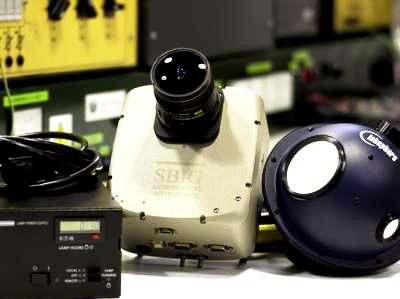
The newly patented all-sky camera

Researchers in Spain have developed a small and light device that can quickly and accurately measure the light-pollution levels or artificial night-sky background brightness for a given location. The team, led by Ovidio Rabaza from the Department of Civil Engineering at the University of Granada, has developed a portable system that includes an all-sky camera and several interference filters that can be easily transported and can be used anywhere.

Currently, methods to measure light pollution that affects the night sky involve using complex techniques such as astronomical photometry, which requires large-scale and expensive equipment generally housed in observatories, according to the researchers. According to the team, the new system is “clearly innovative because, for the first time, relative irradiance and sky background luminance have been measured through wide-field images, of all the sky, instead of using more conventional methods”.

(more…)

Nanoparticles control blood-vessel growth


Peptide-coated gold nanoparticles can be used to activate or inhibit the growth of blood vessels. This is the new finding from a team of physicists and biologists at the University of Southampton in the UK. The researchers say that their experiments could be an important step towards developing better cancer therapies using coated nanoparticles.

Angiogenesis is the process by which new blood vessels form throughout the body. It is vital for growth and development and plays a major role in processes such as wound healing, rheumatoid disease and in pregnancy. However, it is also involved in tumour growth and metastasis; therefore, controlling angiogenesis could lead to new cancer therapies

Angiogenesis starts when specific molecules that bind to angiogenic receptors on cells activate endothelial cells, which line the interior of blood vessels. This activation leads to the endothelial cells proliferating – in a sort of cascade – and then assembling to form new vascular structures. The process is activated (via pro-angiogenic factors) by signals that regulate new vessel growth or inhibited (via anti-angiogenic ones).

Avoiding side effects

Although angiogenic drugs can be used to increase or reduce blood-capillary growth in certain diseases, most of these treatments are only effective for a short time. And more often than not, the drugs need to be administered in large quantities – something that can lead to side effects and even toxicity.

Physicist Antonios Kanaras, biologist Timothy Millar and colleagues believe that nanoparticles could solve some of the problems associated with administering angiogenic drugs. Nanoparticles are efficient drug-carrying and drug-delivery vehicles because they can encapsulate large quantities of therapeutic molecules. What is more, their surfaces can be covered with receptor molecules (usually antibodies). These can ensure that the drugs are delivered to specific parts of the body – targeting a tumour, for example.

The team looked at how three types of peptide-coated gold nanoparticles can activate or inhibit blood-vessel growth in vitro. The first peptide (which the researchers called P1) binds to the “vascular endothelial growth factor” receptor and promotes so-called signal-cascade activating genes; the third peptide (P3) binds to the neurophilin-1 receptor and blocks blood-capillary formation; and the second (P2) is a control because it does not interact with either of these receptors but simply enters cells.

Healing wounds

“We found that the ‘activating’ nanoparticles accelerate angiogenesis by a factor of two, while the ‘inhibiting’ ones significantly prevent angiogenesis,” Kanaras says. Stimulating angiogenesis can be useful in situations where vascular growth is desirable, such as in wound healing, but inhibiting angiogenesis will be important for slowing tumour growth, or stopping it altogether, he says.

Kanaras believes that such studies are critical for understanding how nanoparticles can affect blood-vessel growth and will open up new directions in angiogenic treatment using gold nanoparticles as a platform for drug development.

“Manipulating tumour angiogenesis is certainly the next big step in this research,” he claims. “It is well known that cancer cells need angiogenesis to grow. Will it really be possible for us to stop angiogenesis near a tumour site using functionalized nanoparticles? And how efficient could such a strategy be? These are the questions on which our research group is currently focusing.”

The experiments are described in ACS Nano.

Writing about Oppenheimer

By Margaret Harris

The American physicist J Robert Oppenheimer has been the subject of many biographies. It’s easy to see why. As the scientific director of the Manhattan Project, Oppenheimer presided over one of the most important events of the 20th century: the development of the first atomic weapons during the Second World War. Not long afterwards, he became a prominent victim of another key moment in history: the anti-communist “red scare” that swept the US during the 1950s. And on a personal level, he was a learned and cultured man – one who quoted his own translation of the Hindu scripture Bhagavad Gita (“Now I am become death, the destroyer of worlds”) when asked how he felt after the first test of the atomic bomb.

(more…)

The enigmatic life of J Robert Oppenheimer

Monk is a philosopher at the University of Southampton in the UK, and in the podcast you will hear him discuss the efforts he made to get to grips with Oppenheimer’s physics – including his theoretical work on mesons and the gravitational collapse of neutron stars – as well as the atomic-bomb project. You will also hear Monk’s views on the events that led to Oppenheimer having his security clearance revoked by the US government and the aspects of “Oppie’s” character that made him such a charismatic leader.

Listen to the podcast now to learn more about this pivotal figure in the history of modern physics.

Nigel Lockyer to take the reins at Fermilab

Nigel lockyer

By Hamish Johnston

The particle physicist Nigel Lockyer will take over as director of Fermilab in September this year. Lockyer is currently in charge of TRIUMF in Vancouver, Canada. He will succeed Pier Oddone, who is stepping down after heading Fermilab for eight years.

(more…)

Sterile-neutrino hunt gathers pace at Gran Sasso


Much-debated results suggesting the existence of a fourth kind of neutrino, described as sterile, are to be put to the test in a new experiment under Italy’s Gran Sasso mountain. The physicists who have devised the experiment say that by using an existing solar-neutrino detector they can carry out an inexpensive yet thorough search for the hypothetical sterile neutrino.

Neutrinos are chargeless, almost massless subatomic particles that interact with ordinary matter only via the weak nuclear force. As a result they can pass through vast amounts of material undisturbed. To study them, physicists build huge detectors – the idea being that a large number of target nuclei will result in a few neutrino collisions that can be detected.

If they exist, then sterile neutrinos would be even more difficult to detect because they probably would not interact with ordinary matter at all – only with other neutrinos. They would do so via “oscillation”, a well-established phenomenon in which ordinary neutrinos transform and re-transform continually from one of three flavours – electron, muon and tau – to another as they travel. Likewise, ordinary neutrinos would oscillate into sterile neutrinos and back again but probably over much shorter distances than those typical of normal neutrino oscillation.

Lines of evidence

The existence of sterile neutrinos is suggested by a number of lines of evidence. These include results from experiments studying the oscillation of ordinary neutrinos and from recent calculations showing that the numbers of neutrinos captured by detectors placed close to nuclear reactors are lower than expected, given all of the different ways that neutrinos can be produced inside those reactors.

If these hints turned out to be real, then the implications would be “enormous”, according Marco Pallavicini of the University of Genoa, in Italy, who points out that sterile neutrinos would be the first fundamental particles discovered to lie outside the Standard Model of particle physics. They may also have played a significant role in the evolution of the universe, he adds. Like many physicists, however, he remains sceptical of the particles’ existence.

Pallavicini is leading an international collaboration that will search for sterile neutrinos using the Borexino detector at Italy’s Gran Sasso National Laboratory, which is used mainly to measure neutrinos emitted by the Sun. The detector contains an array of photomultiplier tubes that record the light emitted when neutrinos interact with electrons inside a 300-tonne sphere of a hydrocarbon scintillator. The new experiment is known as Short Distance Neutrino Oscillations with BoreXino (SOX) and will intercept neutrinos from an intense radioactive source placed several metres away.

Quasi-sinusoidal variation

SOX will establish exactly where each of the source-induced neutrino interactions takes place within the hydrocarbon by recording the precise time that the associated light emission reaches several of the photomultiplier tubes. If sterile neutrinos exist, then the number of interactions taking place as a function of distance from the source would show a small but distinct quasi-sinusoidal variation, with a wavelength on the scale of metres – far too short to be caused by normal neutrino oscillation.

SOX will use one of two radioactive sources. One is chromium-51, which emits electron neutrinos and will be placed in a pit just below the detector; the other is cerium-144, an electron–antineutrino emitter that will be positioned inside Borexino’s water shield. The researchers would prefer to use cerium because it would allow the search for sterile neutrinos over a slightly wider range of masses and “mixing angles” (a parameter that determines the strength of oscillations) but they will probably use chromium because it has been used successfully in two previous experiments, albeit it at lower intensities.

Having recently secured the bulk of the funding needed for SOX from the European Research Council – €3.5m – the researchers’ next task is to find a supplier of the necessary radioactive material and then obtain the relevant licences to deliver that material to the lab. Pallavicini estimates that the experiment will start taking data in late 2015 and that the first results will appear in 2016. Further funding permitting, the collaboration will carry out a second – and possibly third – round of tests. The latter being the most challenging because it would put a cerium-144 source at the centre of the detector.

Telltale oscillations

The researchers have calculated that even using chromium-51 SOX would almost certainly be sensitive enough to rule the existing reactor anomalies either in or out. However, the experiment will not see any sterile neutrinos if they happen to be particularly light or mix very weakly with standard neutrinos. Pallavicini also admits that other physicists would be sceptical if his collaboration were simply to record a lower-than-expected overall number of neutrinos, which could be caused by sterile oscillations but which might raise suspicions about poor intensity calibrations or low detector efficiency. However, he says that if the data reveal the telltale oscillatory signal, then he would “challenge anyone to come up with a different explanation” to that of sterile neutrinos.

Petr Vogel at the California Institute of Technology in the US, describes the experiment as “challenging, but doable” and believes that it would “give a very strong indication of whether sterile neutrinos exist or not” if the researchers can collect data using both the chromium and cerium.

Also enthusiastic is William Louis of the Los Alamos National Laboratory in New Mexico, US. “[SOX] will help test and resolve the present evidence for sterile neutrinos,” he says, “assuming that the proper radioactive sources are delivered.” However, he believes that the experiment on its own will not be able to completely prove or disprove the existence of sterile neutrinos, arguing that definitive proof will require the results of several experiments, recording different kinds of oscillation and spanning different energy scales.

SOX is described in a preprint on arXiv.

Which type of large-scale facility has contributed the most to condensed-matter physics?

By Hamish Johnston

hands smll.jpg

Earlier this week my colleague James Dacey was filming in Grenoble, which is home to two major facilities used by condensed-matter physicists: the European Synchrotron Radiation Facility (ESRF) and the Institut Laue-Langevin (ILL). His trip has inspired this week’s poll question, which pits coherent photons against thermal neutrons.

The ESRF and other synchrotron facilities produce coherent beams of synchrotron radiation. These have proven particularly useful to physicists studying soft and biological materials as well as the electronic, atomic and molecular structures of hard materials such as crystals. Although I don’t think that any Nobel prizes have been awarded for condensed-matter physics done at a synchrotron, the 2009 chemistry Nobel was shared by Venkatraman Ramakrishnan, who used synchrotron radiation to work out the structure of ribosomes.

(more…)

View from the beamlines

By James Dacey

Photo of film shoot at ILL

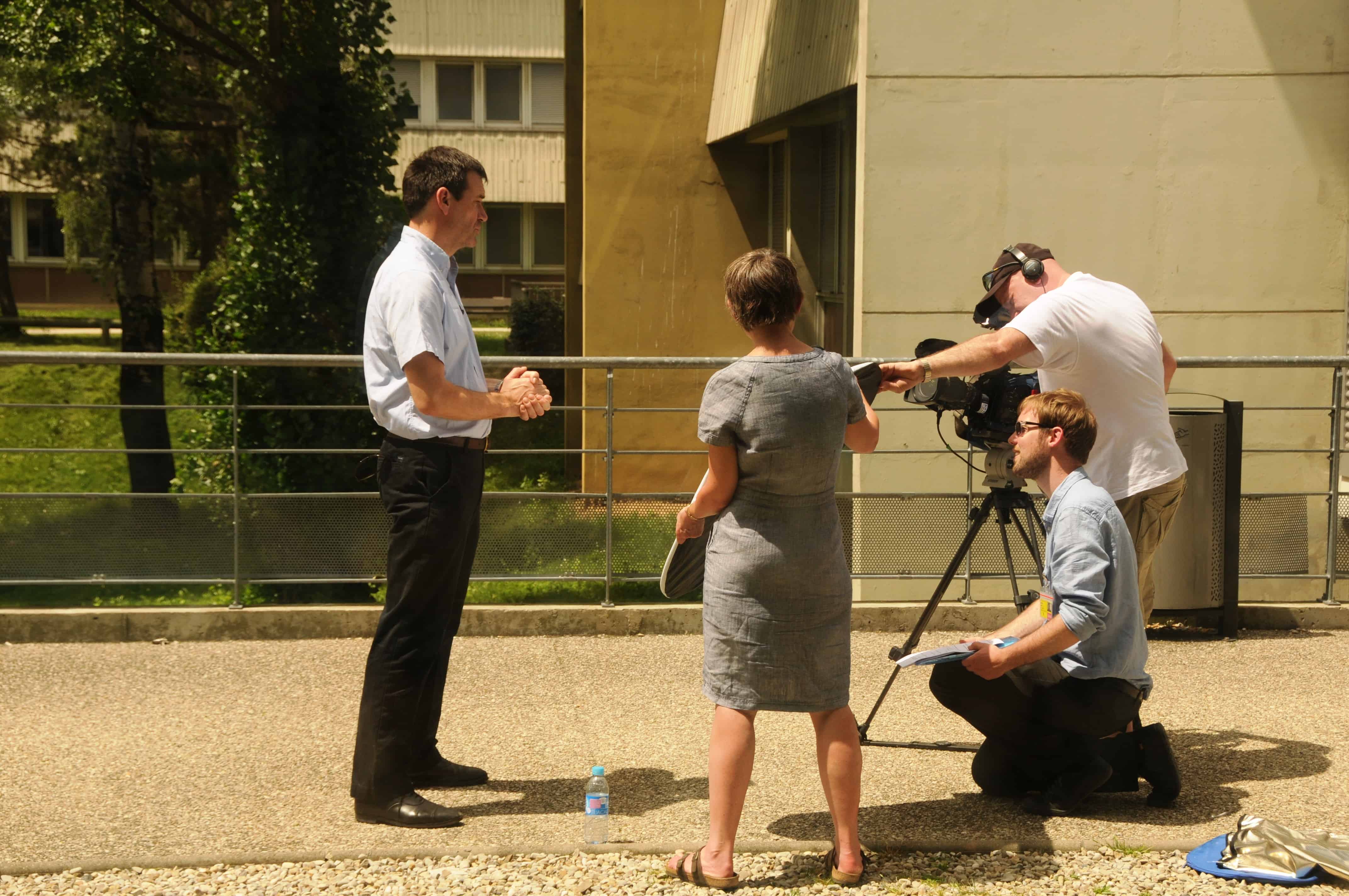
This photo looks a little bit like we were filming the moment that I got down on my knee and popped the big question to Andrew Harrison, the Director General of the Institut Laue-Langevin (ILL). While that would certainly make for an intriguing story worthy of a blog entry, the truth is that earlier this week we were interviewing Harrison for a short film about his international research facility. In case you are still wondering, the reason I am kneeling is so that we could frame our shot to include the dome that houses the ILL’s nuclear reactor, where neutrons are generated.

(more…)

Entangled atom–photon pairs created on demand


The first system that can produce atom–photon entangled pairs on demand has been built by physicists in the US. The set-up uses a 1D optical lattice of ultracold atoms to emit a single photon. However, unlike previous experiments, in which the quantum state of the atoms is destroyed immediately after photon emission, the atomic state endures and is entangled with the photon. Another important feature of the system is that it is deterministic, producing entangled states on demand. Together, these properties could be exploited to create networks for processing and distributing quantum information.

Entanglement is a purely quantum-mechanical phenomenon that allows two particles to have a much closer relationship than is allowed by classical physics. This relationship can be exploited in quantum-information systems and physicists are keen to create entangled systems that could be used in practical applications. In particular, researchers would like to entangle optical photons – which can carry quantum information over hundreds of kilometres – with stable stationary quantum bits (qubits) such as trapped atoms. The problem, however, is that it can be very difficult to get photons to interact with such stationary qubits in a reliable way.

Blockaded atoms

Rydberg states in ensembles of ultracold atoms offer a way forward because these highly excited states interact very strongly with light. They are much like a Rydberg atom, in which one electron is promoted to a very high energy state. However, in this case the electron is not associated with one specific atom but rather with the entire ensemble. Thanks to an effect called the “Rydberg excitation blockade”, only one Rydberg state at a time can occur in the ensemble, which ensures that only a single photon is emitted or absorbed.

While physicists had previously been able to store and emit photons using Rydberg states, any entanglement did not endure in the atoms for long enough to be measured. Now, Alex Kuzmich and colleagues at the Georgia Institute of Technology have come up with a way to entangle photons and Rydberg states for relatively long periods of time.

The experiment begins by cooling a gas of rubidium-87 atoms to microkelvin temperatures. A laser field is then switched on to create a 1D optical lattice containing about 500 atoms in a line. This ensemble is then placed in a collective Rydberg state by zapping it with laser pulses. More pulses are then fired at the ensemble to produce an entangled state of a photon and a “spin-wave” state that remains in the atomic ensemble.

The phase of the emitted photon is then measured. To confirm that the photon is entangled with the atomic ensemble, more pulses are fired at the atoms, causing them to emit a second photon that is characteristic of the spin-wave state.

Phase correlations

The phase of this second photon is measured and by repeating this process many times, the correlation between the phases of the two photons is determined. The team found that the correlation is greater than that allowed by classical physics and therefore the photon and atomic ensemble are entangled.

By varying the delay between the emissions of the two photons, the team was able to work out how long the entanglement endured in the atomic ensemble – which the researchers calculate to be a few microseconds. While this does not sound long, it is enough to allow the photon to travel a few hundred metres, which means that several such atomic ensembles could be connected together in a lab to create a simple circuit for processing quantum information.

An important feature of the system is that the entanglement is deterministic – at least in principle. This means that the process would create an entangled pair every time if it could be implemented using a perfect experimental set-up. This is different to many other schemes for creating entanglement, which are inherently probabilistic and cannot deliver an entangled state every time. Another important feature of the system is that it can generate as many as 5000 entangled photons per second – a thousand times more than previous systems using Rydberg states.

Enabling quantum networks

Together, these features suggest that several such sources could be connected to create a multinode network for processing quantum information. “Such atom–light entanglement might be useful for future work on the realization of distributed quantum systems, which may be applied to quantum communication, computation or similar tasks,” says Kuzmich.

Charles Adams of Durham University in the UK describes the work as “groundbreaking” and “a key advance towards the realization of a quantum network”.

Kuzmich and colleagues are now working on ways to improve the trap used to hold the atoms, which should increase the time for which the entanglement endures.

The experiment is described in Nature.

What is the key to an engaging physics class?

In less than 100 seconds, Nicola Bowler draws on her own experiences to describe the key to a successful physics class.

Watch more from our 100 Second Science video series.

Copyright © 2026 by IOP Publishing Ltd and individual contributors