DNA walks the line

A two-legged molecular motor that “walks” in a single direction instead of wandering about randomly has been unveiled by researchers in the US. The DNA-based device could someday be used to assemble complex molecules, transport drugs within the body, or drive molecular machines of the future.

Current molecular walkers try to imitate the cellular motors actin and kinesin, which carry various cargoes from one place to another in biological cells.

However, until now, it has not been possible to make these molecules move in one particular direction along a track. This is because it is difficult to coordinate the movement of the motor’s legs so that they move in a synchronized way without the legs coming off the track. This also means that researchers must intervene each time the walker takes a step, to stimulate it to move.

Important step forward

“The walking device is autonomous and does not require any further intervention once set up,” said team leader Nadrian Seeman, who is at New York University. “It also only walks in one direction, which is an important step forward in nanotechnology because we expect future walkers like these to move cargo from one place to another.”

The new walker was conceived and designed by Tosan Omabegho of Harvard University and is a piece of DNA that contains a head-to-head linkage in the middle. This set-up ensures that the two legs in the device are synchronized. The device moves along a rigid track, also made of DNA, and is powered by two different fuel strands in solution, acting alternately. These fuel strands push the walker along in a ratchet-like motion.

The walker forms base pairs of DNA as it moves along the track. Seeman explains that the thermodynamic driving force behind the motor is that there are more base pairs formed after the device has taken a step than there were beforehand. This allows the walker and the fuel strands to act as catalysts in the system and supply the energy needed for movement. At the same time, the fuel strands push the walker along the track by first binding to the track and then releasing the walker’s legs, thus allowing it to take steps.

Shifting cargo

The researchers believe that demonstrating such coordinated molecular motion is an important step towards developing more complex and autonomous machines, made from DNA or other materials. They reckon that the device could be used to move cargo, such as molecules and drugs, for use in novel molecular machines and in biomedical applications. It might also move chemical groups into place to produce programmed polymers and other complex species. Such transport will be as important to molecular machinery of the future as trucks and conveyor belts are for factories today.

The team now plans to analyse the detailed kinetics of the walker. “We will also try to incorporate it into a more complex synthetic schemed and possibly use a different energy source,” revealed Seeman.

The work was reported in Science .

Joining the Twitter bandwagon

twitter.jpg

By Matin Durrani

When Tim Berners-Lee dreamt up the World Wide Web 20 years ago last month, the former physicist-turned-CERN-software-engineer could not possibly have envisaged what his invention would unleash – from iTunes to Google StreetView and from Spotify to Ebay.

There’s no way either that he could have ever envisaged the idea of Twitter — the website that invites people to answer the question “What are you doing?” in fewer than 156 characters.

Twitter’s been all the rage this year with everyone from BBC Radio Five Live presenter Richard Bacon to actor Stephen Fry signing up, boring everyone who chooses to “follow” their “twitterings” about their every move. Even Barack Obama is on Twitter, except that he doesn’t write his entries – he has minions to do it for him.

But whether Twitter turns out to be a short-lived phenomenon or something that proves truly durable and lasting, the fact is it’s here and we on Physics World couldn’t resist joining in. You can find us here

You’ll be delighted to hear though that we won’t be letting you know every time one of us goes to the kitchen to make tea or has another chew on one of the Physics World pens.

What we are doing though is letting you know via Twitter every time something new is posted on our site physicsworld.com – be it  a news story, blog entry or longer feature.

So now you’ve got even less excuse not to keep coming back! Apparently you can even follow Twitter via your mobile phone.

Gauging the matter-antimatter divide

An international team of physicists has made the first theoretical estimation of the size of CP violation, a parameter that describes the difference between matter and antimatter. Their calculation matches experimental data, which suggests such data are typical of a fundamental framework and do not expose any underlying issues in the Standard Model of particle physics.

Besides energy, physicists think “stuff” comes in two forms: matter and antimatter. While most physicists believe that the Big Bang created equal amounts of both, the universe today is almost exclusively composed of matter and this discrepancy implies there should be a difference in behaviour between matter and antimatter. In the Standard Model of particle physics this is incorporated as a phenomenon known as charge–parity or “CP” violation.

CP violation was discovered experimentally in 1964 when Jim Cronin and Val Fitch at Princeton University found that the CP quantum number changed sign during the decay of kaons. A decade later Makoto Kobayashi and Toshihide Maskawa of Nagoya University explained the result in the 3 x 3 “CKM” matrix, which describes how the strange quark and down quark inside a kaon can switch to and fro into their antiparticles and, in doing so, occasionally break CP symmetry. Both groups received separate Nobel prizes for their efforts.

The extent of CP violation in the CKM matrix is given by the so-called Jarlskog parameter, J, which can have a maximum value of about 0.1. Naively one might expect J to take values somewhere in the middle between zero and 0.1, but in experiments it turns out to be very small — about 3 x 10-5 — and this raises the question of whether there is some unknown factor making it that way.

Cosmologists to the rescue

Now cosmologists Gary Gibbons and Steffen Gielen at the University of Cambridge, Chris Pope at Texas A&M University and Neil Turok the Perimeter Institute have calculated that such a low value of J is to be expected after all.

Turok’s group has used statistical arguments based on “randomness” to investigate the shape of the geometry of the CKM matrix. They found when the masses of quarks in the matrix were left unconstrained J came out to be much larger than experiments indicate, but when the known values of quarks were inputted J came out close to its observed value. They have published their results in Physical Review Letters and Physical Review D.

“What this work explains is that the actual value of the CP violation that’s measured is a typical value,” says Turok.

Further potential

Different variations on the researchers’ study could have important consequences. A similar analysis for a 4 x 4 matrix, for example, would reveal the likelihood of there being a fourth, much heavier generation of quarks in addition to the three presently known. Also, an analysis on neutrinos could suggest whether these light particles should also exhibit CP-violating processes.

I would be surprised and disappointed if randomness were the whole story Frank Wilczek, Massachusetts Institute of Technology

Frank Wilczek, a particle physicist at the Massachusetts Institute of Technology, who shared the Nobel Prize for Physics in 2004 for his work on the strong interaction, suspects there may be more to CP violation, however. He notes that the overall phase of the matrix is known to be much smaller than could be explained by “statistical fluke”, and thinks there seem to be patterns in the matrices for quarks and leptons that hint of more expansive underlying theories. Moreover, he points out a certain circular reasoning in the researchers’ logic in that they have had to assume the masses of quarks and their associated hierarchy.

“I think ‘randomness’ in the [CKM] matrix is a sensible thing to explore, and might form a baseline against which to test alternative ideas based on symmetry or dynamics,” he adds. “On the other hand I would be surprised and disappointed if randomness were the whole story.”

Astronomy meets philately

stamp1.jpg
stamp1.jpg

By Hamish Johnston

You can’t have an International Year without a commemorative stamp — so here are a few beauties issued by Canada Post to celebrate this International Year of Astronomy.

The top stamp features the Dominion Astrophysical Observatory, which is high on a hill overlooking Saanich, British Columbia.

Not to be confused with the Dominion Observatory in Ottawa, or the Dominion Radio Astrophysical Observatory in Penticton, the Saanich facility opened in 1918 and its telescope is still used today. The observatory is also home of the Herzberg Institute of Astrophysics.

The background of both stamps feature photographs of nebulae taken by the Canada-France-Hawaii Telescope, which is perched on top of an dormant volcano — Mauna Kea — in Hawaii. The top is the Horsehead nebula and the bottom is the Eagle nebula.

stamp2.jpg
stamp2.jpg

The bottom stamp also features the Canada-France-Hawaii Telescope itself, which is so high up that snow shovels are on hand. A little bit of Canada in Hawaii, I suppose.

Physicists have another go at Maxwell’s demon

Ever since James Clerk Maxwell dreamt up his demon nearly 150 years ago, physicists have had a lot of fun in trying to create this mischievous fiend. The latest attempt comes from a group of researchers at the University of Oregon who have created a laser array that brings order to a bunch of ultracold atoms, much like the hypothetical demon.

Maxwell imagined his demon as a miniscule creature who can control a trapdoor in a gas to segregate hot atoms from cold. He proposed this ‘thought experiment’ because it seemed to offer a simple way of violating the second law of thermodynamics by reducing entropy in the system without expending any energy.

Demonic insight

The general consensus amongst physicists is that the demon – as Maxwell had envisaged – would be impossible to realize. Largely because, in sorting the atoms, the demon must open and close the trapdoor at precisely the right times; to do this he would need to know the position and velocity of every atom at any given moment. “In a sense, then, by having such knowledge, the demon has already transferred the entropy of the gas into his brain,” said Daniel Steck, one of the researchers at the University of Oregon.

Now, dragging the demon into the 21st century, Stein and his colleagues readdress the riddle using the modern techniques of ultracold atom research. The researchers created their demon using a laser array, which was focussed on a group of ultracold Rb-87 atoms. Lasers were tuned so their beams of light pushed differently on different atoms depending on their spin.

To begin with, all the atoms are in a state where the first laser beam doesn’t repel them, so they can pass through the beam with ease. However, once they cross this beam they are struck by a second laser beam, which alters their spin state and makes them repellent to the first laser. The result is that atoms become trapped on the farside of the laser.

Problem solved?

“Our one-way barrier acts to put all the atoms into a subsection of the original container. In essence this is the same as the original demon, since the point is that the demon can apparently reduce the entropy of the gas,” Steck told physicsworld.com.

This result is the latest in a line of research, pioneered over the last two years by Mark Raizen, and independently by Andreas Ruschhaupt and Gonzalo Muga. The paper was published this week on the arXiv preprint server.

“The original motivation was to come up with the analog of a diode for cold atoms, said Steck. “This could yield a nice way to direct the motion of atoms, for example, to shuttle atoms around on a chip-sized trap for potential realizations of quantum computers.”

Despite the claims of Steck and colleagues, other researchers are still not fully convinced by this latest research.

“The connection to Maxwell’s demon is reasonable, but should not be that surprising, since cooling in cold atom experiments already relies on using optical manipulation to transfer entropy from the atoms of interest to other parts of the system,” said Jonathon Keeling, a condensed matter researcher at the University of Cambridge.

Algorithm discovers physical laws

Are you a scientist with interesting yet unexplained data that you don’t have the time to analyse? You might want to get in touch with two physicist in the US who have created an algorithm that can deduce physical laws from raw experimental data with little help from humans.

Without any knowledge of physics or geometry, the algorithm discovered exact energy and momentum relations governing the dynamics of mass-spring systems as well as single and double pendulums. The researchers envisage such algorithms speeding up the scientific process by reducing the time needed to identify potentially interesting models of particular systems.

Since the 1960s scientists have been using artificial intelligence to design and run experiments, developing ever more powerful programs to generate, collect and store data. However, they have had less success in automatically distilling these data into new scientific laws.

Modelling algorithms can allow scientists to focus on developing new theories rather than spending their time comparing models with data Hod Lipson, Cornell University

Now, two new papers in the journal Science confront this problem. One describes the development of a robot that can generate and then test hypotheses about biological systems, while the other, by computational biologist Michael Schmidt and engineer and computer scientist Hod Lipson of Cornell University in the US, explains how conservation laws can be generated automatically (Science 324 81).

Meaningful or trivial correlations?

Schmidt and Lipson say that the biggest difficulty in searching for new conservation laws using a computer is identifying meaningful, as opposed to trivial, correlations within data. They point out that the experimental data from a physical system can yield an infinite number of invariant equations, but that only a few of these will have anything interesting to say about that system. Their solution to this problem is to say that an equation is useful only if it can predict how the system’s sub components affect each other over time.

To put this into practice, Schmidt and Lipson set up an algorithm that takes measurements of certain variables over time within a particular physical system, such as the x, y and z coordinates of a pendulum.

The algorithm numerically calculates the partial derivatives for every pair of variables; then generates functions that might describe the behaviour of the system by randomly sticking together algebraic operators (+,-,÷, ×), analytical functions (such as sine and cosine), constants and variables; and then works out the partial derivatives of each of these functions.

The best candidate functions are those whose partial derivatives most closely match the numerical partial derivatives. These functions can then be further refined until they reach a certain level of accuracy.

Chaos in simple systems

To test their algorithm, the researchers investigated four different physical systems – a single mass held between two springs; two masses held between three springs; a single pendulum; and a double pendulum (one pendulum swinging off the bottom of another).

Given time-varying position and velocity data, the algorithm was able to identify the energy laws of each system — the Hamiltonian (total energy) and Lagrangian (kinetic energy minus potential energy). When it was also supplied with acceleration data, it generated the equations of motion corresponding to Newton’s second law for each system.

The algorithm does not produce a unique equation in each case but a shortlist of around ten candidate equations. These represent the most accurate equations for a range of complexities (i.e. number of terms in each equation). It is then down to the scientist to choose his or her favourite.

Plugging theoretical gaps

According to Lipson, this automated approach to law discovery could help in those areas of science where there is “a theoretical gap despite abundance of data”. Cosmology, he says, would be one such area, and biology in general another. “In biology there are many systems where we do not know their dynamics or the rules that they obey,” he adds. “Detecting an invariant could help scientists focus more quickly on an interesting aspect of the system, even if it is not fully understood.”

Robert Crease, a philosopher at Stony Brook University in the US, believes that algorithms can help to advance science “within an already-understood horizon” but says that this is not the interesting part of science. That, he says, “involves discovering something that transforms our current horizon, using a taste for the interesting, the willingness to entertain paradox, and the sense that something is a puzzle and not just an error or absurd contradiction.”

Humans are still needed

Lipson does not claim that automation can replace scientists, because, he says, humans are still needed to choose which data to collect, what the building blocks for equations should be, and also to “give meaning to the results”. However, he believes that algorithms like theirs can speed up the investigation and modelling of new phenomena. “Just as automated design algorithms allow engineers to delegate mundane tasks to computers,” he says, “modelling algorithms can allow scientists to focus on developing new theories rather than spending their time comparing models with data.”

David Waltz, a computer scientist at Columbia University in the US and coauthor of a commentary on the two Science papers, does not believe that the Schmidt and Lipson algorithm is likely to produce a truly profound result in the near future. But he believes that the general approach could become much more sophisticated, envisaging that intelligent systems could continuously look for correlations in the data from an ever larger range of experiments in such areas as astronomy, geophysics and particle physics. “I expect that computational systems will exhibit increasing amounts of what we would today say requires human insight,” he adds.


Keeping carbon out of sight but not out of mind

Channelling vast quantities of carbon dioxide into deep underground bunkers sounds like the ultimate have your cake and eat it solution to ambitious international CO2 emission targets. Now, a group of scientists remind us that before carbon capture and storage can become a viable option we need to first understand what happens to the CO2 once it is buried underground.

“The energy provided by coal, oil, and gas is so valuable that it is crazy to think that we will just leave it all in the ground in a carbon-constrained world” Ken Caldeira, Stanford University

The researchers, led by Stuart Gilfillan of the University of Edinburgh and the University of Manchester, studied a series of natural gas fields which are fed from beneath by natural CO2 sources. Reporting their findings in Nature, they found that over 80 % of the carbon dioxide dissolves in groundwater, with only a small fraction reacting with the cavity walls to form carbonates.

“Our findings confirm that natural gas fields can be used to store CO2 safely over millions of years. More importantly, it tells us we need to take a closer look at the mobility of CO2 dissolved in these waters,” Gilfillan told physicsworld.com.

Simple science

Despite significant investment in developing sustainable fuels, we will carry on burning coal and gas to meet at least half of global energy demand until 2030. That is according to the most optimistic forecasts of the Intergovernmental Panel on climate Change (IPCC). If so, the only way to cut carbon emissions in the short-term is to intercept the CO2 before it reaches the atmosphere.

The leading candidate for this job is carbon capture and storage (CCS), which is a relatively simple idea and could store up to 90% of carbon dioxide from power stations and industrial sites. It is a three-stage process that involves harvesting, transporting, and then storing the CO2 in suitable underground locations such as vast saline aquifers, gas and oil fields, or unmineable coal seams. To date, each stage has been demonstrated in isolation but they are yet to be combined at a significant industrial scale.

“The energy provided by coal, oil, and gas is so valuable that it is crazy to think that we will just leave it all in the ground in a carbon-constrained world. Carbon capture and storage appears to be a viable technology,” said Ken Caldeira, a global ecology researcher at Stanford University, who was recently ranked number 36 in a poll by Rolling Stone magazine of the world’s top 100 “Agents of Change”.

Going underground

In the research reported today, the scientists address an important aspect of the storage — ensuring that CO2 is safely contained. Gilfillan and his colleagues calculated what happens to CO2 over thousands of years by comparing levels of the gas with levels of the inert gas helium, based on samples from 9 natural gas fields in the US, Europe and China. In each case they found that dissolution of CO2 in the groundwater accounts for at least 82 per cent of the gas, with up to 18 per cent precipitating as carbonate minerals.

“Natural gas fields are excellent locations for potential CO2 storage as the geology is well understood and the fact that the gas field was there in the first place indicates that the cap rock seal has already held gas on a geological timescale so should be able to also hold CO2 safely,” said Gilfillan.

Latest IPCC figures predict that we could use these gas reservoirs to store up to 940 gigatonnes of CO2 — the equivalent of 37 years of total global CO2 emissions at current rates. On a global scale, saline aquifers are an even more promising option and could store 60-400 years worth of CO2, according to the same predictions.

“The physics of saline aquifers is comparable with that of gas fields, so — based on our findings — there’s no scientific reason why we can’t inject vast quantities of CO2 into them,” said Gilfillan.

These latest findings will add to a growing international push to realize workable CCS within the next few years. The European Union is on the brink of signing a 1 bn Euro agreement to fund seven CCS projects and Canada has already agreed to supply Can$2bn to finance between three and five large-scale CCS technology demonstrators that should be operational by 2015.

It’s all over for Clover

The UK has cancelled funding for an experiment that, if built, would have searched for the signatures of gravitational waves in the Comic Microwave Background (CMB).

The cancellation of the £4.78m Clover project, a collaboration between Cardiff, Oxford, Manchester and Cambridge universities, is now threatening redundancies as funding runs out. The decision was made by the Science and Technology Facilities Council (STFC) at a council meeting last week.

The Clover telescope, to have been sited in the Atacama Desert, Chile, was designed to search for gravitational waves by looking at the polarization of photons from the CMB as they scattered off free electrons when stars first formed and re-ionized the surrounding gas of the early universe.

Although gravitational waves have never been directly measured, it is in principle possible to tease out their existence by mapping in detail the temperature and polarization of photons in the CMB.

Until now it has only been possible to measure the temperature fluctuations using, for example, the space-based Wilkinson Microwave Anisotropy Probe (WMAP), which was launched in 2003.

Direct link to gravitational waves

However, around 1% of the CMB photons are polarized and these polarizations take the form of so-called “E-modes”, which WMAP also measured, and “B-modes”, which gives information about the orientation of the polarization. The signal from B-modes, which have not been measured to date, are 100 times weaker than E-modes and are directly linked to the existence of gravitational waves.

The Clover project was designed to detect these B-modes by two independent radio-telescopes, one operating at 95 GHz with the other operating at both 150 and 225 GHz. However, after its council meeting on 24 March, the STFC decided to cancel funding for the project. The funding council had already spent £4.5m on Clover, but the project was almost 60% over budget and needed almost £3m to finish construction.

I am sure there will be more redundancies as a result of this decision Peter Coles, Cardiff University

Despite the project being deemed “high importance” in the STFC’s review of facilities last July, in a statement the STFC said, “[the] council was assured that the science to be addressed by Clover remained first rate, [but] the additional funding needed could not be made available in the current financial situation.”

The cancellation now threatens redundancies at the four universities who are part of the project. “There are some people at Cardiff who only have a few months of funding left,” says theorist Peter Coles , from Cardiff University, who had planned to analyse data from Clover. “And I am sure there will be more redundancies as a result of this decision.”

Not all doom and gloom

However, it is not all doom and gloom for the search to detect gravitational waves. The US-led QUIET telescope in Chile, an international collaboration consisting of 12 partners including the universities of Manchester and Oxford, is also designed to detect B-modes and will start taking data soon.

“Another reason why the STFC has pulled the plug could be because Clover is facing intense competition in the race to be the first to detect gravitational waves,” says Coles, “but I am very disappointed that the STFC seems to be walking away from fundamental science.”

My neighbour Paul Dirac

window.jpg
The first Dirac House

By Hamish Johnston

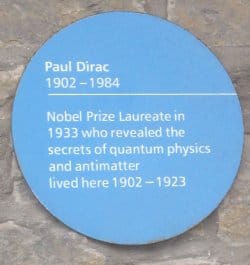
blue.jpg
Did he live here for 21 years?

The salmon-coloured house in the centre of the photo is 15 Monk Road, the birthplace of Paul Dirac.

This view of suburban Bristol is from our back window and would have been somewhat different in 1902 when Dirac was born. The houses had been built a year earlier and I’m guessing the gardens would have been devoid of trees and large shrubs.

Dirac lived in this house until he was about ten (according to his latest biographer Graham Farmelo or 21 — according to the historical plaque on the house (right).

I sometimes wonder what the current owners make of this plaque — are they worried that Dirac left some antimatter lurking under the floorboards?

(more…)

How Bacon egged on empiricism

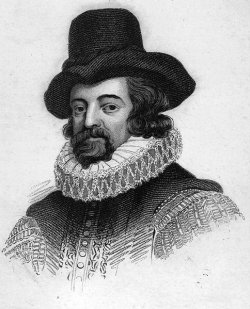
bacon.jpg
Bacon put the sizzle into science

By Hamish Johnston

If you do experiments; collaborate with other scientists; or benefit from government research grants you may want to thank this chap — the English lawyer and political schemer Francis Bacon (1561-1626).

Bacon lived at a pivotal time when the West was moving out of the renaissance and its reverence of the ancient Greek thinkers — and towards evidence-based methods of understanding nature. Bacon was one of the driving forces in the development of what we now call the “scientific method”.

This morning on BBC Radio 4’s In Our Time, Melvyn Bragg and company discussed Bacon’s role (sorry, couldn’t resist another pun) in the shaping of modern science.

(more…)

Copyright © 2026 by IOP Publishing Ltd and individual contributors