Incorporating deep learning into X-ray CT imaging

Want to learn more on this subject?

In recent years, deep learning gained a lot of attention and made impressive achievements in various applications. Incorporating deep learning in X-ray CT has become a non-reversible trend.

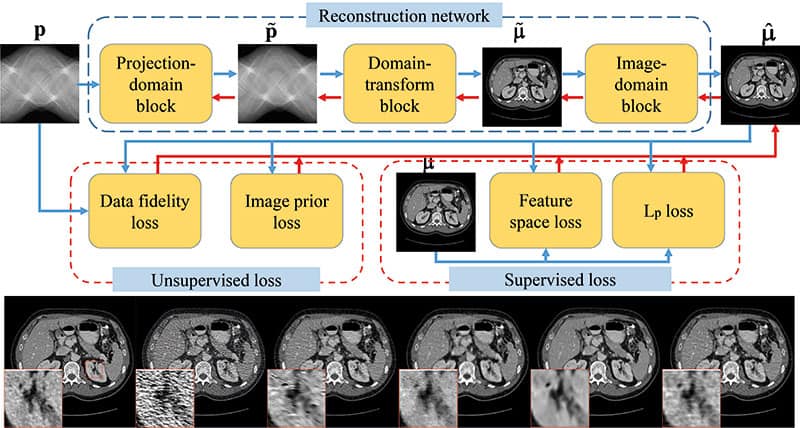
In this webinar, we’ll give a brief overview of deep learning technology. On this basis, focusing on the key issues in CT imaging, including denoising, artefact suppression, image reconstruction, we will discuss the methodology of incorporating deep learning into different data-processing missions by addressing the deep-learning framework, neural network design, loss functions, multiple domain learning, as well as some of our preliminary research results. Some of the key issues in the current field and technological-development challenges will also be discussed.

Yuxiang Xing received her PhD from the State University of New York at Stony Brook in 2003 and then joined Tsinghua University as a faculty member. She is currently a professor of the department of engineering physics at Tsinghua University, China. Since 2003, she has been devoted to research on the theories and technologies for the development and application of X-ray imaging systems. She has authored or co-authored more than 150 research publications and more than 50 patents. Her current interests include X-ray imaging physics, reconstruction methods for CT, radiation image processing and performance evaluation, especially cutting-edge deep-learning methods for CT reconstruction and artefacts reduction.

Speaker relationship with IOP Publishing

Editorial board member for Physics in Medicine & Biology.

Want to learn more on this subject?


Synergistic integration of deep learning and model-based reconstruction for CT image generation

Want to learn more on this subject?

Conventional model-based image reconstruction (MBIR) for X-ray CT is often formulated as an optimization problem, the solution of which is the unknown image to be reconstructed.

Research in the past few years has shifted to replace components of these conventional MBIR methods by deep neural network models. Such integration can provide both improved image quality and certain interpretability of the deep learning architecture.

Jingyan Xu will present some existing approaches combining deep learning and MBIR, and discuss their strengths, weaknesses, and possible future extensions.

Jingyan Xu obtained her PhD in electrical engineering from Stanford University. She is currently an assistant professor in the Department of Radiology at Johns Hopkins University. Her area of expertise lies in developing model-based image reconstruction methods and task-based image-quality evaluation for X-ray CT. More recently, she has been working on synergistic integration of deep learning and model-based reconstruction for CT image generation.


Speaker relationship with IOP Publishing

Co-author of a recently published Physics in Medicine & Biology topical review, Convex optimization algorithms in medical image reconstruction—in the age of AI.

Want to learn more on this subject?


Computer calculation and machine learning in radiotherapy

Want to learn more on this subject?

Recent innovations of computer calculation and artificial intelligence in radiotherapy resulted in rapid advancements in various aspects in cancer treatment such as treatment planning, patient-specific quality assurance, radiation dosimetry, and education for patients and radiation staff. Such computer applications not only improve the quality of radiation treatment, but also enhance the safety in the radiotherapy chain.

In this webinar, we shall draw attention to some significant developments in computer calculation and machine learning in radiotherapy. There will be a focus on Monte Carlo simulations in nanoparticle-enhanced radiotherapy, and the applications of machine learning in treatment plan evaluation.

Showcased will be an AI-chatbot created for education and training. In addition, Monte Carlo simulation is a mathematical method based on random sampling and is well known to be the benchmark in predicting radiation dose in treatment planning.

We will go through some Monte Carlo simulation results for dose enhancement in gold nanoparticle-enhanced radiotherapy. Machine learning is recently implemented in treatment planning and patient/radiation staff education in the radiotherapy chain. Also explored is how machine learning can help in treatment-plan evaluation and creating an AI-chatbot for the education of patients and radiation staff.

Dr James Chow is a medical physicist in the Princess Margaret Cancer Centre, University Health Network and an associate professor in the Department of Radiation Oncology at University of Toronto. He is also an affiliated scientist of the TECHNA Institute for the Advancement of Technology for Health, University Health Network, and a member of the Temerty Centre for Artificial Intelligence Research and Education in Medicine, University of Toronto. He is a senior member of the Institute of Electrical and Electronics Engineers in the USA, and fellows of the Institute of Physics, UK, and Canadian College of Physicists in Medicine, Canada.

Speaker relationship with IOP Publishing

Editorial board member for Biomedical Physics & Engineering Express.

Want to learn more on this subject?


Accelerating drug discovery with machine learning and AI

Want to learn more on this subject?

Deep learning is revolutionizing many areas of science and technology, particularly in natural language processing, speech recognition and computer vision.

In this talk, we will provide an overview into the latest developments of machine learning and AI methods and application to the problem of drug discovery and development at Isayev’s Lab at CMU. We identify several areas where existing methods have the potential to accelerate pharmaceutical research and disrupt more traditional approaches.

Olexandr Isayev is an assistant professor at the Department of Chemistry at Carnegie Mellon University. In 2008, Olexandr received his PhD in computational chemistry. He was postdoctoral research fellow at the Case Western Reserve University and a scientist at the government research lab. During 2016–2019 he was a faculty at UNC Eshelman School of Pharmacy, the University of North Carolina at Chapel Hill. Olexandr received the “Emerging Technology Award” from the American Chemical Society (ACS) and the GPU computing award from NVIDIA. The research in his lab focuses on connecting artificial intelligence with chemical sciences.

Speaker relationship with IOP Publishing

Editorial board member for Machine Learning: Science and Technology.

Want to learn more on this subject?

Why not watch one of our other webinars that we held during AI in Medical Physics Week.


Clathrate superhydride makes new high-temperature superconductor

Researchers in China have synthesized a new type of high-temperature superconductor, clathrate calcium hydride (CaH6). The material, which is superconducting at temperatures of 215 K and pressures of 172 GPa (1.72 Mbar), is one of best high-temperature superhydrides made to date and the only clathrate hydride outside the family of rare-earth and actinide hydrides.

Superconductivity is the ability of a material to conduct electricity without any resistance. It is observed in many materials when they are cooled to below their superconducting transition temperature (Tc). In the Bardeen–Cooper–Schrieffer (BCS) theory of (“conventional”) superconductivity, this occurs when electrons overcome their mutual electrical repulsion and form so-called Cooper pairs that then travel unhindered through the material as a supercurrent.

Superconductivity was first observed in 1911 in solid mercury below a Tof 4.2 K and the search for room-temperature superconductors has been on ever since. Finding a material that superconducts at such high temperatures would considerably improve the efficiency of electrical generators and transmission lines, while also making common applications of superconductivity, such as superconducting magnets in particle accelerators, simpler and cheaper.

Compressed hydrides

Physicists came a step closer to this “holy grail” of condensed-matter physics thanks to the copper oxide (cuprate) superconductors, which were discovered in the 1980s and 1990s and which include materials with Tabove 77 K, the temperature at which nitrogen becomes a liquid. Then, in 2015, the role of pressure came to the fore as researchers discovered that hydrogen sulphide has a Tof 203 K when compressed to pressures of 150 GPa. This result spurred a flurry of interest in the compressed hydrides containing rare-earth or actinide elements.

Using quantum-mechanics-based calculations, two independent teams, led by Russell Hemley at George Washington University in the US and Yanming Ma at Jilin University in China, predicted in 2017 that lanthanum hydride (LaH10) could be superconducting. Hemley’s team went on to synthesize the material, and in May 2018 reported direct measurements of its conductivity indicating a Tof 260 K at 180–200 GPa, posting a paper on the arXiv in August 2018 that was then published in Physical Review Letters. The team then reported additional measurements showing a Tc of up to 280 K in some samples in August 2018 at the Boston ACS meeting. A separate team led by Mikhail Eremets at the Max Planck Institute for Chemistry in Germany reported a Tof 250 K for lanthanum hydride synthesized at pressures of around 170 GPa in work posted on the arXiv in December 2018 and subsequently published in Nature.

A class of currently unexplored superconductors

Now, Yanming Ma and colleagues at the State Key Laboratory of Superhard Materials, College of Physics, Jilin University, China have succeeded in synthesizing a new type of superhydride altogether, one that contains an alkaline-earth metal instead of a rare-earth metal or an actinide. The discovery “opens the door to a class of superconductors that is currently unexplored,” the researchers claim.

Although CaH6 was first predicted to be a superconductor a decade ago, it proved difficult to synthesize because calcium and hydrogen are highly reactive. When the two elements are brought together at low pressures, the result is often a hydride with an undesirably low hydrogen content.

In the new work, Ma and colleagues overcame this problem by using ammonia borane (BH3NH3) as a hydrogen source. This allowed them to synthesize CaH6 via a direct reaction between Ca and H2 at high temperatures and pressures.

“We used a special sample loading method to synthesize the material at close to 200 GPa and temperatures of 2000 K in a diamond anvil cell with microelectrodes that we carefully mounted on the tips of the anvil for subsequent electrical conductivity measurements,” team member Hongbo Wang explains.

“The dramatic loss of resistance is very similar to the other superconductivity transitions that we have previously studied under pressure,” he tells Physics World, “and we have reproduced the result many times.”

According to the researchers, their new work will help to advance our understanding of superconductivity and could lead to new classes of ternary calcium-based superhydrides. The team is now busy exploring a broader range of compositions based on their own and other group’s calculations.  “We believe this system is just one of many superhydrides, with likely higher Tc values,” says Wang.

The present research is detailed in Physical Review Letters.

Wearable MEG system evaluates epilepsy in children

Optically-pumped magnetometers (OPMs) are a promising emerging technology that could make magnetoencephalography (MEG) more accurate and tolerable for patients who have difficulty remaining motionless while the exam is performed – such as young children.

MEG, an established clinical tool used to non-invasively measure brain activity, records the magnetic field generated by the electrical activity of cortical neurons. One key application of MEG is detecting the region of the brain from which epileptic seizures originate. Locating this epileptogenic zone is essential for evaluation of patients with focal drug-resistant epilepsy prior to brain surgery to alleviate or minimize seizures.

MEG is currently performed using a bulky neuromagnetometer containing hundreds of superconducting quantum interference device (SQUID) sensors that need cryogenic cooling. OPMs, on the other hand, are lightweight, wearable and use magnetic sensors that do not require cryogenics. In contrast to SQUID-based MEG systems that use a rigid, one-size-fits-all helmet, a wearable OPM-MEG device can be optimized for an individual’s head shape and size, making its use with paediatric patients more feasible.

Optically pumped magnetometer

A team headed up at Université Libre de Bruxelles has now conducted a prospective pilot study comparing the ability of OPM-based and cryogenic MEG data to detect and localize focal interictal epileptiform discharges (IEDs), the large intermittent electrophysiological events observed between epileptic seizures. The researchers found that an OPM-based MEG device, developed by the team in collaboration with researchers at the University of Nottingham, was better at identifying IED neural sources than a conventional SQUID-based MEG.

The study’s findings, reported in Radiology, pave the way for further development of a wearable whole-head, motion-tolerant OPM-MEG device to record whole-brain signals in children with focal epilepsy. This type of device could potentially also be used to record motor, sensory, language, visual and auditory evoked fields, to localize the areas of the brain that control these functions in a pre-surgical setting.

The study included five children (aged between five and 11 years) receiving treatment at either the CUB Hôpital Erasme or the Hôpital Universitaire des Enfants Reine Fabiola. Each child wore a conventional flexible EEG cap adapted to their individual head circumference, onto which 3D-printed plastic sensor mounts to affix 32 sensors were sewn. The mount design allowed digitization of the OPM position on the child’s scalp using an electromagnetic tracker. The sensors only partially covered the scalp, and were placed on and around the presumed location of the epileptogenic zone as determined by a previous scalp EEG.

For the OPM-MEG exams, the children sat in a comfortable chair at the centre of a compact magnetically shielded room, with no constraints on head position or movement, watching a short movie as data were acquired. The OPM localization procedure took approximately 10 min for each child. The team subsequently performed SQUID-MEG exams on the same day, using a 306-channel, whole-scalp neuromagnetometer with 102 magnetometers.

First author Odile Feys and colleagues report that both MEG devices identified IEDs with comparable spike-wave indexes (the ratio between the number of seconds with IEDs and the time of the total recording) in all five children. Because the OPM-MEG cap enabled a 3 cm smaller brain-to-sensor distance than the SQUID-MEG, IED peak amplitudes were 2.3–4.6 times higher with OPM-MEG than with the conventional device.

Although the OPM signals were generally noisier than SQUID signals, the signal-to-noise ratio was 27–60% higher with OPM-MEG in all participants but one (whose head movements created pronounced artefacts), thanks to the increase in signal amplitude. The researchers suggest that motion-related artefacts could be reduced with OPM denoising algorithms and extra hardware solutions, such as field nulling coils.

“Future studies based on larger numbers of patients with epilepsy and greater numbers of OPMs to allow whole-head coverage (including the development of triaxial OPM sensors) are needed to position OPM-MEG as a reference method for the diagnostic evaluation of focal epilepsy and to replace cryogenic MEG,” the team writes.

Feys advises that the next steps of the OPM-MEG research performed in Brussels will investigate an automated and fast (1–2 min) way to localize the OPM positions relative to the scalp. The team also plan to study wearable OPM-MEG for seizure detection and localization of the seizure onset zone, and investigate the clinical interest in OPM-MEG for pre-surgical assessment of refractory focal epilepsy compared with cryogenic MEG.

In an accompanying commentary in Radiology, paediatric neuroradiologist Elysa Widjaja from the Hospital for Sick Children in Toronto discusses the benefits that this further-developed technology could provide, such as allowing data collection of whole-brain signals during movement.

“Such technology would be groundbreaking for conducting MEG in young children and those with developmental challenges who have difficulty remaining still,” Widjaja writes. “Whole head coverage could improve detection of more extensive or secondary epileptogenic zone that may have been missed with limited OPM coverage and allow for more sophisticated functional connectivity analysis.”

New ‘wonder material’ graphyne synthesized in two labs

Two new processes for producing different types of graphyne – a 2D allotrope of carbon that includes triple bonds – have been reported in independent papers. One paper – from researchers in the US and China – reports the first experimental synthesis of a bulk crystal of the most stable form of graphyne, which could potentially have multiple uses. The second – from researchers in South Korea – describes the discovery and synthesis of a hitherto unpredicted “holey graphyne”. However, some scientists are not convinced of the existence of this second type of graphyne.

Carbon is known for its ability to form numerous different allotropes, such as graphite, diamond and fullerene, by bonding together in different configurations. Graphite, for example, comprises 2D layers of carbon atoms held together by van der Waals forces, whereas diamonds consist of a 3D cubic lattice. Graphene is essentially a single layer of the carbon atoms that comprise graphite. Predictions about graphene’s properties date back to 1962, and when it was first exfoliated in 2004 it was confirmed to have remarkable strength, electronic mobility, flexibility and other qualities.

Researchers first predicted that graphynes could be stable back in 1987. Unlike graphene, there are several potential graphyne structures depending on the proportion of triple bonds and how they are distributed around the lattice. Various researchers have suggested graphynes could have remarkable properties of their own, such as highly directional electrical conductivity or ion mobility – which is extremely important for battery electrodes.

Bottom-up approach

However, it has previously proved impossible to produce a bulk sample of any graphyne. The mechanical exfoliation technique used to produce the first samples of graphene from graphite is impracticable, as no 3D material contains layers of graphyne. Instead, a bottom-up approach is needed to synthesize the material from precursor molecules.

Several researchers have proposed synthesis protocols for γ-graphyne – predicted to be the most stable isomer. In 1997, for example, materials chemist Michael Haley of the University of Oregon in the US proposed that γ-graphyne could be produced through alkyne metathesis. This is a coupling reaction between phenyl alkynes, squeezing out a small “co-product” and leaving aromatic rings connected by triple bonds. The problem is that defects inevitably form: “The co-product that you normally get from a typical alkyne metathesis is 2-butyne, which is a gas that bubbles out of solution and goes away,” explains Haley. “Well if you’ve got an error, how the hell do you correct for that error if the other piece has gone?”

Scientists led by Wei Zhang of the University of Colorado in the US and Yingjie Zhao of Qingdao University of Science and Technology in China solved this problem by adding a larger, less-volatile substitute to the reaction mixture that can also break the triple bond. It can break any triple bond, defective or not, but the defective bonds have higher energy, so these are more unstable. Moreover, says Zhang, “when the higher-energy bonds break open, they are more likely to form lower energy bonds”.

Making and breaking bonds

By allowing both bond making and bond breaking, therefore, the researchers drove the reaction towards the thermodynamically favoured product – perfectly crystalline γ-graphyne. The researchers say that, to the best of their knowledge, they have produced the first demonstration of any graphyne with long-range crystalline order, although other groups have previously reported tiny fragments of carbon that contained triple bonds.

Haley is impressed with the team’s paper, which is published in Nature Synthesis. He believes the door is now open to find out what the material is useful for. “There have been all of these predictions: it’s going to be an exceptionally strong material; it’s going to be great for batteries because you’ll be able to move lithium ions through it – who knows?” he says. “Anybody anywhere should be able to replicate what they’ve reported, and that to me is the strength now: you finally have the material in more than sub-milligram quantities, and you can go and begin to fully investigate all these predicted properties.”

Jeffrey Moore of the University of Illinois Urbana-Champaign in the US agrees and sees two obvious follow-up studies: “One is to understand how this perfect or near-perfect structure is being made by the interplay of kinetics and thermodynamics – there’s some deep mechanistic questions that, if understood, would allow us to make more similar kinds of materials like this more predictably,” he says; “The second is to do chemical modifications, where you introduce defects deliberately to create structures that bring new function.”

Unexpected structure

The second graphyne paper is published in Matter and reports a previously unexpected graphyne structure that comprises networks of benzene rings connected by strained, triple-bonded eight-membered rings. A molecule comprising two linked benzene rings was first reported in 1974, and the researchers decided to investigate whether polymers comprising multiple linkages – creating ring-shaped networks of benzene rings with nanometre-sized pores – could be stable.

Computational modelling established that it could be stable, says Hyoyoung Lee of Sungkyunkwan University in South Korea, so his team set out to develop a synthesis protocol. “We made the intermediate from six steps of organic synthesis, and then started from that,” he says. Spectroscopic analysis suggests that the material has an electronic bandgap of 1.1 eV, say the researchers: “We are going to use this material for sensors, or if possible for photodetectors, and also as a channel material for a thin-film transistor,” says Lee.

Some researchers, however, are sceptical that the material even exists: “Everything in the literature to date suggests this should not do what the authors are claiming it does,” says Haley; “Whereas the description of how they made the monomer is beautifully detailed, the description of how they made the polymer has essentially no detail.”

Lee says, “People are trying to understand ‘How can you make this?’ – That’s still something of a black box…But the bottom line is we made it. We have the simulations, and we have the transmission electron microscopy. Our molecular structure conforms with the spectroscopic measurements”. The researchers also support their claim using several other imaging techniques.

Haley, however, is cautious: “I’m finding now that we can take lots of pictures through STM, AFM, whatever form of microscopy you want, but the devil in the details is not there as it should be,” he says; “Is it what they claim it to be? I remain to be convinced.”

Update: The journal Matter published a paper in February 2024 describing a failed attempt to replicate the 2022 “holey graphyne” synthesis, alongside a response from the authors in which they stand by their work.


Neptune’s blue hue, magnetic cities, space cakes

Ever wondered why Neptune and Uranus have slightly different hues of blue despite having similar masses, sizes and with comparable atmospheric compositions? Well, wonder no more thanks to research led by Patrick Irwin from the University of Oxford.

By combining simulations with observations from Hubble, the NASA Infrared Telescope Facility as well as the Gemini North telescope, the team modelled the aerosol layers in the atmospheres of each planet, focusing on three haze layers that occur at different heights in the planets. This included a middle layer of haze particles where methane ice condenses to form a shower of methane snow that acts to pull the haze particles deeper into the atmosphere.

Neptune has a more active, turbulent atmosphere than Uranus, and the researchers found that Neptune is more efficient at churning up more gaseous methane where it can then produce snow.

Given that this action removes the haze, it results in a thinner haze layer than on Uranus. The result being that Neptune appears bluer than Uranus. So, now you know.

Sound of the underground

Cities are well known for their extremely noisy characteristics, but could they also have their own unique magnetic footprint too? Researchers from the US and Germany think so and they used a network of sensitive magnetometers to collect magnetic field data over a four-week period in two US cities: Berkeley in California and the Brooklyn borough of New York City.

They discovered that several magnetic signatures were indeed specific to each city, and now hope that their system can be used to discover similar characteristics in other cities. On top of that they also found that Berkeley reaches a near-zero magnetic field activity during the night, while Brooklyn’s magnetic activity continues both day and night.

“Again, not too surprisingly, we discovered that New York never sleeps,” says Vincent Dumont from Lawrence Berkeley National Laboratory.

And finally, if you fancy making some science-based cakes then check out these fun bakes from Sweetology, which include a volcano cake, a 3D Earth cake and a solar system decorating kit.

Quantum-computing company focuses on quantum simulation for industry, celebrating the International Year of Glass

In this episode of the Physics World Weekly podcast, Jenni Strabley and Simon McAdams of Quantinuum explain how quantum computers could be used to simulate industrially relevant quantum systems such as the large molecules used in pharmaceuticals and the materials used in hydrogen fuel cells.  Quantinuum offers quantum computing hardware and software and Strabley and McAdams talk about the company’s new quantum computational chemistry software platform and the firm’s roadmap for the future.

Also in the podcast, we chat about the June issue of Physics World magazine, which celebrates 2022 as the International Year of Glass. Physics World’s Sarah Tesh talks about some of the highlights of this glass-themed issue – including a feature article about the role that archaeology is playing in the development of glasses for the vitrification of nuclear waste. Tesh also explains how the toughened glass used in mobile-phone screens was discovered by accident.

Pairing of Cooper pairs helps protect qubits against noise

A research team at the Laboratoire de Physique de l’Ecole Normale Supérieure (LPENS) in France has developed a new way to protect superconducting quantum bits (qubits) from noise. Thanks to a novel superconducting circuit element that effectively “spreads out” the qubit’s quantum state, the team reduced the qubit’s sensitivity to an external magnetic flux by a factor of 10. This improvement could lead to the development of next-generation superconducting qubits that are less prone to errors.

Quantum information stored in qubits is fragile to noise from the surrounding environment, and this remains a major challenge for building large-scale quantum computers. One prominent approach to protecting qubits from noise is to delocalize their quantum information: because noise is typically local, quantum information that is stored non-locally is less likely to be spoiled. For example, certain types of quantum error correction encode information in a network of many spatially separated qubits.

Interestingly, this delocalization approach can also be applied to a more abstract form of space known as the Hilbert space of a qubit. One popular example is the superconducting transmon qubit, the states of which are greatly spread over many charge values, providing some immunity against charge noise.

Cooper-pair pairing

The quantum states of a superconducting circuit can be described in terms of paired electrons known as Cooper pairs (the primary charge carrier in superconductors) or the superconducting phase (technically, the phase of the complex superconducting order parameter). When individual Cooper pairs tunnel across a so-called Josephson junction, which commonly consists of two superconductors sandwiching a thin insulator, the current flowing through the junction depends nonlinearly on its superconducting phase. This phenomenon, termed the Josephson effect, is a key element in almost all superconducting qubits.

The LPENS researchers designed a new superconducting qubit in which the quantum states are delocalized over a wide range of values of the superconducting phase. They achieved this by creating a generalized version of a Josephson junction in which two Cooper pairs tunnel through the junction simultaneously – that is, a pairing of Cooper pairs.

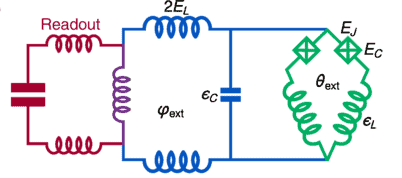
A circuit diagram for the new superconducting qubit

The new junction was realized in a superconducting loop interrupted by two Josephson junctions and two superinductors, which are large inductors with small accompanying capacitances. This arrangement, which the team dubs a kinetic interference co-tunnelling element (KITE), was inspired by a 20-year-old proposal that suggests observing the Cooper-pair-pairing effect in a superconducting loop of four Josephson junctions. “The difference is that the KITE trades two of those junctions for superinductors, which gives better resilience to offset charge noise and some other desirable properties,” says Clarke Smith, the lead author of a Physical Review X paper describing the research.

The team carefully controlled the KITE loop by using destructive interference to suppress the tunnelling of single Cooper pairs over the two Josephson junctions, allowing co-tunnelling of two Cooper pairs to dominate. This magnifies the fluctuations of the superconducting phase by more than a factor of two – a considerable increase in the spreading of the qubit states. The team then observed experimentally a 10-fold reduction in the qubit’s sensitivity to an external magnetic flux, rendering it more resilient to flux noise.

Towards protected superconducting qubits

The researchers say that their generalized Josephson junction is a vital circuit element in making superconducting qubits that are intrinsically resilient to noise. By combining such a junction with another element known as quantum phase-slip, it might become possible to implement a so-called Gottesman-Kitaev-Preskill qubit in which qubit states are delocalized over both the charge and phase spaces and thus even more robust against noise. According to Smith, one follow-up project would be to develop effective quantum phase-slip junctions and build qubits that are intrinsically protected from noise without resorting to quantum error correction. Such qubits would significantly ease the hardware complexity required to build a fault-tolerant quantum computer.

Copyright © 2026 by IOP Publishing Ltd and individual contributors