Lunar explorer: Thomas Smith on studying the Chang’e-5 Moon samples

How did you get into space science?

I’m a geochemist by training and after I did my PhD at the University of Bordeaux, France, in 2010, my supervisor inspired me to study materials from space. I went to Paris for my first postdoc position where I analysed the composition of particles returned from a comet by NASA’s Stardust mission. Then I moved to the University of Bern in Switzerland where I measured and analysed a variety of meteorites for five years until 2017.

Why did you move to China?

I really wanted to continue my research with meteorites, so I reached out to colleagues including a geochemist from China with whom I had worked in Bern. He put me in touch with He Huaiyu, who was studying meteorites at the Institute of Geology and Geophysics (IGG) while waiting for Moon rocks to be brought back by the planned Chang’e-5 mission. I thought studying new lunar samples would be exciting and He invited me to visit Beijing for a week where I was even invited to a wedding. He asked if I wanted to move to China and I joined the IGG in May 2018.

Why are meteorites interesting?

Most meteorites are from the asteroid belt between Mars and Jupiter, a region full of rock fragments that have existed since the beginning of the solar system but failed to form any planet. Bombarded by cosmic radiation, they usually contain noble gases such as helium and neon. Therefore, records of noble gases can be used as a tool to reconstruct the history of a meteorite in space before it landed on Earth. An important part of my work is to measure the concentration of these gases in meteorites to estimate their “exposure age”, which is how long meteorites have been travelling in space before landing on Earth, as well as their size before they entered the Earth’s atmosphere.

What else can we discover about meteorites?

We can also estimate a meteorite’s terrestrial age, or how long it has been here on Earth, by measuring the decay of other radioactive elements in the meteorite. I’ve done such measurements with meteorites found in farmland in Switzerland, and more recently with a meteorite that fell in Xishuangbanna and is believed to have come from a near-Earth object instead of the asteroid belt due to its remarkably shorter exposure age.

How will you use your expertise in meteorites to study lunar samples?

Samples returned from the Moon by the Apollo, Luna and now Chang’e missions are different from lunar meteorites because they don’t go through atmospheric entry and can maintain all the original information. On the Chang’e-5 samples, I proposed a comprehensive analysis of the noble gas “budget” on the Moon, which is understood to involve a mixture of processes including cosmic radiation, comet impacts, solar wind and Earth wind – ionized particles that travelled from the Earth’s atmosphere to the Moon. The results will hopefully tell us which mechanisms dominated and add to what we’ve learned from the Apollo and Luna samples.

What types of samples have you received? What was the application process like?

I received 400 mg of soils as well as two particles – 1 mg and 4.5 mg – as part of the third batch of Chang’e-5 samples distributed to labs in China. I’m very happy with this, as particle samples are rare and hard to get. The proposal for the sample was submitted in Chinese, so I wrote an English draft and asked my Chinese colleagues to translate it. Then I carried out the oral defence in English with slides in Chinese.

How do you go about studying the Moon samples?

The Chang’e-5 lunar samples are stored in a dedicated clean room in one of the IGG buildings. In that clean room, we can do basic, non-destructive characterization of the materials. The soil powder will first be sieved into different grain size bins, handpicked, before non-destructive analyses such as microscopic observations and computed tomography (CT) are performed. CT is important to determine mineral abundances and chemical composition. The handpicked grain particles will then be treated separately and taken to our own lab where we will measure the noble gas compositions of handpicked grain particles. This will be done by firing a laser beam to melt them and in the process release the noble gases.

Have you done this yet?

We are currently testing the lab facilities with standard materials and making sure it’s all ready. Noble gas measurements are challenging because they are in trace amounts, about 10–8 cm3/gram. Our lab is the only lab in China that has all the facilities required to do this kind of measurement. We plan to finish all the experiments by next year.

For Chang’e-7 we are looking at possible in situ measurements of volatiles such as water and nitrogen in the lunar regolith, using a French–Chinese instrument 

So that will keep you busy over the next year?

Yes. My priority will be the Chang’e-5 samples, including making measurements, interpreting data and publishing papers. Our team is also involved in the upcoming Chang’e-7 mission that will go to the Moon’s south pole. For that mission we are looking at possible in situ measurements of volatiles such as water and nitrogen in the lunar regolith, using a French–Chinese instrument that has already been approved.

What’s it like to work and live in Beijing?

Beijing is a huge city compared to my hometown or even Bern. I live in a community a few metro stops from IGG but the trains usually become too packed to get on after 7 a.m. so I get to the office around 6:30 a.m. I’ve got used to a few other things. For example, my Chinese colleagues like to take a short nap after lunch and now I’m used to having post-lunch naps. Otherwise, I’m impressed by the work ethic – there are always experiments going on in the labs.

How have you dealt with the pandemic?

I was in Beijing in January 2020 after spending Christmas with my family in France. My colleagues and I soon heard about the situation in Wuhan. He told me I could go back to France – and keep my job – as most foreigners at IGG chose to leave China. I was among the few who decided to stay and I worked from home, focusing on writing papers with previous data. By mid-March we were allowed to return to the institute, but it was almost empty. Those were a few stressful months.

And what has life in China been like more generally?

The Chinese government got the situation under control pretty quickly. I remember going to parks without a mask in May 2020, while France was experiencing the peak of the first wave. China has been sticking to its zero-COVID policy for over two years now. I feel quite safe here, although code-scanning for tracking (Jiankang Bao) can be tedious sometimes. You have to scan in when you enter a mall, and scan again if you eat at a restaurant inside the mall.

Do you plan to stay in China?

My current contract with IGG ends in May 2024 so I need to think about what happens after that but I will apply for a tenure position at IGG so I hope to stay in China.

MRI’s ‘forgotten’ contrast agent makes dramatic reappearance

© AuntMinnieEurope.com

After decades of dormancy, deuterium is surging in research use as a contrast agent for MRI. Researchers discussed deuterium’s potential in a talk at the International Society for Magnetic Resonance in Medicine (ISMRM) meeting.

In their presentations, Joseph Ackerman from Washington University in St. Louis and Robin de Graaf from Yale University talked about the history of deuterium and how it can be used as a safe, effective contrast agent in a method called deuterium metabolic imaging (DMI).

“It [DMI] provides unique imaging contrast that’s not available with any other technique,” de Graaf said. “It’s easy to implement and really robust. I think it has a role in the clinic … and the future looks bright.”

The ISMRM meeting was held in conjunction with the European Society for Magnetic Resonance in Medicine and Biology and the International Society for MR Radiographers and Technologists.

Heavy hydrogen

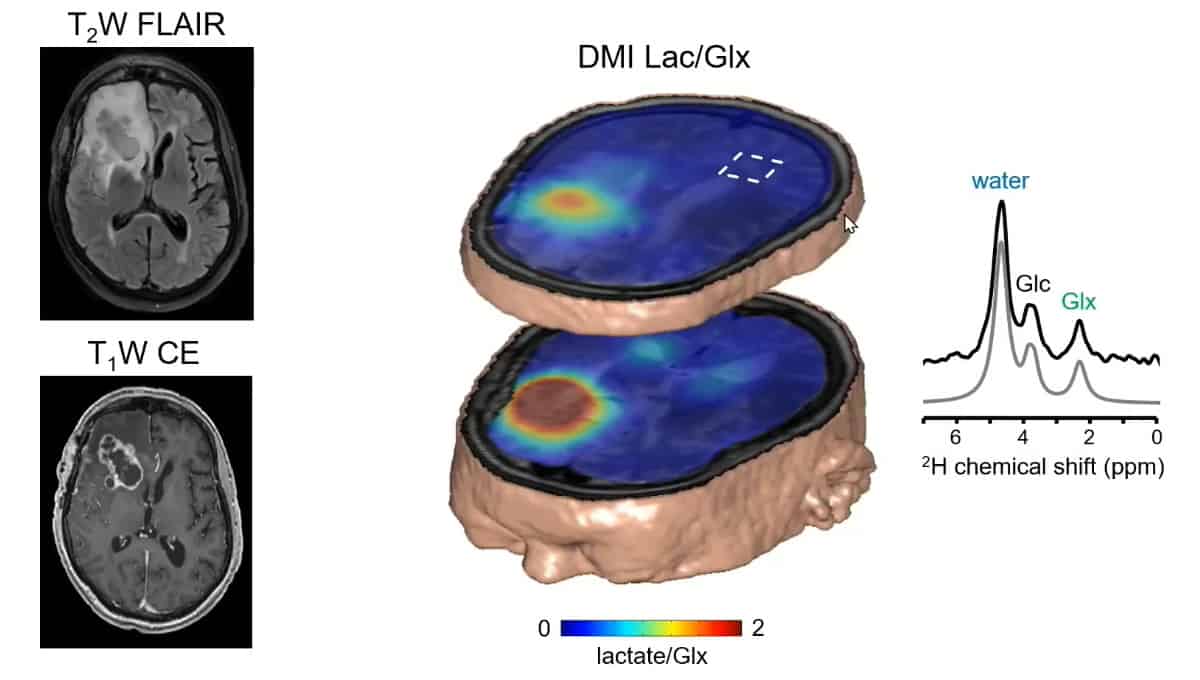
Deuterium is a stable, nontoxic hydrogen isotope, sometimes called “heavy hydrogen”. For radiology, deuterium metabolic imaging (DMI) can image active metabolism noninvasively for metabolic rate mapping or detecting unusual metabolism found in tumours or stroke cases.

Deuterium was first proposed for use as a contrast agent in 1982 and was used in vivo as a perfusion tracer for heavy water throughout the 1980s and 1990s. A 1987 research article also showed that deuterium resonances from metabolic products such as glucose and acetate can be observed in vivo. Previous research using animal models also showed that perfusion could be measured quantitatively and had high agreement with standard measures.

However, research on deuterium went mum as the world entered the 21st century. Ackermann said this was because of focus on proton MRI, which has high signal-to-noise resolution, speed and multiple contrasts.

“Most MRI scanners were and still are only proton-enabled,” he said.

Ackerman added that DMI could “greatly” benefit from ultrahigh-field scanners, which weren’t available in the early days of deuterium’s early research. However, these scanners are expensive and generally found at major MRI research centres.

Deuterium metabolic imaging

De Graaf said DMI has strong potential to become a dominant MR research tool and imaging modality. He added that its advantages include high sensitivity, powerful acquisition methods, availability and time efficiency.

He also echoed the sentiment of a 1992 quote by Robert London saying that the major advantage of using deuterium as an in vivo tracer is the “extreme technical ease” with which studies can be carried out.

“I think this is one of the reasons that deuterium metabolic imaging seems to be taking off. Almost any study will succeed,” de Graaf said.

That take off, de Graaf said, was highlighted by studies in 2014 and 2017 showing DMI’s high performance when used with high magnetic field scanners. Acquisition time for these studies took about one minute, but animal models were used.

However, in 2018, DMI’s use on humans was demonstrated with a study of two patients showing imaging could be done in vivo. The study yielded 3D images of the human brain after patients consumed deuterated water containing glucose, glutamate and lactate.

De Graaf also led studies showing DMI’s performance across multiple magnetic fields and how they affect voxel size, a component of image quality. At a field strength of 4 T, DMI gives a voxel size of 8 ml, 3 ml at 7 T, and 2 ml at 9.4 T. With more conventional 3 T measurements, though, a voxel size of 14 ml is seen, though these results have been seen in healthy study cohorts.

“DMI has the potential, even at [3 T],” de Graaf said. DMI can also be done in parallel with MRI, which could shorten image acquisition time from one hour, when the two are done back-to-back, to 30 minutes, he added.

  • This article was originally published on AuntMinnieEurope.com ©2022 by AuntMinnieEurope.com. Any copying, republication or redistribution of AuntMinnieEurope.com content is expressly prohibited without the prior written consent of AuntMinnieEurope.com.

Laser cooling of polyatomic molecules brings ultracold chemistry into the spotlight

Physicists in the US have created ultracold polyatomic molecules by trapping and cooling them directly in three dimensions. Led by John Doyle at Harvard University, the team used a standard device known as a magneto-optical trap (MOT), plus additional laser cooling techniques, to reduce the temperature of a sample of calcium hydroxide (CaOH) molecules to just 110 µK. By showing that direct laser cooling is possible, the result opens the door to experiments in molecule-based quantum simulation and studies of chemical reactions involving polyatomic molecules.

Chemical reactions are complex processes. At temperatures close to 0 K, however, their complexity is greatly reduced, as the atoms and molecules involved can only exist in their lowest-energy quantum ground states. So far, studies of ultracold chemistry have focused on simple interactions between atoms and diatomic molecules or between pairs of diatomic molecules. Introducing polyatomic molecules to this mix would make it possible to study more intricate interactions, but it also introduces additional challenges, as polyatomic molecules are not easily cooled.

Creating ultracold molecules

Ultracold molecules are generally created in one of two ways. The first is to apply laser pulses to a sample of cold atoms and thereby cause them to associate into ultracold molecules. Researchers have used this laser association method on several species of atoms, and recent experiments showed that it can also be used to create triatomic molecules out of diatomic ones. The second approach is to produce the molecules by chemical means in a beam of buffer gas cooled to cryogenic temperatures, then use lasers to cool the molecules further.

Laser cooling has already been successfully applied to diatomic molecules in 3D and triatomic molecules in 1D. Achieving 3D control over triatomic molecules is far more difficult, however, because the molecules must absorb and emit a large number of laser photons before the accumulated momentum “kicks” from each photon slow them down enough that they can be trapped. Each absorption and emission event can also induce rotational or vibrational motion, leaving the molecule in a new quantum state that is no longer resonant with the cooling laser beam. For this reason, additional laser frequencies must be employed to “repump” the molecule back to the correct state – a requirement that rapidly increases the complexity of the experiment.

Some molecules such as SrF and CaOH, however, have electronic transitions that are nearly closed, meaning that their rotational and vibrational modes are excited relatively infrequently. These molecules can therefore be laser cooled by adding only a limited number of repump lasers to close off the remaining transitions.

Cooling stages

In the present study, which is described in Nature, Doyle and colleagues began by producing CaOH molecules in a two-stage buffer gas cell cooled to around 2 K. The CaOH molecules were then slowed to approximately 10 m/s by counter-propagating laser beams before entering the MOT. There, they are simultaneously trapped and cooled as they scatter thousands of photons from six laser beams that are tuned in or out of resonance depending on the molecules’ position in a quadrupole magnetic field. As a final step, the researchers turned off the magnetic field and performed further cooling on the molecules via a so-called “optical molasses” phase. In this phase, the cooled molecules experience forces that slow their movement in 3D, like a person wading through a vat of molasses or other viscous fluid.

Doyle says that the biggest challenge in going from 1D laser cooling to 3D was tuning the source of the slowed beam to optimize the production of the molecules and their velocity. In comparison to previously reported association experiments with triatomic molecules, Doyle adds that his team’s CaOH molecular sample is in its electronic ground state and therefore amenable to single quantum state control (into any rotational or vibrational state). Another advantage, he says, is that CaOH can be detected optically with high fidelity using traditional photon cycling methods, in which thousands of photons are scattered from each molecule and detected on a camera.

A milestone in ultracold chemistry

Bo Zhao, a physicist from the University of Science and Technology of China who was not involved in this research, says that the most important part of the work is that the researchers confined their triatomic molecules in a 3D magneto-optical trap. This, he says, is a milestone because it makes it possible to study ultracold collisions and reactions involving polyatomic molecules rather than just diatomic ones, greatly enriching the field of ultracold chemistry. This is important since studying collisions and reactions involving cold polyatomic molecules is very difficult even for molecular beam experiments.

Doyle says that the team’s next goal is to load an optical tweezer array with CaOH molecules and measure the quantum gate coupling between two of them. “Triatomic molecules have a qualitatively different property, namely the existence of angular momentum-bearing vibrational bending modes,” he tells Physics World. These modes, he adds, are “a tremendous new tool for science” because they should make it possible to perform experiments with polyatomic molecules in quantum simulation and quantum computation.

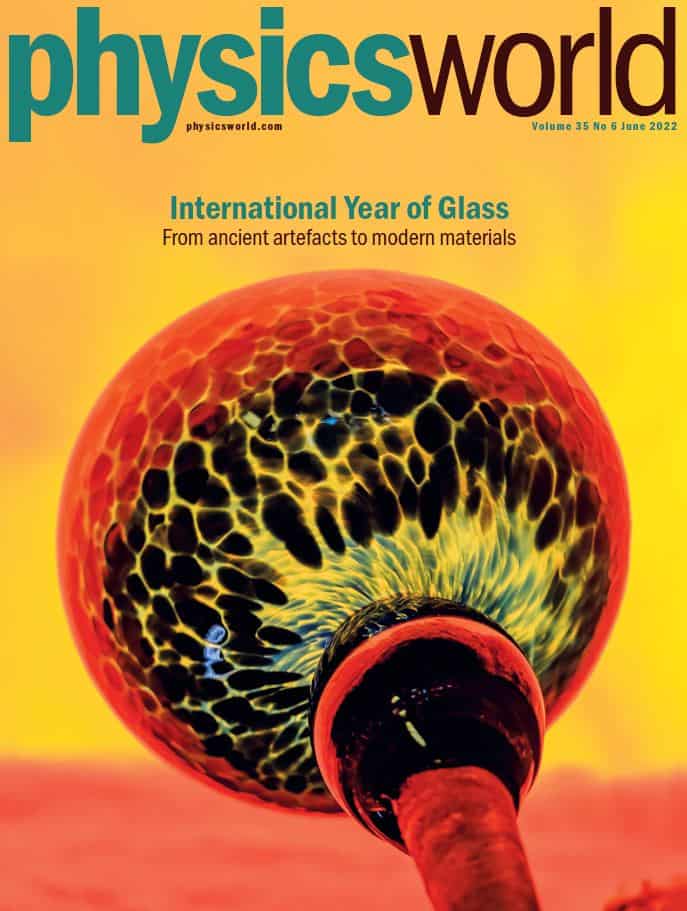
Celebrating the International Year of Glass: the June 2022 issue of Physics World

Glass blowing photo on the cover of the June 2022 isue of Physics World

From windows to cookware, from biological implants to telescope optics and from telecoms to robots in space, we’re surrounded by glass. So could this transparent material best epitomize the world we live in today?

The United Nations certainly thinks so, having declared 2022 the International Year of Glass. And to celebrate the year, the June issue of Physics World magazine, which is now out in print and digital formats, is devoted to all things glass.

James Dacey kicks things off in “A transparent tool for a fairer planet”, going behind the scenes of the celebrations to contemplate the versatility of this wonder material and how it underpins many innovations – from smartphones to vials for vaccines.

In fact, you may be reading these words on a smartphone or tablet with a screen made from Gorilla Glass – a seemingly indestructible material manufactured by US company Corning. As James McKenzie discovers in “The unsung hero of the smartphone”, the glass hinged on an unanticipated but fortuitous invention many years before.

Don’t forget either that the Internet is brought to you via hair-thin strands of glass. We talk to Christine Tremblay – one of many physicists to have spent a lifetime optimizing these fibre-optic cables, paving the way to better communication across the globe.

But despite glass being first used by humans 4500 years ago, not everything is clear. As Jon Cartwright explores in “The many secrets of glass”, physicists are still trying to work out how, for example, a cooling liquid can form a hard glass without any distinct structural changes.

And as Rachel Brazil investigates in “A glassy solution to nuclear waste”, nuclear researchers are teaming up with historians and archaeologists to study ancient glasses and how they hold up over time, hoping to understand the stability of vitrified nuclear waste.

Finally, Robert Crease explores the arty side of glass by visiting the famous Corning Museum of Glass in upstate New York, where he is “Blown away by the wonders of glass”. And even in the darkest of times, glass art can shine a light on what it means to be human, as Ukrainian stained-glass artist Oksana Kondratyeva describes in “The glass that offers hope”.

Remember that if you’re a member of the Institute of Physics, you can read the whole of Physics World magazine every month via our digital apps for iOSAndroid and Web browsers. Let us know what you think about the issue on TwitterFacebook or by e-mailing us at pwld@ioppublishing.org.

For the record, here’s a full rundown of what is in the issue, which also has a set of full-page colour images presenting various eye-catching aspects of glass.

• Milky Way black hole revealed at last – The first picture of the glowing surroundings around Sagittarius A* – the black hole at the centre of the Milky Way – could offer clues to the inner workings of supermassive black holes. Will Gater explains

• US calls for ice-giants missions – The “decadal survey” of US planetary science  prioritizes large-scale probes to Uranus and Saturn’s moon Enceladus. Peter Gwynne reports

• Lunar explorer – Thomas Smith from the Institute of Geology and Geophysics, Chinese Academy of Sciences, talks to Ling Xin about living in China and being the first foreign national to study Chang’e-5 Moon samples

• Physics is something that girls fancy – Jess Wade says that recent high-profile comments by Katharine Birbalsingh, chair of the UK government’s social mobility commission, that girls don’t like physics perpetuate false gender stereotypes and limit young people’s aspirations

• A transparent tool for a fairer planet – Glass-based technologies are shaping the modern world, from enabling green tech to delivering the Internet. James Dacey describes how  the 2022 International Year of Glass will celebrate the universality of this see-through super material

• The many secrets of glass – Glasses are much more mysterious than their crystalline counterparts, yet have a wealth of practical uses, says Jon Cartwright

• Blown away by the wonders of glass – Robert P Crease visits the Corning Museum of Glass in upstate New York, which claims to house the largest collection of glass art and artefacts in the world

• A glassy solution to nuclear waste – Ancient glass is not just of interest to historians and archaeologists, it may also hold the key to understanding the durability of vitrified nuclear waste. Rachel Brazil investigates

• The unsung hero of the smartphone – James McKenzie reflects on the wonders of Gorilla Glass, an invention that protects billions of smartphones, tablets and laptops around the world from unwanted damage

• Commanding missions, making history – Andrew Glester reviews Through the Glass Ceiling to the Stars: the Story of the First American Woman to Command a Space Mission by Eileen M Collins with Jonathan H Ward

• We are living in a material world – Susanne Klein reviews Handmade: a Scientist’s Search for Meaning Through Making by Anna Ploszajski

• Using physics to fuel fibre-optic innovation: Engineering physicist Christine Tremblay talks to Joe McEntee about the joys of a career spent making fibre-optic networks cheaper, smarter and more resilient, opening the way for telecommunications firms to send voice, data and video streams down hair-thin strands of glass at ever-increasing bit rates

• The glass that offers hope – James Dacey talks to Ukrainian stained-glass artist and architect Oksana Kondratyeva


Sarah Tesh and Tushna Commissariat are features editors of Physics World

Fixing our bodies with glass

From windows and bottles, to optical fibres and solar cells, glass is an incredibly versatile material that underpins many technologies. In the June episode of the Physics World Stories podcast, Andrew Glester explores a lesser known application of glass – bioglass in healthcare.

First you will hear from Julian Jones at Imperial College London, who explains how glass putty can help to heal broken bones by stimulating tissue growth. Jones has previously worked with the inventor of bioglass, Larry Hench, a materials engineer whose 1969 breakthrough was inspired by a chance conversation with an army major recently returned from the Vietnam War. Jones is currently developing “bouncy bioglass” that can stimulate bone growth while simultaneously sharing the load placed on bones – making it particularly useful for bad traumas where bones struggle to re-join.

Later in the episode, Glester is joined by Martyna Michalska, a nanotechnology researcher at University College London. As part of her research, Michalska designs glass surfaces patterned with nanoscale features that can be tuned to resist unwanted bacteria. In hospital settings, surfaces could be fitted with the technology as an alternative to chemicals that bacteria can evolve to resist. Michalska is working with industrial partners and they are looking at the option of retrofitting windows and other surfaces with thin films of her nanopatterned glass.

To learn more about glass-based technologies, take a look at the June issue of Physics World, a special issue inspired by the International Year of Glass (IYOG2022).

Glass: a transparent tool for a fairer planet

When the idea for a year-long celebration of glass was first proposed in 2018, at the annual meeting of the International Commission on Glass (ICG) in Yokohama, Japan, few could have foreseen the global calamity that would soon befall. Barely 18 months later the COVID-19 pandemic had struck, and those proposing the year – most with day jobs in academia and industry – must have been tempted to put the project on the backburner. It’s fortunate that they still pushed ahead, as the International Year of Glass (IYOG2022) is exactly the sort of peaceful bridge-building initiative the world needs right now.

Like previous international years devoted to physics, light, astronomy and chemistry, this year’s celebrations are being held under the auspices of the United Nations (UN). Today, the UN exists to address global problems – be it climate change, energy, education or communication. Glass – a material that has played a pivotal role in shaping the modern world – also plays a vital part in solving some of these huge challenges. Indeed, glass-based technology is a crucial part of the UN’s 2030 sustainability goals, which address these and other interconnected issues – from clean water and sanitation, to industry, innovation and sustainable cities.

IYOG2022 can inform and remind people of the versatility of glassy materials and the enormous number of applications that arise as a consequence

John Parker, University of Sheffield, UK

The fact that glass is the source of so much innovation may not be immediately obvious. “Because glass is invisible it does not always get the visibility it deserves,” says Alicia Durán, a physicist at the Spanish Research Council in Madrid who is chair of the IYOG2022. “When you ask people about glass they often think of glassware and windows, they do not realize its importance in areas such as healthcare, telecommunications and energy. Glass is the invisible tool to build a more sustainable and fairer planet.”

Born in Argentina, Durán was a key player in boosting support for the IYOG2022 while serving as ICG president between 2018 and 2021 (see “How 2022 became the International Year of Glass” box). Her love for glass is equalled by her passion for connecting people and promoting gender equality in science. One of the key challenges for IYOG2022 organizers such as Durán is to get people to take a fresh view of a material that most of us have taken for granted throughout our entire lives.

How 2022 became the International Year of Glass

The process of obtaining official United Nations backing for the IYOG2022 was led by Spain’s permanent mission to the UN headquarters in New York. To build momentum in the early stages, the International Commission on Glass teamed up with the International Council of Museums and the Community of Glass Associations. Things were progressing smoothly, with many glass-related organizations pledging support. Then COVID-19 stopped everything. “Many people were saying we have to delay the year. But we said no and continued,” says Madrid-based physicist Alicia Durán, chair of the IYOG2022. That persistence paid off when Spain’s UN resolution finally passed on 18 May 2021, with support from 18 other nations. Today IYOG2022 has more than 2100 endorsements from educational and cultural institutions in 90 countries across five continents.

IYOG2022 officially kicked off on 10 February with an opening ceremony in Switzerland at the Palace of Nations – the UN’s European headquarters. In-person capacity was limited, but freely available online video presentations on the UN’s web TV – covering glass history, technology and culture – have so far been viewed by thousands of people in more than 70 countries. Ambassadors from Turkey and Egypt spoke at the event, given that both nations have rich histories in glassmaking.

Part of the reason for choosing 2022 is that it coincides with several anniversaries. It is the centenary of the German Glass Technology Society and the discovery of Tutankhamun’s tomb in Egypt’s Valley of the Kings, a treasure trove of precious glass and metal artefacts. To mark the occasion, Egypt will host an event “From Pharaohs to High Tech Glass”, now scheduled for 2023. Elsewhere, major trade shows with an IYOG2022 focus include Glassman Latin America in Monterrey, Mexico, on 11–12 May and BrazGlass in Foz do Iguaçu, Brazil, on 25–29 September.

Welcome to the age of glass

Glass has a long and rich history in shaping human society. Early humans used naturally occurring glass for jewellery, arrowheads and other tools, with archaeological evidence suggesting that the first societies to start making glass were in the Near East roughly 3500 years ago. Those people learned to heat crushed quartz in the presence of plant ash, which acted as a “flux” to reduce the melting temperature. By the Middle Ages, strong glasses coloured by metallic oxides adorned religious buildings from Europe to the Middle East.

Partially see-through windows have been around since Roman times, but flat transparent panes of glass truly proliferated after the invention of the “float glass” technique in the 1950s, in which a sheet of molten glass is spread over a bed of molten metal. Glass is also the material of optics. Eyeglasses have corrected the vision of billions, while mirrors and photography have changed the way we see ourselves, and microscopes and telescopes have revealed new, extraordinary worlds.

At multiple tables, glass artists use fire and various instruments to manipulate the material

The IYOG2022’s central mantra is that we are living in an “age of glass” – a concept first introduced in a 2016 special issue of the Journal of Applied Glass Science. “Despite the shift to a digital world and the growing fascination with virtual reality, materials remain the building blocks of our society and culture,” argued glass scientists David Morse and Jeffrey Evenson in that issue. Indeed, they pointed out that glass innovation is accelerating – be it flexible glass that is slimmer than a bank note, bioactive glass that heals flesh wounds, or glass that can vitrify nuclear waste for long-term storage.

Perhaps glass rarely gets the limelight because it reliably underpins so many other new innovations. The obvious example is the Internet. Everyone lauds Tim Berners-Lee for inventing the World Wide Web and Steve Jobs for bringing it to our pockets, but far fewer people marvel at the fibre-optic cables that make computer networks a reality. Nanotechnology is another example. Graphene and other novel forms of carbon have grabbed headlines in recent years, but scientists and artisans have been manipulating glass at the nanoscale for centuries.

“Glass has come to be recognized as the quintessential nanotech material since it made possible the development of the Internet as we know it today, modern cell phones, photocopying and faxing machines,” says David Pye of Alfred University in the US, a former ICG president. “Add to this list a variety of medical procedures including endoscopic examinations, teeth and bone replacements, and specialized emplacement of radioactive glassy spheres to fight cancer in a highly directed, localized way.”

A recent example of glass ceding the limelight is the COVID-19 vaccine rollout from manufacturers such as Oxford–AstraZeneca and Pfizer–BioNTech. How many of us gave a moment’s thought to the glass containers that enabled the reliable and fast storage and delivery of the vaccines? Chemically resistant vials have advanced significantly in the past few years, and some can even support chemotherapy drugs with a pH up to 12. Likewise, foam-glass filters in glass drinks bottles can be used for affordable water purification to improve global sanitation.

Glass is also underappreciated in renewable energy and other green technologies. Glass surfaces are a key constituent in solar cells, and fibreglass is one of the principal materials for wind-turbine blades and building insulation. When it comes to sustainable materials in general, plastic alternatives – such as bamboo, hemp and beeswax – have become fashionable, but good old glass has been quietly carrying on as a non-toxic, infinitely recyclable material with a myriad of applications.

Re-energizing a glass culture

The IYOG2022 also hopes to bring a renewed focus on the close links between the art and science of glass making. Until recently, many university science labs had in-house glassblowing facilities for creating bespoke test tubes, beakers and other scientific glassware. But with glass production becoming increasingly commercial and mechanized, the international year is a chance to reconnect with the original essence of glassmaking. The IYOG2022 opening ceremony, for example, featured Japanese artist Kimiake Higuchi who uses pâte de verre, a technique whereby finely crushed glass is mixed with binding material and colouring agents to create a paste that is moulded and fired.

Glass art of a human torso decorated with pink flowers

John Parker – emeritus professor of glass science at the University of Sheffield, UK, and chair of the IYOG2022 regional committee – is keen to underline the importance of glass to everyday life. “One reason behind the IYOG2022 is to inform and remind people of the versatility of glassy materials – their range of compositions, the possibilities for fabrication into so many different shapes, and the enormous number of applications it has as a consequence,” he says.

IYOG2022 is also a chance for glass experts to look outwards. Later this year, seven “glass wonders” from the worlds of art and architecture will be announced. An education programme will seek to inspire students, while cultural events will try to address gender balance in science and the needs of developing countries. In June, the Museum of Contemporary Art in Alcorcón, Spain is hosting “Women in Glass, Art and Science”, an event to highlight the contributions of women from Ibero-America. In September and October, the Pretoria Art Museum in South Africa will host “Fired Up” – an exhibition about the evolution of glassmaking in Africa.

Other events of note included a workshop in January on the reconstruction and conservation of glass fragments at the archaeological museum of the American University of Beirut in Lebanon that were shattered following the huge explosion at the port of Beirut in August 2020. Another poignant event was an online talk in April by Ukrainian glass artist Oksana Kondratyeva about the history of Ukrainian stained glass, with all proceeds going to the Disasters Emergency Committee’s Ukraine Appeal. An IYOG2022 seed fund has been launched to support any individuals and organizations with ideas for events.

As with any one-off event, the challenge for those behind IYOG2022 is to create a legacy beyond the year itself. Organizers could take inspiration from the 2015 International Year of Light (IYL2015), which has fostered an annual International Day of Light on 16 May each year to celebrate the role of light in science, culture, education and sustainable development. John Dudley, the physicist who chaired IYL2015, says the year led to a lasting international outreach community, with students often telling him that they stayed in physics because of the IYL events in 2015. “I found a tremendous untapped reserve of enthusiasm and energy for public outreach within the scientific community,” he says.

The world is a more daunting place than it was four years ago when the IYOG2022 was first mooted. But with passion and a bit of luck regarding the pandemic, there is every chance that the year can inspire a new generation of glass enthusiasts across the world. When the IYOG2022’s closing ceremony takes place from 8–9 December in Tokyo, Japan, organizers will be hoping that they have evoked a renewed sense of wonder in a material that has repeatedly transformed the way we live.

Riding the wave in quantum photonics

Listen to the full interview with Gaby and Mirella

Tell us about Quantopticon and the problems you’re hoping to solve for the quantum community.

Mirella Koleva, chief executive officer: As quantum physicists, materials scientists and engineers, we are working together to build so-called “quantum 2.0” devices that exploit the properties of superposition and entanglement. But we need to understand the fundamental physical processes occurring within these devices before we can design them better, so at Quantopticon we are developing simulation software that accurately predicts light–matter interactions in the quantum realm. Our software is intended to be a platform for designing and optimizing solid-state quantum photonic components, networks and devices.

How did you get the idea to start the company?

Gaby Slavcheva, chief scientific officer: Having worked in quantum and nonlinear semiconductor optics for many years, I was aware of the methods for modelling and simulating lasers. However, lasers are classical devices in terms of the statistics of radiation they emit, and in recent years we have witnessed great progress towards the physical realization of Richard Feynman’s quantum-computing paradigm based on fragile quantum properties such as quantum coherence, superposition and entanglement. Global research efforts are now focused on developing these next-generation technologies and, ultimately, a universal quantum computer. 

The photonic quantum-computing modality has great advantages in terms of scalability and speed compared to other quantum computing architectures. But the theory and modelling of these quantum 2.0-type effects are in their infancy, and advanced computational tools are needed to predict the performance of devices based on photonic platforms. So Mirella and I decided to found Quantopticon to address this growing need and the lack of such modelling tools for quantum photonics in particular. We aim to accelerate the advent of groundbreaking quantum 2.0 devices and to facilitate their widespread adoption.

What was the catalyst that made you say, “Right, we’re going to start a company together?”

MK: I think there has been a natural build-up of the readiness of quantum technologies in the last five years. When we started the company in 2017, we were anticipating this progress and we thought, “This is the moment when we really need to jump in and get involved to ride on this wave.” So we picked the right moment.

We have very ambitious plans to develop our software suite so that we can really make a difference in the various sub-sectors of the quantum technology industry

Part of riding the wave, of course, is getting funding. How did you do that?

MK: In the very early days, we applied for funding from Innovate UK, the UK’s innovation agency, which provides grants for innovative businesses like ours. We teamed up with world-leading experimentalists in quantum optoelectronics at the University of Oxford and experts in gallium nitride at the University of Cambridge and we wrote a project proposal together. The idea was to use indium gallium nitride quantum dots embedded in gallium nitride micropillar cavities as a test bed for our software. The funding we obtained from Innovate UK also helped us to develop a graphical user interface for our software and to accelerate the underlying code.

The biggest funding hurdle for us – in fact, the most difficult hurdle we’ve had to overcome – was trying to obtain follow-on funding after the Innovate UK project finished. We had a funding gap during the COVID pandemic crisis and that was a really hard time. For nearly three years we repeatedly applied to Innovate UK and other UK government funding agencies, to the extent that we spent most of our time writing grant proposals rather than developing the company. But these grant proposals were ultimately not chosen for funding. That was a real low point. We got so discouraged that we started looking for financing from abroad.

After some sacrifices, grit and sheer determination, the European Space Agency came to our rescue by commissioning us to design components for the first European quantum encryption satellite. At around the same time, we won a significant amount of money from Duality, a start-up accelerator programme based at the University of Chicago in the US that focuses on ventures rooted in quantum technologies. We were the only non-US company to be accepted onto the programme and relocating to Chicago was part of the requirements, so I’m staying in the US until at least August 2022. Finally, in January we were awarded a further small sum from the SPIE in their Startup Challenge competition at Photonics West. It’s a bit ironic and slightly sad that we are getting so much recognition from the rest of the world, but not from our home country. We hope this will change.

How has Duality helped you?

MK: It has provided a wealth of support, mentoring and courses, as well as opportunities to showcase ourselves at high-profile events and summits. It’s been incredibly rewarding to be part of both Duality and the other start-up accelerator programme that we are in, which is based at the University of Toronto, Canada, and is called Creative Destruction Lab. The two programmes have completely different ways of supporting ventures and they complement each other well. We’re very lucky to be in both at the same time.

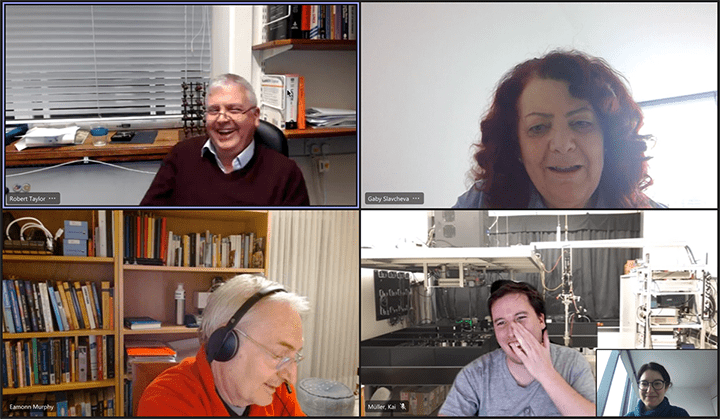
Quantopticon and European Space Agency staff meet online

What do you see as the main challenges for the field of quantum technology as a whole? 

GS: The main technical challenge is undoubtedly the physical realization of a universal quantum computer. A useful photonic quantum computer that can demonstrate quantum advantage over classical computation needs at least a million interconnected qubits to provide an overhead for quantum error correction. Such large-scale architectures require ultrafast operations and interconnects, hence the demand from industry to develop high-speed and high-fidelity quantum components such as quantum light sources. 

Developing the kind of fast, scalable architecture needed to ensure the entanglement of a large number of qubits with minimum decoherence and optimized error correction is a formidable task that is currently being attacked from many angles and on different computing platforms. We believe that by creating reliable physical models of quantum phenomena and computerized design tools for integrated quantum phonics on a chip, we can help to develop such highly performing individual components. These components then need to be entangled, and computational modelling can help here, too, similar to the way that electronic design automation tools are used nowadays as a matter of course in electronic circuit design.

MK: On the business side, the main challenge in the field is that the quantum industry is still emerging and it’s not clear how it will grow in the future and how it will develop. Even the biggest experts are not sure what is going to happen next. So it’s very challenging for a new entrepreneur like myself who doesn’t have a lot of experience in this area to plan, and especially to make long-term plans about how our company is going to develop in the next several years. We are aware that we need to be very agile to respond quickly and take hold of opportunities when they arise and be on the lookout for new things.

What are you working on now, and what do you plan to do in the next few months?

GS: Currently we’re working on the design, modelling and optimization of semiconductor quantum-dot-based single photon sources embedded in optical cavities. We are aiming to exploit cavity quantum electrodynamics and coherent phenomena to produce high-quality single-photon sources. We also hope to describe a wider range of quantum systems, such as spins in silicon, defects in 2D materials, or nitrogen-vacancy centres in nanodiamonds embedded in photonic structures. We’re interested in waveguide geometries with couplers, splitters, routers, Mach–Zehnder interferometers and different types of optical cavities such as photonic crystals, micro-resonators, and others. 

But our long-term plans are to tackle the problem of generating multi-photon entangled states, which are needed for realizing a quantum computer. We want to optimize these multi-photon entangled sources from the point of view of both geometry and quantum system properties.

There are a lot of different ways of making qubits, and you mentioned many of them just now. I guess being qubit-neutral must be one of the advantages of being a quantum software company rather than a hardware company.

GS: Yes, but we are focusing on the photonic quantum computing platform because we strongly believe that the future of quantum computing lies in integrated quantum photonics on a chip. This is the way that we can produce scalable architectures; it’s a natural way and it has worked already in electronics, so we need to take that into account. We’re much more likely to achieve large-scale integration using mature, semiconducting technologies.

MK: Our software is also applicable to neutral atoms, so companies like ColdQuanta that are building quantum computers from neutral atoms are also of interest to us, and we have very ambitious plans to develop our software suite so that we can really make a difference in the various sub-sectors of the quantum technology industry. But that’s further along our roadmap, and Gaby’s right that we are focusing on the photonic modality for the physical implementation of qubits, because it’s not well-addressed so far. We’re trying to rectify that and make sure that we can really develop those systems properly and address our customers’ needs in an appropriate manner so that they are happy with the service they get from us.

Mirella Koleva is the chief executive officer and Gaby Slavcheva is the chief scientific officer at Quantopticon.

Citations in science are biased towards a handful of nations – and the gap is growing

Scientists from a handful of "core" countries – including China, the US and the UK – tend to be cited much more than those working in "periphery" nations. That's the conclusion of an analysis by sociologists in the US, who find that this citation gap is largest in the physical sciences – and that it is growing across all scientific fields. This inequality and lack of diversity in geographical spread of science could impact the spread of knowledge and the growth of new ideas, the researchers warn.

The study has been conducted by a team led by Charles Gomez from the City University of New York, who examined around 20 million academic papers across nearly 150 fields published between 1980 and 2012. They analysed the article's text and citations to see how the number of references a paper receives deviates from what would be expected based on comparisons with other academic publications on similar topics. Known as "citational lensing", this approach reveals how citations vary between authors in different countries and over time.

The team found that researchers in a small group of highly active countries – which includes Australia, China, Germany, Japan, the UK and the US – are more likely to be cited than scientists in other nations around the world. These "over-cited" scientists end up receiving more citations than academics in other countries who work on similar topics. This citation gap is biggest in the physical and mathematical sciences, followed by engineering and computational sciences.

Some of the greatest breakthroughs have happened by accident, so it is dangerous to potentially be excluding other voices

Charles Gomez

The results show that over the 30 years examined, academics in the core nations became more and more over-cited, while researchers in periphery countries – such as Brazil, Mexico and Turkey – are increasingly cited less than would be expected. Gomez told Physics World that the citation gap is "growing quite rapidly" and adds that much of the citation bias is occurring because scientists within the core countries over-recognize each other. He describes this as being similar to a "rich get richer" effect, explaining that once you are at the top the inequality grows.

Growth of China

The other major trend uncovered in the study is the rise of China as a research superpower. In the 1980s and 1990s China was an under-cited country but by the 2000s its academics were more likely to be cited than those from other countries. This was particularly the case in physics and mathematics as well as in engineering and computational sciences, with citations in these fields from China overtaking western European countries.

In other fields, scientists in China have caught up with their contemporaries in the core countries, though over the period studied, the US still dominates across all scientific fields. "It is important that global science is equitable and inclusive," says Gomez, who adds that this is not just because science should be welcoming, but also because science works by serendipity. "Some of the greatest breakthroughs have happened by accident, so it is dangerous to potentially be excluding other voices," he explains. "It is detrimental to science's own progress."

Mirror world of dark particles could explain cosmic anomaly

A long-standing disparity between different measurements of the cosmic expansion rate might be explained, at least in part, by the existence of a "mirror world" containing copies of all known particles. That is the conclusion of three physicists in the US, who have shown how to reconcile contrasting values of the Hubble constant obtained from observations of the nearby and distant universe. Their scheme involves recalibrating the size of the universe without altering other cosmic parameters, but they caution that more research is needed to understand exactly how light and matter interacted at the dawn of time.

The Hubble constant is one of the most important parameters defining cosmic evolution. It tells us how quickly galaxies fly apart from one another – and therefore how fast the universe is expanding. For years, however, its value has been in dispute. Measurements of distances and speeds of objects in the local universe consistently yield a higher value than those that infer the expansion rate from cosmological data. Most notably the cosmological value inferred from fluctuations in radiation known as the cosmic microwave background (CMB), which was generated when electrons and protons combined to form neutral hydrogen atoms a few hundred thousand years after the Big Bang.

That disparity has now reached a statistical significance of 5σ, which means that the disagreement is unlikely to be a chance fluke. Recently, Adam Riess at the Space Telescope Science Institute in Baltimore, US, and colleagues have established a Hubble-constant value of 73.04 ± 1.04 km/s per megaparsec (Mpc) via local observations. Meanwhile, data from the CMB, courtesy of the European Space Agency's Planck satellite, instead yield 67.49 ± 0.53 km/s/Mpc.

This disagreement could potentially be explained away by the existence of systematic errors in the measurements, but no such errors have been identified. As a result, many researchers are looking for holes in cosmological theory and new physics.

Rescaling parameters

In the latest work, Francis-Yan Cyr-Racine of the University of New Mexico and Fei Ge and Lloyd Knox of the University of California, Davis propose a new strategy for revising the standard cosmological model while still retaining consistency with the numerous planks of observational evidence supporting it. Their idea is to rescale certain parameters to bring the data from the CMB in line with that from local observations of the Hubble constant, but to do so while preserving cosmological observables’ internal consistency or “symmetry”. These observables include all distance ratios, CMB temperature anisotropies and CMB polarization.

As the trio points out, a similar idea had already been put forward by Oliver Zahn and Matias Zaldarriaga back in 2003. But that work involved rescaling just one parameter – Newton's gravitational constant – and was unable to preserve symmetry in certain cases such as small angular scales. The new research relies on rescaling at all times both the cosmic expansion rate and the rate of photon scattering (crucial for the generation of the CMB), which in turn rescales the lengths and timescales needed to shift the Hubble constant. In this way, say Cyr-Racine and colleagues, symmetry breaking is zero under the ideal conditions of equilibrium recombination and zero neutrino mass while it is "mild" in real-world conditions.

One straightforward way of rescaling the universe’s expansion rate would be to increase the energy density of all particles in the cosmos, both matter particles and force carriers. Doing so, however, would also affect the CMB's mean energy density, which has been established very precisely using data from NASA's COBE satellite. Instead, the researchers propose that the universe contains what is known as a mirror world dark sector.

Dark particles

Already extensively studied by particle physicists looking to understand why gravity appears so much weaker than the other known forces, the mirror world would contain copies of all existing fundamental particles. These would interact with each other through “mirror” versions of the known force particles, albeit having different masses and coupling strengths. The existence of both "dark baryons" and "dark photons" would allow for a higher matter density while simultaneously preserving the well-measured baryon-to-photon ratio and remaining consistent with the COBE data (which would otherwise be contradicted by too many visible photons). The presence of "dark neutrinos" would in turn conserve the existing proportions of free-streaming to tightly-coupled particles.

Doing the sums, the trio concludes that this mirror world could deliver the re-scaling needed to eradicate the Hubble constant inconsistency. However, they have not so far enjoyed similar success when it comes to rescaling the rate of photon scattering. They say that this could in principle be done by altering the ratio of helium to hydrogen but have found that the revised number conflicts with the amount of helium and deuterium that is thought to have existed in the early universe.

They point to some possible solutions to this problem. Boosting the photon scattering rate, they say, could perhaps be achieved either by altering the spectrum of photons in the high-energy tail of the CMB or by stipulating that electrons' mass varies in time. The abundances of light elements, on the other hand, could conceivably be modified by introducing new kinds of interaction between the light and dark sectors.

But the researchers do not intend to try and overcome this obstacle on their own. As they put it, they have "provided clear model-building targets for the community to explore".

Radek Wojtak, a cosmologist at the University of Copenhagen in Denmark, says that the new proposal bears a “quite intriguing” resemblance to conformal transformations – the idea that the laws of physics remain fixed even when units are changed. But he argues that introducing a new transformation and a new species of particle to solve just a single anomaly is “quite a big investment”. He is also concerned about the absence of any new perspective on dark energy, which, he says, “is currently the most challenging part of the standard cosmological model”.

The research is described in Physical Review Letters.

Can machine learning deliver one-minute brain MRI scans?

© AuntMinnieEurope.com

With a few enhancements, including machine learning, a quantitative technique called MR fingerprinting could make a one-minute clinical brain MRI scan a reality, according to a talk presented at the recent International Society for Magnetic Resonance in Medicine (ISMRM) meeting in London.

Researchers from Stanford University developed an MR fingerprinting acquisition and reconstruction framework for quantitative and multicontrast imaging that requires a scanning time of approximately one minute and a reconstruction time of as little as five minutes.

With help from a machine-learning algorithm for image synthesis, the method can provide five high-quality images with common clinical contrasts at 1-mm isotropic resolution, as well as quantitative T1, T2 and proton density maps, according to presenter Sophie Schauman and colleagues.

The ISMRM meeting was held in conjunction with the European Society for Magnetic Resonance in Medicine and Biology and the International Society for MR Radiographers and Technologists.

Room for improvement

There's certainly room to speed up MRI. Traditional MRI operates on k-space data, thus enabling quick reconstruction using standard parallel imaging methods, according to Schauman.

However, "scan times are long, and thick slices are often acquired to overcome this," she said. "Most clinical MRI scans are T1- or T2-weighted. Thus, the image contrast is qualitative and not quantitative."

Modern, highly undersampled acquisition methods can reduce scan times drastically, as well as encode tissue properties in a quantitative manner. However, these faster acquisition times often come at the cost of a longer reconstruction time, rendering these techniques impractical in clinical settings, according to Schauman.

"In order to translate modern MRI into clinically useful tools, we need fast acquisition, we need faster reconstruction, and we need flexibility in acquiring both [the] contrasts that are useful for clinicians as well as quantitative imaging that can be used, for example, in longitudinal studies," she said.

MR fingerprinting

The researchers turned to MR fingerprinting to pursue this goal. MRI fingerprinting is a quantitative technique that allows simultaneous measurement of multiple tissue properties in a single data acquisition.

In their project, the Stanford researchers used a tiny golden-angle shuffling multi-axis spiral projection MR fingerprinting sequence. This method yields 1-mm isotropic resolution for the whole brain, yet this isn't currently feasible for use due to its need for more than four hours of reconstruction time.

In an effort to make MR fingerprinting an even more promising method for clinical settings, the researchers sought to incorporate a fast reconstruction method, Schauman said. They used a subspace reconstruction technique that takes approximately seven minutes to perform and involves three subspace components – instead of the usual five that are used – and three coils.

MR fingerprinting acquisition and reconstruction

The researchers then used machine learning-based synthesis to further improve scan quality and speed. To train the algorithm, they used data contributed from 14 healthy volunteers. Of the 14 subjects, 10 were used for training, two were used for validation, and two were used to test the model – a previously proposed generative adversarial network.

"To improve robustness of the pipeline in the clinic, a 30-second large field-of-view prescan was included," Schauman said. "In future work, we intend to use the prescan for B0 and B1 estimation, but for now, we use it to optimize our coil compression to suppress signal outside the field of view using a method called [region-optimized virtual (ROVir) coils] and also automatically apply shifts to the data [to] ensure that the brain was centred in the field of view."

Compared to images reconstructed using the traditional technique that takes four hours, the fast reconstruction method has more undersampling artefacts, more blurring and more noise, Schauman said.

"However, if this information can be recovered in the synthesis network, all of this doesn't matter at all," she said.

In the two test subjects, the synthesized T1-weighted magnetization-prepared rapid acquisition gradient-echo (MP-RAGE), T2-weighted, T2 fluid-attenuated inversion recovery (FLAIR) and double inversion recovery (DIR) images had highly similar slicewise structural similarity indexes compared with synthesized images produced from the reference reconstruction technique.

"Future directions of the project include continued clinical data collection, with the aim to include patients in the training data set using semisupervised methods and improved robustness of the pipeline regarding patient positioning in the field of view," Schauman said. "We also aim to further optimize the time/quality trade-off by acquiring faster B0 and B1 maps for calibration of quantitative imaging."

  • This article was originally published on AuntMinnieEurope.com ©2022 by AuntMinnieEurope.com. Any copying, republication or redistribution of AuntMinnieEurope.com content is expressly prohibited without the prior written consent of AuntMinnieEurope.com.
Copyright © 2026 by IOP Publishing Ltd and individual contributors