Concerning primordial black holes

It’s just gone 12:45 p.m. on 30 November 1954 when a lazy Alabama afternoon is suddenly arrested by a fireball noisily rending the air, burning so bright it’s visible from two neighbouring states as it streaks through the sky above Sylacauga. Breaking into fragments, one grapefruit-sized part of the rock slams messily through the roof of a farmhouse, ricochets off a large console radio and slams into the side of a young woman as she takes a nap on her couch. It was thus that the unfortunate Ann Elizabeth Fowler Hodges entered the annals of history as the first individual known with certainty to have not only been struck by a meteorite but also to have lived, if severely bruised, to tell the tale.

Perhaps it is a morbid curiosity innate to the human condition, but the prospect of death and destruction raining down from the heavens has long fascinated us. Poor Ann Hodges was met by some 200 reporters outside her house following her ordeal, while the dinosaur-killing Chicxulub asteroid makes tabloid headlines on a monthly basis, despite having impacted some 66 million years ago. It is no surprise, then, that as cosmologists delve into the prospect that our universe may be rich in tiny black holes, one scientist has turned his hand to calculating the likelihood and risks of one colliding with the Earth.

More holes than Swiss cheese

The idea that black holes might have formed soon after the Big Bang dates back to 1966, when their existence was first proposed by physicists Yakov Borisovich Zel’dovich and Igor Dmitriyevich Novikov. By the mid-1970s the concept was picked up and developed by Stephen Hawking and his colleague Bernard Carr.

Our current theory for how the universe formed does not allow for black holes being created in the early universe. Instead, stars and galaxies first formed thanks to fluctuations in the early universe. Black holes formed much later, only after the first ancient stars had died.

But if primordial black holes (PBHs) did form as early as one second after the Big Bang, during the “radiation dominated” era, things would be different. Hawking and Carr argued that PBHs could have formed as the result of the same density fluctuations in the early universe that we currently believe created the first stars and galaxies. In their model, however, regions of the universe with slightly more mass than average could have collapsed in on themselves to form these embryonic black holes. “The existence of galaxies today implies that the early universe must have been inhomogeneous,” the duo wrote in a 1974 paper (MNRAS 168 399). “Some regions might have got so compressed that they underwent gravitational collapse to produce black holes.”

Hawking and Carr predicted that PBHs could have formed with a wide range of possible sizes, from as small as 10 μg to as large as 10,000 solar masses. This is quite unlike their stellar counterparts, which tend to be between 5 and 10 solar masses and are constrained by the size of the star that collapsed to form them (see box at end of feature).

As early as 1975, other physicists began raising an intriguing possibility about these early black holes. As Hawking had first realized, black holes evaporate over time, via Hawking radiation. But what about PBHs larger than 1011 kg (about the size of a small asteroid) that had not totally evaporated? Might they provide a neat explanation for part or all of the missing dark matter needed to account for the discrepancy between the cosmos’ visible matter and the observed motion of the stars and galaxies? The idea has faded in and out of vogue over the decades and, as Carr himself noted in 2020, “As with other cold dark matter candidates, there is still no compelling evidence that primordial black holes provide the dark matter.”
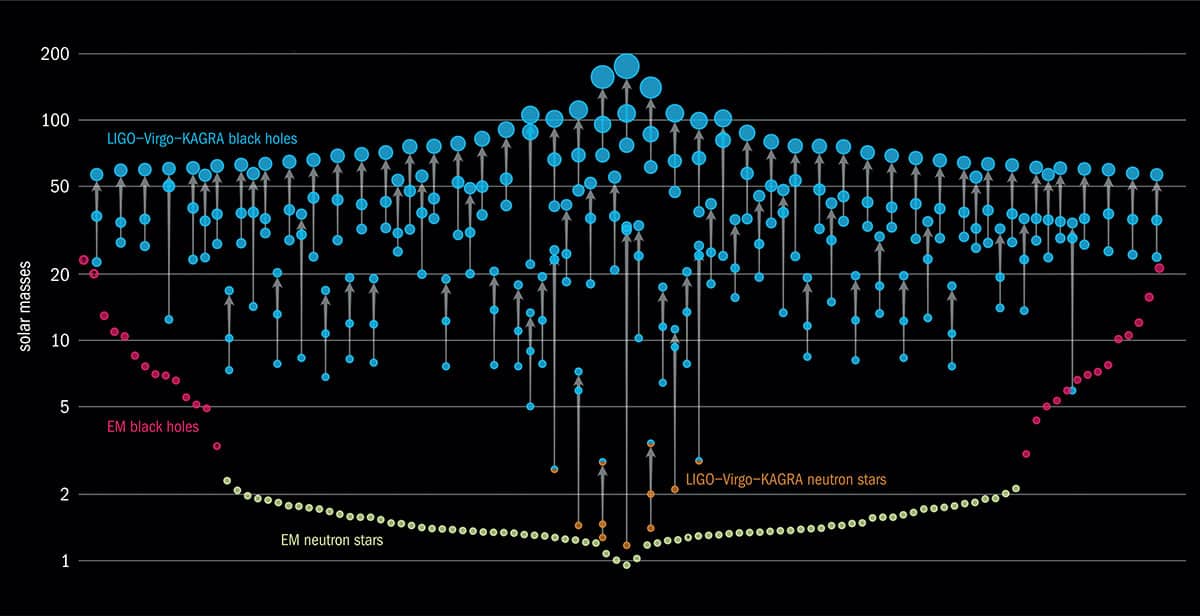
Chart showing distribution of the masses of observed black holes and neutron stars

Particular interest arose in the 1990s – following the development of the theory of cosmic inflation, which finally provided an explanation as to where the universe’s original density fluctuations might have come from. The notion also attracted more recent interest following the first detection by LIGOVirgo in 2016 of the gravitational waves caused by a binary black hole merger. The scale of the holes in question – in the range of 10–50 solar masses – was larger than had been expected, leading some to speculate the pair were primordial in origin.

Since then, LIGO has detected dozens more black-hole mergers (figure 1). And according to a Bayesian analysis published last year by cosmologist Gabriele Franciolini of the University of Geneva and his colleagues (arXiv:2105.03349), as many of as 24 of these binary black holes could well have been formed in the early universe.

A long time ago

The idea that PBHs could truly be the source of dark matter in the universe received a further boost this year, thanks to a study by Yale University researcher Priyamvada Natarajan and colleagues (ApJ 926 205). They propose that if the lion’s share of PBHs were formed with a mass around 1.4 times that of the Sun, then they could account for all dark matter in the universe. The Yale team’s model suggests that these PBHs could have provided the gravitational anchors around which the first stars and galaxies formed. Indeed, these early black holes could, according to the team, have consumed the stars and gas in their vicinity, making them the predecessors of the supermassive black holes that sit at the heart of galaxies today.

“Primordial black holes, if they do exist, could well be the seeds from which all supermassive black holes form, including the one at the centre of the Milky Way,” says Natarajan. “What I find personally super exciting about this idea is how it elegantly unifies the two really challenging problems that I work on – that of probing the nature of dark matter, and the formation and growth of black holes – and resolves them in one fell swoop.”

The existence of PBHs may also resolve another long-standing cosmological puzzle – namely that of the excess of infrared radiation that astronomers have detected coming from various dim, distant sources across the universe. According to Natarajan and her team, their model perfectly predicts that the growth of PBHs – thanks to the accretion of matter – would produce exactly the same radiation signature.
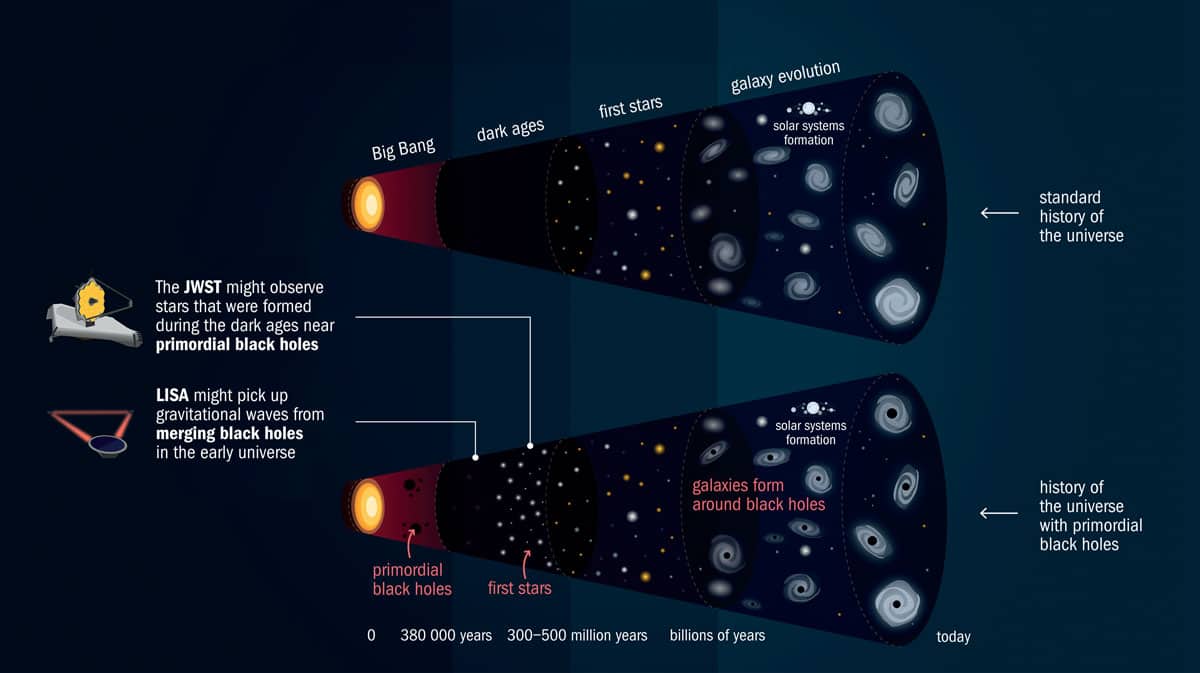
Graphic showing the expansion of the universe in the shape of two funnels. In the top version, there is a period after the Big Bang with empty space before stars form and later black holes and galaxies. In the lower version there are stars and black holes right from the start. Galaxy formation happens at the same point on the right

The good news is that the existence of PBHs in the early universe is something that we should be able to either confirm or rule out in the near future. That’s because one of the main aims of the James Webb Space Telescope (JWST) is to detect the first galaxies and stars to form in the distant universe. Like a Christmas present from NASA, the scope was launched on 25 December 2021 and is currently being commissioned, with its 18 primary mirror segments having just been aligned.

“If the first stars and galaxies already formed in the so-called ‘dark ages’, the JWST should be able to see evidence of them,” says Natarajan’s colleague Günther Hasinger, director of science at the European Space Agency (ESA). The telescope should also be easily able to detect the deep infrared sources in the distant universe, as suggested in the Yale model (figure 2).

In around a decade and a half, meanwhile, ESA expects to launch the three spacecraft that will make up the Laser Interferometer Space Antenna (LISA) gravitational wave detector. If PBHs existed and merged in the early universe, they should have produced characteristic gravitational wave signals that LISA will be able to detect.

Closer to home

So given that PBHs may well abound in the universe, just how likely is it that one might impact the Earth, and what would happen if it did?

Working on the assumption that PBHs account for all the dark matter in the Milky Way’s galactic halo and dark disc, Sohrab Rahvar from Sharif University in Iran has calculated that we might expect the Earth to collide with a small PBH – one with a mass of 1012 kg – around once every billion years (MNRAS 507 914). This, he explains, is at the lower range of PBH sizes that could have survived evaporation by Hawking radiation over the current lifetime of the universe (any black hole born soon after the Big Bang with a mass less than 1011 kg will have evaporated by now). While larger holes may still exist, the rate at which they would collide with Earth is less than one collision across the lifetime of our planet.

“In this scenario, the Earth is moving through the dark halo and can attract primordial black holes,” says Rahvar. As he notes, such a PBH would pass through the Earth, as its kinetic energy is too high to be trapped within. The PBH would be slowed down by a combination of dynamic friction from gravitational interactions with the material of the planet, as well as momentum transfer from the accretion of material onto the black hole.

From this, one can imagine two potential outcomes from a black hole colliding with Earth. One possibility is that it would pass through and carry on out the other side, transferring some of its energy in the process. Alternatively, the black hole would be slowed down so much that it spirals down to the planet’s core. At this point, Rahvar explains, the Earth would be doomed. “The accretion of matter into the black hole will heat the interior of the Earth and make the black hole grow – and finally, all the Earth will be swallowed by the black hole.”

Fortunately for our general existence, his calculations indicate that if PBHs do make up the dark-matter structure of our galaxy, they would have such a high dispersion velocity – in the order of 200 km/s – that they could only make a flying visit through our home, rather than outstaying their welcome. “We would expect there might be up to four primordial black hole collisions during the lifetime of the Earth,” Rahvar says, adding that “even in the case of collision, fortunately, the chance of trapping one inside the Earth is almost zero.”

Clash of the space killers

Even if a PBH isn’t going to destroy the Earth, we might still wonder what happens when one whizzes through our planet, and whether it might leave any traces that we could detect as a proxy for their existence. With this in mind, Rahvar calculated that the impact of a hypothetical asteroid would actually release five times more energy than that of a PBH of equal mass. And even if they were equal, black holes would be far less Armageddon-inducing than an asteroid.

The reason for this, he explains, is that asteroids release their energy in the atmosphere and surface of the Earth by an explosion, but primordial black holes produce heat by passing through the interior of the Earth. The heat released by a black hole’s transit through the planet would be “less than 1015 joules”, he adds, which is “small compared to the internal energy of the Earth”.

Nevertheless, a PBH would have a notable local impact, Rahvar notes. “The passage of a black hole could melt a cylinder along the interior of the Earth with a radius of almost 10 cm. After a short time, this tunnel would freeze,” he explains. In theory, this would produce a distinct metamorphic fingerprint of the passage in the rock record. But given that we might expect only eight of these to have been produced in the Earth’s lifetime (one on each side of the planet per collision episode), “I would expect that such a geological trace is difficult to detect,” Rahvar concedes.

All about that mass

Pixellated image of a black hole – a ring of bright orange surrounds a black circle

Stellar-mass black holes

Created by the gravitational collapse of massive stars at the end of their lives, these black holes are usually between 5 and several 10s of solar masses.

Intermediate-mass black hole (IMBH)

Weighing in at significantly more than a stellar black hole, these mid-range objects have a mass of 102–105 solar masses. Several IMBH candidate objects have been discovered in our galaxy and others nearby. Most prominently, the gravitational-wave signal GW190521 detected by LIGO on 21 May 2019 resulted from the merger of two black holes, weighing 85 and 65 solar masses, with the resulting black hole coming in at 142 solar masses.

Supermassive black hole (SMBH)

As the largest type of black hole (and indeed one of the largest structures in our universe) supermassive black holes – those with millions to billions of solar masses – most likely sit at the heart of every large galaxy. Our own Milky Way hosts the Sagittarius A* supermassive black hole in its galactic centre. The only black hole ever to have been imaged – by the Event Horizon Telescope in 2019 – is the behemoth that lies at the heart of the nearby M87 galaxy. This SMBH has a mass 6.5 billion times that of the Sun.

Infinitesimal chance, deathly outcomes

The chances of Earth, let alone a person, being hit by a black hole in our lifetime may be infinitesimal – but, as the popular meme goes, it is never zero. So, then, what would actually happen if you were struck by a primordial black hole? Researchers have suggested that it would take an atom-sized PBH approximately 0.01 ms to pass through a human body. Despite that very quick route, the PBH’s gravitational effects would cause the person to shrink by several inches in the process, causing severe damage and immediate death.

Rahvar, meanwhile, points to a different but equally fatal consequence – the burning of flesh around the axis of the PBH’s path in the body. “What will kill a human is not the direct swallowing of the human body inside the primordial black hole. The main cause of death would be burning part of the body with high-energy photons released from the matter accreting into the black hole.”

With his initial study complete, Rahvar is now investigating whether it is possible to detect PBHs in the Milky Way, using space-based telescopes, by means of the microlensing effect that they would have on foreground stars. “With space-based telescopes such as the Nancy Grace Roman Space Telescope or JWST, we may detect or rule out small-mass primordial black holes in the near future,” he explains.

Rahvar is also modelling how PBHs might interact with the Oort cloud that sits at the outskirts of the solar system – and whether the tiny but massive objects might be able to fling icy material from the cloud into the heart of the solar system. Of course, if they can, one obvious question would remain – what would happen if the icy material hits Earth? For the answer to that, you’ll have to watch this space.
Decoy nanoparticles soak up SARS-CoV-2

The ACE2 protein is the cellular door through which SARS-CoV-2, the virus that causes COVID-19, enters cells. What if we could trick SARS-CoV-2 into binding to decoy cells that render the virus inactive?

Nanoparticles may be the answer. By binding their ACE2 receptors to viral spike proteins, nanoparticles could act as cellular decoys that soak up viral particles like a sponge.

Cellular decoys soak up SARS-CoV-2

Scientists were testing the effectiveness of nanoparticle decoys for blocking viral infection before the COVID-19 pandemic even began. Such decoy nanoparticles are custom-built extracellular vesicles. Part of our body’s natural transit system that carries cargo between cells, extracellular vesicles are roughly the size of viral particles and about 10 million times smaller than human cells.

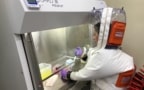
Researchers at Northwestern University had lingering questions about the nanoparticles’ effectiveness against SARS-CoV-2 and its variants, such as Delta and Omicron, that they wanted to answer before moving this potential therapy to in vivo animal studies and clinical trials. Their resulting experiments, published in the journal Small, shed light on what the nanoparticles require (or do not require, as the case may be) to be effective against SARS-CoV-2 infection.

“What we didn’t know was how to design and ultimately manufacture [nanoparticles] in a way that specifically prevents viral infection in the context of a rapidly evolving virus,” says Northwestern synthetic biology and engineering professor Joshua Leonard. “That was the focus of our study.”

Leonard and co-senior author Neha Kamat wanted to know which nanoparticles were most effective at trapping SARS-CoV-2 and its variants. To find out, they designed and manufactured various nanoparticles, each with 500 to 2000 ACE2 molecules. SARS-CoV-2 readily bound to these ACE2-bearing nanoparticles. Overall, the nanoparticles were up to 50 times more effective at inhibiting naturally occurring SARS-CoV-2 mutants when compared with soluble recombinant ACE2, which is similar to antibody drugs that are also recombinant proteins.

A new therapy, a rapidly evolving virus

Through this study, the scientific community may have a better understanding of how nanoparticle decoys perform against emerging viral strains. The nanoparticles were effective against several SARS-CoV-2 variants, including Delta and Beta. Results didn’t depend on which manufacturing method was used to create the nanoparticles. When the researchers tested the nanoparticles against a viral mutant designed to resist treatment, the decoys were up to 1500 times more effective at inhibiting infection than soluble recombinant ACE2.

Kamat and Leonard credit graduate student Taylor Gunnels with the conception and execution of these experiments. Gunnels, who is first author on the paper, leveraged the expertise of Kamat’s and Leonard’s labs to engineer the nanoparticles and test them against different SARS-CoV-2 variants.

“As we were conducting the study, different variants kept popping up around the world,” Kamat said in a Northwestern press release last month. “We kept testing our decoys against the new variants, and they just kept working.”

Now, the team is looking to understand how the decoys block infection. Also requiring study is how nanoparticles function in vivo and how the human body would remove or recycle a decoy-virion complex. Once these concepts are better understood, the researchers say that the nanoparticle therapy could be used to treat patients with severe disease or immunocompromised people who react poorly to other therapies.

“We’ve been gratified to see the excitement generated around the general strategy of using decoy particles for treating COVID-19 and maybe other viral infections,” Leonard says. “We hope that such knowledge could have a lot of utility in the early stages of a future pandemic before suitable drugs and vaccines are developed.”

CERN’s Large Hadron Collider gears up for Run 3

Officials at the CERN particle-physics lab have announced that the Large Hadron Collider (LHC) has successfully restarted following a three-year programme of maintenance and upgrades. Days after the switch-on on 22 April, engineers accelerated the two proton beams to a record energy of 6.8 TeV per beam and will now begin increasing the luminosity before first collisions later in June. 

The LHC was shut down in 2018 to begin maintenance, consolidation and upgrade work to CERN’s accelerator complex. One such upgrade involved changing the way that protons are sent into the accelerator complex. It will now no longer be fed by protons but rather by negatively charged hydrogen ions that then have their electrons stripped off, leaving just the protons.

These protons are then joined by more negatively charged hydrogen ions that undergo the same process. By repeatedly crisscrossing the negative and positive ions, it is possible to create tightly packed bunches of protons, which means more particle collisions per second. 

This third run of the LHC, called Run 3, will last until 2025 and will see the machine’s experiments collect data from collisions not only at a record energy but also in unparalleled numbers.

The ATLAS and CMS experiments are both expected to receive more collisions during this run than in the two previous physics runs combined, while LHCb will see its collision count increase by a factor of three. The heavy-ion detector ALICE, meanwhile, is expected to see a 50 times increase in the total number of recorded ion collisions. 

“The LHC has undergone an extensive consolidation programme and will now operate at an even higher energy and, thanks to major improvements in the injector complex, it will deliver significantly more data to the upgraded LHC experiments,” says Mike Lamont, CERN’s director for accelerators and technology.

Once Run 3 ends, a big upgrade for the LHC is planned in which it will be converted into the High-Luminosity LHC (HL-LHC), which is designed to increase the collider’s luminosity increase by a factor of 10 over the original machine. Costing more than SwFr1.5bn (£1.1bn), the upgrade will require major modifications of the beamline around the two largest LHC detectors – ATLAS and CMS.

This will involve upgrading about 1.2 km of the 27 km ring by including 11–12 T superconducting magnets and superconducting “crab” cavities – which reduce the angle at which the bunches cross – to increase the number of collisions at the two detectors. Commissioning of HL-LHC is due to start in 2029. 

Innovation in optical interferometry: the secret of success in nanopositioning QA

Traceable optical metrology for end-to-end quality assurance (QA) across product design, development and manufacturing provides the raison d’être for a long-running R&D collaboration between Queensgate, a UK manufacturer of high-precision nanopositioning products, and scientists at the National Physical Laboratory (NPL), the UK’s National Metrology Institute. The goal: continuous improvement and technology innovation to support Queensgate’s growing portfolio of piezo-driven nanopositioning stages, piezo actuators, capacitive sensors, control electronics and software – core building blocks for all manner of cutting-edge scientific instrumentation used in diverse fields of optics, microscopy and applied measurement.

Underpinning the partnership is Queensgate’s use of proprietary NPL innovations and know-how in optical interferometry as the basis of its rigorous test and measurement programme. A case in point is the manufacturer’s deployment of NPL’s very-low-noise conditioning electronics and fringe-counting technologies to achieve a measurement resolution of 20 pm or better when evaluating a system under test – for example, the performance of a nanopositioning stage destined for high-precision metrology applications in the data storage industry.

“At Queensgate, our product QA is all about having that traceability and cross-check versus the NPL’s ‘gold-standard’ primary measurement systems,” explains Sam Frost, production manager and site lead at the company’s manufacturing facility in Paignton, UK. “The task is to ensure that the overall performance, scale factors and linearization coefficients of our nanopositioning stages come out exactly the same whether they’re tested at NPL or here at Queensgate, while also ensuring our in-house measurement processes align with NPL guidance over the long term.”

A win-win partnership

It’s also significant that ideas and innovations flow both ways between the partners, a point emphasized by Andrew Yacoot, principal research scientist leading NPL’s dimensional nanometrology programme and chair of the Working Group for Dimensional Nanometrology of the Consultative Committee for Length (one of ten Consultative Committees that oversee the SI units, the international standards of measurement). “A core part of NPL’s remit is to offer proactive support to UK industry, so it’s great to see this collaboration creating lasting value and commercial differentiation for Queensgate,” he explains.

The research facilities at NPL mean that Yacoot and his team are able to look in detail at the metrology aspects of Queensgate’s next-generation positioning stages and give feedback that informs the product roadmap – for example, with regard to the control, automation and software set-up. “Equally,” he adds, “we often get access to prototype stages customized to our own specific experimental requirements – a result of the strong collaboration we have with the Queensgate development team.”

Andrew Yacoot

More broadly, Yacoot and colleagues have supported Queensgate with the implementation of a robust and traceable measurement infrastructure for optical test and calibration of the manufacturer’s nanopositioning product portfolio. As the National Metrology Institute, NPL maintains a state-of-the art capability in optical interferometry, with Queensgate seeing sustained upsides from the laboratory’s specialist domain knowledge and collective capability in this area. “We’re able to advise on the optimum interferometer configuration for product testing, appropriate measurement settings and the measurement strategy more generally,” explains Yacoot.

Meanwhile, the advantage of using NPL’s optical interferometer technologies is the traceability those solutions provide back to the SI standard of length – the metre – via the wavelength of light from calibrated, stabilized lasers used by Queensgate’s interferometers. “From time to time,” adds Yacoot, “we will also cross-check Queensgate’s calibrations of their specialist nanopositioning stages here on our own interferometer systems – effectively validating the test and measurement procedures applied by Queensgate.”

That open-access relationship around optical testing has seeded several other joint R&D projects, in many cases co-funded by the UK government’s Department for Business, Energy and Industrial Strategy. In a proof-of-concept study completed last year, funded by the Measurement for Recovery (M4R) Programme, an amalgam of enabling technologies from Queensgate – including high-speed, piezo-driven nanopositioning stages and proprietary closed-loop velocity-control algorithms – were road-tested by NPL researchers in a series of experiments to evaluate their potential suitability for high-speed scanning applications in atomic force microscopy (AFM). The results showed reliable capture of large-area, high-quality AFM images with nanometre spatial resolution – and all achieved in a matter of minutes, rather than hours or days, at raster scan speeds ranging from 0.5 mm/s up to 4 mm/s.

It’s all about the details

Queensgate, for its part, is pursuing a granular approach to the environmental controls needed to support its in-house interferometric metrology programme. For starters, the manufacturing facility is purpose-built for high-end assembly of photonic and electronic instrumentation (with ambient temperature control to within ±0.5 °C). “Nanometrology is nothing without control,” argues Frost.

Sam Frost

“As such, all of our interferometric test systems are enclosed to counter any pressure differentials caused by air currents or even the voices of our technicians. The attention to detail is a must-have given the specified levels of precision we’re seeking in the picometre regime.”

In terms of deployment, those interferometer test systems either sit on an optical isolation table or hang suspended via specially designed rubber cords – both configurations serving to dampen any vibrations coming through the building floor or from doors opening and closing. Equally important is the production quality of the set-up for testing Queensgate’s stages, with the default materials of choice being high-grade stainless steels (rather than aluminium or plastic) and baseplates made from Super Invar (an alloy with a low thermal-expansion coefficient).

“Our QA programme is robust and comprehensive and has benefited from NPL’s input into our optical metrology and some intercomparison measurements,” adds Frost. Although there are variations on the theme for one-off products, the standard figures of merit covered in a customer test report include range, linearity error, hysteresis, noise, step response as well as cross-talk and rotational errors – all itemized to show target specifications against real-world measurements. “It’s worth noting there’s a lot of automation underpinning these test routines,” concludes Frost, “with custom algorithms ensuring a streamlined and repeatable process for the verification of our nanopositioning stages.”

The dilemma of corrosion and better corrosion management

Want to learn more on this subject?

In this webinar, Dr Reza Javaherdashti will discuss the relationship between the efficient management of corrosion protection and clean-energy strategies. After a quick introduction to the basics of corrosion and cataloguing corrosion countermeasures, he will outline the dilemma of corrosion-management strategies, as well as the challenges of clean-energy susceptibility requirements (as related to environmental friendliness).

A significant focus of research and application related to clean energies is to reduce the negative effects of fossil fuels that are contaminating our planet (via their by- products) and rapidly consuming our natural resources. Any factor that can assist “clean-energy-based strategies” has to be seriously considered. One of the most interesting of these factors is corrosion management.

Embodied Energy (EmE) is defined as the energy consumed by all the processes associated with the production of a structure from the acquisition of natural resources to product delivery. The importance of EmE is its relationship with the release of one of the most important greenhouse gases, i.e., carbon dioxide (CO2). Every Giga Joule (Gj) of energy produced results in the release of approximately 0.098 tonnes of CO2 in the atmosphere; this relationship makes EmE a useful measure to assess the environmental impact of materials and processes.

When a metallic part is made, it accumulates energies from the energy consumed in mining it to the energy that is consumed to fabricate and shape it. Various shapes of metallic components and different ways by which they have been fabricated are all subject to corrosion. When a metal corrodes, it is doing a natural process, due to its thermodynamic background, and it also produces a lower EmE figure.

A lower EmE, in terms of being environmentally friendly, is certainly a positive point. However, if corrosion is so environmentally friendly, should we not let metals corrode? Should we not try to prevent any measures that would make an obstacle towards having a smaller EmE through corrosion?

Want to learn more on this subject?

Dr Reza Javaherdashti (CEO at MICCOR) holds a double degree in materials science and metallurgical engineering. He has more than 20 years of industrial and academic experience. Reza is an approved instructor of ASME and SPE, and has spent more than 5000 hours training industries around the globe on topics in corrosion and microbial corrosion. He has also devised systems of corrosion knowledge management and has taught it globally across industries. He has several published papers in internationally recognized journals, and has published books with publishers like Elsevier, Springer, CRC Press/Taylor & Francis, and Wiley. His LinkedIn profile can be found at: https://www.linkedin.com/in/dr-reza-javaherdashti-9a2a2415/.


The International Day of Light: celebrating the power of glass

I hope you don’t need me to remind you, but Monday 16 May 2022 is the fifth International Day of Light. It marks the anniversary of the first successful operation of the laser on 16 May 1960 by physicist and engineer Theodore Maiman at Hughes Research Laboratories in California. Of all the many “international days” in the calendar, this to me is the most important, given how vital the laser has been for digital communications, medicine, spectroscopy and countless other fields besides.

What’s particularly interesting this time round, however, is that we’re bang in the middle of the 2022 International Year of Glass. Now I know glass is a fascinating material in many different ways, but its most interesting applications stem from the fact that light can pass so easily through it. In particular, the refractive index of glass can be controlled by tweaking the nature and number of additives to enable even more amazing things to happen. Without glass-based fibre optics, the world would be a truly poorer place.

Physics World has a special issue on glass planned for next month, but let me get you in the mood by reflecting on just how far glass-based fibre optics have come since those early days of the laser. That progress was wonderfully illustrated two years ago when researchers from Japan, the US and France sent one petabit (a million gigabits) of data per second down a single-core, multi-mode optical-fibre cable over a distance of 23 km. That smashed the previous record of 0.4 petabits per second, which is remarkable when you think that the first commercial systems in the late 1970s could do barely 6 megabits per second.

Back in time

It’s all a far cry from Maiman’s first laser, which consisted of a cylinder of synthetic ruby 1 cm in diameter and 1.5 cm long, the ends of which were silver-coated to create a partially reflective “Fabry–Perot cavity”. When Maiman pumped the ruby rod with light from photographic flashlamps, he produced a deep-red 694 mm laser pulse. Once those basic principles were demonstrated and understood, scientists could make lasers from a range of materials, including semiconductors.

As for the optical fibre, it was first produced in 1954 by Dutch scientist Abraham van Heel when he covered a bare glass fibre with a transparent coating. This cladding had a lower refractive index than the fibre, preventing light from leaking out. Those primitive fibres had large cores and were used to make “fibrescopes” that could see round corners and look inside the body. However, they lost signal quickly, with attenuations of more than 1000 decibels per metre (db/m) – roughly seven orders of magnitude worse than today’s best fibres.

It was at Standard Telecommunication Laboratories in Harlow, UK, that Charles Kao and co-workers famously showed that the high loss of those early fibre-optic cables was due to impurities in the glass, rather than from any underlying problem of light scattering in the glass itself. In fact, Kao and George Hockham concluded in 1965 that the lower limit for light attenuation in glass was under 20 dB/km. Being less than the value for copper wire, it meant that optical communications was possible – if such a low-loss glass could ever be made.

When Kao first suggested that optical fibre could replace copper for long-distance communications, his ideas were ridiculed. Undeterred, Kao and colleagues pressed ahead and by 1969 he had measured the intrinsic loss of “bulk-fused” silica to be 4 dB/km. It was the first evidence of ultra-transparent glass, opening the door to the modern fibre-optics industry as we know it. Kao, who died in 2018, went on to win the 2009 Nobel Prize for Physics for his achievements.

Meanwhile, laser technology was progressing apace too. The first semiconductor laser chip was developed in 1970 and the first narrow-wavelength distributed feedback (DFB) laser was created two years later. By the mid 1970s, optical-communications systems were able to exploit the low losses of fibres at infrared wavelengths, which were below 0.47 dB/km for light at 1250 nm. An even lower-loss window was discovered in optical fibres at 1550 nm and by 1978 the Japanese firm NTT had created a fibre with a loss of just 0.2 dB/km.

Across the ocean

By 1988 the first transatlantic fibre-optic cable (TAT-8) had been laid, carrying data at a rate of 280 Mbit/s (equivalent to 40,000 telephone circuits) between the US, UK and France (the 8 in its name indicating it was the eighth cable to cross the Atlantic). Another key breakthrough was the development of erbium-doped fibre amplifiers (EDFAs) by teams led by David Payne at the University of Southampton and Emmanuel Desurvire at Bell Labs in 1986 and 1987. Operating at 1550 nm, they promised to make long-distance fibre systems cheaper by reducing – or eliminating entirely – the need for optical-electrical-optical repeaters.

The amount of data that can be sent down fibre was boosted further with the development of wavelength division multiplexing (WDM), which lets fibres simultaneously carry laser light of different colours. By 1996 the TAT-12 transatlantic cable had been installed, which used EDFAs instead of repeaters to provide a transmission speed of 5 GB/s. Two years later, the TAT-13 submarine fibre cables had been upgraded with WDM with three wavelengths, boosting their capacity to 15 Gb/s per cable. The concept of “fibre to the home” swiftly followed and by 2017 Corning had shipped over 1 billion kilometres of optical fibre – enough to go round the Earth 25,000 times.

Optical fibre is now the backbone of telecommunications networks and there seems to be no shortage of demand, with the total amount of data they carry projected to grow to more than 180 zettabytes (180 × 1021 bytes) by 2025. According to a recent Verified Market Research report, the global optical communications business was estimated to be worth $18.7bn in 2020 and could reach almost $38bn by 2028, growing at a compound annual growth rate of more than 5.5% from 2021 to 2028.

Isn’t “glass” fantastic!

Fusion community mourns death of ITER boss Bernard Bigot aged 72

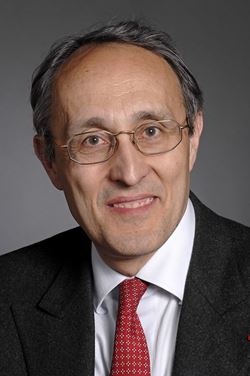
The director general of the ITER Organisation, Bernard Bigot, has died at the age of 72 due to an unspecified illness. Bigot took over as head of ITER in March 2015 and was almost halfway through his second term as ITER boss, which would have ended in 2025. Bigot’s deputy – Eisuke Tada – has taken over leadership of the French-based fusion project while the ITER Council searches for a long-term successor to Bigot.

Born in Blois, France, on 24 January 1950, Bigot studied physical science at the École normale supérieure in Paris and later gained a PhD in chemistry. Following positions at École normale supérieure de Lyon, he became director of the institution in 2000 and then high commissioner for atomic energy in 2003. He took over as chair of France’s Alternative Energies and Atomic Energy Commission in 2009 before succeeding the Japanese physicist Osamu Motojima as ITER boss in 2015.

ITER is an experimental fusion reactor that is currently being built in Cadarache, France. A collaboration between China, Europe, India, Japan, Korea, Russia and the US, the project aims to generate about 500 MW of fusion power over 300 seconds using a plasma heating of 50 MW.

Bernard Bigot

When Bigot joined ITER, the project was in serious difficulty with cost overruns and delays. A management assessment report in 2014 had slammed the ITER Organization for inflexible and top-heavy management, slow decision-making and the failure to foster an effective management culture. Some members, notably the US, expressed scepticism about the project’s viability and whether they should continue to participate.

When Bigot took charge, he sought to change the culture and helped turn the project around, reforming the management system and offering a more realistic budget and schedule. The ITER project, which will cost tens of billions of euros, is now some 75% complete with the facility on track for its “first plasma” in early 2026. However, it will not be until 2035 that the first deuterium-tritium plasma, or “burning fuel”, is performed, which is when ITER can meet its aim of generating more energy than is put into the fusion reaction.

Greatly missed

In comments posted on a memorial website set up by ITER, Tada expressed his “deep sorrow” at the news of Bigot’s death on 14 May. “I am determined to carry on your ambitions and work together with everyone to proceed with the ITER Project,” he adds. “Thank you for your hard work.”

It is deeply sad that [Bigot] won’t be there to see ITER run

Steve Cowley

Steve Cowley, director of the Princeton Plasma Physics Laboratory in the US, told Physics World that Bigot was instrumental in turning ITER’s fortunes around. “Bernard’s extraordinary combination of vision, determination and organizational skill has propelled ITER almost to the point of first operation,” says Cowley. “It is deeply sad that he won’t be there to see ITER run – it is the most important experiment of the first half of the 21st century.”

Condolences have also come in from the leaders of other international projects. “Bigot was an inspiration to all of us working in the field of fusion energy,” says Ian Chapman, chief executive of the UK Atomic Energy Authority, which operates the Culham Centre for Fusion Energy in Oxfordshire, in a statement.

“He transformed the ITER project through his leadership, strength of character and incredible personal commitment. Leading one of the most aspirational but complex endeavours ever undertaken by humanity requires courage, resilience and humility, all of which Bernard displayed unfailingly.”

Bigot has been an outstanding political leader and reliable friend far beyond the ITER project. We will miss him greatly

Sibylle Günter

Francesco Sette, director general of the European Synchrotron Radiation Facility in Grenoble, France, says Bigot was an “inspirational scientist and leader”. “[He was] fully devoted and committed to the advancement of science for the well-being of humanity,” adds Sette, who is also chair of EIROforum – an umbrella organization for eight of Europe’s largest research organizations. “Bigot has been a model for all of us in the scientific community, and for me personally”.

Sibylle Günter, scientific director of the Max Planck Institute for Plasma Physics in Garching, Germany, says that without Bigot’s leadership, the ITER project would not have progressed as far as it has. “We and the whole fusion community owe so much to [Bigot], especially, of course, [his] outstanding leadership of the ITER project. Bigot has been an outstanding political leader and reliable friend far beyond the ITER project. We will miss him greatly.”

How Earth might appear to alien astronomers

If a nearby exoplanet was populated by mountains, oceans and lifeforms, all we would see using today’s telescopes is a few blurry pixels. Therefore, in the search for life beyond Earth, the only option for now is to speculate about planetary features from the bare minimum of information.

This video explains how astronomers are attempting to view the Earth through the eyes of extraterrestrial astronomers – to get baseline data to assist the search for habitable planets. It also introduces the radical idea of using the Sun’s gravity to act as a giant lens to focus light on a telescope that would be sent to the outer reaches of the solar system.

Find out more about the quest to view the Earth through alien eyes in this feature article from the May issue of Physics World.

Human versus machine, in space

When NASA’s Curiosity rover landed on Mars in 2012 and began to explore a crater, it had to be constantly guided from Earth, so it wouldn’t be thwarted by large rocks, sand dunes and deep trenches. By contrast, the US agency’s Perseverance rover, which landed on the red planet in 2021, can steer clear of such obstacles with ease, thanks to the use of artificial intelligence. It has six hazard-detecting cameras, or “HazCams”, of which four are in the front and two in the rear. At intervals, the rover stops to acquire stereo images that let it analyse different pathways and choose the best one. Although Perseverance cannot identify potentially interesting sites and geological formations with AI, such an increasingly intelligent ability is expected to develop before the launch of a not-so-distant future Mars rover.

“No-one doubts that our ever-improving machines can perform in space more efficiently, less expensively and more safely than humans can,” write astronomers Donald Goldsmith and Martin Rees at the outset of their thought-provoking vision of the coming decades in space exploration. Their new book – The End of Astronauts: Why Robots Are the Future of Exploration – controversially advocates the replacement of astronauts with robots. “But can they equal human explorers’ abilities?” they ask. “And does this question miss a more important issue: how can we maintain public interest and inspiration, or fulfil our destiny as humans, without visiting our celestial neighbours in person?”

Human space exploration was of course key to the Apollo programme and its heroic Moon landings of 1969–1972, which inspired the authors at that time, as they make clear. It further captured the imagination of the public through the 1966 television series Star Trek and the 1968 movie 2001: A Space Odyssey, neither of which they cite, apart from an uncredited reference to astronauts who (as in Star Trek) “boldly go where no man has gone before” and robots that “can go boldly where humans rightly fear to tread”. Such exploration seemed to belong in the human tradition of daring terrestrial explorers. But today, the public fascination with space exploration is so low that, according to recent polls, only 10–20% of Americans are “highly interested” in it and some 63% give “top priority” to satellite monitoring of Earth and its threatened environment.

Jeffrey Hoffmann, a current scientist-astronaut interviewed by the authors in 2020, encapsulates the astronaut versus robot issue. Hoffmann has been on five space missions, in which he helped to repair NASA’s Hubble Space Telescope. “I want to know what it’s like being on Mars!” Hoffmann says without hesitation. Yet he summarizes the issue with the comment: “If it can be done robotically, do it.”

Chris McKay, an astrobiologist who was involved in planning NASA missions to Mars, tentatively agrees. Although not an astronomer himself, he warned in an interview with the authors in 2021 that a robot that can emulate a capable human field-assistant would require current robotic capabilities to be doubled at least five times, and that each doubling currently requires more than a decade. However, he believes that “innovations in the space biz may greatly shorten that”. As for a robotic equivalent of a field scientist, this is not on the horizon, says McKay. Therefore, according to the authors, the debate depends on “how much we are willing to pay for the advantages that humans can provide”.

The total cost of the five Hubble repair missions would have financed the building and launching of seven replacement telescopes

Consider the financing of the Hubble telescope, the “most celebrated human–robot hybrid project”. Following Hubble’s launch in 1990, it required five astronaut missions – in 1994, 1997, 1999, 2002 and 2009 – to correct its mirror’s defective shape and add corrective lenses, better detectors and improved cameras. Yet, according to the director of the institute managing the Hubble, the total cost of these five repair missions would have financed the building and launching of seven replacement telescopes. In other words, to have replaced the telescope – the robotic solution, so to speak – would have been much more economical than its repair, not to mention healthier for astronauts. As astronaut Mike Massimino, who joined two Hubble missions, is quoted saying, “What you feel is that the room is spinning and flipping around you while you’re staying perfectly still, which causes the worst vomit-inducing feeling of vertigo you’ve ever experienced. After a couple of days you get used to it.”

Space finance occupies a later chapter, with sections on NASA, China, the European Space Agency, Russia, India and Japan. But the book’s basic structure is organized around exploration’s increasing distance from the Earth. There is a chapter on near-Earth orbit (also known as low-Earth orbit) – which still dominates our activities in space following the launch of the Sputnik satellite by the Soviet Union in 1957 and the International Space Station in 1998. It is followed by four chapters on the exploration of the Moon, Mars, the asteroid belt (including mining) and the conceivable (if seemingly crazy) colonization of space by freely orbiting permanent habitats.

A final chapter addresses the formidable, unresolved difficulties of governing space to control potential conflict between international organizations, national governments, corporations, well-funded groups and wealthy individuals – such as Jeff Bezos, founder of Blue Origin, and Elon Musk, founder of SpaceX. “For now, the sweeping expanse of space provides a domain of potentially eternal discord: a lawyer’s paradise – except that no courts exist to exert legal oversight.”

So what are the likely space developments in the lifetimes of current inhabitants of the Earth, according to Goldsmith and Rees? In their epilogue, they decline to predict what might happen beyond the 2040s. Before then, however, they hazard three “conservative” predictions (while firmly dismissing the colonization of Mars envisioned by Musk, who wishes to die there). First, Mars will continue to dominate space exploration, even if China establishes bases with astronauts on the Moon, as seems likely. Second, whether or not astronauts land on Mars, the search for Martian life will escalate – dramatically if we discover living Martian microbes. Third, the outer solar system will attract more attention, because of the search for Martian life. The first two predictions depend on both astronauts and robots – in wisely unpredicted proportions – while the third involves robots guided from Earth.

  • 2022 Harvard University Press 192pp £20hb

A window into the brain – anywhere, anytime

Have you ever wondered why neuroscience-related small-animal experiments have designs that constrain the subjects being studied? Or how information obtained from these studies might have been different if the subjects could behave freely and were not constrained?

You are not alone. Researchers at the Kavli Institute for Systems Neuroscience at the Norwegian University of Science and Technology have been working to remove such constraints. The team, led by neuroscientist and Nobel Laureate Edvard Moser, recently developed an open-source miniaturized two-photon microscope – Mini2P – for multiplane imaging of over 1000 neurons at a time in freely moving mice. The researchers published the details of their novel design in Cell.

“Our dream was to invent a window into the brain, so we could see what happens inside when we’re thinking, planning, feeling and remembering,” says co-author May-Britt Moser, a long-term collaborator who shared the 2014 Nobel Prize in Physiology or Medicine with Edvard Moser and John O’Keefe.

The basic working principles of Mini2P are not too different from existing two-photon light microscopes, where two photons of laser light are used to excite neurons at high resolution. However, the new design comes with two fundamental improvements.

First author Weijian Zong and his colleagues wanted to build a mini microscope that is light enough not to interfere with the animal’s natural behaviour. The previous miniscope that Zong helped to develop was heavier (roughly 5 g) and also had stiff optical fibre bundles that impeded the rodents’ natural behaviour.

Experimenting with different head-mounted microscopes that varied in both weight and the thickness of connection cables, the researchers concluded that a head-mounted miniscope with a weight of 3 g or less and a 0.7 mm cable assembly might be sufficient to help maintain naturalistic behaviour of free-foraging mice during two-photon imaging sessions.

Another innovative feature of Mini2P is its miniaturized electrically tunable lens. The researchers used a static voltage to adjust the curvature of the imaging lens. Changing the lens’s curvature triggers Mini2P to shift the focal imaging plane across multiple cortical layers in the axial direction (from the surface to deeper cell layers), thus enabling 3D imaging of labelled neurons, which fluoresce when excited with laser light.

Since Mini2P has the capability to collect significant amounts of neural data in a single recording session, and also helps reduce the number of animals used in research, the researchers decided to share Mini2P as open source with neuroscientists and labs across the world. Mini2P’s blueprint, its shopping list and instructional movies can be accessed through GitHub.

Edvard Moser is hopeful that Mini2P could also play an enlightening role in understanding brain diseases. “We know that Alzheimer’s disease cause deficits in the ability to navigate, and in memory. These are brain functions that arise from joint collaboration of thousands of brain cells. The Mini2P offers a way to monitor changes in the dynamics between thousands of cells in freely moving mice, using mouse strains that are model organisms for studying Alzheimer’s disease,” he says.

Copyright © 2026 by IOP Publishing Ltd and individual contributors