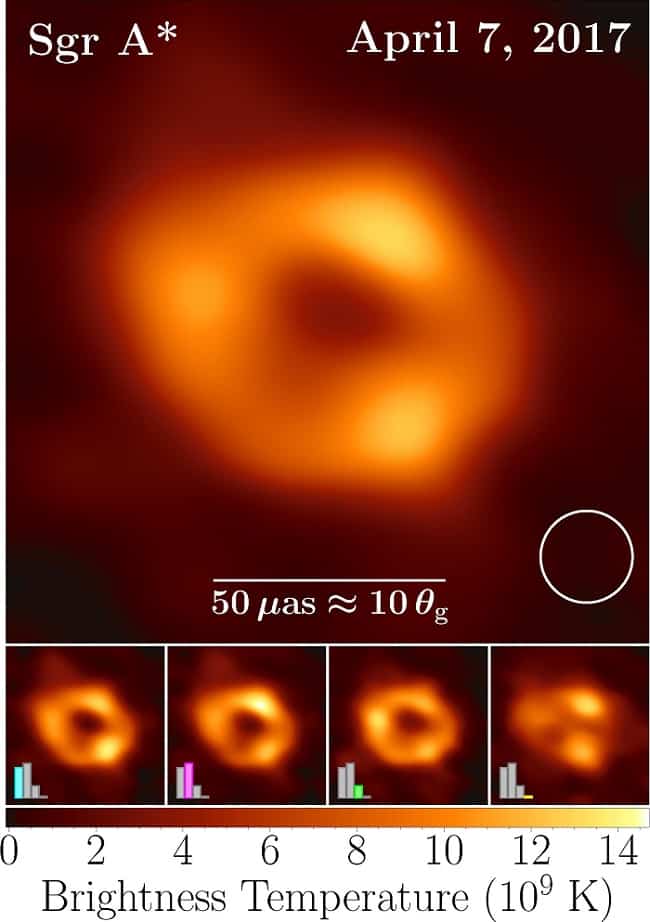
Astronomers working on the Event Horizon Telescope (EHT) have captured the first image of the “shadow” – and glowing surroundings – of the supermassive black hole at the centre of the Milky Way. The achievement is another huge success for the EHT project, which in 2019 released a similar image of the black hole in the core of the galaxy Messier-87.
The hefty black hole within the heart of our galaxy – known as Sagittarius A* or Sgr A* – lies some 27,000 light-years away from Earth and had been scrutinized, albeit indirectly, by astronomers for decades. Based on the motions of stars zipping around a seemingly empty spot at the Milky Way’s centre, they had deduced that a body roughly four million times the mass of our Sun must reside there.
Other studies, including recent observations with the Hubble Space Telescope, had also detected features in the centre of our galaxy and beyond that were assumed to be the hallmarks of an immense, hidden, black hole.
But to take the image of Sgr A*, astronomers have had to combine the capabilities of several radio telescopes – including telescopes belonging to the European Southern Observatory in Chile, as well as observatories in Europe, the US and even at the South Pole.
This endeavour has required an unprecedented level of international collaboration and co-ordination but I’m delighted we’ve finally obtained an image of our own supermassive black hole
Ziri Younsi
They did this using the technique of “very long baseline interferometry”, or VLBI, which effectively creates a single, vast array. It has allowed astronomers to obtain an extraordinary image resolution of several tens of micro-arcseconds, which has been likened to the ability to spot an orange on the surface of the Moon. This resolution means that researchers can image and pick out the features of a supermassive black hole such as Sgr A*.
“This endeavour has required an unprecedented level of international collaboration and co-ordination,” says Ziri Younsi an astrophysicist at University College London, who is one of more than 350 people involved in the EHT collaboration. “It has been exciting and on occasion nerve-wracking, but I’m delighted that we’ve reached this milestone and finally obtained an image of our own supermassive black hole.”
Out of the shadows
The resulting first EHT image of Sgr A* confirms that this gravitational leviathan, inferred for so long by scientists, is indeed the object predicted by astrophysical theories. The picture shows a glowing ring around a dark, inner area dubbed the “shadow” of the black hole. “[It] denotes the boundary where light can no longer orbit the black hole multiple times without being eventually captured,” says Younsi.
EHT image of Sgr A*. (Courtesy: Akiyama et al. and ApJL)
Inside the shadow, albeit invisible in the new image, is the location of the event horizon – the mathematically defined “edge” of the black hole. In the case of Sgr A*, the event horizon is expected to measure somewhere between 12 and 24 million kilometres across, depending on how the black hole is spinning.
The doughnut-shaped swathe of light around the shadow, meanwhile, is thought to arise from a mix of two sources whose appearance has been smeared by gravitational lensing. The first is a maelstrom of photons whirling around close to Sgr A* – a phenomenon astrophysicists call the “photon ring” – while the second is a superheated disc of glowing material that likely encircles the black hole. EHT astronomers found that the measured size of the photon ring is consistent with the predictions of Einstein’s general theory relativity.
There was more to acquiring this first image of Sgr A* than just gathering and analysing the petabytes of data created by the EHT, with researchers having to contend with the dust and gas suspended throughout the Milky Way. “The interstellar medium in our galaxy is a major confounding factor in reconstructing images of Sgr A*,” says Younsi, who adds that it acts like a screen that scatters radiation emanating from close-in to the black hole. “Given the unknown structure and distribution of this screen, mitigating for these effects has proven to be challenging,” adds Younsi.
Even Sgr A* itself was a tricky target to observe, weighing much less than the 6.5 billion solar-mass black hole that the EHT imaged in the centre of the galaxy Messier 87. That’s because, as Younsi explains, the mass of the black hole “sets a characteristic timescale over which material around the black hole evolves, as well as a timescale over which light and information take to propagate”. In other words, features around Sgr A* change in just a matter of minutes, in contrast to the days and weeks long variations of the M87 black hole. “The source structure and light produced from it is rapidly changing and it is not easy to obtain a clear image,” Younsi adds.
More to come
The EHT picture of Sgr A* is based on observations that were made in April 2017, but astronomers hope that even more detailed views could be forthcoming. “We’ve recorded data a few times since then, including this year,” says Younsi. “These are with improvements in the array such as additional telescope sites so they promise to yield better images.” This future work, he believes, should enable EHT astronomers to get a measure of the spin and mass of Sgr A*.
Upcoming EHT observations on Sgr A* and elsewhere should also offer valuable information about the broader workings of supermassive black holes, which are believed to lurk in every large galaxy. These objects are thought to influence the development of entire galaxies as they themselves form, however astronomers have yet to pin down the specifics of how this happens.
Some supermassive black holes, for example, are seen to be emitting tremendous torrents of energy as they feed on infalling material. Understanding the details of that process is “one of the major lines of black hole research” says Dan Wilkins at the Kavli Institute for Particle Astrophysics and Cosmology, in the US, who was not involved in the new EHT research.
“We believe that Sgr A* went through such an active phase in the past when our galaxy was still growing. Today, it is much quieter, releasing much smaller amounts of energy as small amounts of material from its surroundings fall in,” Wilkins says. “Obtaining a close-up image of what’s happening around Sgr A* will give us a better understanding of how it interacts with the material in its vicinity and how supermassive black holes settle down once they are done growing.”
[This is a] unique moment in the past hundred years of gravity studies, both theoretically and observationally
Samaya Nissanke
The recently launched James Webb Space Telescope (JWST) should help in that endeavour. According to Wilkins, the JWST will be able to see “flares” of infrared light emitted as the black hole consumes matter. “Following the infrared emission as the flares rise and fall will add another important piece of the puzzle [of] understanding how Sgr A* interacts with its surroundings,” he adds.
Samaya Nissanke, a black-hole expert at the GRAPPA institute in the Netherlands, says that studies of Sgr A* will even help shed light on the lives of its less massive cousins. “We now believe that there is an interconnection between lower mass black holes and the role they play in the cosmic history and the build-up of mammoth supermassive black holes,” she explains.
The EHT result is, Nissanke adds, a “unique moment in the past hundred years of gravity studies, both theoretically and observationally”.
Friends and colleagues have labelled Roland Harwood a “compulsive connector”. “[What] I spend a lot of my time doing is talking to people, connecting them with each other, connecting organizations with each other, and connecting old ideas to create new ones,” he says. Following a PhD in physics, Harwood has become an expert in the choreography of innovation. Now, as founder of the collective intelligence community, Liminal, he is looking to use these skills to support companies and public bodies in creating a more sustainable and equitable world.
Harwood grew up in Manchester, UK, and his natural abilities in maths and science led him to a physics degree at the University of Edinburgh. There he went to lectures by future Nobel laureate Peter Higgs, and remembers the occasions when Higgs mathematically derived Heisenberg’s uncertainty principle over a whole term. “It was, to this day, the hardest thing I’ve ever done intellectually,” says Harwood, and, although it was deeply satisfying, he also knew that this wasn’t his future.
A talented jazz pianist, Harwood initially became a musician and composer after graduating, but looking for more stability, he started an industry-sponsored PhD a year later at the University of Manchester, where he was able to pursue his growing interest in turning ideas into practical and commercial solutions. He worked on designing low-frequency ultrasonic imaging of high voltage switchgear for a consortium of electricity companies. The idea was to see if it was possible to re-purpose medical imaging technology to detect the type of insulation breakdown that causes failures.
(Courtesy: Roland Harwood)
For the next decade he went through a number of roles and eventually joined the London Development Agency, supporting and funding innovation. He started to get interested in just what holds good ideas back, and how we can create an infrastructure that allows people from different disciplines and sectors to collaborate.
In 2006 Harwood joined the National Endowment of Science, Technology and the Arts (NESTA) – then a public body set up to encourage new ways to innovate. Here he was able to put some of his ideas on connecting people, knowledge and organizations into practice, through a series of open innovation experiments. With some successes under his belt, his team became an independent open innovation agency, 100% Open.
Harwood says one of the biggest challenges in bringing groups together to innovate is always intellectual property (IP) – in particular, how do you stop big companies, deliberately or inadvertently stealing the IP of a small creative company or even academics. “But actually much more challenging than that was just culturally, opening up an organization to people outside it. In 2009, when we were starting up, [open innovation] was still quite new and counter-intuitive, and not the way most big organizations were geared. I think that’s changed,” says Harwood.
Building blocks
One of their most high profile projects, and the one of which he is most proud, was an open-innovation challenge launched with Lego, called Lego Ideas. Initially Lego’s more than 10,000 employees were invited to come up with ideas for new Lego sets, and those that gained wide support would be put into production. The programme, now run internally by the company, became open to all Lego customers. Typically, over a million people post ideas for new Lego products, the community votes on their favourites, and any that get to 10,000 votes are formally reviewed. For those ideas that become bona fide Lego products, 1% of the revenue gets shared with the creator. “It’s very commercially successful for Lego. It’s a brilliant way of unleashing their customers’ creativity and ideas and coming up with brand new things that they’ve never thought of,” says Harwood.
Great minds Roland Harwood helped Lego launch a campaign to involve customers in the design and development of new products. (Courtesy: iStock/Ekaterina79)
In 2018, after a decade with 100% Open, Harwood felt it was time to turn his attention to a different set of challenges. While open innovation was bearing fruit for many businesses, he wanted to use his skills to work on more socially driven problems, and particularly the innovation and change that is needed to deal with the climate crisis and the move to a carbon net-zero economy.
“I think learning to navigate transitions is a skill that we all need to work on individually, but also as organizations, as a society and the economy at large,” says Harwood, who has made this the focus of his new network Liminal. “I’ve been fascinated with the concept of liminality for many years – which means the grey area between more certain states.”
Liminal brings together about 120 “interesting, creative and entrepreneurial” people in a loose network to work with external organizations on creating the mechanisms for change within their establishments. Its first major project was with the United Nations and NESTA to develop a collective intelligence “playbook” – a series of methods for getting people to work together to solve problems.
The community is now also working with Hitachi on decarbonizing energy and transport networks. Hitachi is a huge company of 300,000 people and runs large portions of the world’s energy grid systems and freight movement logistics. It has committed to achieving carbon neutrality by 2050. Liminal has been helping them design processes needed for the transition to net zero, as well as developing a system to allow Hitachi customers to innovate and decarbonize.
The projects Liminal is taking on need a “high tolerance for ambiguity and uncertainty”, and Harwood says his PhD has prepared him well for this type of environment. He remembers struggling with the transition from being an undergraduate where the answers are at the back of the textbook, to a PhD, where your job is to figure out what the questions are and write the answers for others to learn from. “[My scientific training has] given me the confidence to embark on problems where I have no idea what the solution might be, or into spaces where it’s not even clear what the problem is that you’re solving, which is invaluable. Had I not done a PhD, I probably wouldn’t have had the confidence to embark on some of the things I do now.”
I think physicists and scientists understand that no-one can solve big fundamental scientific challenges on their own. You need to collaborate, you need to be open, you need to share
Harwood also thinks other sectors could learn from physics when it comes to collaborating. “Physicists and scientists understand that no-one can solve big fundamental scientific challenges on their own. You need to collaborate, you need to be open, you need to share. If you look at something like CERN, it’s a multinational, multilateral, highly collective endeavour. We need cooperation at that sort of scale, around climate [and] around other issues. Physics is ahead of the curve in working in this kind of way.”
We are clearly now in a time of change, which is the theme of Harwood’s podcast On The Edge. “I feel like the old certainties of technology, democracy and capitalism are breaking down and I think new ways of working, new ways of organizing, new ways of living are being experimented with,” he explains. At the moment he is happy to live with a level of uncertainty in the direction Liminal will take him, “I have no idea where it’s going. But I’m enjoying it for now.”
Ultrasound neuromodulation can prevent the onset of hyperglycaemia or reverse type 2 diabetes in laboratory mice, rats and pigs, according to new research published in Nature Biomedical Engineering.
A multi-institutional team of scientists used peripheral focused ultrasound (pFUS) to stimulate the nerves controlling the hepatic portal system (which returns blood from the digestive tract and spleen to the liver), both neuronal liver–brain pathways. The team observed enhanced insulin sensitivity, glucose uptake and energy substrate utilization. The stimulation improved whole-body glucose homoeostasis, specifically the stability of maintaining blood sugar towards healthy normal levels.
“The use of ultrasound could be a game-changer in how bioelectronic medicine, the use of electronic devices to modulate a body’s nervous system, is used and applied to disease, such as type 2 diabetes,” comments Christopher Puleo of GE Research. “Non-pharmaceutical and device-based methods to augment or replace the current drug-treatments may add a therapeutic choice for physicians and patients in the future.”
The study’s objective was to determine if and how image-targeted pulsed ultrasound could modulate peripheral neurometabolic pathways. The researchers first examined Zucker diabetic fatty (ZDF) and diet-induced obesity rodent models of type 2 diabetes. Each animal underwent image-guided localization and marking of the porta hepatis (the anatomical location of the hepatoportal nerve plexus). The team then directed non-invasive pFUS at the porta hepatis, performing 3 min ultrasound treatments once daily, to modulate neurons within the hepatoportal plexus.
The ultrasound was delivered using a 1.1 MHz pFUS stimulation probe that generated ultrasonic stimulus with 200 mV per pulse, 150 burst cycles and a 500 µs burst period. The team also delivered sham treatments to control animals, which received all steps of the treatment except for activation of the pFUS transducer.
Diabetes treatment: The team is using ultrasound technology to modulate the body’s nervous system. (Courtesy: General Electric)
When pFUS was performed daily on ZDF rats for 40 days, the treatment prevented the onset of hyperglycaemia (high blood glucose), attenuated hyperinsulinemia (excess levels of insulin in the blood) compared with sham-treated controls, and maintained blood glucose at levels comparable to non-diabetic rats. After 20 days of treatment, the researchers interchanged a subset of treated and sham rats. pFUS decreased circulating glucose in the severely hyperglycaemic animals that were previous sham controls. Three days after pFUS stopped, the group that had received treatment began to develop hyperglycaemia.
The team observed similar results in the diet-induced obesity models, including reduced blood glucose, with normal levels sustained for at least five weeks following treatment. “The pFUS stimulation was effective with both genetic and diet-induced models of type 2 diabetes,” says co-principal investigator Victoria Cotero, of GE Research.
The researchers performed similar treatments on mice and miniature pigs, showing the pFUS effect on glucose tolerance and glucose utilization, and are continuing the pre-clinical research. “We are still determining the frequency of treatments needed to maintain the reversal of diabetes under different stimulation parameters,” comments GE Research’s Jeffrey Ashe.
A human clinical pilot study to evaluate the effect of hepatic ultrasound on whole-body insulin sensitivity and tolerability in individuals with type 2 diabetes has just been completed. After fasting for 10 hr, participants received a 15 min pFUS treatment targeting the porta hepatis for three consecutive days.
Sponsored by GE Research, the study aimed to evaluate the effect of liver ultrasound treatment on changes from baseline in whole-body insulin sensitivity, glucose intolerance and insulin secretion, to evaluate the impact on glucose metabolism, and to test safety and tolerability. The researchers are currently preparing the findings for publication.
The Metropolitan Catholic Cathedral at the peak of Mount Pleasant in Liverpool, UK, represents a unique and unmistakable landmark in the city’s skyline. But unbeknown to many passing or visiting the wigwam-shaped building, beneath the steps and next to the crypt there was once a particle accelerator that played an important role in the evolution of experimental physics.
The synchrocyclotron, which operated from 1954 to 1968, was designed to use a single magnet to accelerate a beam of particles – originally protons, but subsequently pions and neutrons – to relativistic speeds around a circular track. During its first years of operation, it was the most powerful example of particle accelerator technology in operation in Europe. It paved the way for future machines, being the first of its type where researchers could extract an intense beam of particles and direct it to apparatus outside of the accelerator’s main body to perform experiments.
Despite its relative obscurity today, Liverpool’s synchrocyclotron played a major part in the rapidly evolving fields of particle and nuclear physics. It served as one of the last pieces of apparatus that practitioners of both disciplines could work on side-by-side, before the experimental needs of these distinct areas of study diversified completely. Indeed, this machine provided a vital glimpse of the fundamental laws of the universe, supplying some of the first evidence that particles and their antiparticle counterparts can behave differently.
Chadwick and the synchrocyclotron
It’s impossible to tell the story of this accelerator without touching upon the renowned British physicist, James Chadwick, who won the 1935 Nobel Prize for Physics for his discovery of the neutron, and worked on the Manhattan Project during the Second World War.
As Chadwick witnessed the culmination of his efforts on the atomic bomb in 1945, researchers in the US and the Soviet Union were discovering the “principle of phase stability”. This involved varying the frequency of the radio frequency (RF) electric field in a cyclotron to account for the relativistic effects that otherwise limited the energy of protons in an accelerator (see box). In short, it made it possible to develop much larger cyclotrons that could accelerate particles to near the speed of light.
The University of Liverpool already had a 37 inch diameter cyclotron. But according to John Riley Holt – a fellow physicist and student of Chadwick at Liverpool who wrote an article about him in 1994 (Notes and Records of the Royal Society of London48 299) – Chadwick had bigger plans than just renovating and repairing this machine. Instead, he intended to build a much larger facility that would mean his lab could compete with any other in the world. In 1947 plans were drawn up by Chadwick and the team at Liverpool, for a frequency-modulated 156 inch diameter cyclotron that would provide protons with an energy of 400 MeV.
Construction time The synchrocyclotron’s single magnet being slowly moved into place partially underground to help with radiation shielding. (Courtesy: The Victoria Gallery & Museum: University of Liverpool)
Funding for the new accelerator was granted to the university in 1946 in acknowledgment of the work that Chadwick and other Liverpool physicists did on the Manhattan project. “When you look and see the deprivation after the war, this machine had priority money from the government, so it’s clear how important it was,” says Mike Houlden, a retired physicist from the university who first studied there during the final years of the accelerator’s operation. The synchrocyclotron itself cost £500,000, and the building that housed it is listed as having cost £235,000 – a considerable investment in a country heavily hit during the war. Taking inflation into account, the synchrocyclotron would have cost the equivalent of almost £28.5m today.
“The country was still recovering from the war, so it was amazing that the government had prioritized building a particle accelerator in 1947 and 1948,” Houlden adds, pointing out an image of the Liverpool skyline at the time of the accelerator’s construction in 1951 that shows cranes in the city still repairing damage from German bombing.
Peter Rowlands, a physicist currently at the University of Liverpool, has written a history of the department (125 Years of Excellence, The University of Liverpool Physics Department 1881 to 2006). In the book, he describes how land on Mount Pleasant, where the Metropolitan Cathedral was under construction, was selected for the site of this new synchrocyclotron and leased from the Roman Catholic Church.
According to Rowlands, it was Joseph Rotblat – Liverpool’s acting director of research in nuclear physics at the time – who had the idea of housing the machine in a chamber cut into the mound on which the cathedral crypt was built after a visit to the catacombs in Rome. Being partially buried would help with radiation shielding, as well as the 30 tonne door, and walls comprised of nearly 1.8 m of concrete, behind which was approximately 3.7 m of rock with a 1.5 m thick ceiling.
Construction began in 1948 but despite playing such a prominent role in pioneering and planning the synchrocyclotron, Chadwick would not directly use the machine. Holt wrote that Chadwick’s decision to leave Liverpool that same year to take a position in Cambridge required much “heart-searching”, and suggests that it was the achievement of establishing an important centre for nuclear research that gave the physicist the most satisfaction.
The synchrocyclotron was completed four years later in 1952, with its first beam achieved in April 1954. Creating a circulating beam of particles was an undeniable achievement, but researchers at Liverpool were about to make a giant leap that would unlock a wealth of further discoveries.
Cyclotron, synchrocyclotron, synchrotron
In a conventional cyclotron, charged particles are accelerated from a central point outwards in a spiral, within two D-shaped electrodes – or “dees” – that have a gap between them. A static magnetic field bends the charged particles in a semicircular path within each dee, while a regularly alternating radio frequency (RF) electric field is applied across the gap to accelerate the particles. After each jump between dees, the semicircular path has a bigger radius because of the speed increase, resulting in the spiral.
The major disadvantage of this basic type of cyclotron is that it can only accelerate particles to a fraction of the speed of light. Once particles start to reach relativistic speeds, the beam goes out of phase with the electric field and cannot be further accelerated. This is where the synchrocyclotron comes in.
In this derivative of a cyclotron, the frequency of the RF electric field is continuously decreasing to compensate for the relativistic effects of the particles as they approach the speed of light. A synchrocyclotron also only needs one dee as strong electric fields are not required to produced large amounts of acceleration because the number of revolutions the particles can take is not restricted as in a cyclotron (the other end of the oscillating voltage is connected to earth).
While cyclotrons in general have been surpassed by synchrotrons – giant ring-shaped accelerators – for high-energy particle research, they are still frequently used in, for example, medical and nuclear physics because they are compact sources of particle beams.
Making strides and breaking laws
Technologically speaking, perhaps the most significant achievement at the synchrocyclotron was the extraction of 10% of the circulating beam particles – in this case protons – from the machine, with an energy of 383 MeV.
Carried out by Albert Crewe, John Gregory and Mike Moore in December 1954 (Proceedings of the Royal Society A232 242), it was the first time a beam had ever been extracted from a synchrocyclotron. Getting a beam out was important because it now allowed experiments to be carried out, even if just 3% of the extracted beam made it through a channel leading from the accelerator to measuring apparatus (Nature175 1012). “You can keep sending the stuff round and round. But unless you can get it out, hitting something, it’s no use,” says Rowlands.
Being able to extract a beam also reduces the amount of apparatus that has to be squeezed into the accelerator itself. “If you can pull the beam out, you don’t have to put your equipment inside the accelerator for the beam to hit, so you can do a huge number of experiments using much bigger equipment,” says Holden. Having achieved this technological leap, Liverpool’s synchrocyclotron would be used to make a more fundamental breakthrough at the heart of how matter behaves.
Down time Workers at the University of Liverpool’s Chadwick Lab sit on the synchrocyclotron’s massive single magnet. (Courtesy: The Victoria Gallery & Museum: University of Liverpool)
In particle physics, CPT symmetry suggests that any fundamental theory must be invariant under the combined operation of three symmetries: charge conjugation (C) or transformation between particle and antiparticle; parity (P) or inversion of the coordinate system; and time reversal (T). The theorem was first put forward in 1954, but just a few years later there were already hints of CPT violation, sparking the idea that this symmetry doesn’t always hold.
By 1956 Tsung-Dao Lee of Columbia University, and Chen Ning Yang, then at the Institute of Advance Study at Princeton (though he was a visitor at Brookhaven National Laboratory) predicted that parity conservation could be violated between particles and antiparticles in the weak interaction of nuclear beta-decay (the emission of an electron and antineutrino when a neutron transforms into a proton in an unstable nucleus). Within months, physicist Chien-Shiung Wu and her team at Brookhaven provided experimental confirmation.
But to confirm the violation of charge conjugation, physicists needed to see a violation in the conservation of charge particle–antiparticle symmetry when positively charged muons decay into an antielectron (otherwise known as a positron), a neutrino and an antineutrino. This was an investigation to which the power of Liverpool’s synchrocyclotron was ideally suited, but the competition to discover C violation was intense, with Wu’s team at Brookhaven and physicists at Columbia’s Nevis Cyclotron Laboratory also hunting for it.
“The experiment was done in two stages and required pions from the beam to hit a carbon target, producing muons which decayed to positrons, which then produced polarized photons,” Rowlands explains. “The first result in 1957 showed the positrons had spins aligned preferentially to the direction of motion, which confirmed the specific mathematical nature of the weak interaction.”
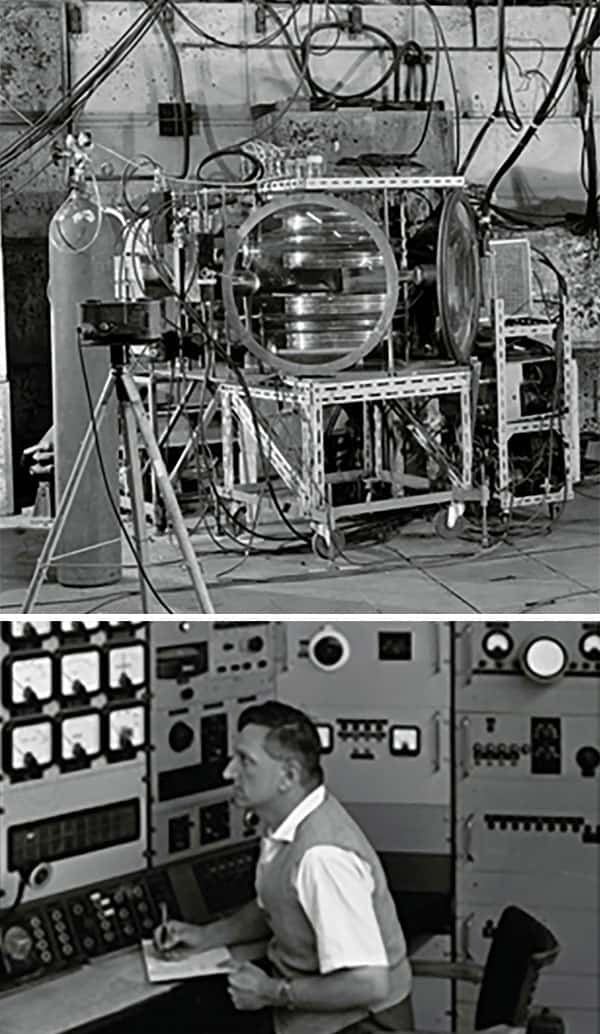
Heart of the machine Top: The synchrocyclotron’s control chamber in 1965. Above: University of Liverpool staffer Bert Chester operates the control desk in 1962. (Courtesy: The Victoria Gallery & Museum: University of Liverpool)
In his history of the Liverpool physics department, Rowlands relays the frantic time in which this initial experiment was conducted. “The experiment was done in a hurry over a three-day period of virtually non-stop work,” Rowlands writes.
The aim of the experiment was to determine whether the mathematical nature of beta-decay couplings were a scalar and tensor mixture as was supposed. This scheme would mean that the positrons from positive muon decay should have spins pointing in the opposite direction to their direction of motion.
Determining the direction of the spins required a huge electromagnet, but even when the experimental result was collected the team had further sleuthing to do before it was confirmed. “When a result was finally obtained, the researchers suddenly found they didn’t know which way round the magnet was wired!” Rowlands describes. Determining which way the magnet faced was crucial to determining the direction of the particles’ spin.
Rowlands explains how this led to arguments raging at 3.00 a.m. among Holt’s team about north magnetic poles, north-seeking poles, Fleming’s left-hand rule and other aspects of physics. In an attempt to settle the debate one of the team took out a small magnetic compass and held it to the magnet, but the arguments continued. Finally a team member went outside the lab and pointed to the pole star, showing that the compass was actually pointing due south – the magnet had changed the orientation of the compass.
The team had therefore found that the positrons’ spins were in the direction of motion, meaning that the mathematical nature of beta-decay couplings were actually vector and axial vector, rather than tensor and scalar. Rowlands calls this “a result of immense significance for the fundamental nature of the weak force”, adding that it was arrived at via a combination of one of the most sophisticated machines available to scientists at the time and an ancient navigation technique.
The second stage of the experiment, done in 1958, used both positive and negative muons. It showed that the polarization of the positrons and electrons, which resulted from the decays of positive and negative muons, were opposite, therefore indicating C violation. “The crucial thing here was that this showed that particles, positive muons, and their antiparticles, negative muons, behave in different ways when they decay,” explains Houlden. “A completely important result as it shows that there is a fundamental difference between particles and antiparticles.”
A synchrocyclotron’s legacy
The end of Liverpool’s synchrocyclotron came in 1968. The reasons for its shutdown were simple – the technology had been surpassed and the power demands of the machine alone amounted to over £27,000 in 1961 (the equivalent of over £500,000 today).
Many of the researchers who had cut their teeth on the accelerator had already moved over to the 600 MeV synchrocyclotron at CERN in Geneva, which had begun operations in 1957. Even physicists working at the University of Liverpool were doing their experiments at CERN. “[Liverpool’s synchrocyclotron] was completely out of date. Everybody wanted to go to CERN and work on the new and improved facilities available there,” Houlden explains. “So the 156 inch synchrocyclotron’s life just came to a natural end.”
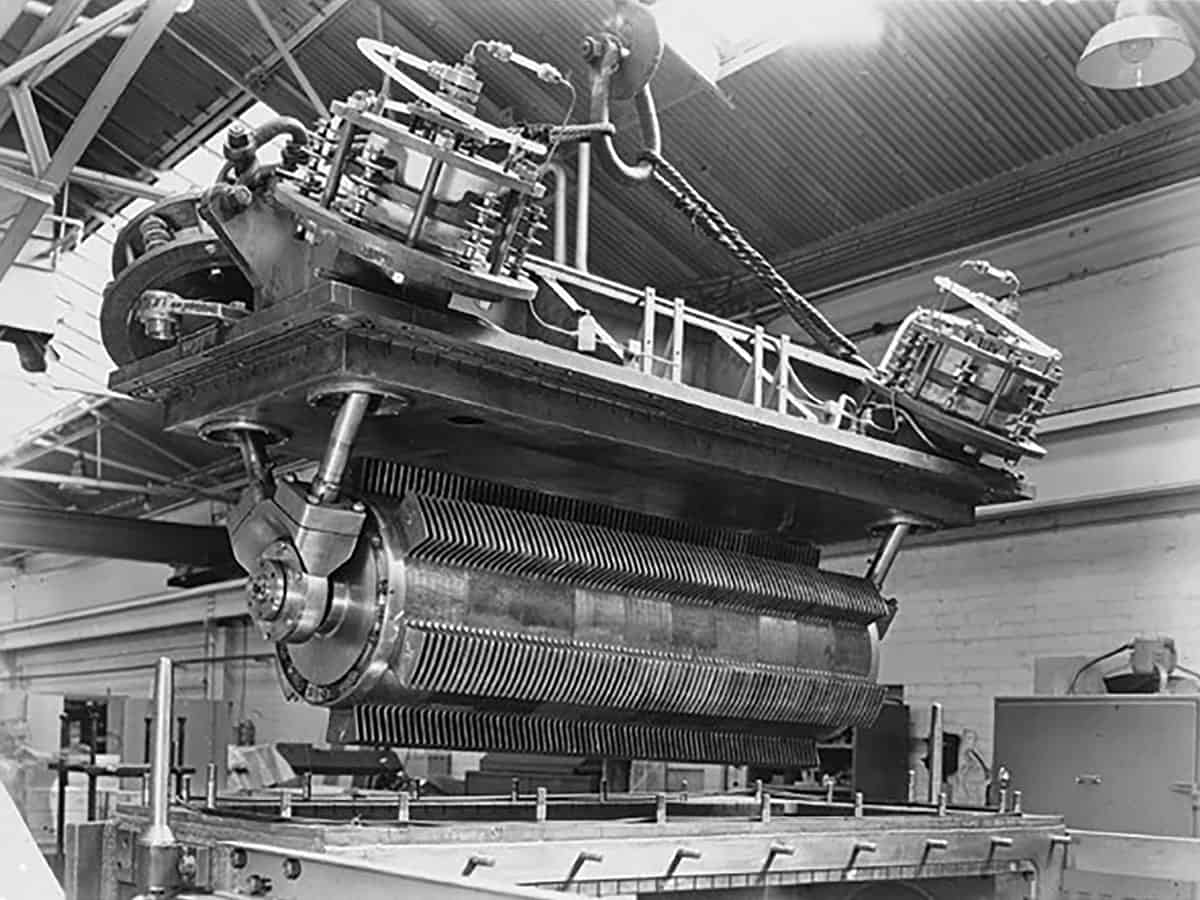
Final piece The synchrocyclotron’s rotating condenser here shown in the factory is one of the few pieces of the machine that still exists, although it is currently in storage. (Courtesy: The Victoria Gallery & Museum: University of Liverpool)
Meanwhile, others who worked with the Liverpool accelerator would move to the 5000 MeV electron synchrotron at the National Institute for Research in Nuclear Science (NINA) in Daresbury, UK. Rather fitting, as Holt says in his article, because it was the success of Liverpool as an important centre of nuclear research that led to the establishment of NINA in 1962.
Houlden adds that Liverpool’s machine was at the very peak of what synchrocyclotrons with a single magnet could achieve. Later machines, such as the one in CERN, would use a ring of magnets rather than just the one to guide a beam of particles through a circular path and give them an accelerating “kick” as they pass.
Not only did the Liverpool machine provide a vital experience that physicists would carry with them to its successors all over the world, but it also played an important part in establishing the university as a world leader in physics. Indeed, Rowlands suggests that Liverpool’s physics department may not exist at all today were it not for Chadwick bringing the synchrocyclotron to the city. “I think it kept Liverpool at the forefront of physics during a crucial period,” Rowlands explains. “The department would have still existed in the 1960s, but when cut-backs came it could have suffered because of its proximity to Manchester if it was reasoned, ‘why do we need Liverpool and Manchester universities doing physics?’ ”
Out of action: other defunct or lost accelerators
CERN’s 600 MeV Synchrocyclotron was the first particle accelerator at the now-famous site and came into operation in 1957. It made its first big discovery in 1958, providing clear evidence of the rare decay of pions into electrons and neutrinos. The synchrocyclotron put CERN on the map but was closed down in 1990 and made into a visitors exhibition.
The Superconducting Super Collider in Texas, US, was to be a powerhouse of particle-physics research. Set to be 87 km in circumference, it would have dwarfed the 27 km-circumference Large Hadron Collider (LHC) at CERN. Construction began in 1991 but was cancelled in 1993 for financial and political reasons, despite 22.5 km of tunnels being dug and $2bn spent. The tunnels are now blocked off, likely flooded, and the site was abandoned for nearly two decades before being bought by a chemicals company.
Tevatron at the Fermi National Accelerator Laboratory in Illinois, US, was the world’s highest energy particle accelerator for two decades before the LHC came along. The 6 km synchrotron became operational in 1983, and its many achievements includes the discovery of the top quark in 1995. It was shut down in 2011 because it could not compete with the LHC. The Main Injector ring, located in a separate tunnel, is still in operation, and is Fermilab’s most powerful particle accelerator even today. While mostly unused, a portion of the Tevatron tunnel still transfers the beam from the Main Injector accelerator to experimental areas such as the Fermilab Test Beam Facility.
BESSY I was a synchrotron built in 1981 in Berlin, Germany, that could produce 200–800 MeV electrons within its 60 m circumference ring. It was decommissioned in 1999 as it had become outdated, but rather than being simply discarded, it was recycled. In an effort to promote collaborative scientific and technological excellence in the Middle East, BESSY I was moved to Allan, Jordan, where it became the region’s first synchrotron light source, SESAME. Developed under the auspices of UNESCO, SESAME was officially opened in 2017, after an upgrade to a 2.5 GeV light source, 133 m in circumference.
Mostly lost to history
Despite its importance to both physics and the city, little remains of Liverpool’s synchrocyclotron today. Due to their radioactivity, many parts of the machine were likely disposed of in a government landfill site, Houlden suggests, adding that many non-radioactive parts were sold for scrap.
The only parts of the accelerator for which we can be sure of their resting place are its rotating condenser and frame. Wendy Simkiss, a curator at the World Museum in Liverpool, says that these parts were acquired by the museum in 1975, saving them from the scrap heap. From 2014 they were temporarily on display at the University of Liverpool’s Victoria Gallery and Museum as part of the physics exhibit, but since at least 2018 the synchrocyclotron’s frame and condenser have been in storage out of sight of the public.
But apart from those pieces – as well as some scattered mentions in histories of Chadwick, and the memories of storytellers and historians like Rowlands and Houlden – little remains to remind people of the existence of this vital step in the development of particle physics. Nor are there many reminders that these developments happened in Liverpool, a city usually renowned for its fierce and justified pride in its history.
“There’s no trace of the 156 inch synchrocyclotron. Not even a little blue plaque,” Houlden concludes. “If you didn’t know about it, you would never even know that it was there.
Researchers in Japan have developed a way of correcting errors in quantum operations without applying a magnetic field. The new zero-field technique, which they demonstrated using quantum bits (qubits) constructed from atomic-scale imperfections in diamond, could make it possible to integrate such qubits with others based on superconducting circuits, and thereby construct larger and more powerful quantum devices.
Qubits based on the spin of charge carriers (electrons and holes) in semiconductors are considered excellent building blocks for quantum computers due to their long coherence times. This also makes them ideal connection points for quantum networks, where they can be used as quantum memory or quantum repeaters. However, these spin qubits are prone to errors caused by interactions with their environment.
In classical computers, bit flip errors – that is, instances when a bit changes from 0 to 1 (or vice versa) due to noise rather than the program’s instructions – can be traced by copying the bits and performing a logic operation called decoding to find the corrupted bit. Qubits, in contrast, cannot be copied due to a quantum principle known as the no-cloning theorem.
Instead, quantum error correction (QEC) seeks to preserve accuracy by “spreading” the information of a single qubit to the entangled states of several other qubits. This idea was first suggested in 1994 by Peter Shor, who proposed an error-correction protocol involving nine entangled qubits. In this protocol, errors (such as a bit flip or a change in the sign of the qubit’s phase) can be traced by performing a multi-qubit measurement that retrieves information about what type of error occurred, and on which qubit, without disturbing the quantum information. An operation is then made on the corrupted qubit to revert the error’s effect.
Several methods have been developed for implementing QEC experimentally in spin qubits. However, all require a strong and highly uniform magnetic field to perform the required spin manipulations. Achieving such high uniformity is hard, and the presence of strong magnetic fields disrupts superconducting qubits by forcing them out of the superconducting state. This makes it difficult to construct hybrid devices that use both superconducting and spin qubits.
Zero field enters the game
Researchers from Yokohama National University have made a significant step towards remedying this problem by developing a magnetic-field-free way to manipulate spin qubits made from nitrogen-vacancy (NV) centres in diamond. They use polarized microwave pulses to entangle the spin of a nitrogen atom’s electron to the nuclear spins of two neighbouring carbon isotopes and the nitrogen itself. For the QEC operation to work, the researchers must manipulate all three nuclear spins via hyperfine interactions with the electron spin, which can be controlled optically. A 3D arrangement of current-carrying coils cancels out any residual magnetic field so that the operation takes place in a truly uniform zero magnetic field.
While the three nuclear spins are short of Shor’s 9-qubit code, the researchers say they are sufficient to correct either a bit-flip or a phase-flip error. They evaluated the effectiveness of their method by intentionally inserting an error in the encoded nitrogen nuclear spin. Without applying the QEC, they determined that the fidelity of the operation degrades in proportion to the error probability. With the QEC in place, the fidelity remained constant regardless of the error probability. The Yokohama researchers also showed that they obtained similar results with their method as they would by using a 6200-Gauss magnetic field to manipulate the spins.
Next step: simultaneous error correction
According to Hideo Kosaka, a quantum engineer at Yokohama and lead author of a report in Communication Physics describing the work, the team’s next step is to correct bit and phase errors simultaneously by implementing a stabilizer code that can be used with a smaller number of qubits and does not require Shor’s 9-qubit code. The team is also developing an interface to perform quantum conversion between superconducting qubits and photons for communications using quantum memory in diamond. “Our method not only improves the efficiency of the quantum conversion, but also enables error correction at the quantum interface,” Kosaka says.
Tim Taminiau from QuTech in Delft, the Netherlands, who was not involved in this research, praises the Yokohama team for developing innovative ways to control spin qubits in diamond at zero magnetic field. In his view, the method’s compatibility with superconducting qubits is a significant advantage as it could facilitate hybrid architectures that combine superconducting circuits (for fast quantum computations) and spin qubits (for long-lived quantum memory). An important future challenge, he adds, will be to realize fault-tolerant error correction, which needs more qubits and an ability to detect errors using non-destructive measurements. Such fault-tolerant operations were recently demonstrated with spin qubits at higher fields and with superconducting and trapped-ion qubits.
Possible realms Nicole Yunger Halpern uses the concept of steampunk to explore and explain quantum technologies. (Courtesy: iStock/Adelevin)
Thermodynamics was born in the early 19th century, during the age of steam, as railways replaced the horse, and factories mechanized production. Efficiency became the new watchword, and a desire to maximize it in steam-powered machines motivated efforts to understand the flow of heat: the literal meaning of thermodynamics. Quantum technologies, on the other hand, are as futuristic as they come, embodied in the almost caricaturish hi-tech cryogenic coils of the quantum computer.
In her new book Quantum Steampunk: the Physics of Yesterday’s Tomorrow, the University of Maryland physicist Nicole Yunger Halpern shows what emerges when past and future meet. As she sees it, the quantum engines, heat pumps and fridges emerging from the marriage of thermodynamics and quantum mechanics constitute “quantum steampunk”, envisaged here with the Victorian brass-and-mahogany aesthetic found in novels by William Gibson, Neal Stephenson, Philip Pullman and others. The result is a blend of fictional adventure, explanations of quantum science and a glimpse of how working scientists make progress.
It is a fun conceit and, like this book, full of charm. All the same, the topic can sound deceptively modish, because quantum mechanics itself originated in thermodynamics. It was in trying to understand how bodies radiate heat that Max Planck postulated the notion of discretely quantizing the distribution of energy among their atoms in 1900. Planck never intended that to be an expression of physical reality, but Albert Einstein ran with the idea in his 1905 paper on the emission of light and the photoelectric effect. Even here the discourse is couched in thermodynamic terms: Einstein evaluates the entropy of light using Ludwig Boltzmann’s statistical relation.
This connection was never really lost. When Erwin Schrödinger pondered the question “What is life?” in his 1944 book of that title, he expressed it in thermodynamic terms and his answer invoked the probabilistic nature of quantum events and the quantum-mechanical nature of the chemical bond that confers molecular stability.
Both the modern description of thermodynamics – statistical mechanics – and quantum theory confirmed in the eyes of Schrödinger and Heisenberg that nature is fundamentally probabilistic rather than deterministic. And the invention of lasers in the 1950s and 1960s required a consideration of how to populate quantum energy levels in ways that departed from normal thermal distributions, invoking notions of negative temperature.
The general challenge posed by giving thermodynamics a fresh quantum makeover is how phenomena like energy quantization and entanglement – which may strip particles of their independence – change the possibilities for the conversion of heat and work or impact on thermodynamic laws. The second law – the rise in entropy for all irreversible phenomena – is a key focus. British astrophysicist Arthur Eddington captured the common view in 1915 when he said “If your theory is found to be against the Second Law of Thermodynamics I can give you no hope; there is nothing for it but to collapse in deepest humiliation.”
At face value this seems odd, because the usual understanding of the second law makes it too merely probabilistic. It is secure at everyday scales (more properly, in the “thermodynamic limit” of infinitely many particles) simply because its violation by huge numbers of particles has negligible probability. But no fundamental law of mechanics prohibits it: those laws are fully time-reversible. Quantum mechanics too seems reversible, as reflected in the property of the Schrödinger equation called “unitarity”, which basically implies that no information about a quantum system encoded in the equation is lost as the wavefunction evolves. But observation seems to compel non-unitarity and irreversible loss of information. Likewise, it is ultimately loss (erasure) of information that prevents Maxwell’s demon from undermining the second law classically, by collecting and exploiting information about individual particles.
Where quantum meets thermodynamics, then, is really all about information. Classically this may be quantified by the measure of informational entropy proposed by Claude Shannon in 1948. But there is a quantum equivalent, including entanglement, introduced by John von Neumann. In using information to temporarily reverse the second law, Maxwell’s demon reveals how information itself can act as a kind of fuel.
Because quantum mechanics enables us to do things with information that are not possible classically – such as smear it across two or more particles, otherwise known as entanglement – quantum information may fuel new types of machine, such as quantum heat engines. Halpern and her collaborators have devised one such method that uses a phenomenon called many-body localization. Here, quantum effects can seem to stave off the second law for longer than usual by slowing down the process of thermalization that distributes heat from hot to cold.
Like all quantum engines, it involves a cycle analogous to the famous Carnot cycle that launched thermodynamics, cycling between quantum states – in this case, one that thermalizes and one that doesn’t – in ways that generate energy. Quantum batteries, meanwhile, use entanglement to boost energy extraction or charging rates in ways not accessible classically.
As Halpern explains, entanglement here acts as a “resource” that, like coal, can be harnessed to do work – but in non-classical ways. So-called resource theories, which Halpern has helped develop, allow thermodynamics to be recast in a quantum form that does not demand macroscopic averages. These can also furnish experimental predictions about quantum machines, while at the same time offering a new perspective on the second law.
All this is rich soil. But I fear that non-specialists will struggle to follow some of this book. Halpern’s explanations tend to use analogies – sometimes rather contrived or opaque – to describe each step of a mechanism, while failing to convey any sense of the overarching physics involved.
Describing a quantum heat engine as involving photon exchange with heat baths of cold, negative and infinite temperatures, for instance, doesn’t help much without some sense of what roles they are playing or what the overall goal is. Some of the metaphors are over-wrought – appropriately baroque, perhaps, but in the end distracting. Or in some cases mixed or inconsistent: one moment entropy is “liver”, the next it’s a King Charles spaniel.
The narrative is also confused more than it is embellished by framing many of the metaphors using characters and scenes from Halpern’s steampunk novel that may or may not exist in its entirety (it’s not clear which). The scenes are elegantly written, but while we have no sense of the story from which they are drawn, they create a rather arbitrary framework for the book.
Nevertheless, Quantum Steampunkmanages to convey some of the excitement and richness in the re-emergence of a quantum take on thermodynamics. Indeed, Halpern shows that, as was the case with quantum information, it is a field that subverts the usual notion of theory preceding and suggesting applications. It’s said of thermodynamics that the theory ended up offering little to the practical questions that inspired it. But for quantum thermodynamics there is often no distinction of “pure” and “applied” at all: new ideas suggest novel devices, but equally, engineering questions are apt to morph into foundational ones. That’s a sign of something profound afoot.
Researchers in the US, UK and South Korea have designed a wireless, implantable optoelectronic device that can effectively deliver photodynamic therapy (PDT) to cancer cells. Led by Sung Il Park at Texas A&M University, the team showed how their device could be used to reliably treat tumours in any part of the body, using precisely targeted illumination.
Unlike chemotherapy, which is often given in conjunction with surgery but can lead to toxic side effects, PDT specifically targets cancer cells while minimizing damage to surrounding healthy tissue. PDT involves administering a photosensitive drug, which is preferentially taken up by and retained in cancer cells. This photosensitizer is then activated by irradiation with light of a specific wavelength, causing it to release reactive oxygen species that kill the surrounding cancer cells.
The main difficulty faced by this technique lies with the ability to deliver light effectively to the photosensitizer – which is often located deep within the body. While advances in wireless technology allow light to be delivered remotely from implantable devices, it is still difficult to produce light that specifically targets the photosensitizer, leading to low levels of activation. In addition, clinical application of PDT has been limited by a lack of methods to monitor tumour response and adjust light dosage accordingly.
To overcome these issues, Park’s team has designed a low-power, wireless LED device for photosensitizer activation. The device’s operation is informed by DeepLabCut (DLC), an algorithm that estimates the poses of freely moving animals in real time, and a Monte Carlo thermal/light simulation platform that simulates the responses of photosensitizers to the light that they receive.
With this software combination, Park and colleagues demonstrated how the implantable devices could be tailored to the responses of individual tumours. Depending on the size of a tumour, and the photosensitizer used to treat it, they showed how bespoke devices could be optimized to produce a suitable combination of light sources and wavelengths to maximize photosensitizer activation.
The researchers evaluated the device performance using mouse models of colorectal cancer – producing up to a 76% decrease in tumour volume after five days of continuous dual-wavelength PDT treatment. Based on these results, they have now established a new set of guidelines for the effective delivery of PDT.
In the long term, the team hopes that its work will create a platform that could improve cancer-monitoring capabilities outside of carefully-controlled hospital and lab facilities. In addition, it could help to prevent the re-emergence of tumours located in any part of the body – significantly improving the quality-of-life for people living with many different types of cancer.
An on-chip circuit that can produce up to six microwave photons simultaneously has been created by researchers in France and Germany. Gerbold Ménard and Ambroise Peugeot at the University of Paris-Saclay and colleagues built their device by connecting a Josephson junction to a microwave resonator. While the team did not establish that the photons are entangled, previous research suggests that the device could be a source of multiple entangled photons.
The ability to produce pairs of entangled photons is vital for many quantum technologies. Most often, it involves a technique called parametric down-conversion, whereby a single photon is split into two lower-energy photons after interacting with a nonlinear optical medium. This technique could be used to produce higher numbers of entangled photons, but such a system would be bulky and complex.
Ménard, Peugeot and colleagues have now shown that multiple photons can be produced far more easily using a simple superconducting circuit that comprises a capacitor, a coil inductor, and a Josephson junction. The circuit was etched onto a 150 nm-thick niobium film that had been deposited onto a quartz substrate. Niobium is a superconductor at low temperatures.
Simple quantum device
A Josephson junction is a simple quantum device in which two superconductors are separated by a thin insulating barrier. When a voltage is applied across the junction, Cooper pairs of electrons – the charge carriers responsible for superconductivity – can tunnel through the barrier. In the process, they acquire an amount of energy that is proportional to the applied voltage, exciting them to a higher energy level.
The capacitor and inductor coil are tuned so that the circuit resonates at the frequency of a microwave photon. When a Cooper pair flows through the circuit, its excess energy is converted into one or more microwave photons – each having the same frequency as the circuit. The number of emitted photons depends on the energy of the Cooper pair, and therefore on the voltage across the Josephson junction. Increasing the voltage increases the number of emitted photons, and by doing this the team was able to create up to six photons at a time.
In a previous experiment, the team showed that pairs of photons produced in this way are entangled – and therefore could be useful in quantum technologies. If it turns out that the multiple photons are also entangled, the technique could someday be used in a wide range of applications including secure quantum communications and quantum computing.
Delegates planning to attend the opening ceremony – presided by Thai Princess Maha Chakri Sirindhorn – were astonished to be told that only “crisp, neat, pressed and never wrinkled” attire would be permitted. Men were required to wear “dark or subtly patterned suits with matching jacket and pants”, along with “plain colour or conservative patterned ties”, “dark leather dress shoes” and “dark-colour socks”.
Women had it even worse. Trousers were banned, with women required to wear a skirt that was a “little below the knee and never shorter than above the knee”. Make-up had to be “minimal” and “conservative”, with “nude (skin-tone) or dark coloured pantyhose”.
The outcry led to a swift U-turn from the organizers, who say the dress code will now conform to “international standards”. Whether physicists will get away with “scruffy academic”, though, isn’t clear.
Sticking together
Birds can be notoriously picky when foraging for nesting material and can be seen poking or shaking a candidate stick before deciding to add it their growing nest – in effect testing its mechanical properties.
Now researchers in the US have carried out experiments and simulations to model how wooden twigs pack together in a nest-like structure. The team found a certain set of properties that make a twig or collection of twigs become optimal nesting material.
This includes having a nonlinear stiffness as well as undergoing a “quasi-static hysteresis”, referring to how the material maintains equilibrium while undergoing a delayed response to stress. The researchers found that these features arise in a nest-like structure from the interplay of friction as the sticks are arranged.
They reckon their work could improve our understanding of other complex structures such as the formation of underground fungal mycelium networks. Sounds fantastick.
And finally, a letter that Albert Einstein penned to a 12-year-old boy sold this week at auction for a cool $31,250. In 1928 Los Angeles resident Arthur Cohen corresponded with Einstein, in which he asked the physicist about relativity as well as whether space exists outside the universe.
The one-page response by Einstein must have had some effect on Cohen and his interest in science as he would later become the founding director of Washington State University’s Electron Microscopy Center.
Europe’s largest meeting for radiation oncology, ESTRO 2022, will take place in Copenhagen, Denmark, on 6–10 May, with online registration also available to those unable to attend in person. The theme of this year’s conference will be “Learning from every patient”, while two over-arching topics will be tackled in six parallel programme tracks. One will be squamous cell carcinomas and what makes them so special, and the other will be the importance of time in radiotherapy.
“The ambition of ESTRO is to further reinforce radiation oncology as a core partner in multidisciplinary cancer care, and to guarantee accessible and high-value radiation therapy for all cancer patients who need it,” says conference chair Ben Slotman, head of radiation oncology at AmsterdamUMC in the Netherlands. “After a difficult couple of years, this is more poignant than ever as, in 2022, we expect to again be able to freely get together and connect.”
According to Slotman, one aim for this year’s meeting will be to raise the visibility of submitted abstracts. Highlighted contributions will take place in a plenary setting, while the introduction of mini-oral sessions will showcase particular abstracts selected for their quality or for their interest across a broad range of disciplines. There will also be dedicated lectures and activities for younger scientists who are just starting out on their careers.
The ESTRO event will also host Europe’s largest industry exhibition in radiation oncology, offering a unique opportunity to interact with industry leaders and to find out about the latest developments in technology, techniques and radiation oncology products. Some of the innovations that will be presented at the show are highlighted below.
Premiering for the first time in Europe at ESTRO 2022, Radformation will be introducing a suite of automated solutions to increase precision in all stages of the treatment planning workflow. From planning and documentation to quality assurance and beyond, Radformation provides auto-checking and auto-planning tools that are easy to use, clinically relevant, and integrate seamlessly with multiple treatment planning systems, including Eclipse.
Automation in action: Radformation’s user-friendly tools increase precision and efficiency throughout the treatment planning workflow, integrating seamlessly with Eclipse and compatible with several other treatment planning systems. (Courtesy: Radformation, Inc)
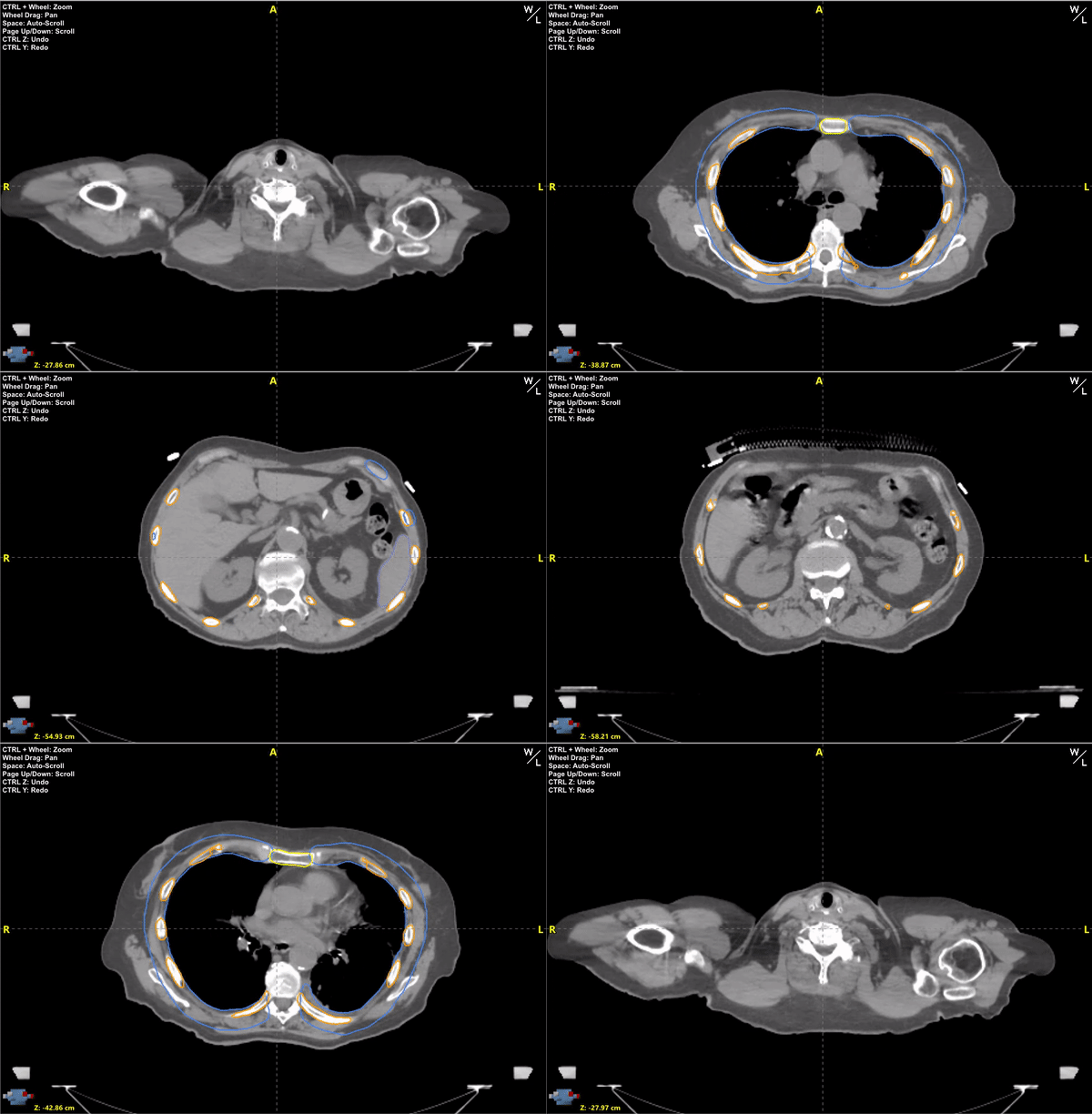
For a start, the company’s AutoContour tool was designed by clinicians to streamline the contouring step, allowing automated contours to be reviewed in less than 30 s. The system exploits deep-learning techniques to generate accurate contours, with more than 90 of the most common structures pre-loaded to jumpstart the planning process. In clinical tests, AutoContour reduced contouring time by up to 60%, saving one clinic approximately 24 hr in the contouring stage of their workflow.
Radformation is also debuting ChartCheck, a continuous 24/7 monitoring program that verifies ongoing treatment data after each fraction has been delivered to the patient. Such automated weekly checks offer enhanced efficiency and safety throughout the treatment, with any failed checks generating automatic notifications to enable any errors in the plan to be resolved immediately.
Streamlining the workflow: with more than 90 different structure models, Radformation’s AutoContour enables clinics to review automated contours of ribs, chest wall, sternum and spleen in as little as 30 s. (Courtesy: Radformation, Inc.)
Also new is RadMachine, a cloud-based platform that provides access to all machine QA data, making it possible to perform, review and track multiple QA data streams at the same time. Data from any Machine QA test or frequency can be automatically uploaded, while RadMachine can integrate all data from therapy machines, imaging devices and ancillary equipment into one consolidated platform.
Heavy-duty platform integrates multi-directional motion into large-scale phantoms
Modus Medical Devices will be presenting the QUASAR Heavy Duty Respiratory Motion Platform, which is designed to support multiple QA processes by moving existing phantoms with programmable respiratory and sinusoidal motion profiles. The platform’s unique multi-directional motion simulation allows it to translate in-line with the sagittal plane in the superior/inferior direction or with a user-defined rotated arrangement.
The QUASAR Respiratory Motion QA allows users to adjust real-time motion frequency and amplitude with local manual control at the motor, while advanced programmable motion software also makes it possible to create, import, edit and playback complex patient-specific waveforms.
Taking the strain: integrating the QUASAR Heavy Duty Respiratory Motion Platform with large detector arrays enables QA of complex protocols for arc-based radiotherapy treatments. (Courtesy: Modus Medical Devices)
The QUASAR Heavy Duty Respiratory Motion Platform features a large 33.2 x 35 cm platform surface with a load-bearing capacity of 45 kg and a Chest Wall Platform moving in the anterior/posterior direction. These heavy-duty features ensure that the platform is compatible with large-scale third-party ionization detector arrays, including the ArcCheck and PTW OCTAVIUS 4D. Integrating the Heavy Duty Motion Platform with these phantoms opens the door to testing complex, dynamic delivery protocols for rotational radiotherapy.
Find out more by visiting Modus Medical Devices at booth 555 in Hall C.
Innovations deliver smarter quality assurance
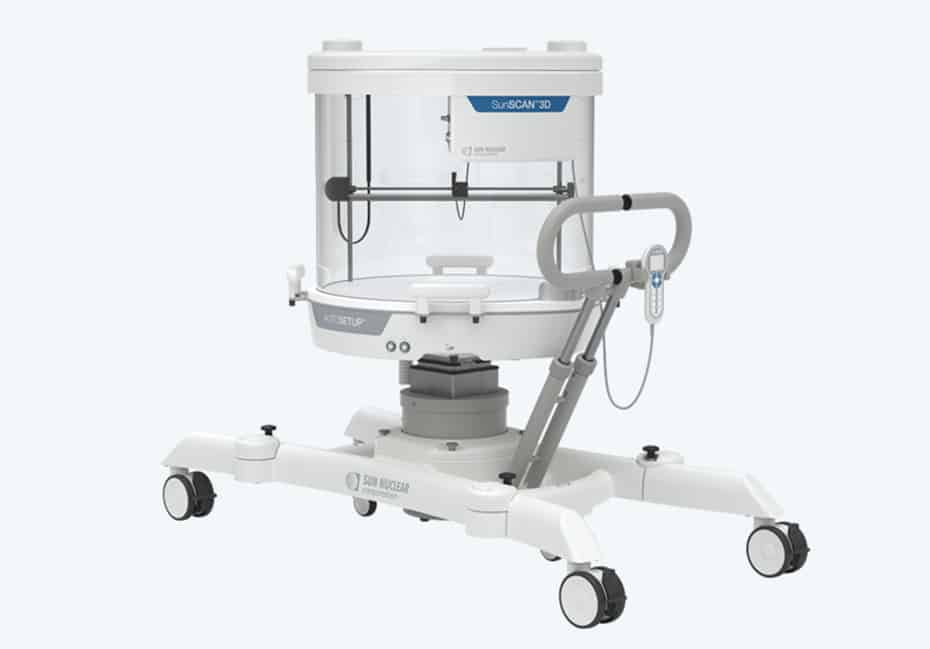
Taking centre stage at the Sun Nuclear booth will be the new SunSCAN 3D cylindrical water-scanning system, which will be officially unveiled during the ESTRO opening reception. Building on the capabilities of the company’s 3D SCANNER water tank, the new system (CE Mark pending) introduces faster, easier workflows and hyper-accurate dosimetry for the growing demands of stereotactic treatment deliveries. Demonstrations throughout the congress will offer insights on quick tank setup, a faster AutoSetup routine, and new, intuitive SunDOSE software.
Fast and accurate: the SunSCAN 3D cylindrical water-scanning system offers hyper-accurate dosimetry for stereotactic treatment deliveries. (Courtesy: Sun Nuclear)
There will also be live demonstrations of Sun Nuclear’s SunCHECK Platform, an integrated and scalable quality management system for radiotherapy programmes that has been designed to meet the needs of any type of clinic. Sun Nuclear announced in April that the SunCHECK Platform is now available as a software-as-a-service (Saas) implementation securely hosted on the Cloud, further reducing the resources needed for upfront deployment and ongoing support.
Throughout the meeting clinical users will be sharing their insights and experiences of using Sun Nuclear’s quality management solutions. There will be a series of in-booth presentations, as well as a dedicated lunch symposium on Sunday 8 May that will be live-streamed for virtual attendees. Delegates can review the full schedule and register to join at sunnuclear.com/estro.
Visit Sun Nuclear at booth 1010 in Hall C for live demonstrations and clinical insights into its range of integrated quality management solutions. (Note: Products subject to availability for certain markets and customers. Visit sunnuclear.com for details.)
Advanced solutions enable more precise quality assurance
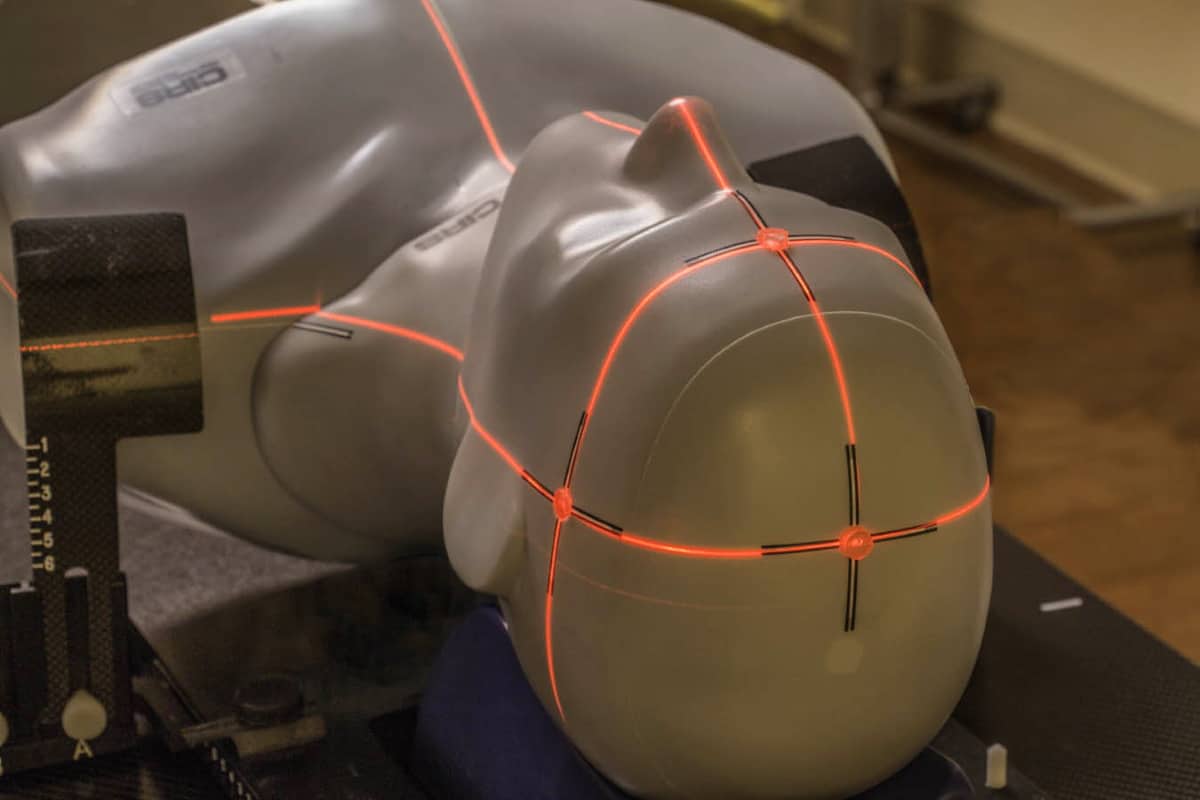
CIRS, which is now part of Sun Nuclear, will feature its ATOM Phantoms, a full line of anthropomorphic, cross-sectional dosimetry phantoms designed to investigate organ doses and whole-body effective doses, as well as to verify therapeutic radiation doses. The line includes six clinically relevant ages, each one representing key variations in tissue composition due to age or sex, and accounting for differences in bone mineral density. The unique design of the ATOM Phantom results in a more precise physical model for investigating the interaction of radiation with different tissues, and allows for more accurate dose calculations across distinct age groups.
Physical form: CIRS supplies six versions of its ATOM Phantom to account for clinically relevant variations in ages and sex, allowing more precise dose calculations. (Courtesy: CIRS)
Meanwhile, the Stereotactic End-to-End Verification (STEEV) Phantom provides accurate patient simulation for SRS/SBRT procedures by combining an anthropomorphic, tissue-equivalent design with organically shaped targets to account for tissue heterogeneity. It enables all the necessary steps of a treatment planning system to be checked, all the way from diagnostic imaging through to treatment plan verification. Another tool, the MR Distortion & Image Fusion Head Phantom (603GS), has been designed to assess MR image distortion in stereotactic radiosurgery planning, and is also useful for verifying image fusion and deformable image registration algorithms used in various treatment planning systems.
For procedures that integrate MR imaging with radiation therapy, the Zeus MRgRT Motion Management QA Phantom has been designed to ensure quality and safety for real-time motion management. Safe for use in an MR environment, Zeus features motors that move a cylindrical insert with an organically-shaped tracking target through a gel/liquid fillable body – rotating it independently from the motion in the inferior/superior direction. The phantom simulates anatomical structures with a life-like spatial relationship and all structures (except for the lungs) offer ion-chamber dosimetry cavities and can simulate an entire QA process.
CIRS’ range of QA solutions will be presented on the Sun Nuclear booth, which is number 1010 in Hall C.