Are you looking at me?: How might the Earth appear to alien observers?
It’s a classic trope of science fiction: aliens watching the Earth from a distance.
But what would an alien really see if they were studying our planet? It’s an intriguing question, because if we knew what we look like as a tiny dot to someone a long distance away, then we could work backwards – examining our murky data on far-away exoplanets to find out what those distant worlds are actually like.
• Biophysics emerges as a major field – The first “decadal” survey into biological physics says the subject should be recognized as a central discipline of physics, as Michael Banks reports
• China set for major upgrade – Scientists in China have begun a transformation of the Beijing Electron Positron Collider that could pave the way for a future Higgs factory. Ling Xin finds out
• A more accessible discipline – Claire Malone says creating a better working environment for those with physical disabilities can end up benefitting everyone
• Light fantastic – To celebrate the International Day of Light, James McKenzie reflects on the wonders of optical communications
• Avoiding artefacts – Can you distinguish experimental errors from the real voice of nature? Robert P Crease wants your stories
• The Earth through alien eyes – Aliens spying on us from across interstellar space is a classic trope of science fiction. But working out what those extraterrestrials might see if they pointed their telescopes at us could help in our quest for finding life on distant Earth-like planets, as James Romero explains
• The legacy of Liverpool’s synchrocyclotron – The University of Liverpool’s synchrocyclotron helped define physics in the 20th century, yet little trace of it remains. Rob Lea looks into the history of this lost machine
• Concerning primordial black holes – Born at the dawn of time, primordial black holes may lurk throughout the universe – should they exist. But what if one struck the Earth or even, perhaps, a human being? Ian Randall discovers whether there is legitimate cause for concern or if such a scenario is mere science fiction
• A steampunk guide to quantum physics – Philip Ball reviews Quantum Steampunk: the Physics of Yesterday’s Tomorrow by Nicole Yunger Halpern
• Human versus machine in space – Andrew Robinson reviews The End of Astronauts: Why Robots Are the Future of Exploration by Donald Goldsmith and Martin Rees
• Opening up innovation and change – Roland Harwood is a physicist who is fascinated by the art of open innovation. He tells Rachel Brazil how he has helped organizations ranging from Lego to the UN to implement change and why he believes that physics is leading the way when it comes to collaboration
• Web of confusion – Jon Tarrant bemoans why so much online physics information is just so plain wrong.
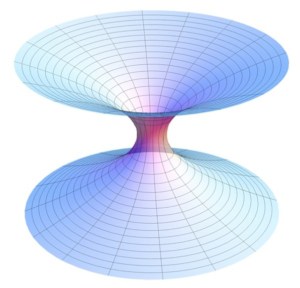
Boundary issue: Finding the dual quantity to wormhole volume under the holographic principle is a key outstanding problem in quantum gravity. (Courtesy: AllenMcC., CC BY-SA 3.0 <https://creativecommons.org/licenses/by-sa/3.0>, via Wikimedia Commons)
Physicists in Germany and the US have proved that the quantum complexity of random circuits grows linearly for extremely long times. The result has implications for the so-called “wormhole growth paradox” in theories of quantum gravity thanks to a proposed link between complexity and the volume of wormholes – hypothesized shortcuts connecting far-separated regions of space in Einstein’s general theory of relativity.
Finding a quantum theory of gravity is one of the most famous problems in physics, and the holographic principle offers an intriguing route to solving it. The idea is to try to describe quantum gravity within a patch of space by focusing on the boundary of that patch, which is described by a non-gravitational theory. Any quantity in the gravitational theory that applies to the bulk of the patch should be equivalent or “dual” to some other quantity in the theory that applies to the boundary.
However, a paradox arises when introducing wormholes into space–time. Known as the “wormhole growth paradox”, it occurs because while the volume of a wormhole grows for a very long time (depending exponentially on the size of the patch), the boundary seems to settle into equilibrium much more quickly. Hence, determining the dual quantity of the ever-expanding wormhole volume is an important challenge.
A complex key
The wormhole growth paradox was first identified by the American physicist Leonard Susskind in 2014. At the time, Susskind also proposed a solution, suggesting that the “quantum complexity” of the boundary’s state could be dual to the wormhole’s volume. A state’s quantum complexity, roughly speaking, is a measure of how difficult it is to produce that state from an initial reference state. Many theorists in the field believe that quantum complexity continues to grow even after other quantities settle at their equilibrium values, hinting that it could be the key to resolving the paradox.
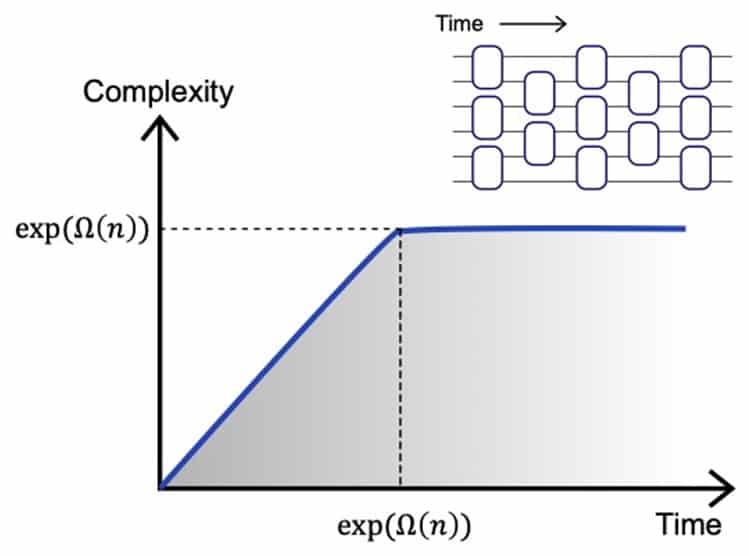
Growing complexity: The new result proves that random quantum circuits on n qubits have a complexity that grows linearly for exponentially long times, after which it remains constant. Ω(n) indicates a function that grows at least as quickly as n, for large n. Inset: The team considered quantum circuits formed from random operations (boxes) acting on qubits (lines). (Courtesy: Adapted from J Haferkamp et al. Nat. Phys. https://doi.org/10.1038/s41567-022-01539-6)
Importantly, however, it remained to be proved that the quantum complexity of the boundary state grows in the same way as the wormhole volume in the bulk. In a recent paper in Nature Physics, Jonas Haferkamp, Philippe Faist, Naga Kothakonda and Jens Eisert from the Freie Universität Berlin and Nicole Yunger Halpern from the University of Maryland showed that it does – at least for a particular class of models.
The researchers considered a very simple quantum system in which two-level quantum bits, or qubits, undergo a series of random, two-qubit transformations. They showed that the quantum complexity of the qubits’ state grew linearly in time until it reached a saturation value at some very late time that depended exponentially on the number of qubits. This pattern precisely mirrors the way in which wormhole volume grows.
The complicating factor in the work is that quantum complexity – which in this case is the minimum number of two-qubit operations that must be performed to arrive at a particular state – is notoriously hard to assess. In fact, it is almost impossible to know whether there is a short-cut to producing the same state with fewer operations.
Proxy considerations
The researchers found a way around this by considering a proxy quantity instead: the dimension of the space of all possible states the system could reach by performing N two-qubit operations. If they could show that this “accessible dimension” increased with each operation, that would amount to proving that the overwhelming majority of these states cannot be reached by fewer than N operations. Thus, randomly performing operations on an initial state generically produces states with a complexity that increases with each operation.
A surprisingly simple class of operations, the so-called Clifford unitaries, provided a key to the proof. “Clifford unitaries are ubiquitous in quantum information,” Haferkamp explains, “but this application was still surprising to me as [despite the complexity of the states being dealt with] Clifford unitaries themselves have very low circuit complexity.” Using this tool, he and his colleagues showed that the accessible dimension – and hence the quantum complexity – increases with each operation, until it reaches its maximum value after an exponentially long time. “One cannot cheat nature,” Haferkamp summarizes. “Long time evolutions cannot be reversed in a substantially shorter time; there are no ‘short-cuts’.”
While the new study is the first to demonstrate linear growth of quantum complexity for random qubit circuits, the notion of quantum complexity that Haferkamp and colleagues used is somewhat less general than that considered in a seminal 2016 paper by Fernando Brandão and colleagues. The current theorem is thus stronger in some ways than this previous result and weaker in others. However, random quantum circuits are simply toy models for the boundary states appearing in examples of the holographic principle – those that could shed some light on quantum gravity – and other fruitful approaches are being pursued in parallel. Hence, these results are an important but preliminary step towards solving the wormhole growth paradox. In Haferkamp’s words, the team’s work provides a crucial “sanity check” for the proposed solution to the paradox, namely that volume is equivalent to complexity.
Nanosurf is a Swiss company that designs, makes and sells atomic-force microscopes (AFMs), which image materials by scanning a cantilever across a sample. In this video filmed at the 2022 March meeting of the American Physical Society in Chicago, Ed Nelson from Nanosurf explains the thinking behind its new DriveAFM product. Rather than relying on traditional piezoacoustic sensing, it uses “photothermal excitation”, which yields a cleaner signal with no cross-talk.
Nelson also discusses Nanosurf’s new imaging mode, in which the cantilever is driven off-resonance. As well as being faster, this “wave mode” is good for studying liquid samples – and in fact has already been used to study the outer shell of a virus on liver tissue. “Setting up an experiment in liquid is trivial,” says Nelson. “It’s almost as easy as working in air.”
A dual-wavelength fibre-laser platform designed for bloodless brain tissue resection has been developed by researchers at the UCI Beckman Laser Institute & Medical Clinic and the University of Texas at Austin. Configuration of the platform for clinical use will enable neurosurgeons to rapidly remove brain tumours, forming the basis of a flexible cutting tool for precision tissue resection.
Inadvertent damage to blood vessels during neurosurgery can obscure the surgeon’s field-of-view. Thus a blood-free environment during surgical resection would make brain surgery more precise and safer. The surgical tools currently used in brain surgery to maintain a blood-free surgical field are ultrasonic aspirators followed by electrocautery. But because these are used sequentially, operating room times can be lengthy. In addition, the electrocautery tool can compromise neural function by damaging viable tissue.
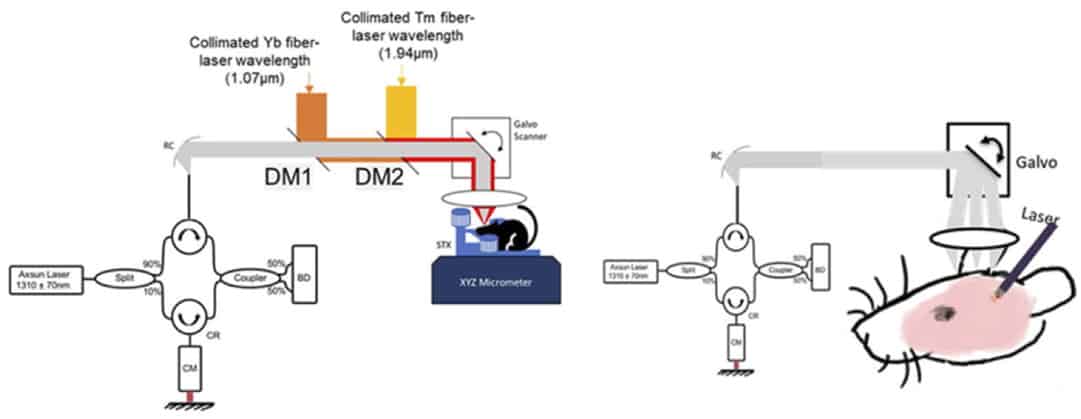
As an alternative, the researchers demonstrated the use of their novel surgical fibre-laser for blood-free neurosurgical resection in mice. The platform combines microscopic-resolution optical coherence tomography (OCT) for image guidance, a vascular specific 1.07 µm ytterbium fibre-laser for blood vessel coagulation, and a precise thulium fibre-laser to perform bloodless cutting.
The ytterbium laser has a peak power of 3000 W, with variable pulse repetition rate and versatile pulse durations (50 µs to 200 ms) for coagulation of different sized blood vessels. The thulium laser, which operates at the 1.94 µm water absorption peak, was used at 15 W average power for tissue resection. The team combined both fibre-lasers into a single biocompatible silica fibre, guided by the swept-source OCT system centred at 1310±70 nm.
The team used the dual-wavelength platform to perform in vivo laser surgery, including point, line and square ablations, on five mice placed on a cranial stereotaxic stage. This involved an initial OCT imaging step, a series of image-guided ablations and coagulations, and post-ablation OCT imaging. OCT angiography was carried out before and after each procedure to verify the tissue resection.
“Development of the fibre laser platform was enabled by two key scientific advances,” principal investigator Thomas Milner, director of the Beckman Laser Institute, tells Physics World. “The first is the laser dosimetry required to coagulate blood vessels of variable sizes. Large calibre blood vessels (250 µm or larger) have previously evaded laser coagulation due to fast flowing blood. My colleague Nitesh Katta worked out the scientific rationale for establishing the laser dosimetry to coagulate blood vessels up to 1.5 mm in diameter.”
The second advance, Milner explains, is a preconditioning methodology that allows repeatable and consistent tissue ablation in many tissue types with deeper penetrating lasers. “Because laser ablation is dependent on tissue mechanical properties, cutting can be inconsistent and in some cases can result in a catastrophic thermal runaway. The platform developed resolves these problems and allows repeatable and consistent cutting of both soft and even stiff tissues such as cartilage.”
Writing in Biomedical Optics Express, the researchers report that post-surgical ablation resulted in repeatable and consistent tissue cuts, while the surgical field remained entirely bloodless. The cuts correlated qualitatively with histological sections in terms of size, shape and morphology, with minimal observed thermal damage. The Milner lab team believes that this is the first time that bloodless resection of brain tissue has been achieved using a dual-wavelength strategy, with a pulsed thulium fibre laser for resection and a vascular-specific wavelength for coagulation combined into a single beam path.
“We are currently trying to build a small-form-factor malleable bloodless optical fibre knife that can resect neurologic tissue with minimal lateral thermal spread,” says Katta. “For this, we are using a dual-wavelength approach to overcome the competing requirements of haemostasis and tissue resection. One wavelength is tuned to a blood absorption wavelength. The second wavelength is tuned to water absorption to remove tissue in an efficient way.”
Katta notes that recent developments in fibre-lasers (for example, thulium and ytterbium) and fibre-coupled diode lasers (near-infrared), combined with the latest advances in high-power fibre-optic components, provide an even wider choice of wavelengths to combine multiple beams into a small-form-factor optical fibre.
Far ultraviolet-C light can reduce the level of airborne microbes in a room by more than 92%, according to a new study by researchers in the UK and the US. The result suggests that lamps operating at this wavelength could be used to combat common airborne viruses, including SARS-CoV-2, and thus prevent the transmission of diseases like COVID-19.
While ordinary UVC light is very effective at destroying microbes like bacteria and viruses, it is hazardous for humans because it can damage skin and eyes. A decade ago, researchers at Columbia University in the US discovered that a different wavelength of UVC light, known as far-UVC light, would be just as effective at killing germs, but without the safety concerns. This is because, at 222 nm, its wavelength is too short to penetrate human skin or eye cells. These early tests of the technology were, however, conducted in small experimental chambers, rather than room-sized ones that better reflect real-world human environments.
Testing far-UVC krypton chloride excimer lamps against S. aureus
In the new work, scientists from the universities of St Andrews and Leeds in the UK and Columbia University Vagelos College of Physicians and Surgeons tested the efficiency of far-UVC krypton chloride (KCl) excimer lamps in a specially designed room-sized chamber at Leeds. The researchers ventilated this chamber at the same rate as a typical home or office – that is, around three air changes per hour. They then released aerolized S. aureus bacteria into the space continuously, allowing the pathogen load to reach a stable level before sampling the air for an hour.
While continuing to release the aerolized S. aureus into the chamber, the researchers then switched on the far-UVC lamps placed on the ceiling of the chamber and sampled the air for a further hour. “This methodology allowed us to compare the air samples after the lamps had been switched on compared to the air samples before lamp switch-on,” explains team member Kenneth Wood, a researcher in the School of Physics and Astronomy at St Andrews.
The team found that the lamps reduced the continuously produced aerolized S. Aureus pathogen load in the room by 92%, which is equivalent to 35 air changes per hour. “This is exciting,” Wood tells Physics World, “since this is a higher number of air changes per hour than other technologies (which have been limited to 5 to 20 equivalent air changes). It is also the first time the effect of far-UVC has been demonstrated for aerolized pathogens in a large ‘real-world’ type environment.”
“Spectacular results”
Wood adds that the trials have produced “spectacular results”, far exceeding what is possible with ventilation alone. “In terms of preventing airborne disease transmission, far-UVC light could make indoor places as safe as being outside on the golf course on a breezy day at St Andrews,” he says.
Team member David Brenner, who leads the Center for Radiological Research at Columbia, says that far UVC-light should be just as good at inactivating current and future variants of SARS-CoV-2; new infectious viruses that have yet to emerge; and “old-fashioned” viruses like influenza and measles. The researchers foresee that far-UVC could become an important “hands off” tool, alongside filtration and ventilation, in a global move towards reducing airborne transmission of disease and improving indoor air quality.
The team have received funding from NHS Scotland Assure to investigate the impact of far-UVC when there are different mechanical ventilation rates. “With this funding, we also plan to study how far-UVC acts on other pathogens and hopefully short-distance viral inactivation,” Wood says. The researchers would now also like to test the technology in real-world environments.
Deliver a UK prototype fusion energy plant, targeting 2040, and thereafter a sustainable, long-term pathway to the commercial viability of nuclear fusion. That’s the ambitious objective – and even more ambitious timeline – confronting the scientists, engineers and project managers currently sweating the details for the conceptual design of the so-called Spherical Tokamak for Energy Production (STEP).
While STEP will leverage the deep domain knowledge and expertise of both these established projects, it is the spherical tokamak capability pioneered at MAST-U (and its parent facility MAST) over the past two decades that is being touted as the precursor for a compact, cost-effective and commercially scalable next-generation fusion power plant (see below: “Back to basics on STEP”).
Equally significant, of course, is the associated industry supply chain to source the core enabling technologies and innovations that will make commercial fusion a reality. A case in point: the myriad complex cryogenic systems that will be required throughout the STEP fuel cycle, guaranteeing bulletproof integrity across a range of low-temperature regimes (15–80 K) to deliver successful, sustained fusion operation.
Cryogenic conversations
Those low-temperature technologies and applications were very much front-and-centre last month when more than 50 industry delegates turned up to the Culham Science Centre – in person and online – for the STEP Cryogenics Engagement Workshop. The gathering marked an acceleration of STEP’s early-stage dialogue with the UK cryogenics community, with the UKAEA team seeking to tap the collective wisdom of specialist manufacturers and academia to bottom out the development roadmap for the project’s cryogenic infrastructure.
Together with industry partners we need to identify where technological developments [in cryogenics] should be targeted and explore who might lead on such developments
Chris Waldon
“Right now, our priority is to introduce the cryogenics community to STEP, explain the importance of the programme for future energy production, and outline the challenges in terms of cryogenic refrigeration,” explained Chris Waldon, deputy director and chief engineer for STEP. “Together with industry partners we need to identify where technological developments [in cryogenics] should be targeted and explore who might lead on such developments.”
Fair to say, given there is still much work to be done regarding the granular detail of the STEP fuel cycle, that not all of those low-temperature technologies have yet been selected (nor calculations undertaken for the expected cryogen usage and estimated power loads). Nevertheless, some high-level cryogenics requirements are already nailed down. “Our priorities are to minimize the real-estate and associated power budget for cryogenic refrigeration,” explained Nanna Heiberg, specialist contractor for cryogenics on the STEP project team. “Currently, though, the cryogenic technology is not available at the scale and power efficiency that we need to support a range of core subsystems in STEP.”
Among those crunch-points are compound cryogenic pumps for the exhaust systems of the fusion reactor vessel; matter injection into the plasma core using cryogenic pellets; and cryogenic distillation systems to adjust the ratio of hydrogen isotopes (deuterium/tritium) for fuelling the fusion plasma.
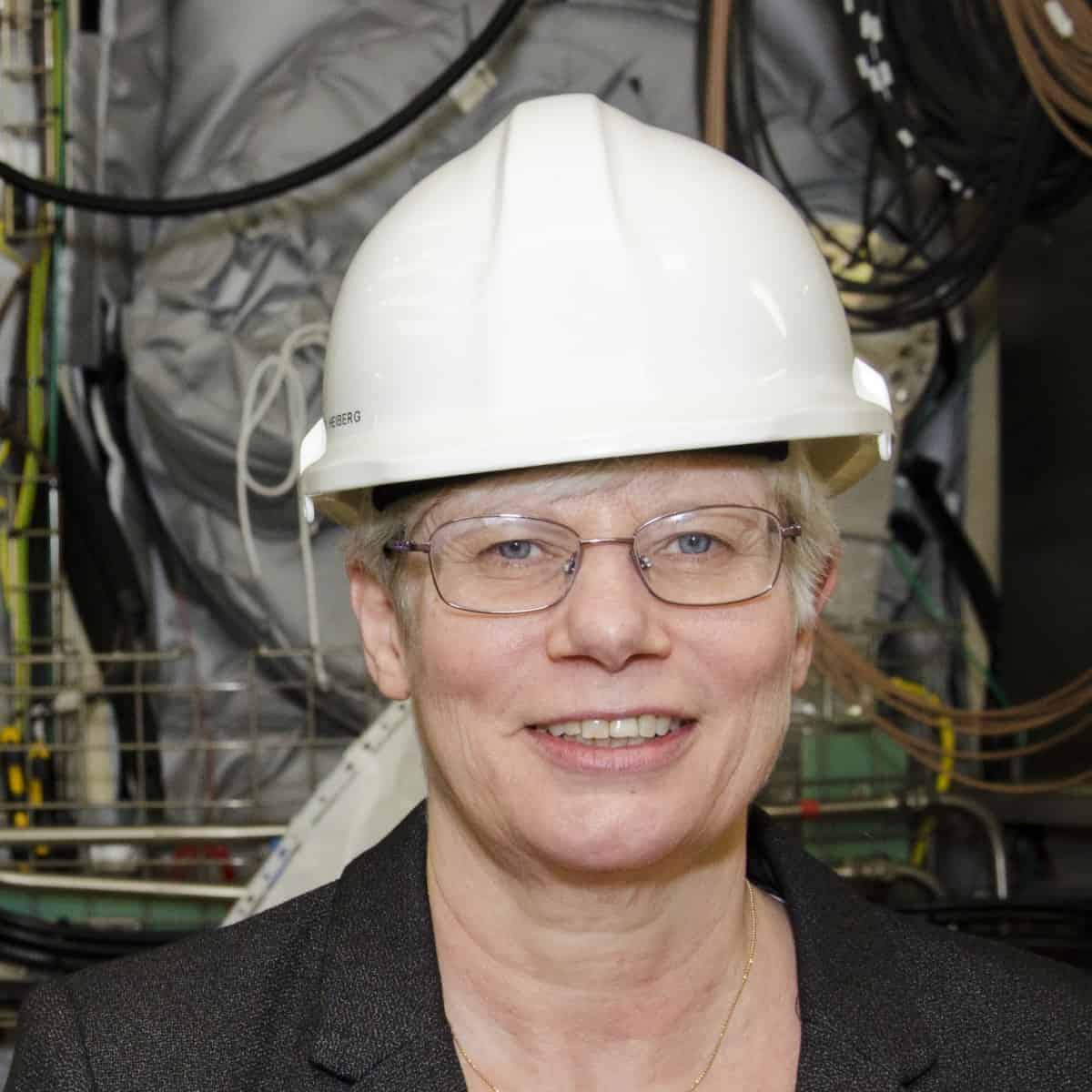
Nanna Heiberg: “Our priorities are to minimize the real-estate and associated power budget for cryogenic refrigeration.” (Courtesy: UKAEA)
In short, STEP scientists and engineers need to engage with the cryogenics industry – at scale and at pace – in order to realize a viable conceptual design for a prototype fusion power plant versus that looming 2024 deadline. Those industry partners, in turn, will gain access to targeted R&D contracts to support near-term cryogenic technology development, testing and prototyping, while positioning themselves as preferred suppliers for the anticipated scale-up to commercial fusion power generation from the middle of the century.
It is not a straightforward sell, however. One of the biggest challenges facing the STEP project team is getting the right creative and commercial people in cryogenics to focus on that slow-burn fusion opportunity. That is especially so given that “business as usual” markets – supporting the hydrogen economy, liquefied natural gas applications and emerging quantum technologies – are where these companies currently see their surest commercial returns.
“We need to help the cryogenics industry see beyond BAU to the significant growth potential of fusion energy,” added Heiberg. “STEP is the proving ground through which we will realize the necessary cryogenic innovations and, as such, it is not just about one prototype fusion power plant, but the catalyst for a sustained commercial and technology opportunity.”
Connecting with engineers
One industry insider with a clear-eyed view on the fusion opportunity – as well as the potential pitfalls for smaller cryogenics companies – is Paul Kelly, chief technical officer at ICEoxford, a UK-based designer and manufacturer of specialist cryogenic systems for scientific research and industry. “My high-level take-away from the workshop is that there is a very long way to go before we realize commercial fusion,” he explained. “Nonetheless, it’s vital that STEP fosters connections with cryogenics engineers sooner rather than later to minimize divergence on the desired ‘cold requirements’ versus what’s actually going to be feasible.”
So how can the STEP team guarantee the cryogenic solutions it needs at the right price point and versus the project’s tight timeframes? “The fusion part of the STEP puzzle is still in its early stages, with probably numerous design changes yet to be made,” noted Kelly. For sure, he adds, the cryogenics industry will need hard-and-fast numbers and targets to hit, so it’s going to be essential to have strong decision-makers to scope out the granular cryogenic requirements for STEP during the current concept design phase.
The cooling requirements for STEP are huge, also the range of temperatures to be controlled is broad
Paul Kelly
“When you start talking about kilowatts of heat load, a cryogenics engineer wants to turn and run away,” Kelly added. “The cooling requirements for STEP are huge, also the range of temperatures to be controlled is broad. I’m sure things will accelerate, though, once the fusion and cryogenics specialists get together and define a complete, joined-up initial design.”
Getting that collaboration right between STEP and the cryogenics suppliers will be fundamental to success, with the feedback coming through loud and clear from small- and medium-sized equipment vendors and academic groups – all of them wary of committing significant time and resource to tender for sprawling, broad-scope design studies.
“What we’re instead investigating is the potential for tighter collaborative R&D engagements, with smaller packages of funding against discrete and more manageable deliverables,” concluded John Teah, cryoplant lead within the STEP project team. “PhD studentships could be another important part of the mix when it comes to engaging with cryogenic experts in academia.”
Back to basics on STEP
In the prototype STEP power plant, nuclear fusion will be realized in a spherical tokamak device that uses superconducting magnets to confine and control a hot plasma of fusion fuels in a container called a torus.
At the heart of it all is the fusion reaction between deuterium and tritium nuclei, yielding one helium nucleus, one neutron and, in the process, liberating huge amounts of thermal energy for electricity production (although STEP is not expected to be a commercially operating plant at this stage).
While most of today’s experimental fusion reactors – including JET and the work-in-progress ITER project in southern France – are built in the shape of a ring doughnut, STEP’s spherical plant will be shaped more like a cored apple (as per MAST-U). This spherical tokamak design is expected to minimize STEP’s physical footprint, improve operating efficiency, as well as potentially reduce capital and running costs.
China’s premier particle-physics lab in Beijing is undergoing major work that will boost its capability to search for more exotic particles. When complete in 2024, the upgrade to the Beijing Electron Positron Collider (BEPC) – dubbed BEPCII-U – will triple the current collision rate and extend the maximum collision energy to 5.6 GeV. The enhanced collider will also help develop plans for a next-generation collider, which if built would make China a world leader in high-energy physics research.
The proposal to build the BEPC, which lies in the west of Beijing, was approved in the early 1980s when China emerged from the Cultural Revolution – a nationwide political movement that had disrupted research and education. The newly founded Institute of High Energy Physics (IHEP) designed and built the BEPC, partnering with US colleagues including Nobel laureates T D Lee and Pief Panofsky from the SLAC National Accelerator Laboratory.
Completed in 1988, the BEPC operated in the energy range 2–5 GeV and focused on the study of tau and charm particles. Facing competition from similar colliders elsewhere in the world, IHEP began an upgrade of the BEPC in 2004. This included adding a second ring for the electrons and positrons to travel separately to improve collision performance. BEPCII consisted of a 200 m-long linear accelerator and two separate 240 m-long rings, in which electrons and positrons are accelerated to nearly the speed of light. They are then smashed together to generate a variety of subatomic particles inside the Beijing Spectrometer (BESIII), which records the trajectories, energies and electric charges of the particles that are produced.
The luminosity of BEPCII reached 1 × 1033 cm–2 s–1, which resulted in a collision rate 100 times higher than that of the original BEPC. This allowed scientists to look for evidence for – or against – the Standard Model of particle physics, which is currently our best theory of the universe’s basic building blocks. In 2008 the first collisions took place at BEPCII and were observed by the BESIII detector, which is a collaboration of over 500 members from 74 research institutions in 15 countries.
The accelerator and collider have already achieved world-leading results that can compete with experiments in the US, Japan and Europe. In particular, in 2012 BESIII recorded collisions that pointed to a particle that researchers were not familiar with. It was generated at 3.9 GeV, decayed into a J/ψ and a charged pion, weighed four times as much as a proton, and carried an electrical charge. Since the particle must contain a charm quark and an anti-charm quark – the composition of a J/ψ – it should hold at least two other quarks to have a non-zero electrical charge. This four-quark structure was totally different from conventional particles, which contain either three quarks (such as a proton) or two quarks (such as a pion). With the very same particle observed on a Japanese collider days later, ZC (3900) became the first confirmed evidence for a four-quark particle to exist and opened a new window on how quarks are combined to form composite particles.
While ZC (3900) has not been confirmed at CERN’s Large Hadron Collider (LHC), this is mostly because the collisions at the BEPC are much “cleaner” than the proton–proton collisions at the LHC. “Presumably there’s too much ‘noise’ at [the LHC],” says Luciano Maiani, who was director general of CERN from 1999 to 2003. “[But this gives] BESIII a good reason to continue to explore exotic particles.”
Since then, BESIII has been discovering more tetraquark candidates and has been a main contributor to the study of exotic particles. The facility has also been well suited to exploring the tau lepton and later the so-called “hadronic” cross-section R value, which was crucial in determining the mass of the Higgs boson that was observed in 2012 at the LHC. “R is a quantity that cannot be calculated theoretically, and before the BESIII measurement, the predicted value of the Higgs mass was below the experimental lower limit. BESIII proved it otherwise,” says Fred Harris from the University of Hawai’i at Mānoa, who has been working at the BEPC since 1993 and served as BES’s co-spokesperson between 1999 and 2013.
Future outlook
The development of the next major upgrade is now under way, which includes the addition of superconducting high-frequency cavities that will boost beam quality and luminosity, as well as superconducting magnets to push collisions to higher energies. This work will involve dismantling some, but not all, of the BEPC-II accelerator. The higher luminosity means more collisions, faster data taking, and more precise measurements of rare processes. Harris adds that higher energies will allow BESIII to study the decay of a different category of particles called charmed baryons, which are heavier than the ones BEPCII has been producing. Charmed baryons have not been studied in detail, with many of the measurements being from 50 years ago. “It’s a topic which was not even envisioned in the early days of the experiment,” he adds.
If BEPCII-U proves to be successful, it will show that the key technologies for the Circular Electron Positron Collider are ready
Yifang Wang, director of IHEP
Ryan Mitchell was a member of the CLEO-c experiment at Cornell University, which also used electron and positron accelerator to produce charm quarks. They observed odd behaviours in collisions at energies above 4 GeV, but did not have enough data to figure out what had actually happened in the process. “When the opportunity arose a decade ago, our group at Indiana University jumped at the chance to join the BESIII collaboration,” says Mitchell, who now works at Indiana University Bloomington. He says that the energy upgrade is an exciting prospect. “Every previous increase in collision energy has opened new doors,” he adds. “These energy regions are yet to be thoroughly explored and we don’t have much theoretical guidance here, but it’s this plunge into unexplored territory that I find especially exciting.”
Mitchell told Physics World that he is particularly interested to see how the collision rates change at higher energies. If these rates depend strongly on energy, it would be a sign BEPCII-U is producing more novel configurations that contain charmed quark–antiquark pairs. “But different electron–positron reactions are giving inconsistent results right now. With more data, we can start to investigate these reactions on a more global level,” adds Mitchell.
It is expected that operations at BEPCII-U will begin in January 2025 and the collider will operate into the early 2030s, if not longer. The upgrade will also test out technologies designed for next-generation facilities that are being built or studied in China, including the $6bn Circular Electron Positron Collider (CEPC). The feasibility study for the CEPC began in 2012 and it consists of a 100 km-circumference “Higgs factory” to carry out precision measurements on the Higgs boson and search for physics beyond the Standard Model.
According to IHEP director Yifang Wang, if BEPCII-U proves to be successful, it will show that the key technologies for CEPC are ready and boost the chances that it is selected in future funding roadmaps. “I don’t know if CEPC will work out, but China is well placed in particle physics to think on a larger scale,” adds Maiani. “It’s certainly worth trying.”
But before then BEPCII-U will be the machine the community uses to make discoveries, train scientists, and foster international collaboration. “When we designed BEPCII, we thought it would retire by 2020,” says Wang. “Let’s see what happens with BEPCII-U.”
Researchers in Italy and Austria have constructed a new device that can transmit coherent quantum information as a superposition of single photons. Known as a quantum memristor, the device could be used to fabricate quantum versions of so-called neuromorphic architectures that mimic the structure of the human brain.
The memory-resistor, or memristor for short, was described theoretically by Leon Chua in 1971, but it was not until 2008 that researchers made the first practical version. The memristor’s special feature is that its resistance can be programmed and subsequently stored. This is because unlike standard resistors, the resistance of a memristor changes depending on the current previously applied to it – hence the “memory” in its name. What is more, the device’s memory of this resistive state persists even when the power is switched off.
Scientists soon realized that the behaviour of memristors was very much like that of neurons in the human brain, which learn by reconfiguring the strengths of the connections (synapses) between neurons. Memristors can bring this learning functionality to the connections in electronic circuits, which is why they have become a fundamental building block of neuromorphic architectures.
They constructed the device using a technique called femtosecond-laser micromachining in which a laser emits light pulses as short as 10-15 seconds to write channels inside a piece of glass. These channels are known as waveguides thanks to their ability to trap or “guide” light into a predefined path, much as optical fibres do, explains team member Michele Spagnolo, who was a PhD student at Vienna when the work was done.
In their device, Spagnolo and colleagues send single photons into these waveguides. Thanks to their quantum nature, these particles of light can be split into a superposition of being in multiple waveguides at the same time. “We make a measurement using very sophisticated single photon detectors in one of these waveguides and then use that measurement to control the device using an electronic controller, thus modulating the transmission on the other output,” Spagnolo tells Physics World. “This is how we can induce memristive behaviour in the device.”
According to Spagnolo, the team’s quantum memristor could open the way towards a whole new class of quantum devices. Possible applications are hard to predict, however, because photonic quantum memristors didn’t exist until now. “This is also the beauty of it,” he says, “but the best we can do is make an educated guess.”
Since classical memristors have found applications in neuromorphic computing platforms, the researchers suggest that its quantum counterpart may find applications in quantum-neuromorphic applications. Indeed, the researchers show in their study, which is published in Nature Photonics, that the device appears to work well in a particular scheme called quantum reservoir computing. “At the moment, my research group in Vienna is working on an experimental version of this quantum reservoir computing scheme,” Spagnolo adds. “This means building a device with several quantum memristors and several photons, and represents a major technological challenge.”
According to Guinness World Records, the highest standing jump by a human is 1.70 m – which was done in 2021 by the American Christopher Spell. Apparently Spell is 1.75 m tall, so it looks like most humans cannot reach anywhere near their own heights when jumping.
Nature’s jumping champions are fleas, which can reach heights that are many times their body size – apparently, the record is 66 times. But now, researchers at the University of California, Santa Barbara have created a jumping machine that outperforms even the flea (see video).
In creating their jumper, Elliot Hawkes and colleagues took a similar approach to the flea and some other animals – they stored much of the energy need for their jump in a spring. But unlike animals – which use a small biological spring and a large muscle motor to jump – the mechanical jumper used a spring that stores a very large amount of energy compared to the output of its motor.
Big spring, tiny motor
Indeed, if the video is anything to go by, the jumper is essentially a big spring with a tiny motor that winds it up.
The jumper is about 10 cm tall and can jump to a height of 30 m, so about 100 times its height. The team reckons that their work could inspire a new type of jumping robot that could be used in areas where it is difficult to walk or climb – for example, on the Moon.
A century ago, an experiment devised by the physicists Otto Stern and Walter Gerlach showed that atomic angular momenta are quantized spatially. This discovery played an important role in the development of quantum mechanics and is seen today as one of the classic experiments of modern physics.
There will be much more about this historic experiment in Physics World this year. In the meantime, you can learn more about the experiment by watching this video – which features Stern and Gerlach speaking about the experiment. English subtitles are provided by the molecular physicist Bretislav Friedrich of Fritz Haber Institute of the Max Planck Society in Berlin.
Ultrasound-mediated opening of the blood–brain barrier (BBB) for drug delivery can be successfully performed through a biocompatible plastic plate, a study on guinea pigs has demonstrated. The finding suggests that the cranial prosthesis could be used as a literal “window to the brain” for such therapeutic ultrasound techniques.
The BBB is the semipermeable interface between the brain’s capillaries and the cerebrospinal fluid. The barrier both protects the brain and maintains cerebral homeostasis by only allowing certain substances to pass across it. For example, lipid-soluble oxygen can diffuse directly across the barrier, while glucose is helped across by means of transporter proteins that bridge the endothelium. In contrast, other substances such as pathogens, blood solutes and assorted large molecules are kept out.
While this selective obstacle is ordinarily essential to brain health, it can provide an unwanted hurdle for the administration of drugs needed to treat a variety of neurological diseases. In fact, it has been estimated that the barrier can inhibit the passage of more than 98% of small-molecule drugs – and all large-molecule neurotherapeutics.
Various strategies have been proposed to sneak medicines past the border control that is the BBB. One approach, for example, involves packaging drugs with special molecules that trigger the endothelium’s transporter proteins, thereby tricking the barrier into actively admitting the therapeutic agents. Other solutions work instead by reversibly opening up holes in the barrier through which drugs can pass – the equivalent of prying open a hole in the border fence.
As their name suggests, microbubbles have diameters in the range of one-to-four microns. They are formed by encapsulating gas within a flexible lipid, polymer or protein shell. When injected into the bloodstream and targeted with low-intensity, pulsed ultrasound waves, they can act as “cavitation nuclei”, concentrating the incoming sonic energy on the BBB and temporarily opening up its intercellular junctions. This then allows large drug molecules to pass through to the brain’s functional tissues.
While clinical trials of this approach have proven highly promising, they are not without limitations. For one thing, it is impossible to visualize microbubble distribution prior to and during insonation, as the high impedance of the skull bone prevents transcranial imaging.
In their study, neurosurgeon Francesco Prada of the Fondazione IRCCS, Istituto Neurologico Carlo Besta in Milan and his colleagues propose that this limitation could be overcome in patients requiring a craniotomy by substituting the native bone that’s replaced at the end of the procedure with an acoustically transparent prosthesis.
In vitro studies: the experimental setup. (Courtesy: Francesco Prada)
Working with 12 guinea pig brains that had been extracted, perfused and maintained in a water bath, the researchers experimented with insonating infused microbubbles in the model organs, both with and without the interposition of a 4 mm-thick plate of polyolefin – a biocompatible plastic material – between the transducer and the brain.
In contrast with many other BBB-opening experiments, the researchers used an unfocused planar transducer capable of insonating a much wider area of the brain than focused ultrasound approaches. They applied the ultrasound over one brain hemisphere after perfusion with microbubbles, monitoring the microbubble distribution with an ultrasound probe. The BBB opening was assessed by seeing whether FITC-albumin, a large fluorescent molecule, was capable of permeating the tissues of the brain.
“Our results showed that ultrasound-mediated blood–brain barrier opening is feasible across an acoustic transparent implantable cranial prosthesis,” Prada tells Physics World. “These findings, combined with previous work from our group showing that ultrasound imaging is feasible and safe across the prosthesis, are literally opening a window to the brain for ultrasound.”
Carmel Moran – an expert in translational ultrasound from the University of Edinburgh who was not involved in the present study – says that the team “convincingly confirmed” that the BBB could be opened when microbubbles were insonated through the polyolefin plate. She adds: “The results pave the way for future large animal and clinical trials utilizing this material as a long-term acoustic access point to the brain.”
With their initial study complete, the researchers are indeed now looking to move towards clinical trials. Alongside this, they say, they are also exploring whether the same setup might be used with other ultrasound treatments like sonodynamic therapy, in which sound waves are used to activate selectively cytotoxic drugs at specific locations in the body.