
A team of researchers from King’s College and Imperial College London have proposed a new way to calculate entropy production in active matter systems
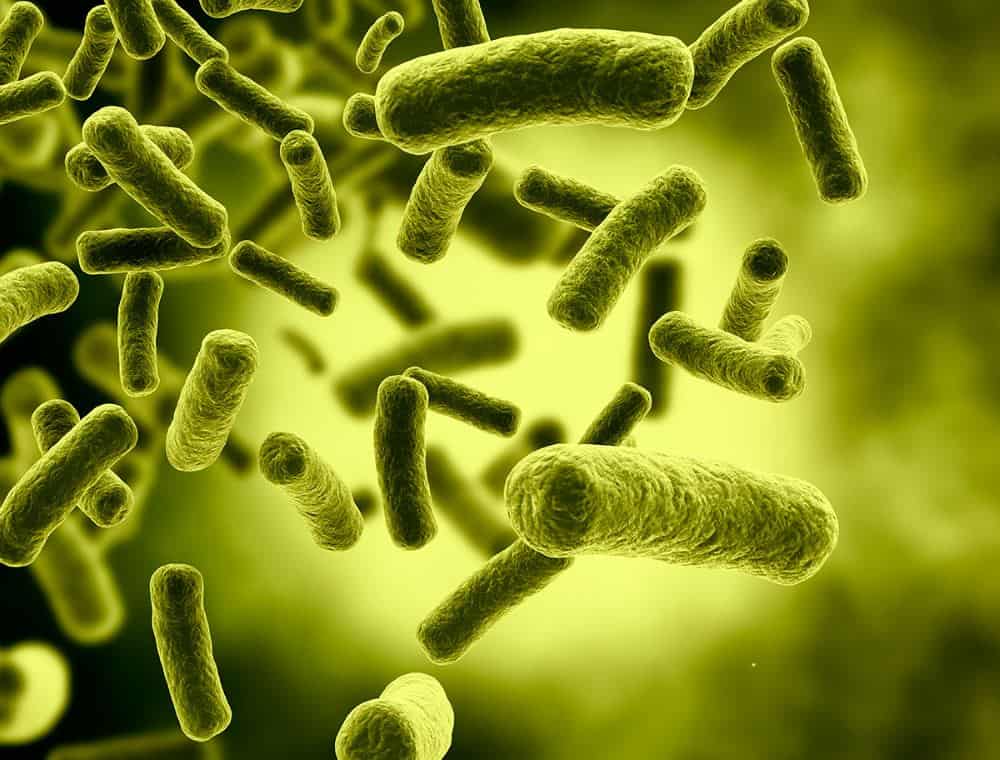
Active matter is matter composed of large numbers of active constituents, each of which consumes chemical energy in order to move or to exert mechanical forces.
This type of matter is commonly found in biology: swimming bacteria or migrating cells are both classic examples. In addition, a wide range of synthetic systems, such as active colloids or robotic swarms, can also fall into this umbrella.
Active matter has therefore been the focus of much research over the past decade, unveiling many surprising theoretical features and a suggesting a plethora of applications.
Perhaps most importantly, these systems’ ability to perform work leads to sustained non-equilibrium behaviour. This is distinctly different from that of relaxing equilibrium thermodynamic systems, commonly found in other areas of physics.
The concept of entropy production is often used to quantify this difference and to calculate how much useful work can be performed. If we want to harvest and utilise this work however, we need to understand the small-scale dynamics of the system. And it turns out this is rather complicated.
One way to calculate entropy production is through field theory, the workhorse of statistical mechanics. Traditional field theories simplify the system by smoothing out details, which works well for predicting densities and correlations. However, these approximations often ignore the individual particle nature, leading to incorrect results for entropy production.
The new paper details a substantial improvement on this method. By making use of Doi-Peliti field theory, they’re able to keep track of microscopic particle dynamics, including reactions and interactions.
The approach starts from the Fokker-Planck equation and provides a systematic way to calculate entropy production from first principles. It can be extended to include interactions between particles and produces general, compact formulas that work for a wide range of systems. These formulas are practical because they can be applied to both simulations and experiments.
The authors demonstrated their method with numerous examples, including systems of Active Brownian Particles, showing its broad usefulness. The big challenge going forward though is to extend their framework to non-Markovian systems, ones where future states depend on the present as well as past states.
Read the full article
Field theories of active particle systems and their entropy production – IOPscience
G. Pruessner and R. Garcia-Millan, 2025 Rep. Prog. Phys. 88 097601
