
New research shows that imaginary numbers are not just convenient, they might be a fundamentally necessary part of quantum theory
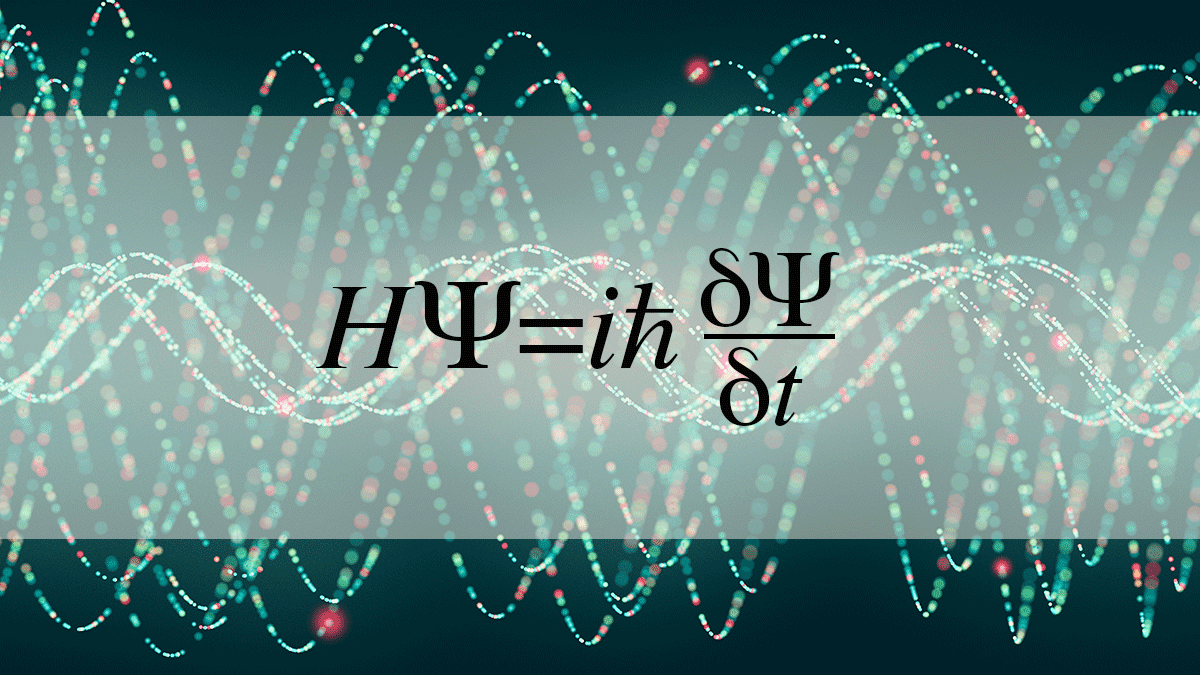
Imaginary numbers first appeared in the 16th century as a mathematical invention, introduced to solve equations that real numbers could not. As the name implies, many treated them as kind of trick to get results, rather than an underlying truth about the nature of reality. Although highly controversial at the time, these numbers are now ubiquitous in many fields of physics and mathematics.
One such field is quantum mechanics. Researchers routinely use complex numbers, which include both imaginary and real parts. For many simple quantum systems, you could think this is a mathematical convenience rather than a physical necessity. Predictions made with complex numbers can often be reproduced using only real numbers, albeit in a larger mathematical space.
The key question is: are complex numbers merely just a convenience, a trick, or are they necessary to understand complicated quantum systems? And if they are necessary, to what extent?
A team of researchers from France, Poland and Spain have been working on this problem and they’ve now come up with an answer. Their work relies on the composition postulate – a standard starting point for formulations of quantum mechanics which describes how quantum systems are combined mathematically.
They set out by studying a star-shaped quantum network. In this network, a number of outer parties (N) each receive one part of a quantum system, while a central party (Eve) receives the other parts from independent sources.
Each outer party chooses between several simple two-outcome measurements, while the central party performs one measurement with many possible outcomes.
Their strategy was to build a specially designed, conditional Bell test. The most well-known Bell test compares classical physics with quantum mechanics, with experiments demonstrating the latter is a better description of reality. However, Bell tests can compare the correlations predicted by many other different theories.
The two theories studied here were standard quantum theory using complex numbers and a different formulation of the theory only using real numbers. While it was already shown that complex numbers are necessary, just how much the predictions of complex and real quantum theories differ is still an open question.
They found that the ratio between the predictions of the two theories increased proportional to N-1. So as the network gets larger, real-number quantum theory becomes increasingly bad at reproducing the results of standard complex-number quantum theory.
The work therefore gives a clear answer to the original question. Namely, in sufficiently large quantum networks, complex numbers provide an advantage that can become arbitrarily large. If the composition postulate is respected, they are physically required.
Read the full article
Gap between quantum theory based on real and complex numbers is arbitrarily large – IOPscience
S. Sarkar et al 2026 Rep. Prog. Phys. 89 070503
