AI sniffs out tuberculosis in breath’s chemical signature

Every breath we exhale carries a complex chemical narrative written in thousands of volatile organic compounds (VOCs). These tiny molecules, produced by human metabolic processes and invading pathogens, hold immense diagnostic potential. Yet, translating this molecular cloud into a definitive medical diagnosis has long faced an analytical bottleneck. Now, an international team of physicists from Botswana and South Africa has harnessed machine learning to decode these complex signatures, offering a rapid, non-invasive pathway to detect tuberculosis (TB) directly from human breath.

Breaking the analytical bottleneck

Traditional gas chromatography-mass spectrometry (GC-MS) excels at separating complex molecular mixtures based on volatility and mass-to-charge ratios. However, a single breath sample generates thousands of overlapping spectral peaks. Manually sifting through this dense landscape is a painstaking, time-consuming process.

To find a faster, more systematic approach to molecule identification, researchers in the Nano –Breath taking group led by George Chimowa from Botswana International University of Science and Technology (BIUST) collected breath samples from three distinct cohorts: patients with active TB, individuals with multidrug-resistant TB (MDR-TB), and healthy control volunteers.

Standard analytical pipelines often rely on aggressive data pre-processing to smooth and simplify the GC-MS spectra. However, this filtering risks erasing subtle, low-concentration molecular features that might hold critical diagnostic clues. Bypassing this limitation, the BIUST group fed a high-dimensional dataset of 1867 spectral features (from 87 breath samples) directly into four competing supervised machine-learning algorithms: decision trees, random forest, k-nearest neighbours, and support vector machines (SVM). The researchers published their findings in Discover Artificial Intelligence.

Geometric optimization avoids the pitfalls of high-dimensional data

The team found that the linear SVM classifier led the algorithmic comparison, distinguishing among the three patient cohorts with 93% accuracy.

This performance stems from how the algorithm handles high-dimensional data spaces. While distance metric models often suffer from overfitting errors, where experimental noise is misidentified as a meaningful diagnostic signal, SVM relies on geometric boundary optimization to separate classes.

Much like clearing a wide highway down the centre of two opposing crowds, it identifies a hyperplane that maximizes the margin between groups. Instead of tracking every individual in the crowd, the algorithm relies solely on a sparse subset of border points known as support vectors. By focusing strictly on these boundary “guards” and ignoring the background movement, this approach completely isolates the classifier from the noise inherent to the surrounding high-dimensional feature space.

The Nano – Breath taking research group

Beyond raw classification accuracy, the model yielded a crucial insight for future clinical applications. It pinpointed a specific window within the gas chromatogram, a retention time between 10 and 30 min, where the most diagnostic, high-variance VOCs elute. This 20-min window corresponds to medium- and large-molecule VOCs, including specific chemical biomarkers associated with TB, such as tridecane, decane and O-cymene.

By demonstrating that these vital diagnostic features are concentrated within this single slice of data, the physicists have shown that future diagnostic hardware can be specialized, eliminating the need to analyse the entire spectrum. Narrowing the focus to this specific elution window can drastically shrink data-processing times and maximize instrument throughput in clinical settings.

AI and the future of medical diagnostics

TB remains one of the world’s deadliest infectious diseases. Traditional diagnostics rely heavily on slow sputum cultures and backlogged laboratory queues, delaying critical treatment. A rapid, non-invasive breath test powered by an optimized physical classifier offers an ideal alternative for resource-limited settings where laboratory infrastructure may be scarce.

While the researchers emphasize that larger validation trials are required, the work signals a profound shift in medical diagnostics. It mirrors advanced data-modelling techniques used in engineering, such as those predicting structural degradation in self-healing aerospace composites.

By fusing analytical physics with artificial intelligence, this research points to a future where immediate, automated bedside disease detection could be rapid, accessible and driven entirely by the mathematical profiling of a patient’s breath.

Heat-transfer fins give phase change materials a boost

If you’ve ever kept a drink cool on a hot summer day by placing it inside a frozen, gel-filled sleeve, you’ll understand the appeal of phase change materials (PCMs). The reason these sleeves work so well (and so much better than simply putting your drink in a cold bath or cool room) is that the solid inside them has a high latent heat, meaning it can absorb relatively large quantities of energy before melting and beginning to warm up.

But what if surrounding your drink with a frozen PCM isn’t enough? What if you want to cool your drink more quickly and evenly? One option would be to create a PCM sleeve with fin-shaped extensions that protrude into your drinking vessel. These fins would cool your drink – or, equivalently, allow your drink to melt the PCM – much more efficiently than a simple sleeve. But what should the fins look like? How far apart should they be? And how many of them do you need?

These are the questions that Paolo ProiaMauro Sbragaglia and Giacomo Falcucci considered in a study published in EPL though not with the aim of keeping their drinks cold. As researchers at the University Tor Vergata of Rome, Italy, Proia, Sbragaglia and Falcucci are interested in PCMs that store and release heat like a battery. Such materials are useful in fields such as electronics and refrigeration where heat is a common byproduct. Other applications include maintaining the efficiency of solar panels by preventing them from getting too hot and keeping buildings cool in the daytime via insulation.

Physics World spoke with them about their work.

What was your motivation for doing this research?

Our interest in PCMs stems, in part, from our interest in their many applications, especially in the ecological transition to less carbon-intensive fuels. PCMs are particularly good at managing heat in hydrogen storage with metal hydrides, for example, because storing hydrogen in these materials produces heat, while releasing the hydrogen requires it. Using a PCM to store the heat of the adsorption process and give it back during the release means that the produced heat doesn’t go to waste. Instead, it improves the efficiency of the process.

We’re also fascinated by the complexity of the equations involved. The coupling of fluid and temperature dynamics already causes interesting phenomena such as convection. By adding a phase transition to the mix, you introduce a moving boundary that complicates the system even more, both phenomenologically and analytically, since the describing equations must account for it.

We started this paper as a way of extending our previous work on the insertion of fins inside a PCM to three dimensions. PCMs are exceptionally good in latent heat but severely lacking in sensible heat; in other words, they store heat well, but they absorb and release it poorly. Fins are useful in relieving this flaw since they enhance the heat transfer surface and provide a horizontal heat source, which is instrumental for the development of convection, the main driver of heat transfer in this kind of system. By switching to a 3D system, we had more freedom to explore complex layouts of multiple fins and the importance of their relative position.

Individual head shot photos of Paolo Proia, Mauro Sbragaglia and Giacomo Falcucci

What is the most important advance in the paper?

The most important result is that naively inserting fins too close to each other can cause interference. If there are overlaps in the fins’ “influence zone”, the system will waste energy by, in effect, trying to melt something that was already molten from heating by a nearby fin. Moreover, by comparing a single fin and multiple fins with the same total surface, we found that the latter configuration benefits from the gaps between the fins. This is because the substance in these gaps melts early and starts acting as an extra heating surface, contributing to the development of bigger convective structures.

Why is it so challenging to model melting in phase change materials in 3D?

Beyond the analytical requirements we already mentioned, the success of this type of modelling depends on having a resolution that is high enough to capture correctly all the phenomena in the system. This means the number of computational sites N must be sufficiently large. In 2D, we “only” have N2 sites to model, but in 3D, this scales to N3. That creates a challenge because making N too large would severely slow down the simulation. Moreover, we must be sure to respect the restraints on the physical parameters for which the lattice Boltzmann method is a correct approximation of the equations involved. So, we underwent a thorough validation process to pinpoint the best parameters for the algorithm.

What do you plan to do next?

First, we’d like to further optimize the code. The main bottleneck is the speed of a single iteration. Ideally, we’d like to study a wider range of layouts and physical conditions, but with the code we have now, that would impact heavily on performance. For example, a slower-melting substance requires more iterations to completely melt, which translates into more real-life time to model, sometimes outside the limits of feasibility. This problem would obviously be solved if we can make a single iteration faster.

Another issue we have is that some ranges of physical parameters can make the simulation unstable. Fortunately, there exist some remedies to this, and we plan to eventually adopt them.

Finally, we would be happy to see other researchers use these findings in their own optimization studies on fin shapes and spatial layouts. It would also be very interesting to see someone study this problem from an analytical angle or to see some experimental validation. In the medium term, we are planning to conduct our own experiments to use as a benchmark for our computational results.

Pressurizing EV battery electrodes could make them last longer, if it’s done right

Pressure-dependent battery degradation mechanisms

Engineers are constantly striving to improve the safety and performance of electric vehicle (EV) batteries. Much effort has been put into developing new electrode materials over the years, but future improvements may not follow the same path and may just be as simple as utilizing physical pressure.

A recent study, led by researchers at the University of Cambridge, suggests that EV batteries could be made to last up to twice as long, by applying the right amount of pressure to the electrodes. It is, however, a fine balancing act, as too high or too low a pressure can cause the battery to fail. To employ this approach in real world systems, engineers will need to make sure that the process is easily repeatable without significant pressure error, but it’s an interesting avenue of battery engineering that has come to fruition.

“We carried this work out to improve the sustainability of batteries,” says Michael de Volder, one of the lead researchers on the study. “Given that we are not very good at recycling batteries, extending the lifetime of batteries reduces the need for mining critical minerals for making new batteries and therefore improves their sustainability.”

For their study, reported in Nature Energy, the researchers developed a dilatometer with pneumatic bellows to apply pressure to the electrodes. The bellows act like a clamp to maintain a uniform and constant pressure on the electrode, while a sensor detects small volume changes that occur as the battery charges and discharges.

The researchers tested their electrode pressurization approach on commercial nickel manganese cobalt (NMC) lithium-ion pouch batteries (which have a flexible packaging), without changing their electrolyte or electrode composition. By using commercial batteries with a standard setup, they could test them fairly under different pressures.

“In this work we optimized how hard battery anodes and cathodes should be pushed together to maximize the lifetime of batteries,” de Volder tells Physics World. “Importantly, we also unravel which degradation mechanisms kick in if you press too hard, or not hard enough.”

Doubling battery lifetime

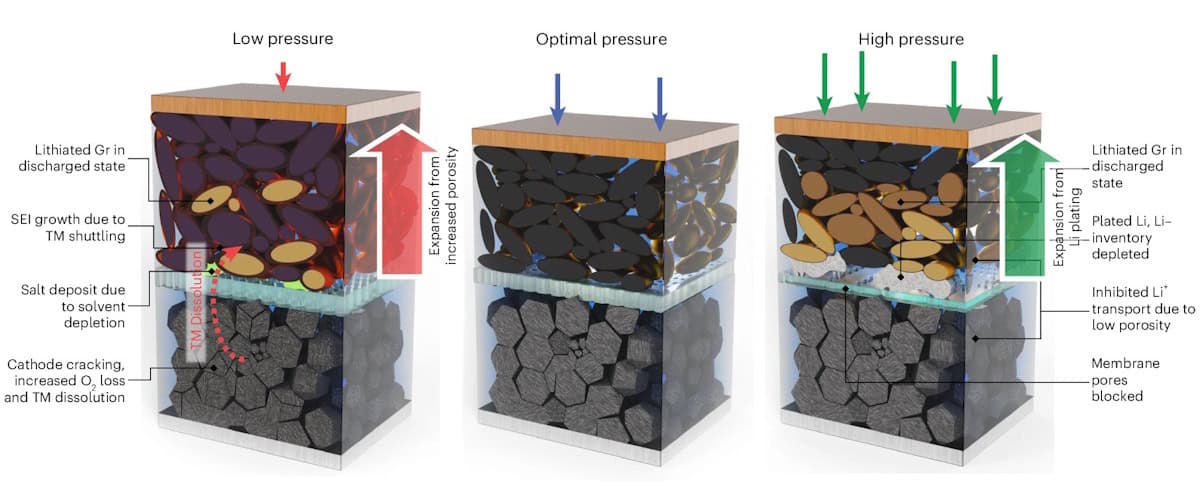
The researchers found that increasing the stack pressure fourfold over typical initial values used in conventional coin cells – to an optimal pressure of 12.5 bar – doubled the lifetime of the NMC811 cells. They compared the results with NMC cells tested at an extra-low pressure of 1.5 bar, a low pressure of 3 bar, a medium pressure of 6.5 bar and a high pressure of 37.5 bar.

Different degradation mechanisms emerged at high and low pressures outside of the optimal pressure zone. Low stack pressure accelerated cathode cracking, causing an increase in transition metal dissolution and excessive formation of the solid electrolyte interphase (SEI) layer. The cracking is likely due to a small number of particles bearing most of the mechanical load, leading to localized high-stress concentrations that initiate crack propagation.

Higher stack pressures, meanwhile, caused increased lithium plating on the anode. The team observed that the electrode thickness reduced during initial cycling but then underwent rapid thickness growth. When the electrodes are at their thinnest, they have a lower porosity that limits lithium transport, leading to higher overpotentials and higher lithium plating. This increases the amount of “dead” lithium and reduces the usable lithium inventory in the battery, causing it to degrade faster.

“We found that when the pressure applied to battery cells is sub-optimal, certain dangerous degradation processes can be accelerated. So, in a way, pressure optimization might improve the safety of batteries. However, more research is needed before we can draw reliable conclusions on this front,” says de Volder.

The pressurization results in this study are still in the early stages, but if shown to be viable at scale in commercial systems, could help EV batteries to last longer. In theory, this could give second-hand EVs a higher market value as the vehicle will have a longer battery life when sold. Additionally, if EV batteries can last longer, it will reduce the pressure on lithium mining operations and reduce the amount of raw material required for battery manufacturing (assuming the same demand) – something that is becoming an issue due to the skyrocketing price of lithium.

Cambridge Enterprise, the university’s innovation arm, has filed a patent, so the research team and university obviously see commercial viability in the process. When asked about the team’s future plans, de Volder tells Physics World that “we studied pressure optimization for one specific battery chemistry, but we anticipate that gains can be made in the lifetime of other battery chemistries too”.

How scholarly publishers are safeguarding trust in science

This episode of the Physics World Weekly podcast features Antonia Seymour, who is chief executive of IOP Publishing.

Seymour has more than 30 years’ experience in a publishing industry that has evolved significantly from the days of paper journals to today’s sophisticated digital technologies.

In this interview we explore how scholarly publishers are responding to the rapid growth in research output, the rise of artificial intelligence and the increase in threats to research integrity.

A wholly owned subsidiary of the Institute of Physics, IOP Publishing produces more than 100 scholarly journals as well as Physics World.

Identifying maximum viscosity: a slide puzzle

To play, click or drag one or more tiles to move them into the empty space. Repeat until you have reconstructed the image.

Image courtesy: iStock/Muhammed Zeynel Ozturk

Fancy some more? Check out our puzzles page.

Future of UK physics threatened by ‘ruinous’ funding cuts, says Institute of Physics

Physicists in the UK have reacted with dismay following the decision by the Science and Technology Facilities Council (STFC) to cancel funding for several high-profile international projects. The Institute of Physics (IOP), which publishes Physics World, says that the axing of support threatens the UK’s international reputation as well as the ability to attract people into the subject.

The STFC cuts come after the council announced late last year that its core annual budget would rise by only £7m to £842m over the four years from 2026 to 2030. One of seven research councils within UK Research and Innovation (UKRI), the STFC runs the UK’s national facilities and supports particle physics, astronomy and nuclear physics (PPAN) research in the UK.

In a strongly worded statement, IOP President Paul Howarth is now urging the government to review “this ruinous set of decisions”, calling the cuts a “terrible blow” that will do “real damage” to the UK’s scientific reputation and put future economic growth at risk.

“Despite reassurances, physics has not been protected, crucial facilities remain under threat and jobs are being lost,” says Howarth. “Scientific capability that has taken years to build up is being put at risk by these decisions – it undermines a number of our most important international collaborations and could put a whole generation of young people off a career in science.”

Balancing the books

Although UKRI has received a record £39bn investment across the four-year period, it said last year that projects at STFC would need to be cut given inflation, rising energy costs as well as “unfavourable movements in foreign exchange rates”. Together, the STFC’s annual costs are projected to rise to over £1bn per year by 2030, forcing it to find ways to balance its books by 2029.

Earlier this year, the STFC said it would have to cut its core science budget by at least 30% over 2024/2025 levels. UKRI also noted it would stop funding two UK facilities – the Relativistic Ultrafast Electron Diffraction and Imaging facility and the C-MASS mass spectrometry centre. A UK-led upgrade to the LHCb experiment at CERN and support for the Electron-Ion Collider at Brookhaven in the US would be axed too.

That announcement caused significant distress within the physics community, prompting the heads of UK university physics departments to publish an open letter to then science minister Patrick Vallance, expressing their “deep concern” about funding changes adding that such cuts cause “reputational risk”.

UKRI then carried out further consultation with researchers and the STFC’s expert advisory bodies, with the results of this “funding prioritisation exercise”now revealed. There is some good news for STFC-funded “discovery-led” PPAN research, which physicists had feared could be cut by a third. Following lobbying, UKRI says this work is being “protected”, although it will still fall by 2.7% over the next four years.

Under attack

While facilities such as Diamond Light Source, the ISIS Neutron and Muon Source, and the Central Laser Facility will not be mothballed, the STFC’s budget for multidisciplinary facilities will reduce by 15% over the next four years to save £28m. As a result, ISIS will have to reduce operational time at the facility.

Yet the STFC warns that if saving and income targets for the programme are not met by 2028 then further action could be taken, which could involve closing a multi-disciplinary facility.

STFC’s national laboratories and estates budget fares slightly better, falling by 8% over the four-year period, but individual facilities will be hit harder. The operational budget of the Boulby Underground Mine, for example, will be slashed by 40%.

Particle fever

The STFC insists that subscriptions for international projects, such as CERN and the European Southern Observatory, will remain protected despite their costs expecting to rise by 19% over the next four years. But other projects, including the EIC as well as the LHCb upgrade, will not be funded. The latter is expected to operate until 2033 by which time it would have reached the end of its lifetime after years of intense radiation damage.

An upgrade was planned so that it could take advantage of the upgrade to the LHC – the High-Luminosity LHC (HL-LHC) – and offer an order of magnitude increase in luminosity over upgrade I.

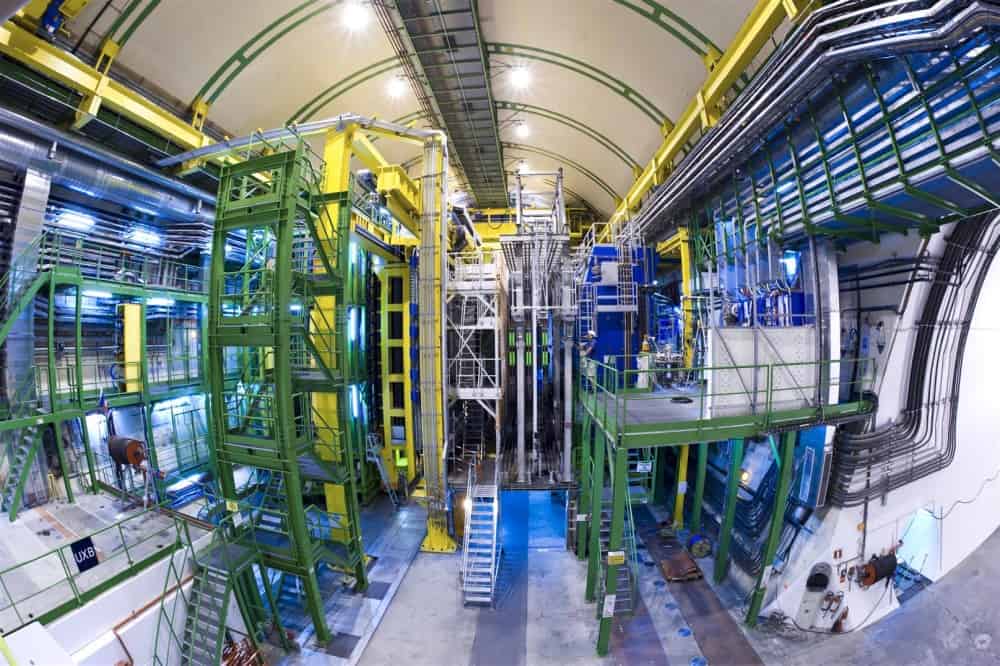
Inside the LHCb detector

Tim Gershon from the University of Warwick, who became international spokesperson for the  collaboration this month, says that the outlook for STFC-funded science is “grim”.

“With a 15% cut last year and an outlook that sees funding shrink further due to inflationary pressure, not even excellent-rated and internationally-leading science like LHCb can be supported,” he adds. “LHCb is the canary in the coalmine for the future sustainability of particle physics and astronomy research.”

Gershon states that the decision to cut UK involvement in LHCb will throw away the leadership it has built up. “Not only is this a tragedy for researchers and engineers who have dedicated their lives to making LHCb one of the most successful experiments in history, it destroys opportunities for current and future students to be involved in world-leading scientific discovery,” he adds.

This is a short-sighted move, to save a tiny fraction of the overall UK science budget

Catherine Haymans

Gershon says it will take some time to understand what the UK’s decision means for the upgrade and how other funding agencies will react but without UK expertise it will be hard to progress given the UK is the largest partner in LHCb with a 20% stake.

“Ultimately, the LHCb Upgrade is an essential part of the full exploitation of the HL-LHC, which is the top priority of the European and CERN strategies for particle physics,” adds Gershon. “We are determined to deliver the best detector that is possible within the available resources. But such a major change to the level of expected resources makes this extremely difficult.”

Peter Millington, a particle physicist from the University of Manchester, says that the outcome is “bad news” for accelerator physics and the applications that it fosters, particularly in medical physics. “It is completely at odds with UK priorities across all industrial strategy growth-driving areas, while also eliminating skills pipelines pivotal to a wide range of sectors and eroding the UK’s long-held position as a global scientific leader.”

Astronomy woes

Astronomy is another area that is bearing the brunt of the cuts. The UK contribution to the e-MERLIN network of seven radio telescopes, which includes the iconic Lovell telescope at Jodrell Bank in northern England, is also ear-marked for cancellation. Its funding will now run out in 2028 and the move not only threatens e-MERLIN but also the future of Jodrell Bank , which the Royal Astronomical Society calls a “deeply troubling development”.

Catherine Haymans, Astronomer Royal for Scotland, says she is “absolutely devastated” for those working on e-MERLIN.  “This is a short-sighted move, to save a tiny fraction of the overall UK science budget,” she says. They are now considering contacting the new Department for Business, Innovation, Science and Trade to reverse the decision.

Other astronomy cuts include the UK withdrawal from the James Clerk Maxwell Telescope located in Hawaii as well as 20% cuts for the UK’s Square Kilometre Array Regional Centre and activities at the Vera C. Rubin Observatory in Chile, which recently began a 10-year survey of the universe.

Jim Wild, president of the Royal Astronomical Society, notes the cuts are “devastating news” for UK astronomy. “At a time when technological innovation is crucial to our country’s prospects, discarding unique, globally significant observatories threatens both our scientific future and the inspiration of future generations of astronomers,” adds Wild.

Michele Dougherty, executive chair of the STFC, who is also Astronomer Royal, says that the situation requires “tough, but necessary decisions”.

“After listening to our community we have protected core discovery research within PPAN, through a more focused portfolio that safeguards postdoctoral researchers, protects PhD opportunities and maintains the UK’s international leadership.” adds Dougherty, who stepped down as president of the IOP in January over the conflict of interest with her position at the STFC. “These are never easy choices, but we have made what we feel are the right decisions to bring STFC to a sustainable financial position by 2029/30″.

The Bayeux Tapestry: how optical techniques have let this artwork come home

The Bayeux Tapestry

A few years ago, I was lucky enough to see the Bayeux Tapestry – the famous embroidered cloth depicting the Norman invasion of England in 1066. More than 900 years old, this historic piece of art is only 50 cm wide but more than 68 m long. It’s also extremely fragile, which why I was astonished when I heard that that Bayeux Tapestry was going to leave its home in Normandy and be transported across the English Channel to the UK.

The loan of the artwork, which was agreed between former British prime minister Keir Starmer and French president Emmanuel Macron last year, has now taken place. The tapestry arrived under police escort on 10 July and will be on display at the British Museum in London from September 2026 until July 2027. It is the first time the tapestry has been back in England, the country where this linen cloth was originally made.

I’m fascinated by how non-invasive optical techniques have been crucial in advancing our understanding of the tapestry.

So what’s all this got to with physics? Well, I’m fascinated by how physics – and specifically, non-invasive optical techniques – have been crucial in advancing our understanding of the tapestry and its historical significance. Thanks to physics-based equipment developed by hi-tech manufacturers, we’ve learned about how the Bayeux Tapestry was initially made, what damage it subsequently suffered, how it was repaired, and the nature of its current condition.

Such information is vital not only for increasing our historical awareness, but also for current conservators who want to understand the tapestry’s underlying condition and find out how to preserve it for future generations. And before the pedants write in, yes I know that while it’s known as the Bayeux Tapestry, technically it’s an embroidery. That means it was created by stitching woollen threads onto a linen backing, which is helpful to know when reviewing the physics involved.

Optical sleuthing

The beauty of using optical methods to study the Bayeux Tapestry is that they are non-destructive and non-intrusive – and so can typically be applied in-situ. In 2017 a three-year project was started, in which conservationists used high-resolution 2D imaging, photogrammetry, multimodal scanning and advanced image reconstruction techniques to determine the tapestry’s condition and conservation needs. The project revealed considerable information about how this artwork was created and modified over time.

Thanks to these high-resolution images, we now have a single digital map of the entire tapestry, making it possible to zoom in and look at individual threads. It’s yielded information such as the width of stitches and the positions where the wool threads cross the original linen background. As a result, historians now believe the tapestry was made by a single group of embroiderers, who – knowing the skills that existed at the time – were probably based in Canterbury, UK.

Techniques such as infrared spectroscopy and fluorescent and reflection ultraviolet imaging have revealed information about what’s underneath the surface of the tapestry.

From the size and direction of the stitches, we also think the outlines of the figures were stitched first, with the shapes filled in afterwards using coloured wools in a strict, specific order. Meanwhile, techniques such as infrared spectroscopy and fluorescent and reflection ultraviolet imaging have revealed information about what’s underneath the surface of the tapestry. In particular, they’ve located the presence of stains such as glue, wax (dripped from candles that lit the tapestry) and even oil from the hands of people who touched it.

Infrared light passing through the dark-coloured wools have also revealed original sketch lines that were drawn on the linen base before the wool stitching started. It reveals the original artist’s draft, likely to be someone familiar with manuscript drawing – perhaps an illuminator of religious books.

The Bayeux Tapestry arriving in London via lorry

3D imaging with photogrammetry

Researchers in France, led by Stéphane Le Mouélic from Nantes University, who originally did a PhD in astrophysics, have also used computer software to combine more than 440 overlapping 2D photos taken from multiple angles to create a detailed 3D model of the Bayeux Tapestry (J. Cult. Heritage 71 211).

It digitally “irons out” all the sags and wrinkles in the line fabric, recreating the original, “flat” tapestry and allowing the original physical shape of the artwork to be revealed for the first time. The 3D model can be viewed for free at the Bayeux Museum website, allowing historians, researchers and members of the public to study it without having to handle the delicate material.

Physics-based techniques have also allowed us to deal with the fact that parts of the fabric have been repaired over the last 900 plus years. Some of those repairs used non-authentic dyes and colours, while others covered up the original stitching. But using computer vision and image processing, threads that were added later can be subtracted digitally, providing a clearer, corrected view of what the original tapestry looked like.

Finally, optical tools can help keep the tapestry safe for future generations. Museum curators need to know if the cloth is sagging, tearing, or changing shape over time. Instead of putting heavy tools on the cloth, lasers can scan the cloth to accurately map of the contours of its surface. By repeating this exercise every few years, conservationists can spot if any part of the cloth has stretched or sagged, enabling minor problems to be rectified before they end up causing significant damage.

Without the huge amount of investigative and restorative work carried out, the Bayeux Tapestry would never have been allowed to make the journey to London.

In 2025 Le Monde newspaper reported that experts had, over the previous five years, meticulously documented 24,204 stains, 9,646 holes and 30 tears in the artwork. Without the huge amount of investigative and restorative work carried out, the Bayeux Tapestry would never have been allowed to make this year’s journey to London. Advanced and detailed optical measurement has “de-risked” the tapestry’s trip.

Tickets to the British Museum exhibition are reportedly being snapped up faster than those for Glastonbury. So if you don’t get to see the tapestry in person, feel free to marvel at this wonderful historical artwork by checking out interactive online digital copy. It really is physics and history in the making.

Can a 16-year-old really understand quantum teleportation?

Quantum theory is one of humanity’s great intellectual achievements, radically transforming our understanding of nature at the deepest level while delivering unprecedented technological advances. We have thus always felt it a great pity that most young people never get the opportunity to engage with the theory at a substantive level.

The solid-state physicist David Mermin, who has studied the fundamentals of quantum mechanics, once memorably wrote of quantum theory: “We now know that the Moon is demonstrably not there when nobody looks”. It was a comment that certainly captures the imagination, but it is difficult to appreciate what he meant meant without engaging with the mathematics that lies behind it.

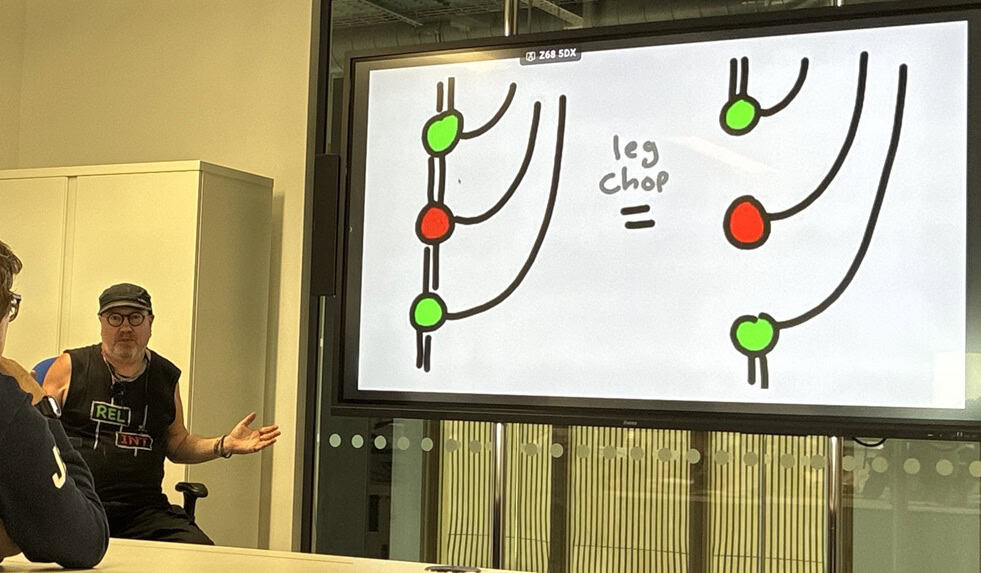
In an attempt to see if we could change that, we ran our first Quantum in Pictures programme at the University of Hertfordshire earlier this month. A five-day, in-person course, it was attended by about 45 students aged 16-18 and was built around Quantum Pictorialism – a diagrammatic approach to quantum theory pioneered by Bob Coecke from the University of Oxford and collaborators.

bob coecke explaining quantum physics

The crucial point is that the pictures aren’t illustrations of some more fundamental mathematics hidden underneath. The pictures are the mathematics. A rigorous graphical calculus built from spider diagrams enables students to reason directly about quantum processes. Since this diagrammatic formulation is fully equivalent to the usual Hilbert space formalism, the students were doing quantum mechanics for real.

We felt truly privileged to share the mysteries of quantum mechanics with a fantastically friendly, interested and diverse cohort from schools across south-east England. What struck me was how readily they engaged with the material: asking excellent (and sometimes rather challenging) questions, debating ideas and working collaboratively through the problem-solving sessions.

The graphical problems proved particularly popular, with repeated cries for “more spider diagrams!”. The course was deliberately ambitious, but by the end, they were able to work through the complete quantum teleportation protocol. Indeed, one student was confident enough to get up and reason through it for the whole class (something we certainly would not have dared to do at their age).

As Maya, a year-12 student from Highams Park Sixth Form in London, put it: “I really enjoyed seeing how ideas in quantum physics could be explained through simple pictures and diagrams. I was surprised that concepts like quantum teleportation, which seemed very complicated at first, could become much easier to understand through this approach. The programme has made me even more interested in studying physics and exploring quantum theory in the future.”

The approach also worked for students without a traditional mathematics or physics background, such as Andrew, a year-12 student from Sir John Lawes School in Harpenden.

“The programme was captivating,” he said. “The concept of using diagrams was innovative and explained things in a logical manner to help me understand topics such as quantum teleportation. The programme showed the stark differences between classical and quantum physics through real-world examples, enriched by talks from industry experts and pioneers with different backgrounds.”

Muhammad Hamza Waseem, who helped develop the programme and joined us on the final day, captured the atmosphere perfectly. “I found the enthusiasm, curiosity, and irreverence of the students very inspiring,” he said, “and I hope that they take the same spirit into their university education and beyond.”

That sense of joy and excitement was, for me, the lesson of the week. We’ve been thoroughly convinced that quantum theory isn’t intrinsically beyond the reach of curious 16-year-olds. We just need to give them the right mathematical language. The next step is an optional graduate-level exam, which will put that claim to the test. Watch this space.

  • The authors would like to thank staff, researchers and students from the University of Hertfordshire who volunteered their time to make the programme possible. They are also grateful to Ian Loffler, Bob Coecke and Muhammad Hamza Waseem for their support and inspiring contributions.

Bringing physics down to Earth through rocket science

Science is often easier to learn and understand when its abstract ideas are presented through the lens of our everyday world. Indeed, a key challenge for science teachers is to make the subject as interesting as possible to students, usually by showing its applications to real-world problems. As a former college lecturer turned science journalist, Trisha Muro is very well suited to this task.

To introduce her new book It’s (Just) Rocket Science: Exploring Physics Through Spaceflight Missions, Muro recalls how, while teaching high-school physics, she had a student drop out of her course because they “thought it would be more like ‘story’ physics”. Muro wasn’t exactly sure what the student meant, but the phrase stuck with her over the years, eventually leading her to write this book. Within its pages, Muro presents quintessential physics concepts in the context of spaceflight. She touches upon everything from the Apollo space programme to the Mars rovers, to provide the narrative aspect that makes abstract science relatable.

I’d argue that rather than story, the examples she uses in the book are more like case studies, as there is not much of a continuing narrative. Indeed, I couldn’t help but wonder if by “story”, Muro’s student meant science-fiction physics rather than real-life examples, but that’s semantics. What Muro has written is a very effective guide to all manner of basic physics that draws upon all her experience as a physics teacher and all her skills as a science writer.

In It’s (Just) Rocket Science, each chapter features an interview with one or two scientists (refreshingly, mostly women) providing insights into how the missions that they work on employ physics. There are some clear and concise explanations and neat analogies throughout. Muro provides a treatise on general relativity by highlighting the Hubble Space Telescope’s observations of gravitational lensing. She also includes a fascinating explanation of momentum via the physics of NASA’s DART mission, which impacted and deflected the little asteroid Dimorphos. Muro’s description of the electromagnetic spectrum is aided by discussions about interplanetary radio communications, the spectroscopic measurements of Venus that the forthcoming DAVINCI mission will make, and the X-ray vision of the Chandra Observatory.

The chapters I enjoyed best were in part two of the book where, as a self-confessed Space Cadet, Muro talks about how she attended a NASA Space Camp in the 1980s. (She is donating 100% of the proceeds from this book towards funding scholarships for children to attend the camp too.) In this section, Muro takes us through the science of rocket launches and landing on other worlds. She explains how the balance of forces as described by Newton’s laws of motion will enable NASA’s Dragonfly helicopter mission to fly on Saturn’s moon Titan. I especially liked the ice-skating analogy that Muro used to describe gravitational slingshots. Imagine two ice skaters, one being yourself and the other a champion speed skater, writes Muro. You get a head start, then the speed skater races up alongside you, takes your hand just for a moment and then lets you go, giving you an energy boost.

Muro gets through an impressive amount of science in a short space – the first 50 pages alone are full of heavy topics such as Kepler’s laws of orbital motion, planetary transits, exoplanet science, Lagrange points, gravitation, the three-body problem, general and special relativity, the concept of space–time, the speed of light, the Doppler effect, and even an equation or two. Phew! That’s a lot of science, and while at times it might feel dense to the uninitiated, at no point is it too confusing or impenetrable for the science or space enthusiast.

Muro’s willingness to include equations (there are even two interludes featuring derivations) reminds us of her teaching background. I found it refreshing to see maths presented front and centre when most popular-science books shy away from it, in an attempt not to lose readers. In this book, the maths isn’t complex and it is crucial in showing us why various physical laws work the way that they do.

One small issue for me was Muro’s decision to incorporate both imperial and metric units, which made for some confusing reading. In some instances, she mixes the systems in the same sentence – for example, giving a distance in kilometres followed by a weight in pounds, or a speed in miles per hour followed by energy in joules. Muro comments in the chapter about momentum and the DART mission that she has been using both systems to help readers become more comfortable with them. However, if the conversions between imperial and metric are not going to be given, then I’m not sure she really succeeds at making people more comfortable using metric.

If I were to nitpick further, I’d point out that when Muro strays from straight physics and engineering to astrophysics, some mistakes do crop up. These include stating that objects in the early universe are “red” because they have been cooling for billions of years. What is really happening is we are seeing them as they were long ago and their colour is the product of cosmological redshift, not temperature. Another is implying that gravitational waves are what cause the orbits of asteroids and comets to be perturbed. This ignores the fact that gravitational interaction from the planets, particularly Jupiter, is the dominant influence. However, these errors do not detract from the otherwise clear and correct explanations of the physics, which are easy to read and pitched perfectly for students below university level.

Overall, It’s (Just) Rocket Science is an excellent book that turns abstract physics into something more relevant. With the popularity of the recent Artemis II mission, the book’s focus on space missions will hopefully help it find an audience who will really take all that Muro has to teach on board.

  • 2026 Johns Hopkins University Press £25.50 hb 384pp

Understanding core-shell nanoparticle growth

Many catalysts are made using core-shell nanoparticles, in which the core is a structurally important or inexpensive material and the thin shell surrounding it is an expensive metal such as platinum. Since catalytic reactions occur on the surface, this helps to reduce the amount of platinum required and therefore lowers costs. Crystal structures are described based on the smallest repeating unit of the crystal (the unit cell) using the Bravais lattice system. Three important crystal structures are face-centred cubic (fcc, atoms at the corners and faces of a cube), body-centred cubic (bcc, atoms at the corners and centre of a cube), and hexagonal close-packed (hcp, a hexagonal arrangement of atoms).

Different materials have different crystal structures; for example, platinum is fcc, many alloys are bcc, and magnesium and zinc are hcp. In core–shell nanoparticles, differences between the crystal structures of the core and shell mean that the atoms do not line up perfectly. This mismatch creates strain, which can significantly affect catalytic performance. In this work, the researchers explored how a platinum shell grows on a different crystal structure in a process known as heteroepitaxy.

They studied platinum shells (Pt, fcc) grown on cores made of ruthenium (Ru, hcp), palladium–copper (PdCu, bcc), and specially synthesised ruthenium with an fcc structure. It was found that each system accommodates the atomic mismatch differently. In hcp/fcc particles, some areas lined up coherently while others contained defects called dislocations, which formed networks in particles smaller than 10 nm. In bcc/fcc particles, both the core and shell stretched or compressed to fit together. In fcc/fcc particles, the matching crystal structures aligned more readily, but twin defects formed in which one region mirrored another.

Overall, this study shows that the way a Pt shell grows on a nanoparticle core is determined by a balance between the energies of the interface, shell, and core, with the system naturally adopting the lowest-energy configuration. These findings could help scientists achieve atomic-precision interfacial engineering, controlling the catalytic, mechanical, and electrical properties of core-shell nanoparticles.

Do you want to learn more about this topic?

PLP-Logo-2.png, find out more. Single metal nanoparticles: optical detection, spectroscopy and applications by P Zijlstra and M Orrit (2011)

Copyright © 2026 by IOP Publishing Ltd and individual contributors