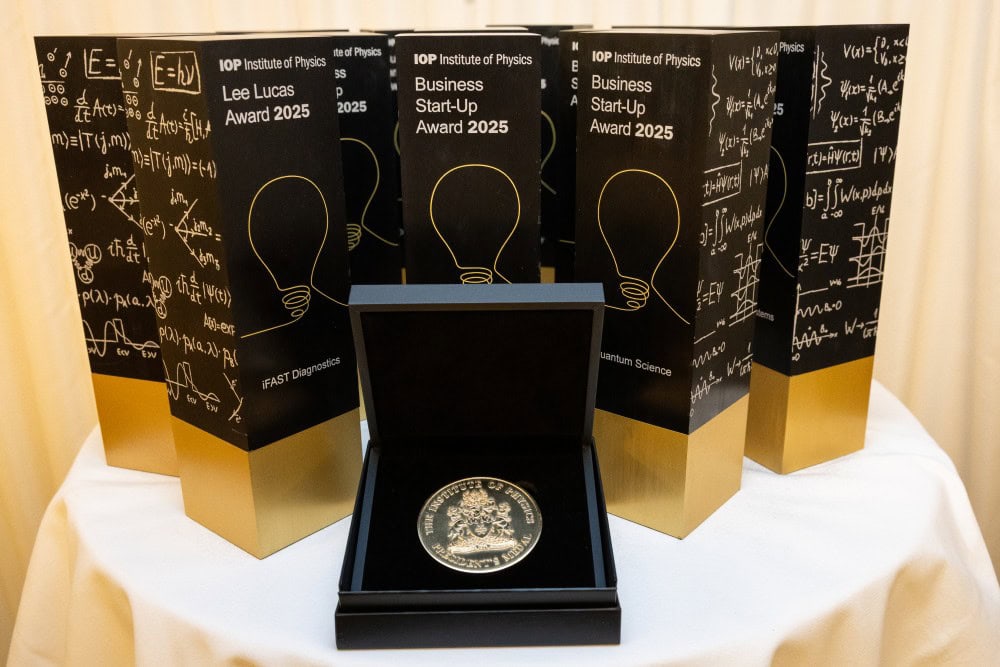
A total of 14 physics-based firms in sectors from quantum and energy to healthcare and aerospace have won 2025 Business Awards from the Institute of Physics (IOP), which publishes Physics World. The awards were presented at a reception in the Palace of Westminster yesterday attended by senior parliamentarians and policymakers as well as investors, funders and industry leaders.
The IOP Business Awards, which have been running since 2012, recognise the role that physics and physicists play in the economy, creating jobs and growth “by powering innovation to meet the challenges facing us today, ranging from climate change to better healthcare and food production”. More than 100 firms have now won Business Awards, with around 90% of those companies still commercially active.
The parliamentary event honouring the 2025 winners were hosted by Dave Robertson, the Labour MP for Lichfield, who spent 10 years as a physics teacher in Birmingham before working for teaching unions. There was also a speech from Baron Sharma, who studied applied physics before moving into finance and later becoming a Conservative MP, Cabinet minister and president of the COP-26 climate summit.
Seven firms were awarded 2025 IOP Business Innovation Awards, which recognize companies that have “delivered significant economic and/or societal impact through the application of physics”. They include Oxford-based Tokamak Energy, which has developed “compact, powerful, robust, quench-resilient” high-temperature superconducting magnets for commercial fusion energy and for propulsion systems, accelerators and scientific instruments.
(courtesy: Carmen Valino)
Oxford Instruments was honoured for developing a novel analytical technique for scanning electron microscopes, enabling new capabilities and accelerating time to results by at least an order of magnitude. Ionoptika, meanwhile, was recognized for developing Q-One, which is a new generation of focused ion-beam instrumentation, providing single atom through to high-dose nanoscale advanced materials engineering for photonic and quantum technologies.
The other four winners were: electronics firm FlexEnable for their organic transistor materials; Lynkeos Technology for the development of muonography in the nuclear industry; the renewable energy company Sunamp for their thermal storage system; and the defence and security giant Thales UK for the development of a solid-state laser for laser rangefinders.
Business potential
Six other companies have won an IOP Start-up Award, which celebrates young companies “with a great business idea founded on a physics invention, with the potential for business growth and significant societal impact”. They include Astron Systems for developing “long-lifetime turbomachinery to enable multi-reuse small rocket engines and bring about fully reusable small launch vehicles”, along with MirZyme Therapeutics for “pioneering diagnostics and therapeutics to eliminate preeclampsia and transform maternal health”.
The other four winners were: Celtic Terahertz Technology for a metamaterial filter technology; Nellie Technologies for a algae-based carbon removal technology; Quantum Science for their development of short-wave infrared quantum dot technology; and Wayland Additive for the development and commercialisation of charge-neutralised electron beam metal additive manufacturing.
James McKenzie, a former vice-president for business at the IOP, who was involved in judging the awards, says that all awardees are “worthy winners”. “It’s the passion, skill and enthusiasm that always impresses me,” McKenzie told Physics World.
iFAST Diagnostics were also awarded the IOP Lee Lucas Award that recognises early-stage companies taking innovative products into the medical and healthcare sector. The firm, which was spun out of the University of Southampton, develops blood tests that can test the treatment of bacterial infections in a matter of hours rather than days. They are expecting to have approval for testing next year.
“Especially inspiring was the team behind iFAST,” adds McKenzie, “who developed a method to test very rapid tests cutting time from 48 hours to three hours, so patients can be given the right antibiotics.”
“The award-winning businesses are all outstanding examples of what can be achieved when we build upon the strengths we have, and drive innovation off the back of our world-leading discovery science,” noted Tom Grinyer, IOP chief executive officer. “In the coming years, physics will continue to shape our lives, and we have some great strengths to build upon here in the UK, not only in specific sectors such as quantum, semiconductors and the green economy, but in our strong academic research and innovation base, our growing pipeline of spin-out and early-stage companies, our international collaborations and our growing venture capital community.”
The “leftover” gamma radiation produced when the beam of an electron accelerator strikes its target is usually discarded. Now, however, physicists have found a new use for it: generating radioactive isotopes for diagnosing and treating cancer. The technique, which piggybacks on an already-running experiment, uses bremsstrahlung from an accelerator facility to trigger nuclear reactions in a layer of zinc foil. The products of these reactions include copper isotopes that are hard to make using conventional techniques, meaning that the technique could reduce their costs and expand access to treatments.
Radioactive nuclides are commonly used to treat cancer, and so-called theranostic pairs are especially promising. These pairs occur when one isotope of an element provides diagnostic imaging while another delivers therapeutic radiation – a combination that enables precision tumour targeting to improve treatment outcomes.
One such pair is 64Cu and 67Cu: the former emits positrons that can identify tumours in PET scans while the latter produces beta particles that can destroy cancerous cells. They also have a further clinical advantage in that copper binds to antibodies and other biomolecules, allowing the isotopes to be delivered directly into cells. Indeed, these isotopes have already been used to treat cancer in mice, and early clinical studies in humans are underway.
“Wasted” photons might be harnessed
Researchers led by Mamad Eslami of the University of York, UK have now put forward a new way to make both isotopes. Their method exploits the fact that gamma rays generated by the intense electron beams in particle accelerator experiments interact only weakly with matter (relative to electrons or neutrons, at least). This means that many of them pass right through their primary target and into a beam dump. These “wasted” photons still carry enough energy to drive further nuclear reactions, though, and Eslami and colleagues realized that they could be harnessed to produce 64Cu and 67Cu.
Eslami and colleagues tested their idea at the Mainz Microtron, an electron accelerator at Johannes Gutenberg University Mainz in Germany. “We wanted to see whether GeV-scale bremsstrahlung, already available at the electron accelerator, could be used in a truly parasitic configuration,” Eslami says. The real test, he adds, was whether they could produce 67Cu alongside the primary experiment, which was using the same electron beam and photon field to study hadron physics, without disturbing it or degrading the beam conditions.
The answer turned out to be “yes”. What’s more, the researchers found that their approach could produce enough 67Cu for medical applications in about five days – roughly equal to the time required for a nuclear reactor to produce the equivalent amount of another important medical radionuclide, lutetium-177.
Improving nuclear medicine treatments and reducing costs
“Our results indicate that, under suitable conditions, high-energy electron and photon facilities that were originally built for nuclear or particle physics experiments could also be used to produce 67Cu and other useful radionuclides,” Eslami tells Physics World. In practice, however, Eslami adds that this will be only realistic at sites with a strong, well-characterized bremsstrahlung fields. High-power multi-GeV electron facilities such as the planned Electron-Ion Collider at Brookhaven National Laboratory in the US, or a high-repetition laser-plasma electron source, are two possibilities.
Even with this restriction, team member Mikhail Bashkanov is excited about the advantages. “If we could do away with the necessity of using nuclear reactors to produce medical isotopes and solely generate them with high-energy photon beams from laser-plasma accelerators, we could significantly improve nuclear medicine treatments and reduce their costs,” Bashkanov says.
The researchers, who detail their work in Physical Review C, now plan to test their method at other electron accelerators, especially those with higher beam power and GeV-scale beams, to quantify the 67Cu yields they can expect to achieve in realistic target and beam-dump configurations. In parallel, Eslami adds, they want to explore parasitic operation at emerging laser-plasma-driven electron sources that are being developed for muon tomography. They would also like to link their irradiation studies to target design, radiochemistry and timing constraints to see whether the method can deliver clinically useful activities of 67Cu and other useful isotopes in a reliable and cost-effective way.
Physics World is delighted to announce its Top 10 Breakthroughs of the Year for 2025, which includes research in astronomy, antimatter, atomic and molecular physics and more. The Top Ten is the shortlist for the Physics World Breakthrough of the Year, which will be revealed on Thursday 18 December.
Our editorial team has looked back at all the scientific discoveries we have reported on since 1 January and has picked 10 that we think are the most important. In addition to being reported in Physics World in 2025, the breakthroughs must meet the following criteria:
Significant advance in knowledge or understanding
Importance of work for scientific progress and/or development of real-world applications
Of general interest to Physics World readers
Here, then, are the Physics World Top 10 Breakthroughs for 2025, listed in no particular order. You can listen to Physics World editors make the case for each of our nominees in the Physics World Weekly podcast. And, come back next week to discover who has bagged the 2025 Breakthrough of the Year.
Analysing returned samples Tim McCoy (right), curator of meteorites at the Smithsonian’s National Museum of Natural History, and research geologist Cari Corrigan examine scanning electron microscope (SEM) images of a Bennu sample. (Courtesy: James Di Loreto, Smithsonian)
To Tim McCoy, Sara Russell, Danny Glavin, Jason Dworkin, Yoshihiro Furukawa, Ann Nguyen, Scott Sandford, Zack Gainsforth and an international team of collaborators for identifying salt, ammonia, sugar, nitrogen- and oxygen-rich organic materials, and traces of metal-rich supernova dust, in samples returned from the near-Earth asteroid 101955 Bennu. The incredible chemical richness of this asteroid, which NASA’s OSIRIS-REx spacecraft visited in 2020, lends support to the longstanding hypothesis that asteroid impacts could have “seeded” the early Earth with the raw ingredients needed for life to form. The discoveries also enhance our understanding of how Bennu and other objects in the solar system formed out of the disc of material that coalesced around the young Sun.
To Takamasa Momose of the University of British Columbia, Canada, and Susumu Kuma of the RIKEN Atomic, Molecular and Optical Physics Laboratory, Japan for observing superfluidity in a molecule for the first time. Molecular hydrogen is the simplest and lightest of all molecules, and theorists predicted that it would enter a superfluid state at a temperature between 1‒2 K. But this is well below the molecule’s freezing point of 13.8 K, so Momose, Kuma and colleagues first had to develop a way to keep the hydrogen in a liquid state. Once they did that, they then had to work out how to detect the onset of superfluidity. It took them nearly 20 years, but by confining clusters of hydrogen molecules inside helium nanodroplets, embedding a methane molecule within the clusters, and monitoring the methane’s rotation, they were finally able to do it. They now plan to study larger clusters of hydrogen, with the aim of exploring the boundary between classical and quantum behaviour in this system.
To researchers at the University of Southampton and Microsoft Azure Fiber in the UK, for developing a new type of optical fibre that reduces signal loss, boosts bandwidth and promises faster, greener communications. The team, led by Francesco Poletti, achieved this feat by replacing the glass core of a conventional fibre with air and using glass membranes that reflect light at certain frequencies back into the core to trap the light and keep it moving through the fibre’s hollow centre. Their results show that the hollow-core fibres exhibit 35% less attenuation than standard glass fibres – implying that fewer amplifiers would be needed in long cables – and increase transmission speeds by 45%. Microsoft has begun testing the new fibres in real systems, installing segments in its network and sending live traffic through them. These trials open the door to gradual rollout and Poletti suggests that the hollow-core fibres could one day replace existing undersea cables.
PAT pioneers The research team in the proton therapy gantry room. (Courtesy: UO Fisica Sanitaria and UO Protonterapia, APSS, Trento)
To Francesco Fracchiolla and colleagues at the Trento Proton Therapy Centre in Italy for delivering the first clinical treatments using proton arc therapy (PAT). Proton therapy – a precision cancer treatment – is usually performed using pencil-beam scanning to precisely paint the dose onto the tumour. But this approach can be limited by the small number of beam directions deliverable in an acceptable treatment time. PAT overcomes this by moving to an arc trajectory with protons delivered over a large number of beam angles and the potential to optimize the number of energies used for each beam direction. Working with researchers at RaySearch Laboratories in Sweden, the team performed successful dosimetric comparisons with clinical proton therapy plans. Following a feasibility test that confirmed the viability of clinical PAT delivery, the researchers used PAT to treat nine cancer patients. Importantly, all treatments were performed using the centre’s existing proton therapy system and clinical workflow.
To Peter Maurer and David Awschalom at the University of Chicago Pritzker School of Molecular Engineering and colleagues for designing a protein quantum bit (qubit) that can be produced directly inside living cells and used as a magnetic field sensor. While many of today’s quantum sensors are based on nitrogen–vacancy (NV) centres in diamond, they are large and hard to position inside living cells. Instead, the team used fluorescent proteins, which are just 3 nm in diameter and can be produced by cells at a desired location with atomic precision. These proteins possess similar optical and spin properties to those of NV centre-based qubits – namely that they have a metastable triplet state. The researchers used a near-infrared laser pulse to optically address a yellow fluorescent protein and read out its triplet spin state with up to 20% spin contrast. They then genetically modified the protein to be expressed in bacterial cells and measured signals with a contrast of up to 8%. They note that although this performance does not match that of NV quantum sensors, it could enable magnetic resonance measurements directly inside living cells, which NV centres cannot do.
To Guangyu Zhang, Luojun Du and colleagues at the Institute of Physics of the Chinese Academy of Sciences for producing the first 2D sheets of metal. Since the discovery of graphene – a sheet of carbon just one atom thick – in 2004, hundreds of other 2D materials have been fabricated and studied. In most of these, layers of covalently bonded atoms are separated by gaps where neighbouring layers are held together only by weak van der Waals (vdW) interactions, making it relatively easy to “shave off” single layers to make 2D sheets. Many thought that making atomically thin metals, however, would be impossible given that each atom in a metal is strongly bonded to surrounding atoms in all directions. The technique developed by Zhang and Du and colleagues involves heating powders of pure metals between two monolayer-MoS2/sapphire vdW anvils. Once the metal powders are melted into a droplet, the researchers applied a pressure of 200 MPa and continued this “vdW squeezing” until the opposite sides of the anvils cooled to room temperature and 2D sheets of metal were formed. The team produced five atomically thin 2D metals – bismuth, tin, lead, indium and gallium – with the thinnest being around 6.3 Å. The researchers say their work is just the “tip of the iceberg” and now aim to study fundamental physics with the new materials.
Exquisite control Physicist Barbara Latacz at the BASE experiment at CERN. (Courtesy: CERN)
To CERN’s BASE collaboration for being the first to perform coherent spin spectroscopy on a single antiproton – the antimatter counterpart of the proton. Their breakthrough is the most precise measurement yet of the antiproton’s magnetic properties, and could be used to test the Standard Model of particle physics. The experiment begins with the creation of high-energy antiprotons in an accelerator. These must be cooled (slowed down) to cryogenic temperatures without being lost to annihilation. Then, a single antiproton is held in an ultracold electromagnetic trap, where microwave pulses manipulate its spin state. The resulting resonance peak was 16 times narrower than previous measurements, enabling a significant leap in precision. This level of quantum control opens the door to highly sensitive comparisons of the properties of matter (protons) and antimatter (antiprotons). Unexpected differences could point to new physics beyond the Standard Model and may also reveal why there is much more matter than antimatter in the visible universe.
To Richard Allen, director of the Berkeley Seismological Laboratory at the University of California, Berkeley, and Google’s Marc Stogaitis and colleagues for creating a global network of Android smartphones that acts as an earthquake early warning system. Traditional early warning systems use networks of seismic sensors that rapidly detect earthquakes in areas close to the epicentre and issue warnings across the affected region. Building such seismic networks, however, is expensive, and many earthquake-prone regions do not have them. The researchers utilized the accelerometer in millions of phones in 98 countries to create the Android Earthquake Alert (AEA) system. Testing the app between 2021 and 2024 led to the detection of an average of 312 earthquakes a month, with magnitudes ranging from 1.9 to 7.8. For earthquakes of magnitude 4.5 or higher, the system sent “TakeAction” alerts to users, sending them, on average, 60 times per month for an average of 18 million individual alerts per month. The system also delivered lesser “BeAware” alerts to regions expected to experience a shaking intensity of magnitude 3 or 4. The team now aims to produce maps of ground shaking, which could assist the emergency response services following an earthquake.
To Lisa Nortmann at Germany’s University of Göttingen and colleagues for creating the first detailed “weather map” of an exoplanet. The forecast for exoplanet WASP-127b is brutal with winds reaching 33,000 km/hr, which is much faster than winds found anywhere in the Solar System. The WASP-127b is a gas giant located about 520 light–years from Earth and the team used the CRIRES+ instrument on the European Southern Observatory’s Very Large Telescope to observe the exoplanet as it transited across its star in less than 7 h. Spectral analysis of the starlight that filtered through WASP-127b’s atmosphere revealed Doppler shifts caused by supersonic equatorial winds. By analysing the range of Doppler shifts, the team created a rough weather map of WASP-127b, even though they could not resolve light coming from specific locations on the exoplanet. Nortmann and colleagues concluded that the exoplanet’s poles are cooler that the rest of WASP-127b, where temperatures can exceed 1000 °C. Water vapour was detected in the atmosphere, raising the possibility of exotic forms of rain.
To the team led by Yichao Zhang at the University of Maryland and Pinshane Huang of the University of Illinois at Urbana-Champaign for capturing the highest-resolution images ever taken of individual atoms in a material. The team used an electron-microscopy technique called electron ptychography to achieve a resolution of 15 pm, which is about 10 times smaller than the size of an atom. They studied a stack of two atomically-thin layers of tungsten diselenide, which were rotated relative to each other to create a moiré superlattice. These twisted 2D materials are of great interest to physicists because their electronic properties can change dramatically with small changes in rotation angle. The extraordinary resolution of their microscope allowed them to visualize collective vibrations in the material called moiré phasons. These are similar to phonons, but had never been observed directly until now. The team’s observations align with theoretical predictions for moiré phasons. Their microscopy technique should boost our understanding of the role that moiré phasons and other lattice vibrations play in the physics of solids. This could lead to the engineering of new and useful materials.
Physics World‘s coverage of the Breakthrough of the Year is supported by Reports on Progress in Physics, which offers unparalleled visibility for your ground-breaking research.
This episode of the Physics World Weekly podcast features a lively discussion about our Top 10 Breakthroughs of 2025, which include important research in quantum sensing, planetary science, medical physics, 2D materials and more. Physics World editors explain why we have made our selections and look at the broader implications of this impressive body of research.
The top 10 serves as the shortlist for the Physics World Breakthrough of the Year award, the winner of which will be announced on 18 December.
Links to all the nominees, more about their research and the selection criteria can be found here.
Physics World‘s coverage of the Breakthrough of the Year is supported by Reports on Progress in Physics, which offers unparalleled visibility for your ground-breaking research.
The Sun regularly produces energetic outbursts of electromagnetic radiation called solar flares. When these flares are accompanied by flows of plasma, they are known as coronal mass ejections (CMEs). Now, astronomers at the Netherlands Institute for Radio Astronomy (ASTRON) have spotted a similar event occurring on a star other than our Sun – the first unambiguous detection of a CME outside our solar system.
Using these tools, the team detected short, intense radio signals from a star located around 40 light-years away from Earth. This star, called StKM 1-1262, is very different from our Sun. At only around half of the Sun’s mass, it is classed as an M-dwarf star. It also rotates 20 times faster and boasts a magnetic field 300 times stronger. Nevertheless, the burst it produced had the same frequency, time and polarization properties as the plasma emission from an event called a solar type II burst that astronomers identify as a fast CME when it comes from the Sun.
“This work opens up a new observational frontier for studying and understanding eruptions and space weather around other stars,” says Henrik Eklund, an ESA research fellow working at the European Space Research and Technology Centre (ESTEC) in Noordwijk, Netherlands, who was not involved in the study. “We’re no longer limited to extrapolating our understanding of the Sun’s CMEs to other stars.”
Implications for life on exoplanets
The high speed of this burst – around 2400 km/s – would be atypical for our own Sun, with only around 1 in every 20 solar CMEs reaching that level. However, the ASTRON team says that M-dwarfs like StKM 1-1262 could emit CMEs of this type as often as once a day.
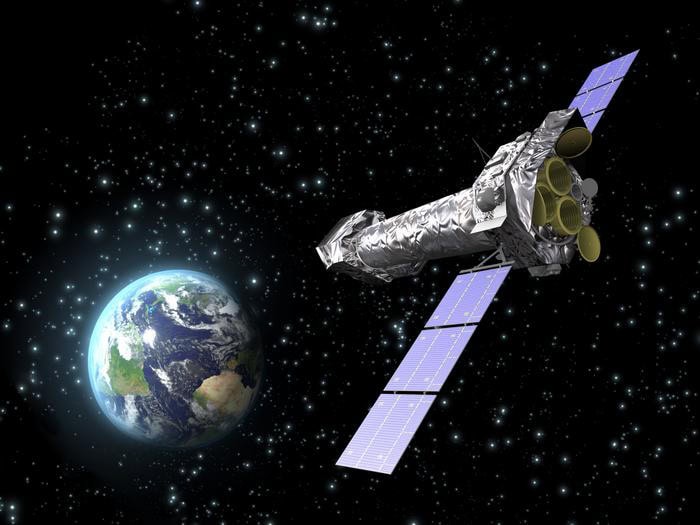
Spotting a distant coronal mass ejection: An artist’s impression of XMM-Newton. (Courtesy: ESA/C Carreau)
According to Eklund, this has implications for extraterrestrial life, as most of the known planets in the Milky Way are thought to orbit stars of this type, and such bursts could be powerful enough to strip their atmospheres. “It seems that intense space weather may be even more extreme around smaller stars – the primary hosts of potentially habitable exoplanets,” he says. “This has important implications for how these planets keep hold of their atmospheres and possibly remain habitable over time.”
Erik Kuulkers, a project scientist at XMM-Newton who was also not directly involved in the study, suggests that this atmosphere-stripping ability could modify the way we hunt for life in stellar systems akin to our Solar System. “A planet’s habitability for life as we know it is defined by its distance from its parent star – whether or not it sits within the star’s ‘habitable zone’, a region where liquid water can exist on the surface of planets with suitable atmospheres,” Kuulkers says. “What if that star was especially active, regularly producing CMEs, however? A planet regularly bombarded by these ejections might lose its atmosphere entirely, leaving behind a barren uninhabitable world, despite its orbit being ‘just right’.
Kuulkers adds that the study’s results also contain lessons for our own Solar System. “Why is there still life on Earth despite the violent material being thrown at us?” he asks. “It is because we are safeguarded by our atmosphere.”
Seeking more data
The ASTRON team’s next step will be to look for more stars like StKM 1-1262, which Kuulkers agrees is a good idea. “The more events we can find, the more we learn about CMEs and their impact on a star’s environment,” he says. Additional observations at other wavelengths “would help”, he adds, “but we have to admit that events like the strong one reported on in this work don’t happen too often, so we also need to be lucky enough to be looking at the right star at the right time.”
For now, the ASTRON researchers, who report their work in Nature, say they have reached the limit of what they can detect with LOFAR. “The next step is to use the next generation Square Kilometre Array, which will let us find many more such stars since it is so much more sensitive,” Callingham tells Physics World.
Two major experiments have found no evidence for sterile neutrinos – hypothetical particles that could help explain some puzzling observations in particle physics. The KATRIN experiment searched for sterile neutrinos that could be produced during the radioactive decay of tritium; whereas the MicroBooNE experiment looked for the effect of sterile neutrinos on the transformation of muon neutrinos into electron neutrinos.
Neutrinos are low-mass subatomic particles with zero electric charge that interact with matter only via the weak nuclear force and gravity. This makes neutrinos difficult to detect, despite the fact that the particles are produced in copious numbers by the Sun, nuclear reactors and collisions in particle accelerators.
Neutrinos were first proposed in 1930 to explain the apparent missing momentum, spin and energy in the radioactive beta decay of nuclei. The they were first observed in 1956 and by 1975 physicists were confident that three types (flavours) of neutrino existed – electron, muon and tau – along with their respective antiparticles. At the same time, however, it was becoming apparent that something was amiss with the Standard Model description of neutrinos because the observed neutrino flux from sources like the Sun did not tally with theoretical predictions.
Gaping holes
Then in the late 1990s experiments in Canada and Japan revealed that neutrinos of one flavour transform into other flavours as then propagate through space. This quantum phenomenon is called neutrino oscillation and requires that neutrinos have both flavour and mass. Takaaki Kajita and Art McDonald shared the 2015 Nobel Prize for Physics for this discovery – but that is not the end of the story.
One gaping hole in our knowledge is that physicists do not know the neutrino masses – having only measured upper limits for the three flavours. Furthermore, there is some experimental evidence that the current Standard-Model description of neutrino oscillation is not quite right. This includes lower-than-expected neutrino fluxes from some beta-decaying nuclei and some anomalous oscillations in neutrino beams.
One possible explanation for these oscillation anomalies is the existence of a fourth type of neutrino. Because we have yet to detect this particle, the assumption is that it does not interact via the weak interaction – which is why these hypothetical particles are called sterile neutrinos.
Electron energy curve
Now, two very different neutrino experiments have both reported no evidence of sterile neutrinos. One is KATRIN, which is located at the Karlsruhe Institute of Technology (KIT) in Germany. It has the prime mission of making a very precise measurement of the mass of the electron antineutrino. The idea is to measure the energy spectrum of electrons emitted in the beta decay of tritium and infer an upper limit on the mass of the electron antineutrino from the shape of the curve.
If sterile neutrinos exist, then they could sometimes be emitted in place of electron antineutrinos during beta decay. This would change the electron energy spectrum – but this was not observed at KATRIN.
“In the measurement campaigns underlying this analysis, we recorded over 36 million electrons and compared the measured spectrum with theoretical models. We found no indication of sterile neutrinos,” says Kathrin Valerius of the Institute for Astroparticle Physics at KIT and co-spokesperson of the KATRIN collaboration.
Meanwhile, physicists on the MicroBooNE experiment at Fermilab in the US have looked for evidence for sterile neutrinos in how muon neutrinos oscillate into electron neutrinos. Beams of muon neutrinos are created by firing a proton beam at a solid target. The neutrinos at Fermilab then travel several hundred metres (in part through solid ground) to MicroBooNE’s liquid-argon time projection chamber. This detects electron neutrinos with high spatial and energy resolution, allowing detailed studies of neutrino oscillations.
If sterile neutrinos exist, they would be involved in the oscillation process and would therefore affect the number of electron neutrinos detected by MicroBooNE. Neutrino beams from two different sources were used in the experiments, but no evidence for sterile neutrinos was found.
Together, these two experiments rule out sterile neutrinos as an explanation for some – but not all – previously observed oscillation anomalies. So more work is needed to fully understand neutrino physics. Indeed, current and future neutrino experiments are well placed to discover physics beyond the Standard Model, which could lead to solutions to some of the greatest mysteries of physics.
“Any time you rule out one place where physics beyond the Standard Model could be, that makes you look in other places,” says Justin Evans at the UK’s University of Manchester, who is co-spokesperson for MicroBooNE. “This is a result that is going to really spur a creative push in the neutrino physics community to come up with yet more exciting ways of looking for new physics.”
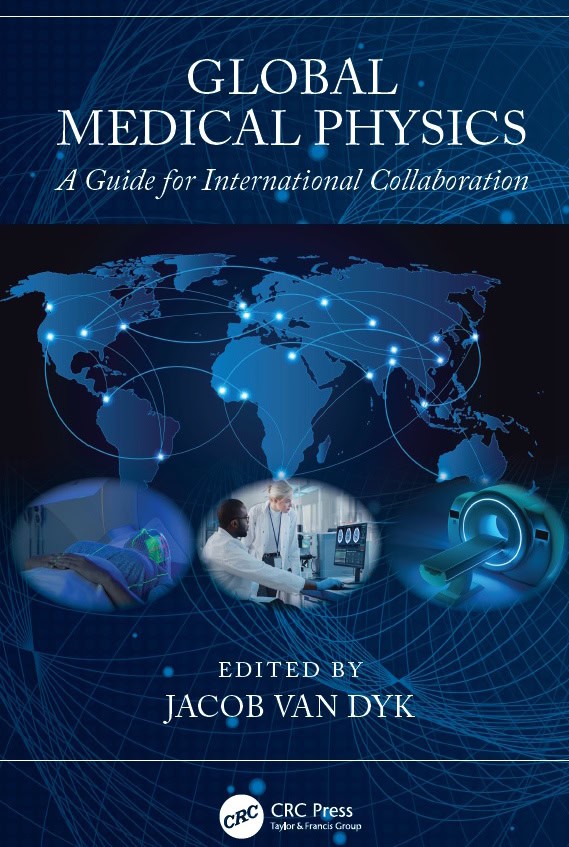
Educational aid Global Medical Physics: A Guide for International Collaboration explores the increasing role of medical physicists in international collaborations. The book comes in paperback, hardback and ebook format. An open-access ebook will be available in the near future. (Courtesy: CRC Press/Taylor & Francis)
As the world population ages and the incidence of cancer and cardiac disease grows alongside, there’s an ever-increasing need for reliable and effective diagnostics and treatments. Medical physics plays a central role in both of these areas – from the development of a suite of advanced diagnostic imaging modalities to the ongoing evolution of high-precision radiotherapy techniques.
But access to medical physics resources – whether equipment and infrastructure, education and training programmes, or the medical physicists themselves – is massively imbalanced around the world. In low- and middle-income countries (LMICs), fewer than 50% of patients have access to radiotherapy, with similar shortfalls in the availability of medical imaging equipment. Lower-income countries also have the least number of medical physicists per capita.
This disparity has led to an increasing interest in global health initiatives, with professional organizations looking to provide support to medical physicists in lower income regions. Alongside, medical physicists and other healthcare professionals seek to collaborate internationally in clinical, educational and research settings.
Successful multicultural collaborations, however, can be hindered by cultural, language and ethical barriers, as well as issues such as poor access to the internet and the latest technology advances. And medical physicists trained in high-income contexts may not always understand the circumstances and limitations of those working within lower income environments.
Aiming to overcome these obstacles, a new book entitled Global Medical Physics: A Guide for International Collaboration provides essential guidance for those looking to participate in such initiatives. The text addresses the various complexities of partnering with colleagues in different countries and working within diverse healthcare environments, encompassing clinical and educational medical physics circles, as well as research and academic environments.
“I have been involved in providing support to medical physicists in lower income contexts for a number of years, especially through the International Atomic Energy Agency (IAEA), but also through professional organizations like the American Association of Physicists in Medicine (AAPM),” explains the book’s editor Jacob Van Dyk, emeritus professor at Western University in Canada. “It is out of these experiences that I felt it might be appropriate and helpful to provide some educational materials that address these issues. The outcome was this book, with input from those with these collaborative experiences.”
Shared experience
The book brings together contributions from 34 authors across 21 countries, including both high- and low-resource settings. The authors – selected for their expertise and experience in global health and medical physics activities – provide guidelines for success, as well as noting potential barriers and concerns, on a wide range of themes targeted at multiple levels of expertise.
This guidance includes, for example: advice on how medical physicists can contribute to educational, clinical and research-based global collaborations and the associated challenges; recommendations on building global inter-institutional collaborations, covering administrative, clinical and technical challenges and ethical issues; and a case study on the Radiation Planning Assistant project, which aims to use automated contouring and treatment planning to assist radiation oncologists in LMICs.
In another chapter, the author describes the various career paths available to medical physicists, highlighting how they can help address the disparity in healthcare resources through their careers. There’s also a chapter focusing on CERN as an example of a successful collaboration engaging a worldwide community, including a discussion of CERN’s involvement in collaborative medical physics projects.
With the rapid emergence of artificial intelligence (AI) in healthcare, the book takes a look at the role of information and communication technologies and AI within global collaborations. Elsewhere, authors highlight the need for data sharing in medical physics, describing example data sharing applications and technologies.
Other chapters consider the benefits of cross-sector collaborations with industry, sustainability within global collaborations, the development of effective mentoring programmes – including a look at challenges faced by LMICs in providing effective medical physics education and training – and equity, diversity and inclusion and ethical considerations in the context of global medical physics.
The book rounds off by summarizing the key topics discussed in the earlier chapters. This information is divided into six categories: personal factors, collaboration details, project preparation, planning and execution, and post-project considerations.
“Hopefully, the book will provide an awareness of factors to consider when involved in global international collaborations, not only from a high-income perspective but also from a resource-constrained perspective,” says Van Dyk. “It was for this reason that when I invited authors to develop chapters on specific topics, they were encouraged to invite a co-author from another part of the world, so that it would broaden the depth of experience.”
Born in 1898, Lysenko was a Ukrainian plant breeder, who in 1927 found he could make pea and grain plants develop at different rates by applying the right temperatures to their seeds. The Soviet news organ Pravda was enthusiastic, saying his discovery could make crops grow in winter, turn barren fields green, feed starving cattle and end famine.
Despite having trained as a horticulturist, Lysenko rejected the then-emerging science of genetics in favour of Lamarckism, according to which organisms can pass on acquired traits to offspring. This meshed well with the Soviet philosophy of “dialectical materialism”, which sees both the natural and human worlds as evolving not through mechanisms but environment.
Stalin took note of Lysenko’s activities and had him installed as head of key Soviet science agencies. Once in power, Lysenko dismissed scientists who opposed his views, cancelled their meetings, funded studies of discredited theories, and stocked committees with loyalists. Although Lysenko had lost his influence by the time Stalin died in 1953 – with even Pravda having turned against him – Soviet agricultural science had been destroyed.
A modern parallel
Lysenko’s views and actions have a resonance today when considering the activities of Robert F Kennedy Jr, who was appointed by Donald Trump as secretary of the US Department of Health and Human Services in February 2025. Of course, Trump has repeatedly sought to impose his own agenda on US science, with his destructive impact outlined in a detailed report published by the Union of Concerned Scientists in July 2025.
But after Trump appointed Kennedy, the assault on science continued into US medicine, health and human services. In what might be called a philosophy of “political materialism”, Kennedy fired all 17 members of the Advisory Committee on Immunization Practices of the US Centers for Disease Control and Prevention (CDC), cancelled nearly $500m in mRNA vaccine contracts, hired a vaccine sceptic to study its connection with autism despite numerous studies that show no connection, and ordered the CDC to revise its website to reflect his own views on the cause of autism.
Of course, there are fundamental differences between the 1930s Soviet Union and the 2020s United States. Stalin murdered and imprisoned his opponents, while the US administration only defunds and fires them. Stalin and Lysenko were not voted in, while Trump came democratically to power, with elected representatives confirming Kennedy. Kennedy has also apologized for his most inflammatory remarks, though Stalin and Lysenko never did (nor does Trump for that matter).
What’s more, Stalin’s and Lysenko’s actions were more grounded in apparent scientific realities and social vision than Trump’s or Kennedy’s. Stalin substantially built up much of the Soviet science and technology infrastructure, whose dramatic successes include launching the first Earth satellite Sputnik in 1957. Though it strains credulity to praise Stalin, his vision to expand Soviet agricultural production during a famine was at least plausible and its intention could be portrayed as humanitarian. Lysenko was a scientist, Kennedy is not.
As for Lysenko, his findings seemed to carry on those of his scientific predecessors. Experimentally, he expanded the work of Russian botanist Ivan Michurin, who bred new kinds of plants able to grow in different regions. Theoretically, his work connected not only with dialectical materialism but also with that of the French naturalist Jean-Baptiste Lamarck, who claimed that acquired traits can be inherited.
US Presidents often have pet scientific projects. Harry Truman created the National Science Foundation, Dwight D Eisenhower set up NASA, John F Kennedy started the Apollo programme, while Richard Nixon launched the Environmental Protection Agency (EPA) and the War on Cancer. But it’s one thing to support science that might promote a political agenda and another to quash science that will not.
One ought to be able to take comfort in the fact that if you fight nature, you lose – except that the rest of us lose as well. Thanks to Lysenko’s actions, the Soviet Union lost millions of tons of grain and hundreds of herds of cattle. The promise of his work evaporated and Stalin’s dreams vanished.
Lysenko, at least, was motivated by seeming scientific promise and social vision; the US has none. Trump has damaged the most important US scientific agencies, destroyed databases and eliminated the EPA’s research arm, while Kennedy has replaced health advisory committees with party loyalists.
While Kennedy may not last his term – most Trump Cabinet officials don’t – the paths he has sent science policy on surely will. For Trump and Kennedy, the policy seems to consist only of supporting pet projects. Meanwhile, cases of measles in the US have reached their highest level in three decades, the seas continue to rise and the climate is changing. It is hard to imagine how enemy agents could damage US science more effectively.
Early diagnosis of primary central nervous system lymphoma (PCNSL) remains challenging because brain biopsies are invasive and imaging often lacks molecular specificity. A team led by researchers at Shenzhen University has now developed a minimally invasive fibre-optic plasmonic sensor capable of detecting PCNSL-associated microRNAs in the eye’s aqueous humor with attomolar sensitivity.
At the heart of the approach is a black phosphorus (BP)–engineered surface plasmon resonance (SPR) interface. An ultrathin BP layer is deposited on a gold-coated fiber tip. Because of the work-function difference between BP and gold, electrons transfer from BP into the Au film, creating a strongly enhanced local electric field at the metal–semiconductor interface. This BP–Au charge-transfer nano-interface amplifies refractive-index changes at the surface far more efficiently than conventional metal-only SPR chips, enabling the detection of molecular interactions that would otherwise be too subtle to resolve and pushing the limit of detection down to 21 attomolar without nucleic-acid amplification. The BP layer also provides a high-area, biocompatible surface for immobilizing RNA reporters.
To achieve sequence specificity, the researchers integrated CRISPR-Cas13a, an RNA-guided nuclease that becomes catalytically active only when its target sequence is perfectly matched to a designed CRISPR RNA (crRNA). When the target microRNA (miR-21) is present, activated Cas13a cleaves RNA reporters attached to the BP-modified fiber surface, releasing gold nanoparticles and reducing the local refractive index. The resulting optical shift is read out in real time through the SPR response of the BP-enhanced fiber probe, providing single-nucleotide-resolved detection directly on the plasmonic interface.
With this combined strategy, the sensor achieved a limit of detection of 21 attomolar in buffer and successfully distinguished single-base-mismatched microRNAs. In tests on aqueous-humor samples from patients with PCNSL, the CRISPR-BP-FOSPR assay produced results that closely matched clinical qPCR data, despite operating without any amplification steps.
Because aqueous-humor aspiration is a minimally invasive ophthalmic procedure, this BP-driven plasmonic platform may offer a practical route for early PCNSL screening, longitudinal monitoring, and potentially the diagnosis of other neurological diseases reflected in eye-fluid biomarkers. More broadly, the work showcases how black-phosphorus-based charge-transfer interfaces can be used to engineer next-generation, fibre-integrated biosensors that combine extreme sensitivity with molecular precision.
Plutonium is considered a fascinating element. It was first chemically isolated in 1941 at the University of California, but its discovery was hidden until after the Second World War. There are six distinct allotropic phases of plutonium with very different properties. At ambient pressure, continuously increasing the temperature converts the room-temperature, simple monoclinic a phase through five phase transitions, the final one occurring at approximately 450°C.
The delta (δ) phase is perhaps the most interesting allotrope of plutonium. δ-plutonium is technologically important, has a very simple crystal structure, but its electronic structure has been debated for decades. Researchers have attempted to understand its anomalous behaviour and how the properties of δ-plutonium are connected to the 5f electrons.
The 5f electrons are found in the actinide group of elements which includes plutonium. Their behaviour is counterintuitive. They are sensitive to temperature, pressure and composition, and behave in both a localised manner, staying close to the nucleus and in a delocalised (itinerant) manner, more spread out and contributing to bonding. Both these states can support magnetism depending on actinide element. The 5f electrons contribute to δ-phase stability, anomalies in the material’s volume and bulk modulus, and to a negative thermal expansion where the δ-phase reduces in size when heated.
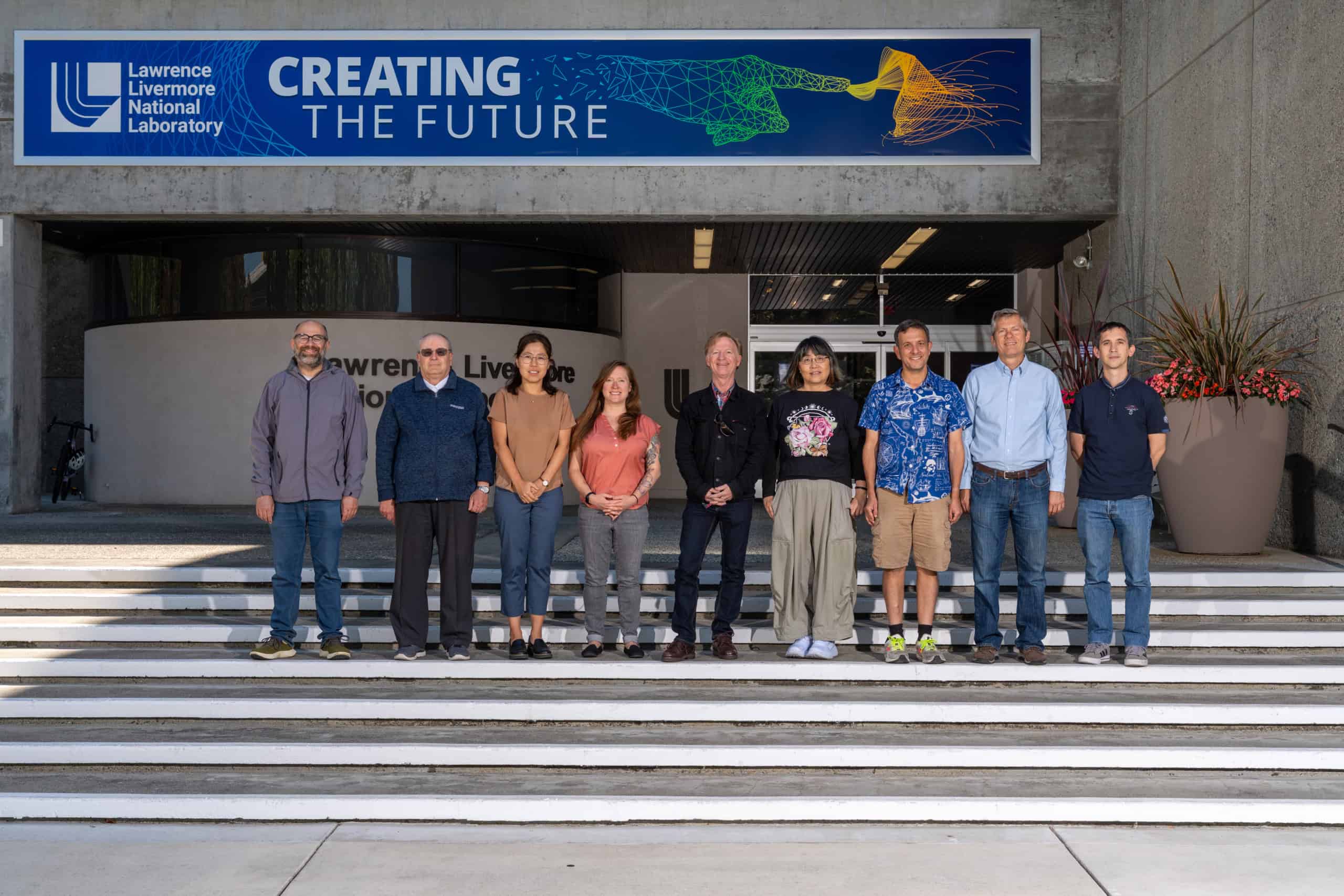
Research group from Lawrence Livermore National Laboratory. Left to right: Lorin Benedict, Alexander Landa, Kyoung Eun Kweon, Emily Moore, Per Söderlind, Christine Wu, Nir Goldman, Randolph Hood and Aurelien Perron. Not in image: Babak Sadigh and Lin Yang (Courtesy: Blaise Douros/Lawrence Livermore National Laboratory)
In this work, the researchers present a comprehensive model to predict the thermodynamic behaviour of δ-plutonium, which has a face-centred cubic structure. They use density functional theory, a computational technique that explores the overall electron density of the system and incorporate relativistic effects to capture the behaviour of fast-moving electrons and complex magnetic interactions. The model includes a parameter-free orbital polarization mechanism to account for orbital-orbital interactions, and incorporates anharmonic lattice vibrations and magnetic fluctuations, both transverse and longitudinal modes, driven by temperature-induced excitations. Importantly, it is shown that negative thermal expansion results from magnetic fluctuations.
This is the first model to integrate electronic effects, magnetic fluctuations, and lattice vibrations into a cohesive framework that aligns with experimental observations and semi-empirical models such as CALPHAD. It also accounts for fluctuating states beyond the ground state and explains how gallium composition influences thermal expansion. Additionally, the model captures the positive thermal expansion behaviour of the high-temperature epsilon phase, offering new insight into plutonium’s complex thermodynamics.