Molecular spin sensor takes the temperature of cancer cells

Researchers in Japan have succeeded in measuring the temperature inside living cells with high precision using a new class of biocompatible quantum nanosensor – something that has been difficult to do until now even. If improved, the nanosensor could be used to characterize a wide range of biological phenomena and so help in disease diagnosis, they say.

Recent years have seen the advent of a new generation of nanoscale quantum sensors that can detect the tiny magnetic fields of biological systems. Some of these sensors rely on photons and others on electrons or spin defects – typically diamond specially engineered with nitrogen–vacancy (NV) defects. This material is made by removing two carbon atoms from the diamond lattice and replacing one with a nitrogen atom. The other “hole” is left empty, thereby creating a vacancy or defect. The spin state of the defect is influenced by the local magnetic field that can be “read out” from the way it fluoresces.

While a powerful tool, and biocompatible, this type of quantum sensor does suffer from certain limits. For one, it can be structurally inhomogeneous, which affects how it detects temperature and other physical or chemical parameters inside biological cells.

A more homogenous structure

Even though the new molecular quantum nanosensor (MoQN) works in the same way as these conventional devices, it does not suffer from this problem, explain Nobuhiro Yanai of the University of Tokyo and Hitoshi Ishiwata of the National Institutes for Quantum Science and Technology (QST), who led this research effort. This is because it has a more homogenous structure and does not contain any defects. Instead, it is made by embedding molecular spin qubits, in this case fabricated from pentacene, in nanocrystals of para-terphenyl. This design makes the structure uniform on a molecular scale and preserves the quantum coherence of the spin qubits. It is then coated with Pluronic F127, which is a biocompatible surfactant.

By detecting the spin direction of the “excited triplet state” of the pentacene qubits using a technique known as optically detected magnetic resonance (OMDR), the researchers can precisely determine the temperature of the qubits’ surroundings from the OMDR peak position. When they tested their method inside the cytoplasm of cancer cells in vivo, they found that the intracellular temperature was consistently higher than the surrounding medium.

Yanai says he embarked on this study after reading about the work of Sam Bayliss’ group at the UK’s University of Glasgow, and Ashok Ajoy’s group at the University of California, Berkeley in the US on OMDR in pentacene-doped para-terphenyl crystals. He says he immediately got the idea that nanocrystals of this material could be used for quantum sensing inside cells. This was because his group had already developed such nanocrystals for a different purpose in previous research.

Ensuring biocompatibility

“I then spoke with Hitoshi Ishiwata, who is an expert in quantum sensing using NV centres,” he recalls. “While many molecular qubits have been developed to date, there had been no examples demonstrating their sensing ability within living cells.”

The project required materials science expertise, he tells Physics World, and in particular, finding out how to reduce the material to the nanoscale and ensuring it was biocompatible.

“We already knew that nanodiamonds are good quantum sensors for temperature measurements, but I had noticed a practical limitation: their ODMR spectra often vary significantly from particle to particle,” he says. “This spectral dispersion can introduce errors, especially when trying to perform precise measurements at the single-particle level.”

Replacing hydrogen with deuterium

The researchers thought they had overcome this problem during the first run of their experiments because they found that different particles showed identical OMDR spectra. However, their joy quickly waned when they observed that the spectra were still broadened by hyperfine interactions between the pentacene-doped para-terphenyl molecules’ electron spins and hydrogen nuclear spins.

To improve the spectral resolution, Ishiwata says he suggested chemically modifying the molecule by replacing the hydrogen in it with deuterium. And the technique worked: “the hyperfine broadening was strongly suppressed, allowing us to determine the OMDR spectra much more precisely.”

These findings, which are detailed in Science Advances, show that MoQNs are a chemically versatile platform for quantum sensing in living cells and that they can operate directly inside them while maintaining the precision needed for absolute thermometry, he says. Their appeal also lies in in the fact that their structures can be easily modified.

It will not all be plain sailing, however, adds Yanai. MoQNs cannot yet target specific organelles within cells, so endowing them with this targeting capability is an important future challenge. “What is more, their size has been limited to around 200 nm so far, so creating smaller MoQN particles will be crucial,” he says.

Quiz of the week: CERN may have made a quark–gluon plasma by colliding which nuclei?

Fancy some more? Check out our puzzles page.

AI-led solutions of Erdős problems spark debate over the future of mathematics

News that large language models (LLM) have made major advances in solving Erdős problems – a set of problems formulated by the renowned 20th-century mathematician Paul Erdős – has created an amalgamation of uproar and interest among mathematicians. The past month alone has seen two significant LLM-generated solutions. The first relates to prime sets, a generalization of prime numbers, and was solved after Liam Price, an amateur mathematician from the US, fed the problem statement into GPT-5.4 Pro without other information. The second came last week when the company behind ChatGPT, OpenAI, announced that it had used artificial intelligence to disprove Erdős’ planar unit distance conjecture.

LLMs have solved Erdős problems before, but the one Price chose wasn’t just any Erdős problem. It was one that human mathematicians had worked on for 60 years without success. The nature of the solution was also unusual. While previous LLM mathematical proofs used standard techniques, this one took an entirely different approach. Rather than starting from Erdős’ original probability-theory-based framing of the problem, as human mathematicians had, the LLM found an alternative route – one that led naturally, in less than a page, to a correct proof.

“Paul Erdős had a concept of ‘Proofs from The Book’, meaning that the argument is so compact and elegant that this is the proof God would’ve written down in ‘The Book’,” Jared Lichtman, a mathematician at Stanford University in the US, wrote on the social media site X after the proof was announced. “After reading the GPT5.4 proof of Erdős #1196, I would say this is a Book Proof of the result.”

The planar unit distance conjecture, meanwhile, concerns a deceptively simple question: if you have n points in a plane, how many pairs of points can be exactly one distance unit apart? Erdős thought the limit was n1+C/log log(n) where C is a positive constant, but OpenAI’s model identified a higher bound. What’s more, the company claims it did so by coming up with a counter example, and in doing so, a whole family of objects that mathematicians had so far not considered. This counter example was generated using sophisticated ideas from algebraic number theory.

Some members of the mathematics community have greeted these proofs, and the advent of AI in mathematics in general, with enthusiasm. OpenAI’s announcement quotes Arul Shankar, a number theorist at the University of Toronto, Canada, as saying that the new proof “demonstrates that current AI models go beyond just helpers to human mathematicians – they are capable of having original ingenious ideas, and then carrying them out to fruition”.

Others, however, are more cautious. David Bessis, a mathematician-turned-science writer who previously worked on algebra, geometry and topology, claims that the programme of trying to automate mathematics stems from a misconception of mathematics as a logically direct process of churning out theorems, given some rules. Writing in his Substack newsletter, Bessis argues that the method used to verify AI-generated proofs, which involves a computer program called Lean, may reduce the benefit the mathematics community gains from proofs. Notably, proofs that are verifiable in Lean are not always parse-able by humans, which detracts from (and in certain cases removes) the insights researchers typically get from new proofs.

How AI is being used in mathematics…

To evaluate the merits of these arguments, it’s useful to understand how AI is currently used within mathematics research. The first strategy is the one Price used to solve Erdős #1196: directly prompting an LLM. “Large language models have proven their worth at literature search: finding similar instances of a problem, or a proof, in past literature,” notes François Charton, an AI engineer at the California-based start-up AxiomMath, which is using AI to accelerate mathematics research.

The second strategy is to use AI models trained on other types of data. According to Charton, these models are especially good at spotting “weak signals and correlations” and thereby uncovering patterns in data that might be too laborious or convoluted for humans to identify.

Both methods have shown promise for generating new results, but they are not universal – at least, not yet. “It [AI] seems to do a lot better at certain types of maths than others,” says Thomas Bloom, a mathematician at the University of Manchester, UK, who maintains a webpage that tracks solutions to Erdős problems. In particular, Bloom says that to the best of his knowledge, AI “hasn’t done anything interesting in category theory” – a field whose reputation for abstraction is only matched by its track record of bridging supposedly distinct areas of mathematics.

Photo of Paul Erdős' grave. It's made of white marble and consists of stacked rectangular solids. The largest rectangular solid contains the name, birth and death date of his father Lajos (1879-1942). A smaller rectangle below refers to his mother and gives her birth and death dates (1880-1970), followed by the name Erdős Pál and the dates 1913-1996.

Another challenge is that with AI systems churning out new proofs at scale, there are simply not enough people with the skills needed to check them. A process called autoformalization could solve this problem by turning human proofs into what Bessis calls “bulletproof, machine-verifiable logical derivations” expressed in Lean or other specialized languages. At that point, AI-generated proofs could be checked automatically. The question is, could humans lose out on some knowledge in the process?

For doubters like Bessis, who refers to AI-driven autoformalization (at least as practiced by certain firms) as “AI slop”, the answer is very little. But within the AI camp, there is considerable interest in what AI brings to autoformalization. “I see autoformalization as the bridge in both directions, as important as proving itself,” Charton argues. “We can use Lean to translate between these two languages so that a Lean proof can be reverse-translated into a sketch, lemmas or natural language a human mathematician can engage with. That bidirectional translation preserves and extends mathematical knowledge at scale.”

…and how it isn’t

In the 18th century, when Leonhard Euler began arranging the logical thought processes of mathematics into theorems, definitions and proofs, mathematicians were primarily interested in solving problems with underpinnings in the physical world: questions of volume and distance, and, more generally, geometry and counting. Since then, though, mathematics has become a discipline that is at least as concerned with coming up with interesting problems as it is with solving them.

Two aspects of this change seem relevant to debates over AI’s utility. The first is that posing problems requires a broader skillset than solving them. The second is that solving posed problems sometimes requires mathematicians to invent new structures, tools or objects. Fermat’s Last Theorem, which posits that there are no three positive integers a, b, and c that satisfy the equation an + bn = cn for any integer value of n greater than 2, is a good example. At face value, this nearly 400-year-old theorem seems simple. However, proving it was the life’s work of a modern mathematician, Andrew Wiles, who won the Abel Prize in 2016 for developing the numerous new tools required, as well as for the proof itself.

Coming up with such tools – or indeed whole new frameworks – is a challenging and hugely creative endeavour. There are no rules as to the kinds of objects you are allowed to create, and unlike a proof (which is either correct or incorrect), there is no finality, either. If the new framework is a good one, it will crop up frequently and naturally in various branches of mathematics, and other mathematicians will incorporate it into their own work. If it isn’t, they won’t.

Currently, not even AI enthusiasts like Charton think machines are capable of such leaps. “Theory building is completely out of reach right now,” he tells Physics World. “Models, especially generative models, can provide a mathematician with interesting examples, or discover surprising relations that may bring a theoretical breakthrough, but the breakthrough still depends on the mathematician. I believe this will remain the case for some time.”

A new tool for scientists and mathematicians alike

In many areas of science, AI works in a way that is entirely distinct from human thinking. In physics, for example, machine learning algorithms are trained to analyse large amounts of data, find patterns and use them to infer underlying laws. This strategy could advance our understanding of some of the most fundamental questions in physics, but it is very different from how a human scientist would do it, and therefore perhaps more likely to be seen as a welcome new tool.

On the theorem-proving side of mathematics, the distinction between methods a human might use and those an algorithm might use is more blurred. Yet in some ways, Bloom thinks incorporating AI into mathematics could bring the field closer to other sciences. In particle physics, for example, “you don’t go in and take these individual recordings [of data]. It’s all automated,” he tells Physics World. “Until now, there has been no equivalent for maths. It takes time and attention to prove theorems, and maybe this had been a bottleneck.”

AxiomMath’s Charton agrees. “Every new math tool in history has automated something that used to be the work of a human mathematician – from the abacus all the way to symbolic algebra,” he says. “With each new tool, the role of the mathematician evolved rather than disappeared. Tasks got automated, and problems that felt impossible became trivial – but mathematicians just keep moving up the stack to the next set of questions. I see AI as the latest shift rather than a categorical break from history.”

Open data: the benefits and challenges of sharing a precious resource

Data are at the core of science, but traditional journal articles normally deliver a distillation of the raw data gathered by the authors. While the movement towards open access to data is widely supported by researchers and funding agencies, a 2024 study by IOP Publishing revealed that many scientists still encounter a wide range of practical, ethical and technical barriers when it comes to sharing their data.

As a result, the publisher has launched a free online course that aims to give early-career researchers the practical skills and confidence they need to share and manage research data effectively.

To talk about the course and IOP Publishing’s open data policy I am joined by Laura Feetham-Walker, who is head of publishing strategy and performance at IOP Publishing.

IOP Publishing is a wholly owned subsidiary of the Institute of Physics and it publishes Physics World.

Physicist John Hill takes the helm at Brookhaven National Laboratory

John Hill has become director of the Brookhaven National Laboratory in Long Island, New York, after serving as interim lab director since September. Hill will now oversee Brookhaven’s 3000-strong team of scientists, engineers and technicians as well as manage the lab’s annual $900m budget.

Brookhaven opened in 1947 as one of the first three US national labs, the others being Argonne and Oak Ridge. Brookhaven carries out a wide range of research in the physical, biomedical and environmental sciences and is home to seven Nobel-prize-winning discoveries.

Brookhaven operated the Relativistic Heavy Ion Collider (RHIC) until it shut down in February. RHIC collided heavy nuclei such as gold and copper to produce a quark-gluon plasma – a state of matter thought to have been present in the very early universe.

In 2020, Brookhaven was chosen to host the next-generation Electron-Ion Collider (EIC). Costing about $2bn, the EIC will smash together electrons and protons to probe the strong nuclear force and the role of gluons in nucleons and nuclei.

Building the EIC involves revamping the RHIC accelerator as well as adding an electron ring and other components with the first experiments starting the 2030s.

As well as RHIC and the EIC, Brookhaven is also home to other big-science projects including the National Synchrotron Light Source II, which opened in 2015 at a cost of $912m.

A Brookhaven career

With a PhD in physics from the Massachusetts Institute of Technology, Hill joined Brookhaven as a postdoc in 1992 before leading the lab’s X-ray scattering group from 2001 to 2013.

He then became deputy associate laboratory director for energy and photon sciences until becoming the lab’s deputy director for science and technology from 2023 to 2025.

In September 2025 he became interim director following the resignation of the theoretical physicist JoAnne Hewitt.

In the role, Hill will also become president of Brookhaven Science Associates – a partnership between Stony Brook University and the science and tech firm Battelle – that manage and operate Brookhaven on behalf of the US Department of Energy.

Hill notes that he is “very excited” to lead the lab in the coming years. “Brookhaven is entering a defining decade, and I’m honoured to take on this role at this time,” he says. “The vision we have for our future is a powerful one, including delivering the nation’s next particle collider and advancing science across a range of critical areas.”

Radar identifies insect species via reflections from wingbeats

Pollinating insects form a vital part of any ecosystem, enabling the biodiversity that we see on Earth today. However, biodiversity is in rapid decline around the world, and monitoring insect species is a difficult task that often requires some insects to be killed. To support the conservation of biodiversity, which is critical to ensure the sustainability of human civilization, more robust monitoring is required. In a study published in PNAS Nexus, researchers have developed a new method to identify and classify individual insects, based on radar imaging and machine learning.

Radar has long been used to study migrating insects that fly at high altitudes and in large numbers, but such systems typically perform wide-area, long-range monitoring. However, thanks to a combination of millimetre-wave radar and machine learning, narrow focused identification is now possible, by detecting changes in the radar reflection of insects caused by the flapping of their wings.

“Having a background in antenna engineering, there was always the question of whether this technology can be used to address some of the environmental challenges that we’re facing,” says co-lead author Adam Narbudowicz from the Technical University of Denmark. “Some five or six years ago, we started talking with [co-author] Ian [Donohue] about those possibilities, and eventually the idea of micro-Doppler emerged, which seemed feasible from an engineering point of view and could provide some useful data on biodiversity.”

The approach taken in this study doesn’t focus on morphological features of the insects, as these are difficult to detect with radar. Instead, it uses the harmonic patterns generated by the micro-Doppler effect of an insect beating its wings as a detection strategy. Millimetre-wave radar can provide insight into biomechanical characteristics not visible with cameras, and these characteristics are encoded in the harmonic patterns of the wingbeat.

The team used machine learning to improve the accuracy of the identification and incorporated a SHAP (SHapley Additive exPlanations) analysis – an explainable AI tool that interprets and explains key outputs and prioritizes key features – to identify which signal features are the most critical for differentiating insect species. The SHAP analysed each insect across the full spectrum of micro-Doppler harmonics, extracting key features including fundamental wingbeat frequency, energy distributions, cepstral coefficients (sound signals) and how quickly an insect’s wing movement change. These data were then used to train the machine learning model.

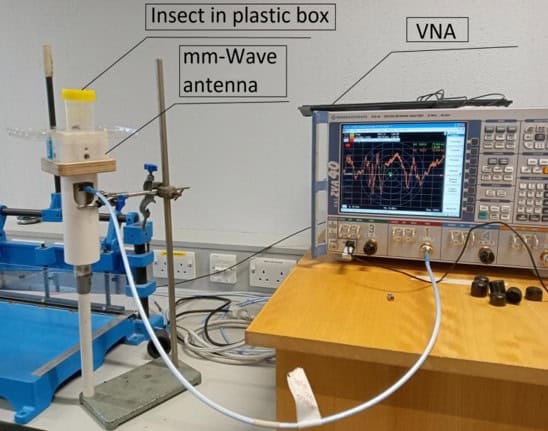
The actual process of obtaining this data from the insects involved capturing insects at the Trinity College Dublin campus and placing them in a plastic box on top of a millimetre-wave antenna that recorded their radar signatures. The researchers then released the insects back into the wild. After data capture, the relevant micro-Doppler features were extracted from the data for model training.

The model allowed non-invasive monitoring of different insects and could distinguish between bees and wasps with 96% accuracy. The model also classified five key pollinating insect species – red-tailed bumblebee, buff-tailed bumblebee, moss carder bumblebee, western honeybee and common wasp – with an accuracy of 85%.

“I think the most impressive thing is that we can detect and classify them with such an accuracy. From a biological point of view, it’s impressive how different species beat their wings in different manner, and from an engineering point of view it’s fascinating how different wingbeats affect harmonics of radar micro-Doppler reflections,” says Narbudowicz. “Those differences are of course impossible to see just by looking at spectrograms, but it appears that a sufficiently trained machine learning algorithm can see them.”

Narbudowicz points out that the current study used precise lab-grade transceivers and a relatively controlled set-up, and that the natural next step is to move this technology to outdoor field deployment. “This requires a number of steps,” he explains. “Firstly, the device needs to be miniaturized, and battery operated; the transceiver will be less accurate than the one used in the lab, but a big problem is the ground truth verification, since in the field it can be difficult to verify exactly which species flew over the sensor.”

Despite the greater challenge with deploying the technology in the field today, the researchers suggest that this radar reflection approach could be utilized in the future in a fly-through device, which would make it much easier and cheaper to achieve non-lethal monitoring of insect biodiversity in different environments.

Tiny droplets of primordial soup appear in oxygen collisions

Colliding oxygen nuclei could briefly recreate one of the most extreme states of matter in the universe – according to evidence gathered by physicists working on the CMS Collaboration at the Large Hadron Collider at CERN. Their analysis suggests that when smashed together, even relatively small atomic nuclei can produce a tiny droplet of quark–gluon plasma (QGP). This is a superhot “soup” of elementary particles that is believed to have filled the universe just after the Big Bang.

Under normal conditions, quarks – the particles that make up protons and neutrons – are tightly bound together by gluons, which carry the strong nuclear force. But at extremely high temperatures, matter changes into a radically different form in which quarks and gluons move freely in a dense fluid-like state called a QGP.

Scientists believe the entire universe existed in this form for a tiny fraction of a second after the Big Bang. To recreate it here on Earth, physicists smash atomic nuclei together at nearly the speed of light.

One of the main ways researchers study this strange state of matter is by observing the fast-moving particle sprays created during the collision. In the absence of a QGP these energetic particles would travel outward freely. But if they pass through QGP, they lose energy, somewhat like a bullet slowing down in water. Physicists call this effect jet quenching.

“Jet quenching is one of the main tools we use to study the QGP,” explains Jiangyong Jia of Stony Brook University in the US, who was not involved in the CMS study. “When a high-energy collision produces a QGP droplet, energetic quarks and gluons created in the same collision have to travel through it, and they lose energy along the way.”

For many years, this energy-loss effect had only been clearly observed in collisions involving very heavy nuclei such as lead or gold. Lower mass systems, including collisions between protons and heavier nuclei, showed hints of unusual behaviour but no convincing evidence that particle jets were being slowed down.

A clear signal

The new CMS study examined collisions between oxygen nuclei, which are much smaller than lead nuclei. Oxygen contains just 16 protons and neutrons, compared with 208 in lead. This allowed researchers to investigate how small a droplet of QGP can become while still affecting energetic particles passing through it.

The collisions were performed in 2025 at an energy of about 5 TeV – the highest energy ever for oxygen ions. The CMS Collaboration measured how many high-energy particles emerged from the collisions. This was compared to simpler proton–proton collisions, which are not expected to result in jet quenching.

The physicists found a clear reduction in the number of energetic particles produced. At some energies, the suppression reached about 30%, far beyond what could be explained by random statistical fluctuations. The pattern looked remarkably similar to what researchers had previously observed in much larger lead–ion collisions, although the effect was weaker overall.

“Oxygen-16 has only 16 nucleons compared to 208 in lead, but it appears to produce a medium that absorbs jet energy in a qualitatively similar way to much heavier systems,” Jia explains. “The shape of the suppression curve in oxygen–oxygen collisions resembles what is seen in lead–lead, which suggests the underlying physics is the same.”

Understanding fireballs

The team compared its measurements with several theoretical models. Models that included energy loss caused by QGP generally matched the data better than models without it. Still, some uncertainty remains. Part of the observed effect may come not from a QGP itself, but from differences in how quarks and gluons are distributed inside oxygen nuclei before the collision even occurs.

“The main limitation right now is the nuclear parton distribution functions,” Jia says. These describe how quarks and gluons are arranged inside atomic nuclei. According to Jia, uncertainties in these distributions “can account for roughly half of the observed suppression on their own”.

Future experiments involving proton–oxygen collisions are expected to help clarify the picture. The findings may also reshape how physicists think about the minimum size needed to create QGP.

“It shows that QGP formation is not limited to heavy nuclei,” Jia says. “It can occur in collisions of nuclei as light as oxygen.”

Researchers now hope to compare oxygen with other light nuclei such as neon to understand how the properties of QGP change as the colliding systems become larger or smaller. The work could eventually help physicists build a more complete picture of how ordinary matter behaved in the universe’s earliest moments – and how the strong nuclear force operates under the most extreme conditions known in nature.

The research is described in Physical Review Letters.

What a modern-day US Declaration of Independence should say

Displayed in a sealed case at the National Archives Museum in Washington DC, the US Declaration of Independence is – alongside the Constitution, the Emancipation Proclamation and the Gettysburg Address – one of America’s most sacred documents. Just a single sheet of parchment, it was signed on 4 July 1776 by 56 representatives of 13 colonies, declaring themselves free of British rule. Even though years of fighting followed and Britain did not officially recognize the colonies’ independence until 1783, America dates its birth to that signing.

For many American citizens, the Declaration of Independence is greatly revered. I remember my grandfather had a copy mounted in the entryway to his home, and when I was 10 years old offered me $1 if I memorized it. I had no trouble with the start, for the document’s first sentence is arresting. “When in the Course of human events, it becomes necessary for one people to dissolve the political bands which have connected them with another”, decency requires that “they should declare the causes which impel them to the separation”.

The second sentence is equally exhilarating and unforgettable: “We hold these truths to be self-evident, that all men are created equal…”.  I didn’t discover until years later that this evidently didn’t include women, slaves, or the people referred to as “merciless Indian Savages”. Four truths later, the signatories zoomed in. When a government destroys “life, liberty and the pursuit of happiness” it is the “Right of the People to alter or abolish it”.

King George III was doing just that, they claimed, and the signatories followed with a laundry list of appalling grievances that amounted to tyranny. These included: obstructing justice, bending judges to his will, sending agents to harass and murder people, giving amnesty to those agents, transporting people overseas, cutting off trade with the rest of the world, making the military responsive to himself alone, and on and on.

Current US president Donald Trump claims that the Declaration of Independence led to “the greatest political journey in human history”. The document, he adds, set an example for the world. “The Story of America Makes Everyone Free,” he writes on an official website that has been counting down the days, hours, minutes and seconds to the 250th anniversary of the signing.

Destroyers of Earth

The enormous attention that the US administration is paying to this anniversary has made me wonder, however, whether a government today could destroy life, liberty and the pursuit of happiness badly enough to make it necessary to alter or abolish it. The answer was staring me in the face. What if it destroyed science enough to make citizens vulnerable to natural threats?

I’ve therefore been trying to imagine a revised declaration. Among the self-evident truths, I think, is that human beings are endowed with the right to protection against nature, that the purpose of science is to understand nature and its threats, and that a sovereign’s duty is therefore to foster science and act appropriately on its findings. A no-brainer, right?

These truths are more important than ever in the 21st century, I envision the document saying. Until recently in human history, nature could be treated as an inert stage for human activity. But human activity can now interact with nature in a destructive way to threaten human life, liberty and the pursuit of happiness.

We experience such destruction in the degradation of the Earth’s atmosphere, in rising sea levels, in the spread of infectious diseases, in the increasing pollution of land, sea and air, and in coastal floods and water shortages. The current US administration, I’d continue, is not only doing nothing to prevent this destruction, but also actively campaigning against people who are fighting it and trying to make the world safer.

Human freedom and independence require developing science to understand and cope with nature’s threats. When science is ignored, nature rules

The administration claims that stopping these attempts increases the freedom of US citizens. It does not, however, and instead enslaves us to nature. Human freedom and independence require developing science to understand and cope with nature’s threats. When science is ignored, nature rules.

Yet the current US sovereign, a wannabe King, has made unprecedented attacks on science. His ignorance, denials and repudiations have unleashed untold damage and destruction to the health, welfare and safety of citizens. His actions threaten not only our lives but human lives elsewhere. His actions even threaten the global conditions that make human life possible at all.

Our grievances

My revised declaration would follow with a long and easily verifiable list of modern-day grievances. These would include the fact that Trump has declared that threats whose existence is scientifically well-established are hoaxes, scams and have “no basis in fact”. He has prevented agencies from investigating these threats and from developing technologies to use against them.

He has fired people who study these threats and installed political appointees to oversee funding of research. Despite publicly denying and ridiculing findings about climate change and rising seas, he has admitted their truth when it comes to protecting his own golf course.

The US administration has also declared, contrary to scientific findings, that claims of outbreaks of disease have been “fabricated” and that vaccines do not work. It has cancelled grants to develop vaccines, attacked vaccine makers, revoked recommendations that children be vaccinated, fired experts in vaccines, and damaged the process of vaccine development.

The US administration has sought to gut or close the most important US science agencies. He has withdrawn the US from international agencies that track and address the most important threats to human life and health. He has invented false facts about nature and forced US agencies to agree with him. And he has damaged and extorted America’s top universities by trying to dictate their research, hiring, admissions, courses and curricula.

The critical point

My document would reach a rousing conclusion.

A people, it would say, are only truly free and independent when they and their offspring are able to live in a safe environment, not stalked by disease, and educated freely without government interference. A sovereign who ignores and damages science is unfit to be a ruler by exposing the people to the enslavement of nature. Citizens in a democracy have the right to a leader who does not enslave them to nature.

The final sentence of the document would be: “Let us take those rights back.”

Like the Declaration of Independence 250 years ago, my imagined one may seem revolutionary but only expresses what Thomas Jefferson, the author of the original, called “the common sense of the subject.”

How to model a net‑zero system across timescales

A successful clean‑energy transition depends on understanding how to balance variable renewable power with the growing electricity demands of transport, heating, and industry. A key challenge is capturing how renewable energy sources like wind and solar fluctuate hour by hour, but this variability also creates new opportunities to align supply with increasingly flexible forms of demand, such as electric vehicles, heat pumps, and other electrified services. Alongside these short‑term dynamics, it is equally important to determine the long‑term infrastructure needed to support a fully decarbonised energy system.

In this research, two powerful models (REMIND and PyPSA‑Eur) are linked and allowed to exchange information repeatedly to determine both what infrastructure should be built and how it would operate each hour of the year. REMIND is a global energy and climate model that looks decades ahead, analysing investments, technology choices, and pathways to net‑zero. PyPSA‑Eur is a detailed model of the European electricity system that simulates real‑time grid behaviour. By combining a model that excels at long‑term planning with one that captures hourly power system dynamics, the researchers create a much more realistic tool for answering these complex questions. 

They then test this approach on a Germany case study under two conditions: one with demand‑side flexibility (where electricity use can shift to cheaper hours, such as smart‑charging electric vehicles) and one without flexibility. Their findings show that a fully renewable energy system is technically and economically achievable, that flexible systems perform far better than inflexible ones, and that even with flexibility, electricity prices can vary significantly between sectors, creating political challenges around fair pricing. Both scenarios of the German case study reach net-zero emissions by 2045.

This research gives policymakers a clearer way to design reliable, affordable, fully renewable energy systems by showing how to integrate renewables, manage electrification, use flexibility to reduce costs, understand sectoral price differences, and build markets. 

“Models used to inform climate policy have always faced a fundamental trade-off: they either capture the long-term perspective needed for investment decisions, or the hourly detail needed for power system planning, but not both. Our coupling of REMIND and PyPSA-Eur is a first step towards resolving this trade-off for an increasingly electric future energy system.” – Dr Adrian Odenweller, Potsdam Institute for Climate Impact Research

Read the full article

REMIND-PyPSA-Eur: integrating power system flexibility into sector-coupled energy transition pathways

Adrian Odenweller et al 2026 Prog. Energy 8 025001

Do you want to learn more about this topic?

The role of grid-forming inverters in enabling high penetration of renewable energy in power systems: standards, ancillary services, current deployment, and future perspectives Ali Q Al-Shetwi et al. (2026)

The hidden mechanics behind earthquakes

Earthquakes occur when tectonic plates rub against each other, become temporarily stuck, and then suddenly release accumulated stress as they slip. Although earthquakes have been studied for decades, the microscopic mechanics that cause faults to stick, slip, and generate friction are still not fully understood. 

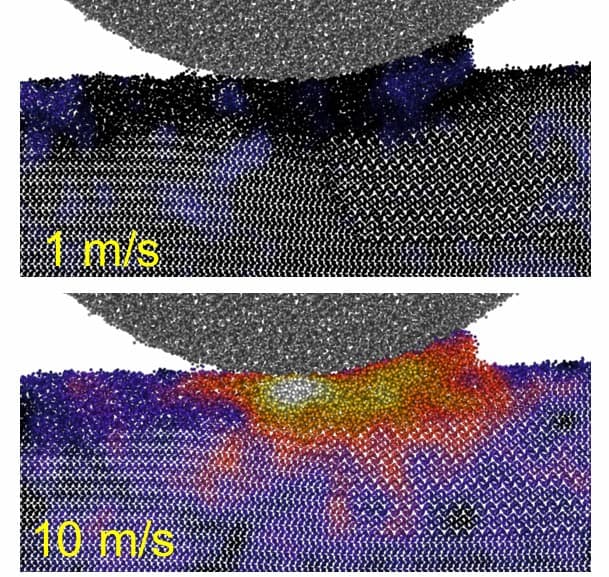
In this research, scientists use a granite-on-granite system to investigate these processes. Granite is common in continental crust and mechanically similar to many fault rocks, making it a strong laboratory analogue. The researchers used three complementary approaches. First, they performed controlled experiments measuring friction, wear, and surface roughness as two granite surfaces slid past each other, including tests with water, different temperatures, and different sliding speeds. Second, they ran molecular dynamics simulations of a silica (amorphous SiO₂) tip sliding on quartz (crystalline SiO₂), the dominant mineral in granite, to observe how atomic bonds break, phases transform, heat builds up, and friction emerges. Third, they applied theoretical models of contact mechanics (how surfaces actually touch through tiny asperities) and flash heating (how much local heating occurs and whether it weakens the material). 

Traditionally, earthquake models assume that friction comes from mechanical processes such as asperity interlocking (high points locking together), plowing (hard grains digging into the opposite surface), and gouge grinding (crushed particles resisting motion). However, this study shows the opposite of what those models predict: more wear leads to less friction, and less wear leads to more friction. Instead of friction coming from grains digging or grinding, it arises from tiny asperities that plastically flatten, cold‑weld together, and resist sliding because their welded atomic bonds must be broken. This represents a major shift in how fault friction is understood. 

Rigid tip sliding over quartz at two velocities

The study also finds that friction is largely insensitive to temperature, sliding speed, and hold time, suggesting that classic rate-state friction laws may not scale to real faults. The simulations identify three main energy dissipation mechanisms which are bond breaking, plastic deformation, and stress‑induced phase changes. This shows that flash heating at laboratory speeds is too small to weaken quartz, whereas earthquake level slip speeds would generate much stronger thermal weakening. They also reveal that certain quartz polymorphs can form purely from stress, meaning their presence in natural faults does not necessarily indicate high temperatures. 

Taken together, these results suggest that fault friction is dominated by adhesive bonding at asperities rather than mechanical grinding, and that tectonic motion may be governed more by creep‑slip than classic stick‑slip behaviour. 

Read the full article

Granite sliding on granite: friction, wear rates, surface topography, and the scale-dependence of rate–state effects

Sergey V Sukhomlinov et al 2026 Rep. Prog. Phys. 89 038301

Do you want to learn more about this topic?

The physics of earthquakes by Hiroo Kanamori and Emily E Brodsky (2004)

Copyright © 2026 by IOP Publishing Ltd and individual contributors