Observation of top-antitop quark excess
ATLAS probes top-antitop quark interactions near threshold
 Read article: Observation of top-antitop quark excess


ATLAS probes top-antitop quark interactions near threshold
Read article: Observation of top-antitop quark excess
A lifecycle analysis of Proton Exchange Membrane Water Electrolysis reveals where water is consumed and how it can be reduced
 Read article: Water use in green hydrogen production
New insights into how van der Waals heterostructures manage lattice mismatch at the nanoscale
 Read article: Strain relaxation in van der Waals heterostructures
Researchers show that routine lattice flaws can reliably detect topological phases, opening new routes for quantum materials and device engineering
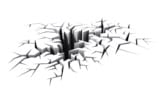 Read article: Defects as topological sensors
Spain can rapidly expand renewable energy, but the study shows this is only sustainable if overall material and energy demand is reduced
 Read article: Material limits of Spain’s energy transition
SolarMiner maps abandoned mining areas and reveals their huge potential for low‑cost solar energy
 Read article: Solar power from abandoned mines
New STM measurements show that shear strain decisively shapes flat-band structure across multiple magic angle regimes
 Read article: Shear strain reshapes magic angle graphene
A 3D soundwave lattice creates the first fully flat Landau levels, proving they can exist beyond two dimensions
 Read article: Flat bands go 3D
Third-order optical effects enable light-to-DC conversion in common symmetric materials, opening new pathways for photodetection, terahertz sensing, and energy harvesting
 Read article: Rethinking rectification for future energy technology
A unified theory shows how periodic light can mimic superconductivity and create a new hybrid mode: the Meissner polariton
 Read article: Driving matter into new states