Read more on IOPscience

Planning a sustainable water future in the United States

Within 45 years, water demand in the United States is predicted to double, while climate change is expected to worsen freshwater supplies, with 44% of the country already experiencing some form of drought. One way to expand water resources is desalination, where salt is removed from seawater or brackish groundwater to make clean, usable water. Brackish groundwater contains far less salt than seawater, making it much easier and cheaper to treat, and the United States has vast reserves of it in deep aquifers. The challenge is that desalination traditionally requires a lot of energy and produces a concentrated brine waste stream that is difficult and costly to dispose of. As a result, desalination currently provides only about 1% of the nation’s water supply, even though it is a major source of drinking water in regions such as the Middle East and North Africa.

Researchers Vasilis Fthenakis (left) and Zhuoran Zhang (right) from Columbia University taken at Nassau Point in Long Island

In this work, the researchers show how desalination of brackish groundwater can be made genuinely sustainable and economically viable for addressing the United States’ looming water shortages. A key part of the solution is zero‑liquid‑discharge, which avoids brine disposal by extracting more freshwater and recovering salts such as sodium, calcium, and magnesium for reuse. Crucially, the study demonstrates that when desalination is powered by low‑cost solar and wind energy, the overall process becomes far more affordable. By 2040, solar photovoltaics paired with optimised battery storage are projected to produce electricity at lower cost than the grid in the states facing the largest water deficits, making renewable‑powered desalination a competitive option.

The researchers also show that advanced technologies, such as high‑recovery reverse osmosis and crystallisation, can achieve zero‑liquid‑discharge without increasing costs, because the extra water and salt recovery offsets the expense of brine management. Their modelling indicates that a full renewable‑powered zero‑liquid‑discharge pathway can produce freshwater at an affordable cost, while reducing environmental impacts and avoiding brine disposal altogether. Taken together, this work outlines a realistic, sustainable pathway for large‑scale desalination in the United States, offering a credible strategy for securing future water supplies in increasingly water‑stressed regions.

Progress diagram adapted from article

Do you want to learn more about this topic?

Review of solar-enabled desalination and implications for zero-liquid-discharge applications by Vasilis Fthenakis et al. (2024)


Could silicon become the bedrock of quantum computers?

Silicon, in the form of semiconductors, integrated chips and transistors, is the bedrock of modern classical computers – so much so that it lends its name to technological hubs around the world, beginning with Silicon Valley in the US . For quantum computers, the bedrock is still unknown, but a new platform developed by researchers in Australia suggests that silicon could play a role here, too.

Dubbed the 14|15 platform due to its elemental constituents, it combines a crystalline silicon substrate with qubits made from phosphorus atoms . By relying on only two types of atoms, team co-leader Michelle Simmons says the device “avoids the interfaces and complexities that plague so many multi-material platforms” while enabling “high-quality qubits with lower noise, simplicity of design and device stability”.

Boarding at platform 14|15

Quantum computers take registers of qubits, which store quantum information, and apply basic operations to them sequentially to execute algorithms. One of the primary challenges they face is scalability – that is, sustaining reliable, or high-fidelity, operations on an increasing number of qubits. Many of today’s platforms use only a small number of qubits, for which operations can be individually tuned for optimal performance. However, as the amount of hardware, complexity and noise increases, this hands-on approach becomes debilitating.

Silicon quantum processors may offer a solution. Writing in Nature, Simmons, Ludwik Kranz, and their team at Silicon Quantum Computing (a spinout from the University of New South Wales in Sydney) describe a system that uses the nuclei of phosphorus atoms as its primary qubit. Each nucleus behaves a little like a bar magnet with an orientation (north/south or up/down) that represents a 0 or 1.

These so-called spin qubits are particularly desirable because they exhibit relatively long coherence times, meaning information can be preserved for long enough to apply the numerous operations of an algorithm. Using monolithic, high-purity silicon as the substrate further benefits coherence since it reduces undesirable charge and magnetic noise arising from impurities and interfaces.

To make their quantum processor, the team deposited phosphorus atoms in small registers a few nanometres across. Within each register, the phosphorus nuclei do not interact enough to generate the entangled states required for a quantum computation. The team remedy this by loading each cluster of phosphorous atoms with a electron that is shared between the atoms. The result is that so-called hyperfine interactions, wherein each nuclear spin interacts with the electron like an interacting bar magnet, arise and provide the interaction necessary to entangle nuclear spins within each register.

By combining these interactions with control of individual nuclear spins, the researchers showed that they can generate Bell states (maximally entangled two-qubit states) between pairs of nuclei within a register with error rates as low as 0.5% – the lowest to date for semiconductor platforms.

Scaling through repulsion

The team’s next step was to connect multiple processors – a step that exponentially increases their combined capacity. To understand how, consider two quantum processors, one with n qubits and the other m qubits. Isolated from one another, they can collectively represent at most 2n + 2m states. Once they are entangled, however, they can represent 2n + m states.

Simmons says that silicon quantum processors offer an inherent advantage in scaling, too. Generating numerous registers on a single chip and using “naturally occurring” qubits, she notes, reduces their need for extraneous confinement gates and electronics as they scale.

The researchers showcased these scaling capabilities by entangling a register of four phosphorus atoms with a register of five, separated by 13 nm. The entanglement of these registers is mediated by the electron-exchange interaction, a phenomenon arising from the combination of Pauli’s exclusion principle and Coulomb repulsion when electrons are confined in a small region. By leveraging this and all other interactions and control in their toolkit, the researchers generate entanglement of eight data qubits across the two registers.

Retaining such high-quality qubits and individual control of them despite their high density demonstrates the scaling potential of the platform. Future avenues of exploration include increasing the size of 2D arrays of registers to increase the number of qubits, but Simmons says the rest is “top secret”, adding “the world will know soon enough”.

Is our embrace of AI naïve and could it lead to an environmental disaster?

According to today’s leading experts in artificial intelligence (AI), this new technology is a danger to civilization. A statement on AI risk published in 2023 by the US non-profit Center for AI Safety warned that mitigating the risk of extinction from AI must now be “a global priority”, comparing it to other societal-scale dangers such as pandemics and nuclear war. It was signed by more than 600 people, including the winner of the 2024 Nobel Prize for Physics and so-called “Godfather of AI” Geoffrey Hinton. In a speech at the Nobel banquet after being awarded the prize, Hinton noted that AI may be used “to create terrible new viruses and horrendous lethal weapons that decide by themselves who to kill or maim”.

Despite signing the letter, Sam Altman of OpenAI, the firm behind ChatGPT, has stated that the company’s explicit ambition is to create artificial general intelligence (AGI) within the next few years, to “win the AI-race”. AGI is predicted to surpass human cognitive capabilities for almost all tasks, but the real danger is if or when AGI is used to generate more powerful versions of itself. Sometimes called “superintelligence”, this would be impossible to control. Companies do not want any regulation of AI and their business model is for AGI to replace most employees at all levels. This is how firms are expected to benefit from AI, since wages are most companies’ biggest expense.

AI, to me, is not about saving the world, but about a handful of people wanting to make enormous amounts of money from it. No-one knows what internal mechanism makes even today’s AI work – just as one cannot find out what you think from how the neurons in your brain are firing. If we don’t even understand today’s AI models, how are we going to understand – and control – the more powerful models that already exist or are planned in the near future?

AI has some practical benefits but too often is put to mostly meaningless, sometimes downright harmful, uses such as cheating your way through school or creating disinformation and fake videos online. What’s more, an online search with the help of AI requires at least 10 times as much energy as a search without AI. It already uses 5% of all electricity in the US and by 2028 this figure is expected to be 15%, which will be over a quarter of all US households’ electricity consumption. AI data servers are more than 50% as carbon intensive as the rest of the US’s electricity supply.

Those energy needs are why some tech companies are building AI data centres – often under confidential, opaque agreements – very quickly for fear of losing market share. Indeed, the vast majority of those centres are powered by fossil-fuel energy sources – completely contrary to the Paris Agreement to limit global warming. We must wisely allocate Earth’s strictly limited resources, with what is wasted on AI instead going towards vital things.

To solve the climate crisis, there is definitely no need for AI. All the solutions have already been known for decades: phasing out fossil fuels, reversing deforestation, reducing energy and resource consumption, regulating global trade, reforming the economic system away from its dependence on growth. The problem is that the solutions are not implemented because of short-term selfish profiteering, which AI only exacerbates.

Playing with fire

AI, like all other technologies, is not a magic wand and, as Hinton says, potentially has many negative consequences. It is not, as the enthusiasts seem to think, a magical free resource that provides output without input (and waste). I believe we must rethink our naïve, uncritical, overly fast, total embrace of AI. Universities are known for wise reflection, but worryingly they seem to be hurrying to jump on the AI bandwagon. The problem is that the bandwagon may be going in the wrong direction or crash and burn entirely.

Why then should universities and organizations send their precious money to greedy, reckless and almost totalitarian tech billionaires? If we are going to use AI, shouldn’t we create our own AI tools that we can hopefully control better? Today, more money and power is transferred to a few AI companies that transcend national borders, which is also a threat to democracy. Democracy only works if citizens are well educated, committed, knowledgeable and have influence.

AI is like using a hammer to crack a nut. Sometimes a hammer may be needed but most of the time it is not and is instead downright harmful. Happy-go-lucky people at universities, companies and throughout society are playing with fire without knowing about the true consequences now, let alone in 10 years’ time. Our mapped-out path towards AGI is like a zebra on the savannah creating an artificial lion that begins to self-replicate, becoming bigger, stronger, more dangerous and more unpredictable with each generation.

Wise reflection today on our relationship with AI is more important than ever.

New sensor uses topological material to detect helium leaks

A new sensor detects helium leaks by monitoring how sound waves propagate through a topological material – no chemical reactions required. Developed by acoustic scientists at Nanjing University, China, the innovative, physics-based device is compact, stable, accurate and capable of operating at very low temperatures.

Helium is employed in a wide range of fields, including aerospace, semiconductor manufacturing and medical applications as well as physics research. Because it is odourless, colourless, and inert, it is essentially invisible to traditional leak-detection equipment such as adsorption-based sensors. Specialist helium detectors are available, but they are bulky, expensive and highly sensitive to operating conditions.

A two-dimensional acoustic topological material

The new device created by Li Fan and colleagues at Nanjing consists of nine cylinders arranged in three sub-triangles with tubes in between the cylinders. The corners of the sub-triangles touch and the tubes allow air to enter the device. The resulting two-dimensional system has a so-called “kagome” structure and is an example of a topological material – that is, one that contains special, topologically protected, states that remain stable even if the bulk structure contains minor imperfections or defects. In this system, the protected states are the corners.

To test their setup, the researchers placed speakers under the corners that send sound waves into the structure and make the gas within it vibrate at a certain frequency (the resonance frequency). When they replaced the air in the device with helium, the sound waves travelled faster, changing the vibration frequency. Measuring this shift in frequency enabled the researchers to calculate the concentration of helium in the device.

Many advantages over traditional gas sensors

Fan explains that the device works because the interface/corner states are impacted by the properties of the gas within it. This mechanism has many advantages over traditional gas sensors. First, it does not rely on chemical reactions, making it ideal for detecting inert gases like helium. Second, the sensor is not affected by external conditions and can therefore work at extremely low temperatures – something that is challenging for conventional sensors that contain sensitive materials. Third, its sensitivity to the presence of helium does not change, meaning it does not need to be recalibrated during operation. Finally, it detects frequency changes quickly and rapidly returns to its baseline once helium levels decrease.

As well as detecting helium, Fan says the device can also pinpoint the direction a gas leak is coming from. This is because when helium begins to fill the device, the corner closest to the source of the gas is impacted first. Each corner thus acts as an independent sensing point, giving the device a spatial sensing capability that most traditional detectors lack.

Other gases could be detected

Detecting helium leaks is important in fields such as semiconductor manufacturing, where the gas is used for cooling, and in medical imaging systems that operate at liquid helium temperatures. “We think our work opens an avenue for inert gas detection using a simple device and is an example of a practical application for two-dimensional acoustic topological materials,” says Fan.

While the new sensor was fabricated to detect helium, the same mechanism could also be employed to detect other gases such as hydrogen, he adds.

Spurred on by these promising preliminary results, which they report in Applied Physics Letters, the researchers plan to extend their fabrication technique to create three-dimensional acoustic topological structures. “These could be used to orientate the corner points so that helium can be detected in 3D space,” says Fan. “Ultimately, we are trying to integrate our system into a portable structure that can be deployed in real-world environments without complex supporting equipment.,” he tells Physics World.

Encrypted qubits can be cloned and stored in multiple locations

Encrypted qubits can be cloned and stored in multiple locations without violating the no-cloning theorem of quantum mechanics, researchers in Canada have shown. Their work could potentially allow quantum-secure cloud storage, in which data can be stored on multiple servers, thereby allowing for redundancy without compromising security. The research also has implications for quantum fundamentals.

Heisenberg’s uncertainty principle – which states that it is impossible to measure conjugate variables of a quantum object with less than a combined minimum uncertainty – is one of the central tenets of quantum mechanics. The no-cloning theorem – that it is impossible to create identical clones of unknown quantum states – flows directly from this. Achim Kempf of the University of Waterloo explains, “If you had [clones] you could take half your copies and perform one type of measurement, and the other half of your copies and perform an incompatible measurement, and then you could beat the uncertainty principle.”

No-cloning poses a challenge those trying to create a quantum internet. On today’s Internet, storage of information on remote servers is common, and multiple copies of this information are usually stored in different locations to preserve data in case of disruption. Users of a quantum cloud server would presumably desire the same degree of information security, but no-cloning theorem would apparently forbid this.

Signal and noise

In the new work, Kempf and his colleague Koji Yamaguchi, now at Japan’s Kyushu University, show that this is not the case. Their encryption protocol begins with the generation of a set of pairs of entangled qubits. When a qubit, called A, is encrypted, it interacts with one qubit (called a signal qubit) from each pair in turn. In the process of interaction, the signal qubits record information about the state of A, which has been altered by previous interactions. As each signal qubit is entangled with a noise qubit, the state of the noise qubits is also changed.

Another central tenet of quantum mechanics, however, is that quantum entanglement does not allow for information exchange. “The noise qubits don’t know anything about the state of A either classically or quantum mechanically,” says Kempf. “The noise qubits’ role is to serve as a record of noise…We use the noise that is in the signal qubit to encrypt the clone of A. You drown the information in noise, but the noise qubit has a record of exactly what noise has been added because [the signal qubits and noise qubits] are maximally entangled.”

Therefore, a user with all of the noise qubits knows nothing about the signal, but knows all of the noise that was added to it. Possession of just one of the signal qubits, therefore, allows them to recover the unencrypted qubit. This does not violate the uncertainty principle, however, because decrypting one copy of A involves making a measurement of the noise qubits: “At the end of [the measurement], the noise qubits are no longer what they were before, and they can no longer be used for the decryption of another encrypted clone,” explains Kempf.

Cloning clones

Kempf says that, working with IBM, they have demonstrated hundreds of steps of iterative quantum cloning (quantum cloning of quantum clones) on a Heron 2 processor successfully and showed that the researchers could even clone entangled qubits and recover the entanglement after decryption. “We’ll put that on the arXiv this month,” he says.

 The research is described in Physical Review Letters and Barry Sanders at Canada’s University of Calgary is impressed by both the elegance and the generality of the result. He notes it could have significance for topics as distant as information loss from black holes: “It’s not a flash in the pan,” he says; “If I’m doing something that is related to no-cloning, I would look back and say ‘Gee, how do I interpret what I’m doing in this context?’: It’s a paper I won’t forget.”

Seth Lloyd of MIT agrees: “It turns out that there’s still low-hanging fruit out there in the theory of quantum information, which hasn’t been around long,” he says. “It turns out nobody ever thought to look at this before: Achim is a very imaginative guy and it’s no surprise that he did.” Both Lloyd and Sanders agree that quantum cloud storage remains hypothetical, but Lloyd says “I think it’s a very cool and unexpected result and, while it’s unclear what the implications are towards practical uses, I suspect that people will find some very nice applications in the near future.”

Cosmic time capsules: the search for pristine comets

In this episode of Physics World Stories, host Andrew Glester explores the fascinating hunt for pristine comets – icy bodies that preserve material from the solar system’s beginnings and even earlier. Unlike more familiar comets that repeatedly swing close to the Sun and transform, these frozen relics act as time capsules, offering unique insights into our cosmic history.

Pale blue circle against red streaks. composite image of interstellar comet 3I/ATLAS captured by the Europa Ultraviolet Spectrograph instrument on NASA’s Europa Clipper spacecraft

The first guest is Tracy Becker, deputy principal investigator for the Ultraviolet Spectrograph on NASA’s Europa Clipper mission. Becker describes how the Jupiter-bound spacecraft recently turned its gaze to 3I/ATLAS, an interstellar visitor that appeared last July. Mission scientists quickly reacted to this unique opportunity, which also enabled them to test the mission’s instruments before it arrives at the icy world of Europa.

Michael Küppers then introduces the upcoming Comet Interceptor mission, set for launch in 2029. This joint ESA–JAXA mission will “park” in space until a suitable comet arrives from the outer reaches of the solar system. They will deploy two probes to study it from multiple angles – offering a first-ever close look at material untouched since the solar system’s birth.

From interstellar wanderers to carefully orchestrated intercepts, this episode blends pioneering missions and cosmic detective work. Keep up to date with all the latest space and astronomy developments in the dedicated section of the Physics World website.

Hot ancient galaxy cluster challenges current cosmological models

As with people, age in cosmology does not always extrapolate. An early-career politician may be more likely to win a debate with a student than with a seasoned diplomat, but put all three in a room with a toddler and the toddler will almost certainly get their own way – they are following a different set of rules. A team of global collaborators noticed a similar phenomenon when peering at a cluster of developing galaxies from a time when the universe was just a tenth of its current age.

Cosmological theories suggest that such infant clusters should host much cooler and less abundant gas than more mature clusters. But what the researchers saw was at least five times hotter than expected – apparently not abiding by those rules.

“That’s a massive surprise and forces us to rethink how large structures actually form and evolve in the universe,” says first author Dazhi Zhou, a PhD candidate at the University of British Columbia.

Eyes on the past

Looking into distant outer space allows us to peer into the past. The protocluster of developing galaxies that Zhou and collaborators investigated – known as SPT2349–56 – is 12.4 billion light-years away, so the light observed from it left home when the universe was just 1.4 billion years old. Light from so far away will be quite faint and hard to detect by the time it reaches us, so the researchers used the Atacama Large Millimeter/submillimeter Array (ALMA) to study SPT2349–56 using a special type of shadow.

As this type of protocluster develops, Zhou explains, the gas around its galaxies  becomes so hot that electrons in the gas interact with, and confer some of their energy upon, passing photons. This leaves light passing through the gas with more photons at the higher energy end of the spectrum and fewer at the lower end. When viewing the cosmic microwave background radiation – the “afterglow” left behind by the Big Bang – this results in a shadow at low energies. This energy shift, discovered by physicists Rashid Sunyaev and Yakov Zeldovich, not only reveals the presence of the protocluster, but the strength of this signature indicates the thermal energy of the gas in the protocluster.

The team’s observations were not easy. “This shadow is actually pretty tiny,” Zhou explains. In addition, there is thermal emission from the dust inside galaxies at radio wavelengths, originally estimated to be 20 times stronger than the Sunyaev–Zeldovich signature. “It really is like finding a needle in a haystack,” he adds. Nonetheless, the team did identify a definite Sunyaev–Zeldovich signature from SPT2349–56, with a thermal energy indicating that it was at least five times hotter than expected – thousands of times hotter than the surface of our Sun.

Time to upgrade?

SPT2349–56 has some quirks that may explain its high thermal energy, including three supermassive black holes shooting out jets of high-energy matter – a known but rare phenomenon for these supermassive black holes. However, simulations that take these outbursts into account as a heating mechanism that’s more efficient and occurs much earlier than heating from gravitational collapse (as current models suggest) still do not give the high temperatures observed, perhaps pointing to gaps in our knowledge of the underlying physics.

Eiichiro Komatsu from the Max-Planck-Institut für Astrophysik describes the work as “a wonderful  measurement”. Although not directly involved in this research, Komatsu has also looked at what the Sunyaev–Zeldovich effect can reveal about the cosmos. “The amount of thermal energy measured by the authors is staggering, yet its origin is a mystery,” he tells Physics World. He suggests these results will motivate further observations of other systems in the early universe.

“We need to be cautious rather than making any big claim,” adds Zhou. This is the first Sunyaev–Zeldovich detection of a protocluster from the first three billion years of the universe’s existence. Next, he aims to study similar protoclusters, and he hopes others will also work to corroborate the observations.

The research is reported in Nature.

Laser fusion: Focused Energy charts a course to commercial viability

This episode of the Physics World Weekly podcast features a conversation with the plasma physicist Debbie Callahan who is chief strategy officer at Focused Energy – a California and Germany based fusion-energy startup. Prior to that she spent 35 years working at the National Ignition Facility (NIF) at Lawrence Livermore National Laboratory in the US.

Focused Energy is developing a commercial system for generating energy from the laser-driven fusion of hydrogen isotopes. Callahan describes LightHouse, which is the company’s design for a laser-fusion power plant, and Pearl, which is the firm’s deuterium–tritium fuel capsule.

Callahan talks about the challenges and rewards of working in the fusion industry and also calls on early-career physicists to consider careers in this burgeoning sector.

Fuel cell catalyst requirements for heavy-duty vehicle applications

Want to learn more on this subject?

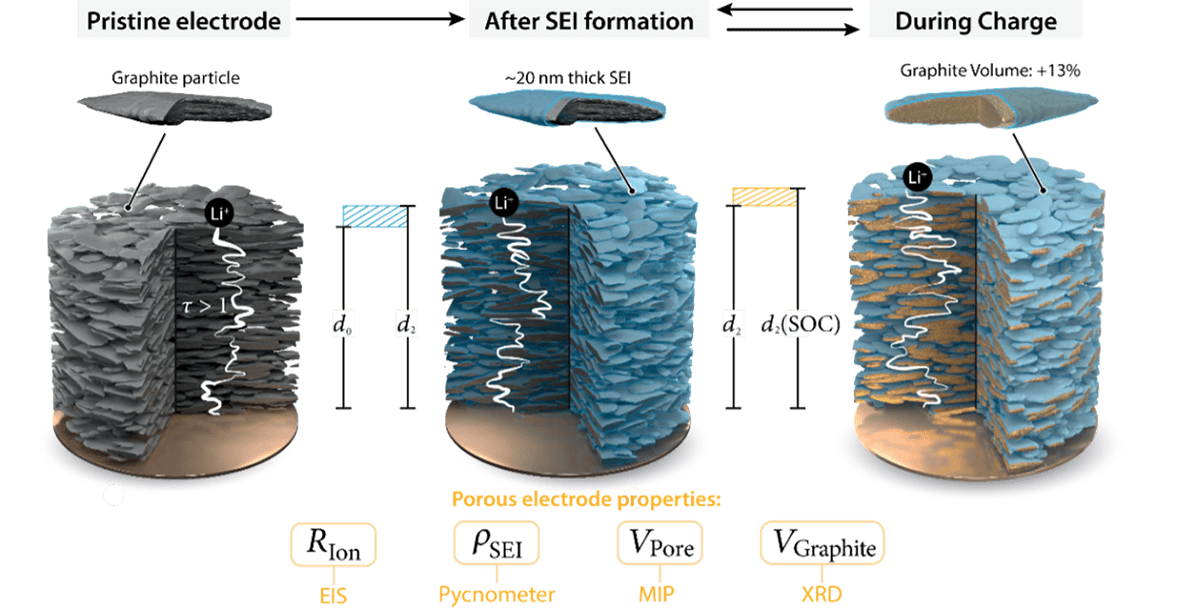
Heavy-duty vehicles (HDVs) powered by hydrogen-based proton-exchange membrane (PEM) fuel cells offer a cleaner alternative to diesel-powered internal combustion engines for decarbonizing long-haul transportation sectors. The development path of sub-components for HDV fuel-cell applications is guided by the total cost of ownership (TCO) analysis of the truck.

TCO analysis suggests that the cost of the hydrogen fuel consumed over the lifetime of the HDV is more dominant because trucks typically operate over very high mileages (~a million miles) than the fuel cell stack capital expense (CapEx). Commercial HDV applications consume more hydrogen and demand higher durability, meaning that TCO is largely related to the fuel-cell efficiency and durability of catalysts.

This article is written to bridge the gap between the industrial requirements and academic activity for advanced cathode catalysts with an emphasis on durability. From a materials perspective, the underlying nature of the carbon support, Pt-alloy crystal structure, stability of the alloying element, cathode ionomer volume fraction, and catalyst–ionomer interface play a critical role in improving performance and durability.

We provide our perspective on four major approaches, namely, mesoporous carbon supports, ordered PtCo intermetallic alloys, thrifting ionomer volume fraction, and shell-protection strategies that are currently being pursued. While each approach has its merits and demerits, their key developmental needs for future are highlighted.

Want to learn more on this subject?

Nagappan Ramaswamy joined the Department of Chemical Engineering at IIT Bombay as a faculty member in January 2025. He earned his PhD in 2011 from Northeastern University, Boston specialising in fuel cell electrocatalysis.

He then spent 13 years working in industrial R&D – two years at Nissan North American in Michigan USA focusing on lithium-ion batteries, followed by 11 years at General Motors in Michigan USA focusing on low-temperature fuel cells and electrolyser technologies. While at GM, he led two multi-million-dollar research projects funded by the US Department of Energy focused on the development of proton-exchange membrane fuel cells for automotive applications.

At IIT Bombay, his primary research interests include low-temperature electrochemical energy-conversion and storage devices such as fuel cells, electrolysers and redox-flow batteries involving materials development, stack design and diagnostics.

Ask me anything: Mažena Mackoit-Sinkevičienė – ‘Above all, curiosity drives everything’

What skills do you use every day in your job?

Much of my time is spent trying to build and refine models in quantum optics, usually with just a pencil, paper and a computer. This requires an ability to sit with difficult concepts for a long time, sometimes far longer than is comfortable, until they finally reveal their structure.

Good communication is equally essential – I teach students; collaborate with colleagues from different subfields; and translate complex ideas into accessible language for the broader public. Modern physics connects with many different fields, so being flexible and open-minded matters as much as knowing the technical details. Above all, curiosity drives everything. When I don’t understand something, that uncertainty becomes my strongest motivation to keep going.

What do you like best and least about your job?

What I like the best is the sense of discovery – the moment when a problem that has evaded understanding for weeks suddenly becomes clear. Those flashes of insight feel like hearing the quiet whisper of nature itself. They are rare, but they bring along a joy that is hard to find elsewhere.

I also value the opportunity to guide the next generation of physicists, whether in the university classroom or through public science communication. Teaching brings a different kind of fulfilment: witnessing students develop confidence, curiosity and a genuine love for physics.

What I like the least is the inherent uncertainty of research. Questions do not promise favourable answers, and progress is rarely linear. Fortunately, I have come to see this lack of balance not as a weakness but as a source of power that forces growth, new perspectives, and ultimately deeper understanding.

What do you know today that you wish you knew when you were starting out in your career?

I wish I had known that feeling lost is not a sign of inadequacy but a natural part of doing physics at a high level. Not understanding something can be the greatest motivator, provided one is willing to invest time and effort. Passion and curiosity matter far more than innate brilliance. If I had realized earlier that steady dedication can carry you farther than talent alone, I would have embraced uncertainty with much more confidence.

Copyright © 2026 by IOP Publishing Ltd and individual contributors