

Fancy some more? Check out our puzzles page.
‘Back to the future’ messages are more efficient
Science fiction has long embraced the idea of travelling backward in time, but the advent of Einstein’s general theory of relativity transformed these ideas from fantasies into potential – albeit contested – realities. In particular, solutions to the equations of general relativity known as closed time-like curves (CTCs) seem to allow a system’s trajectory to return to a previous point in time. Although the existence of CTCs has never been proven, their admissibility within general relativity has inspired many physicists to study their implications, which include increases in information processing speeds as well as retrograde time travel.
Inspired by the 2014 film Interstellar, in which a father sends messages to his daughter in the past, Kaiyuan Ji and Mark Wilde of Cornell University, together with Seth Lloyd at the Massachusetts Institute of Technology, have now investigated the potential advantages of a retrograde messaging channel based on a CTC. As well as deriving an exact expression for the information capacity of such a channel, they showed that this capacity exceeds that of regular channels that do not involve backward time travel.
Post-selected CTC models
To model their CTC, the researchers used an approach that Lloyd and his then-collaborators developed 15 years ago. This approach exploits the mathematical equivalence between a CTC and the combined operations of quantum teleportation and post selection, so it is often referred to as a post-selected CTC model. Previous analyses established that this model disallows time-travel paradoxes such as going back in time to kill your grandfather, while still preserving correlations between the system that travels backward in time and the environment.
The latter feature is important, Ji notes, because quantum CTC models without it have a distinct drawback: “If you travel through that closed time-like curve, you end up in the past, but basically you lost all the memory of what has happened before you do time travel,” he explains.
A further advantage of the team’s chosen model is that it does not prohibit causal loops in which correspondents in the past and future influence each other. To return to the Interstellar scenario, Ji explains that while the daughter is influenced by her father’s message, she also influences her father, because he witnessed how she decoded the message and therefore used that information to optimize his encoding protocols.
The existence of causal loops in the model allowed Ji and his colleagues to formulate an expression for the channel’s bit capacity. It also pointed towards the best way of maximizing that capacity. The optimal strategy, Ji explains, would involve the father using his memory from the past when encoding his message to the past, which makes sending messages to the past more efficient (and capable of a higher bit capacity) than sending messages to the future. “The causal loop is essential to the design of the optimal communication protocol in this retro causal communication setting,” he tells Physics World. “It is not possible in standard communication from the past to the future.”
Capacity for messages
The CTC can also be used to form a quantum channel capable of transmitting either regular classical data or quantum data back in time. Using their expression for the channel’s bit capacity, the researchers were able to show that its classical bit capacity is twice that of its quantum counterpart.
Nicole Yunger Halpern, a theoretical physicist at the University of Maryland who has studied some implications of CTCs for metrology but was not involved in the current work, describes the research as “creative and technically impressive”. She points out that while calculating a communication channel’s capacity is a common challenge in the field of information theory, obtaining straightforward answers can be difficult. “The authors combined this workaday task with a highly unusual (retrocausal) setting and, moreover, obtained a simple solution,” Halpern says.
Decoding the dark arts of Interstellar’s black hole
Read more

Not everyone is sold on the mathematical format of post-selected CTC models, though. Scott Aaronson, a computer scientist at the University of Texas at Austin, US, who has previously studied the speed advantages of information processing using CTCs, believes that studies with this approach “attempt to model time travel but don’t fully succeed at it”. However, with respect to the question of channel capacity, Aaronson concedes it may be “interesting to prove things”.
While the current model considered the effects of distortion (“noise”) on messages in the channel, Ji suggests it might be interesting to broaden this to include noise in the memory of the process – like the father in Interstellar having a hazy recall of his daughter’s decoding protocol. Ji also notes that the post-selection CTC model has some mathematical equivalence with black hole final state projections, and he says it might be interesting to explore these connections, too.
The research is described in Physical Review Letters.
New superconducting diode gives greater control over the flow of electrons
Like a two-lane highway with one lane empty and the other clogged with traffic, superconducting diodes allow electrons to flow without resistance in one direction while encountering normal, resistive conditions in the other. First demonstrated experimentally in 2020, these devices have considerable potential as platforms for fundamental studies of quantum materials and as building blocks for superconducting electronics.
For many applications, being able to control the flow of electricity through the diode – or even reverse its polarity – is essential. In principle, there are several ways of doing this because the efficiency of the superconducting diode effect (SDE) depends on many factors. Examples include magnetic field, temperature and diode design as well as intrinsic properties such as the momentum of the Cooper-paired superconducting electrons and their spin-orbit coupling.
In practice, though, some of these properties are more easily changed than others. To return to the highway analogy, it’s much more straightforward to alter the flow of traffic by posting new road signs, rather than by rebuilding the road or redesigning the cars.
In a recent paper in Chinese Physics Letters, Yanwu Xie, Yishuai Wang, Wenze Pan and Meng Zhang of Zhejiang University in Hangzhou, China describe a new superconducting diode platform that makes it far easier to change the device’s configuration, and thus to control the flow of superconducting electrons through it. Physics World spoke to them about their research and its possible applications.
How did you get the idea for this new type of superconducting diode?
This work started with an unexpected experimental observation. While we were making routine current-voltage measurements on a conventional strip-shaped superconducting device constructed at the interface between two materials, LaAlO3 and KTaO3 (LAO/KTO), we noticed a pronounced difference between the critical currents in opposite directions. Given the growing interest in the SDE, this surprising result immediately caught our attention and prompted us to investigate its origin.
What is special about these two materials?
The properties of conventional superconducting diodes are typically locked into their fixed physical structures, such as Josephson junctions or patterned vortex pinning sites. This inflexibility makes post-fabrication tuning or reconfiguration of the diode characteristics extremely challenging.
Two-dimensional oxide interface superconductors such as LAO/KTO and LaAlO3/SrTiO3 are good candidates for overcoming this problem. The strong spin-orbit coupling near the interface enables possible finite-momentum Cooper pairing, while the extremely low superfluid density and intrinsic two-dimensional nature of the materials create ideal conditions for studying vortex dynamics and magnetic flux behaviour.
In addition, these systems have exceptional tuneability. Their superconducting states can be well controlled through both global substrate gating and local conductive atomic force microscope (cAFM) lithography, which opens new possibilities for post-fabrication SDE engineering.
What was the most challenging aspect of this research?
The most challenging part was unravelling the frustrating sample-to-sample variability we encountered early on. We now know that the SDE in conventional LAO/KTO devices stems from asymmetric vortex entry conditions caused by random, fabrication-induced edge imperfections. At the time, however, even devices with nominally identical geometries exhibited wildly different SDE efficiencies and polarities, showing no discernible systematic trend.
The breakthrough came when AFM imaging revealed random edge defects on the superconducting channels. To test whether these random imperfections were indeed the root cause, we used cAFM lithography to “straighten” the originally photolithography-produced rough channel boundaries. This atomic-scale trimming strongly suppressed the SDE, providing unambiguous evidence for the vortex edge asymmetry mechanism.
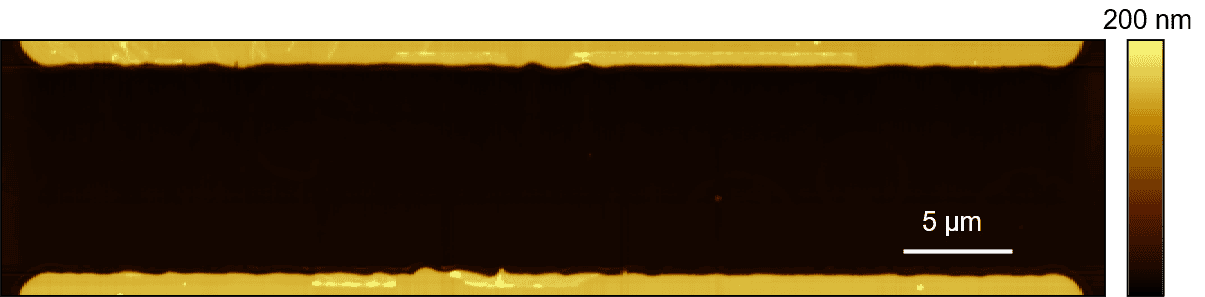
We then turned this challenge into an opportunity. By using cAFM to re-shape the channel edges repeatedly and in a non-volatile way, we transformed a source of random sample variability into a tool for deterministic, on-demand quantum device control.
What are some possible applications for this editable superconducting diode?
The nonreciprocal transport of charge carriers – exemplified by p-n junctions in semiconductor diodes – is a cornerstone of modern electronics. Similarly, superconducting diodes are emerging as pivotal components for superconducting electronics. What distinguishes our approach is our ability to reversibly modify the diode polarity and efficiency within the same device through nanoscale control of the superconducting channel geometry. This editability may enable reconfigurable superconducting circuit elements and adaptive circuit architectures, while also providing a versatile platform for investigating the role of geometry-associated vortex dynamics in nonreciprocal superconducting transport.
What will you do next?
We plan to fully exploit the unique cAFM lithography capability of our oxide interface platform to systematically investigate how tailored vortex-boundary configurations shape the SDE. The diode performance can be further optimized by mapping out the precise relationship between channel geometry, vortex entry barriers and rectification efficiency.
In parallel, we plan to introduce artificial pinning centres (such as nanoscale insulating dot arrays) directly into the superconducting channel. This will allow us to engineer asymmetric vortex-pinning landscapes within the bulk of the channel. Combining this engineered flux pinning with the asymmetric vortex-boundary mechanism demonstrated in the current work offers a promising route toward achieving a robust, deterministic and highly controllable superconducting diode.
Wearable pacemaker uses ultrasound to control heart rhythm
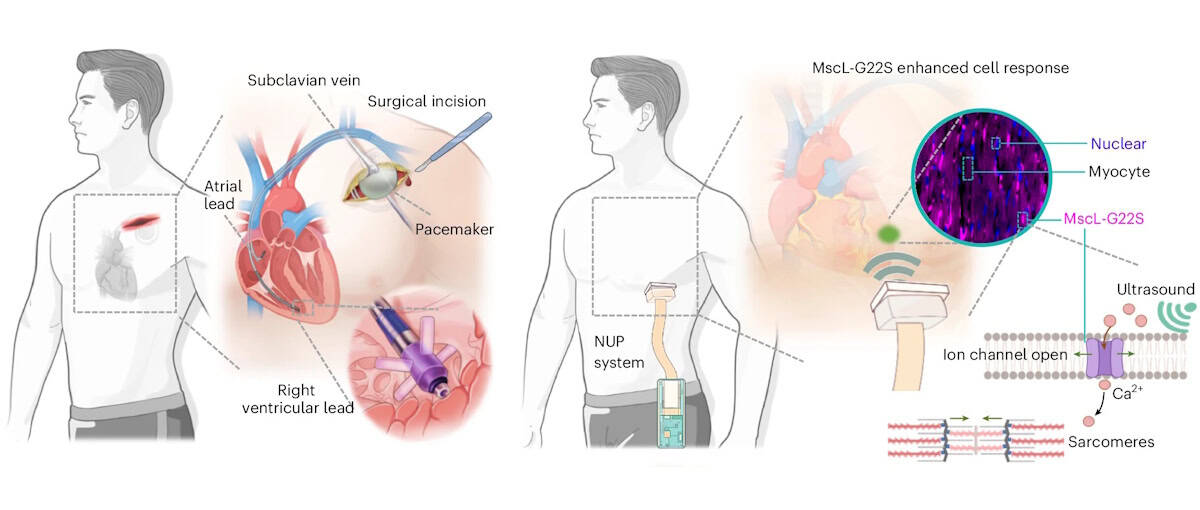
Cardiac arrhythmia – a disorder in which the heart beats too fast, too slowly or irregularly – affects millions of people worldwide. Currently, arrhythmias are treated using pacemakers to regulate the heart’s rhythm, but traditional pacemakers require invasive surgical implantation and intracardiac leads that risk infection and tissue injury. As an alternative, a research collaboration headed up at Massachusetts Institute of Technology (MIT) and the University of Southern California (USC) has developed a non-invasive pacemaker that’s worn like a sticker on the chest and stimulates the heart using ultrasound.
“Ultrasound offers a unique combination of deep tissue penetration, spatial focusing and non-invasive delivery,” explains first author Chen Gong from USC. Previous approaches for ultrasound-based cardiac pacing, however, lacked reliability or required the use of microbubbles. In this new study, Gong and collaborators employed a technique called sonogenetics, in which cardiac cells are genetically altered to increase their sensitivity to ultrasound. Once exposed to ultrasound waves, the engineered cells trigger the opening of ion channels that let in calcium, which signals the cells to squeeze and beat.
“Our central motivation was to address the limitations of conventional pacemakers, while preserving precise control of cardiac rhythm,” says Gong.
The team first examined whether ultrasound could modulate cardiac cells in vitro, using sonogenetically engineered human heart muscle cells. Ultrasound stimulation caused almost three-quarters of the engineered cells to beat in synchrony with the ultrasound waves. In contrast, unaltered cells did not exhibit such behaviour. Importantly, ultrasound exposure did not impact the cells’ expression of biomarkers for inflammation, myocardial injury or oxidative stress, demonstrating the safety of this approach.
The non-invasive ultrasound pacemaker
The researchers designed a sonogenetics-based non-invasive ultrasound pacemaker (NUP) capable of real-time imaging and steerable stimulation, describing the device in Nature Biomedical Engineering. The postage stamp-sized device, which sticks to the skin via a bioadhesive interface, incorporates a 64-channel phased-array transducer, as well as data acquisition, wireless transmission and power modules.
To assess whether this prototype NUP could achieve non-invasive cardiac pacing in sonogenetically engineered rats, they attached the device onto the rats’ chests and applied ultrasound stimulation through the chest wall to the heart.
At an acoustic pressure of 2 MPa and a 40 ms pulse duration, the NUP increased the rats’ heart rates from 240 to 360–540 bpm, with a higher pulse repetition frequency leading to increased heart rate. Upon stopping the ultrasound stimulation, the heart returned to its natural rhythm. In control rats without the genetic modification, NUP could not control the heart rate effectively.
The team demonstrated that the NUP could electrically steer the ultrasound beam focus with a spatial precision of less than 1 mm, enabling targeting of different regions of the heart to induce chamber-specific pacing. NUP also successfully treated cardiac arrhythmias induced in the engineered rats, returning their heart rates to normal levels. In contrast, ultrasound stimulation of control rats did not effectively treat their arrythmias.
“A major objective of this work was to move beyond proof-of-concept stimulation and demonstrate a wearable system that could realistically support daily use,” explains Qifa Zhou, group leader at USC. “The current prototype integrates imaging, stimulation, wireless communication and battery-powered operation into a wearable format.”
Clinical potential
For future clinical use, the NUP device needs to automatically detect the wearer’s heart rate, locate heart chambers and deliver stimuli. To achieve this, the researchers used a cloud-based, artificial intelligence (AI)-powered imaging feedback loop that determines the heart rate and stimulation coordinates, and steers the ultrasound beam to target sites.
To test its feasibility for human-scale applications, they assessed the acoustic energy penetration of the device. Using simulations and experiments on a pig heart beneath layers of tissue, they confirmed that, even after tissue attenuation, NUP could deliver sufficient ultrasound pressure (approximately 2 MPa) to a human heart to enable stimulation at clinically relevant pacemaker sites.
The team also assessed the biosafety of the NUP approach, finding that the delivered ultrasound energy remained below approved safety limits and generated minimal thermal effects during and after stimulation. They also confirmed that the sonogenetic engineering induced no off-target effects, immune responses or pathological changes in the rats.
“In the long term, we are optimistic about applying sonogenetics in humans,” explains co-author Gengxi Lu from MIT. “Sonogenetics is different from gene editing – it does not aim to rewrite a patient’s DNA sequence, but instead enables target cells to temporarily or controllably express ultrasound-responsive proteins. At the same time, extensive clinical validation will still be needed to establish safety and long-term effectiveness.”
The team is now focusing on clinical translation and validation of the NUP technology, which includes improving gene delivery strategies, validating the system in larger animal models, and developing closed-loop control approaches that combine real-time physiological sensing with adaptive stimulation. There’s also much engineering work to be done, such as device miniaturization, and improving battery life, skin coupling and motion robustness.
“For cardiac pacing, we envisage that the final goal of NUP technology is to be a permanent alternative to a long-term implanted pacemaker,” Xuanhe Zhao from MIT tells Physics World. “More broadly, we are interested in expanding ultrasound-enabled bioelectronic medicine beyond cardiac pacing toward other organs and therapeutic applications where non-invasive, spatially precise modulation could have clinical impact.”
From ideas to industry: a theoretical physicist’s journey into Silicon Valley
When Ryan Hamerly was a 15-year-old at Boulder High School in Colorado, he spent his summer building a Tesla coil after seeing a classroom demonstration. “I thought that was really, really cool,” he recalls. “I wanted to make one myself, and as a result I ended up studying the theory of electricity and magnetism over one summer.”
In hindsight, Hamerly realizes he didn’t use much theory to construct the coil, which became part of a school physics project. “Most of the design was based on things I had read on the Internet,” he explains, “but I did try to teach myself electricity and magnetism – and it did work in the end.”
In 2006 Hamerly’s interest in physics took him to the California Institute of Technology (Caltech) for his undergraduate studies. Keen to do graduate research, Hamerly was most fascinated by fundamental theoretical problems in quantum field theory, such as dark matter and quantum gravity. But as he started toying between different options, he had a chance encounter with Hideo Mabuchi, an applied physicist at Stanford University.
“One thing that Hideo told me that I thought was particularly fascinating,” says Hamerly, “is that quantum field theory is just a generic tool that applies in many other fields.” He therefore ended up doing a PhD in optical and quantum computing under Mabuchi’s supervision, which he completed in 2016.
Hamerly then moved to Japan, where he studied at the National Institute of Informatics in Tokyo – a time he characterizes as “sort of a postdoc, but more an excuse to travel for a year”. He did, though, get a paper out of it “so it wasn’t wasted”. In Tokyo, Hamerly worked with Mabuchi’s longtime friend Yoshihisa Yamamoto – a quantum optics researcher who had previously led a group at Japanese telecoms giant NTT for over two decades.
Step into industry
When Hamerly returned to the US in 2017, he did a formal postdoc under quantum photonics engineer Dirk Englund at the Massachusetts Institute of Technology (MIT). And in a fortuitous turn of events, Yamamoto also came to the US to establish the Silicon Valley start-up NTT Research, with the intention of forming collaborations with US universities.
“[Yamamoto] just called me up and said they had a position at NTT to work in optical computing,” he says. “At the time it made most sense to stay at MIT working as a collaborator [rather than relocate to the NTT campus] because that was where a lot of our experiments were being done.”
Today, Hamerly is a senior research scientist at NTT Research’s Physics and Informatics (PHI) Lab in Sunnyvale, California. He divides his time between MIT – where his collaboration with Englund continues – and the PHI laboratory, about 15 km from Stanford. He works at the intersection of optics, deep learning and quantum computation. For example, one of Hamerly’s projects looks into ways to reduce the energy consumption of AI data centres using optical interconnects in place of electronic ones.
Researchers hope it might one day be possible to design processors that perform calculations using optical logic that are either impossible, or at least energetically unfeasible, using electronic logic. To this end, in January 2026 Hamerly co-founded Opticore – a company producing photonic integrated circuits for energy-efficient, high-speed AI – with UC Berkeley professors Mengjie Yu and Zaijun Chen, who was previously a postdoc in Englund’s MIT group.
Different setting, same science
Hamerly does not view his place at NTT Research as purely an industry position. “The mission at NTT Research is about generating ideas that will ultimately have some use in industry,” he explains, “but the fundamental focus is on those ideas and on the research.”
The mission at NTT Research is about generating ideas that will ultimately have some use in industry
His experience at NTT Research has shown him that an industrial lab can be smaller and more focused than one at a university – but that can be a double-edged sword. “[At a university] it’s nice to be able to go into seminar rooms and see a talk from a travelling world expert in a different field,” he says, “but on the other hand, the average person [at NTT] tends to be a lot more experienced and productive than say a graduate student in academia who is still learning.”
However, the chance to meet and interact with scientists from different areas is still the same. “Science is science, regardless of what institution you’re affiliated with,” he says. “We’re still doing the same things: we do research in a lab, we write up the results, submit them and publish them in journals, and we go to conferences and present our work.”
Hamerly still sees himself as principally a theorist. He spends much of his time writing computer code – occasionally for models that run on a supercomputer but usually for models that can run on his laptop. The rest of his time is focused on writing papers, travelling to present work, responding to reviews or in meetings.
Looking to the future, Hamerly believes that technology will impact research, but that the core elements of a researcher’s role are likely to remain similar for the foreseeable future. “The job of a researcher before the Internet, for example, is not too different from a post-Internet researcher,” he says, pointing to how you still have to communicate research via papers and conferences, and understand the field by reading others’ publications.
“There will definitely be changes in the way you do every one of these things in the next 10 years, especially with AI, but I don’t see any of them becoming optional.”
For young researchers entering the field, Hamerly advises keeping your options open. He did not envisage himself leaving full-time academia and work in an industrial lab, but switched because it offered a better opportunity to pursue the research he wanted to do. “They are both good routes to do research,” he concludes, “but you might find – based on which offers you get – that one is better than another.”
Undersea optical fibres detect the motion of silent whales
A technique currently used to track whale vocalizations could be adapted to pick up the hydrodynamic pressure fields created as they swim, researchers in Norway have demonstrated. Through analysis of backscattered light in an undersea optical fibre, Robin Rørstadbotnen and Martin Landrø at the Norwegian University of Science and Technology (NTNU) showed how silent whales can be detected as they swim close to the fibre. The duo hopes the discovery could ultimately provide a valuable new tool for whale conservation.
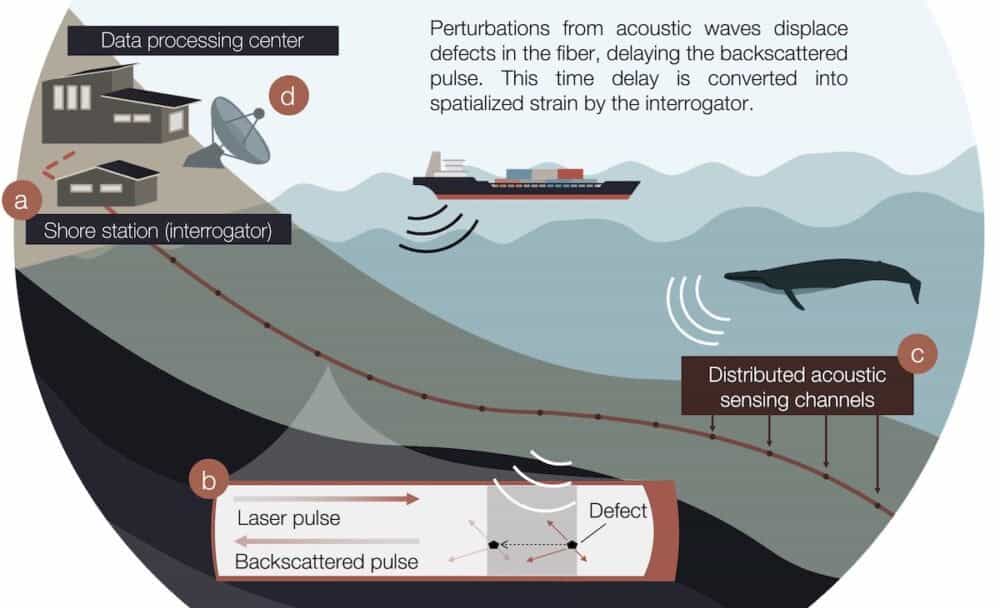
With the combined disruption of climate change and human activity, whales are rapidly being forced into new habitats and migration patterns. To understand these profound shifts in behaviour, conservationists widely rely on a technique named distributed acoustic sensing (DAS), which detects acoustic waves via the strain they induce on optical fibres.
When coherent laser pulses are passed through a fibre, a small portion of laser light is inevitably scattered back to the source by small fluctuations in the fibre’s structure and density. If the fibre is strained by an acoustic wave, the oscillating pressure field imprints a phase shift on this backscattered light, which varies in proportion to the degree of strain.
So far, this approach has been used to pick up whale vocalizations: the loudest sounds produced by any animal, which can travel for thousands of kilometres through the ocean. By analysing backscattered light across the global network of undersea optical fibres, researchers have gathered valuable information about how the habitats and migration paths of these marine mammals are changing.
“At NTNU, we started activity within distributed acoustic sensing in 2016,” Rørstadbotnen describes. “When the Center for Geophysical Forecasting was launched in 2021, this technology became a key field of interest.”
Despite the value of data that can be gathered through whale vocalizations, the approach leaves conservationists with a significant blind spot for the majority of the time when whales are silent. To address this limitation, Rørstadbotnen and Landrø considered how DAS could be adapted to pick up the hydrodynamic pressure and velocity fields constantly being created by the whales moving through the water, which generates ultralow-frequency signals similar to those created by the movement of ships.
To test this idea, the duo revisited scattering data gathered from a seabed optical fibre off the coast of Svalbard in the Norwegian Arctic. After filtering the data for a selected band of frequencies, they carried out frequency–wavenumber analysis to determine how rapidly the signals varied along the length of the fibre. Just as they hoped, “we found that this new approach could be applied to detect silent whales, given that they are swimming close to the fibre optic cable,” Rørstadbotnen says.
Through this analysis, the researchers were able to identify ships crossing the fibre from depths of up to 413 m, and at a maximum distance of 550 m from the fibre. They also managed to determine the vessel speeds and roughly estimate their sizes. Crucially, they were also able to distinguish the speeds and approximate sizes of silent whales swimming less than 40 m away from the fibre, as well as estimating their depths.
“Since we also recorded the acoustic signals in the frequency range from 5 to 100 Hz, we could identify whales when they were vocalizing closer to the sea surface,” Rørstadbotnen describes. “Thereby, we could use this information as a strong indication that the low-frequency signal observed a bit later in time was most likely generated by the whale moving closer to the fibre.”
Having demonstrated this possibility, Rørstadbotnen and Landrø now hope that their technique could provide researchers with a new tool for tracking whales around the world, even when they aren’t vocalizing. “In addition, this method can potentially detect toothed whales that vocalize in the high-frequency band outside what is normally recorded for distributed acoustic sensing,” Rørstadbotnen adds.
Beyond its potential for whale conservation, the duo is also hopeful that the technique could help researchers build up a more extensive picture of marine mammals more generally, along with other vital elements of fast-changing marine ecosystems.
The research is described in Proceedings of the National Academy of Sciences.
Can surplus renewable power make green hydrogen cheaper?
Electricity grids need to be carefully balanced, with too low levels of electricity leading to blackouts and too high levels causing damage to grids. Due to the intermittent nature of renewable energy sources such as solar and wind, it is possible for specific regions (e.g. the north of Germany) to have an excess of electricity, while the power lines do not have enough capacity to transport it to higher demand regions such as cities and industrial areas. This is known as a grid bottleneck. To keep the grid running properly, operators redispatch electricity by reducing renewable feed-in in oversupplied areas and increasing generation elsewhere. However, this leads to renewable energy being wasted, and because producers are still compensated and generation increase on demand is costly, it is financially inefficient.
In 2024, Germany created regional redispatch markets so that renewable electricity that would otherwise be curtailed can instead be sold locally. This is particularly useful for hydrogen producers because they do not require a continuous supply of electricity. Because they can operate flexibly, turning on and off depending on electricity availability, they can take advantage of very low-priced electricity. In this work, the researchers ask whether using this electricity source makes producing green hydrogen cheaper and how market prices for otherwise curtailed renewable electricity affect this.
They found that using only redispatch electricity is not cost-effective because of its unreliability. However, combining it with different renewable energy sources does reduce costs. Depending on hydrogen storage costs, using redispatch electricity can reduce hydrogen production costs by €0.9 – €1.96 per kg, if the redispatch electricity is available for 0 €/MWh, compared to typical costs of around €6-8 per kg without redispatch electricity.
Increased redispatch prices reduce the potential for production cost reductions, which, combined with the unreliability of redispatch availability, lowers the incentive for
system beneficial electrolyser siting within the regional market areas. Therefore, the success of these markets depends heavily on keeping prices low, which might necessitate effective price capping but could increase green hydrogen competitiveness and simultaneously decrease renewable energy curtailment.
Read the full article
J Brandt et al 2026 Prog. Energy 8 025006
Do you want to learn more about this topic?
Metrics for assessing the economic impacts of power sector climate and clean electricity policies John Bistline (2021)
How can you fast-forward a quantum simulation?
Quantum computers promise to simulate physical systems far beyond the reach of classical machines. But even quantum algorithms face fundamental limits: no fast-forwarding theorems. These say that if you want to simulate a system for longer, the computational effort increases at least in proportion.
In many real algorithms, the situation is even worse than the ideal case. This is because the requirements of accuracy and runtime compound one another, so that running longer and running precisely become entangled and costly together.
In their new study, a team of researchers from Beijing and Hong Kong showed that this link between time and cost is not as rigid as it seems, at least for a broad class of realistic systems that interact with their surroundings. These so‑called open quantum systems are described by Lindbladian dynamics, which include both ordinary evolution and the effects of noise or dissipation.
In earlier approaches, improving the accuracy of a simulation made long-time calculations much more demanding, because the two effects multiplied together. The new method separates these contributions, so that the cost of simulating longer times does not automatically amplify the cost of achieving accuracy. In practical terms, this means that extending a simulation in time becomes far more manageable than before.
An even more surprising result appears when the dissipative processes in the system have a particular structure common in quantum physics. In these cases, the number of sequential computational steps needed grows only very slowly as the simulated time increases. Instead of needing proportionally more effort to simulate longer dynamics, the algorithm can effectively skip ahead, compressing what would normally be a long sequence of steps into a much shorter one. This fast‑forwarding is a dramatic departure from the usual expectation that longer simulations must always take longer to run.
The team also demonstrated how these ideas can be applied to studying thermal properties of quantum systems. These are essential for understanding matter at finite temperature. Such calculations are especially challenging at low temperatures, where lots of interesting physics often occurs. By exploiting their more favourable scaling, the new approach can extract certain thermal properties more efficiently, making it easier to probe regimes that are typically hard to access.
Beyond the specific application of this advance itself, the work highlights an important shift in perspective. Rather than focusing only on the worst‑case limits imposed by general theorems, it shows that carefully chosen physical structure can loosen those limits. Only time will tell what the implications for quantum simulation and computation will be in the future.
Read the full article
Zhong-Xia Shang et al 2026 Rep. Prog. Phys. 89 057602
Observation of top-antitop quark excess
Top quarks are the heaviest known elementary particles. They are produced in pairs with their antiparticle equivalent, the antitop quark. Researchers at the Large Hadron Collider (LHC) smash protons together at extremely high energies in the hope of producing these top-quark pairs. The minimum energy required to create a pair is known as the production threshold (approximately twice the top mass). Near this threshold, the particles move relatively slowly and, because of the strong nuclear force, they may briefly interact strongly enough to form a quasi-bound state before each top quark decays individually.
In this work, researchers used a huge dataset collected with the ATLAS detector at the LHC. Top quark pairs decay far too quickly to be observed directly, so the ATLAS team instead studied their decay products. A top quark usually decays into a W boson and a b-quark, while the antitop quark decays into the corresponding antiparticles. The W bosons then decay further, either through leptonic decay (producing an electron, muon or tau plus a neutrino) or through hadronic decay, which produces jets of particles.
The ATLAS analysis focuses on the case where both W bosons decay leptonically into electrons and muons and reconstructs the invariant mass of the system using the energy and momentum of the decay products.
If non-relativistic QCD effects are included, the event rate near threshold is expected to be higher than that predicted by standard perturbative QCD alone, due to contributions such as the formation of quasi-bound states that are not accounted for in the perturbative framework. The analysis also employs spin-correlation observables to enhance the sensitivity to the unique spin structure of the phenomena. If non-relativitic QCD effects occur near the production threshold, including the formation of quasi-bound states, physicists expect to see an excess of events concentrated at masses close to the minimum energy needed to produce the pair.
The researchers observed significantly more events near the production threshold (∼345 GeV) than standard QCD calculations predicted, confirming a previous similar measurement by the CMS collaboration. The excess matches predictions from non-relativistic QCD that the top and antitop quarks briefly perform non-relativistic QCD interaction, including the formation of quasi-bound states, before separating and decaying. This is important because it provides strong evidence for a subtle quantum effect of the strong force and improves our understanding of top-quark behaviour in an extreme regime. This measurement underscores the capacity of LHC experiments at the precision frontier, reinforcing the vital interplay between theory and experiment in these precision studies.
“This is a very exciting finding that pushes our current understanding of top quark physics and its modelling to the extreme. It has only been made possible by recent efforts to connect quantum information theory and collider physics.” – Yoav Afik, an ATLAS physicist affiliated with the Enrico Fermi Institute at the University of Chicago
“With the newly collected Run 3 dataset, which is more than twice as large as the Run 2 dataset used in this first analysis, we will be able to scrutinize this excess in much greater detail and determine whether it can be described solely by non-relativistic QCD effects, or whether there is something more to it.” – Baptiste Ravina, a Senior Research Fellow at CERN
Read the full article
The ATLAS Collaboration 2026 Rep. Prog. Phys. 89 057801
Do you want to learn more about this topic?
Towards the identification of new physics through quark flavour violating processes by Andrzej J Buras and Jennifer Girrbach (2014)
Vera C Rubin Observatory kicks off 10-year quest to map the cosmos
A major astronomy facility in the Andes has begun a 10-year survey of the Southern sky with the aim of creating the most comprehensive, cinematic record of the universe ever made.
Based in Cerro Pachón in the Andes, the Vera C Rubin Observatory is named in honour of the US astronomer and dark-matter pioneer Vera Rubin.
The observatory contains the Legacy Survey of Space and Time (LSST) – the largest camera ever built. Taking almost two decades to build, the 3200 megapixel instrument forms the heart of the observatory’s 8.4 m Simonyi Survey Telescope.
The observatory is funded by the US National Science Foundation and the Department of Energy along with international partners including France and the UK.
Last year the observatory released its first images, featuring millions of galaxies and Milky Way stars and thousands of asteroids in exquisite detail. This was then followed by further commissioning work as well as an “operational readiness” review.
Now that is complete, the LSST has today begun its 10-year mission. It will now take a ultrawide, ultrahigh-definition picture of the southern night sky every 3–4 nights, replicating the process over a decade to produce almost 1000 full images of sky.
This will be used to plot the positions and measure the brightness of objects in the sky to help improve our understanding of dark matter and dark energy.
The survey will examine 20 billion galaxies as well as produce the most detailed star map of the Milky Way, imaging 17 billion stars and cataloguing some six million small objects within our solar system including asteroids.
When the LSST survey is complete, the final dataset will contain billions of objects with trillions of measurements, all accessible through regular data releases.
“It is amazing and humbling as we start the Legacy Survey of Space and Time, after more than two decades of incredible work by our dedicated team,” says Vera C Rubin Observatory director Bob Blum. “Rubin Observatory is for everyone; the LSST will change how we do astronomy and astrophysics, allowing researchers anywhere to participate in cutting-edge science.”
Copyright © 2026 by IOP Publishing Ltd and individual contributors