Faramarz S Gard, a researcher at Argentina’s national atomic-energy commission, describes the first-hand impact of funding cuts and job losses in the country’s scientific system
I am writing from Argentina as a researcher working within the country’s national scientific system. While discussions about science funding are often framed in terms of budgets and economic indicators, the reality is experienced in laboratories, offices and research facilities where scientific knowledge is produced.
Today, many of us in Argentina are witnessing a progressive deterioration of Argentine science, both in terms of infrastructure and human capital.
I am based at the Comisión Nacional de Energía Atómica (CNEA), where uncertainty has become routine. Hundreds of employees remain on temporary contracts that can be terminated without warning. On 1 July 2026, a total of 61 colleagues lost their jobs, with armed military police officers occupying the building to contain a peaceful employee protest. Beyond the immediate human cost, these dismissals are steadily dismantling scientific capabilities that have taken decades to build.
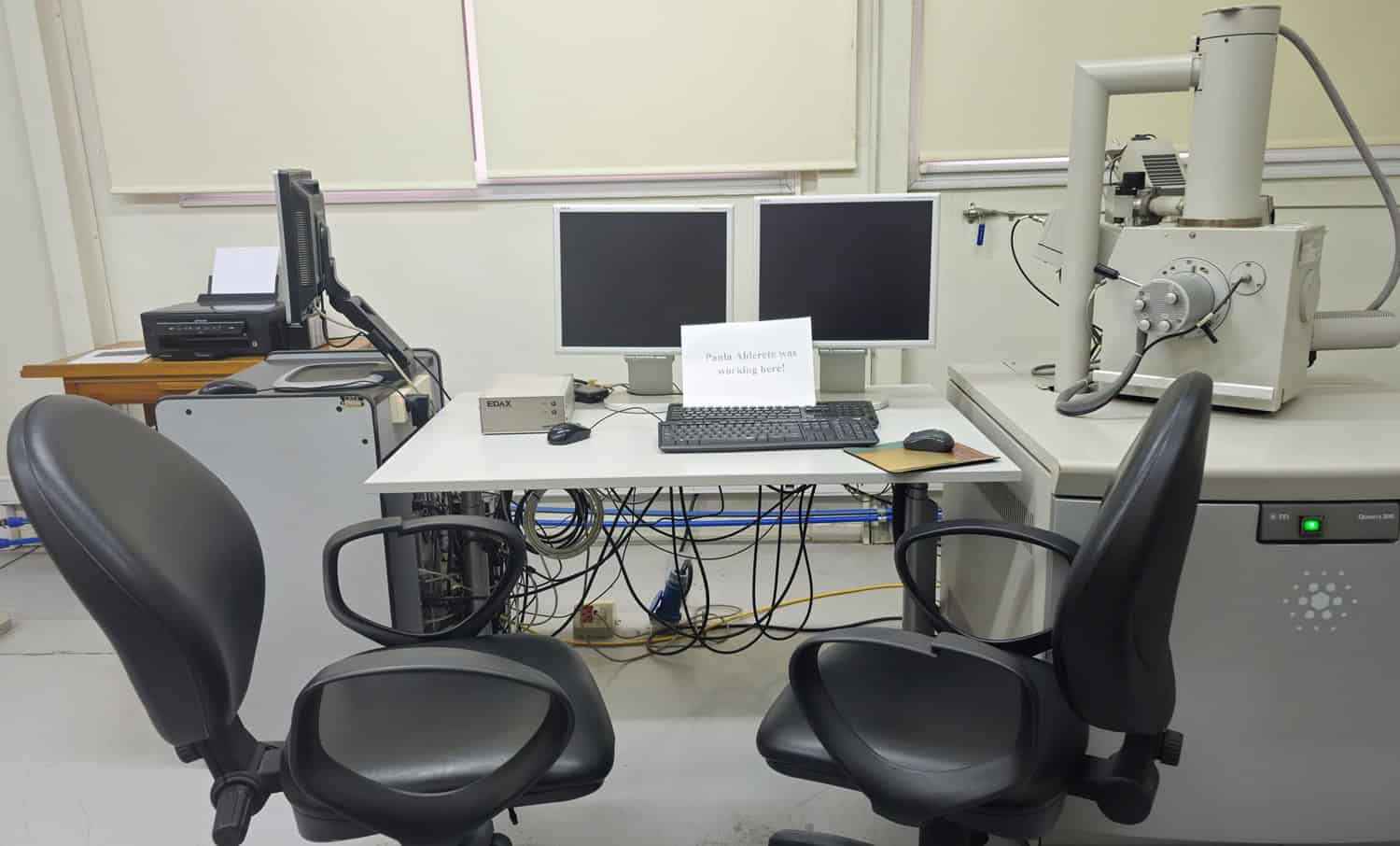
The impact became tangible when my colleague Paula Alderete, an experienced electron microscope specialist, lost her position. Alderete, who has published two papers with me, was responsible not only for operating a highly specialized instrument, but also for maintaining it and supporting dozens of research projects.
Without Paula Alderete’s expertise, our lab’s electron microscope has become largely unusable. It is a quiet reminder that scientific infrastructure depends as much on people as on expensive equipment.
Faramarz S Gard
Without her expertise, the microscope has become largely unusable. Every morning I pass her empty desk on my way to the laboratory. It has become a quiet reminder that scientific infrastructure depends as much on people as on expensive equipment.
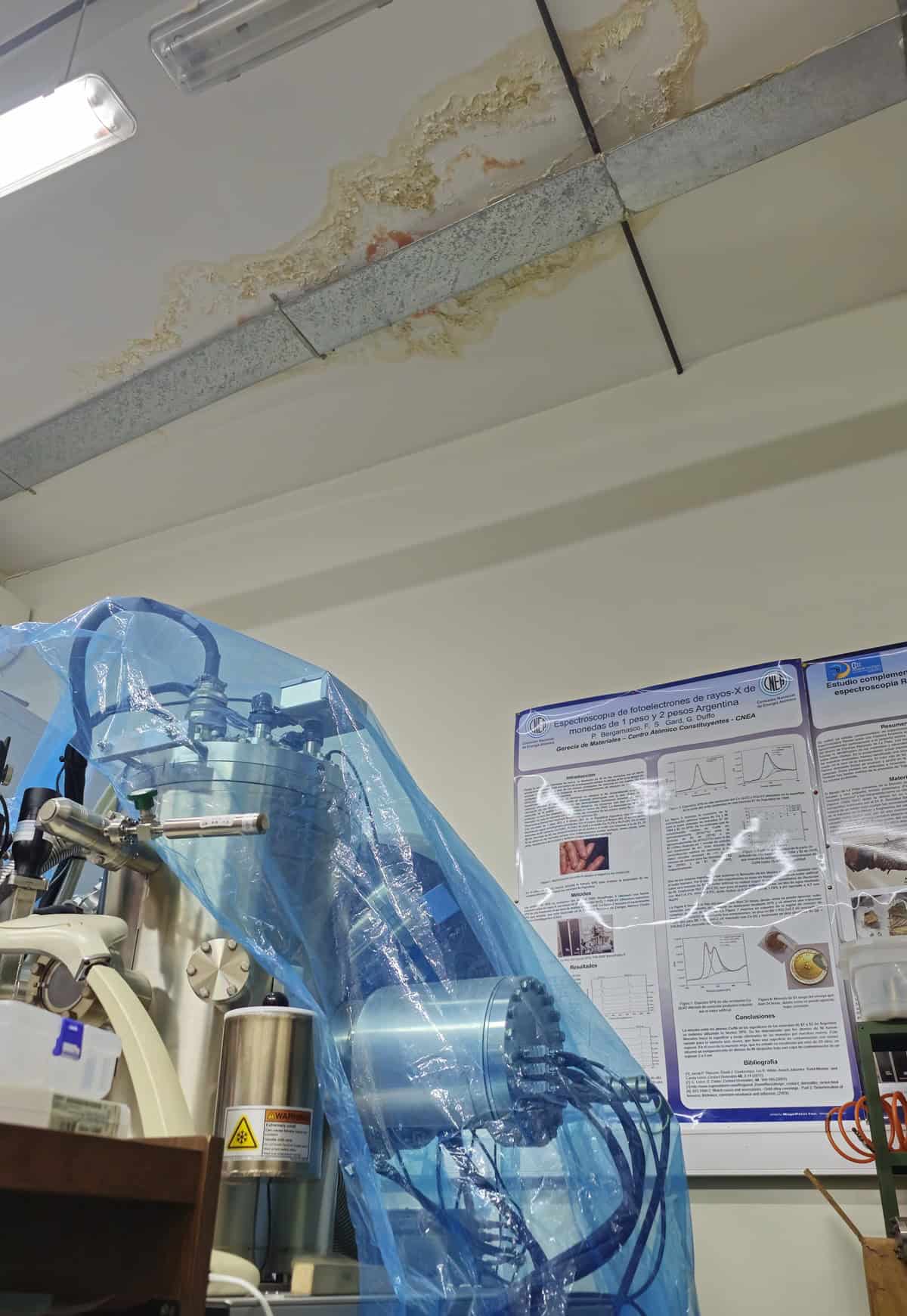
The deterioration extends beyond personnel. In my laboratory, an X-ray photoelectron spectroscopy (XPS) instrument worth more than $1m must sometimes be protected with plastic sheets because rainwater leaks through the roof.
Equipment designed to operate under tightly controlled environmental conditions is now exposed to circumstances that threaten its long-term reliability. Similar situations are becoming increasingly common across Argentina’s universities and research institutes as maintenance budgets shrink and infrastructure ages.
Argentina has a scientific tradition that reaches far beyond its borders. The country has produced five Nobel laureates, including three in the sciences, and has made internationally recognized contributions to nuclear technology, medicine, agriculture, astronomy and materials science. Institutions such as CNEA, CONICET (Argentina’s national research council) and the national universities have trained generations of researchers whose work has strengthened international collaborations and advanced scientific knowledge worldwide.
Scientific systems rarely collapse through a single dramatic event. They decline incrementally: one technician dismissed, one laboratory left unrepaired, one instrument taken out of service, one young scientist deciding to build a career elsewhere. These individual losses accumulate into a weakening of scientific capacity that may take decades to rebuild.
When a country loses the expertise required to operate advanced laboratories or maintain unique scientific infrastructure, the consequences extend beyond national borders.
Faramarz S Gard
This should concern more than Argentina. Modern science depends on international networks of researchers, shared facilities and long-term collaboration. When a country loses the expertise required to operate advanced laboratories or maintain unique scientific infrastructure, the consequences extend beyond national borders.
Knowledge is lost, collaborations weaken, and opportunities for discovery diminish.scientific infrastructure is more than buildings and instruments; it is the people whose expertise gives those resources value. Once that expertise disappears, replacing it is far more difficult than preserving it.
The empty desk of a single scientist may seem insignificant, but multiplied across laboratories and institutions, it becomes a warning of how a research system is quietly dismantled. Argentina’s experience is therefore not only a national concern but also a reminder that scientific capacity, wherever it exists, is a global resource that is remarkably difficult to rebuild once lost.
I write this letter not only to describe a difficult situation but also to call attention to the broader consequences of sustained disinvestment in science. The international scientific community should recognize that the erosion of research systems in countries such as Argentina represents a loss not only for those nations but for global science itself.
Science is built by people, sustained by institutions, and enabled by infrastructure. Today, all three are under increasing strain in Argentina.