Particle accelerators have traditionally been designed to maximize their scientific impact, but now they need to be environmentally friendly too. Joe McEntee examines initiatives pursuing a more sustainable roadmap for big science
For particle physicists, bigger has always been better. The first working cyclotron, which was built by Ernest Lawrence in California in 1931, was little more than 35 cm in circumference and accelerated protons to 80 keV. Compare that with CERN’s Large Hadron Collider (LHC), which is more than 27 km long and has been creating protons with energies of 7 TeV per beam – some eight orders of magnitude higher.
Only recently, though, have the burgeoning energy requirements of ever-larger accelerator facilities become a cause for concern. It was not until 2020 that CERN published its first-ever environmental report, which outlined to the public how the lab was reducing its energy consumption. Thanks to innovations in cryogenics, for example, CERN reported that the “data per joule” doubled between the LHC’s first and second experimental runs.
All good and well. Yet while their core mission of fundamental scientific discovery remains paramount, it’s clear that – if nothing changes – the environmental impact of new and upgraded accelerator complexes will track in tandem with the size, energy footprint and resource consumption of these large-scale research facilities.
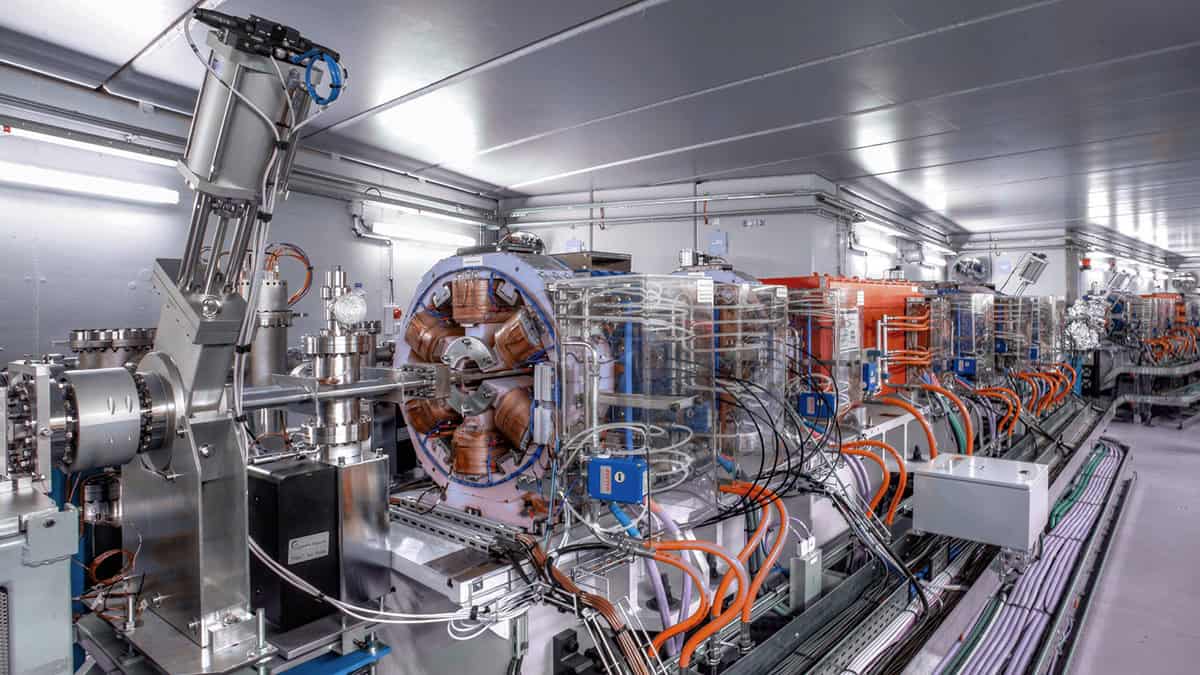
The numbers are eye-watering. Particle-accelerator research centres currently consume hundreds of gigawatt-hours (GWh) of electricity per year – roughly the energy budget of a mid-sized European city. CERN’s unique array of accelerators, detectors, computers and technical infrastructure, for example, together account for about 95% of the lab’s total electricity use of 1290 GWh in 2024, with the LHC alone soaking up 695 GWh.
What if bigger isn’t better?
It’s not a good look given the climate crisis – and only made worse with oil and gas prices soaring after the effective closure of the Strait of Hormuz. Fortunately, the accelerator-science community is ramping up efforts to make its core technologies and facilities more sustainable. The aim is not only to cut the energy and resources that accelerators use, but also to understand – and, more importantly, minimize – their “whole-lifetime” environmental impact.
In fact, with CERN bringing the upgraded High Luminosity LHC online by 2030, mulling over a 91 km-circumference Future Circular Collider, and China eyeing up a 100 km collider of its own, now is a good time to embed environmental impact-reduction techniques into accelerator designs from the start.
That, at least, is the hope of a group of accelerator scientists and sustainability experts from the UK, Switzerland and Germany, who in June published a “living document” that puts environmental sustainability front-and-centre in the planning, construction, operation and decommissioning of large-scale accelerator facilities (EPJ Research Infrastructures 10 12).
“We’re seeing a surge in interest from colleagues across the accelerator community, all of them eager to incorporate environmental sustainability into their work and to share lessons learned,” says Hannah Wakeling, lead author of the report. An accelerator physicist in the John Adams Institute at the University of Oxford, UK, Wakeling’s own research involves measuring the carbon footprint of particle accelerators, their use of raw materials and even their wider impact on biodiversity.
Trouble is, measuring and improving the environmental sustainability of accelerator facilities is not easy. Labs often don’t have enough funding, staff or time for such initiatives. Sustainability recommendations are either too generic or cannot be applied to accelerator science and technology. There’s also uncertainty about how to incorporate environmental sustainability into day-to-day operations.
We hope that the guidelines will help accelerator facilities make informed decisions that balance scientific progress with environmental responsibility
Hannah Wakeling, University of Oxford
Inspired by various initiatives in big science (see “Sustainable acceleration”, below), Wakeling and colleagues’ open-access resource has 110 practical sustainability recommendations for anyone building, planning or running accelerator facilities. It includes advice on procuring resources responsibly and reducing environmental impact through, for example, tunnelling, shielding, component design, waste management and green computing. There are also recommendations on skills, knowledge transfer and culture change, the latter being what the authors think will have most impact.
“Looking at accelerator programmes through the lens of sustainability gives us an opportunity to do things differently,” notes Wakeling. “We hope that the updated version of our high-level guidelines [v1.0 was published in 2025] will help accelerator facilities make informed decisions that balance scientific progress with environmental responsibility.”
Towards accelerator 2.0
In general, the biggest opportunity to make accelerators more sustainable is when they are still being designed and conceived. “At these crucial stages,” says Wakeling, “environmental impact assessments should be employed to highlight the areas of highest potential for impact reductions and more sustainable designs.”
What’s more, argues Wakeling, any decision to build or upgrade an accelerator shouldn’t depend just on its cost or scientific output but on how environmentally sustainable it will be too. That, in turn, means prioritizing R&D funding for enabling technologies that can make the most difference and co-ordinating efforts between large-scale facilities to avoid scientific duplication and to minimize the consumption of resources.
One relevant effort is a pan-European consortium called Research Facility 2.0 (RF 2.0), which is aiming to develop accelerator facilities that can run entirely on renewable energy – in effect, almost independently of the public power grid. A three-year, €5.6m initiative funded by the European Union’s Horizon programme and the Swiss State Secretariat for Education, Research and Innovation, RF 2.0 includes major accelerator labs like CERN, DESY and HZB (both in Germany), ALBA (Spain) and MAX IV (Sweden) plus the Karlsruhe Institute of Technology (KIT) and four high-tech SMEs.
Large-scale research infrastructures are a public good but they are inflexible and found wanting when it comes to environmental sustainability
Giovanni De Carne, director of KIT’s Institute for Technical Physics
“We are addressing a couple of fundamental problems,” says RF 2.0 head Giovanni De Carne, who is director of KIT’s Institute for Technical Physics. One issue is purely economic: a particle accelerator consumes a lot of electrical energy and therefore accounts for a recurring chunk of operating expenditure. In “run” years, for example, electricity costs typically equate to 5–10% of CERN’s annual budget.
“The second problem is practical, but also philosophical,” De Carne adds. “Large-scale research infrastructures are a public good – driving scientific and societal impact – but they are inflexible and found wanting when it comes to environmental sustainability, consuming large amounts of raw materials during construction and regular operations.”
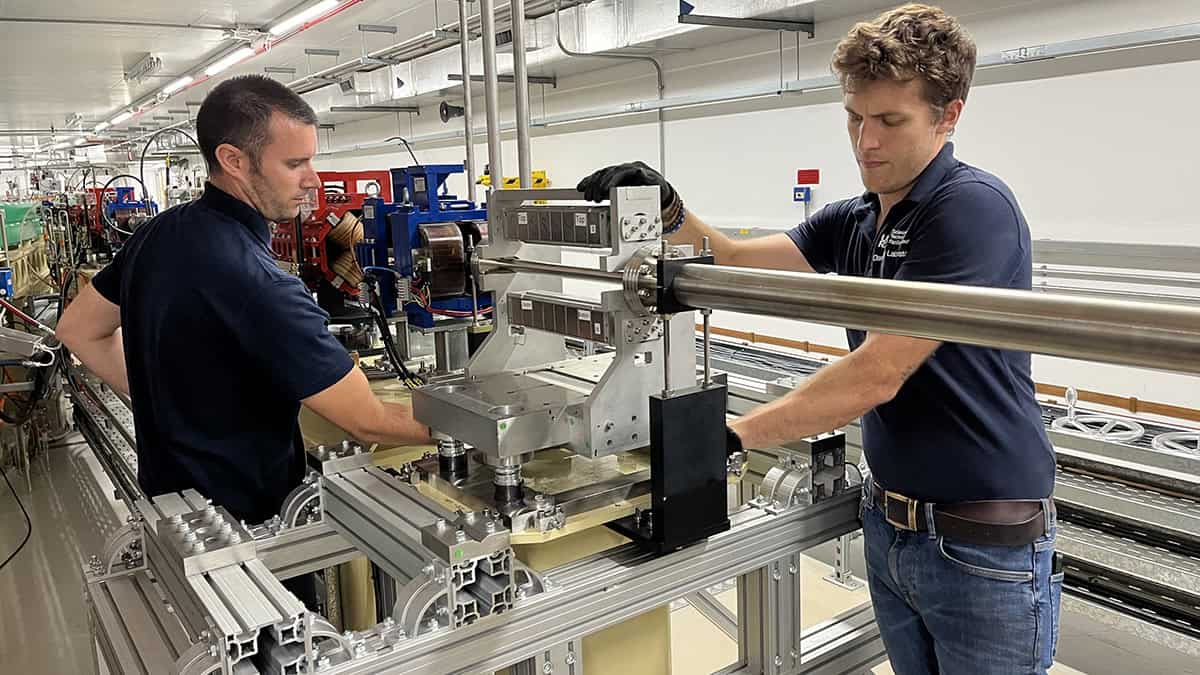
RF 2.0’s goal is therefore to analyse the many ways accelerators use energy – from components and systems to experiments and engineering – and to develop and test novel platform technologies in real-world settings. One notable RF 2.0 demonstrator project, for example, led to a redesign of permanent magnets that steer and focus beams at the MAX IV synchrotron, reducing energy use and heat losses by up to 40%.
Another involved retrofitting solid-state amplifiers with energy-efficient “active parameterization” controllers to enhance particle acceleration at the ALBA synchrotron; it yielded 18% energy savings in one year versus prior technologies. A parallel R&D track has also led to sustainable high-performance computing initiatives such as a summer energy-saving programme at DESY’s data centre, reducing the power draw during the hottest parts of the day.
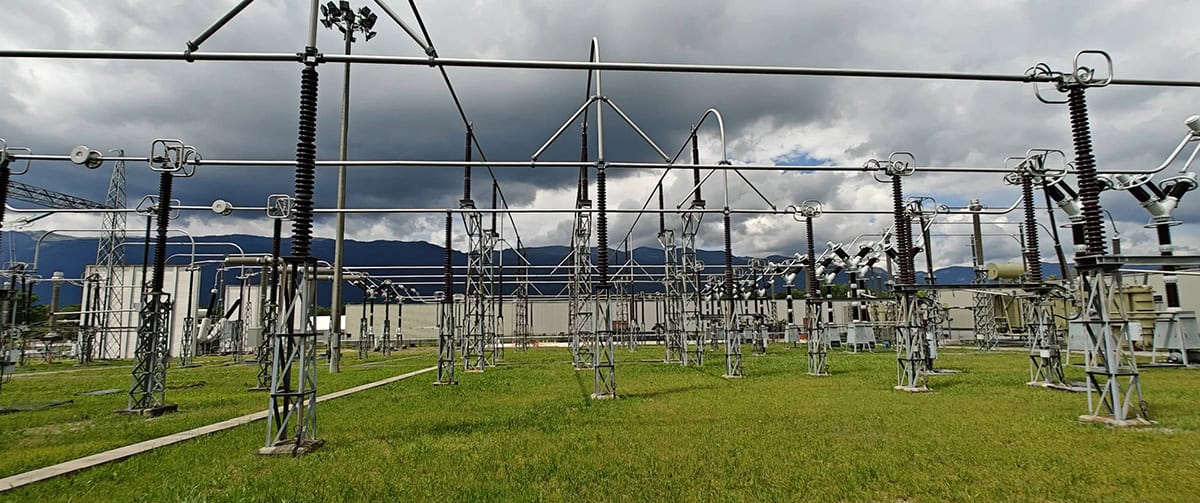
Meanwhile at CERN, an RF 2.0 team has installed 24 phasor measurement units (PMUs) at the lab. These smart grid devices, which record the magnitude and timing of voltage/current fluctuations, are able to monitor harmonics, voltage sags and grid disturbances within the LHC’s power network.
By recording phenomena that would otherwise go unnoticed with traditional metering systems, the PMUs help engineers to implement counter-measures to make the accelerator grid more robust. In the first year of operation, the devices recorded 135 voltage sags and rapid voltage-change events, with 18 of these adversely impacting operation of the accelerator complex – mainly affecting magnets and radio-frequency (RF) acceleration schemes.
“RF 2.0 cannot work in one single direction – a multidisciplinary approach is key,” says De Carne. “We are bringing together physicists, engineers and technologists who, under normal circumstances, rarely talk to each other. The project provides a forum for them to connect and share insights on common problems but from their own unique perspective. It’s been a real game-changer.”
The RF 2.0 programme finishes at the end of 2026, after which De Carne hopes to secure follow-on EU funding for RF 2.0 to merge with another pan-European project called Innovate for Sustainable Accelerator Systems (iSAS). The two projects look like a neat fit, with iSAS consisting of 11 academic labs and six companies seeking to make superconducting RF cavities – a workhorse accelerator technology – more energy-efficient.
Sustainable acceleration
The following sustainability initiatives are a useful starting point for scientists and engineers who want to evaluate and lower the environmental impact of accelerator projects at an institutional, project or individual level.
- Sustainable HECAP+ is a group of researchers in high-energy physics, cosmology, astroparticle physics and beyond who are promoting environmentally sustainable practices in areas such as computing, energy, mobility, research infrastructure, resources and waste.
- The ICFA Panel on Sustainable Accelerators and Colliders is promoting “energy-efficient and sustainable accelerator concepts, technologies and strategies…and the use of accelerators for the development of carbon-neutral energy sources”.
- Flexibility in RIs for global CArbon Neutrality (FlexRICAN) is a pan-European academic-industry consortium evaluating how research facilities can enhance energy flexibility for the European electrical grid and contribute to local heating networks through waste heat recovery.
- Europe-America-Japan Accelerator Development Exchange Programme (EAJADE) has a work package of sustainable technologies for accelerator facilities including high-efficiency superconducting RF cavities and RF amplifiers.
- ErUM Data Hub is a German initiative helping 20,000 scientists exploring “the universe and matter” to make data management, software and digital tools more environmentally sustainable.
Disruptive thinking, sustainable outcomes
Along another coordinate, there’s also top-down pressure for a more sustainable approach to future accelerators from the European Strategy Group for Particle Physics (ESG), which guides the future of the field in Europe. “Energy consumption and emissions must be minimized when realizing and operating facilities and projects,” is the ESG’s unequivocal message in the 2026 update to its third strategy paper. “The design of new particle physics infrastructures should be as sustainable as possible, balancing important sustainability aspects with cost and physics performance.”
The ESG argues that R&D funding should be allocated to platform technologies with the most potential to yield energy savings. These include systems that convert grid power to RF more efficiently for particle acceleration, with some studies suggesting it could be possible to quadruple the efficiency with which RF systems convert electrical power into radiant power. Other promising technologies include thin-film superconducting RF cavities operating at higher cryogenic temperatures (around 4.2 K or higher versus 2 K for bulk niobium cavities).
Also important are novel permanent and high-temperature superconducting magnets that minimize heat losses. “Comparing the carbon footprints of electromagnet and permanent-magnet quadrupoles,” says Wakeling in Oxford, “the higher manufacturing impact of a permanent magnet can, in certain cases, be offset by its lower operational impact in as little as one year. Worth noting as well that this conclusion only considers carbon and doesn’t compare other environmental impacts.”
Another sustainability pathway is the use of AI and machine-learning to optimize the efficiency of accelerator experiments – for example, by focusing on intersecting parameters tuned to improve equipment reliability, lifetime and resource consumption. In parallel, AI could cut the huge computational needs of particle physics by requiring fewer “events” to be stored and lowering computing time.
Longer term, researchers are prioritizing disruptive accelerator concepts that could slash the size, cost and carbon footprint of next-generation facilities. One example is the energy-recovery linac, in which superconducting RF cavities decelerate a “used” particle beam and recycle the kinetic energy to accelerate new particles to higher energies. Another is plasma-wakefield acceleration, which uses laser- or particle-beam-driven intense “plasma waves” as the accelerating medium, yielding electric fields up to 1000 times greater than in classical accelerators.

The best of all worlds
Notwithstanding all this technology innovation, so many factors influence accelerator design that the “best” decision in terms of its environmental benefits can’t always be made. “In the end,” says Wakeling, “this is all a balancing act: we want accelerator facilities to be cutting-edge in terms of their scientific output, but we also want them to be cutting-edge when it comes to environmental sustainability.”
As for next steps, Wakeling and co-authors now plan to assess the anticipated impact of their 110 recommendations – whether high, medium or low – and the potential difficulty of putting them into practice (by referencing technology-readiness level, for example). Work is also underway to incorporate more quantitative analyses, including target figures for selected recommendations based on case studies from the accelerator community.
Equally, when assessing an accelerator’s emissions over its whole life-cycle, Wakeling thinks there is much to learn from the space-science community, which has developed the Open-source Rocket and Constellation Lifecycle Emissions (ORACLE) GitHub repository. This initiative seeks to cut the carbon footprint of the space industry – especially large constellations of satellites – by allowing researchers to share code and data.
“We applaud efforts like ORACLE and wish to encourage and promote similar programmes within fields applicable to accelerator science,” says Wakeling. But it’s clear that significant research is still required to tackle the complex environmental challenges in accelerator science, with Wakeling and colleagues aiming to update their living document as new information and technologies become available.
“We invite contributions from colleagues within the accelerator community,” Wakeling concludes, “to ensure this resource remains relevant, comprehensive and impactful.”