Moon-Ho Jo, director of the IBS Center for Van der Waals Quantum Solids in Korea, tells Physics World how breakthroughs in basic science will accelerate the translation of 2D materials and their novel quantum properties into next-generation semiconductors and quantum devices
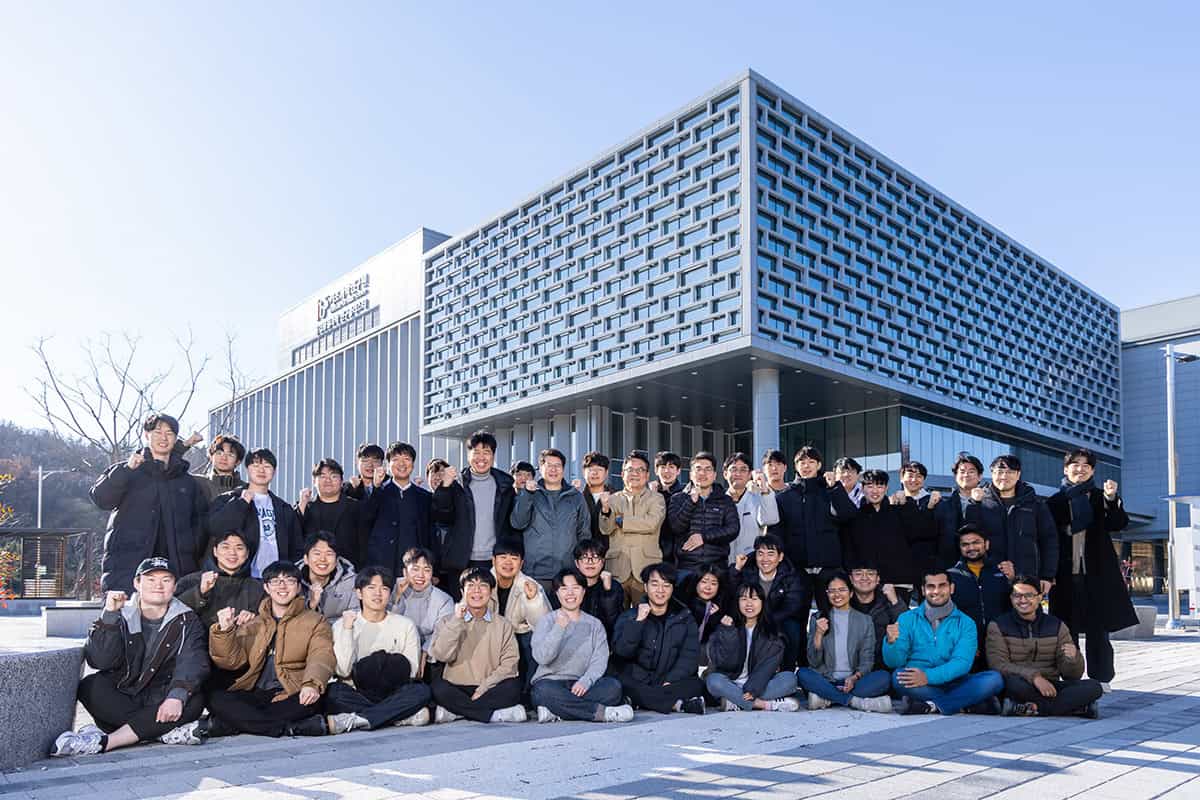
What’s the research mission of the IBS Center for Van der Waals Quantum Solids (IBS-VdWQS)?
Our multidisciplinary team aims to create heteroepitaxial van der Waals quantum solids at system scales, where the crystal lattices and symmetries of these novel 2D materials are artificially moulded to atomic precision via epitaxial growth. Over time, we also hope to translate these new solids into quantum device platforms.
Clearly there’s all sorts of exotic materials physics within that remit.
Correct. We form van der Waals heterostructures by epitaxial manipulation of the crystal lattice in diverse, atomically thin 2D materials – for example, 2D heterostructures incorporating graphene, boron nitride or transition-metal dichalcogenides (such as MoS2, WSe2, NbSe2, TaSe2 and so on). Crucially, the material layers are held in place only by weak van der Waals forces and with no dangling chemical bonds in the direction normal to the layers.
These 2D layers can also be laterally “stitched” into hexagonal or honeycomb lattices, with the electronic and atomic motions confined into the atomic layers. Using state-of-the-art epitaxial techniques, our team can then artificially stack these lattices to form a new class of condensed matter with exotic interlayer couplings and emergent electronic, optical and magnetic properties – properties that, we hope, will find applications in next-generation quantum devices.
The IBS-VdWQS is part of Korea’s Institute for Basic Science (IBS). How does this arrangement work?
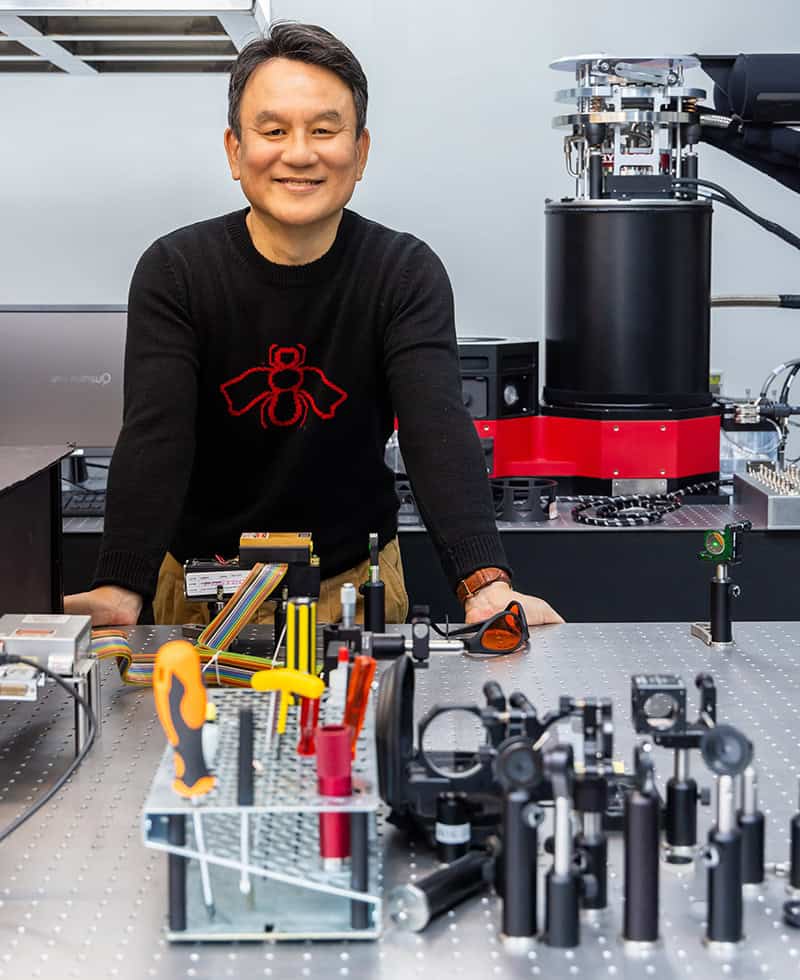
The IBS headquarters was established in 2011 as Korea’s first dedicated institute for fundamental science. It’s an umbrella organization coordinating the activity of 38 centres-of-excellence across the physical sciences, life sciences, as well as mathematics and data science. In this way, IBS specializes in long-range initiatives that require large groups of researchers from Korea and abroad.
Our IBS-VdWQS is a catalyst for advances in fundamental materials science and condensed-matter physics, essentially positioned as a central-government-funded research institution in a research-oriented university. Particularly important in this regard is our colocation on the campus of Pohang University of Science and Technology (POSTECH), one of Korea’s leading academic centres, and our adjacency to large-scale facilities like the Pohang Synchrotron Radiation Facility (PAL) and Pohang X-ray free-electron laser (PAL-XFEL). It’s worth noting as well that all the principal investigators (PIs) in our centre hold dual positions as IBS researchers and POSTECH professors.
So IBS is majoring on strategic research initiatives?
Absolutely – and that perspective also underpins our funding model. The IBS-VdWQS was launched in 2022 and is funded by IBS for an initial period through to 2032 (with a series of six-year extensions subject to the originality and impact of our research). As such, we are able to encourage autonomy across our 2D materials programme, giving scientists the academic freedom to pursue questions in basic research without the bureaucracy and overhead of endless grant proposals. Team members know that, with plenty of hard work and creativity, they have everything they need here to do great science and build their careers.
Your core remit is fundamental science, but what technologies could eventually emerge from the IBS-VdWQS research programme?
While the focus is very much on basic science, epitaxial scalability is hard-wired into all our lines of enquiry. In short: we are creating new 2D materials via epitaxial growth and this ultimately opens a pathway to wafer-scale industrial production of van der Waals materials with commercially interesting semiconducting, superconducting or emergent properties in general.
Right now, we are investigating van der Waals semiconductors and the potential integration of MoS2 and WSe2 with silicon for new generations of low-power logic circuitry. On a longer timeline, we are developing new types of high-Tc (around 10 K) van der Waals superconductors for applications in Josephson junctions, which are core building blocks in superconducting quantum computers.
There’s a parallel opportunity in photonic quantum computing, with van der Waals materials shaping up as promising candidates for quantum light-emitters that generate on-demand (deterministic) and highly coherent (indistinguishable) single-photon streams.
Establishing a new research centre from scratch can’t have been easy. How are things progressing?
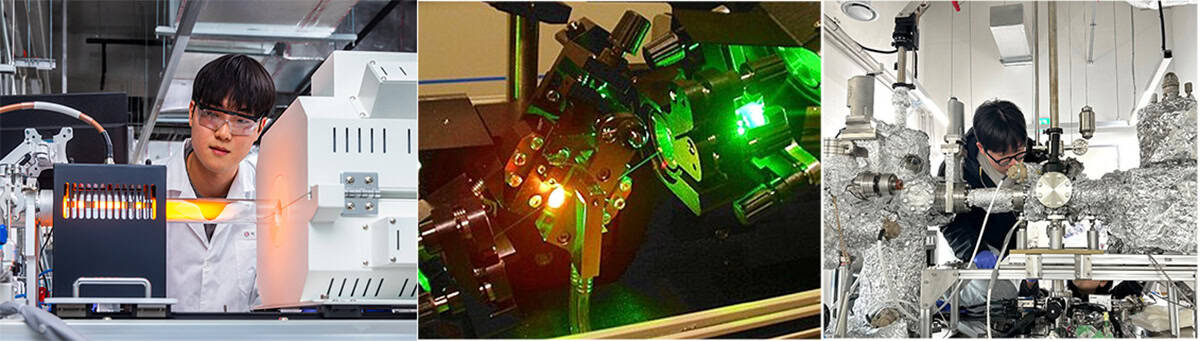
It’s been a busy three years since the launch of the IBS-VdWQS. The most important task at the outset was centralization – pulling together previously scattered resources, equipment and staff from around the POSTECH campus. We completed the move into our purpose-built facility, next door to the PAL synchrotron light source, at the end of last year and have now established dedicated laboratory areas for the van der Waals Epitaxy Division; Quantum Device and Optics Division; Quantum Device Fabrication Division; and the Imaging and Spectroscopy Division.
One of our front-line research efforts is building a van der Waals Quantum Solid Cluster, an integrated system of multiple instruments connected by ultra-high-vacuum lines to maintain atomically clean surfaces. We believe this advanced capability will allow us to reliably study air-sensitive van der Waals materials and open up opportunities to discover new physics in previously inaccessible van der Waals platforms.
Are there plans to scale the IBS-VdWQS work programme?
Right now, my priority is to promote opportunities for graduate students, postdoctoral researchers and research fellows to accelerate the centre’s expanding research brief. Diversity is strength, so I’m especially keen to encourage more in-bound applications from talented experimental and theoretical physicists in Europe and North America. Our current research cohort comprises 30+ PhD students, seven postdocs (from the US, India, China and Korea) and seven PIs.
Over the next five years, we aim to scale up to 25+ postdocs and research fellows and push out in new directions such as scalable quantum devices. In particular, we are looking for scientists with specialist know-how and expertise in areas like materials synthesis, quantum transport, optical spectroscopy and scanning probe microscopy (SPM) to accelerate our materials research.
How do you support your early-career researchers at IBS-VdWQS?
We are committed to nurturing global early-career talent and provide a clear development pathway from PhD through postdoctoral studies to student research fellow and research fellow/PI. Our current staff PIs have diverse academic backgrounds – materials science, physics, electronic engineering and chemistry – and we therefore allow early-career scientists to have a nominated co-adviser alongside their main PI. This model means research students learn in an integrated fashion that encourages a “multidisciplinarian” mindset – majoring in epitaxial growth, low-temperature electronic devices and optical spectroscopy, say, while also maintaining a watching brief (through their co-adviser) on the latest advances in materials characterization and analysis.
What does success look like at the end of the current funding cycle?
With 2032 as the first milestone year in this budget cycle, we are working to establish a global hub for van der Waals materials science – a highly collaborative and integrated research programme spanning advanced fabrication, materials characterization/analysis and theoretical studies. More capacity, more research infrastructure, more international scientists are all key to delivering our development roadmap for 2D semiconductor and superconductor integration towards scalable, next-generation low-power electronics and quantum computing devices.
- Find more information on open research positions at IBS-VdWQS.
Building a scientific career in 2D materials
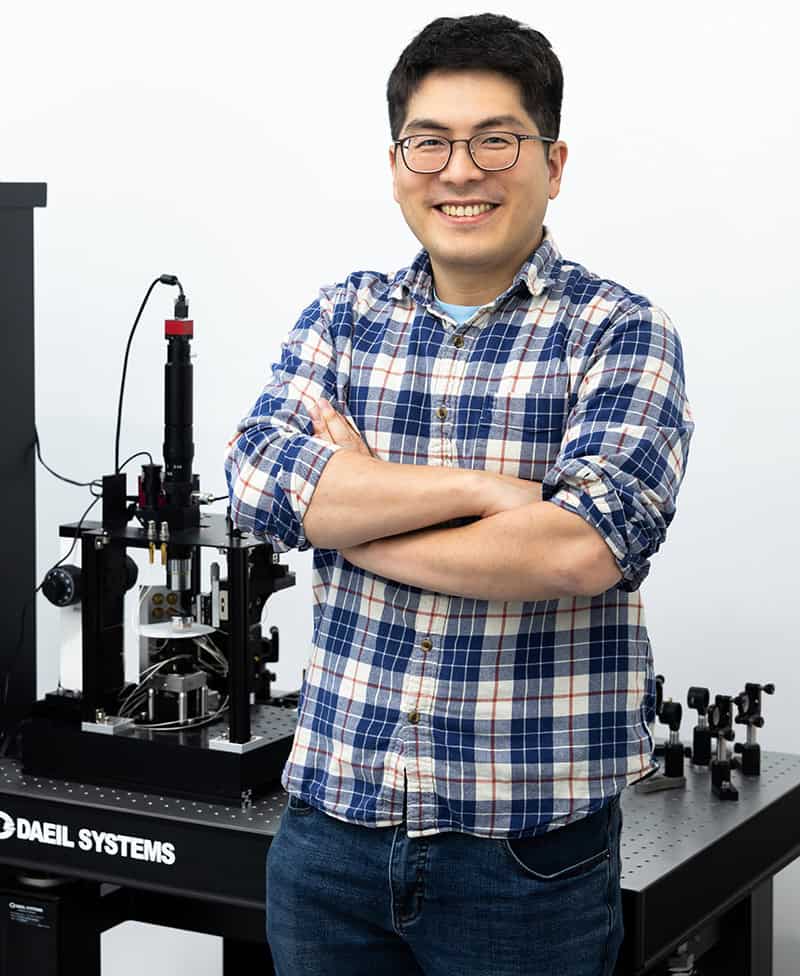
Myungchul Oh joined the IBS-VdWQS in 2023 after a five-year stint as a postdoctoral physicist at Princeton University in the US, where he studied strongly correlated phenomena, superconductivity and topological properties in “twisted” graphene systems.
Recruited as an IBS-POSTECH research fellow, Oh holds dual academic positions: team leader for the quantum-device microscopy investigations at IBS-VdWQS and assistant professor in the semiconductor engineering department at POSTECH.
Van der Waals heterostructures, assembled layer-by-layer from 2D materials, enable precise engineering of quantum properties through the interaction between different atomic layers. By extension, Oh and his colleagues are focused on the development of novel van der Waals systems; their integration into devices via nanofabrication; and the study of electrical, magnetic and topological properties under extreme conditions, where quantum-mechanical effects dominate.
“We are exploring the microscopic nature of quantum materials and their device applications,” Oh explains. “Our research combines novel 2D van der Waals heterostructure device fabrication techniques with cryogenic scanning probe microscopy (SPM) measurements – the latter to access the atomic-scale electronic structure and local physical properties of quantum phases in 2D materials.”