A consultancy firm with expertise in radiation safety can help companies developing a new generation of commercial fusion reactors to navigate the regulatory framework
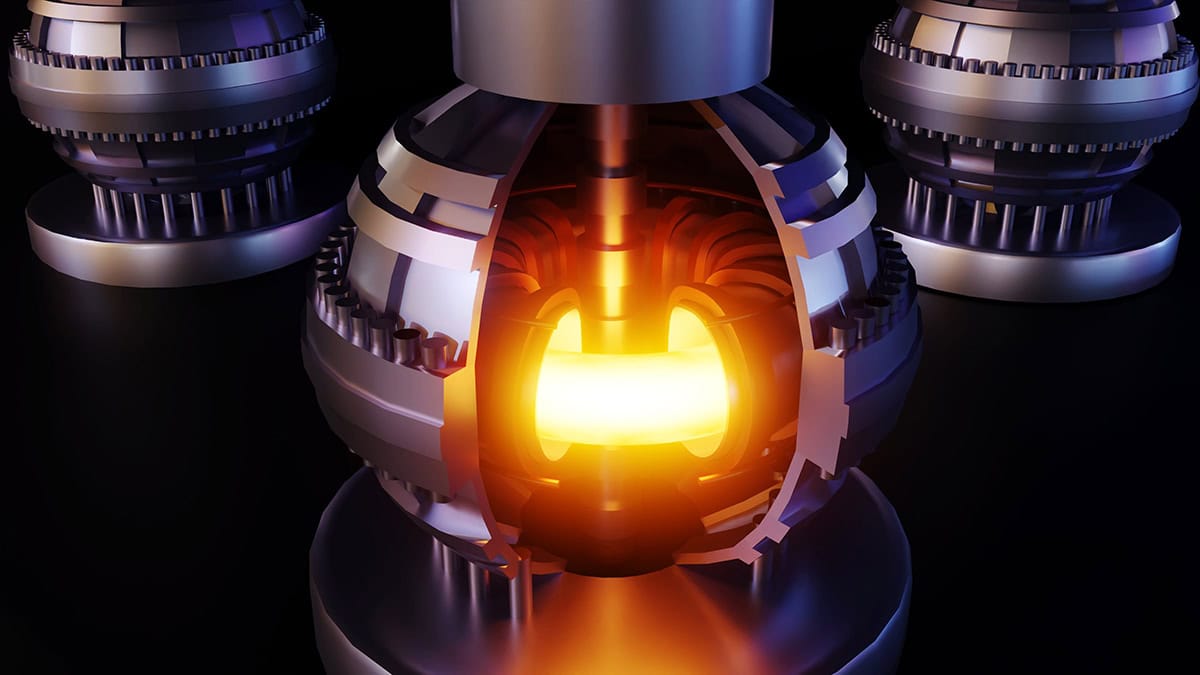
Nuclear fusion has long held the promise of providing an unlimited supply of clean energy, but turning such a compelling concept into a practical reality has always seemed just beyond reach. That could be about to change, with a new wave of commercial operators developing compact nuclear reactors that they believe could be providing the grid with useful amounts of electricity within the next 10 years.
Leading the way is the US, where a combination of federal grants and private capital is fuelling the drive towards commercial production. One company grabbing the headlines is Helion, which has broken ground on a power plant that is due to supply 50 MW of power to Microsoft by 2028. Commonwealth Fusion Systems, set up with the backing of the Massachusetts Institute of Technology, has also announced an agreement with Google that trades an early strategic investment for 200 MW of power when the company’s first reactor comes online in the early 2030s.
Such commercial interest has been buoyed by a clarification in the licensing regime, at least within the US. In 2023 the Nuclear Regulatory Commission (NRC), the federal agency responsible for nuclear safety, ruled that fusion reactors need not be governed by the highly restrictive framework that applies to existing power plants based on nuclear fission. Instead, fusion developers must comply with the part of the code that is primarily focused on the handling of radioactive material.
“That was a big win for the industry,” says Steve Bump, an expert in radiation safety and licensing at consultancy firm Dade Moeller, part of the NV5 group. “Fusion is a much safer process because there is no spent fuel to deal with and there is no risk of the reaction running out of control. In the event of a system failure, everything just stops.”
Growth industry
Almost 50 companies are now actively involved in fusion development and research within the US, while others are active in the UK, China and Europe. Different reactor designs are being pursued, but each rely on heating a plasma containing deuterium and tritium to extreme temperatures and then confining the superheated plasma. When the light atomic nuclei collide and fuse together – which requires the plasma to reach temperatures above 100 million degrees Celsius – the nuclear reaction releases helium gas and high-energy neutrons, along with a vast amount of energy.
Nuclear fusion has already been shown to deliver intense bursts of energy that exceed the power needed to generate and sustain the plasma, but no-one has yet managed to produce a steady supply of electricity from the process. “The fusion industry is often characterized as a race,” says Bump. “There are many new companies that are aiming to build a commercially viable power plant that can be scaled up and replicated in multiple locations.”
Amid this rapid expansion, one upshot from the NRC ruling is that state-level regulators now have the authority to award licences for fusion reactors, provided that they follow the framework set out by the federal agency. But these state regulators are more accustomed to issuing licences to healthcare providers or research institutes that need to handle small amounts of radioactive material, and they are often wary of applications from fusion developers that ask for large quantities of radioactive tritium. “The amounts required for fusion can produce thousands and thousands of curies, while most other applications need less than a microcurie,” says Bump. “That makes it very different from a licensing standpoint, and the state agencies don’t have much experience with activities that use that much material. It makes them nervous.”
A big priority for them is to ensure that people in and around the plant are safe from any exposure, and we can help to ensure that the information provided by the company is clear, thorough and accurate.
Bump and his colleagues can help fusion companies to reassure the state regulators that all the evaluations have been done correctly. “Each state agency is a little different, and we need to work with each one to find out what they need and what they will accept,” adds Bump. “They need to consider the impact of the facility on public safety and the local environment, and they are going to ask questions before they are confident enough to issue a licence.”
That abundance of caution means that each application must be customized to address the concerns of each regulator. One area that receives particular scrutiny is the amount of shielding needed to protect people from the energetic neutrons produced by the fusion reaction. Slowing down and absorbing these neutral particles is a difficult process, requiring a multi-stage strategy that typically includes water-cooled steel and walls made of reinforced concrete.
As part of the licence application, companies need to demonstrate that their shielding mechanisms reduce the radiation dose to acceptable levels, both for people working inside the facility and those living and working in the neighbourhood. “We can review the shielding evaluations produced by companies before they are submitted to the state regulators,” says Bump. “A big priority for them is to ensure that people in and around the plant are safe from any exposure, and we can help to ensure that the information provided by the company is clear, thorough and accurate.”
Practical advice
The experts at Dade Moeller can also help fusion developers to make a realistic assessment of the amount of tritium they will need, since any licence will place a limit on how much radioactive material can be held within the facility. In addition, they can advise companies on how to establish and document failsafe procedures for storing and using tritium, along with real-time monitoring systems to ensure that emissions of tritium gas are kept within regulated limits. “We also look at the potential dose consequences if there is an accidental release, along with any emergency planning that may be needed if any radioactive material does escape,” adds Bump.
As well as providing the technical documentation needed by the regulators, fusion companies need to gain the support of local residents and businesses. Outreach events and public meetings are critical to explain how the technology works, openly discuss the risks and mitigation strategies, and highlight the benefits to the surrounding community. “We have attended some of the public meetings where people have had the opportunity to ask questions and voice their concerns,” says Bump. “We can help companies to prepare helpful and informative answers, particularly when questions are submitted prior to the meeting.”
If these efforts are successful, many local communities welcome the economic boost that could be produced by a commercial power plant, such as the creation of highly skilled jobs and the potential to attract other businesses to the area. Several fusion companies are planning to build their production facilities on the sites of previous coal-fired power stations, potentially breathing new life into small cities suffering from a post-industrial malaise.
These sites also provide prospective commercial operators with easy access to the existing electrical infrastructure. “It’s convenient for them because there is no need to install new transmission lines,” says Bump. “If they can make electricity, they can simply connect to the grid through the existing substation.”
Most commercial developers are currently building and testing pilot machines, with commercial production expected in the 2030s. As they make that transition, Bump and his colleagues can provide the expertise needed to navigate the licensing requirements across different states. “We can offer advice on how to get started, and how to set up a framework for radiation protection that will support companies as they scale up their operations,” says Bump. “It’s a growing industry, and we are here to help.”