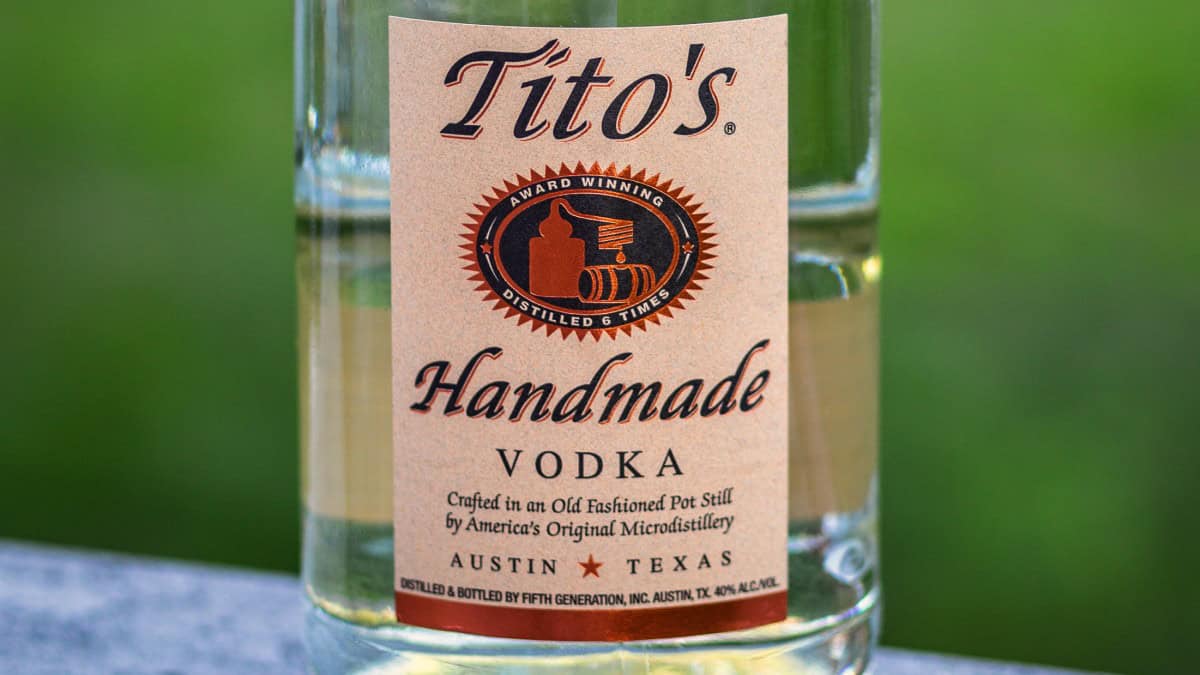
As a freelance writer, I’m not usually one to go down rabbit holes when it comes to research funding. That changed when Physics World spotted an intriguing source of support in a paper I was covering on exotic phases in quantum materials. The study, published in Nature Materials and led by Edoardo Baldini at the University of Texas at Austin, was partially funded by Love, Tito’s – the philanthropic arm of the Texas-based distillery, Tito’s Handmade Vodka.
The link between vodka and quantum materials was a story I was eager to explore, but a quick look at the company’s website was enough to shed some light on how this connection came about. Since its beginnings in 2015, Love, Tito’s has donated tens of millions of dollars to multidisciplinary research, with no direct ties to the company’s business operations.
Much of this funding has supported projects ranging from cancer therapies to ocean cleanups – efforts whose vital importance will be immediately clear to the public. Yet the team at Love, Tito’s also demonstrates a clear appreciation for the broader, often understated relevance of physics.
New passion
As I read more about Bert “Tito” Beveridge, the roots of this appreciation became even clearer. In 1992, between jobs in oil rigging and mortgage lending, Beveridge developed a new passion: distilling affordable, high-quality vodka from fresh ingredients.
Faced with limited funding and disinterested investors, his operation encountered hurdles at every turn. But with an engaged and analytical mindset, he tackled these challenges systematically – even studying prohibition-era photographs of distillery setups, and curating advice from colleagues in the oil industry. Working with the resources available to him, Beveridge refined his process, and within a decade, his vodka was winning national awards.
“Tito Beveridge has always been a scientist at heart,” says Sarah Everett, director of global impact and research at Tito’s Handmade Vodka.
Even before achieving success, the company had committed itself to philanthropic work – finding homes for stray dogs that wandered onto the distillery grounds, and connecting local communities with volunteer opportunities. Alongside these efforts, “we have a special focus on scientific research, through our CHEERS initiative: Creating Hope and Elevating Emerging Research and Science,” Everett says.
Invaluable grant
Today, CHEERS provides grants across a wide range of disciplines, including physics. For Edoardo Baldini’s team, a $1.4 million donation from the programme has proved invaluable in advancing their discovery of exotic quantum clock states.
“The gift helped us establish a state-of-the-art sample preparation and handling station for atomically thin materials, which directly supports experiments like those in this study by improving sample quality and reproducibility. It also supported a laser system for a time-resolved momentum microscope,” Baldini says.
These resources are already enabling the next phase of the team’s research: probing ultrafast phenomena in atomically thin systems and tracking how their electronic structure evolves following photoexcitation.
“The experimental work in Baldini’s group provides the basis for developing advanced materials for a wide range of applications, with implications that will be far reaching beyond the walls of his lab,” Everett adds.
With the foresight to recognize the societal relevance of physics – beyond the fields that typically dominate headlines – a company that once defied the odds to build a vodka brand is now helping to support research that could lead to technological solutions for some of the world’s most urgent challenges.
“By supporting fundamental research on quantum materials, this gift reflects Love, Tito’s broader interest in advancing scientific discovery that can ultimately contribute to addressing major societal challenges, including the development of future energy and information technologies,” Baldini says.