To many people, culture means art, food, fashion or music – but what ought a cultured human know of science? Robert P Crease seeks your ideas

The New York Times recently published a 124-page special issue of its Style Magazine entitled “How to be cultured”. According to the cover of this glossy, ad-driven supplement, the contents were “idiosyncratic” but amounted to a “compendium of what you need to know right now”. The material had been “chosen by experts” for the purpose of “teaching readers how to be more cultured”.
Curious as to what would be included, my hopes were raised by the magazine’s lead editorial. It said that the issue “celebrates expertise, a quality ever less valued in our culture today, where learnedness and firsthand research can be overshadowed by slick presentation and dumb certainty”.
Now, I’m not naïve. I know that the New York Times Style Magazine caters to advertisers, who in turn cater to wealthy readers who feel the need to spend gobs of money to get culture. It didn’t therefore surprise me to have to leaf through 40 pages of adverts for jewellery, champagne, watches and home furnishings before finally coming across the table of contents.
I saw headings for film, food, music, theatre, fashion and the visual arts. Shakespeare showed up several times: over half a dozen plays, sonnet #94 and one of his monologues. There were entries for 1930s movies, animated videos and films from Brazil. One page on food and drink covered porridge from Norway, meat from Mexico, lemonade from Vietnam and wine from Austria.
There was no mention of science in “How to be cultured”, nothing at all
Novels from the US, UK, France, Japan, India and Brazil made the list, as did selections of music from medieval times to opera and hip-hop. Samples of theatre, puppetry and architecture made it in too. But there was no mention of science, nothing at all. The closest I found were architectural materials such as plaster, glass, steel and textiles.
Snow’s lament
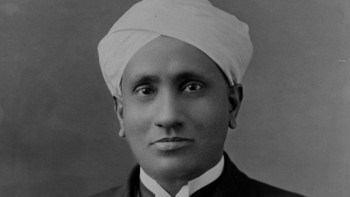
The absence of anything scientific should not have shocked me; in fact, it reminded me of the British scientist and novelist C P Snow’s 1959 essay The Two Cultures and the Scientific Revolution. Even back then, Snow lamented that humanists and scientists were living in two separate cultures divided by a “gulf of mutual incomprehension”.
In the essay’s most famous passage, Snow wrote that “a good many times I have been present at gatherings of people who, by the standards of the traditional culture, are thought highly educated and who have with considerable gusto been expressing their incredulity at the illiteracy of scientists”.
“Once or twice,” he went on, “I have been provoked and have asked the company how many of them could describe the Second Law of Thermodynamics. The response was cold: it was also negative. Yet I was asking something which is about the scientific equivalent of ‘Have you read a work of Shakespeare’s?’”
Two Cultures: 50 years down the line

Snow did not stop there. “I now believe,” he continued, “that if I had asked an even simpler question – such as, ‘What do you mean by mass, or acceleration’, which is the scientific equivalent of saying, Can you read? – not more than one in ten of the highly educated would have felt that I was speaking the same language.”
“So the great edifice of modern physics goes up,” he concluded, “and the majority of the cleverest people in the western world have about as much insight into it as their neolithic ancestors would have had.”
Culture club
Snow’s tone was snobby and arrogant, but he was on to something. Can someone who knows nothing about, say, Einstein’s equation E = mc2 or about Heisenberg’s uncertainty principle really be called cultured? Sure, cultured individuals don’t need to know much about these topics. But they ought at least to realize that those equations concern how mass and energy work and the inherent limitations to what humans can know.
I’d say those are principles fundamental to the formation, maintenance and fate of the universe – and ones that a cultured person ought to know something about. Indeed, references to them are routinely found in arts and popular culture. Einstein’s equation has made the cover of Time magazine, while the uncertainty principle has been taken up by novelists, theologians and comedians.
Shouldn’t a cultured person be acquainted in some way with the existential threats facing the world?
Further, shouldn’t a cultured person be acquainted in some way with the existential threats facing the world? Wouldn’t such a person have to have an inkling of the way a carbon molecule absorbs and emits heat, of how vaccines work, and of safe and unsafe levels of substances toxic in high doses? How cultivated can an ostrich be?
Measuring culture

Of course, there was nothing about the second law in “How to be cultured”, or about any other science of the sort Snow had in mind.
Nothing about scientific equations, experiments, theories or facts that a cultured person ought to know.
No discussion of dark matter, dark energy or of quantum physics, genes or vaccines. Nor about the Pythagorean Theorem or the double-slit experiment.
The critical point
Culture refers to the influences and values that are embedded in the way we live. Judging such influences and values – deciding which influences and values ought to be so embedded – is a tempting but arrogant game.
So let’s play. Imagine that you are among the experts charged with compiling a “compendium of what you need to know right now”. What would you include of science – and why? Send me your contributions, and tell me why they are what we need to know, and I’ll write about them in a future column.

What science do you need to know to be cultured?
Send your thoughts to Robert P Crease at robert.crease@stonybrook.edu.