James Dacey reviews The Elements of Power: a Story of War, Technology and the Dirtiest Supply Chain on Earth by Nicolas Niarchos
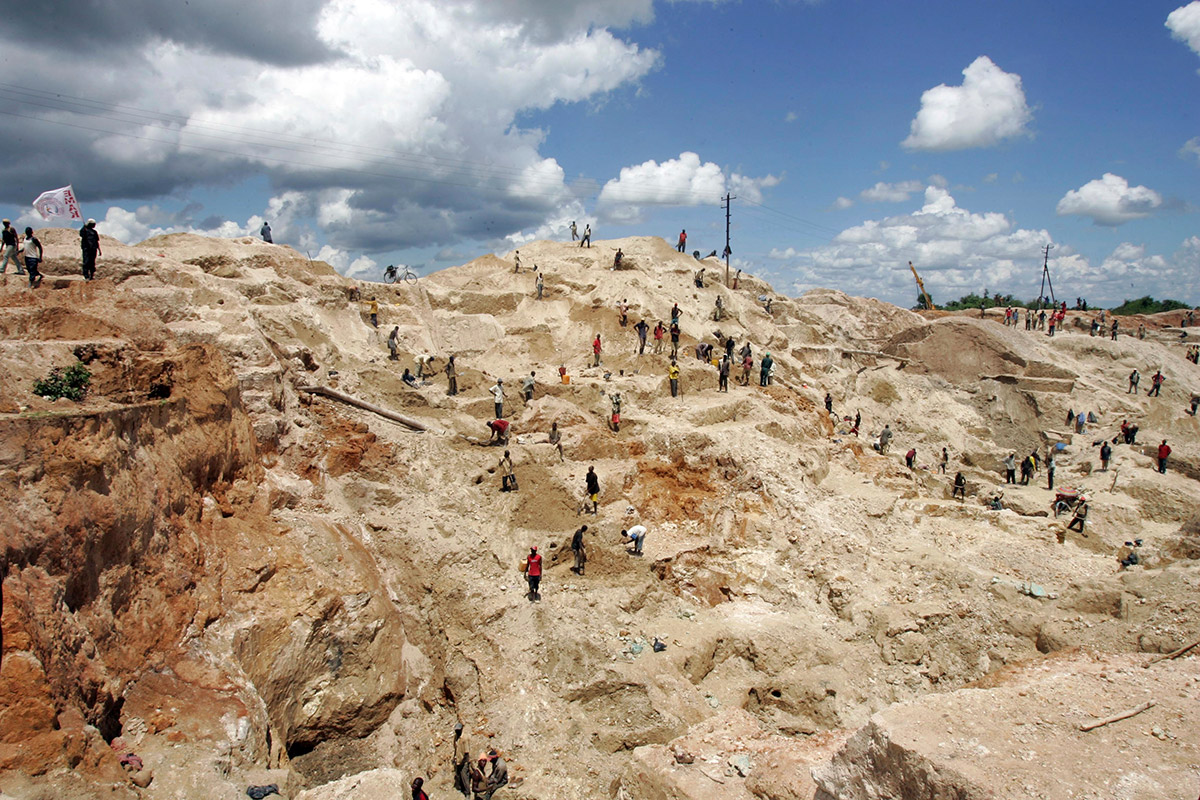
In a book about batteries, you might not expect the author to be detained by Congolese secret police because he attempted to meet a rebel warlord whose militia has been linked with cannibalism. But that’s exactly what happened when journalist Nicolas Niarchos was doing research for The Elements of Power: a Story of War, Technology and the Dirtiest Supply Chain on Earth.
In his debut book, Niarchos dives into the global supply chain of critical metals for lithium-ion (Li-ion) batteries. Nowadays Li-ion technology powers electric vehicles, laptops and smartphones, and provides backup for renewable energy when the Sun stops shining and the wind stops blowing. The critical metals in these batteries come from all corners of the Earth. In 2024 Australia, Chile and China were the top three producers of lithium; Indonesia produced over half of the world’s nickel; and the Democratic Republic of Congo (DRC) dominated the cobalt mining industry.
Building on his earlier reporting for The New Yorker and other outlets, Niarchos shines a light on the dark underbelly of green tech. He takes the reader from the underprivileged mining communities extracting the raw materials, to the global superpowers profiting from Li-ion technology.
This is a story of geopolitics, deep-rooted inequality, and history repeating itself. In recent decades, governments, corporations and opportunistic intermediaries have jostled for the lion’s share of resources in mineral-rich countries. As in colonial times, wealth has again concentrated in the hands of a few, while communities near the resources bear the costs of greed and corruption.
“The world is facing the biggest supply–demand dislocation in living memory with critical metals,” writes Niarchos.
The race to develop and commercialize
In The Elements of Power, Niarchos includes the history of Li-ion batteries and their commercialization. Key scientific figures include British chemist Stanley Whittingham, US solid-state physicist John Goodenough, and Japanese chemist Akira Yoshino, who all shared the 2019 Nobel Prize in Chemistry for their breakthroughs that led to commercial Li-ion batteries.
Whittingham laid the foundations in the 1970s when his work on fast ionic transport in solids led to a cathode made from titanium disulphide that could house (or “intercalate”) lithium ions. Goodenough then introduced a lithium cobalt oxide cathode – raising the battery voltage and making it less explosive – before Yoshino took the final step to a commercially viable battery by adding a carbon-based anode in 1985.
Niarchos highlights how Japan failed to capitalize on this early lead. Although Japanese firm Sony released the first Li-ion battery in 1991, production and commercial impetus soon switched to China and South Korea. In fact, at the turn of the millennium, Japan controlled 90% of the Li-ion market, but by 2012 Sony’s value had dropped to one-ninth of Samsung’s in South Korea.
The electrification of transport has been a key application of China’s push for Li-ion batteries – it drives economic growth and tackles air pollution. The speed of progress is striking. In 2018 China produced 1.26 million electric cars over the course of the whole year. By 2024 it was producing a million in a month.
To fuel battery demand, Beijing has steadily strengthened its foothold in places like the DRC and Indonesia. Niarchos highlights the 2007/2008 Sicomines “minerals-for-infrastructure” deal, which was a major, yet controversial, partnership made between the DRC government and a group of Chinese investors. It swapped massive copper/cobalt mining rights in the DRC for $6bn in Chinese-financed infrastructure, which has been slow to materialize.
Niarchos shows how China’s economic miracle has been fuelled by ruthless geopolitical pragmatism in strengthening its mining deals over decades, but also how the US administration’s manoeuvrings in places like Greenland are an unsubtle sign that it intends to catch up.
Inevitably, Elon Musk and Tesla make several appearances in the book. For example, Niarchos includes how a futuristic Tesla Gigafactory near Berlin, Germany, was attacked by protestors. The episode reveals the conundrum facing progressives in the West who want to go green but in the right way, led by the right people.
The people behind the metal
While Niarchos looks at how global superpowers profit from Li-ion technology, it’s his reporting on the sources of critical metals that reveals the truly dark side of the supply chain.
Cobalt, often used in Li-ion battery cathodes, is perhaps the starkest example of the problem, and the book gives particular attention to its production and the mining practices in the DRC. More than 70% of global supply comes from the DRC, with most mined in the mineral-rich Katanga region, comprising of the provinces Tanganyika, Haut-Lomami, Lualaba and Haut-Katanga. Extreme poverty is rife, cholera outbreaks are common, and conflict has displaced hundreds of thousands.
One of the book’s strengths is how Niarchos weaves the story of Li-ion batteries with the social history of the DRC. In works like this, the human sections often provide light relief from dense scientific explanations. Here, the opposite is true, as the cycles of violence and exploitation against the Congolese people – which goes back centuries – make for grim reading.
What is now the DRC was colonized in the 1870s by Belgium, and forced labour, starvation, violence and mass death were inflicted on the Congolese people in relation to the ivory and rubber trade. While the country gained its independence from Belgium in 1960, the turbulence of power struggles and civil war has led to deeper corruption, opaque webs of international finance, and foreign magnates whose dealings raise eyebrows among global watchdogs. Today the country seems haunted by its past, trapped by the cruelty of power dynamics and the corrupting influence of promised wealth.
The most resonant pages of The Elements of Power describe modern daily life in the Katanga region. Most people see barely a trickle of the vast mineral wealth they help dig up. In 2020 some 74 million Congolese lived below the poverty line of $2.15 a day, and 43% of children in the country were malnourished.
Many adults and children resort to digging for mineral seams using rudimentary tools and minimal safety gear. Referred to as “artisanal” miners by multinational corporations but known as creuseurs (French for digger or burrower) in the DRC, they often come from the very poorest stratum of society and do not have the education or the contacts to get jobs with the mining corporations that have official permits to extract the cobalt. Just in Kolwezi – the capital city of the Lualaba Province with a population of nearly 600,000 – an estimated 170,000 of these unofficial miners dig for the black ores, which they then sell to unscrupulous intermediaries.
One of the saddest passages is when Kolwezi resident Françoise Ilunga describes how her husband was crushed and suffocated, along with at least 150 other creuseurs, after a tunnel collapsed in the city. Unable to get official jobs, the miners had entered a secluded part of a cobalt mining site without permits or safety gear to find ore to sell so they could support their families. The mine was run by the Anglo-Swiss multinational Glencore (which incidentally had to pay $700m in 2022 relating to bribery offences in several African nations). Françoise and her family spent two days digging up her husband’s body.
It is easy to see how cycles of poverty have been sustained in the DRC. Niarchos interviews children who say they mined out of necessity for food and clothes. In their villages and towns, conflict still bubbles under. When Niarchos is detained by the DRC’s secret police, he had planned to meet a man called Gédéon, whose militia group, Bakata Katanga, has agitated for a separate Katanga state. Niarchos had heard a rumour that Gédéon was funding himself through artisanal mines. You’ll need to read the book for the full story, but it’s fair to say Niarchos won’t be returning to the DRC anytime soon.
Save solutions for another day
While The Elements of Power touches upon some solutions – such as recycling batteries, and sodium and sulphur-based alternatives to Li-ion batteries – no fully scalable solution is presented. And at times, I found the web of organizations and individuals hard to follow. I’m also a bit of a geology geek so I wish there was a bit more on why the DRC is blessed with so many critical minerals in the first place.
That said, the book feels incredibly timely given the current state of geopolitics. It is essential reading for anyone who cares about the origins of materials powering their phones, cars and many other aspects of daily life in wealthy nations. It shines a light on how difficult it is to know what percentage of critical minerals in your devices has come from ethical sources, despite what tech companies might say.
If there is a key takeaway, it’s that any system-wide solution for greener, ethical mining must consider the entire supply chain. Above all, we should listen to people on the ground sourcing the raw materials that make our shiny new technology possible. A supply chain is only as clean as its grubbiest link.
- 2026 William Collins 480pp £25 hb