Gabriel Lippmann received the 1908 Nobel Prize for Physics for a version of colour photography that never took off. Four years later, Gustaf Dalén was honoured for inventing, of all things, a valve used in lighthouses. Margaret Harris uncovers the stories behind these lesser-known laureates
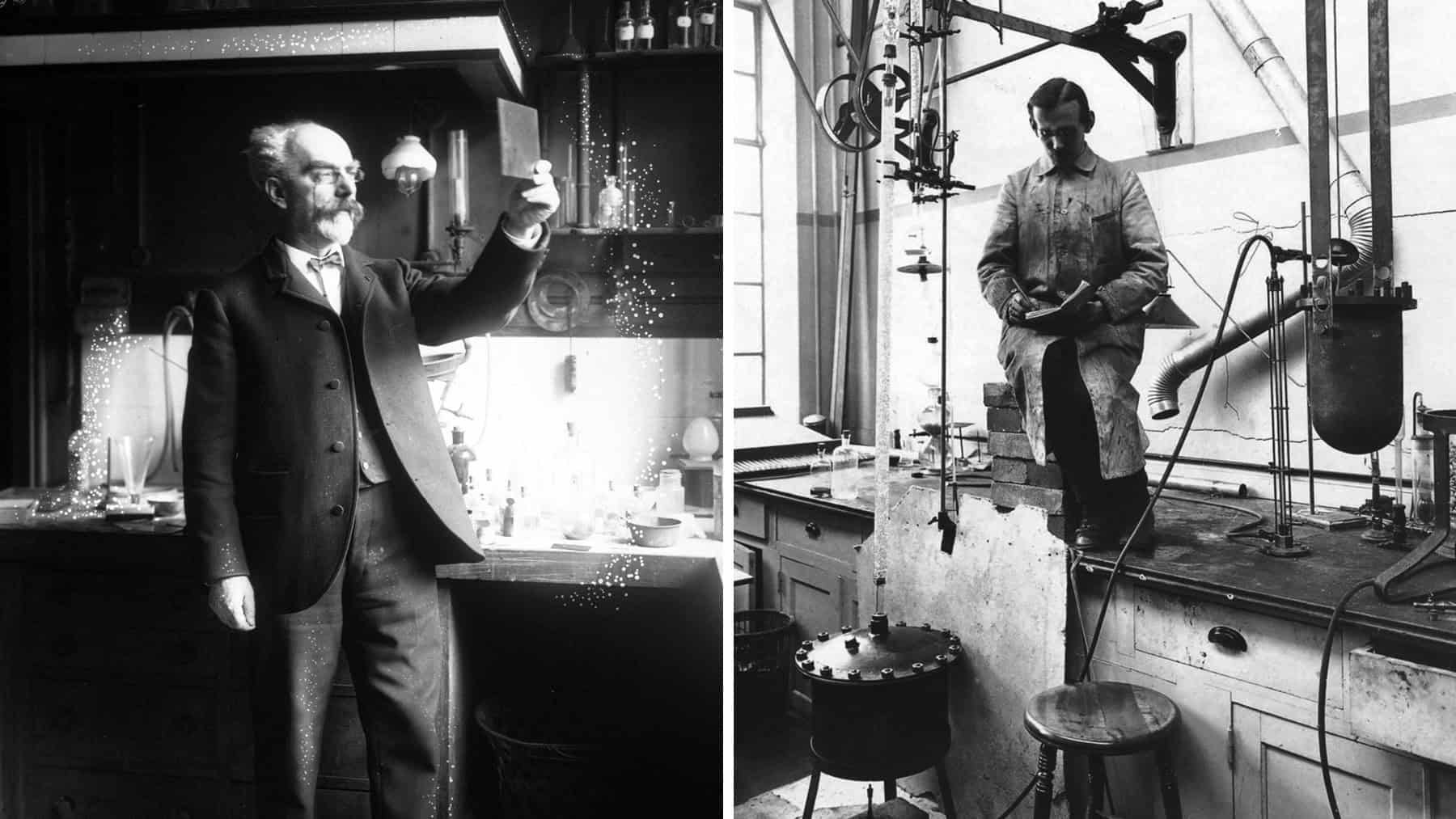
The early years of the Nobel prize read like a Who’s Who in modern physics. The inaugural physics prize, in 1901, went to Wilhelm Röntgen for discovering X-rays. Subsequent recipients included Henri Becquerel, Marie and Pierre Curie, Lord Rayleigh and several others who likewise lent their names to scientific units and physical phenomena.
Look a little further down the list of laureates, though, and you’ll find two names that stand out not because they’re famous, but because they aren’t. The first is Gabriel Lippmann, who received the 1908 Nobel Prize for Physics “for his method of reproducing colours photographically based on the phenomenon of interference”. The second is Gustaf Dalén, who got the 1912 Nobel “for his invention of automatic valves designed to be used in combination with gas accumulators in lighthouses and buoys”.
If you’ve never heard of Lippmann photographs or Dalén valves – if their names do not trip off your tongue like Lorentz contractions or Zeeman shifts – you’re in good company. Lippmann’s invention was never commercially successful. Dalén’s was, but it faded from use around 50 years ago, and in physics terms it is undeniably much less important than contemporaneous advances in quantum mechanics and relativity. Why, then, did the Royal Swedish Academy of Sciences deem these inventions worthy of the most prestigious prize in physics?
A colourful but puzzling prize
The strangest thing about Lippmann’s prize is that by the time he received it, his version of colour photography was already obsolete – and he knew it. Four days after picking up his award in Stockholm, Lippmann, a Frenchman with a waxed moustache that would shame a silent film villain, ended his Nobel lecture with the verbal equivalent of a Gallic shrug. Despite nearly 20 years of work, he acknowledged that the minimum exposure time for his photographs – one minute in full sunlight – was still “too long for the portrait”. Though further improvements were possible, he concluded, “Life is short and progress is slow.”
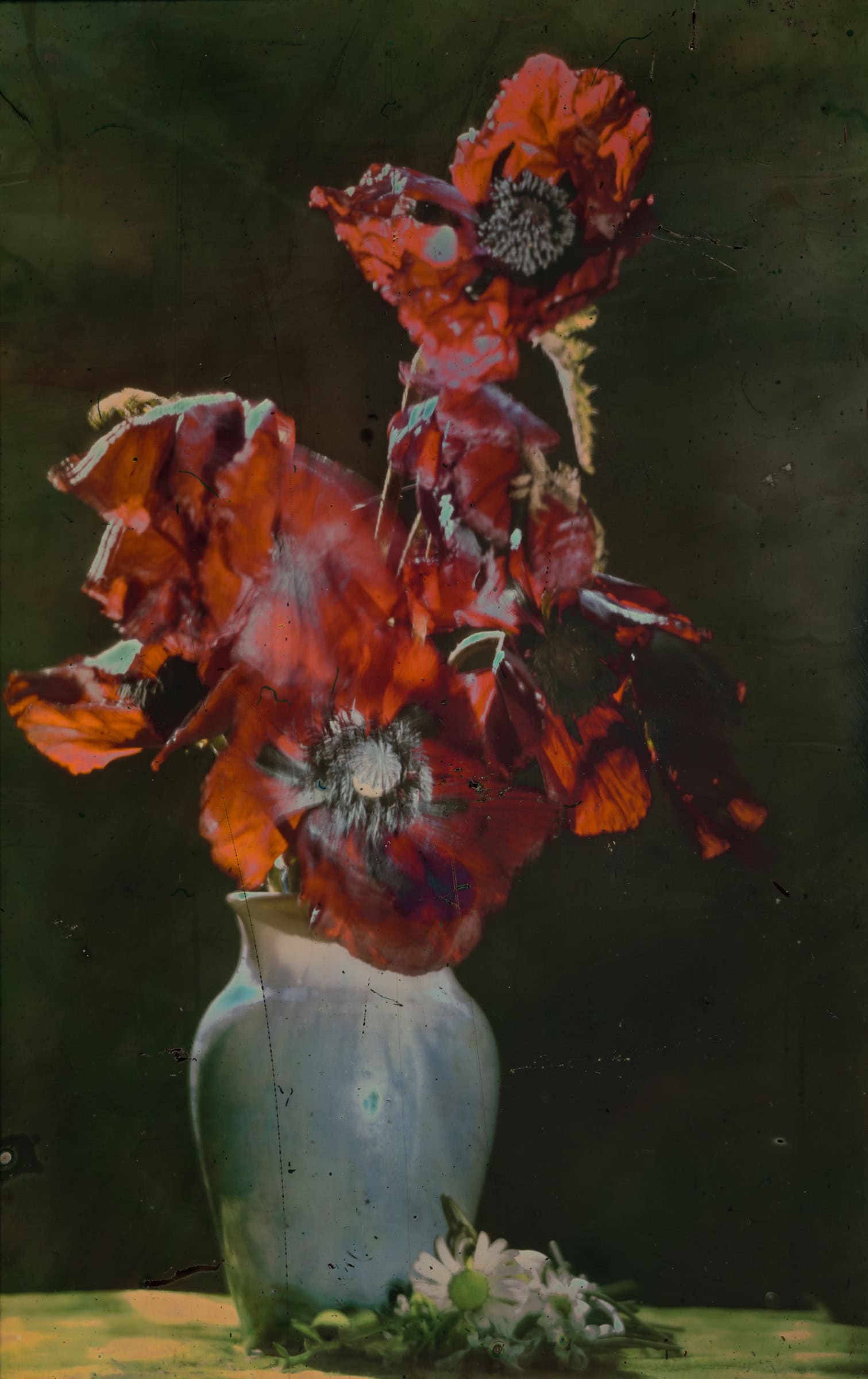
To understand why the Academy bestowed its physics prize on a method of colour photography that not even its inventor seemed to believe in, let’s begin with the method itself. Unlike other imaging processes, Lippmann photography directly records the entire colour spectrum of an object. It does this by using standing waves of light to produce interference fringes in a light-sensitive emulsion backed by a mirrored surface. The longer the wavelength of light given off by the object, the larger the separation between the fringes. It’s an elegant application of classical wave theory. It’s easy to see why Edwardian-era physicists loved it.
Lippmann’s method also has an important practical advantage. Because his photographs don’t require pigments, they retain their colour over time. Consequently, the images Lippmann showed off in his Nobel lecture look as brilliant today as they did in 1908.
The method’s disadvantages, though, are numerous. As well as needing long exposure times, the colours in Lippmann photographs are hard to see. Because they are virtual, like a hologram, they are only accurate when viewed face-on, in perpendicular light. Lippmann’s original method also required highly toxic liquid mercury to make the mirrored back surface of each photographic plate. Though modern versions have eliminated this, it’s not surprising that Lippmann’s method is now largely the domain of artists and hobbyists.
If technical merit can’t explain Gabriel Lippmann’s Nobel, was it perhaps due to politics?
A French connection
If technical merit can’t explain Lippmann’s Nobel, was it perhaps due to politics? The easiest way to find out is to look in the Nobel archives. Although the names of Nobel prize nominees and the people who nominated them are initially secret, this secrecy is lifted after 50 years. The nomination records for Lippmann’s era are therefore very much available, and they show that he was a popular candidate. Between 1901 and 1908, he received 23 nominations from 12 different people – including previous laureates, foreign members of the Academy, and scientists from prestigious universities invited to make nominations in specific years.
Funnily enough, though, all of them were French.
Faced with this apparent conspiracy to stamp the French tricolour on the Nobel medal, Karl Grandin, who directs the Academy’s Center for History of Science, concedes that such nationalistic campaigns were “quite common in the first years”. However, this doesn’t mean they were successful: “Sometimes when all the members of the French Academy have signed a nomination, it might be impressive at one point, but it might also be working in the opposite way,” he says.
A clash of personalities
Because Nobel Foundation statutes stipulate that discussions and vote numbers from the prize-awarding meeting of the Academy are not recorded, Grandin can’t say exactly how Lippmann came out on top in 1908. He does, however, have access to an illuminating article written in 1981 by a theoretical physicist, Bengt Nagel.
Drawing on the private letters and diaries of Academy members as well as the Nobel archives, Nagel showed that personal biases played a significant role in the awarding of the 1908 prize. It’s a complicated story, but the most important strand of it centres on Svante Arrhenius, the Swedish physical chemist who’d won the Nobel Prize for Chemistry five years earlier.
Today, Arrhenius is best known for predicting that putting carbon dioxide in the Earth’s atmosphere will affect the climate. In his own lifetime, though, Arrhenius was also known for having a long-running personality conflict with a Swedish mathematician called Gustaf Mittag-Leffler.
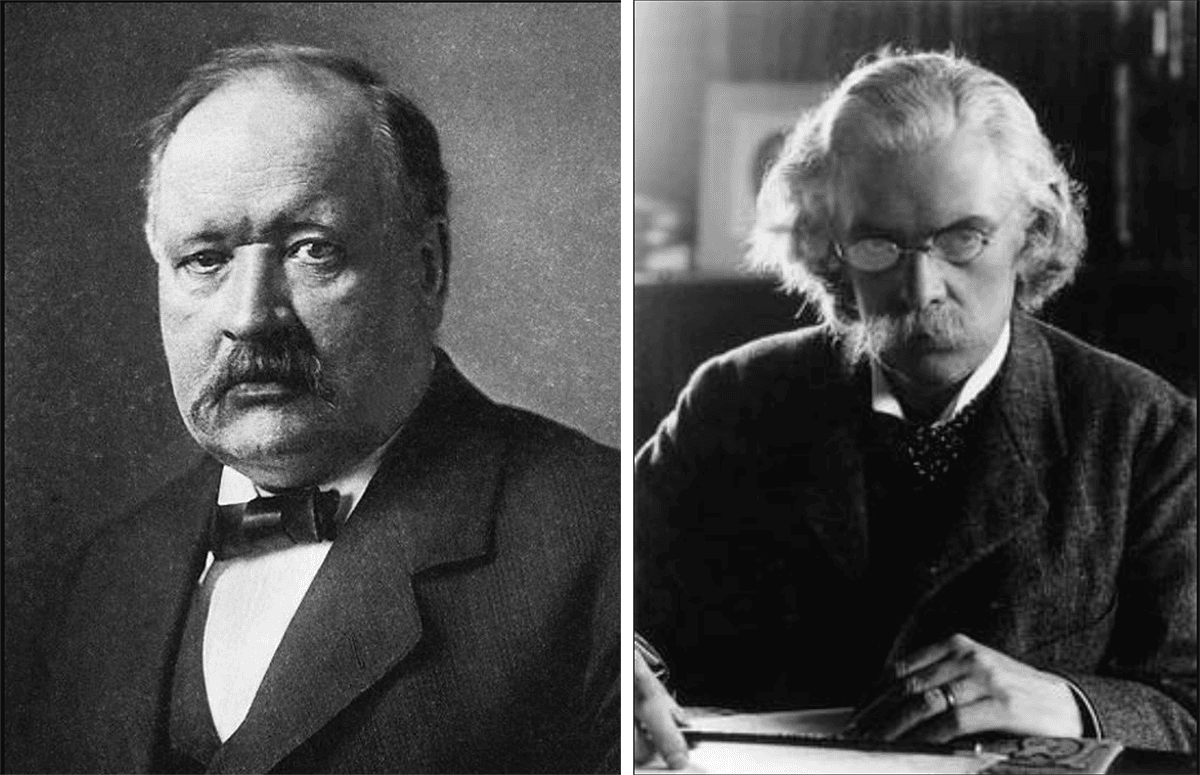
“Stockholm at the time was a small place,” Grandin explains. “Everyone knew each other, and it wasn’t big enough to host both Arrhenius and Mittag-Leffler.”
Arrhenius wasn’t the chair of the Nobel physics committee in 1908. That honour fell to Knut Angstrom, son of the Angstrom the unit is named after. Still, Arrhenius’ prestige and outsized personality gave him considerable influence. After much debate, the committee agreed to recommend his preferred choice for the prize, Max Planck, to the full Academy.
This choice, however, was not problem-free. Planck’s theory of the quantization of matter was still relatively new in 1908, and his work was not demonstrably guiding experiments. If anything, it was the other way around. In principle, the committee could have dealt with this by recommending that Planck share the prize with a quantum experimentalist. Unfortunately, no such person had been nominated.
That was awkward, and it gave Mittag-Leffler the opening he needed. When the matter went to the Academy for a vote, he used members’ doubts about quantum theory to argue against Arrhenius’ choice. It worked. In Mittag-Leffler’s telling, Planck got only 13 votes. Lippmann, the committee’s second choice, got 46.
A consensus laureate
Afterwards, Mittag-Leffler boasted about his victory. “Arrhenius wanted to give it to Planck…but his report, which he had nevertheless managed to have unanimously accepted by the committee, was so stupid that I could easily have crushed it,” he wrote to a French colleague. “Two members even declared that after hearing me, they changed their opinion and voted for Lippmann. I would have had nothing against sharing the prize between [quantum theorist Wilhelm] Wien and Planck,” Mittag-Leffler added, “but to give it to Planck alone would have been to reward ideas that are still very obscure and require verification by mathematics and experimentation.”
Lippmann’s work posed no such difficulties, and that seems to have swung it for him. In a letter to a colleague after the dust had settled, Angstrom called Lippmann “obviously a prizeworthy candidate who did not give rise to any objections”. However, Angstrom added, he “could not deny that the radiation laws constitute a more important advance in physical science than Lippmann’s colour photography”.
Much has been written about excellent scientists getting overlooked for prizes because of biases against them. The flip side of this – that merely good scientists sometimes win prizes because of biases in their favour – is usually left unacknowledged. Nevertheless, it happens, and in 1908 it happened to Gabriel Lippmann – a good scientist who won a Nobel prize not because he did the most important work, but because his friends clubbed together to support him; because Academy members were wary of his quantum rivals; and above all because a grudge-holding mathematician and an egotistical chemist had a massive beef with each other.
And then, four years later, it happened again, to Gustaf Dalén.
The unlikeliest laureate
Dalén was, by some margin, history’s unlikeliest physics Nobel laureate. He wasn’t a physicist, for starters. He wasn’t even a chemist. He was an inventor, and the invention that won him the prize was closely connected – in more ways than one – to an industrial accident that almost cost him his life.
Like Alfred Nobel, Dalén was Swedish, born in 1869 in the small farming community of Stenstorp. Located around 140 km north-east of Gothenburg, Stenstorp is now home to a museum in Dalén’s honour. As a young man, though, he did not seem like museum material. On the contrary, he was incredibly lazy – so lazy, in fact, that he invented a machine to make coffee and turn the light on for him in the mornings.
This ingenious device brought Dalén some local notoriety, but his big break came when Sweden’s most famous inventor at the time, Gustaf de Laval, saw him demonstrate a device for measuring milk fat content. Encouraged by de Laval to attend university, Dalén sold his family’s farm and enrolled at what is now the Chalmers University of Technology. After spending an additional year at ETH Zürich in Switzerland, he returned to Sweden to set up his first engineering firm.
A light in the darkness
The engineering challenge that set Dalén on the path to the Nobel was hugely important in a country like Sweden with a long, complex coastline. Years before the advent of GPS, or even reliable radio communications, lighthouses were the main way of warning ships away from danger. However, they were extremely expensive and hard to maintain. As well as needing 24-hour attention from skilled and hardy humans, they required huge amounts of propane fuel, necessitating frequent (and frequently dangerous) resupply trips.
The obvious way of reducing these costs was to make lighthouses burn something else. Acetylene was attractive because it could be manufactured in industrial quantities, and it produced a bright light when burned. Unfortunately, it was also highly explosive, meaning it couldn’t be safely bottled or shipped.
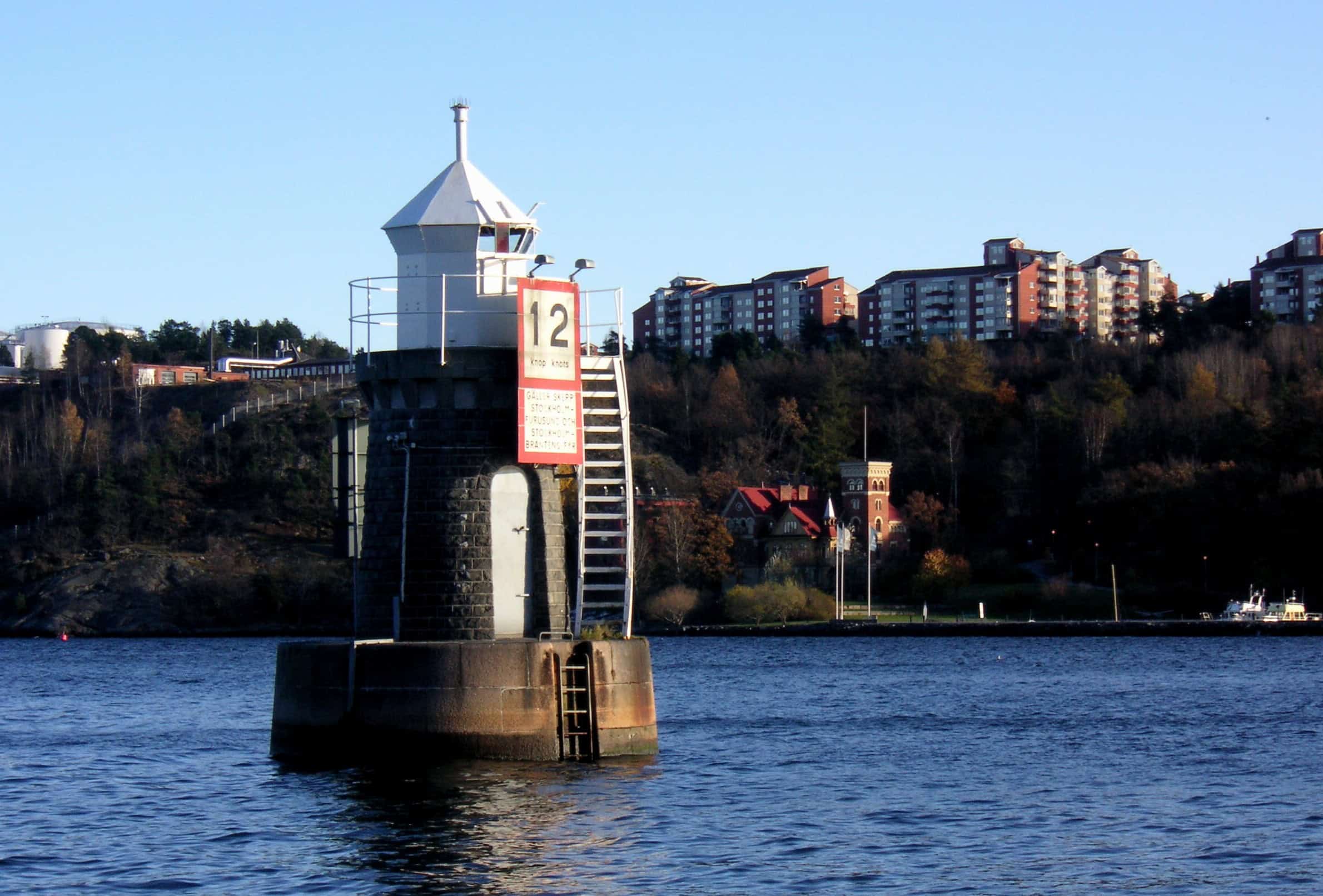
To tame the acetylene dragon, Dalén developed three separate inventions. The first was a combination of asbestos and diatomaceous earth that he called “agamassan” after his company (Aktiebolaget Gasaccumulator) and the Swedish word for compound, massan. By filling a container with agamassan, wetting it with acetone and then forcing acetylene into the container under pressure, Dalén showed that the acetylene would dissolve in the acetone and become trapped within the agamassan like water in a sponge. Under these conditions, it could be shipped, stored and even dropped without exploding.
Having made acetylene safe to use, Dalén turned to making it economical. His second invention was a device that automatically turned the acetylene supply on and off. This saved fuel and enabled the light to flash (distinguishing it from other light sources on the shore) without the need for cumbersome rotation mechanisms.
Dalén’s third invention enabled even greater automation. Rather than relying on lighthouse keepers to switch acetylene burners on at night and off in the morning, Dalén developed a valve that could do it automatically. This valve worked by means of a set of metal rods, one of which was blackened while the others were polished. When the blackened rod absorbed enough heat from the Sun, it expanded and closed the valve. At dusk, or in foggy conditions, the blackened rod returned to the temperature of the others, contracted, and opened the valve.
The committee’s call
While Dalén was perfecting the use of acetylene gas for lighthouses, the Nobel physics committee was getting on with its usual business of recommending candidates for the prize. In 1909 the committee suggested the radio pioneer Guglielmo Marconi and his academic counterpart Karl Ferdinand Braun. The wider Academy accepted this choice. In 1910 the committee recommended Johannes Diderik van der Waals, the father of modern molecular science. He also won the Academy’s approval. In 1911 Wien, whose joint nomination with Planck in 1908 provoked such bitter disputes that neither of them got the prize, finally got the nod from both the committee and the Academy (Planck’s prize would have to wait until 1918).
By the early autumn of 1912, there was every indication that the Academy would again accept the committee’s recommendation: Heike Kammerlingh Onnes, who had liquefied helium for the first time in 1908 and subsequently used it to discover superconductivity. Although Dalén had also been nominated, Mats Larsson, a physicist at Stockholm University who served on the committee between 2016 and 2023, says he wasn’t a serious contender.
“It’s clear from the report from the Nobel committee to the Academy that they recognize there is an importance to Dalén’s inventions, but it doesn’t reach the standard for a Nobel prize,” says Larsson. With only a single nomination from a member of the Academy’s technical section, Larsson adds, “Dalén is not even on the shortlist.”
An industrial accident
Then, before the Academy could vote, tragedy struck. On 27 September 1912, during an experiment so risky it was performed in a quarry rather than in Aktiebolaget Gasaccumulator’s Stockholm factory, an explosion left Dalén seriously injured. The next day, Sweden’s national paper of record, Dagens Nyheter, put the accident on its front page, describing Dalén’s face as “unrecognizable” and his right side as “horribly massacred and burned”. Though conscious and talking when taken to hospital, he was not expected to survive.
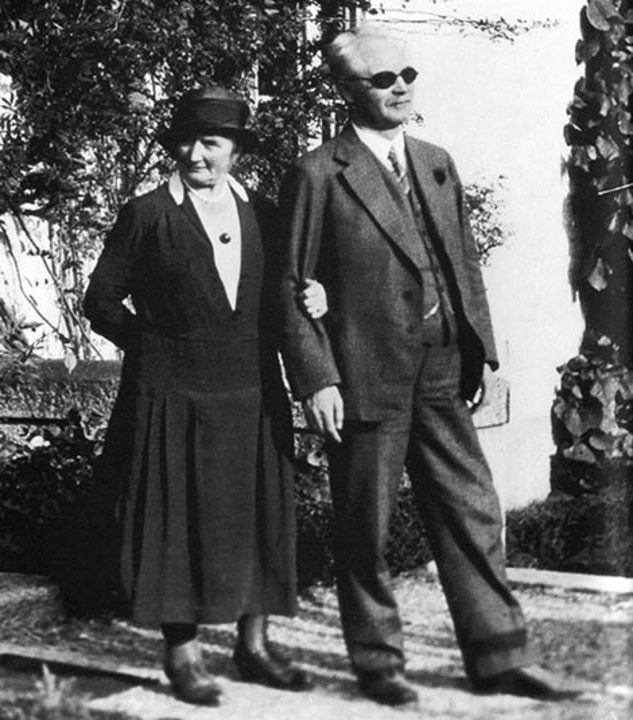
Nobel prizes cannot be awarded posthumously. If Dalén had died of his injuries, it is unlikely that his colleagues would have voted to honour him. But though Dalén’s doctors could not save his eyesight, they did save his life. By the time the Academy convened a few weeks later to vote on the 1912 Nobel prizes, he was recovering in the care of his family and very much on the minds of his sympathetic colleagues.
We don’t know exactly what happened next. “The material [in the Nobel archives] is very meagre,” Larsson explains. “It just says there was a vote and Dalén won the prize.”
Still, it’s easy to imagine that someone in the Academy must have pled Dalén’s cause. “This is our national hero who fought the war against ignorance and against darkness,” agrees Grandin. “And he loses his sight in the purpose of bringing light to the world. It was a symbolic thing.”
Warmth as well as light
Dalén was too unwell to attend the usual Nobel prize celebrations in Stockholm. Instead, he sent his brother, a physician, to accept the prize on his behalf. Eventually, though, he recovered enough to resume his duties at Aktiebolaget Gasaccumulator. In time, he even returned to inventing. And herein lies the final twist in his story.
During his convalescence, the blind Dalén noticed something that had apparently escaped his attention when he could see. His wife, Elma, worked very hard around the house, and cooking for him and their four children was especially tiresome. It would be much easier, Dalén decided, if she had a device that could cook several dishes at once, at different temperatures.
Gustaf Dalén may be the least likely physics Nobel laureate in history, but it would be facile to dismiss him as unworthy
In 1922, ten years after losing his sight and winning the Nobel prize, Dalén unveiled the invention that would become his most enduring. Named, like agamassan, after the initials of his company, the AGA cooker is still sold today, bringing warmth to kitchens just as its inventor brought safe and economical illumination to lighthouses. Dalén may be the least likely physics Nobel laureate in history, but it would be facile to dismiss him as unworthy. After all, how many other physics laureates saved hundreds of thousands of lives at sea, while also relieving the drudgery of hundreds of thousands back home?
The verdict of history
Lippmann and Dalén received their Nobel prizes more than a century ago, but many of the factors that contributed to them remain relevant today. Though Larsson is tight-lipped when asked if there have been any recent dust-ups like the one in 1908, or sympathy votes like the one in 1912, he acknowledges that Nobel’s request that the prize go to “the person who made the most important discovery or invention in the field of physics during the preceding year” still creates some conflict.
There is, he says, frequently a debate between honouring discoveries (which can, in principle, endure forever) and recognizing inventions (most of which eventually become obsolete). “If we award a discovery prize, there are people who think, ‘Oh, there should be more invention prizes,’” he says. “There is always a little bit of this tension.”
A more troubling continuity concerns the role of bias. Despite measures to diversify the pool of Nobel nominators, Grandin says that getting broad perspectives remains a challenge. “How on Earth should this small community of physicists and chemists in this small country, Sweden, be able to make this decision every year?” he asks. It is, he adds, “a big, big task”.
For the record, Larsson says that Nobel committee members take their task very seriously, with many “long and intense discussions” before recommending new laureates. Even so, he and his colleagues are human, and humans are, on our worst days, prone to all sorts of biases: good at avoiding tough decisions; suspicious of new facts that don’t fit our worldviews; and inclined to favour people who remind us of ourselves. In Dalén’s case, these biases got refracted through a lens of humanitarian spirit rather than partisan spite, but even so, Grandin says that his prize and Lippmann’s demonstrate the importance of keeping the Nobels in perspective.
“Sometimes I have to say, it’s just a prize,” he says. “It’s not the correct answers to all questions in physics.”