When I had two kids going through daycare, or nursery as we call it in the UK, every day seemed like a constant fight with germs and illness. After all, at such a young age kids still have a developing immune system and are not exactly hot on personal hygiene.
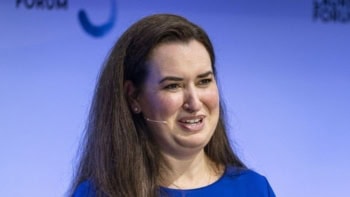
That same dilemma faced mathematician Lauren Smith from the University of Auckland. She has two children at a “wonderful daycare centre” who often fall ill. As many parents juggling work and parenting will understand, Smith is frequently faced with the issue of whether her kids are well enough to attend daycare.
Smith then thought about how an unethical daycare centre might take advantage of this to maximize its profits – under the assumption that if there are not enough children attending (who still pay) then staff get sent home without pay, and also don’t get sick pay themselves.
“It occurred to me that a sick kid attending daycare could actually be financially beneficial to the centre, while clearly being a detriment to the wellbeing of the other children as well as the staff and the broader community,” Smith told Physics World.
For a hypothetical daycare centre that is solely focused on making as much money as possible, Smith realized that full attendance of sick children is not optimal financially as this requires maximal staffing at all times, whereas zero attendance of sick children does not give an opportunity for the disease to spread such that other children are then sent home.
But in between these two extremes, Smith thought there should be an optimal attendance rate so that the disease is still able to spread and some children – and staff – are sent home. “As a mathematician I knew I had the tools to find it,” adds Smith.
Model behaviour
Using the so-called Susceptible-Infected-Recovered model for 100 children, a teacher to child ratio of 1:6 and a recovery rate from illness of 10 days, Smith found that the more infectious the disease, the lower the optimal attendance rate for sick children is, and so the more savings the unethical daycare centre can make.
In other words, the more infectious a disease, fewer ill children are required to attend to spread it around, and so can keep more of them – and importantly staff – at home while still making sure it still spreads to non-infected kids. The surprising physics of babies: how we’re improving our understanding of human reproduction
For a measles outbreak with a basic reproductive number of 12-18, for example, the model resulted in a potential staff saving of 90 working days, whereas for seasonal flu with a basic reproductive rate of 1.2 to 1.3, the potential staff savings is 4.4 days.
Smith writes in the paper that the work is “not intended as a recipe for unethical daycare centre” but is rather to illustrate the financial incentive that exists for daycare centres to propagate diseases among children, which would lead to more infections of at-risk populations in the wider community.
“I hope that as well as being an interesting topic, it can show that mathematics itself is interesting and is useful for describing the real world,” adds Smith.