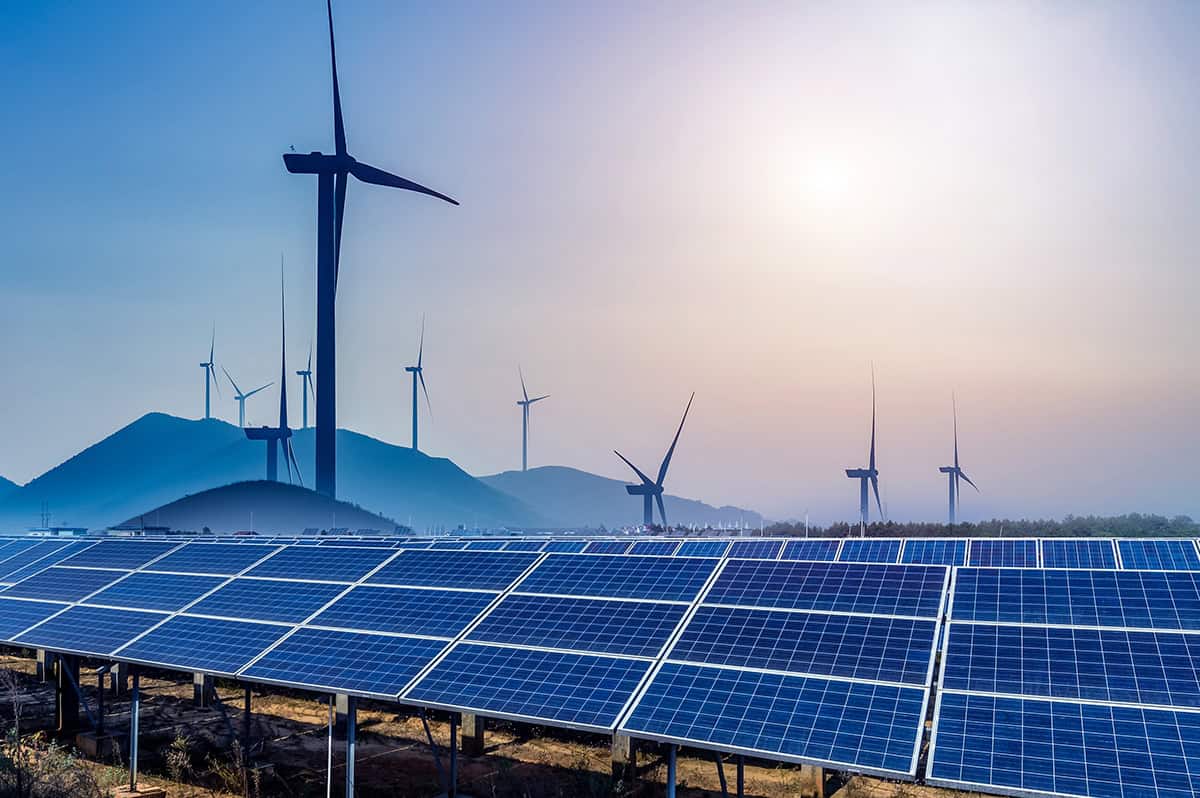
With the conflict in Iran and the resulting closure of the Strait of Hormuz pushing oil and gas prices upwards, the prospect of a world that runs on 100% renewable energy seems even more attractive than usual. Before we can get there, though, experts in a range of fields say we’re going to need to solve a few physics problems – including one that goes straight back to Maxwell’s equations.
Unlike energy that comes from processes such as burning fossil fuels, sending water downhill through turbines, or harnessing the heat from nuclear reactions, the supply of wind and solar energy varies in ways we cannot control. To complicate matters further, consumer demand also varies, and the two variations “do not necessarily match in time or in space” observes Michael Jack, a physicist at the University of Otago in New Zealand.
Speaking on Monday at the American Physical Society’s Global Physics Summit in Denver, Colorado, Jack explained that there are two ways of making sure demand matches supply in an all-renewable grid. The first is to smooth out demand over time, for example by storing energy in batteries and using it when the wind isn’t blowing or the Sun isn’t shining. The second is to smooth out demand over space, for example by creating a grid that connects large numbers of consumers. “It’s very unlikely that all consumers’ demand will peak at the same time,” Jack noted.
To understand how peak demand scales with the number of consumers, Jack and his colleagues are using tools from an area of mathematics called extreme value theory. As its name implies, the goal of extreme value theory is to understand the probability of events that are either extremely large or extremely small compared to the norm. Once we can do that, Jack told the APS audience, we’ll be able to build renewable energy systems that deal efficiently with periods of peak demand.
“The opposite of quantum mechanics”
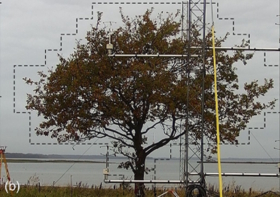
Another speaker in the same session, Charles Meneveau, is working on the supply side of the variability problem. As a fluid dynamics expert at Johns Hopkins University in Maryland, US, his goal is to understand how turbulent gusts of wind lead to fluctuations in the power output of wind farms – a problem he described as “the opposite of quantum mechanics” because “it’s intuitive and we feel like we understand it, but we can’t compute it”.
Meneveau and his collaborators began by building a micro-scale wind farm, sticking it in a wind tunnel and monitoring how it behaved. More recently, they’ve added computer simulations to the mix, generating around a petabyte of simulated turbulence data.
As expected, these studies showed that the power output of an array of turbines fluctuates much less than the output of a single turbine. However, an array’s output does spike at intervals set by the rotation frequency of the turbine blades, and also when gusts of wind propagate from one turbine to the next. Meneveau has developed a model that can predict this second type of spike, and he’s now working to extend it to floating offshore wind farms, which experience watery turbulence as well as the windy kind.
Everything under control
The third speaker in the session, Bri-Mathias Hodge, is an energy systems engineer at the University of Colorado, Boulder. He’s interested in ways of ensuring that renewable energy systems remain stable in the face of disturbances that could otherwise send the grid into a tailspin, leading to blackouts like the one that struck the Iberian Penninsula in 2025.
In traditional grids dominated by thermal energy sources, Hodge explained that one of the main ways of maintaining stability is to use devices called synchronous machine generators. These are essentially large rotating masses that all spin at the same rate: the frequency of the grid, which in the US is 60 Hz. When coupled to an AC power system, they give the system a degree of inertia, enabling it to resist potentially damaging fluctuations in the supply of electricity.
These devices have existed for 100 years, and Hodge says our current power system is designed around them. But because renewable energy generation is primarily DC rather than AC, an all-renewable grid will require a fundamentally different approach. “We have to reimagine what the system looks like when we have 100% renewable energy,” Hodge told the APS audience.
The solution, Hodge explained, is to replace synchronous machine generators with electronic inverters. These devices have the advantage of reacting much faster to system fluctuations. However, they also come with a big disadvantage. Unlike massive spinning objects that follow ponderous Newtonian physics, they don’t react automatically. They have to be told, and Hodge says that will require completely different control systems than the ones used in today’s electrical grids.
Return of Maxwell’s equations
While studying this problem, Hodge realized that the engineers who designed electrical grids back in the 1960s made an important simplifying assumption. Because they were working with a system composed entirely of thermal, synchronous generators (and because they were doing all their calculations with slide rules), they treated voltage as being separate from frequency, even though the two are inherently coupled. In other words, they treated the grid as an electromechanical network rather than an electromagnetic one.
Where do power surges occur in an electricity grid?
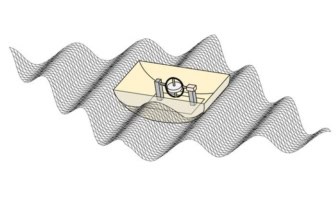
To understand how this simplification plays out in a renewable-dominated grid, Hodge and colleagues went back to Maxwell’s equations. Specifically, they focused on what these equations have to say about the momentum associated with a mass that is moving around in an electromagnetic field. In an electrical grid controlled by large inertias from thermal generators, this momentum isn’t important. But in a renewable-dominated grid, Hodge says it can’t be ignored.
He and his colleagues have therefore developed a new model of electric power networks that highlights the significance of this electromagnetic momentum and restores the link between frequency and voltage dynamics. Ultimately, though, Hodge says that avoiding blackouts in an all-renewable energy system will require advances in simulation technologies. “We need to improve our decision-making processes on a whole range of timescales, from seconds to years,” he concluded.