People have been using reinforced rubber for nearly a century, but we still don’t know why it’s so strong. Researchers at the University of South Florida (USF) in the US now say they may have the answer thanks to advanced molecular dynamics simulations. Their work could make it possible to design new materials that are safer and have even better mechanical properties.
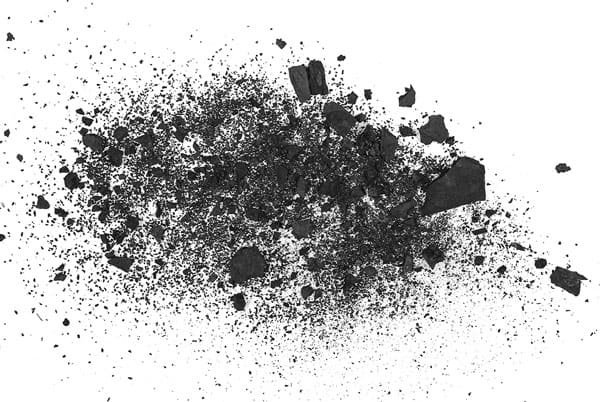
Reinforced rubber is made by adding a nanoparticle filler – typically carbon black or silica – to elastic polymers (elastomers). The presence of this nanofiller explains why tyres, industrial seals and many other everyday rubber products tend to be black in colour. More importantly, the nanofiller makes the material robust to heat and able to withstand millions of cycles of deformation, meaning that objects can last for years, or even decades, without deteriorating.
One property that may play a central role in the materials’ mechanical performance is the stickiness of the nanofillers’ surfaces. This enables them to attract and immobilize nearby polymer segments, but USF engineer David Simmons, who led this new research effort, says the exact mechanism remains an enigma because it is hard to differentiate between the many physical processes that may be at play.
“I love this kind of problem,” Simmons says, adding that it combines “massive practical impact” with “a deep fundamental scientific question that has resisted resolution for so long that much of the field has moved on to different problems”.
A model that distinguishes between mechanisms
To disentangle the different processes, Simmons and his colleagues conducted molecular dynamics simulations of elastomeric nanocomposites. These simulations incorporated strong polymer-particle attractions, with the strength controlled by a parameter known as ϵP F.

The team studied how ϵP F and various other parameters, including nanoparticle filler loading ϕF and structure Np, affected various reinforcement mechanisms by measuring several parameters. These included the nanocomposite’s bulk and Young’s moduli; the Poisson’s ratios for pristine and filled elastomers; and the time required for the nanocomposite to relax after being stretched.
The team then used this model to explore four possible ways that strong polymer-particle attractions might, hypothetically, increase mechanical strength. The first of these is called strain localization. If this was the key factor, strong attractions could immobilize the surrounding polymer, straining the remaining mobile elastomer domains. “This ‘bound-rubber’ mechanism was popular in the early literature,” Simmons notes.
The second mechanism is known as glassy bridging. The idea here is that regions of polymer between particles could vitrify, forming links that elongate the cohesive nanoparticle network.
The third mechanism is called transient crosslinking. Under this hypothesis, slower-moving or stationary polymer regions around particles, or adhesions to the particles themselves, act as long-lived physical crosslinks in the matrix. “This could increase the effective crosslink density of the rubber, thereby increasing the entropic elastic modulus of the polymer domains,” says Simmons.
The fourth and last mechanism is a Poisson’s ratio mismatch. Poisson’s ratio measures how materials change shape when stretched, and a mismatch between ratios for the rubber and the nanoparticles would essentially force rubber to “fight” against its own incompressibility.
And the winner is…
The results of the study, which is detailed in PNAS, show that while all four of these mechanisms play a role in reinforcing the nanocomposites, the most important is the Poisson’s ratio mismatch.
“This is an incredibly cool result because it tells us that the strength of nanocomposites doesn’t come from their polymer-like elasticity but from their resistance to volume expansion,” Simmons says. “This is an entirely different picture than the field has held for more than 80 years. What’s more, we’ve shown that some of the other leading proposed mechanisms from these past decades (for example, particle network percolation, sticky interactions and space-filling effects) actually contribute to this mechanism, enhancing it and making it more effective in strengthening rubber.”
The biggest barrier to obtaining these findings, Simmons adds, was that these materials are difficult to simulate at a molecular level. “They involve very large system sizes, very large timescales and very complex processing histories,” he says. He highlights the work of two lab members – postdoctoral researcher Pierre Kawak and PhD student Harshad Bhapkar – as “instrumental” in overcoming these challenges to generate “beautiful and insightful” simulations of these systems.
Why rubber bands ripple when shot from the thumb

As for the work’s impact, Simmons tells Physics World that it could provide a new foundation for rational design of elastomeric nanocomposites with transformative mechanical properties. “Let’s take the tyre industry alone, for which it is important to design a rubber that combines good traction, durability and fuel economy,” he says. “The industry has had to very empirically navigate this space of competing properties – they call it the ‘magic triangle’. Our findings could help design this triangle with a grasp of the fundamental principles that govern reinforcement in these systems.”
The researchers are now trying to better understand how elastomeric nanocomposites ultimately fail and determine how this failure can be predicted and even delayed. Their work is supported by the Mechanical Properties and Radiation Effects programme within the US Department of Energy.