

Many-body effects at the world’s largest physics conference
A personal reflection on the Global Physics Summit – from artificial intelligence to ultracold atoms
 Read article: Many-body effects at the world’s largest physics conference

A personal reflection on the Global Physics Summit – from artificial intelligence to ultracold atoms
Read article: Many-body effects at the world’s largest physics conference
Scientists discuss whether AI could surpass human contributions to physics by 2035
 Read article: Is ‘vibe physics’ the future?
Scientists have created a material with the ability to repeatedly and autonomously repair cracks
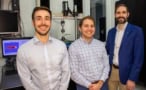 Read article: Self-healing materials could make automobile parts last over 100 years
Physicists have designed a protocol to study high-temperature superconductivity on an experimentally realizable platform
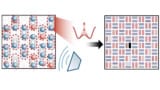 Read article: New protocol makes an elusive superconducting signature measurable
Increasing the wave-like behaviour of nanoparticles brings fundamental quantum tests one step closer
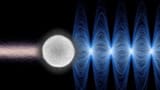 Read article: Physicists extend the wave nature of large objects