

John Hopfield and Geoffrey Hinton share the 2024 Nobel Prize for Physics
Duo win for their work on machine learning
 Read article: John Hopfield and Geoffrey Hinton share the 2024 Nobel Prize for Physics

Duo win for their work on machine learning
Read article: John Hopfield and Geoffrey Hinton share the 2024 Nobel Prize for Physics
Chatting with Frank Wilczek and Albert Fert
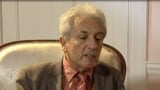 Read article: Laureates on film: Nobel winners who have graced our silver screen
We are expecting a prize in condensed-matter physics in 2024
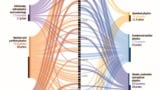 Read article: Use our infographic to predict this year’s Nobel prize winners
Physics World editors gaze into their crystal ball and reminisce about past Nobel winners
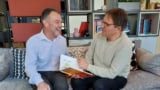 Read article: Nobel predictions and humorous encounters with physics laureates
The magical day Bertram Brockhouse won his prize
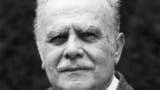 Read article: Celebrating with a new Nobel laureate in Canada’s ‘Steeltown’
Unhelpful or rude feedback can shake the confidence of early career researchers
 Read article: Science thrives on constructive and respectful peer review
Two medical physicists talk about the future of treatment and diagnostic technologies
 Read article: Diagnosing and treating disease: how physicists keep you safe during healthcare procedures
In this podcast we chat about active matter, artificial intelligence and storm Ciarán
 Read article: Looking to the future of statistical physics, how intense storms can affect your cup of tea
Margot Taylor and David Woolger explain to Physics World why quantum-sensing technology is a game-changer for studying children’s brains
 Read article: Quantum brainwave: using wearable quantum technology to study cognitive development
Equal1’s Elena Blokhina and Harvard’s Brandon Grinkemeyer are our guests
 Read article: Hybrid quantum–classical computing chips and neutral-atom qubits both show promise