

Quantum Systems Accelerator focuses on technologies for computing
Bert de Jong of Lawrence Berkeley National Lab is our podcast guest
 Read article: Quantum Systems Accelerator focuses on technologies for computing
Bert de Jong of Lawrence Berkeley National Lab is our podcast guest
Read article: Quantum Systems Accelerator focuses on technologies for computing
Hidden coated materials could be detected using new technique
 Read article: Transfer learning could help muon tomography identify illicit nuclear materials
Aerospace engineer Rahil Makadia on the danger of asteroid “keyholes”
 Read article: Asteroid deflection: why we need to get it right the first time
Passive system could give quantum sensors a boost
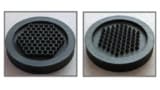 Read article: Pockets and pillars capture ricocheting molecules in vacuum pump
Electron undulator amplifies X-ray beam
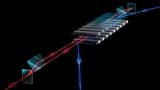 Read article: Cavity-based X-ray laser delivers high-quality pulses
Medical physicist Todd McNutt is our podcast guest
 Read article: AI-based tool improves the quality of radiation therapy plans for cancer treatment
Deformed nucleus makes multi-ion design easier
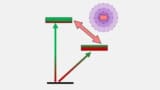 Read article: Ion-clock transition could benefit quantum computing and nuclear physics
Plasma physicist Debbie Callahan is our podcast guest
 Read article: Laser fusion: Focused Energy charts a course to commercial viability
Precision timekeeper is just 5% the size of a conventional clock
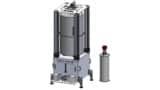 Read article: NPL unveils miniature atomic fountain clock
This podcast features Tim Prior and John Devaney of the National Physical Laboratory
 Read article: Quantum metrology at NPL: we explore the challenges and opportunities