Metrology Research update Optical link connects atomic clocks over 1400 km of fibre Connection is important step towards European network of ultra-precise timekeepers Read article: Optical link connects atomic clocks over 1400 km of fibre
Metrology Video What is a watt balance? Stephan Schlamminger describes how this device will redefine mass Read article: What is a watt balance?
Particles and interactions Research update Ultracold neutrons put a new spin on neutron dipole measurements Neutron charge imbalance could explain lack of antimatter Read article: Ultracold neutrons put a new spin on neutron dipole measurements
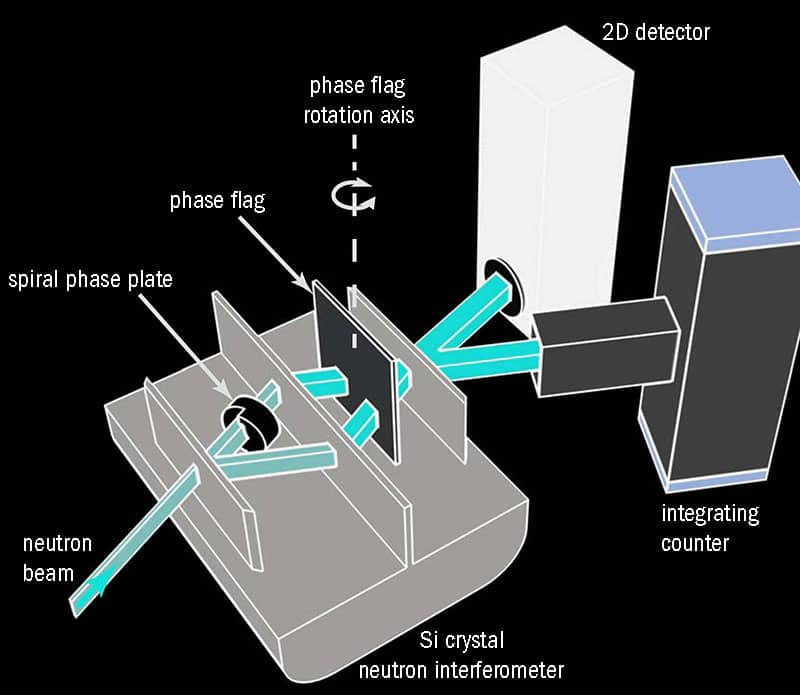
Quantum optics Research update How to put neutrons into a twist Particle beam with orbital angular momentum could test the foundations of quantum mechanics Read article: How to put neutrons into a twist
Quantum optics Research update Physicists defend against Trojan-horse quantum hackers Simple devices can protect quantum cryptography from eavesdroppers Read article: Physicists defend against Trojan-horse quantum hackers
Transport properties Research update Levitating diamonds could improve motion sensors Hybrid quantum system combines light, motion and spin Read article: Levitating diamonds could improve motion sensors
Quantum optics Research update How to make a better quantum thermometer Physicists develop theoretical framework for measuring heat in tiny objects Read article: How to make a better quantum thermometer
Metrology Blog Atomic time was born 60 years ago today Millennia of astronomical timekeeping ended on 3 June 1955
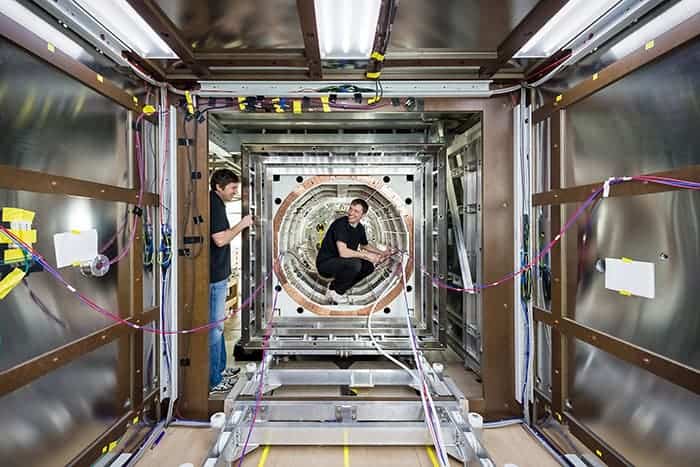
Particles and interactions Research update Extraordinary magnetic shield could reveal neutron’s electric dipole moment System reduces ambient field by a factor of more than one million Read article: Extraordinary magnetic shield could reveal neutron’s electric dipole moment
Telescopes and space missions Research update Highly charged ions could measure changes in fine-structure constant Measurements on Earth could help us understand light from distant quasars Read article: Highly charged ions could measure changes in fine-structure constant