Physics World Instrumentation & Vacuum Briefing 2026

Physics World Instrumentation & Vacuum Briefing 2026

Welcome to the 2026 Physics World Instrumentation and Vacuum and Briefing.

Highlights include Florence Concepcion of UK-based Aquark talking about its mission to cut the size and energy consumption of ultrahigh vacuum systems, while Impulsonics co-founder Luke Cox explains how its system uses ultrasound to gently separate living cells.

Another entrepreneur featured is Brian Pogue, co-founder of US firm DoseOptics, which has a system to detect the faint Cherenkov light emitted when a radiotherapy beam strikes a patient’s skin, allowing it to be monitored in real time and so avoid healthy areas of the body.

Also covered in the briefing is the development of a new compact, free electron laser driven by a laser plasma accelerator, which has been used to create a beam of muons. And finally, don’t miss Ben Stein’s look at SI units, which might be the bedrock of metrology but have some amusing quirks and curiosities.

To enjoy the extra features of the digital magazine, such as audio and video, use the magazine viewer below or open the digital magazine in full screen here.

You can open a simple PDF of the magazine here and download it to read offline.

Or you can read the articles in HTML format on the website.


Read articles from the Physics World Instrumentation & Vacuum Briefing 2026 in HTML format
Florence Concepcion interview

Quantum sensors benefit from miniaturized ultrahigh vacuum

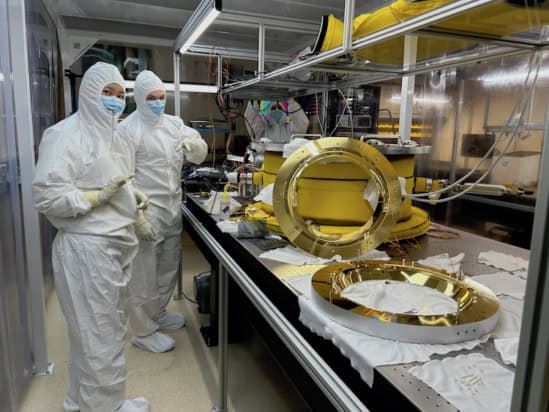
Photo of two researchers in a clean room with the components of the prototype. They're wearing white bunny suits, gloves, and masks over their noses and mouths. The components are shiny and gold and laid out on a bench research update

Optics technology boosts gravitational wave detectors

Artist's impression of a light spectrum research update

Lithium niobate boosts spectrometer

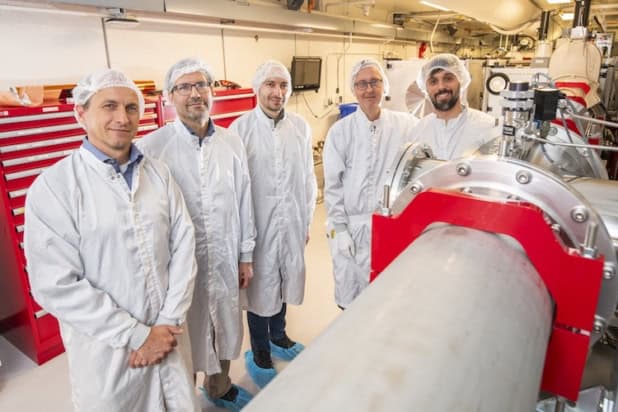
Photo of people who work for Impulsonics interview

Ultrasound system for biomedical research

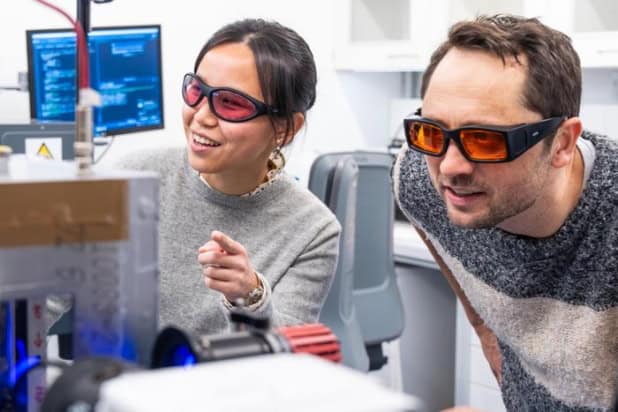
Two researchers with goggles in their lab research update

Physicists levitate objects with sound

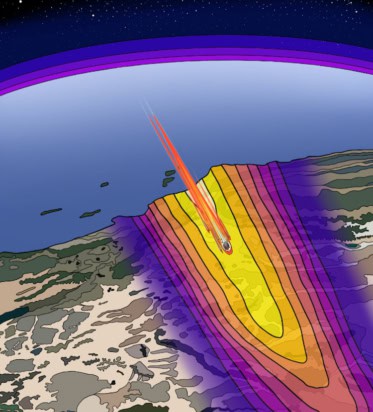
Graphic showing the path of space debris re-entering the atmosphere. The re-entry path is shown in bright yellow with contours fading to dark purple, and is superimposed on a brown-green-and-black contour plot of the terrain beneath it. A curved horizon in the background indicates that the image is shown from the perspective of someone looking down on the planet from space research update

Earthquake-sensing network

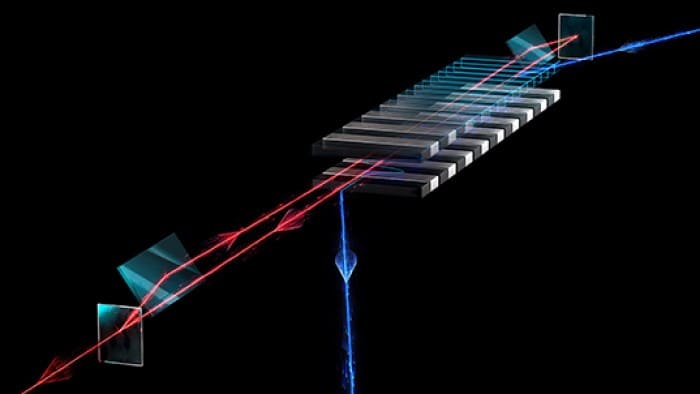
Schematic showing X-ray and electron pulses in XFEL research update

Cavity-based X-ray laser

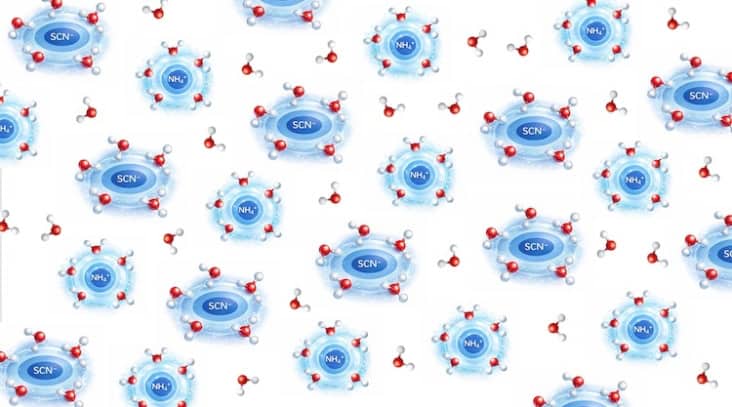
Schematic diagram showing the structure of the barocaloric solution. Blue ovals labelled "SCN-" and "NH4+" are surrounded by red-and-white ball-and-stick models of water molecules, disrupting the water's hydrogen bonding. research update

Giant barocaloric cooling

Brian Pogue interview

Biomedical optics play crucial roles across medicine

A lit candle against black background feature

The International System of Units: constantly evolving, but forever quirky

Berkeley Laboratory Laser Accelerator (BeLLA) Center and researchers research update

Portable source could produce high-energy muon beams

Want even more from Physics World?

Get more from Physics World without waiting for the next issue. The same great journalism, but delivered to you daily. Read updates on the latest research as soon as they happen and access more than 25 years of online content, organized across 15 dedicated scientific areas. Visit the homepage to start exploring.

Copyright © 2026 by IOP Publishing Ltd and individual contributors