Octopus-inspired adhesive could heal wounds

An octopus-inspired adhesive surface that works in wet and dry conditions has been created by researchers in South Korea. They believe their suction cups could find a range of uses including the manufacture of silicon chips and wound healing. The research also provides a better understanding of why the suction cups of the common octopus are so good at grabbing hold of surfaces.

The limbs of octopuses are covered with suction cups, which the animals use to pull themselves along and catch prey. The suction cups of the common octopus are particularly interesting, containing a central bump whose function had previously been unknown.

Adhesives are required in all sorts of different applications, from keeping packages shut to closing wounds after major surgery. However, glue can lose its stickiness after a while, and can leave chemical contamination on surfaces. Imaginative solutions using charged polymers, nanoparticle solutions and systems inspired by various living creatures have been tested, but they can be difficult to manufacture. As a result, creating contamination-free, easily manufactured adhesives that stick repeatedly to wet and dry surfaces of variable geometries remains a challenge.

Polymer moulds

In the new research, Changhyun Pang and colleagues at Sungkyunkwang University in South Korea fabricated polymer surfaces covered with thousands of miniature replicas of the octopus suction cups – complete with central bumps. The team made several versions of the surfaces with suction cups of different diameters in the 15–500 μm range. The structures are easily produced by pouring a polymer into a mould.

The researchers tested their film’s adhesiveness to a silicon wafer – and compared the results with the adhesiveness of films covered with similarly sized cylindrical holes, solid cylindrical pillars and hollow cylindrical pillars. They found the octopus-like structures were significantly more effective than the others in damp conditions or when fully submerged in water. Indeed, strong adhesion was even achieved in silicone oil, which is used as a lubricant.

When one of the suction cups is gently pressed into a surface in the presence of liquid, it contracts, pushing some of the fluid out. When the cup expands again, the pressure inside is lower than outside, creating suction. If more force is applied, the octopus-inspired dome-like protuberance in the middle of the suction cup flattens, expanding sideways until it touches the edges of the cup. This divides the cup into upper and lower chambers. Capillary forces draw the liquid into the upper chamber. When the pressure is released, cohesive forces between the liquid molecules in the upper chamber keep the protuberance flattened, holding the upper chamber shut and creating extremely low pressure in the lower chamber.

Fluorescent water

This two-stage suction process could explain why the octopus-inspired surface attaches to the wafer much more strongly if the two surfaces are pressed together harder, whereas surfaces covered with the other structures often show little or no increase in suction. The researchers confirmed their model by using confocal microscopy to study the movement of fluorescently labelled water within the suction cups.

The ability to hold a silicon wafer could be useful in the semiconductor industry, where wafers have to be transported precisely and repeatedly in both dry and wet conditions – an expensive process that can also damage the wafers. Pang and colleagues have shown that their adhesive surface can do the job in a repetitive industrial setting because it shows no loss of suction after more than 10,000 cycles of attachment and detachment. They also showed that saline-loaded patches can stick to mouse skin and assist wound healing, although less effectively than the standard current medical dressing: “Our group is currently investigating stem-cell- and drug-loading approaches to improve these patches’ practical utility,” says Pang.

Rough surfaces

Solid and structural mechanics expert Nicola Pugno of the University of Trento in Italy believes that the work is significant. He points out that while the adhesiveness of a large conventional suction cup is comparable or slightly higher that the new surface, large suction cups cannot attach to very small or rough surfaces.

He also says that producing a film embedded with microscopic conventional suction cups would be very difficult: “A suction cup seems to be simple but, as a geometry, it’s quite complex: it’s tapered, for example.” “Perhaps the most interesting aspect is that they were able to produce in large area these microscopic, strange suction cups with the peculiar geometry of the octopus suction cups. When you understand all the physics and optimise everything, perhaps you can achieve an order of magnitude increase in adhesion strength.”

The invention is described in Nature.

Flash Physics: US energy agency needs more time, Sun’s runaway twin, chemical analysis of fingerprints

Threatened US energy agency needs time to deliver

The Advanced Research Projects Agency-Energy (ARPA-E) has the ability to make significant contributions to energy research but must be allowed time to do so, according to a report by the US National Academies of Sciences, Engineering and Medicine. The academies’ report – An Assessment of ARPA-E – says that the agency is making progress towards its goals but cannot be expected to have fulfilled them yet, given that new energy technologies require decades of effort. Operated by the US Department of Energy, ARPA-E was created in 2009 to fund high-risk, high-reward research. The report finds that a quarter of supported projects have received follow-on funding, while around a half have published their results in peer-reviewed journals, with 13% receiving patents. The 18 strong committee that wrote the report recommends that ARPA-E management now develop a way of measuring and assessing the agency’s impact to demonstrate the agency’s value. The report comes just weeks after US president Donald Trump included no money for the agency in his administration’s 2018 budget request.

New evidence says the Sun had a runaway twin

Infrared image from the Hubble Space Telescope of the Perseus molecular cloud

The Sun likely had a non-identical twin that escaped into the depths of the Milky Way a long time ago. This is according to Sarah Sadavoy of the Harvard-Smithsonian Center for Astrophysics in the US and Steven Stahler from the University of California, Berkeley, who have theorized that all Sun-like stars are born in pairs. The idea that the Sun once had a twin is not new. The long-lost sibling is called Nemesis and may have kicked out the asteroid that exterminated the dinosaurs. However, astronomers have struggled to find the evidence to support the existence of Nemesis. Now, Sadavoy and Stahler have run a series of statistical models to try and find one that fits the populations of single and binary young stars seen within the Perseus giant molecular cloud during a radio survey. “The only model that could reproduce the data was one in which all stars form initially as wide binaries,” says Stahler, where “wide” refers to a separation of at least 500 AU apart – 17 times the distance between the Sun and Neptune. “These systems then either shrink or break apart within a million years.” In Sadavoy and Stahler’s model, stars with masses similar to the Sun start as wide binaries within star-forming egg-shaped cores. “As the egg contracts, the densest part will be toward the middle, and that forms two concentrations of density along the middle axis,” Stahler explains. “These centres of higher density at some point collapse in on themselves because of their self-gravity to form stars.” 60% of the time, the stars then separate, but for the remaining 40%, the pairs go on to form tight binaries. The work is presented in the Monthly Notices of the Royal Astronomical Society.

Laser lift-off boosts chemical analysis of fingerprints

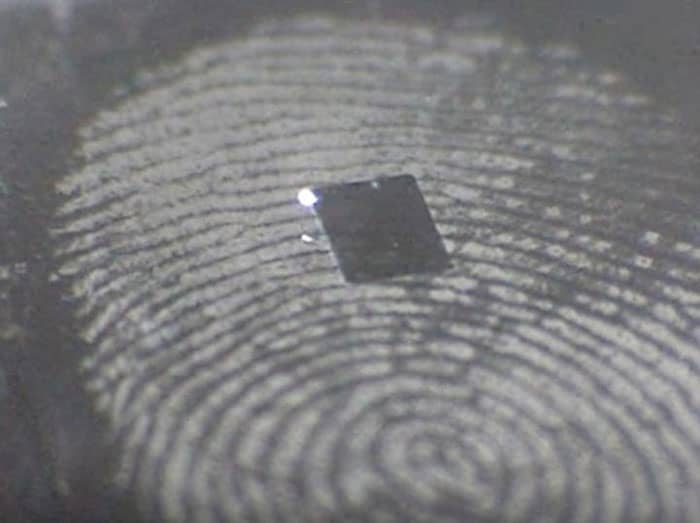
A new way to analyse the chemical composition of fingerprints has been developed by researchers at Louisiana State University in the US. The system uses an infrared laser to vaporize material that is left behind when a person touches a surface. While this might sound like a violent process, the laser wavelength was carefully selected to heat up water molecules while minimizing damage to biological molecules such as DNA. Material is removed from a region about 0.3 mm in diameter – leaving most of the fingerprint intact – and the vapour is sucked into a filter that captures the molecules of interest. The contents of the filter can then be analysed using a number of different techniques, including mass spectrometry. The system was developed by Fabrizio Donnarumma, Eden Camp and colleagues, who say that it could also be used to work out if a person had been handling explosive materials. Indeed, the technique was able to identify a range of substances including caffeine, antiseptic cream and TNT using mass spectrometry. The team is now working with industry and police agencies to come up with ways to use the portable system to analyse chemical signatures left at crime scenes. The research is described in the Journal of the American Society for Mass Spectrometry.

Rotational superradiance spotted as water swirls down a drain

Water waves can gain energy when they scatter from a whirlpool-like vortex. That is the conclusion of physicists in Brazil, Canada and the UK, who are the first to observe a phenomenon called “rotational superradiant scattering”. The team says that the effect could be used to study black-hole physics.

Silke Weinfurtner and colleagues at the University of Nottingham, Universidade Federal do ABC and University of British Columbia observed the effect using a rectangular water tank 1.5 m long and 3 m wide. Water is pumped continuously into one corner of the tank and allowed to drain through a 4 cm-diameter hole in the middle of the tank – creating a familiar draining vortex.

Controlling the flow so that the water is always about 6.25 cm deep, the team then generated plane waves from one side of the tank with excitation frequencies in the 2.9–4.1 Hz range. An “absorption beach” is located on the opposite side of the tank to minimize the effect of the waves reflecting back into the tank.

Simple bathtub

Using a special 3D sensor developed by the team, the researchers were able to precisely measure the height of the waves passing through the swirling vortex at the centre of the tank. According to the team, images of the waves at various excitation frequencies agree with “simple bathtub flow models”. Furthermore, the plane waves undergo an angular phase shift upon scattering, analogous to the Aharonov–Bohm effect in quantum mechanics.

The team also looked at how the waves interact with the vortex by expressing the incident waves in terms of azimuthal components relative to the rotational direction of the water. Azimuthal wave components rotating in the opposite direction as the vortex were found to have lower energy upon scattering, which the team says is the result of energy being absorbed by the vortex hole. However, azimuthal wave components rotating in the same direction as the vortex gained energy as a result of superradiant scattering, with a maximum amplification of about 14% for waves at 3.7 Hz.

The team points out that exactly how energy is lost to the vortex is not known and this could be the subject of future experiments that try to measure the amount of wave energy that goes down the drain. These experiments could provide insights into black holes, which can be modelled in terms of waves interacting with water swirling out of a tank.

The study is described in Nature Physics.

Flash Physics: Eels have a compass, ancient galaxy alignment puzzles, research productivity rises in Spain

Glass eels have a magnetic compass linked to the tides

European eels could navigate tricky coastal waters using the Earth’s magnetic field, according to researchers in the US and Norway. The eels begin their lives in the Sargasso Sea and then migrate thousands of kilometres to the coasts of Europe and North Africa, where they enter rivers and spend their adult lives in fresh and brackish water. Scientists believe that much of this journey is made in the larval stage by hitching a ride with the Gulf Stream current that travels from the Sargasso Sea to Northern Europe. When they reach the European continental shelf, the larvae become “glass eels”, which peel off the current and head for the coast. European eels have recently suffered a large decline in numbers and how the glass eels find their final destinations while being buffeted by tides and currents is of great scientific interest. Now, researchers at the University of Miami and the Norwegian Institute of Marine Research have shown that the eels use Earth’s magnetic field to determine which direction to swim. In a Norwegian fjord, they placed locally caught glass eels in a mesh container that was suspended from a surface float. A camera recorded the behaviour of the eels and the team found that they tended to swim in a southerly direction at ebb tides. The same glass eels were then placed in a specially designed tank in which they are shielded from external stimuli such as daylight. Magnetic fields were applied to the tank, which effectively rotated the magnetic north–south axis by 90°. During periods of ebb tides, the team found that the eels oriented themselves in a southerly direction as defined by the applied magnetic field. This led them to conclude that the glass eels navigate using Earth’s magnetic field in a manner that is linked to the local cycle of tides. This, they believe, could help the eels to use the tides to reach freshwater in rivers. “It is incredible that these small transparent glass eels can detect the Earth’s magnetic field,” says Miami’s Alessandro Cresci. “The use of a magnetic compass could be a key component underlying the amazing migration of these animals,” he adds. “It is also the first observation of glass eels keeping a compass as they swim in shelf waters, and that alone is an exciting discovery.” The study is described in Science Advances.

Ancient alignment of giant galaxies puzzles astronomers

Image of galaxies

Massive galaxies became aligned with their surroundings before the universe reached a third of its current age, astronomers report. The orientation of a galaxy is one of the easiest properties to observe. While most are randomly orientated with respect to their surroundings, some have a preferred alignment – this particularly applies to giant elliptical galaxies at the centres of rich galaxy clusters. The reason behind why these massive galaxies have an orientation, however, remains a mystery to astronomers. Michael West of Lowell Observatory in the US and collaborators therefore used the Hubble Space Telescope to observe 65 distant galaxy clusters. The team found that the galaxies have been aligned for at least 10 billion years – the earliest the phenomenon has been seen. “It’s an important new piece of the puzzle,” says West, “because it says that whatever caused these alignments happened early.” However, it is still unclear how the alignment occurred, and the team suggest several possible theories in their paper in Nature Astronomy. One theory is that the galaxies aligned with the surrounding matter at the time of formation, while another attributes it to the gravitational pull of neighbouring galaxies slowly orientating the largest.

Research productivity rises in Spain despite resource decline

Universities in Spain have seen a rise in scientific productivity and impact despite a decrease in resources and researchers. This is according to a report by the IUNE Observatory, run by the 4U Alliance. The report considers the research activity at 79 public and private Spanish universities between 2006 and 2015. IUNE found that funding for research and development diminished by 19% between 2008 and 2014. The number of scientific researchers was also seen to decline by 9.1% between 2010 and 2015, although the number of professors slightly increased. Despite these falling resources, the average number of publications per professor per year increased from 0.46 in 2006 to 0.83 in 2015. IUNE also reports an increase in research visibility and impact. The percentage of publications in the top 25% of journals based on impact factor rose from 49% to 53%. International scientific collaboration also saw a rise, with the US, UK and Germany being the top collaborators. The field of physics and astronomy are cited as the main areas where international collaboration has increased, due to projects such as those at CERN.

Superfluid polaritons seen at room temperature

The superfluid-like behaviour of a condensate of polaritons at room temperature has been seen for the first time by researchers in Italy and Canada. Until now, such behaviour had only been observed at very low temperatures. As well as allowing physicists to study macroscopic quantum phenomena under ambient conditions, the research could be exploited in the development of photonic circuits that use light to process information.

Superfluidity – the flow of liquid without any friction – was first observed in ultracold liquid helium in 1938. Such a superfluid liquid can creep up along the walls of a container, boil without bubbles and even flow around obstacles. Shortly after the discovery, the physicist Fritz London suggested that there might be some sort of link between a superfluid and a Bose–Einstein condensate (BEC) – the latter being a state of matter in which all constituent particles have condensed into a single quantum state. He was proved right in 1995 when superfluidity was observed in BECs made from ultracold atoms.

To date, however, superfluidity and BECs have only been observed at very low temperatures. A team led by Daniele Sanvitto of the CNR NANOTEC in Leece, Italy, and Stéphane Kéna-Cohen of the Polytechnqiue Montréal in Canada has now shown that a condensate of quasiparticles called polaritons can behave as a superfluid at room temperature.

Flowing around obstacles

The sample studied by the team consists of a Fabry–Pérot microcavity made up of two highly reflective dielectric mirrors surrounding a thin film of organic material called TDAF. This set-up confines photons in a small volume. Electrons and holes can form bound states called excitons even at high temperatures in TDAF. The photons interact with the excitons so strongly in the microcavity that they form particle-like excitations called polaritons.

By making use of a very fast detection technique that can take one image about every 10 fs, the researchers were able to observe the collective dynamics of the polaritons. They found that the polaritons behave like a fluid that can flow without friction around obstacles, which were formed by using a laser to burn small holes in the organic material. This is interpreted by the researchers as being a signature of the superfluid behaviour.

Photonic counterparts to electronic devices

“The fact that such an effect has been observed under ambient conditions means that such condensate fluids can now be studied with table-top experiments in a simple device no bigger than a finger nail,” Sanvitto says. “The specific dynamics of these fluids (also called quantum fluids) could now be revealed and observed without the need for special equipment and experimental conditions.”

Referring to possible technological uses of the polariton superfluid, Kéna-Cohen says: “In the future, devices made of such quasiparticles composed of half-light and half-matter, which have a very low mass, might be used to transport information with zero losses and zero heating.” Indeed he says that one of the most interesting applications of polaritons is their use as possible photonic counterparts to electronic devices such as switches, gates and transistors.

The team is now looking at how to make devices in which photons can be better confined and stay confined for longer periods of time. “This will be essential for making future viable and realistic technologies based on polariton condensates,” says Sanvitto.

The research is described in Nature Physics.

Flash Physics: Hubble tracks dancing stars, ‘little brother’ Higgs not found, living diode from muscle cells

Hubble tracks dancing brown dwarfs

Astronomers working on the Hubble Space Telescope have tracked the motions of two nearby brown-dwarf stars, revealing the intricate “dance” that they appear to make as they orbit each other. Located just six light-years away, Lurhman 16AB is the third closest stellar system to Earth. Despite its proximity it was only discovered in 2013 and since then astronomers have been very keen to work out if the system of two brown dwarfs also contains a planet – something that had been suggested by observations made at the Very Large Telescope in Chile. Now, 12 images of the system taken by Hubble over three years have been studied using high-precision astrometry by a team led by researchers at the National Institute for Astrophysics in Italy. Great precision was needed because the two stars are separated by a distance just three times that between the Earth and the Sun. The presence of a planet would have a small effect on the motions of the stars, but no evidence of a planet was seen in the Hubble data.

Higgs boson’s “little brother” probably never existed

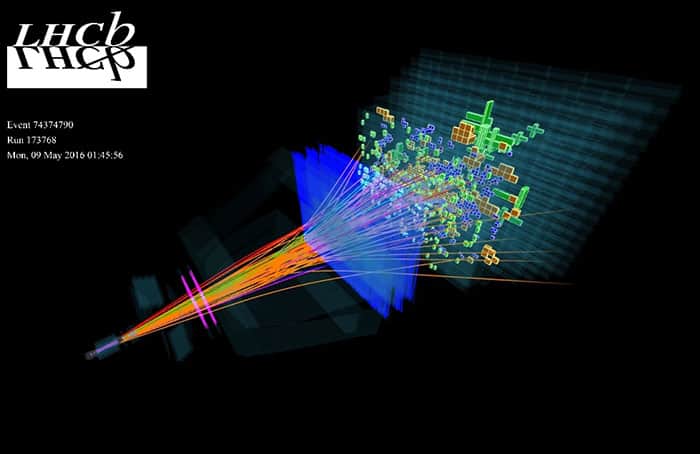
A typical, fully constructed LHCb event

The hypothetical inflaton is almost certainly not the particle behind the universe’s rapid expansion soon after the Big Bang. This is according to an international collaboration of physicists working at the LHCb experiment on the Large Hadron Collider (LHC) at CERN, who have been looking for traces of the inflaton in the decay of B+ mesons. Back in 1981, Alan Guth proposed a new model of the early universe to explain why it looks the same in all directions today. He theorized that after the Big Bang the universe initially expanded slowly, allowing time for matter to interact and the temperature to level out. Then, there was a very short, extremely fast expansion of space–time, which happened so rapidly that the universe now appears uniform throughout. For such an expansion to take place, however, there must have been a force field behind it. “A new [force] field always means the existence of a particle that is the carrier of the effect,” explains team member Marcin Chrzaszcz from the Institute of Nuclear Physics of the Polish Acadamy of Sciences (IFJ PAN). For a while, it was thought that this particle was the Higgs boson – however, when it was observed in 2012, the boson was too heavy to be the correct candidate. So theoreticians proposed a new particle called the inflaton, which had the properties of the Higgs boson but a smaller mass. To prove its existence, physicists looked at the decay of B+ mesons, which sometimes decay into K+ mesons and Higgs bosons. According to quantum mechanics, the near-identical nature of the “brother” particles means that they transform and oscillate between each other, so the Higgs boson should then convert into the inflaton. Rather than directly measuring the inflaton or Higgs, the LHCb detects their decay into a muon and antimuon. “Depending on the parameter describing the frequency of the inflaton–Higgs oscillation, the course of B+ meson decay should be slightly different,” Chrzaszcz explains. “We found nothing. We can therefore say with great certainty that the light inflaton simply does not exist.” The work is presented in Physics Review D.

“Living diodes” are made from muscle cells

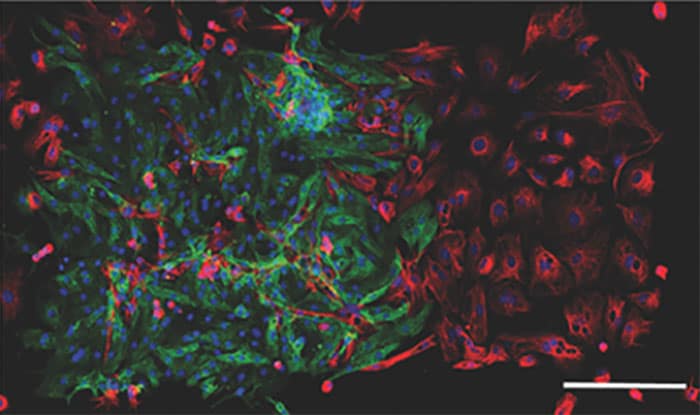
Microscope image of the diode

Two different types of muscle cells have been combined to create an electrical diode. Built by Pinar Zorlutuna and colleagues at Notre Dame University in the US, the device comprises two adjacent squares (each measuring about 400 μm) that are covered in cells found in rat hearts. One square contains cardiac muscle cells, which respond to an applied electrical signal by outputting electrical signals of their own. This means that an applied signal is propagated actively across the square. The other square contains cardiac fibroblast cells, which can absorb electrical signals but do not output signals on their own. While no active propagation occurs in the cardiac fibroblast square, an electrical signal can propagate passively over short distances. When an electrical pulse is applied to the cardiac-muscle side of the device, it propagates actively to the junction between the two squares. Once the pulse enters the cardiac fibroblast, it propagates passively and the output of the device is an attenuated version of the input signal. However, when a similar pulse is applied to the cardiac-fibroblast side of the device, it is attenuated by the time it reaches the junction and is below the voltage threshold required to cause cardiac muscle cells to output electrical pulses of their own. As a result, there is no active propagation in the opposite direction and no signal reaches the other side of the device. Writing in a preprint on arXiv, the researchers say that the device could be used to study electrical interactions between different types of muscle cells. Looking further in the future, they say the device could be used to create electronic and computer devices that could be integrated with the human body.

Send a birthday card to Fermilab, a huge periodic table, art meets quantum computing

By Hamish Johnston and Sarah Tesh

50 years ago this month, the particle physics facility that was to become Fermilab opened its doors for the first time. To celebrate a half a century of physics on the Illinois prairie, the folks at Symmetry have produced a set of themed birthday cards that you can print-out and send to your friends and family. Indeed, there is still time to send a card to Fermilab itself, because the big day isn’t until next Thursday (15 June). My favourite card (above) uses colliding piñatas to illustrate the plethora of particles that were produced in Fermilab’s Tevatron  – which smashed together protons and antiprotons between 1983 and 2011.

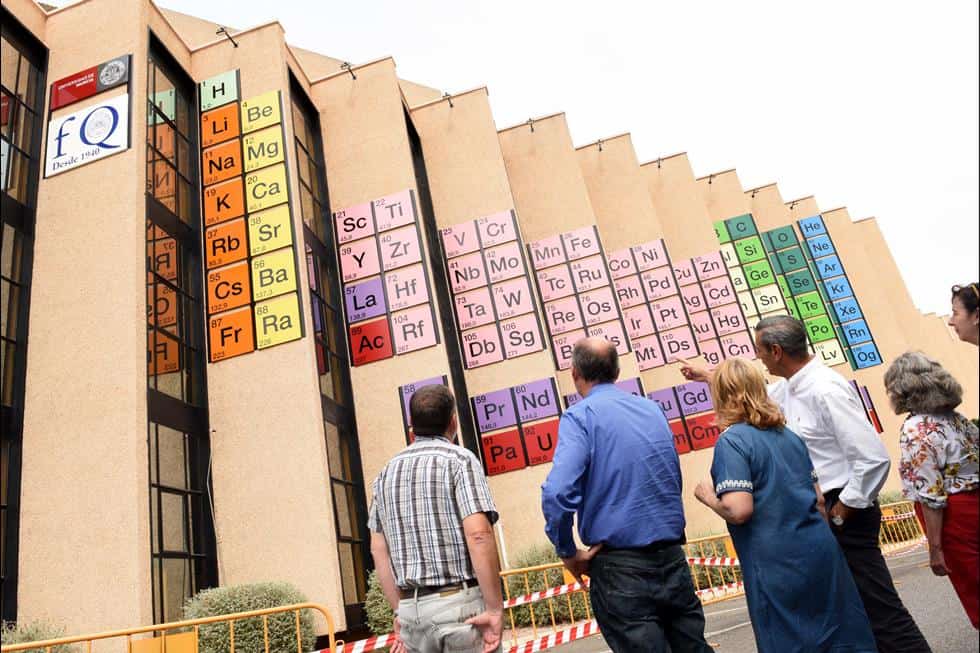
periodic-table artwork

Chemists at the University of Murcia in Spain will now have no excuse for forgetting their elements because their department building has been decorated with a giant periodic table. The display (above) covers 150 m2 and it is thought to be the largest ever permanent display of the elements. The university plans to also build a 50-seat grandstand for outdoor lectures so that the eye-catching table can become a feature of classes.

Quantum artwork

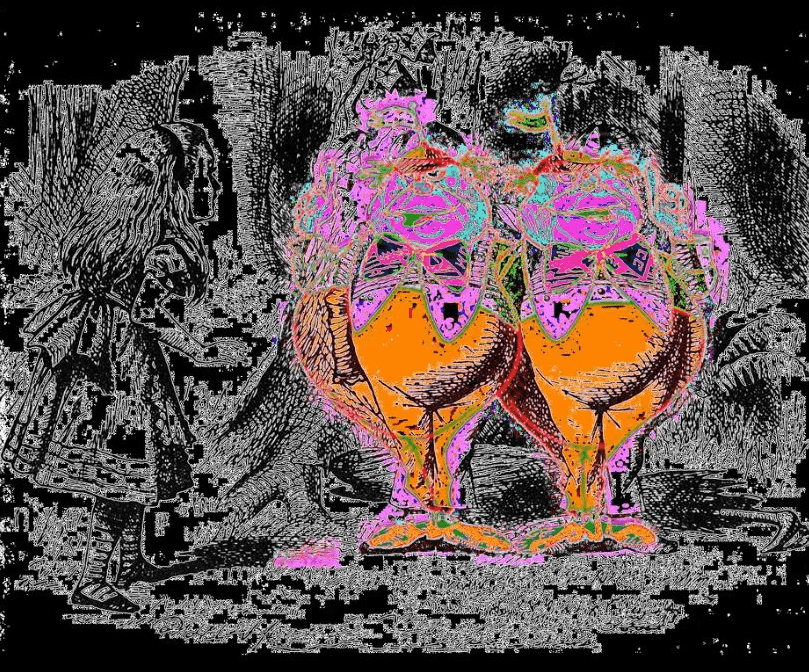
Finally, the image above is an example of quantum art – at least according the University of Bristol. It is John Tenniel’s 1872 illustration from Through the Looking-Glass made using mathematical simulations of quantum teleportation. The work was created by Bristol’s Henry Semenenko and Sam Pallister, who teamed up with Maria Euler and Ker Siang Yeo of the Royal College of Art. This and other works are part of an exhibition called “Entangled: Art, Science and Quantum Computing” which ran early this week in London and will be coming to Bristol later in July.

A ‘plasma broom’ for cleaning on Mars

A “plasma broom” for sweeping away dust on Mars has been developed by scientists in Romania. The device has been designed to clean solar cells that are typically found on probes sent to the planet by forcing away dust with bursts of plasma. The team led by Catalin Ticoş from the National Insitute for Laser, Plasma and Radiation Physics in Bucharest hopes it could be an efficient solution to the problem of Martian dust.

As Earth’s closest planetary neighbour, Mars holds a certain fascination for humans. In our pursuit to know more about the red planet, multiple probes have been sent and there are currently two operational landers on the planet’s surface – NASA’s Curiosity and Opportunity rovers – as well as NASA’s Spirit, which appears to have lost contact with Earth. But the environment on Mars is very different to Earth and dust has proven to be a particular nuisance for the robots.

Fine dust particles can be found everywhere on Mars, with sizes ranging from a fraction of a micron to hundreds of microns. The planet’s winds carry the dust over long distances and then deposit it as a fine layer on exposed surfaces. There are also larger sand particles that are more than 1 mm across and are transported by saltation – the same mechanism seen in deserts on Earth when sand is blown across the ground. The deposition and accumulation of the dust can cause a number of problems for Mars rovers. “Reports from NASA show that dust is quite a problem for missions to the red planet,” says Ticoş. “The Opportunity and to a lesser extent the Spirit rovers have been affected by the Martian dusty atmosphere.” Not only can dust cover optical detectors and cameras rendering them useless, it can also decrease the power production of solar panels at a rate of roughly 0.3% per day. Furthermore, the finer particles can penetrate equipment through holes and slits, and become a frictional problem for moving parts.

Sticky surfaces

Unfortunately, it isn’t a simple case of tipping the particles off or brushing them away with a standard broom. The dust sticks strongly to surfaces due to factors such as electrification caused by high electric fields during storms, and chemical composition – the high iron content is easily magnetized, for example. Previously researchers from NASA and other groups invented an electrical method called an electrodynamic dust shield – a fine mesh imprinted on surfaces is coupled to a voltage source to create an electric field that repels the dust. “The problem appears when you have large dust grains, which are quite heavy,” explains Ticoş, “Even if they are electrically charged it becomes very challenging to lift them off and transport them over tens of centimetres.”

The “plasma broom” solution developed by Ticoş and colleagues uses bursts of plasma jet produced by a simple plasma accelerator. When a large current is passed through two electrode plates separated by a field of rarefied gas, the voltage difference between the two electrodes ionizes the gas, creating the plasma. In the broom, this is done with a coaxial gun – the two metal electrodes are arranged as an inner rod within a hollow cylindrical shell. The discharge current flowing through the central rod electrode produces a magnetic field, which, together with the electric field, exerts a Lorentz force on the ionized gas that expels it. “The trick is that you need a quite high current in order to produce a reasonable magnetic field and this can be achieved more conveniently in a pulsed operation,” Ticoş explains. “For a fraction of a second (100 µs) the current is very high (several kiloamps) and the force pushing the plasma is quite strong.” During a pulse, the plasma is expelled at a very high speed – several kilometres per second – and so can simply blow dust away from an area two to four times bigger than the diameter of the jet.

An advantage of the plasma broom is that it uses low-pressure CO2 as the gas between the electrodes. This is particularly ideal for operation on Mars as the atmospheric pressure there is 150 times lower than on Earth and the atmosphere is 96% CO2. This means the gun will be able to function in “open” Martian atmosphere without the need for a pump or gas bottle. Ticoş and colleagues have also considered the energy required for the cleaner to function on Mars. This depends on the voltage the gun operates at and can vary between a few hundred to a few thousand Joules per pulse.

Energy efficient

“We did an energy budget estimate taking into account the solar irradiance on Mars,” says Ticoş, “and it appears perfectly feasible to fire a few shots even on a daily basis for cleaning the solar panels, which will boost considerably the energy production rate.”

To test the broom’s performance, the researchers covered photovoltaic cells (area 26.86 cm2) with 1 mm of synthetic Martian soil called JSC-Mars 1 A. This is a brown powder made from volcanic ash with particle sizes up to 1 mm. The gun was pointed at the cells from a distance of 5–11.5 cm and fired shots every two minutes. “Our plasma broom is quite effective,” Ticoş proclaims, “it can remove over 90% of the dust covering a surface of tens of centimetres squared, after a few shots.”

The next stage of the team’s research will focus on ways to remove dust in other environments, such as the Moon. The problem there is that the Moon has no atmosphere so instead of a plasma jet they will try a weak electron beam. As for using the plasma broom on a Mars lander, Ticoş suggests it could be autonomous or remotely controlled. “In the first case you would use it to clean the same area while if it is attached to a controlled mobile arm it could sweep dust off of a large solar array.”

The study is presented in New Journal of Physics.

Flash Physics: Dark universe simulation, ferromagnetic 2D material, life ingredient found in stellar system

Simulation of the dark universe is the largest ever

The largest virtual universe ever simulated has been created by scientists at the University of Zurich in Switzerland. Using the Piz Daint supercomputer at the Swiss National Computing Center (CSCS), Douglas Potter and colleagues generated a catalogue of 25 billion virtual galaxies from 2 trillion digital particles representing dark-matter fluid. The simulation describes the dynamics of dark matter and the formation of large-scale structures in the universe with unprecedented accuracy. Due to the team’s high-precision calculations, they have been able to account for galaxies as small as one-tenth of the Milky Way within the massive volume of the observable universe. The image above shows a section of the virtual universe a billion light-years across. The yellow represents dark-matter halos where scientists believe galaxies form and these are interconnected by dark filaments. The white areas are the lowest-density regions in the universe known as the cosmic void. The virtual catalogue will be used to calibrate experiments on the European Space Agency’s Euclid satellite, which will investigate the nature of dark matter and dark energy when launched in 2020. Potter and team’s code took 80 hours to execute and produce the simulation, which is presented in Computational Astrophysics and Cosmology. The researchers claim this is fastest time-to-solution simulation with such a high number of particles.

Ferromagnetic 2D material is a first

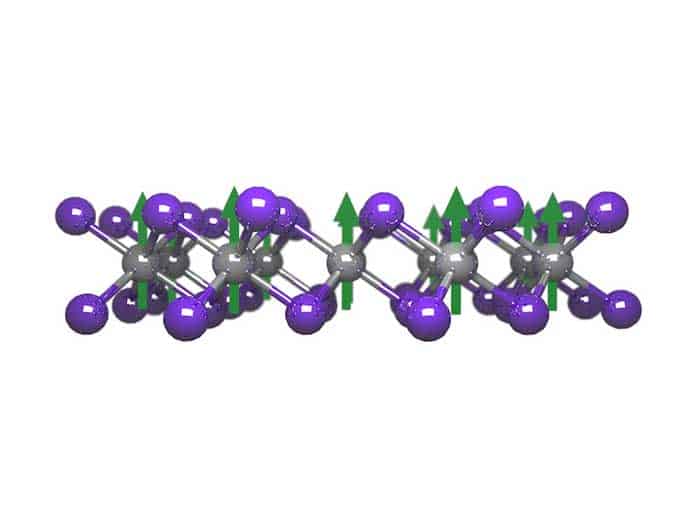
Schematic of a single layer of chromium triiodide

Researchers have observed robust ferromagnetism in an isolated 2D material for the first time. They also found that the crystal, chromium triiodide, boasts unique layer-dependent magnetic phases. The team was led by Xiadong Xu of the University of Washington in Seattle and Pablo Jarillo-Herrero from the Massachusetts Institute of Technology. They found that a single layer of the material displays ferromagnetic order below 45 K, a temperature that is only slightly lower than that for magnetism in the bulk crystal (61 K). “The magnetization forms spontaneously without applying an external magnetic field,” explains Xu. “This indicates that the magnetism in monolayer chromium triiodide is very robust. Spins lie perpendicular to the material’s crystal plane with large magneto-anisotropy. It can thus be described by the 2D Ising model of magnetism.” The team also found that the nature of the magnetic ordering depends very much on the number of layers in the system. In a bilayer, for example, the remnant magnetization in a single layer is suppressed – which implies that the two layers have oppositely oriented – antiferromagnetic – spins. In contrast, in a trilayer this property is lost and the net magnetization comes back. “The 2D crystal offers us several truly unique opportunities for exploring the fundamental physics of magnetism,” says Xu. The research is described in Nature. For more details see a longer version of this article on nanotechweb.org.

Ingredient for life found around Sun-like stars

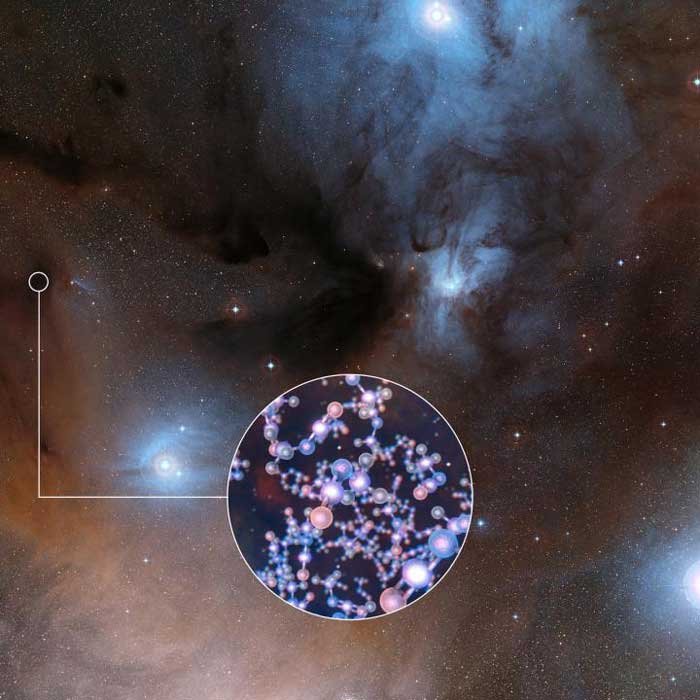
Composite image showing the region of IRAS 16293-2422 and the methyl isocyanate molecule

A possible precursor to life – the organic molecule methyl isocyanate – has been detected within the triple star system IRAS 16293-2422. Two independent teams of astronomers made the discovery using the Atacama Large Millimeter/submillimeter Array (ALMA) radio telescope in Chile. A previous study using ALMA has already shown that the system of three very young “protostars” contains the sugar glycolaldehyde, which is another ingredient for life. “This star system seems to keep on giving! Following the discovery of sugars, we’ve now found methyl isocyanate,” say Niels Ligterink at the Leiden Observatory in the Netherlands and Audrey Coutens at University College London, UK – who led one of the teams. “This family of organic molecules is involved in the synthesis of peptides and amino acids, which, in the form of proteins, are the biological basis for life as we know it.” Rafael Martín-Doménech and Víctor Rivilla of the Osservatorio Astrofisico di Arcetri in Florence, who led the other team, said “We are particularly excited about the result because these protostars are very similar to the Sun at the beginning of its lifetime, with the sort of conditions that are well suited for Earth-sized planets to form. By finding prebiotic molecules in this study, we may now have another piece of the puzzle in understanding how life came about on our planet.” IRAS 16293-2422 is about 400 light-years from Earth and includes an accretion disk of material that could someday form planets. The detection is reported in two papers that are available from the European Southern Observatory, which is a partner in running ALMA.

Is turbulent flow universal after all?

Identifying universal laws within fluid mechanics is notoriously difficult. So it has come as a disappointment that recent experimental and computational results have cast doubt on one of the very few relations that was thought to hold true across all turbulent, bounded fluid flows. But now a physicist in Italy reckons that by tweaking the formula in question – which stipulates that such flows have a logarithmic velocity profile – it does indeed prove to be universal. All that is needed, he says, is a simple extra term to account for the effect of pressure variation along the structure through which the fluid flows. One turbulence expert, however, points out that this is not necessarily a new idea.

Turbulence is a ubiquitous phenomenon in nature and is seen by many as one of the greatest unsolved problems of classical physics. The challenge is understanding how a fluid, such as water flowing from a tap, makes the transition from a smooth laminar flow to a disordered turbulent flow as the velocity of flow increases. This characterized by a dimensionless ratio known as the Reynolds number, and this usually occurs when the number is around 3000.

Physicists have no doubt that the basic formula describing the temporal evolution of a flowing fluid – the Navier–Stokes equation – is correct. Applying the formula to turbulent fluids, however, is problematic. The equation can only be solved numerically in simple geometries – even water travelling along a uniform, circular pipe can only be described for very modest Reynolds numbers.

The best that can be done in more complex scenarios, says Paolo Luchini of the University of Salerno, Italy, is to calculate time-averaged local quantities using “somewhat ad-hoc” turbulence models. The values that emerge can then be used to work out the global quantities – such as total flow rate through a given pipe – which are of most interest to engineers.

Holy grail

Developing robust turbulence models has been a “holy grail” for physicists, according to Luchini, but to date the only one that has, he says, been “generally accepted” is one describing a fluid’s velocity profile. This cross-sectional variation in the velocity of a confined fluid, such as one flowing through a pipe, arises because while the fluid generally flows quite freely down the centre of a pipe it is held back by friction at the edges. Indeed, at the very edge its velocity is generally zero.

Working out this profile for laminar flow is relatively straightforward. It just involves calculating the shear stress across the pipe caused by the variation in the fluid’s velocity, resulting in a parabolic distribution. But when the flow is turbulent, eddies introduce a second source of stress. Unfortunately, this cannot – yet, at least – be worked out from first principles.

Logarithmic profile

Despite these difficulties, German engineer Ludwig Prandtl showed as far back as 1925 that the turbulent profile should be logarithmic. However, experiments and computer simulations done over the past 20 years or so have cast doubt on this idea. The experiments measured the velocity profile of a fluid flowing down a pipe with a variety of Reynolds numbers. If the logarithmic law indeed holds true then the different profiles, when plotted, should overlap one another once the axes are suitably adjusted. But the overlap wasn’t perfect. Furthermore, the experimenters found that the shape of the profile also changed when fluids were sent along a different kind of channel – between parallel plane walls, for example.

This is a topic that can easily start up a fight at a specialist conference
Paolo Luchini, University of Salerno

Researchers have responded to this problem in various ways. Grigory Barenblatt of the University of California, Berkeley, US, proposed that the logarithmic law be replaced with a multi-parameter power law, while Hassan Nagib of the Illinois Institute of Technology, US, and colleagues said the law should remain logarithmic but that the coefficient used to multiply the logarithm, known as von Kármán’s constant (ᴋ), should vary. Others, meanwhile, have continued to back the existing logarithmic law. “This is a topic that can easily start up a fight at a specialist conference,” says Luchini.

Luchini’s own solution involves the addition of an extra mathematical term. He arrived at this conclusion by chance while surveying the literature as part of a study of how modulations in the flow of a stream that are dictated by the shape of the stream bed affect the formation of sand dunes. Having devised, and then discarded, a series of candidate formulae, he found one that he says “had a physical basis and satisfied me more than those I had read about”. The new term he introduces varies linearly with the pressure gradient along a pipe, which, he says, accounts for the variation in velocity profile with channel type while preserving the expression’s “asymptotic” logarithmic nature.

Common correction

Not everyone, however, is convinced by the importance of the latest work. Peter Davidson of the University of Cambridge, UK, argues that it “has long been known” how to correct for pressure gradients when calculating turbulent velocity profiles. “There is not much new here,” he says.

Luchini acknowledges that the effect of the pressure gradient on a velocity profile is “not in itself a new idea”. But what is new, he maintains, is the addition of a new term to account for the effect, rather than modifying the value of ᴋ. The omission of such a term to date, he writes, “justifies the doubts that have arisen in the literature, whereas including it definitely shows that the logarithmic law is valid and the value of ᴋ is universal”.

The research is reported in Physical Review Letters.

Copyright © 2026 by IOP Publishing Ltd and individual contributors