Has metallic hydrogen finally been seen?

The first observation of the low-temperature transformation of solid hydrogen into a metal – first predicted over 80 years ago – has been claimed by researchers in the US. The material needs further investigation – it is not clear whether it is a solid or a liquid – but some theoreticians have predicted exotic, and potentially useful, properties for metallic hydrogen such as room-temperature superconductivity. At least one leading high-pressure physicist, however, remains unconvinced by the results.

Hydrogen is a colourless diatomic gas under standard conditions. However, in 1935, Eugene Wigner and Hillard Huntington predicted that, at a pressure of 25 GPa (250,000 times atmospheric pressure) or higher, it would form an atomic, solid metal. This pressure was later shown to be hugely underestimated, as hydrogen becomes less compressible as its density increases. Liquid metallic hydrogen comprises the majority of the planets Jupiter and Saturn and this liquid metal can be produced by heating hydrogen up at high pressure until it crosses the so-called plasma phase transition. It was first observed in static experiments by Isaac Silvera and colleagues at Harvard University in 2016.

However, the so-called Wigner-Huntington transition, in which solid metallic hydrogen forms without heating at even higher pressures, had not been definitively observed, despite several suggestions that the material might have interesting properties. In 1968, Neil Ashcroft of Cornell University in Ithaca, New York, suggested that it could be a high-temperature superconductor. Then in 2011, David Ceperley and Jeffrey McMahon of the University of Illinois predicted that, at 500 GPa, the transition temperature would be well above room temperature.

Fade to black

In 2016, Silvera’s team reported compressing hydrogen in a diamond anvil cell to 420 GPa – the highest static pressures then reported, in a paper on the arXiv preprint server. At 335 GPa, the sample turned from a transparent phase to a black one, but concluded that it was not metallic. Intriguingly, Mikhail Eremets and colleagues at Max Planck Institute for Chemistry in Mainz, Germany, published another arXiv paper in 2016 identifying a “possible metallic” phase in hydrogen at 360 GPa. Silvera and colleagues believe this is likely to be the same phase that they observed.

In the new research, Silvera and his colleague Ranga Dias modified their apparatus to increase the pressure even further. They found that at 495 GPa, the sample changed from black to highly reflective – which Silvera and Dias say is evidence that the hydrogen has become a metal. Numerous questions remain, however, such as the sample’s state: “It’s possible that at low temperatures, the ground state of hydrogen is a liquid,” says Silvera, “If it’s a liquid, then it’s all part of the same phase of liquid metallic hydrogen. If it’s a solid, which I think it is, then that’s interesting too.”

Silvera and Dias have maintained the sample stably at liquid nitrogen temperatures for about three months. They now intend to conduct a series of ever-more challenging tests such as Raman and X-ray scattering to determine its state and structure and resistance measurements to determine its electrical conductivity. Perhaps most tantalizingly, it wants to release the pressure to see whether it remains metallic: “It’s been predicted that metallic hydrogen is metastable,” explains Silvera. If it turns out to be a superconductor, this would be especially interesting, although what would happen to the transition temperature remains uncertain: “I would expect that, if it was a superconductor at very high pressure, and you released the pressure and it was metastable, the critical temperature would change somewhat, but probably not a great deal,” Silvera says.

There have been many false claims in the past, so I think everyone will look for confirmation and for more data about the new phase
David Ceperley, University of Illinois

Ceperley is cautiously enthusiastic: “The search for metallic hydrogen has been kind of a contentious field,” he says. “There have been many false claims in the past, so I think everyone will look for confirmation and for more data about the new phase.”

Eremets, however, is not convinced, saying “We observed much stronger evidence of metallicity but we did not claim that it was really metallic, just possibly metallic.” He criticizes the absence of repeated experiments and describes the techniques used to measure pressure as “ambiguous”, saying the true pressure could be anywhere between about 400-630 GPa. Finally, he criticizes the researchers’ reliance on reflectivity measurements as proof of metallicity without data on conductivity: “What they observe could be from a semiconductor,” he says, “Because narrow-gap semiconductors reflect very well.”

Silvera disputes this interpretation, saying that the reflectivity of a semiconductor should increase with temperature, whereas their material became more reflective as they cooled the material: “This is the expected behaviour for a metal,” he concludes.

The research is described in Science.

Flash Physics: Sound can halt tsunamis, scientists to march on Washington, H0LiCOW measures Hubble constant

Sound waves could halt tsunamis

The devastating effects of a tsunami could be mitigated by firing underwater sound waves at the giant wave. That is the claim of Usama Kadri, who is a mathematician at Cardiff University in the UK. He has calculated that when the outgoing acoustic gravity waves (AGUs) collide with a tsunami the height of the incoming wave is reduced – thereby lessening its impact when it reaches shore. AGUs occur naturally and are created by violent geological events such as earthquakes. Kadri admits that creating artificial AGUs with sufficient energy to dissipate a tsunami would be a huge technological challenge. However, he points out that the great expense of developing and deploying the technology would be offset by its ability to save lives and protect property. The research is described in Heliyon.

Scientists plan march on Washington

A group of scientists in the US is trying to organize a scientists’ march on Washington to protest science-related policies of President Donald Trump and his new administration – including the potential muzzling of scientists working for the federal government. “An American government that ignores science to pursue ideological agendas endangers the world,” said a statement on the group’s Scientists March on Washington website. Several Facebook accounts set up by the group and like-minded supporters have gathered hundreds of thousands of followers over the past few days. A Twitter account associated with the movement, @ScienceMarchDC, has also attracted more than 136,000 followers. The group says that it is “working to schedule a March for Science on DC and across the United States. We have not settled on a date yet but will do so as quickly as possible and announce it here”. According to a report in the Washington Post, organizers will meet this weekend and plan to announce the date of the march next week.

H0LiCOW’s Hubble constant not consistent with theory

Optical image of quasar RXJ1131-1231 taken by the Hubble Space Telescope

A new measurement of the Hubble constant – the rate at which the Universe is expanding – has strengthened the argument against the standard cosmological model. The H0LiCOW collaboration has independently measured the Hubble constant by studying how the light from quasars is distorted by gravitational lensing. Quasars are supermassive black holes located at the centre of galaxies. They emit huge amounts of electromagnetic energy that randomly varies. We see this as an apparent flickering in their intensity. However, each image detecting the flickering shows a different time-delay of the event. This is because the emitted energy takes different paths to reach us due to the enormous mass of foreground galaxies bending space-time. This distortion is called gravitational lensing. The international collaboration led by École Polytechnique Fédérale de Lausanne (EPFL) and the Max Planck Institute, measured the time-delays to determine the Hubble constant because the distance the quasar light travels is dependent on the universe’s expansion. The current measurement of the Hubble constant agrees with other recent independent studies of the local universe. However, they all disagree with measurements of the cosmic microwave background made using the Planck satellite in 2015 and the predictions of the standard cosmological model. The current result, presented in a series of papers in the Monthly Notices of the Royal Astronomical Society, has strengthened the idea that there is new physics beyond the standard cosmological model.

Between the lines

Close encounters

“The truth is in here” reads a line at the top of a new book about – you guessed it – aliens. In a series of 20 short, sharp essays by a mix of extraterrestrial scientists and experts, compiled and edited by physicist and TV presenter Jim Al-Khalili, Aliens attempts to succinctly answer some big questions beginning with “Do aliens exist?” You would be forgiven if at first glance, you think this book is more fiction than fact – the paperback cover with its tagline of “Science Asks: Is There Anyone Out There?” and its neon green backing may throw off the serious scientific reader. But do not judge this little book by its cover, for it does pack a punch. The book opens with an introduction from Al-Khalili, followed by an intriguing essay by cosmologist Martin Rees, in which he speculates about how future humans, travelling across the galaxy, may be the aliens that we seek today. The other 19 essays are divided into four categories: close encounters; where to look for life elsewhere; life as we know it; and alien hunting. What would motivate aliens to visit us; what are the necessary ingredients and conditions for life to form, evolve and flourish; what about some form of life elsewhere in the solar system; and what might aliens look like – all these themes and more are mentioned in the book by seasoned science writers, authors and scientists including Monica Grady, Lewis Dartnell, Louisa Preston and Paul Davies. Thanks to the discovery of thousands of exoplanets in the past decade, astrobiology and the search for life beyond our planet has become a common topic in the popular-science book market, and indeed may soon saturate it. What sets Aliens apart in some ways is the real expanse of topics covered. The two chapters you’ll guiltily enjoy the most deal not with science per se, but with the human aspect of alien existence. Science broadcaster Dallas Campbell’s entertaining chapter tells the tale of “five of the most notorious UFO stories that have taken the flying saucer from fringe subculture to mainstream modern folklore”. In a subsequent essay, psychologist and professor of paranormal belief Chris French looks into the psychology behind the many people world over who are convinced that they have had “close encounters” or been abducted by extraterrestrials. Aliens is an entertaining and educational if slightly basic read for anyone with a scientific interest in extraterrestrials.

  • 2016 Profile Books £8.99pb 240pp

Lively lectures

Mention the Royal Institution and most people will know it best for its long-running and beloved “Christmas Lectures”. Indeed, the lectures have been run every year since 1825, only taking a hiatus between 1939 and 1942 as a result of the Second World War. The lectures were the brainchild of Michael Faraday, who wanted to bring science in an engaging manner to children and young adults. Although the lectures have been televised since 1936, each year’s lecture (which takes place over a few days) still has a live audience of school children. Over the years, the lectures have been on all aspects of science, but those mentioned in 13 Journeys Through Space and Time: Christmas Lectures from the Royal Institution have a bit more of a physics thread. Compiled by astronomer and writer Colin Stuart, the book features 13 chapters, each of which is a shortened version of an actual lecture based on the theme of space and time. Beginning with Sir Robert Stawell Ball’s 1881 lecture on the Sun, Moon and the planets and finishing with Kevin Fong’s 2015 lecture on how to survive in space, the book spans many decades and plots the huge advances that science has made in that time. Some of the more famous lecturers include James Hopwood Jeans and Carl Sagan. The book also boasts an introduction from British astronaut Tim Peake, who (virtually) participated in Fong’s 2015 lecture while he was on board the International Space Station. Grab a copy of the book to read about the whacky live demonstrations done by the lecturing scientists and for some Christmas nostalgia.

  • 2016 Michael O’Mara £9.09hb 224pp

Saved by Bell

From a scientific point of view, the theories of relativity and quantum mechanics are often considered the 20th century’s most renowned and profound discoveries. But the past 100 years have also seen many other significant advances in science: from the discovery of penicillin to the structure of DNA, from continental drift to the Big Bang, and even that of information theory, which set the basis for today’s hi-tech society. However, there is an often forgotten but nevertheless crucial discovery in physics that, in my opinion, surpasses all the others. By that I mean the pioneering work done by physicist John Bell on “local hidden variables” of quantum mechanics, which ultimately led to his ideas of “non-locality” or Bell’s inequalities.

In John Stewart Bell and Twentieth-Century Physics: Vision and Integrity, fellow physicist Andrew Whitaker tells the story of Bell’s life and his revolutionary discovery that not everything in physics can be explained using only local variables. Back in 1935 Albert Einstein, Boris Podolsky and Nathan Rosen realized that two quantum particles can be in a state such that a measurement on one particle instantaneously affects the other – no matter how far apart they may be. This effect, more commonly referred to today as entanglement, upset the trio because such “spooky action at a distance” would require information to travel faster than the speed of light. We now know than entanglement emerges thanks to correlations between measurements made on the two particles, and that entangled particles have much stronger correlations than are allowed in classical physics. But it was Bell’s breakthrough in 1964 that laid the groundwork for this phenomenon, when the Northern Irish physicist calculated an upper limit on how strong these correlations could be, if they were caused by local physics alone. Bell reasoned that correlations stronger than this limit would occur only if the particles were entangled and this is Bell’s inequality.

Whitaker, a physics professor at Queen’s University, Belfast, tells the story of Bell’s main discovery, but the book also goes beyond that. Bell was no one-discovery-wonder and, peculiarly, pursued quantum mechanics as a “hobby” in his spare time. Indeed, he was a very successful high-energy theoretical physicist, spending most of his career at the CERN particle-physics laboratory in Geneva. The book sets the stage with Bell as a student at Queen’s, and then follows his dual career – from the early 1950s to his “decade of great success” in the 1960s – including the publication of his seminal paper in 1964, which he wrote while in the US on sabbatical from CERN.

Through the book, one reads a lot about Bell’s character and the many people with whom he interacted including Alain Aspect, Abner Shimony, Reinhold Bertlmann and even myself. Interestingly, despite the fact that Bell seemed to discuss his ideas with a number of fellow scientists, he had very few joint publications on his work on quantum foundations. It is also remarkable how few papers Bell published in refereed journals. It seems he didn’t quite like the referee reports he must have received about his fundamental work, which was initially ignored and did not truly gain favour until the 1970s.

Bell died unexpectedly at the relatively young age of 62, from a cerebral haemorrhage, which Whitaker describes as the “final tragedy”. The book continues with the far-reaching implications of Bell’s discovery, including brief descriptions of many of today’s active researchers. Bell’s inequalities are now experimentally testable and his concept of non-locality is gaining momentum. Violating a so-called Bell inequality shows that an experiment is truly quantum in nature and there are no “local hidden variables” at play.

Today, Bell’s non-locality is also being exploited for futuristic applications in a new field that would never exist without Bell’s seminal discovery – namely, “device-independent quantum information processing”. The idea is that a quantum protocol would be completely independent of the internal workings of the devices being used, which would therefore eliminate the risk of a quantum cryptographic system being hacked. That is because the protocol looks merely at the statistics of any measurement made, without the need to understand in any detail how the data were collected; it suffices to know that they were produced at separate locations that couldn’t communicate. The National Institute for Standards and Technology in the US has already tapped into this idea and has created a free, public random number generator that you can access online. Large sets of truly random numbers are difficult to produce, but they are used in a variety of applications today, including in unpredictable sampling and secure authentication methods.

I truly enjoyed reading this very informative book. Moreover, it is nicely illustrated with many pictures of John, his wife Mary and others such as Michael Horne, Daniel Greenberger and Artur Ekert. This is not a book to learn about physics, but to get to know a bit about the man who made one of the most profound, if not the most profound, discoveries of the 20th century.

  • 2016 Oxford University Press $44.95hb 480pp

Uncertainty for science under Trump

Rick Perry, the former governor of Texas, who has been nominated as the Trump administration’s energy secretary, once expressed his desire to eliminate the Department of Energy (DOE). Scott Pruitt, the nominated head of the Environmental Protection Agency (EPA), sued the agency 14 times during his time as attorney general of Oklahoma. Donald Trump’s choice as secretary of the interior, Republican congressman Ryan Zinke from Montana, recently asserted that human-caused climate change, although “not a hoax”, was “not proven science, either”. And just nine days before his inauguration, Donald Trump appointed a proponent of the discredited link between children’s vaccines and autism to head a government commission on the safety and scientific integrity of vaccines.

“The appointments make one scratch one’s head,” says Rush Holt, the physicist and former Congressional Representative who is chief executive of the American Association for the Advancement of Science (AAAS). “Even though some are not outsiders, they are idiosyncrats or iconoclasts.” These nominees had provided few hints about the administration’s likely policies related to science and technology. Yet at a Senate hearing this month, Perry did express regret that he had called for the DOE to be abolished. He also noted that he would base decisions at the DOE on “sound science” and “protect the men and women of the scientific community from anyone who would attack them, no matter what their reason may be”.

Nevertheless, the overall lack of clarity has caused significant angst within the US scientific community as Trump takes up office. “Since the election, the level of uncertainty and even anxiety has increased,” says Holt. “The president continues to leave everybody guessing as to what he will do.” Holt adds that many of Trump’s statements are cryptic, “all over the place” and sometimes seem contradictory, leaving it hard to know what he actually means. “Combine that with his appointments, at least for science, and it’s almost bewildering, the uncertainty that is there,” he adds.

Poorly prepared

Adding to the uncertainty are the actions – or lack of them – by members of the Trump transition team. “The word from all the science-related agencies is that the transition team has not been very engaged,” Holt says. “It seems to me that the transition process will provide the least preparation for the incoming officers of any administration in many, many years.”

A major issue that worries the scientific community is the Trump-transition-team’s failure to provide any indication of its intentions on appointing a science adviser and making use of the Office of Science and Technology Policy that the adviser heads, despite receiving a letter advocating a fast appointment from the leaders of 29 scientific societies. Indeed, members of the community have sent several letters to the transition team and individuals, expressing their concerns about the future of science-related issues.

Climate-change nixed

The community’s strongest concern focuses on climate change – especially given that all references to climate change were removed from the official White House website within minutes of Trump’s inauguration. Indeed, Trump is noted for once accusing climate change of being a “hoax” set up by China to gain business from the US. Although he has slightly modified his attitude since, his transition team surprised the community by asking the DOE for the names of individuals involved in the Paris agreement and related issues. Department managers refused the request, fearing that the new administration might target those individuals in some way. “Spokespeople said there was no intention to harass them,” Holt says. “But the fact that the information was sought has left climate scientists in government very nervous.”

That feeling is hardly reduced by the line-up of nominees to head the cabinet departments mainly involved with climate matters. It is heavily slanted to individuals with strong connections to the fossil-fuel industry and those opposed to environmental controls. For example, over the past seven years, Pruitt has been suing the EPA to block regulations intended to improve the cleanliness of the environment. His reasoning is that such issues should not be handled by the federal government.

“Some claim Pruitt opposes clean air and water. This could not be further from the truth,” wrote a group of conservative organizations supporting his candidacy. “He understands that many of the nation’s challenges regarding clean air and water are best met at the state and local level.” However, environmental groups do not accept Pruitt or his reasoning. Indeed, the Environmental Defense Fund, a relatively moderate organization, has announced its opposition to Pruitt – the first such action in the fund’s 50 year history.

Increased drilling

Zinke – the nominee for secretary of the interior – is a geologist who spent much of his career in the US Navy. He has had little exposure to the protection of public lands and waters that the department oversees and, like Pruitt, has expressed support for US states to gain control of land currently under the jurisdiction of the federal government. Environmentalists fear that he might agree to increased drilling for oil and gas on those lands. Sally Jewell, the last head of the interior department under president Obama, in contrast, blocked such activity and advocated the development of renewable energy sources.

Even though some are not outsiders, they are idiosyncrats or iconoclasts
Rush Holt, AAAS

Meanwhile, former-Texas-governor Perry’s best known connection to the DOE is his failure to remember it as one of the cabinet departments he wanted to eliminate during a debate in 2012, when he ran unsuccessfully for the Republican presidential nomination. Intriguingly, Perry is not the first DOE nominee to have wanted to discard the department. Spencer Abraham, president George W Bush’s first energy secretary, had voted to do so when representing Michigan in the Senate; the department survived. Given his roots in Texas and his denial of the role of humans in climate change, Perry is expected to give strong support to the oil and gas industries. On the other hand, proponents of renewables point out that Texas emerged as a powerful source of wind power during Perry’s governorship.

Nuclear responsibilities

Dealing with energy sources and climate change represents just one facet of the DOE’s remit. About 60% of its budget goes to the National Nuclear Security Administration, which oversees the US stockpile of nuclear weapons. The expertise informed by that work played a major role in the agreement reached by the Obama administration and its allies to reduce Iran’s stockpile of enriched uranium. Throughout the election campaign, Trump asserted that the agreement was “the worst deal ever negotiated” and said dismantling it was his “number one priority”.

However, a group of senior scientists – organized by physicist and policy-maker Richard Garwin – disagree. They penned a letter to the then-president-elect asserting that the deal “has increased to many months, from just a few weeks, the amount of time that Iran will take to develop a single nuclear weapon”. The 37 signatories include Nobel laureates and senior figures in nuclear policy such as Siegfried Hecker and Sidney Drell (who signed the letter shortly before he died in late December).

The DOE also oversees the country’s 16 national laboratories. In one of his last appearances as outgoing energy secretary, Ernest Moniz introduced the first annual report to Congress on the state of the labs. While identifying areas for improvement, the report notes that collectively “they have pursued actions to substantially improve the laboratory system”. Together, the report continues, “they will continue to work to maintain and develop the most comprehensive network of its kind – a system of national laboratories that can effectively tackle long-term, critical R&D challenges for the nation.”

Obama’s legacy

As for efforts begun by the Obama administration to encourage clean power, they – for the time being – will continue. The $1bn Petra Nova carbon-capture plant – a joint venture between a Houston power company and an oil and gas operation with some government support – started operation last month. Completed on time and under budget, the plant will pump the carbon dioxide (CO2) created when it burns coal to an oilfield 130 km away. The CO2 will be injected into wells to increase the recovery of oil, with the plant being economically viable when the price of oil reaches $50 per barrel.

But as with other energy issues, environmentalists fear that the incoming Trump administration, with its negative attitude to global warming, may end support for carbon capture. Equally at risk is a new approach to coal leases on federal lands suggested by former interior secretary Jewell in early January. The recommendations could make it more expensive for companies to take on the leases.

There is, though, one agency that seems likely to prosper under the new administration: NASA. Some of president Trump’s advisers have spoken enthusiastically about lunar colonies and manned missions to orbit Mars. However, the team has also made clear its disapproval of the agency’s efforts to study global warming and other aspects of Earth science.

Holt now calls on scientists to use the switch to a new administration to their own advantage. “The current transition is an excellent opportunity for young scientists and engineers to engage now with the public and many different audiences, to explain the work you do and why it’s important for expanding human knowledge and improving people’s lives,” he says.

Supporting hi-tech businesses

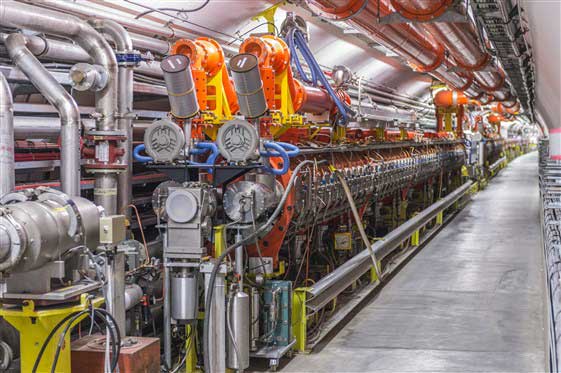
Big-budget science facilities such as the CERN particle-physics lab near Geneva and the ITER fusion reactor being built in Cadarache, France, are pushing the boundaries of knowledge. Such centres are unique, bringing together thousands of scientists from across the world. They also rely on bespoke specialist equipment that is critical to their operation. Yet the hi-tech businesses supporting these facilities are being threatened by the current economic climate and the need to safeguard public funds when such facilities issue a tender for equipment. The way contracts are defined, awarded and funded is a major issue for small businesses that is now threatening their existence.

Once a company successfully wins a contract bid, it is sometimes paid as little as 10% of the contract value as a down payment to cover the costs of producing all the designs, doing development, sourcing parts, building the kit and covering salaries for the years until delivery. It is often only when the parts are delivered that the firm receive the next payment – typically 60–70% or more of the contract value. About 10–20% is then normally withheld as a warranty performance bond for more than a year. Typically, a profit can only be made between three and five years following a contract. The rest of the time, small businesses are in a “negative cash-flow situation”, where they must pay staff and suppliers up front to realise a profit in the future.

This issue used to be facilitated by bank loans, with the anticipated costs rolled up into the quotation. However, banks are now less willing to make loans to cover negative cash flow. Most big-science projects are not considered credit-worthy by banks as they require unique products that cannot be resold to anybody else should the contract fail. Small businesses are therefore struggling under the twin burden of having to finance their projects with prepayments from other projects and then relying upon the goodwill of their suppliers to accept the same payment terms they were given.

If the status quo continues, the number of suppliers will decline as companies become unprofitable

Some would say this is good for big science as competition ensures good value for the funding body. Well, yes, in the short term, but the situation changes over longer timescales. If the status quo continues, the number of suppliers will decline as companies become unprofitable. This will result in a loss of talented experts and threaten the supply of spare parts for existing systems, representing a blow to institutions that have invested in equipment that should be operable for decades.

Levelling the playing field

So how can we cultivate a healthy business community that supports big science? Firstly, we need to ensure that scientists are closely involved with purchasing teams when deciding who to award a contract to. It is extremely difficult to present a proposal that highlights the nuanced technical advantages of extremely specialist equipment when the tenders are typically awarded by non-technical accountants to the cheapest bidder that ticks most of the boxes. Unfortunately, in tender assessments the price often speaks louder than the details, resulting in a race to the bottom.

My company – Ampegon – has been approached many times by scientists disappointed by other suppliers’ sub-standard equipment that only just meets specification, is unreliable, difficult to use and requires expensive consumables, only to have new contracts for replacements awarded to the same supplier because of a tiny price difference. If tenders focus solely on meeting 80% of the criteria and then looking for the cheapest price, equipment will be made to the absolute minimum possible requirements while businesses are run into the ground trying to compete with each other for the cheapest possible solution.

The requirement that a tender process needs to have multiple bidders should also be left behind. Having to respond to five tenders for each contract simply puts prices up for everyone. It incurs irrecoverable costs that divert the business’s efforts away from contracted projects. Even if two or three companies can supply equivalent products that meet the specifications, the chances are that they will each have strengths and weaknesses that cannot be easily distinguished in a tick-box tender-compliance checklist. If possible, scientific staff should visit manufacturers, make their choice of supplier(s), and then – after per-haps commissioning a design from each – negotiate the price for production with the company offering the best, most functional design. This would preserve the scientific value of proposals while also offering the best value for money.

Finally, and most importantly, we need to level the playing field around the world. There are numerous barriers hindering international co-operation between businesses and science that are often reinforced by government policy. An especially harmful example is the impasse that occurs when a contract is agreed in one currency, and then, two years later when payment is due, the exchange rate has changed. This results in either the supplier making a loss, or conversely, the buyer having insufficient funding to pay in full. There then follows a circus of shadows whereby one party delays either delivery or acceptance, hoping that the exchange rate changes: this can be mitigated somewhat by agreeing smaller, more frequent payments throughout the project. It would also help if facilities could standardize requirements in even some areas. Economies of scale mean that prices would fall and the industrialization of developed technologies would also be easier.

Unless the situation changes, companies supplying the highest specification systems will be driven out of business by cheaper, barely sufficient equipment. This will result in a loss of knowledge and experience, and it will become harder to find suppliers as manufacturers leave for more favourable business sectors. Few small businesses ever became rich from supporting scientific research and we are simply asking that the business environment surrounding big science be modified so survival in it is easier.

Flash Physics: Fishy armour, giant telescope picks leader, E-XFEL welcomes proposals, Bruker buys Hysitron

A fish in shining armour

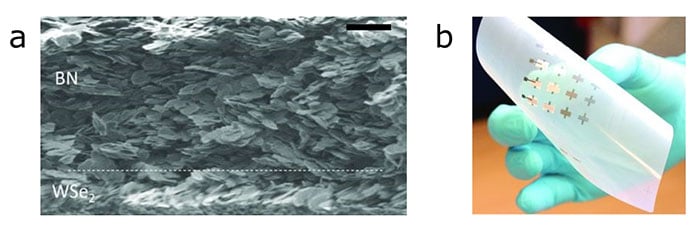
Fish have inspired a new design for flexible armour. Roberto Martini and Francois Barthelat from McGill University in Montreal, Canada, have looked to nature to design a protective, scaled material. Over millions of years, evolution has ensured animals can protect themselves from physical threats. In particular, the scales of animals such as snakes and fish allow flexibility yet still protect the soft tissue beneath from punctures. While humans have a long history of making scale-like armour, engineers are still exploring how nature achieves this protection so easily. Martini and Barthelat looked at hundreds of fish scales to understand their individual and group properties, finally finding that an alligator gar gave the best answers. “The people at the fish market must have wondered what we were up to,” says Bathelat. They developed a new technique to cover large, soft surfaces with ceramic tiles. Using computer simulations alongside experimental testing, they were able to find the ideal size, shape and arrangement of scales and study how they deform, slide and fracture. The resulting armour is more flexible and resistant to damage than a continuous layer of ceramic, and 10 times more resistant than soft elastomers. The work is presented in Bioinspiration and Biomimetics.

Condensed-matter physicist to lead Giant Magellan Telescope Organization

Photograph of Robert Shelton

The condensed-matter physicist and university administrator Robert Shelton has been appointed president of the Giant Magellan Telescope Organization (GMTO) – which is building what will be the world’s largest optical observatory. Located at the Las Campanas Observatory in Chile and run by an international consortium of universities and astronomy institutes, the Giant Magellan Telescope will have a mirror 24.5 m in diameter and a resolving power 10 times greater than the Hubble Space Telescope. Shelton is currently president of the US-based Research Corporation for Science Advancement, which is a private foundation that provides funding for research in the physical sciences. He will leave his current post and join the GMTO in February. Shelton has also been president of the University of Arizona and has a research career investigating the collective behaviour of electrons in novel materials.

European free-electron laser opens for proposals

Photograph of the Femtosecond X-Ray Experiments instrument

The European X-ray Free Electron Laser (E-XFEL) in the Hamburg region of Germany has issued its first call for proposals for beam time on the 3.4 km-long facility. The E-XFEL, which is currently being commissioned, will use a superconducting linear accelerator to accelerate electrons before passing them through an “undulator” so they produce coherent X-ray beams 30,000 times per second. Each pulse will last less than 100 fs (10–13 s), allowing researchers to create “movies” of chemical processes such as bonding and the way vibrational energy flows across a material. The user programme at the facility is expected to start later this year for a two-month period with two instruments – the Femtosecond X-Ray Experiments and the Single Particles, Clusters, and Biomolecules and Serial Femtosecond Crystallography instrument. The deadline for applications is 20 March, with the next proposal round scheduled for mid-2017 for experiments in early 2018, when it is expected that a further four instruments will come online.

Bruker buys nanoanalysis firm Hysitron

Hysitron, which supplies equipment for making mechanical measurements at the nanometre scale, has been bought by the Bruker Corporation. Hysitron was founded in 1992 in Minneapolis, US. It has annual revenues of about $20m and supplies nanoindentation systems, which are used to measure the hardness of nanomaterials. The firm also makes equipment for tribology and electron microscopy. Bruker was founded in Germany in the 1960s and supplies a wide range of scientific instrumentation. The company is now based near Boston, US, and has more than 6000 employees worldwide. According to Mark Munch, president of Bruker’s NANO Group, Hysitron’s products will complement Bruker’s atomic-force-microscopy systems as well as its mechanical and tribology test instruments.

  • You can find all our daily Flash Physics posts in the website’s news section, as well as on Twitter and Facebook using #FlashPhysics. Tune in to physicsworld.com later today to read today’s extensive news story on the latest on Donald Trump’s science policy.

Acoustic frequency comb measures up

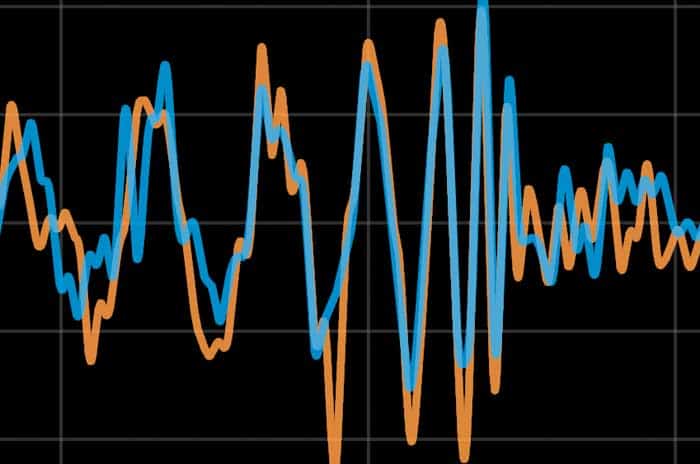
An “acoustic frequency comb”, which produces sound at a precise set of frequencies, has been made by physicists at the University of Cambridge in the UK. The device, which is an acoustic analogue of an optical frequency comb, works at ultrasonic frequencies. With further improvements, the device could be used for imaging, metrology and materials testing.

Conventional optical frequency combs emit a spectrum of light made of thousands of discrete peaks at evenly spaced frequencies, like the teeth of a comb. Developed in the 1990s, such combs have been used in a range of applications such as comparing different atomic clocks.

One way of creating an optical frequency comb is to combine laser light of several different frequencies in a nonlinear optical medium. But in the new work, Adarsh Ganesan, Cuong Do and Ashwin Seshia have discovered that a similar effect occurs when ultrasound waves interact in a silicon wafer covered by a thin layer of aluminium nitride, which vibrates when driven by an electrical signal.

Surprising discovery

The three researchers were initially investigating if such a wafer could be used for sensing applications when they were surprised to see it vibrate at a number of different frequencies when a megahertz signal is applied to it. The gaps between the frequencies all had the same value (about 2 kHz) and the spectrum looked much like a frequency comb. The teeth of the comb extended over a frequency range of about 100 kHz, says Ganesan.

Puzzled by their discovery, the trio soon realized that their system is like a theoretical proposal for an acoustic frequency comb made in 2014 by Peter Schmelcher of the University of Hamburg and colleagues. Schmelcher’s group modelled the atoms in a solid material as a collection of masses connected by springs that have a restoring force with a nonlinear component.

In such a material, sound waves can interact with each other to create waves at several different frequencies. Ganesan told Physics World that while the Schmelcher model does describe some aspects of their acoustic comb, it does not capture the full complexity of the device.

The team is now making more frequency combs and is also thinking about possible applications, which include boosting the accuracy of sensors that operate using mechanical vibrations. Other possible uses include phonon lasers that create phase-coherent sound signals and ultrasonic imaging.

Follow-up studies

Ultrasound expert Bruce Drinkwater at the University of Bristol says the research is “fascinating” but warns that while there could be applications, “until follow-up studies are performed it’s hard to be sure”. If further research succeeds, the phenomenon could be used, says Drinkwater, to create sensitive new sensors that could be used for, say, gas and chemical monitoring. “There is also the intriguing possibility of using it to monitor the degradation of metallic structures, which are known to become increasingly nonlinear as they age,” he adds.

The frequency comb is described in Physical Review Letters.

Flash Physics: Ancient solar system was unstable, light pushes and pulls, detecting hidden machinery

Ancient meteorites reveal solar-system’s unstable past

Ancient micro-meteorites have revealed that the solar-system’s history may not be as stable as we thought. The discovery was made by researchers from Lund University, Sweden, in collaboration with the University of Chicago and University of Wisconsin-Madison in the US. The team studied 43 meteorites found on the ancient sea floor of the Lynna River near St Petersburg in Russia. These objects fell to Earth 470 million years ago and were less than 2 mm across. Unusually, the composition of these tiny meteorites did not match the make-up of modern ones. The findings instead echoed research from 2016 investigating an ancient meteorite named Österplana 065 found in a Swedish quarry. The studies mean that meteorite flow nearly 500 million years ago was completely different to todays. “We have always assumed that the solar system is stable, and have therefore expected that the same type of meteorites have fallen on Earth throughout the history of the solar system, but we have now realized that this is not the case,” says Birger Schmitz, who took part in both studies. The latest finding, reported in Nature Astronomy, means that our current understanding of our solar-system’s stable history needs to be revised.

Light pushes and pulls on a gold plate

Illustration of how and object can be pushed and pulled by light

When a beam of light strikes an object, momentum is transferred to the object, pushing it away from the source of the light. Light striking one side of an object will also heat up that end of the object, which in turn will heat the surrounding air. The hotter and faster-moving air molecules on the illuminated side will exert a greater force on the object than the cooler molecules on the opposite side – again causing the object to move away from the source of the light. Now, Min Qiu of Zhejiang University in China and colleagues have created a scenario in which these two phenomena work in opposite directions. They placed a hexagonal plate of gold (measuring 10 μm across and 30 nm thick) on an optical fibre that is tapered to a sharp tip, and van der Waals forces cause the plate to stick to the fibre. Light that leaks from the fibre causes the plate to move towards the tip. However, as the plate nears the tip, the intense light that is emitted there causes the near side of the plate to heat up. This causes the plate to reverse its direction of travel along the fibre. While the plate moved back and forth once, the researchers were unable to set it oscillating along the fibre – something that they are currently working. Describing its work in Physical Review Letters, the group says that the system could be used to transport materials in miniature lab-on-a-chip systems or even for generating mechanical energy from light.

Atomic magnetometer detects hidden machinery

A radio-frequency atomic magnetometer (RF AM) has been used by physicists in the UK to detect hidden rotating machinery. Built by Luca Marmugi and colleagues, the RF AM is based on a glass cell that is filled with rubidium atoms at room temperature. The atoms are subject to static and RF magnetic fields – which cause the Larmor precession of the atomic spins. A magnetic field from rotating machinery will disrupt this precession – and this disruption is detected by using a laser-measurement technique. The detector measures about 0.4 × 0.6 m and the team says that it is suitable for outdoor use. Using its device, the team was able to detect magnetic fields produced by spinning steel discs at frequencies of about 10 Hz as well as DC and AC electric motors. The device’s performance is on a par with a commercial magnetic flux detector and the team says that its instrument is particularly good at detecting rotational frequencies lower than about 15 Hz. Detection can be made at distances up to about 1 m, even through concrete walls. Writing in Applied Optics and in a preprint on arXiv, the team says the detector could be further improved and miniaturized and could someday be used in security and surveillance remote sensing.


  • You can find all our daily Flash Physics posts in the website’s news section, as well as on Twitter and Facebook using #FlashPhysics. Tune in to physicsworld.com later today to read today’s extensive news story on an acoustic frequency comb.

Mapping the heavens: Xiaohui Fan and David Law reflect on the Sloan Digital Sky Survey

Physics World: How did you get involved in the Sloan Digital Sky Survey (SDSS)?

Xiaohui Fan: In 1994 I was studying for my Master’s degree in China, working on a smaller imaging survey project and developing my method of looking for distant quasars. I came across the SDSS in the literature when the survey was still in the development stage, and I immediately knew what I wanted to do for my PhD. So I applied to Princeton University, basically saying that I wanted to work on the SDSS because it would revolutionize survey astronomy and I thought I had both the interests and the skills needed. I got in and was welcomed to the project with open arms. I spent the next five years working in the SDSS group at Princeton, and in the end, I carried out the observations and analysis that resulted in the discovery of the first sample of distant quasars – including one that broke the record at the time for the most distant quasar. I never thought that I should or could be the lead author of the first paper based on SDSS survey data, because I was a graduate student at the time, and because the survey is so much more this initial discovery – it involved years of work by many people. So I was surprised and humbled by the fact that I was told to lead the paper (Fan et al. 1999 ApJ 117 2528). It was a tremendous responsibility, which I think always brings the best out of your ability.

David Law: A few years ago, when I was a Hubble Fellow, a colleague of mine from graduate school, Kevin Bundy, had an idea for a new integral-field unit (IFU) spectroscopic survey of nearby galaxies. He knew that I had some experience using such systems in the past, and although he was not part of the SDSS, he had been discussing his ideas with Jim Gunn, one of the survey’s founders. Initially, Kevin asked if I could adapt my simulation code to estimate the typical data quality that we could expect in our proposal, but what started as some quick simulations to explore the capabilities of such a new instrument gradually evolved over the next few years into leadership of the software and analysis team of what became the MaNGA (Mapping Nearby Galaxies at APO) project.

PW: What is MaNGA about?

DL: The overall goal of the project is to take the statistical power of the SDSS and use it to explore the internal properties of galaxies – a largely uncharted regime. In previous generations of the SDSS, all of the millions of galaxies that had been observed with spectroscopy used just a single fibre per galaxy – treating the galaxy as a point object. Galaxies aren’t points, though. They have rich and varied structures, with internal motions, chemical evolution and feedback from one generation of star formation influencing the next. In order to study this kind of structure we need spectroscopy. Spectra are what tell us the physics of astronomical objects, what they’re made of, how they’re moving, where they came from and so on. While a few tens to a few hundreds of the brightest, most accessible galaxies had been studied in such a way, the purpose of MaNGA is to observe a representative sample of 10 000 galaxies across a wide range of masses, star formation rates, morphologies and environments. The goal is to understand the “life history” of current-day galaxies.

PW: What have you learned from working as part of the SDSS?

XF: One thing I learned is the paramount importance of the free exchange of ideas and open use of data. SDSS data are available for all collaboration members to explore. There is no restriction on working on any projects one wishes to, provided one follows SDSS rules of announcing the projects so that others can collaborate with you. The SDSS has made many unexpected discoveries, partly because it is so powerful as a survey tool, but also because it encourages open minds and open eyes to look for things beyond our own immediate narrow interests. For example, after the quasar discovery, I was a key member of the team that discovered new classes of brown dwarfs (basically failed stars or free-floating planets) using SDSS data. This is an area that I knew nothing about: we found them simply because they were “contaminants” in our quasar selection process. But there were no pre-defined areas of research, and we were encouraged to work closely with experts on stars.

Another lesson from the SDSS is the importance of encouraging, promoting and really challenging young scientists to take leadership roles, while at the same time providing guidance and protections for them on the policy side. The freedom and the responsibility I had on my first paper experience were really key to my growth. I think many of my peers, who “grew up” in the SDSS as students and postdocs, felt the same way. The SDSS benefited greatly from innovative contributions by a generation of young astronomers who were familiar with the digital age, with big data and with collaborative research, and to make the best use of all that expertise and creativity, it was equally important for the SDSS leadership to promote and protect the interests of junior scientists. We were all extremely grateful for the unselfish service (and, in many cases, sacrifice) of our mentors and leaders, which I think allowed the best science to come out of the project.

DL: At first, what I learned mostly broadened my technical expertise. For example, working with SDSS engineers gave me an appreciation for the interface between software design and the realities of physical hardware, while learning from more senior members of the SDSS collaboration dramatically improved my knowledge of practical large-scale collaborative software development. Later on, as the project reached maturity, it was my scientific expertise that began to expand by bringing my technical knowledge to bear on the variety of science topics being pursued by the rest of the large MaNGA science team.

PW: How did this experience help your career?

XF: After more than 20 years, and now as a senior faculty member, I am still working on SDSS data. It has been the one constant of my career, even as I have expanded my research. My role evolved from hands-on analysis of data, to organizing a team to explore new ways of using the data, and more recently to representing my institution on the SDSS advisory board – setting policies, evaluating progress and planning new directions. The two most important things I learned from SDSS – to prepare for the unexpected discoveries, and to encourage the next generation astronomers – are also the principles of how I conduct my research and lead my own research group and projects. One of my most satisfying experiences as a faculty member happened when one of my students analysed SDSS data in a different way, and this new analysis resulted in the discovery of a remarkable new quasar that was missed by the original SDSS selection method that I developed as a student. This object turned out to be the most luminous quasar in the early universe, powered by a 12 billion solar mass black hole at its centre (Wu et al. 2015 Nature 518 512) – a surprise discovery that is challenging the theory of black hole formation in the early universe.

DL: After a graduate school experience working with a very small and close research group, the opportunity to work with so many SDSS scientists from around the world has been an incredible way of broadening my contacts within the astronomical community. Many of us who started the MaNGA project did so as postdocs, and we have continually been impressed with the leadership roles and responsibilities that were open to us within the project. As the MaNGA data group lead and part of the executive committee, even as a postdoctoral fellow myself I had the opportunity to hire and supervise the team of postdocs tasked with various aspects of the project software development.

All of this experience leading a team to design, build, and operate an IFU software and analysis pipeline while interacting regularly with scientists, engineers and technical staff was invaluable when it came time to apply for permanent positions. Now, as a tenure-track assistant astronomer at the Space Telescope Science Institute, I can look back and see that my experience with the SDSS was nearly ideal preparation.

Copyright © 2026 by IOP Publishing Ltd and individual contributors