Optical clock mimics spin–orbit coupling

An optical atomic clock has been used by physicists in the US to study the effects of spin–orbit coupling. Spin–orbit coupling is fundamental to understanding how electrons behave within condensed-matter systems and could be exploited in the design of new materials, such as topological insulators and superconductors.

The researchers also plan to adapt their atomic-clock design to study other fundamental phenomena in condensed-matter systems. The work is another example of how physicists have mimicked the behaviour of electrons in solids by fine-tuning interactions between ultracold atoms.

Spin–orbit coupling links the motion of a particle to its quantum spin. For example, an electron has two possible spin states: up and down. Spin–orbit coupling means that otherwise identical electrons with different spins will follow different trajectories in the same electromagnetic field. The consequences of spin–orbit coupling are particularly important in solid materials, where electrons move under the influence of an electromagnetic field produced by a crystal lattice. However, studying spin–orbit coupling directly in materials is difficult because researchers cannot precisely tune a material’s inherent crystal structure during an experiment.

Great potential

Now, Jun Ye and colleagues at JILA, NIST, and the University of Colorado, Boulder, have simulated the behaviour of electrons in a material by using the innards of an atomic clock. Their clock is made of thousands of strontium atoms that have been laser-cooled to nearly absolute zero and trapped in an optical lattice formed from overlapping laser beams. These beams create a grid of potential wells in which the strontium atoms are trapped. The atoms are then bathed in visible light corresponding to an atomic transition in strontium. These excited strontium atoms emit visible radiation, and it is the frequency of this radiation that forms the basis of an extremely precise atomic clock. Indeed, the group has developed strontium clocks that are accurate to within one second for more than 15 billion years.

When the potentials are shallow, the atoms can tunnel
Jun Ye, JILA

But instead of using the clock for timekeeping, the researchers engineered the potential wells to allow the strontium atoms to move around in the optical lattice. “When the potentials are shallow, the atoms can tunnel,” Ye says. The clock atoms offer an additional advantage: they remain in their excited states for a relatively long time, allowing the researchers to observe them for longer.

The team observed that strontium atoms excited to a higher energy level moved differently than unexcited ones. The motion of excited and unexcited atoms in the lattice is analogous to how spin-up and spin-down electrons move through a crystal structure. “Mathematically speaking, the tools used to describe two [atomic] energy levels are completely equivalent to the tools for describing two spin states,” Ye explains.

Mathematically equivalent

This means that while the physicists did not observe actual spin–orbit coupling, they were able to study a mathematically equivalent phenomenon in which the energy state of the atom affects its motion in the same way that an electron’s spin would. Ultracold-atom experiments are a useful proxy for condensed-matter experiments because the atoms can be precisely controlled with lasers in ways that electrons in a material cannot, Ye says.

Their results are “absolutely impressive”, says Tilman Esslinger, a physicist at ETH Zürich who was not involved with the work. Ye and his colleagues’ work offers a first glimpse into a new class of experiments that combine the precision of optical-clock technology with optical lattices, Esslinger adds.

The team’s clock arranges the atoms in a 1D optical lattice. In future work, the researchers are developing a 3D lattice clock that they could use to study spin–orbit coupling and other quantum phenomena in multiple dimensions. This work could be used to develop electronics that rely on quantum spins, or “spintronics,” Ye says.

The research is described in Nature.

Physicists concerned by Trump team

The US scientific community has published a number of open letters calling on president-elect Don-ald Trump to support science as researchers come to terms with his surprise victory in November. The leaders of 29 US scientific societies, including the American Associa-tion for the Advancement of Science (AAAS), the American Institute of Physics, the American Physical Soci-ety and the American Astronomical Society, kicked off the process by urging the president-elect in late November to “quickly appoint a sci-ence adviser… who is a nationally respected leader with the appropri-ate engineering, scientific, manage-ment and policy skills necessary for this critically important role”.

A few days later, more than 2000 scientists, including physicists Dan-iel Kleppner and Wolfgang Ketterle and 20 other Nobel laureates, signed an open letter requesting that the president-elect and Congress “pro-vide adequate resources to enable scientists to conduct research in the public interest and effectively and transparently carry out their agencies’ missions”. Not to be outdone, last month more than 800 earth sci-entists urged “immediate and sustained action against human-caused climate change”.

Individual academic institutions and scientists have also added to the volume of letter writing. A missive by 400 researchers from the Massachusetts Institute of Technology (MIT) calls on Donald Trump to – among other things – “uphold the principles of the scientific method, of fact- and reason-based objective inquiry”. The heads of the 29 societies also offered to meet Trump or leaders of his team “to discuss how the science and engineering community can assist with developing a path forward to ensure that the US innovation infrastructure grows and flourishes”. As Physics World went to press, the group had yet to receive a response.

This administration came forward essentially by bashing the establishment; everybody fears that this means they will also deny established fact

The US scientific community is, however, still struggling to identify the appropriate contacts responsible for science and technology in the Trump transition team. While scientific societies and individual scientists have well-developed con-tacts with Congressional Republicans, those politicians, who will have a majority in both the House of Representatives and the Senate, have had little influence over Trump or his advisers, many of whom have little experience dealing with science policy.

“This administration came for-ward essentially by bashing the establishment; everybody fears that this means they will also deny established fact,” says Rush Holt, the physicist and former Congressman who is now chief executive of the AAAS. “Scientists who deal in evidence would like to think that politicians do too. Unfortunately they don’t. And the public didn’t show too much interest in sticking to evidence.”

Scientists have also been concerned by the identity of certain team members of the Trump transition team, as well as confirmed and leaked names of nominees for science-related posts in the administration. Climate change has hit a particular nerve, with the nomination of Scott Pruitt – the Attorney General of Oklahoma who asserts that scientists disagree about global warming – to head the Environmental Protection Agency (EPA) causing particular angst. “This pick threatens to undo the progress President Obama has made on climate change and protecting our natural resources,” says Representative Bill Foster, the Illinois Democrat who is the only physicist in Congress. “Scott Pruitt has a long history of representing the interests of the fossil-fuel industry at the expense of the long-term health of our planet and our fellow Americans.”

Media reports suggest, meanwhile, that the transition team is considering Republican Representative Thomas Massie, an engineer educated at MIT who is another climate change sceptic, as presidential science adviser while former Texas governor Rick Perry has been nominated as head of the Department of Energy (DOE). According to reports, the Trump transition team has also requested the identification of civil servants and contractors at the DOE who worked on the Paris climate change agreement as well as on efforts to reduce the US’s output of carbon dioxide over the past five years. The questions have raised fears that individuals involved in work on human-caused climate change might be marginalized by the new administration. Meanwhile a Trump adviser, James Carafano of the Heritage Foundation, has called for the elimination of the Office of Science and Technology Policy, headed by the presidential science adviser. His reasoning is that Trump has other sources of advice on science available to him.

Indeed, the transition team contains virtually no-one familiar to the scientific community to whom scientists can relate their concerns and advice. In the effort to do so, Holt says, the AAAS “is trying to do several things at once – reach out to the transition team, explain why we think that a strong science adviser would be beneficial, and explain why it’s important that there should be scientists distributed throughout the administration, as you never know where a crisis will occur”.

Yet whether that will be effective remains unknown. “We just don’t know [if it will be],” admits Holt. At the same time, several individual scientists are offering the transition team their help and suggestions. “Some scientists are almost lecturing to the new administration,” says Holt. “That will be counterproductive.”

The impact of the scientific lobbying effort remains to be seen. However, Neal Lane, a physicist and former presidential science adviser who is now a senior fellow at Rice University’s James A Baker III Institute for Public Policy, sees one sliver of optimism. “There are people in Congress, both Democrats and Republicans, who recognize the value of science,” he says. “One hopes they will ensure that science is respected and gets funded, and that peer review is recognized.”

The 10 quirkiest physics stories of 2016

From a physicist playing at this year’s Masters golf tournament to an animal halting CERN’s Large Hadron Collider (LHC), physics has had its fair share of bizarre stories this year. Here is our pick of the 10 best, not in any particular order.

Dinner that’s out of this world

Tim Peake portrait made from a British roast dinner

Before setting off to the International Space station (ISS) for six months late last year, UK astronaut Tim Peake revealed that one of the meals he would miss most was the classic British roast dinner. So what better way to celebrate his safe return to Earth in June than to create a portrait of him made from his favourite nosh? Designed by UK “food artist” Prudence Staite for the Hungry Horse pub chain, the culinary concoction took 20 hours to make and contained 5 kg of roast potatoes, 3 kg of cauliflower, 2.5 kg of meat, 0.5 kg of carrots, 0.4 kg of garden peas, a whopping 46 Yorkshire puddings and one litre of gravy. The finished portrait weighed in at 12 kg and says “Welcome Home Tim”. Hungry Horse has even offered Tim and his family free roast dinners for life.

Pop goes the LHC marten

You may remember the strange story in 2009 when a bird apparently dropped a piece of baguette onto CERN’s LHC. The bread caused a short circuit in the collider’s cryogenic equipment, which heated one of the eight sectors in the LHC’s 27 km long ring and forced the facility to temporarily close. So when the LHC unexpectedly lost power in April we wondered what could the culprit be this time? The answer: a marten. The little weasel-like creature apparently got inside an electrical outbuilding and gnawed through a 66 kV transformer, which ended up frying the creature and causing a wide power outage. After engineers removed the charred remains, the fault was easily repaired and it only took a few days for the LHC to restart. “We’re in the countryside, you have wild animals,” noted Arnaud Marsollier, CERN’s head of press, leaving one wondering what could be next to halt the LHC.

Nuclear poo

A rouge marten wasn’t the only case of an animal putting a stop to a facility’s operation. A gloop of bird excrement was responsible for shutting down the Indian Point nuclear power plant in the US according to a report published in March by Entergy – the firm that runs the plant that lies around 50 km north of New York. The power station automatically shut down when a string of bird droppings fell into some of the plant’s electrical equipment. “Damage was caused by a bird streamer. Streamers are long streams of excrement from large birds that are often expelled as a bird takes off from a perch,” officials noted in the report. “If a streamer contacts an energized conductor, the electrical current may travel through the streamer back to the bird or pole/transmission tower.” In this case, no bird carcasses were found nearby. The firm will now install bird guards to prevent any future streamer incidents.

A well lit shadow

Fancy adding a suite of solo electric-guitar tracks inspired by images from CERN’s Large Hadron Collider to your record collection? Then make sure you get hold of Well Lit Shadow by the US jazz-rock guitarist Jake Hertzog. For only £7.90 on iTunes, the album contains tracks that apparently depict the chaos and beauty of subatomic-particle collisions. Hertzog’s fascination with physics is influenced by his father David Hertzog, a particle researcher involved in several projects including the proposed Muon g–2 experiment at Fermilab. “I tried to learn what I could about his work growing up and have followed recent developments in particle physics through the news and speaking with him,” Hertzog told physicsworld.com. Indeed, this isn’t the first time that Hertzog has been inspired by science. His previous studio album – a collection of jazz classics – is entitled Beyond the Standard Model. “It’s a very exciting time to be an artist, so many amazing ideas to be inspired by,” Hertzog adds.

Physics at the Masters

This year’s Masters golf tournament at Augusta National featured a physics graduate playing alongside the sport’s elite. With a then world ranking of 349th, US amateur Bryson DeChambeau at the time was a physics graduate of Southern Methodist University in Dallas. DeChambeau, who admits to being a “physics nut”, even applied his physics knowledge to the sport by designing new clubs after discovering it was easier to swing his irons if they were each 95 cm long and had a mass of 277 g. Usually, short clubs such as wedges have a shorter shaft, while longer clubs such as a 1-iron have a longer shaft to help the ball go further. Yet DeChambeau found he was hitting his new clubs the same distances as the old set regardless of the length. “If you can beautifully mesh the art and science sides to enhance your game, there are no downsides,” he noted. Alas, the clubs did not help DeChambeau pick up a green jacket as he only mustered 21st place. Yet he has since turned professional and climbed the world rankings to 121st.

LIGO recap

Still on sport, Australian swimmer Cameron McEvoy caught the attention of onlookers at the Australian Championships in Adelaide this year when the 21 year old donned a rather striking black cap. His headgear featured the gravitational-wave signal that was detected in late 2015 by the Advanced Laser Interferometer Gravitational-wave Observatory in Washington and Louisiana. Sporting scientific data might seem an unusual choice, but McEvoy is currently studying physics and mathematics at Griffith University in Australia. Having bagged the 50, 100 and 200 m freestyle events at the championships, reporters asked McEvoy – nicknamed “The Professor” – about the headgear. “That pulse on my cap is the signal they detected when two supermassive black holes collided and made space–time ripple,” he explained.

Quantum charter

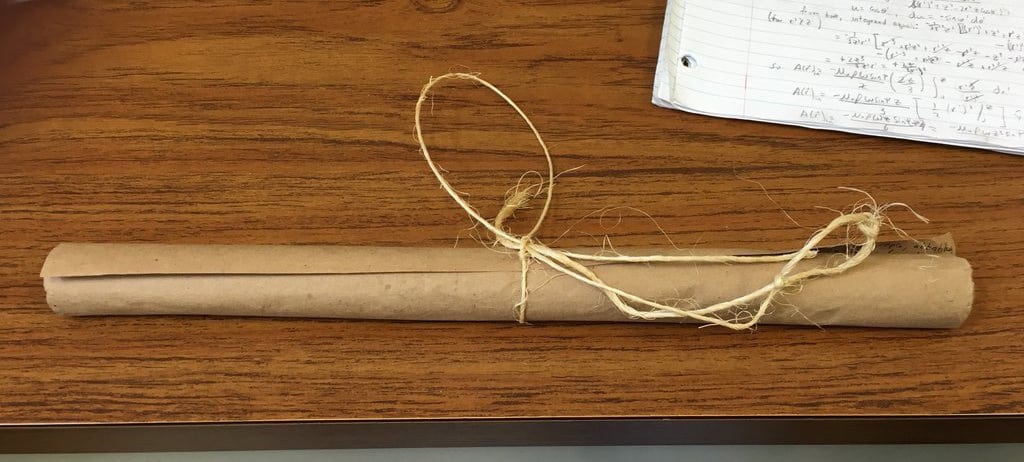
The scroll created by student Joseph Kamberos for his quantum mechanics homework

When Joseph Kamberos, a student at Loyola University Chicago, began writing his quantum mechanics assignments on extra-long paper to carry out the long derivations, he was met with a swift rebuke. A marker asked the undergraduate to use regular-sized paper instead, adding that he wasn’t “writing the Magna Carta”. The student hit back and for his next assignment “pulled an all-nighter with a few beers” to create a handmade scroll of the Magna Carta, written in Latin and tied with twine, with his quantum-mechanics equations at the bottom. Kamberos received top marks for the work, with the marker adding a note at the bottom saying “Glory and honor onto you.” The department is even thinking about framing the scroll and hanging it up in the physics study room. “Everyone had a good laugh about it,” he told physicsworld.com. “All the teachers loved it.”

A false dawn

AuroraWatch UK – run by a group of researchers at the University of Lancaster – sent out a “red alert” to its e-mail subscribers in August advising them of a huge surge in geomagnetic activity that could point to a big show of the northern lights. The group usually takes measurements from a set of magnetometers dotted around the UK, with the main one located in Aberdeen. But with that sensor out of action at the time, AuroraWatch UK turned to a sensor at the University of Lancaster as its lead. Turns out, the apparent huge spike in activity had nothing to do with space but was actually caused by the operation of a groundskeeper on a sit-on lawnmower who ventured too close to the sensor. “We’ll work with the facilities team to try and avoid an incident such as this occurring in the future,” the team wrote.

The bets are off

We don’t know if CERN will ever have to face up to the “nightmare scenario” of the LHC failing to spot any particles beyond the Standard Model. But the particle no-show is already a reality for some physicists who placed bets on a potential discovery. At a conference in Copenhagen in August, physicist Nima Arkani-Hamed presented a 1000 Danish krone (£110) bottle of cognac to Poul Damgaard, director of the Niels Bohr International Academy. The bet was set up in 2000 and since then 20 physicists, including Arkani-Hamed, signed it claiming that supersymmetry would be experimentally detected within 10 years, while 24 physicists disagreed. Each of the 20 losers of the bet now have to buy a bottle of “good cognac at a price not less than $100” to be shared among the 24 winners. Another to pay out is the Nobel laureate Frank Wilczek, who in 2009 bet physicist Garrett Lisi $1000 that superparticles will be discovered at the LHC by July 2015 (extended a year due to delays at the collider). Lisi told physicsworld.com that the money will go towards funding the Pacific Science Institute – a small science institute for researchers on the Hawaiian island of Maui. Lisi says that he hasn’t received the cash yet. “But I’m not worried – Wilczek is a great guy.”

A monument to peer review

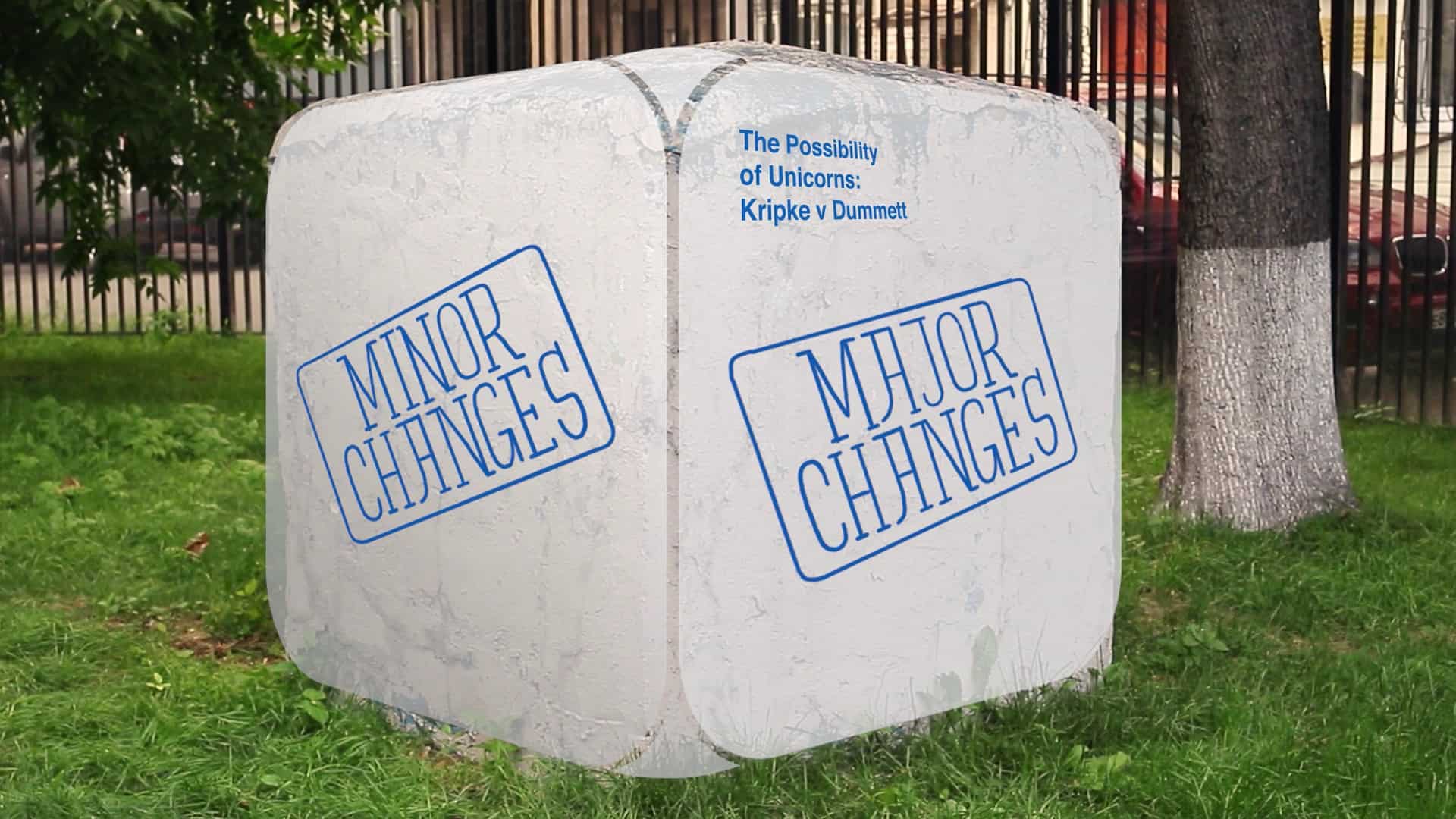
Igor Chirikov's momument celebrating peer review

To celebrate those hard-working people who peer review research papers, Russian sociologist Igor Chirikov from the National Research University Higher School of Economics in Moscow had an inspired idea: to build the world’s first monument to their efforts. He raised $2521 via 123 backers on Kickstarter for a sculptor to turn an “ugly” block of concrete outside the university’s Institute of Education into a die. Not any ordinary numbered die, but one that reads “accept”, “minor changes”, “major changes”, “revise and resubmit” and “reject” on its five visible sides. Chirikov, who is also based at the Center for Studies in Higher Education at the University of California, Berkeley, US, told physicsworld.com that he wanted to acknowledge the role of peer reviewers and use it to “have a good laugh” about the peer-review process. “I hoped that academics would like the idea but was a bit surprised how fast we’ve reached the fundraising goal,” says Chirikov. “It means that there are common challenges in [the] academic profession across the world and disciplines. It also means that scholars have a good sense of humour.”

You can be sure that next year will throw up its fair share of quirky stories from the world of physics. See you in 2017!

Holiday word challenge

To keep your brain cells active over the festive period, we have put together a word puzzle based wholly on articles published in Physics World this year. We have two copies of Astronomy Photographer of the Year: Collection 5 to give away as prizes. Download a PDF of the puzzle here.

Astronomy Photographer of the YearFor the fifth year in a row, the Royal Observatory Greenwich has produced a beautiful hardback book showcasing the winners of the Astronomy Photographer of the Year competition.

See “Galaxies and auroras and planets, oh my!” for our review of Astronomy Photographer of the Year: Collection 5 and a sneak preview of the photos.

This year, its publisher Collins Astronomy has kindly offered us two copies to give away to readers. You just need to complete the festive puzzle in this PDF to be in with a chance of winning. Terms and conditions apply.

How to enter

To enter the competition, download the PDF, complete the puzzle and send it to us by 16 January 2017.

Please include your full name and contact details with your entry.

Send your completed puzzle by post to:
Physics World
Temple Circus
Temple Way
Bristol
BS1 6HG
UK

Alternatively, you can fill in the PDF electronically, or scan your completed puzzle, and e-mail it to pwld@iop.org.


Terms and conditions

These terms and conditions apply to all entries to the Physics World Crossword Competition – December 2016, however submitted. Promoter is IOP Publishing Limited (“IOP”) of Temple Circus, Temple Way, Bristol, UK, BS1 6HG. No purchase necessary. All entries must be received by the closing date of 16 January 2017. The winners will be drawn at random from all the entrants who successfully complete the crossword. The draw will take place within 30 days of the closing date. If IOP cannot contact any winner within 90 days of the closing date, it shall have the right to declare their entry void and to draw a new winner. IOP’s decision is final and no correspondence will be entered into. Only one entry per person and entrants must be over 16 and have the right to enter. IOP can change or withdraw these terms without notice and can refuse any entry. No entries allowed from IOP employees or anyone connected with the competition, including their immediate families. Only two prizes. As not all countries in the world accept the legality of competitions, it is the sole responsibility of each non United Kingdom based entrant to ensure that he or she is not breaching any laws of their country of residence by submitting an entry. IOP will not be held responsible for any entrant entering any competitions unlawfully. If in any doubt, the entrant should check with the relevant authorities in his or her country. Delivery costs paid by IOP but any other costs winner’s responsibility. IOP can use winner’s name, location and affiliation for promotion. Personal data will be processed in accordance with Data Protection Act 1998. Terms governed by English law.

The world of physics in 2017

“This election is said to have been about rejecting the political establishment. We cannot let that mean rejecting established facts”. So said Rush Holt, chief executive of the American Association for the Advancement of Science, in a powerful recent editorial in its journal Science. Holt – a physicist who served for 16 years as a Democrat in the House of Representatives – has been one of many voices to speak up for the value and integrity of science following the election of Donald Trump as US president.

But as a new year dawns, a worrying time lies ahead for the US physics community as Trump eases climate-change sceptics into positions of power, dismantles environmental rules laid carefully in place by the Obama administration and quizzes Department of Energy officials about their role in climate-change negotiations. It’s not just that funding for science is a low Trump priority; more that he’s likely to ignore scientific evidence in informing policy decisions.

The signs do not look good. Trump has already nominated Scott Pruitt – attorney general of Oklahoma who asserts that scientists disagree about global warming – to head the Environmental Protection Agency, triggering fears that Pruitt may favour the fortunes of the fossil-fuel industry at the expense of the long-term health of the planet. Former Texas governor Rick Perry, meanwhile, has been nominated to replace physicist Ernest Moniz to head the Department of Energy – an organization he once said should be “eliminated”.

Reports also suggest that Republican Representative and climate-change sceptic Thomas Massie is the frontrunner for the key position of presidential science adviser. That role has been held for the last eight years throughout the Obama administration by respected physicist John Holdren. He has been widely admired by the scientific community for issuing advice to government officials on how to remove political interference from science policy-making.

Worryingly, one Trump adviser – James Carafano of the Heritage Foundation – has even called for the axing of the Office of Science and Technology Policy, which is headed by the presidential science adviser. Carafano’s reasoning is that Trump has other sources of scientific advice available to him, though who they are remains unclear. Indeed, the transition team has virtually no-one familiar to the scientific community to whom scientists can relate their concerns and advice.

It will fall to US scientific societies, led by the AAAS and the American Physical Society, to form contacts with the Trump team and ensure science remains on an even keel. But they will have work on their hands and uncertain times lie ahead.

Bumpy times ahead

Map of European showing the flags of the European Union and the UK

Over in Europe, life will not be straightforward for physicists either. Britain’s vote to leave the EU will threaten EU funding for UK physicists and place question marks over the status of EU researchers in the UK – as well as of British physicists working at EU institutions. It’s vital, therefore, that the UK physics community pushes for the UK to remain a full part of EU research programmes – coupled with free movement of individuals – and receives support in that endeavour from European colleagues.

Physics is an international discipline that works best when people can move easily between nations, spreading their experience and skills. However, the rise of anti-immigration sentiment across the continent, typified by the Brexit vote, is likely to lead to further uncertainty for scientists too, especially with national elections due next year in France, Germany and the Netherlands. All eyes will be on whether the physicist-turned-politician Angela Merkel, who has been a solid supporter of science over the last 12 years, can stay on for a fourth term as German chancellor.

The coming year will be a bumpy ride too in South America. Researchers in Argentina have been protesting strongly over recent budget cuts by president Mauricio Macri. Particularly badly hit will be the National Scientific and Technical Research Council, which will see the number of new researchers supported drop to 385 next year, compared to 900 last year. In Brazil, meanwhile, its plans to become an associate member of the CERN particle-physics lab could be scuppered if its €1.1m debt to the Geneva facility doesn’t get paid.

One country where we can be sure physics can go from strength to strength is China, which already publishes about a fifth of all research papers in the world and is building a host of top facilities. Apart from putting the finishing touches to its massive new China Spallation Neutron Source, 2017 will see the country send its first sample-return mission to the Moon. China is also about to launch a satellite to monitor how much greenhouse gas the country is creating. TanSat (Tan means “carbon” in Chinese) is designed to collect more data than existing, similar satellites (GOSAT of Japan and OCO of the US). Keep an eye out for Physics World, which will produce another special report – our third to date – on China next July.

Extreme events

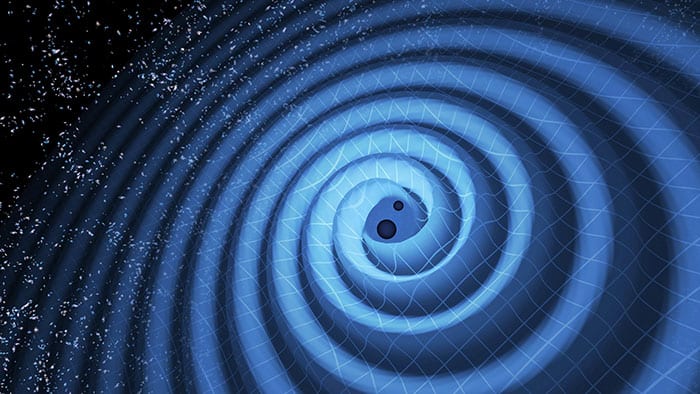
Artistic impression of two black holes merging with gravitational waves rippling out

In astrophysics and cosmology, we’re likely to see more exciting findings from the LIGO collaboration, which not only bagged the 2016 Physics World breakthrough of the year for the first ever detection of gravitational waves but also recently switched on its twin detectors on for its second science run. The Livingston detector now has a 25% improvement in sensitivity, allowing it to spot black-hole mergers at greater distances. The sensitivity of the Hanford detector is similar to the first run, but the power of its laser has been ratcheted up and the detector is more stable, increasing the time the detector is operational.

Over at CERN, particle physicists at the Large Hadron Collider (LHC) are celebrating a successful 2016, having observed more than 6.5 × 1015 proton–proton collisions at an energy of 13 TeV – greater than in the previous three runs combined. They also achieved a peak luminosity that was regularly 30% above target and recently completed a series of collisions between protons and lead ions. The LHC is currently closed for its annual winter maintenance but will start colliding protons again in March. Whether we find anything beyond the Standard Model of particle physics remains to be seen.

In other developments, the Europe’s Extreme Light Infrastructure – a big-science project based at four sites across the continent – will complete its nuclear-physics facility in Romania, boasting what will be the world’s most powerful laser. The European Space Agency plans to launch its CHEOPS planet-hunting satellite in December. Meanwhile, the spacecraft Cassini-Huygens, which has been orbiting Saturn since 2004, will be retired by being plunged into the planet’s atmosphere on 15 September. Let’s hope there’s no wider symbolism to that particular event.

Trump eclipsed?

Photo of a solar eclipse

There is, though, one event in 2017 that will bring joy to physicists in the US – the total solar eclipse that will take place on Monday 21 August. Visible across a corridor from Oregon in the west, via Kansas and Nashville, to South Carolina in the east, this astronomical wonder has been dubbed the “Great American Eclipse” as the path of totality occurs over just one country (the US). The eclipse will also be the first to cross mainland US since 1979, and a string of events across the country are planned. Surely the wonders of the eclipse will be the perfect way to tell Trump just why science is so vital.

  • Happy with our predictions? Annoyed at something we missed? Tell us what you think by commenting below

Hungry reindeer could mitigate climate change, talking about quantum computing and our breakthroughs of the year

It’s that time of year when everyone is looking for stories with a Christmassy angle. My colleagues here at IOP Publishing are no exception and they have just put out a press release about some reindeer-related physics. Apparently, hungry reindeer in northern Norway are increasing the albedo of their feeding grounds by eating lots of plants. Albedo is a measure of how much sunlight is reflected back from the surface of the Earth – rather than being absorbed and dissipated as heat – and plays an important role in climate. A worry in the far north is that global warming will lead to greater plant cover – which will reduce albedo and lead to even more warming. Now, it looks like reindeer could help break this cycle. “The effect reindeer grazing can have on albedo and energy balances is potentially large enough to be regionally important,” says Mariska te Beest, from Umeå University in Sweden. “It also points towards herbivore management being a possible tool to combat future warming. Most of the arctic tundra is grazed by either domesticated or wild reindeer, so this is an important finding.”

Here is a great gift idea for a budding young physicist. The quantum computing expert Scott Aaronson has teamed up with the artist Zach Weinersmith to create a delightful comic strip about quantum computing. Inspired by the dreaded “sex talk” that parents give to their children, the comic follows a mother as she shatters several myths about quantum computing that her precocious son has picked up from his peers and the popular media. The strip is called “The talk” and as someone who struggles on a regular basis to understand quantum computing, I found it very useful – and entertaining.

On Monday I had the great pleasure of appearing on the radio programme Love and Science, hosted by the incomparable Malcolm Love. The show is an hour long and I was the only guest, so it was really hard work – but also very enjoyable. We chatted about the Physics World top 10 breakthroughs of 2016 and I got a chance to explain why we chose several of the winners. Love’s programme is broadcast on BCFM here in Bristol and you can listen to Monday’s show by clicking here and then choosing “15:00 – 19/12/2016” under recent broadcasts.

We will be taking a well-earned Christmas break here at Physics World, but we still have a few gems going out over the next week or so. Tune in on 26 December, when you can try to solve our holiday word challenge that is based on physics events that happened in 2016. Then on New Year’s Eve you can amuse your friends with a round-up of  humorous stories that have appeared in Physics World.

Normal service will resume on 3 January. If you are taking holidays over the next few weeks, I hope you get a chance to relax and look back over your achievements of 2016 – as well as look forward to what the next year will bring.

Flash Physics: Diamond-defect FM-radio tunes in, Slovenia joins CERN, first plasma for WEST tokamak

Tiny radio is based on diamond defects

A radio receiver based on atomic-scale defects in diamond has been unveiled by physicists at Harvard University in the US and Element Six in the UK. The device uses nitrogen vacancies (NVs) in which two adjacent carbon atoms in a diamond crystal are replaced by a nitrogen atom and an empty lattice site. NVs are useful because they have an electronic spin that is extremely well isolated from the surrounding lattice. An NV will also emit fluorescent light when excited by a laser – and together these properties make NVs very attractive to physicists trying to build quantum computers. To create their receiver, Harvard’s Marko Loncar and colleagues use a green laser to “pump” a collection of NVs into an excited energy state. When a pumped NV is subjected to radio waves, it emits red light, which is then captured by a photodetector and converted into an electrical signal. The system was able to receive a frequency-modulated (FM) signal on a carrier frequency of 2.8 GHz. The receiver could be tuned over a frequency range of 300 MHz by applying an external magnetic field to the NV spins. The team says that “high-quality” audio signals at frequencies up to 91 kHz can be received by its radio. While the team used billions of NVs to create its device, a receiver based on just one NV would emit just one photon at a time – and could be used to convert quantum information from radio frequencies to visible light. Because diamond is a very tough material, Loncar says: “This radio would be able to operate in space, in harsh environments and even the human body, as diamonds are biocompatible.” The receiver is described in Physical Review Applied.

Slovenia moves towards full membership of CERN

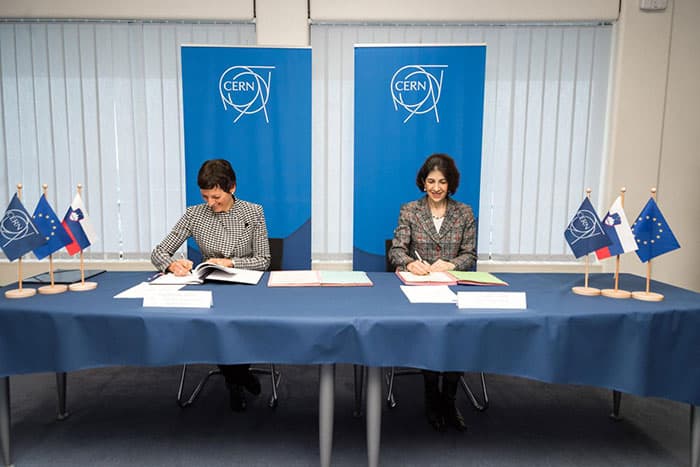
Photograph of Slovenia's Maja Makovec Brencic and CERN's Fabiola Gianotti

CERN’s council has voted unanimously to admit Slovenia as an “associate member in the pre-stage to full membership” of the particle-physics lab in Geneva. The move means that the Balkan nation will be able to apply for full membership of CERN in five years. Slovenia applied to be a member of CERN in 2009, and the nation’s physicists have been contributing to CERN long before the country became an independent state in 1991. Slovenian physicists currently work on the ATLAS experiment on the Large Hadron Collider (LHC) and the country hosts a tier-2 data centre for processing data from the LHC. “Slovenia’s membership in CERN will on the one hand facilitate, strengthen and broaden participation and activities of Slovenian scientists (especially in the field of experimental physics), on the other it will bring full access of Slovenian industry to CERN orders, which will help to break through in demanding markets with products with a high degree of embedded knowledge,” says Maja Makovec Brenčič, Slovenian minister of education, science and sport.

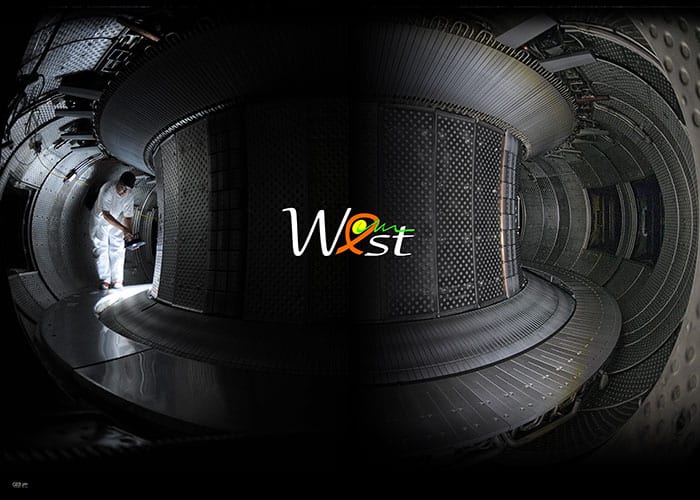
First plasma for WEST tokamak in France

Photograph of the interior of the WEST tokamak

The WEST tokamak in Cadarache, France, has confined its first plasma. The facility is a refurbishment of the Tore Supra tokamak, and is designed to test “divertor” technology that is being created for the ITER fusion reactor – which is currently being built at Cadarache. The divertor will sit on the floor of the ITER vacuum vessel and will remove the helium “ash” that is created when hydrogen nuclei fuse in the reactor. The divertor must be able to withstand high fluxes of both heat and particles from ITER’s plasma, which will be heated to several million degrees. The plasma-facing portion of the divertor will be made from thousands of tungsten tiles and WEST will test the performance of different divertor designs under plasma operating conditions. Scientists will also be able to quantify how the divertor will age and be damaged in the harsh plasma environment. Scheduled for completion in 2025, ITER is a collaboration involving China, the EU, India, Japan, Russia, South Korea and the US that aims to demonstrate that nuclear fusion can generate useful energy.


  • You can find all our daily Flash Physics posts in the website’s news section, as well as on Twitter and Facebook using #FlashPhysics.

Audio and visual highlights of 2016

Transforming light

In January, we published the final instalment from our “Light in Our Lives” series, which we commissioned as an official media partner with the Internal Year of Light (IYL 2015). Each film in the series told a local story involving light and its applications and how they can affect people’s lives. Transforming Light is a film about the 2015 Day of the Dead celebrations in Mexico City and how a multimedia lightshow blended old traditions with new technologies to spectacular effect. The film was produced by Jorge Benjamín Ruiz Gutiérrez and his team of film-makers at the National Autonomous University of Mexico (UNAM).

Faces of physics

Following on from the Light in Our Lives series, we decided to commission another film series for 2016 – this time related to diversity within physics. “Faces of Physics” reveals the working lives of people involved in physics, focusing on the day-to-day activities as much as the applications of their work. Inspiring the Next Generation (above) offers a profile of Ghada Nehmeh, a physics teacher who has brought about innovative changes at the Bronx High School of Science in New York. By creating an interactive environment in her classroom, Nehmeh has significantly boosted the number of female students taking Advanced Placement (AP) physics.

The other films published in this series to date are: Working in Green Energy about renewable energy engineer Samantha Carter; and A HAWC Eye on the Sky about Adiv González Muñoz – an astronomer and timelapse photographer at High-Altitude Water Cherenkov (HAWC) gamma-ray observatory in Mexico. For more stories and analysis about diversity issues in physics take a look at the March special issue of Physics World, which is introduced in this blog post by Physics World editor Matin Durrani.

Bringing Native American voices back to life

Bringing Native American voices back to life

I mentioned at the start of this article that physics is a diverse subject spanning a range of areas. A good example of this was the July episode of the Physics World podcast, which brought together the unlikely mix of particle physics, Native American storytelling and the evolution of audio recording media. “Bringing Native American voices back to life” profiled a project to restore early 20th century recordings of Native Americans performing songs and stories. The method, based on imaging technologies at particle accelerators, has been developed by Carl Haber of the Lawrence Berkeley National Laboratory (LBNL). Listen to the podcast to hear rare recordings of myths told by Ishi – the last surviving member of the Yahi people of the central Sierra Nevada mountain range in northern California.

Still not even wrong

Still not even wrong

Theoretical physics can seem abstract at times and about as far removed from everyday life as one could imagine. But it is also an intellectual pursuit like any other, carried out by people with personalities, opinions and beliefs – people who don’t always agree with each other. The sociological dimensions of theoretical physics were particularly apparent in the so-called “string wars” – a vitriolic debate played out in the 2000s about the scientific validity of string theory. A key player in the string wars was mathematical physicist Peter Woit whose 2006 book Not Even Wrong took string theory’s supposed inadequacies to task. In the September podcast, Peter Woit is in conversation with Physics World reporter Tushna Commissariat 10 years since the book’s release. Woit speaks about controversy sparked by his book and what he thinks needs to happen now in mathematical physics to propel it into the future.

Doing physics by ear

Doing physics by ear

If the complex mathematics of physics is hard to get your head around sometimes, then imagine trying to do it without the ability to see the equations. That is the reality for Aqil Sajjad, a particle physicist at Harvard University in the US, who lost his sight to retina detachments in both eyes when he was a teenager in Pakistan. Sajjad tells his story in the November episode of the Physics World podcast produced by journalist Lucina Melesio. You will hear how Sajjad accesses maths and science concepts using speech-to-text software. When not pondering the nature of the universe, Sajjad is also a keen baseball player and often travels to other US cities with his team the Boston Renegades. Though – as Sajjad explains in the podcast – at heart he prefers cricket.

Physics on your phone

Finally, in this collection of stories celebrating the social aspects of physics, we’d like to draw your attention to the various short videos we’ve been producing for our social media channels. With the proliferation of smart phones and other mobile devices, we know that your viewing habits are changing and that you want to get your physics stories on the go. So we have been producing a number of short videos for our Facebook page, Twitter feed and YouTube channel. They can be enjoyed with or without sound. For instance, the video above provides a guide to NASA’s Juno mission, which arrived at Jupiter in July where it is now investigating this planet from orbit. One of the major scientific goals of the mission is to better understand the origins of this giant planet, providing key information about the origins of the entire Solar System.

Watch out for much more multimedia – including social videos – in 2017.

Franken-physics

Image of a depiction of the monster made by Dr Frankenstein

“How,” Mary Godwin asked herself, did I come up with “so very hideous an idea?”

In the summer of 1816, Mary and her lover (soon to be husband) Percy Shelley met Lord Byron in Switzerland. It rained a lot, so rather than hiking as planned they spent time indoors reading ghost stories. At one point Byron suggested they each write their own. At first, Mary had writer’s block, but then recalled a conversation between Percy and Byron about scientific experiments in which researchers caused parts of animals to flinch by applying electricity, which then made them speculate about the principle of life. That night Mary had a dream in which a technician sent a spark into an assemblage of body parts. The thing began to move, and then opened its eyes.

The next day Mary told her companions she had an idea.

Out of control

That’s the story Mary Shelley told of the origin of Frankenstein in her introduction to its second edition (1831). Thanks to two centuries of theatre and film adaptations, most people know the basic plot, which centres on an out-of-control monster built by a well-meaning but careless scientist named Victor Frankenstein. The story is now embedded in our language. The prefix “Franken-”, as in “Frankenfoods” and “Frankenfish”, is often used to create a charged word referring to a terrible thing that should not have been created because it is an unnatural product of rampant consumerism. Frankenwords are catchy, wave a red flag, provoke fear, and seem to endow those who use them with unclouded moral judgement.

But the story that unfolds in Shelley’s novel is not so simple.

In 2014 two humanities scholars at the University of New Mexico published an article in Science and Engineering Ethics (21 1139) that envisioned Victor Frankenstein submitting his research to an institutional review board (IRB), or panel of the sort now mandatory in the US for research involving human or animal subjects. “Had Frankenstein had to submit an IRB proposal,” wrote the authors, “tragedy may have been averted, for he would have been compelled to consider the consequences of his experiment and acknowledge, if not fulfil, his concomitant responsibilities to the creature that he abandoned and left to fend for itself.”

The article cleverly exhibits Frankenstein’s potential for teaching contemporary research ethics. At the same time, though, the article exemplifies the familiar but erroneous way in which the story is understood: as a tale about the creator and the creation. To determine the ethics of the experiment, the authors looked into possible carelessness or ill intent on the part of Frankenstein, and the potential for the creature to do harm.

Numerous adaptations of the story reflect that version too. In the 1931 film Frankenstein, starring Boris Karloff, the creator unwittingly installs an abnormal brain in the creature. The creature, a property destroyer and serial killer, is evil from the start.

Other interpretations, though, blame Victor Frankenstein, the monster’s creator. At one point in Shelley’s story, he calls the monster “my own spirit let loose”. In these psychological interpretations, Victor’s act is motivated by his internal demons, such as the trauma of losing his mother before he leaves for university. “Knowledge is the awareness that Frankenstein is not the monster,” runs a joke. “Wisdom is the awareness that Frankenstein is the monster.”

Certain other interpretations blame Victor’s ambition: to create life in the lab without thinking of the rest of world. Such ecological interpretations, behind “Frankenfood” language, find the monster to symbolize the breakdown of responsible human stewardship of nature.

In a 2011 article in the Breakthrough Journal entitled “Love your monsters: why we must care for our technologies as we do our children”, the French philosopher Bruno Latour proposed that the moral of Frankenstein is that technologies should not be unleashed without human guidance. The scientists who discover things like nuclear fission, for instance, are responsible for its applications. This is a parental interpretation: constantly care for your creations or you’re a bad parent!

But Shelley’s story, read attentively, wrecks such interpretations. She leaves no indication the beast has anything but a normal brain. The creature himself gives a persuasive reason for his behaviour: “I was benevolent and good; misery [his rejection by humans] made me a fiend.” Shelley’s story indeed carries a shockingly contemporary message: the creature is the extreme refugee, unable to assimilate into the country where he’s thrown without his consent, whose inhabitants not only reject but vilify him.

In Shelley’s story, too, Victor’s ambitions are not outlandish but shared by the professors who taught him science in the first place, who seek to “penetrate into the recesses of nature, and show how she works in her hiding places”. Like them, he is thrilled, saying: “None but those who have experienced them can conceive of the enticements of science.”

Nor was the science implausible. “Mary Shelley based Victor Frankenstein’s attempt to create a new species from dead organic matter through the use of chemistry and electricity on the most advanced scientific research of the early 19th century,” writes Shelley’s biographer Anne K Mellor. “Her vision of the isolated scientist discovering the secret of life is no mere fantasy but a plausible prediction of what science might accomplish.”

The critical point

The evil that erupts in Shelley’s story therefore cannot be blamed entirely on electricity, careless scientists, or an out-of-control creation, but also on the climate in which Victor conducts his research. It therefore recalls another contemporary predicament: that of bank employees whose managers instruct them to handle their accounts ethically but who must work in a banking climate with overwhelming incentives not to do so. For physicists and other scientists, Shelley’s story rings an alarm bell, not because of some breakdown in the system – bad behaviour, brains, or breeding – but because nothing broke down.

Now that’s a hideous idea.

Antiatoms yield their first optical spectrum

The first measurement of an atomic transition in an antiatom has been made by researchers working in the ALPHA collaboration at CERN in Geneva. The team measured the frequency of a specific transition in antihydrogen, which consists of a positron (an antielectron) bound to an antiproton. Although the result is no different from that measured in normal hydrogen, the group says that more sensitive versions of its experiment might one day reveal a new matter–antimatter asymmetry in nature.

The transition in question is between the 1s (ground) and 2s (excited) states of antihydrogen. This process could be sensitive to a violation of what is known as charge, parity and time reversal (CPT) symmetry. This states that the behaviour of any physical system remains unaltered under the combined reversal of charge, spatial coordinates and time. Although CPT symmetry has solid theoretical support, experimentalists are nevertheless keen to put it to the test. Its violation, for example, might explain why the universe today appears to consist almost entirely of matter – even though equal amounts of matter and antimatter were thought to have been produced during the Big Bang. "Other symmetries that were thought to be inviolable have been broken before," notes ALPHA spokesperson, Jeffrey Hangst of Aarhus University in Denmark.

ALPHA, like a number of other antimatter experiments at CERN, takes its antiprotons from the lab's Antiproton Decelerator, and then slows down and cools the particles before combining them with chilled positrons from a sodium-22 source. The resulting sub-kelvin atoms of antihydrogen are then trapped – thanks to their tiny magnetic dipole moments – in a potential well created by the careful overlap of several magnetic fields.

Antiatoms drop out

To carry out their spectroscopic measurements, Hangst and colleagues fire a laser beam into the magnetic trap and let it bounce numerous times between two mirrors. The laser's frequency is tuned to roughly half that of the 1s to 2s transition in normal hydrogen. This is because the transition involves the absorption of two photons, and its precise frequency is determined to some extent by the presence of the trapping magnetism. Some of the antiatoms should then be excited and drop out of the trap as a result of one of two mechanisms – either by absorption of a third photon to become ionized, or by having their spin flipped. The researchers then repeat the process with the laser tuned to different frequencies, as well as with no laser at all.

Carrying out the whole procedure 11 times, the group found that on average just under 60% of antiatoms left the trap with the laser tuned to the 1s-2s transition, while no antiatoms (within the bounds of statistical error) dropped out when the laser was tuned to a different frequency or when it was switched off. The researchers say that the antiatoms underwent the transition at the expected frequency and therefore behaved no differently from normal hydrogen.

Although the result does nothing to threaten CPT symmetry, Hangst argues that it testifies to the enormous technical progress that has been made in the field of antiatom research – first in producing atoms of antihydrogen, then in cooling them, and then in trapping them. In particular, his group has recently made progress in two areas. They have trapped significant numbers of antiatoms at the same time – up from about one to around 14 within the past year. They have also created a resonant cavity around the magnetic trap in order to boost the intensity of the laser light to the point where it could interact with the very few antiatoms present.

Opening salvo

ALPHA's achievement has earned praise from other antimatter groups at CERN. Ryugo Hayano of the University of Tokyo and spokesperson of the ASACUSA experiment, describes the research as "a very important milestone", while AEgIS spokesperson Michael Doser says it constitutes the "opening salvo in precision spectroscopic measurements of antihydrogen".

All, however, agree that it will not be easy boosting the precision achieved in the latest work by the roughly five orders of magnitude needed to match the sensitivity already obtained in spectroscopic measurements of ordinary hydrogen. Doser says there will be "many challenges" in doing this, including how to prepare antiatoms at millikelvin temperatures, in order that more of them can be trapped magnetically, and how to better reduce or disentangle the effect of the magnetic fields on the energy levels of the antiatoms. But he adds that ALPHA has been "quite effective at coming up with solutions" to all of the technical problems they have encountered to date.

Hangst says that the collaboration's next step will be to plot the shape of the 1s-2s resonance when the Antiproton Decelerator switches on again next spring. So far he and his colleagues have just made measurements on one side of it.

Pain and delight

Indeed, Gerald Gabrielse of Harvard University in the US, who is spokesperson of the ATRAP experiment, says: "I look forward to the day when either ALPHA or ATRAP eventually traces out a complete 1s-2s resonance lineshape at a significant precision". He adds that his group actually started working towards antihydrogen spectroscopy ten years earlier than did ATHENA (the predecessor to ALPHA), saying that his "parental delight" at the latest work is "only tempered by the pain that I feel in ATRAP not getting the first suggestive result".

However, according to Walter Oelert of Mainz University in Germany, who led the team that produced the first antiatoms, the contest for higher precision remains very much on. "It is by no means clear which collaboration will reach the 10-15 target first," he says, "although ALPHA can celebrate the first step."

The research is reported in Nature.

Copyright © 2026 by IOP Publishing Ltd and individual contributors