Levitating diamond vacancies hold their spin

Physicists in France have levitated tiny diamonds and found that doing so has no effect on their spin properties. The researchers came to this conclusion after carrying out electron spin resonance (ESR) and fluorescence measurements on nitrogen vacancy (NV) centres, which occur whenever two neighbouring carbon atoms in diamond are replaced by a nitrogen atom and an empty lattice site. The technique could be used to create new optomechanical technologies such as extremely sensitive rotation sensors.

The reason why physicists are interested in levitating tiny diamonds containing NV centres is that tiny movements of such objects in a magnetic field could be measured by detecting changes in how it absorbs and emits light. One type of NV, known as NV, is particularly interesting for researchers making sensors and other devices because its spin state can be determined easily using light. Unfortunately, conventional levitation techniques that use laser light make it hard to measure the optical properties of the NV centres.

Electrically charged

Now, however, Gabriel Hétet and colleagues at the Laboratoire Pierre Aigrain in Paris have developed a way of using an ion trap to levitate tiny diamonds without the need for laser light. They used a Paul-Straubel trap, which has a voltage oscillating at a radio frequency to trap charged particles. The trap was loaded by dipping a copper wire into a microcrystalline diamond powder and placing it in the trap, where electrically charged, micron-sized diamond particles jump off the wire and become trapped.

To show that the NV spins in the diamonds are not affected by trapping, the researchers first applied a microwave signal to the trapped particles, which split the energy levels associated with different spin states. They then applied a static magnetic field and confirmed that a further splitting of spin states had occurred. In both cases the spin states did not seem to be affected by being trapped.

Optical fluorescence spectra of the levitated diamonds were also similar to the spectra of diamonds on a glass surface, leading the researchers to conclude that the optical properties of the NV centres are not affected by levitation.

No rotation

However, the team did find that diamond particles smaller than about 2 μm rotate in the presence of the laser light used to make the fluorescence measurements. This, they calculate, is caused by the radiation pressure of the laser beam on the particle. However, for diamonds larger than 2 μm and relatively low laser powers, the diamonds did not rotate in the few minutes it takes to make the ESR measurement. Achieving this angular stability, they say, is an important step towards creating spin-controlled levitating particles.

Writing in the New Journal of Physics, Hétet and colleagues say that their levitated diamonds could be used in a number of applications including magnetometry, the study of quantum geometric phases and multi-axis rotational sensors.

Flash Physics: Bacteria wave defeats barrier, stereotypes affect girls choosing physics, EPS prize winners

Bacteria join forces to defeat physical barrier

E. coli bacteria have joined forces to create collective waves that thwart an attempt by physicists to constrain the bacteria’s motion. Robert Austin and colleagues at Princeton University and the University of Edinburgh placed the micro-organisms in the middle of a liquid-and-nutrient-filled structure that comprises four concentric rings made of tiny funnel-like objects. Bacteria placed in the centre of this corral-like structure can easily migrate outwards through the rings, but find it very difficult to move inwards. About 2 h after the centre is inoculated, the bacteria will have migrated to the periphery of the corral where they multiply in number. Then, after a few more hours, the bacteria launch a collective action in the form of a wave that encircles the corral while propagating inwards towards the narrow ends of the funnels. This results in significant numbers of bacteria flowing the “wrong way” towards the centre of the corral. While the team has done a mathematical analysis that provides some insights into the process, it says that further studies focusing on the behaviour of individual bacteria are required before the phenomenon can be better understood. The study is described in New Journal of Physics.

School-wide stereotyping stops girls choosing physics

Cover of the report Improving Gender Balance: Reflections on the impact of interventions in schools

The number of girls in the UK studying physics at AS- and A-level can be increased by tackling gender bias and stereotyping at a school-wide level, according to the latest report by the Institute of Physics (IOP). For more than 30 years, girls have made up only 20% of students taking physics past the age of 16, despite nationwide efforts to improve the balance. The IOP, which publishes Physics World, runs multiple diversity and equality programmes for all stages of education. Previous projects have found a striking difference between physics uptake in mixed and single-sex schools, and that gender imbalance in one subject is usually mirrored across the whole school. Both factors indicate that school-wide gender stereotyping is a problem. Therefore, the IOP launched the project Improving Gender Balance (IGB) in 2014 as part of the Stimulating Physics Network, funded by the Department of Education. Alongside a pilot project funded by the Drayson Foundation, IGB looks at factors affecting girls across the entire school experience. Over the past two years, the schemes have worked with 20 schools and have trialled interventions aimed to improve the confidence and resilience of girls, improve their experience in the physics classroom, and ensure that students and staff understand and are able to address unconscious bias and gender stereotyping. The report details the methods and their impact, identifying that school-wide interventions successfully challenged gender stereotypes in the participating schools, with the number of girls taking AS-level physics more than trebling. The IGB’s recommendations include appointing a gender champion among senior staff, training teachers to understand unconscious bias, and consider project-led science groups.

European Physical Society names accelerator prize winners

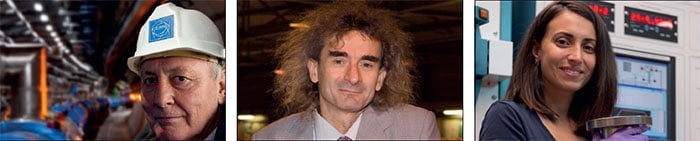
Photographs of Lyn Evans, Pantaleo Raimondi and Anna Grassellino

Lyn Evans, Anna Grassellino and Pantaleo Raimondi are winners of the 2017 European Physical Society Accelerator Group prizes. CERN’s Lyn Evans takes home the Rolf Wideroe Prize for outstanding work in the accelerator field “for his many major professional accomplishments in the field of accelerator design, construction and operation”. His work includes the design and construction of the LHC, which led to the discovery of the Higgs Boson in 2012. Anna Grassellino has bagged the Frank Sacherer Prize for an early career scientist who has made a recent significant, original contribution to the accelerator field. Grassellino, who is based at Fermilab in the US, is honoured “for her major impact on the field of superconducting RF technology”. The Gersh Budker prize for a recent, significant contribution to the accelerator field has been awarded to Pantaleo Raimondi of the European Synchrotron Radiation Facility (ESRF) in France. Raimondi won for his design of the hybrid multi-bend achromat lattice, which will replace the current ESRF storage-ring magnets in 2019.

  • You can find all our daily Flash Physics posts in the website’s news section, as well as on Twitter and Facebook using #FlashPhysics. Tune in to physicsworld.com later today to read today’s extensive news story on diamond qubits.

Honey bees navigate using magnetic abdomens

Honey bees appear to sense magnetic fields using a magnetic structure in their abdomens, according to a team of physicists and biologists in Canada. The researchers came to this conclusion by carrying out a series of physics and behavioural experiments on the insects, which showed that this sensory ability can be disrupted using a strong permanent magnet.

Bees are not the only animals that seem to navigate using magnetic fields, with some rodents, birds, fishes, reptiles, bacteria and insects appearing to have this ability too. What is not well understood, however, are the underlying mechanisms of “magnetoreception” that make this navigation possible.

One clue could lie in the fact that some of these organisms contain magnetite – a ferromagnetic oxide of iron that is also found in some types of rock. Indeed in 1997, Joe Kirschvink and colleagues at the California Institute of Technology showed that honey bees respond to local magnetic fields in a way that is consistent with magnetite-based magnetoreception.

Disruptive effect

What Veronika Lambinet, Michael Hayden, Gerhard Gries and colleagues at Simon Fraser University in Vancouver have now done is to show that a ferromagnetic material consistent with magnetite exists in the abdomen of honey bees. They found that the material can be magnetized using a strong permanent magnet and that magnetizing the abdomen of a live honey bee disrupts its ability to navigate using local magnetic fields.

The researchers first dissected a number of honey bees, separating the bodies into abdomens, thoraxes and heads before crushing the body parts into pellets representing the three sections of bee anatomy. They then used a superconducting quantum interference device (SQUID) to measure the magnetization of each pellet as it was exposed to an applied magnetic field of varying strength and direction. The resulting plots of magnetization versus applied field showed no evidence for ferromagnetism in pellets made from thoraces and heads – but a clear hysteresis loop indicative of ferromagnetism for the abdomen sample.

The team then used a strong permanent magnet to expose live honey bees to a magnetic field of 2.2 kOe – several thousand times stronger than the Earth’s magnetic field – for about 5 s. Further measurements with the SQUID revealed that pellets made from the abdomen of these bees were more strongly magnetized than pellets made from bees that had not been exposed to a magnetic field.

Food source

To see how this magnetization affected the ability of live bees to navigate to a food source, the team first trained a group of bees to locate a sugar reward in an environment where electrical coils create a magnetic field. Half of these trained bees were then magnetized and their performance was compared with an un-magnetized control group. The team found that the magnetized bees were unable to find the reward, suggesting that their magnetoreceptors had been disrupted by the magnetization process.

While the study does not provide direct information about the biological mechanisms involved in magnetoreception, Hayden says: “The fact that we were able to disrupt the magnetic sense may well help to open doors or provide traction for future lines of inquiry.”

Hayden adds that the team hopes “to eventually address questions such as the potential impact of industrial electromagnetic noise on the bees’ magnetoreceptor and their overall well-being”.

He also believes that future experiments could aim at investigating the microstructure of the magnetoreceptor. “Indeed, bees could become the model organism for studying magnetoreception,” Hayden adds.

The study is described in Royal Society Proceedings B.

Fast live nanoscopy reveals protein confinement in neurons

Fast tracking of single molecules inside cells could provide important insights into their dynamic behaviour, such as the diffusion and underlying forces affecting their motion. However, achieving adequate imaging speed and precision has proved challenging. Now researcher’s spread across London, Oxford and Berlin have teamed up to address protein diffusion in neurons with a new type of super-fast interferometric nanoscopy.

The researchers proved a prevailing theory in the lab using the interferometric nanoscopy technique – that transmembrane proteins are in some sense confined in specific zones in the cylindrical axon of a neuron. This model would fit with the now almost canonical (yet difficult to investigate) theory first suggested by Akihiro Kusumi and colleagues in Japan and the US in their ‘picket fence’ membrane model, where the cytoskeleton has some role in corralling membrane proteins to elicit proper function and nanoclustering.

According to the picket fence model, cortical actin and transmembrane proteins in the membrane work together to create pockets of confinement. Proteins and lipids only exhibit free diffusion in this tiny zone – Kusumi describes the movement of the lipids to neighbouring corrals as ‘hop diffusion’. It is thought that this mechanism might provide a mechanism for fast spatial regulation of nanoclusters of proteins, aside from their phosphorylation state, association with other proteins or the cytoskeleton itself.

To investigate the theory, Gabi de Wit at the University of Oxford, UK, David Albrecht and Helge Ewers at King’s College London, UK, and the Free University in Berlin, Germany, used a technique, called interferometric scattering (iSCAT) with equipment put together by Philip Kukura at the University of Oxford. The approach combines light scattered from gold nanobeads (AuNPs) with reflected light from the glass–water interface of the microscope slide, which is usually cut out as background. The interference pattern detected is used to boost the signal, which manifests as a single point spread function that can be localised to nanometre precision in each frame. Combine this with acousto-optical beam deflectors, and iSCAT allows you to image at tens of kHz, fast enough to image the diffusive properties of transmembrane proteins in neurons. The speed of imaging is in practice faster than an average CMOS camera, meaning the scanned image appears constantly illuminated.

Applying iSCAT in neurons

To do the experiment they tagged three inert transmembrane proteins with nanobodies (tiny camel-sourced antibody fragments) bound to AuNPs, and tracked their movement with iSCAT. What they found was that in neurons, there were clear 180 to 200 nm segments in which proteins were free to move, which matched their prior work and the actin/spectrin rings seen in the axon initial segment.

In addition, they showed different diffusive models for all three of the membrane proteins surveyed. To back up the work, they also imaged thin epithelial cells from a common, well characterised cell line (U2OS) in the same system. Here, they confirm Kusumi-esque hop diffusion and the existence of corrals, where proteins halt their diffusive motion for up to 50 µs, before moving to the next nanoscale area. These behaviours were not present in the neuron.

Kusumi showcased his lab’s ability to track cell membrane lipids, to posit his picket fence model. This work now backs up the picket fence model, over the traditional Singer model of freely diffusing membrane proteins, and provides a window on a world that was simply too fast and small for us to see previously. In addition, this work emphasises nanoscale, and not just microscale location and diffusion as a likely regulatory mechanism for, at the very least, such membrane proteins. Past studies have suggested that receptor aggregation and swapping during virus entry occurs by using this kind of fast single particle tracking. Here, a new system is confirmed in neurons.

Full details can be found in the preprint on biorxiv.org.

Flash Physics: Golden pyramids deliver drugs, NASA goes for GUSTO, magnons spotted in non-magnet

Golden pyramids deliver drugs to living cells

Tiny pyramids activated by laser pulses can temporarily pierce cells to allow drug delivery. Nabiha Saklayen of Harvard University in the US and colleagues have used a technique called “template stripping” to create surfaces textured with about 10 million microscale pyramids. The process involved a reusable silicon “master template” containing millions of inverted, ordered pyramids (rather like a pyramid ice-cube tray). This template was coated with 50 nm of gold, filled with UV glue and then topped with a coverslip. Once cured, these layers could be peeled off, resulting in a surface covered in micro-pyramids. The team cultured HeLa cancer cells on the pyramids and surrounded the cells with a solution containing molecular cargo. As Saklayen and collaborators have previously shown that small arrays of gold micro-pyramids can focus laser energy into electromagnetic hotspots, they applied nanosecond laser pulses to the pyramid-cell system. While the cells were not affected, the laser pulses caused the pyramid tips to reach about 300 °C. This localized heating produced bubbles that gently pushed their way through the cells’ protective membranes, opening pores that allowed molecules to diffuse into the cell. “We found that if we made these pores very quickly, the cells would heal themselves and we could keep them alive, healthy and dividing for many days,” Saklayen explains about the study published in ACS Nano. Controlling the laser parameters meant the researchers could control the bubble formation and hence the cell penetration. “Being able to effectively deliver large and diverse cargos directly into cells will transform biomedical research,” Saklayen continues. “This work is really exciting because there are so many different parameters we could optimize to allow this method to work across many different cell types and cargos. It’s a very versatile platform.”

NASA goes for GUSTO balloon mission

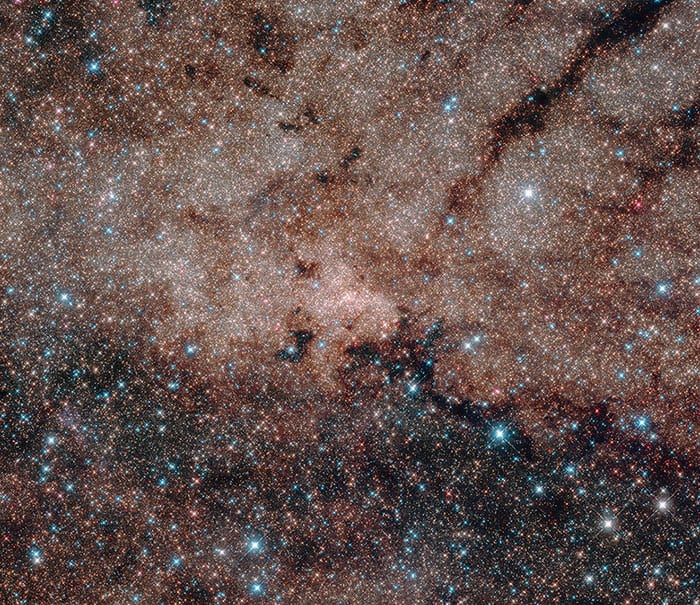
Image of stars in a galaxy

NASA has given the green light to the balloon-borne GUSTO terahertz observatory that will map and measure emissions from the interstellar medium. The $40m mission is scheduled for launch in 2021 from the McMurdo research station in Antarctica and will last 100–170 days, depending upon weather conditions. The balloon will carry a spectroscopic telescope that will detect emission lines from carbon, oxygen and nitrogen, with the aim of shedding light on the life cycle of the gas found in the regions between stars in the Milky Way and a nearby galaxy called the Large Magellanic Cloud. “GUSTO will provide the first complete study of all phases of the stellar life cycle, from the formation of molecular clouds, through star birth and evolution, to the formation of gas clouds and the re-initiation of the cycle,” says NASA’s Paul Hertz. GUSTO will be part of NASA’s Explorers Program of smaller-scale missions.

Magnons spotted in non-magnetic phase of material

Magnons have been measured for the first time in the non-magnetic phase of a material, answering a long-standing question in condensed-matter physics. The magnetic spins in a ferromagnetic material tend to point in the same direction, creating a net magnetization. Magnons are collective excitations whereby the directions of some of the spins oscillate around the magnetization direction. A long-standing mystery about magnons is what happens to them when a magnet is heated up through the Curie temperature – above which the magnetic spins cease to point in the same direction and instead point in random directions. Naively, one might assume that magnons cannot exist in this non-magnetic phase because there is no magnetization to oscillate about. However, spins can align over short distances in this phase, opening the door to magnons. Now, Khalil Zakeri and colleagues at the Karlsruhe Institute of Technology have found the first evidence for magons above the Curie temperature of a material. They studied a thin film of iron and palladium with the relatively low Curie temperature of 380 K – which makes it easier to identify magnons. They fired a beam of spin-aligned electrons at the material, which was subject to a magnetic field. Below the Curie temperature, magnons absorb energy from the beam when the spin of the electrons is in the opposite direction to the magnetization of the sample. As they increased the temperature to above 380 K, they found that this absorption occurred well into the non-magnetic phase of the material. While the magnons were significantly weaker abovee the Curie temperature, they were able to propagate nearly 3 nm through the material. The study is described in Physical Review Letters.


  • You can find all our daily Flash Physics posts in the website’s news section, as well as on Twitter and Facebook using #FlashPhysics. Tune in to physicsworld.com later today to read today’s extensive news story on how bees navigate using magnetic fields.

Quantum punchlines, the cloud atlas, NASA schooled


Quantum humour: is the joke dead or alive (Courtesy: Creative Commons/Benoît Leblanc)

By Sarah Tesh

 You may not normally associate humour with quantum theory, but it’s not just jokes about Schrödinger’s cat and Heisenberg’s uncertainty principle that links the two. Liane Gabora of the University of British Columbia in Canada and Kirsty Kitto of Queensland University of Technology in Australia have created a new model for humour based upon the mathematical frameworks of quantum theory. The idea for their “Quantum Theory of Humour” stems from jokes like “Time flies like an arrow. Fruit flies like a banana.” Separately, the statements aren’t amusing but together they make a punchline. This requires you to hold two ideas in your head at once – a concept analogous to quantum superposition.

(more…)

Supermassive black hole was ejected by gravitational waves

Astronomers using the Hubble Space Telescope have spotted a supermassive black hole that has been propelled out of the centre of the galaxy where it formed. They reckon the huge object was created when two galaxies merged and was then ejected by gravitational waves.

The discovery centres on galaxy 3C186, which lies about eight billion light-years from Earth and contains an extremely bright object that astronomers believe is a black hole weighing about one billion Suns. Most large galaxies, including our own Milky Way, contain such supermassive black holes at their cores, with these huge, bright objects being powered by radiation given off by matter as it accelerates into the black hole.

What is unique about this black hole, however, is that it is not at the centre of the galaxy but rather about 35,000 light-years away – a distance equivalent to a third of the diameter of the Milky Way. Moreover, the scientists believe that the black hole is moving away from the galactic core at 7,500,000 km/h – the speed at which a journey from the Earth to the Moon would take just 3 min.

“We estimate that it took the equivalent energy of 100 million supernovae exploding simultaneously to jettison the black hole,” explains Stefano Bianchi of the University of Rome Tre, who was involved with the discovery.

The astronomers believe that this vast energy was liberated when two galaxies, each with its own supermassive black hole, collided. The two black holes orbited each other before coalescing to form the black hole we see today. If the black holes had different masses and internal rotation rates, the merger would have created gravitational waves that were more intense in one specific direction. This, the astronomers believe, gave the merged black hole the kick that sent it on its way out of the galaxy – a journey that it has been on for one to two billion years.

Strong evidence

While the LIGO gravitational-wave detectors have recently found evidence that much smaller stellar-mass black holes can merge, it is not clear if supermassive black holes could coalesce. “If our theory is correct, the observations provide strong evidence that supermassive black holes can actually merge,” says Bianchi.

The mass and speed of the black hole was determined by doing a spectroscopic study of light emitted from gas surrounding the object. The team has secured more observation time on Hubble and the ALMA array of radio telescopes in Chile.

The observations will be described in Astronomy and Astrophysics.

Dedicated to computation: welcoming a new centre for computational science

What is the Flatiron Institute?

The Flatiron Institute is a newly opened private research institute that has an annual budget of $80m from the Simons Foundation – a non-profit organization that supports basic research. The institute aims to advance scientific research through computational methods, including data analysis, modelling and simulation. It is located in an 11-storey building in New York City and occupies three floors so far, but the institute will eventually expand to all eleven.

Where did the idea for the institute come from?

The genesis of the idea was developed by US mathematician and philanthropist James Simons and the Belgian physicist and mathematician Ingrid Daubechies from Duke University, who thought that an institute dedicated to computation – and especially to the creation of computational tools to process today’s large datasets – would help different areas of science.

How did you get involved?

I was asked to put together a half-day programme last year about computation in astrophysics. We had speakers on topics from galaxy formation to black holes and we also discussed how to structure an institute that was dedicated to computing in astrophysics. After the workshop, Simons took me into his office and asked me if I wanted to lead a department focusing on astrophysics. It was a big surprise and I didn’t expect it. I accepted and since then we have been developing the vision for the institute.

Are you still at Princeton too?

I joke that I spend half my time at Flatiron and the other two-thirds at Princeton University, where I am still a professor leading a group of eight people.

What is the make-up of the institute?

When fully complete, it is expected there will be about 250 people working in four scientific departments, each of which will have around 60 researchers. There is the Center for Computational Astrophysics (CCA) that I lead as well as the Center for Computational Biology (CCB), which is led by Leslie Greengard from New York University. The third department – the Center for Computational Quantum mechanics – will be run by the French physicist Antoine Georges who will arrive in September. The fourth department has yet to be finalized. We also have a Scientific Computing Core co-led by Ian Fisk and Nick Carriero that will support the four scientific departments by developing algorithms and the necessary infrastructure.

What is the status of the Center for Computational Astrophysics?

The idea was that an institute dedicated to computation would help different areas of science

Currently, the CCA has about 20 people made up of postdocs and senior scientists and we are in the process of recruiting more researchers. The idea for the institute is that each department will also have professional programmers who help the scientists with their investigations. We haven’t employed any yet, but we soon will. My focus is first getting the scientists in place so we can define what problems to tackle. Yet those scientists will already have significant computational abilities.

What science will the CCA do?

There are two avenues in astrophysics that we are working on: simulations and big data. The next set of advances in astronomy will require an understanding of complex multi-scale physics and large astronomical datasets and it is the CCA’s mission to develop the computational tools needed for these calculations, simulations and analyses.

Can you give any examples?

In simulations, we aim to do research in planet, star and galaxy formation, the cosmic microwave background and gravitational-wave astronomy. We aim to focus on challenges that are too big for a single person to take on. On the data side, we will work on the huge amounts of data generated by the European Space Agency’s GAIA mission, which has assembled the most detailed 3D map ever made of our Milky Way galaxy by cataloguing more than a billion stars. We will also work on data that is produced at the Simons Observatory, which is located in the Atacama Desert in northern Chile.

Are you collaborating with other departments at Flatiron?

Yes, there are great opportunities to work with other departments, especially in aspects such as scientific visualization. Just walking around the institute you notice similar equations on the wall and we are looking to set up regular meetings to discuss where we can work together.

When will the centre be complete?

The building work will be complete in around 18 months’ time. The CCB is likely to have a full department within the next three years, while it will take the CCA and the other two departments around five to six years to be complete in terms of personnel. The hope is that when it is fully complete, Flatiron will make the New York area a major centre for computational science.

Flash Physics: Laser wakefield delivers three beams, cat-litter nanosheets, Canada budget disappoints physicists

Laser-plasma wakefield accelerators deliver three electron beams

Laser-plasma wakefield accelerators (LWFAs) create two lower-energy, higher-flux electron beams in addition to the higher-energy electron beam that they are designed to deliver. That is the conclusion of experiments and computer simulations done by an international team of physicists led by Dino Jaroszynski at the University of Strathclyde in the UK. LWFAs work by firing an intense laser pulse at a target to create a plasma. The powerful electric field of the pulse causes electrons and ions in the plasma to separate, leaving a huge electric field in its wake. Under the right conditions, this field will accelerate a focussed beam of electrons (or protons) to energies as great as several gigaelectronvolts. As a result, physicists are very keen on developing LWFAs as low-cost, compact particle accelerators that could have a wide range of applications from medical therapy to particle physics. One puzzling aspect of LWFAs was that a relatively small portion of the energy of the laser pulse appears to go into the production of the high-energy electron beam. Now, Jaroszynski and colleagues have shown that LWFAs also produce two lower-energy electron beams that are not as tightly focused as their higher-energy counterpart. In experiments done at Strathclyde, the team used a LWFA that delivers a focused electron beam with energy 100–200 MeV and a total charge of about 5 pC. However, the researchers also observed a broad cone of electrons with energies of several megaelectronvolts that are accelerated in the same direction as the higher-energy beam and the laser pulse. Furthermore, a beam of electrons with energies of hundreds of kiloelectronvolts was seen to be accelerated in the opposite direction. The total charges in both of these lower-energy beams was 1000 times greater than the higher-energy beam – explaining where much of the laser energy has gone. The researchers point out that these lower-energy electrons could be used for imaging applications – either on their own, or via X-rays that they could be used to create. However, the team also points out that these electrons could also damage equipment and the energy that they take away limit the efficiency of LWFAs. The research is described in Scientific Reports.

Making nanosheets from cat litter and talcum powder

2D nanosheets have been made out of cat litter, talcum powder and sand by using liquid phase exfoliation (LPE). LPE is a top-down method that produces nanosheets by shearing or sonicating layered crystals in solutions. The resulting dispersed sheets can then be processed to create nanostructured materials for a range of applications such as battery electrodes and photodetectors. Already proven to be a scalable, simple and cheap method, researchers from Trinity College Dublin in Ireland and the University of Manchester in the UK have investigated LPE’s versatility. In the past the method has been used to create a range of 2D materials, such as graphene and boron nitride, which are nominally uncharged and require a pure starting material. Jonathan Coleman from Trinity College Dublin and colleagues therefore wanted to know if nanosheets could be made from charged layered precursors that are always accompanied by counter ions (such as layered oxides, hydroxides and silicates), and impure materials. The team tried shop-purchased talcum powder (which contains the clay mineral talc), cat litter (contains layered silicate compounds) and sand from a beach in County Kerry, Ireland (contains small amounts of clay). By using a standard LPE procedure whereby the materials were ultrasonically agitated in a surfactant solution and then centrifuged, the researchers produced nanosheets of talc from the talcum powder, bentonite/palygorskite from the cat litter and mica from the sand. “What is particularly surprising,” explains Coleman, “is that the bentonite and palygorskite layered crystals, contained in the cat litter as well as the mica in the beach sand, should both consist of charged layers with charge-balancing counter ions, yet could still be exfoliated by LPE.” The research, presented in 2D Materials demonstrates the versatility of the method and opens up the easy production of more nanosheet materials.

Canadian budget has “little new spending for science”, says physics association

Photograph of Canada's finance minister Bill Morneau

The proposed Canadian 2017 federal budget has “little new spending for science”, according to the Canadian Association of Physicists (CAP). Delivered earlier this week by Liberal finance minister Bill Morneau, the budget “proposes new funding to help Canadians prepare for the economy of tomorrow by promoting the development of science, technology, engineering and mathematics (STEM) skills and digital literacy, particularly for women, girls and under-represented groups”. However, an analysis published by CAP suggests that little new money has been allocated for academic research-related initiatives funded by the Natural Sciences and Engineering Research Council of Canada and the Canada Foundation for Innovation. On a positive note, CAP points out that the federal government has promised C$10m over two years to the Institute for Quantum Computing in Waterloo, Ontario, and C$89m over five years for space-related research. C$221m over five years will also be given to the Mitacs programme, which is a research internship programme that involves Canadian universities, industry and provincial and federal governments.


  • You can find all our daily Flash Physics posts in the website’s news section, as well as on Twitter and Facebook using #FlashPhysics. Tune in to physicsworld.com later today to read today’s extensive news story on an expelled supermassive black hole.

Molybdenum disulfide transistors display nervous behaviour

An analogue for neurotransmitter release in chemical synapses using a MoS2 field-effect transistor (FET) has been developed by researchers from Pennsylvania State University. The research team – led by Saptarshi Das – replicated three fundamental features of neurotransmitter behaviour: quantal, stochastic and excitatory/inhibitory releases. The FET was also used to imitate synaptic plasticity – a crucial part of memory formation. Such technology could underpin future developments in intelligent machines, and provide insights into neurological diseases and disorders such as sclerosis, Parkinson’s disease and Alzheimer’s disease.

Chemical synapses are essential to the transmission of information through the central nervous system. When an electrical impulse – otherwise known as an action potential – reaches the end of a presynaptic axon, vesicles containing neurotransmitters bind to the plasma membrane and are released into the synaptic cleft. These neurotransmitters diffuse to the postsynaptic neuron where they lead to the generation of a postsynaptic current (PSC). The PSC does more than generate an action potential to shape the immediate actions of the postsynaptic neuron – it can also have a long-term effect on its cellular and molecular machinery.

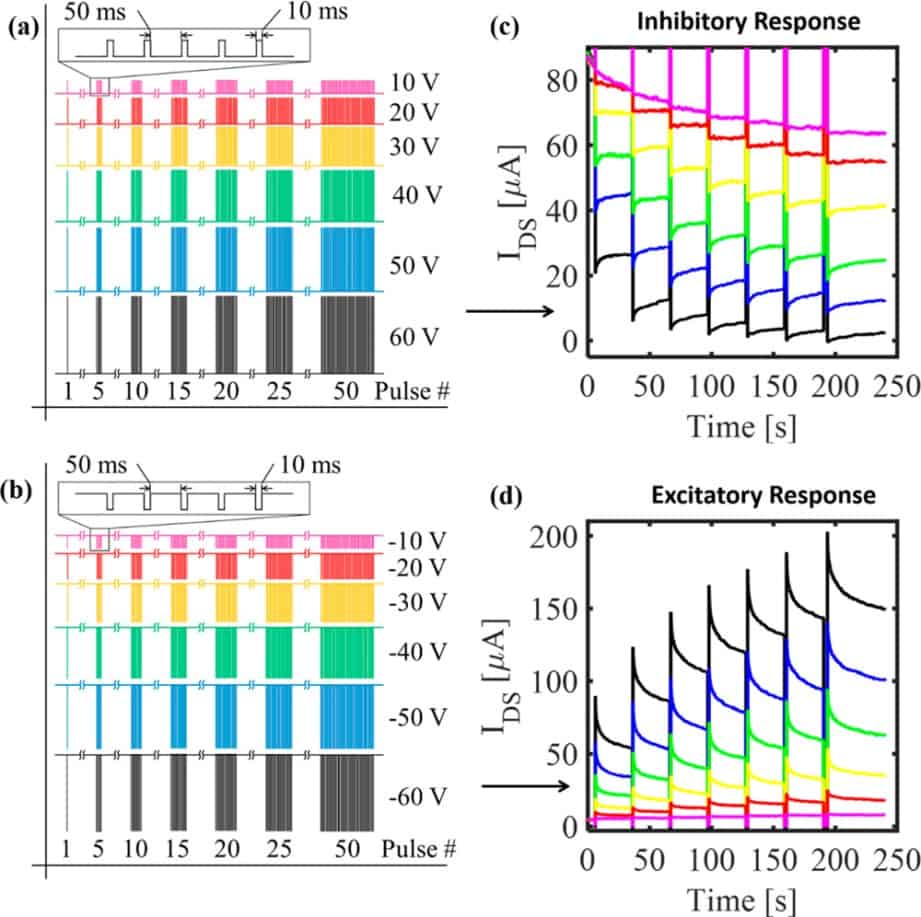
To achieve this transducing behaviour in the FET, Das and his team equated the presynaptic action potential and the induced PSC with the gate voltage (VG) pulse and the change in source to drain current (ΔIDS), respectively. They also took advantage of the electron traps in the FET to display behaviour analogous to synaptic plasticity. This is the ability of synapses to strengthen and weaken dependent on the signalling activity, and forms one of the building blocks of memory formation in mammals.

Swapping vesicles for traps

To mimic neurotransmitter behaviour the researchers drew a parallel between vesicle exocytosis – the process of un-packaging the vesicles and releasing the neurotransmitters into the synapse – and the capture and release of electrons in the FET. They developed a system whereby the quantal, stochastic and excitatory/inhibitory releases of neurotransmitters were associated with the frequency, amplitude and polarity of VG pulses, respectively.

The electron traps in the FET cause a shift in the threshold voltage of the device such that when the gate voltage is pulsed negatively, ΔIDS is positive – a response akin to an excitatory neurotransmitter release. The exact mechanism of electron trapping is a subject of debate, with several origins posited by the authors:

• adsorption of gas molecules on the surface of MoS2;
• electron trapping at the interface between SiO2 and MoS2;
• and defects in the MoS2 itself – particularly the surface.

The FET also replicates PSC saturation. In a real synapse this saturation occurs due to the finite number of neurotransmitters that can be released into the synaptic cleft. In the FET – for a set gate voltage there are a fixed number of traps induced and as the number of VG pulses increases more traps become charged – at a higher number of pulses the threshold to charge all traps is reached and ΔIDS will saturate.

Synaptic plasticity

In excitatory synapses a long-lasting signal increase is called long-term potentiation (LTP) and is linked with learning. It can be replicated in the FET because of the comparatively large discharge time constant of the electron traps. By maximizing the pulse amplitude and the number of pulses as well as operating the device in the sub-threshold region – where any change in the threshold voltage will produce an exponential change in current – the researchers optimized the trap discharge time to achieve lengths similar to those of biological synapses.

The team fabricated the FET by depositing a mechanically exfoliated 2 nm-thick MoS2 flake – about three monolayers – on a Si/SiO2 substrate and e-beam evaporating Ni source–drain contacts. They claim the high-voltage operation of the FET – which raises issues such as high power consumption – can be easily resolved by substituting the SiO2 dielectric with ultra-thin or high-k dielectric materials.

Going forward the group plan to turn their attention to more complex issues in the field, including co-release of neurotransmitters as a mechanism for negative feedback to neural firing, and recurrent neural networks with slow nonlinear transmission.

Full details are reported in ACS Nano.

Copyright © 2026 by IOP Publishing Ltd and individual contributors