Subtle quantum effects dictate how some nuclei break apart

Subtle quantum effects within atomic nuclei can dramatically affect how some nuclei break apart. By studying 100 isotopes with masses below that of lead, an international team of physicists uncovered a previously unknown region in the nuclear landscape where fragments of fission split in an unexpected way. This is driven not by the usual forces, but by shell effects rooted in quantum mechanics.

“When a nucleus splits apart into two fragments, the mass and charge distribution of these fission fragments exhibits the signature of the underlying nuclear structure effect in the fission process,” explains Pierre Morfouace of Université Paris-Saclay, who led the study. “In the exotic region of the nuclear chart that we studied, where nuclei do not have many neutrons, a symmetric split was previously expected. However, the asymmetric fission means that a new quantum effect is at stake.”

This unexpected discovery not only sheds light on the fine details of how nuclei break apart but also has far-reaching implications. These range from the development of safer nuclear energy to understanding how heavy elements are created during cataclysmic astrophysical events like stellar explosions.

Quantum puzzle

Fission is the process by which a heavy atomic nucleus splits into smaller fragments. It is governed by a complex interplay of forces. The strong nuclear force, which binds protons and neutrons together, competes with the electromagnetic repulsion between positively charged protons. The result is that certain nuclei are unstable and typically leads to a symmetric fission.

But there’s another, subtler phenomenon at play: quantum shell effects. These arise because protons and neutrons inside the nucleus tend to arrange themselves into discrete energy levels or “shells,” much like electrons do in atoms.

“Quantum shell effects [in atomic electrons] play a major role in chemistry, where they are responsible for the properties of noble gases,” says Cedric Simenel of the Australian National University, who was not involved in the study. “In nuclear physics, they provide extra stability to spherical nuclei with so-called ‘magic’ numbers of protons or neutrons. Such shell effects drive heavy nuclei to often fission asymmetrically.”

In the case of very heavy nuclei, such as uranium or plutonium, this asymmetry is well documented. But in lighter, neutron-deficient nuclei – those with fewer neutrons than their stable counterparts – researchers had long expected symmetric fission, where the nucleus breaks into two roughly equal parts. This new study challenges that view.

New fission landscape

To investigate fission in this less-explored part of the nuclear chart, scientists from the R3B-SOFIA collaboration carried out experiments at the GSI Helmholtz Centre for Heavy Ion Research in Darmstadt, Germany. They focused on nuclei ranging from iridium to thorium, many of which had never been studied before. The nuclei were fired at high energies into a lead target to induce fission.

The fragments produced in each fission event were carefully analysed using a suite of high-resolution detectors. A double ionization chamber captured the number of protons in each product, while a superconducting magnet and time-of-flight detectors tracked their momentum, enabling a detailed reconstruction of how the split occurred.

Using this method, the researchers found that the lightest fission fragments were frequently formed with 36 protons, which is the atomic number of krypton. This pattern suggests the presence of a stabilizing shell effect at that specific proton number.

“Our data reveal the stabilizing effect of proton shells at Z=36,” explains Morfouace. “This marks the identification of a new ‘island’ of asymmetric fission, one driven by the light fragment, unlike the well-known behaviour in heavier actinides. It expands our understanding of how nuclear structure influences fission outcomes.”

Future prospects

“Experimentally, what makes this work unique is that they provide the distribution of protons in the fragments, while earlier measurements in sub-lead nuclei were essentially focused on the total number of nucleons,” comments Simenel.

Since quantum shell effects are tied to specific numbers of protons or neutrons, not just the overall mass, these new measurements offer direct evidence of how proton shell structure shapes the outcome of fission in lighter nuclei. This makes the results particularly valuable for testing and refining theoretical models of fission dynamics.

“This work will undoubtedly lead to further experimental studies, in particular with more exotic light nuclei,” Simenel adds. “However, to me, the ball is now in the camp of theorists who need to improve their modelling of nuclear fission to achieve the predictive power required to study the role of fission in regions of the nuclear chart not accessible experimentally, as in nuclei formed in the astrophysical processes.”

The research is described in Nature.
New coronagraph pushes exoplanet discovery to the quantum limit

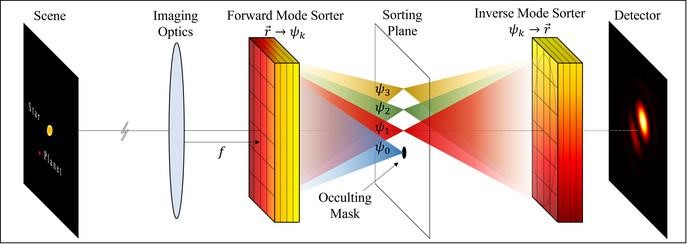
Diagram of the new coronagraph

A new type of coronagraph that could capture images of dim exoplanets that are extremely close to bright stars has been developed by a team led by Nico Deshler at the University of Arizona in the US. As well as boosting the direct detection of exoplanets, the new instrument could support advances in areas including communications, quantum sensing, and medical imaging.

Astronomers have confirmed the existence of nearly 6000 exoplanets, which are planets that orbit stars other as the Sun. The majority of these were discovered based on their effects on their companion stars, rather than being observed directly. This is because most exoplanets are too dim and too close to their companion stars for the exoplanet light to be differentiated from starlight. That is where a coronagraph can help.

A coronagraph is an astronomical instrument that blocks light from an extremely bright source to allow the observation of dimmer objects in the nearby sky. Coronagraphs were first developed a century ago to allow astronomers to observe the outer atmosphere (corona) of the Sun , which would otherwise be drowned out by light from the much brighter photosphere.

At the heart of a coronagraph is a mask that blocks the light from a star, while allowing light from nearby objects into a telescope. However, the mask (and the telescope aperture) will cause the light to interfere and create diffraction patterns that blur tiny features. This prevents the observation of dim objects that are closer to the star than the instrument’s inherent diffraction limit.

Off limits

Most exoplanets lie within the diffraction limit of today’s coronagraphs and Deshler’s team addressed this problem using two spatial mode sorters. The first device uses a sequence of optical elements to separate starlight from light originating from the immediate vicinity of the star. The starlight is then blocked by a mask while the rest of the light is sent through a second spatial mode sorter, which reconstructs an image of the region surrounding the star.

As well as offering spatial resolution below the diffraction limit, the technique approaches the fundamental limit on resolution that is imposed by quantum mechanics.

“Our coronagraph directly captures an image of the surrounding object, as opposed to measuring only the quantity of light it emits without any spatial orientation,” Deshler describes. “Compared to other coronagraph designs, ours promises to supply more information about objects in the sub-diffraction regime – which lie below the resolution limits of the detection instrument.”

To test their approach, Deshler and colleagues simulated an exoplanet orbiting at a sub-diffraction distance from a host star some 1000 times brighter. After passing the light through the spatial mode sorters, they could resolve the exoplanet’s position – which would have been impossible with any other coronagraph.

Context and composition

The team believe that their technique will improve astronomical images. “These images can provide context and composition information that could be used to determine exoplanet orbits and identify other objects that scatter light from a star, such as exozodiacal dust clouds,” Deshler says.

The team’s coronagraph could also have applications beyond astronomy. With the ability to detect extremely faint signals close to the quantum limit, it could help to improve the resolution of quantum sensors. This could to lead to new methods for detecting tiny variations in magnetic or gravitational fields.

Elsewhere, the coronagraph could help to improve non-invasive techniques for imaging living tissue on the cellular scale – with promising implications in medical applications such as early cancer detection and the imaging of neural circuits. Another potential use could be new multiplexing techniques for optical communications. This would see the coronagraph being used to differentiate between overlapping signals. This has the potential of boosting the rate at which data could be transferred between satellites and ground-based receivers.

The research is described in Optica.

Miniaturized pixel detector characterizes radiation quality in clinical proton fields

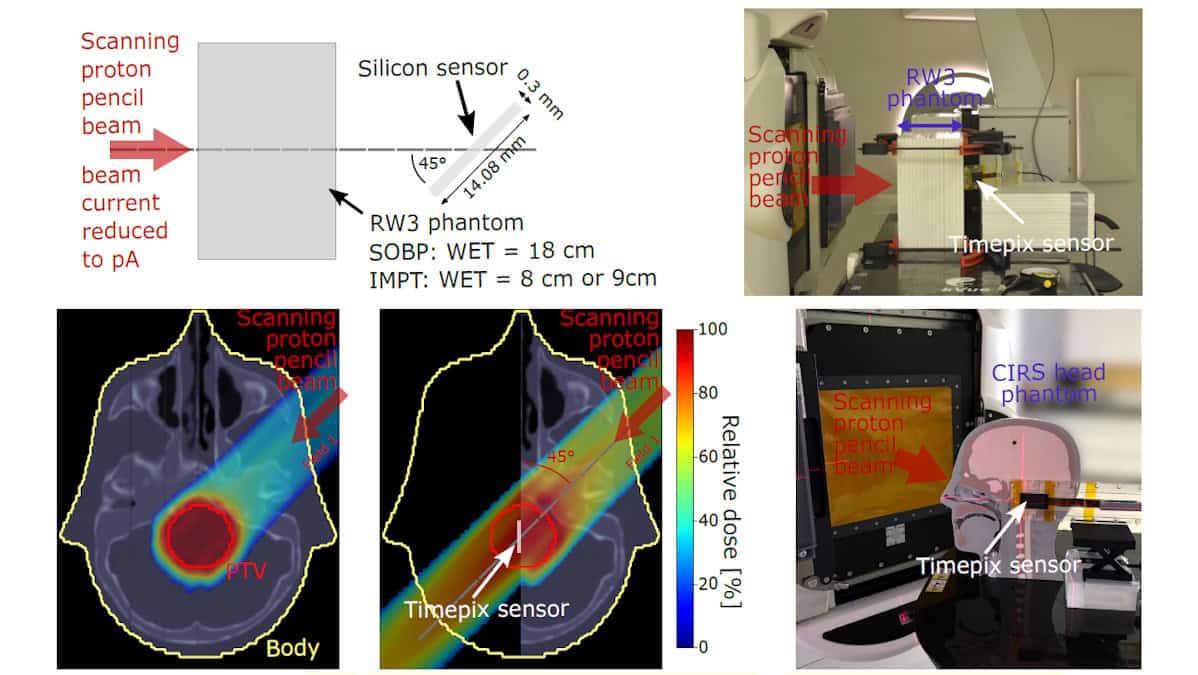
Experimental setups for phantom measurements

Proton therapy is a highly effective and conformal cancer treatment. Proton beams deposit most of their energy at a specific depth – the Bragg peak – and then stop, enabling proton treatments to destroy tumour cells while sparing surrounding normal tissue. To further optimize the clinical treatment planning process, there’s recently been increased interest in considering the radiation quality, quantified by the proton linear energy transfer (LET).

LET – defined as the mean energy deposited by a charged particle over a given distance – increases towards the end of the proton range. Incorporating LET as an optimization parameter could better exploit the radiobiological properties of protons, by reducing LET in healthy tissue, while maintaining or increasing it within the target volume. This approach, however, requires a method for experimental verification of proton LET distributions and patient-specific quality assurance in terms of proton LET.

To meet this need, researchers at the Institute of Nuclear Physics, Polish Academy of Sciences have used the miniaturized semiconductor pixel detector Timepix3 to perform LET characterization of intensity-modulated proton therapy (IMPT) plans in homogeneous and heterogeneous phantoms. They report their findings in Physics in Medicine & Biology.

Experimental validation

First author Paulina Stasica-Dudek and colleagues performed a series of experiments in a gantry treatment room at the Cyclotron Centre Bronowice (CCB), a proton therapy facility equipped with a proton cyclotron accelerator and pencil-beam scanning system that provides IMPT for up to 50 cancer patients per day.

The MiniPIX Timepix3 is a radiation imaging pixel detector based on the Timepix3 chip developed at CERN within the Medipix collaboration (provided commercially by Advacam). It provides quasi-continuous single particle tracking, allowing particle type recognition and spectral information in a wide range of radiation environments.

For this study, the team used a Timepix3 detector with a 300 µm-thick silicon sensor operated as a miniaturized online radiation camera. To overcome the problem of detector saturation in the relatively high clinical beam currents, the team developed a pencil-beam scanning method with the beam current reduced to the picoampere (pA) level.

The researchers used Timepix3 to measure the deposited energy and LET spectra for spread-out Bragg peak (SOBP) and IMPT plans delivered to a homogeneous water-equivalent slab phantom, with each plan energy layer irradiated and measured separately. They also performed measurements on an IMPT plan delivered to a heterogeneous head phantom. For each scenario, they used a Monte Carlo (MC) code to simulate the corresponding spectra of deposited energy and LET for comparison.

The team first performed a series of experiments using a homogeneous phantom irradiated with various fields, mimicking patient-specific quality assurance procedures. The measured and simulated dose-averaged LET (LETd) and LET spectra agreed to within a few percent, demonstrating proper calibration of the measurement methodology.

The researchers also performed an end-to-end test in a heterogeneous CIRS head phantom, delivering a single field of an IMPT plan to a central 4 cm-diameter target volume in 13 energy layers (96.57–140.31 MeV) and 315 spots.

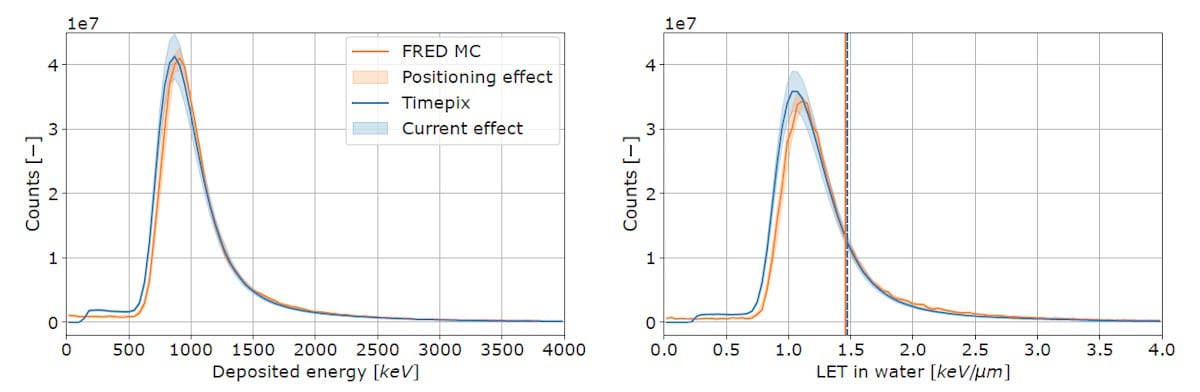
Energy deposition and LET spectra for an IMPT plan delivered to a head phantom

For head phantom measurements, the peak positions for deposited energy and LET spectra obtained based on experiment and simulation agreed within the error bars, with LETd values of about 1.47 and 1.46 keV/µm, respectively. The mean LETd values derived from MC simulation and measurement differed on average by 5.1% for individual energy layers.

Clinical translation

The researchers report that implementing the proposed LET measurement scheme using Timepix3 in a clinical setting requires irradiating IMPT plans with a reduced beam current (at the pA level). While they successfully conducted LET measurements at low beam currents in the accelerator’s research mode, pencil-beam scanning at pA-level currents is not currently available in the commercial clinical or quality assurance modes. Therefore, they note that translating the proposed approach into clinical practice would require vendors to upgrade the beam delivery system to enable beam monitoring at low beam currents.

“The presented results demonstrate the feasibility of the Timepix3 detector to validate LET computations in IMPT fields and perform patient-specific quality assurance in terms of LET. This will support the implementation of LET in treatment planning, which will ultimately increase the effectiveness of the treatment,” Stasica-Dudek and colleagues write. “Given the compact design and commercial availability of the Timepix3 detector, it holds promise for broad application across proton therapy centres.”

Protons take to the road

Physicists at CERN have completed a “test run” for taking antimatter out of the laboratory and transporting it across the site of the European particle-physics facility. Although the test was carried out with ordinary protons, the team that performed it says that antiprotons could soon get the same treatment. The goal, they add, is to study antimatter in places other than the labs that create it, as this would enable more precise measurements of the differences between matter and antimatter. It could even help solve one of the biggest mysteries in physics: why does our universe appear to be made up almost entirely of matter, with only tiny amounts of antimatter?

According to the Standard Model of particle physics, each of the matter particles we see around us – from baryons like protons to leptons such as electrons – should have a corresponding antiparticle that is identical in every way apart from its charge and magnetic properties (which are reversed). This might sound straightforward, but it leads to a peculiar prediction. Under the Standard Model, the Big Bang that formed our universe nearly 14 billion years ago should have generated equal amounts of antimatter and matter. But if that were the case, there shouldn’t be any matter left, because whenever pairs of antimatter and matter particles collide, they annihilate each other in a burst of energy.

Physicists therefore suspect that there are other, more subtle differences between matter particles and their antimatter counterparts – differences that could explain why the former prevailed while the latter all but disappeared. By searching for these differences, they hope to shed more light on antimatter-matter asymmetry – and perhaps even reveal physics beyond the Standard Model.

Extremely precise measurements

At CERN’s Baryon-Antibaryon Symmetry Experiment (BASE) experiment, the search for matter-antimatter differences focuses on measuring the magnetic moment (or charge-to-mass ratio) of protons and antiprotons. These measurements need to be extremely precise, but this is difficult at CERN’s “Antimatter Factory” (AMF), which manufactures the necessary low-energy antiprotons in profusion. This is because essential nearby equipment – including the Antiproton Decelerator and ELENA, which reduce the energy of incoming antiprotons from GeV to MeV – produces magnetic field fluctuations that blur the signal.

To carry out more precise measurements, the team therefore needs a way of transporting the antiprotons to other, better-shielded, laboratories. This is easier said than done, because antimatter needs to be carefully isolated from its environment to prevent it from annihilating with the walls of its container or with ambient gas molecules.

The BASE team’s solution was to develop a device that can transport trapped antiprotons on a truck for substantial distances. It is this device, known as BASE-STEP (for Symmetry Tests in Experiments with Portable Antiprotons), that has now been field-tested for the first time.

Protons on the go

During the test, the team successfully transported a cloud of about 105 trapped protons out of the AMF and across CERN’s Meyrin campus over a period of four hours. Although protons are not the same as antiprotons, BASE-STEP team leader Christian Smorra says they are just as sensitive to disturbances in their environment caused by, say, driving them around. “They are therefore ideal stand-ins for initial tests, because if we can transport protons, we should also be able to transport antiprotons,” he says.

Photo of the BASE-STEP system sitting on a bright yellow trolley after being unloaded from the transport crane, which is visible above it. A woman in a hard hat and head scarf watches from the ground, while a man in a hard hat stands above her on a set of steps, also watching.

The BASE-STEP device is mounted on an aluminium frame and measures 1.95 m x 0.85 m x 1.65 m. At 850‒900 kg, it is light enough to be transported using standard forklifts and cranes.

Like BASE, it traps particles in a Penning trap composed of gold-plated cylindrical electrode stacks made from oxygen-free copper. To further confine the protons and prevent them from colliding with the trap’s walls, this trap is surrounded by a superconducting magnet bore operated at cryogenic temperatures. The second electrode stack is also kept at ultralow pressures of 10-19 bar, which Smorra says is low enough to keep antiparticles from annihilating with residual gas molecules. To transport antiprotons instead of protons, Smorra adds, they would just need to switch the polarity of the electrodes.

The transportable trap system, which is detailed in Nature, is designed to remain operational on the road. It uses a carbon-steel vacuum chamber to shield the particles from stray magnetic fields, and its frame can handle accelerations of up to 1g (9.81 m/s2) in all directions over and above the usual (vertical) force of gravity. This means it can travel up and down slopes with a gradient of up to 10%, or approximately 6°.

Once the BASE-STEP device is re-configured to transport antiprotons, the first destination on the team’s list is a new Penning-trap system currently being constructed at the Heinrich Heine University in Düsseldorf, Germany. Here, physicists hope to search for charge-parity-time (CPT) violations in protons and antiprotons with a precision at least 100 times higher than is possible at CERN’s AMF.

“At BASE, we are currently performing measurements with a precision of 16 parts in a trillion,” explains BASE spokesperson Stefan Ulmer, an experimental physicist at Heinrich Heine and a researcher at CERN and Japan’s RIKEN laboratory. “These experiments are the most precise tests of matter/antimatter symmetry in the baryon sector to date, but to make these experiments better, we have no choice but to transport the particles out of CERN’s antimatter factory,” he tells Physics World.

Quantum computing for artists, musicians and game designers

Many creative industries rely on cutting-edge digital technologies, so it is not surprising that this sector could easily become an early adopter of quantum computing.

In this episode of the Physics World Weekly podcast I am in conversation with James Wootton, who is chief scientific officer at Moth Quantum. Based in the UK and Switzerland, the company is developing quantum-software tools for the creative industries – focusing on artists, musicians and game developers.

Wootton joined Moth Quantum in September 2024 after working on quantum error correction at IBM. He also has long-standing interest in quantum gaming and creating tools that make quantum computing more accessible. If you enjoyed this interview with Wootton, check out this article that he wrote for Physics World in 2018: “Playing games with quantum computers“.

This article forms part of Physics World‘s contribution to the 2025 International Year of Quantum Science and Technology (IYQ), which aims to raise global awareness of quantum physics and its applications.

Stayed tuned to Physics World and our international partners throughout the next 12 months for more coverage of the IYQ.

Find out more on our quantum channel.


Five-body recombination could cause significant loss from atom traps

Five-body recombination, in which five identical atoms form a tetramer molecule and a single free atom, could be the largest contributor to loss from ultracold atom traps at specific “Efimov resonances”, according to calculations done by physicists in the US. The process, which is less well understood than three- and four-body recombination, could be useful for building molecules, and potentially for modelling nuclear fusion.

A collision involving trapped atoms can be either elastic – in which the internal states of the atoms and their total kinetic energy remain unchanged – or inelastic, in which there is an interchange between the kinetic energy of the system and the internal energy states of the colliding atoms.

Most collisions in a dilute quantum gas involve only two atoms, and when physicists were first studying Bose-Einstein condensates (the ultralow-temperature state of some atomic gases), they suppressed inelastic two-body collisions, keeping the atoms in the desired state and preserving the condensate. A relatively small number of collisions, however, involve three or more bodies colliding simultaneously.

“They couldn’t turn off three body [inelastic collisions], and that turned out to be the main reason atoms leaked out of the condensate,” says theoretical physicist Chris Greene of Purdue University in the US.

Something remarkable

While attempting to understand inelastic three-body collisions, Greene and colleagues made the connection to work done in the 1970s by the Soviet theoretician Vitaly Efimov. He showed that at specific “resonances” of the scattering length, quantum mechanics allowed two colliding particles that could otherwise not form a bound state to do so in the presence of a third particle. While Efimov first considered the scattering of nucleons (protons and neutrons) or alpha particles, the effect applies to atoms and other quantum particles.

In the case of trapped atoms, the bound dimer and free atom are then ejected from the trap by the energy released from the binding event. “There were signatures of this famous Efimov effect that had never been seen experimentally,” Greene says. This was confirmed in 2005 by experiments from Rudolf Grimm’s group at the University of Innsbruck in Austria.

Hundreds of scientific papers have now been written about three-body recombination. Greene and colleagues subsequently predicted resonances at which four-body Efimov recombination could occur, producing a trimer. These were observed almost immediately by Grimm and colleagues. “Five was just too hard for us to do at the time, and only now are we able to go that next step,” says Greene.

Principal loss channel

In the new work, Greene and colleague Michael Higgins modelled collisions between identical caesium atoms in an optical trap. At specific resonances, five-body recombination – in which four atoms combine to produce a tetramer and a free particle – is not only enhanced but becomes the principal loss channel. The researchers believe these resonances should be experimentally observable using today’s laser box traps, which hold atomic gases in a square-well potential.

“For most ultracold experiments, researchers will be avoiding loss as much as possible – they would stay away from these resonances,” says Greene; “But for those of us in the few-body community interested in how atoms bind and resonate and how to describe complicated rearrangement, it’s really interesting to look at these points where the loss becomes resonant and very strong.” This is one technique that can be used to create new molecules, for example.

In future, Greene hopes to apply the model to nucleons themselves. “There have been very few people in the few-body theory community willing to tackle a five-particle collision – the Schrödinger equation has so many dimensions,” he says.

Fusion reactions

He hopes it may be possible to apply the researchers’ toolkit to nuclear reactions. “The famous one is the deuterium/tritium fusion reaction. When they collide they can form an alpha particle and a neutron and release a ton of energy, and that’s the basis of fusion reactors…There’s only one theory in the world from the nuclear community, and it’s such an important reaction I think it needs to be checked,” he says.

The researchers also wish to study the possibility of even larger bound states. However, they foresee a problem because the scattering length of the ground state resonance gets shorter and shorter with each additional particle. “Eventually the scattering length will no longer be the dominant length scale in the problem, and we think between five and six is about where that border line occurs,” Greene says. Nevertheless, higher-lying, more loosely-bound six-body Efimov resonances could potentially be visible at longer scattering lengths.

The research is described in Proceedings of the National Academy of Sciences.

Theoretical physicist Ravi Rau of Louisiana State University in the US is impressed by Greene and Higgins’ work. “For quite some time Chris Greene and a succession of his students and post-docs have been extending the three-body work that they did, using the same techniques, to four and now five particles,” he says. “Each step is much more complicated, and that he could use this technique to extend it to five bosons is what I see as significant.” Rau says, however, that “there is a vast gulf” between five atoms and the number treated by statistical mechanics, so new theoretical approaches may be required to bridge the gap.

This is what an aurora looks like on Mars

The Mars rover Perseverance has captured the first image of an aurora as seen from the surface of another planet. The visible-light image, which was taken during a solar storm on 18 March 2024, is not as detailed or as colourful as the high-resolution photos of green swirls, blue shadows and pink whorls familiar to aurora aficionados on Earth. Nevertheless, it shows the Martian sky with a distinctly greenish tinge, and the scientists who obtained it say that similar aurorae would likely be visible to future human explorers.

“Kind of like with aurora here on Earth, we need a good solar storm to induce a bright green colour, otherwise our eyes mostly pick up on a faint grey-ish light,” explains Elise Wright Knutsen, a postdoctoral researcher in the Centre for Space Sensors and Systems at the University of Oslo, Norway. The storm Knutsen and her colleagues captured was, she adds, “rather moderate”, and the aurora it produced was probably too faint to see with the naked eye. “But with a camera, or if the event had been more intense, the aurora will appear as a soft green glow covering more or less the whole sky.”

The role of planetary magnetic fields

Aurorae happen when charged particles from the Sun – the solar wind – interact with the magnetic field around a planet. On Earth, this magnetic field is the product of an internal, planetary-scale magnetic dynamo. Mars, however, lost its dynamo (and, with it, its oceans and its thick protective atmosphere) around four billion years ago, so its magnetic field is much weaker. Nevertheless, it retains some residual magnetization in its southern highlands, and its conductive ionosphere affects the shape of the nearby interplanetary magnetic field. Together, these two phenomena give Mars a hybrid magnetosphere too feeble to protect its surface from cosmic rays, but strong enough to generate an aurora.

Scientists had previously identified various types of aurorae on Mars (and every other planet with an atmosphere in our solar system) in data from orbiting spacecraft. However, no Mars rover had ever observed an aurora before, and all the orbital aurora observations, from Mars and elsewhere, were at ultraviolet wavelengths.

An artist's impression of what the aurora would have looked like. The image shows uneven terrain silhouetted against a greeish sky with several visible stars. The Perseverance rovers is in the foreground.

How to spot an aurora on Mars

According to Knutsen, the lack of visible-light, surface-based aurora observations has several causes. First, the visible-wavelength instruments on Mars rovers are generally designed to observe the planet’s bright “dayside”, not to detect faint emissions on its nightside. Second, rover missions focus primarily on geology, not astronomy. Finally, aurorae are fleeting, and there is too much demand for Perseverance’s instruments to leave them pointing at the sky just in case something interesting happens up there.

“We’ve spent a significant amount of time and effort improving our aurora forecasting abilities,” Knutsen says.

Getting the timing of observations right was the most challenging part, she adds. The clock started whenever solar satellites detected events called coronal mass ejections (CMEs) that create unusually strong pulses of solar wind. Next, researchers at the NASA Community Coordinated Modeling Center simulated how these pulses would propagate through the solar system. Once they posted the simulation results online, Knutsen and her colleagues – an international consortium of scientists in Belgium, France, Germany, the Netherlands, Spain, the UK and the US as well as Norway – had a decision to make. Was this CME likely to trigger an aurora bright enough for Perseverance to detect?

If the answer was “yes”, their next step was to request observation time on Perseverance’s SuperCam and Mastcam-Z instruments. Then they had to wait, knowing that although CMEs typically take three days to reach Mars, the simulations are only accurate to within a few hours and the forecast could change at any moment. Even if they got the timing right, the CME might be too weak to trigger an aurora.

“We have to pick the exact time to observe, the whole observation only lasts a few minutes, and we only get one chance to get it right per solar storm,” Knutsen says. “It took three unsuccessful attempts before we got everything right, but when we did, it appeared exactly as we had imagined it: as a diffuse green haze, uniform in all directions.”

Future observations

Writing in Science Advances, Knutsen and colleagues say it should now be possible to investigate how Martian aurorae vary in time and space – information which, they note, is “not easily obtained from orbit with current instrumentation”. They also point out that the visible-light instruments they used tend to be simpler and cheaper than UV ones.

“This discovery will open up new avenues for studying processes of particle transport and magnetosphere dynamics,” Knutsen tells Physics World. “So far we have only reported our very first detection of this green emission, but observations of aurora can tell us a lot about how the Sun’s particles are interacting with Mars’s magnetosphere and upper atmosphere.”

Robert P Crease: ‘I’m yet another victim of the Trump administration’s incompetence’

Late on Friday 18 April, the provost of Stony Brook University, where I teach, received a standard letter from the National Science Foundation (NSF), the body that funds much academic research in the US. “Termination of certain awards is necessary,” the e-mail ran, “because they are not in alignment with current NSF priorities”. The e-mail mentioned “NSF Award Id 2318247”. Mine.

The termination notice, forwarded to me a few minutes later, was the same one that 400 other researchers all over the US received the same day, in which the agency, following a directive from the Trump administration, grabbed back $233m in grant money. According to the NSF website, projects terminated were “including but not limited to those on diversity, equity, and inclusion (DEI) and misinformation/disinformation”.

Losing grant money is disastrous for research and for the faculty, postdocs, graduate students and support staff who depend on that support. A friend of mine tried to console me by saying that I had earned a badge of honour for being among the 400 people who threatened the Trump Administration so much that it set out to stop their work. Still, I was baffled. Did I really deserve the axe?

My award, entitled “Social and political dynamics of lab-community relations”, was small potatoes. As the sole principal investigator, I’d hired no postdocs or grad students. I’d also finished most of the research and been given a “no-cost extension” to write it up that was due to expire in a few months. In fact, I’d spent all but $21,432 of the $263,266 of cash.

That may sound like a lot for a humanities researcher, but it barely covered a year of my salary and included indirect costs (to which my grant was subject like any other), along with travel and so on. What’s more, my project’s stated aim was to “enhance the effectiveness of national scientific facilities”, which was clearly within the NSF’s mission.

Such facilities, I had pointed out in my official proposal, are vital if the US is to fulfil its national scientific, technological, medical and educational goals. But friction between a facility and the surrounding community can hamper its work, particularly if the lab’s research is seen as threatening – for example, involving chemical, radiological or biological hazards. Some labs, in fact, have had important, yet perfectly safe, facilities permanently closed out of such fear.

“In an age of Big Science,” I argued, “understanding the dynamics of lab-community interaction is crucial to advancing national, scientific, and public interests.” What’s so contentious about that?

“New bad words”

Maybe I had been careless. After all, Ted Cruz, who chairs the Senate’s commerce committee, had claimed in February that 3400 NSF awards worth over $2 billion made during the Biden–Harris administration had promoted DEI and advanced “neo-Marxist class warfare propaganda”. I wondered if I might have inadvertently used some trigger word that outed me as an enemy of the state.

I knew, for instance, that the Trump Administration had marked for deletion photos of the Enola Gay aircraft, which had dropped an atomic bomb on Hiroshima, in a Defense Department database because officials had not realized that “Gay” was part of the name of the pilot’s mother. Administration officials had made similar misinterpretations in scientific proposals that included the words “biodiversity” and “transgenic”.

Had I used one of those “new bad words”? I ran a search on my proposal. Did it mention “equity”? No. “Inclusion”? Also no. The word “diversity” appeared only once, in the subtitle of an article in the bibliography about radiation fallout. “Neo-Marxist”? Again, no. Sure, I’d read Marx’s original texts during my graduate training in philosophy, but my NSF documents hadn’t tapped him or his followers as essential to my project.

Then I remembered a sentence in my proposal. “Well-established scientific findings,” I wrote, “have been rejected by activists and politicians, distorted by lurid headlines, and fuelled partisan agendas.” These lead in turn to “conspiracy theories, fake facts, science denial and charges of corruption”.

Was that it, I wondered? Had the NSF officials thought that I had meant to refer to the administration’s attacks on climate change science, vaccines, green energy and other issues? If so, that was outrageous! There was not a shred of truth to it – no truth at all!

Ructions and retractions

On 23 April – five days after the NSF termination notice – two researchers at Harvard University put together an online “Terminated NSF grant tracker”, which contained information based on what they found in the NSF database. Curious, I scrolled down to SUNY at Stony Brook and found mine: “Social and political dynamics of lab-community relations”.

I was shocked to discover that almost everything about it in the NSF database was wrong, including the abstract

I was shocked to discover that almost everything about it in the NSF database was wrong, including the abstract. The abstract given for my grant was apparently that of another NSF award, for a study that touched on DEI themes – a legitimate and useful thing to study under any normal regime, but not this one. At last, I had the reason for my grant termination: an NSF error.

The next day, 24 April, I managed to speak to the beleaguered NSF programme director, who was kind and understanding and said there’d been a mistake in the database. When I asked her if it could be fixed she said, “I don’t know”. When I asked her if the termination can be reversed, she said, “I don’t know”. I alerted Stony Brook’s grants-management office, which began to press the NSF to reverse its decision. A few hours later I learned that NSF director Sethuraman Panchanathan had resigned.

I briefly wondered if Panchanathan had been fired because my grant had been bungled. No such luck; he was probably disgusted with the administration’s treatment of the agency. But while the mistake over my abstract evidently wasn’t deliberate, the malice behind my grant’s termination certainly was. Further, doesn’t one routinely double-check before taking such an unprecedented and monumental step as terminating a grant by a major scientific agency?

I then felt guilty about my anger; who was I to complain? After all, some US agencies have been shockingly incompetent lately

I then felt guilty about my anger; who was I to complain? After all, some US agencies have been shockingly incompetent lately. A man was mistakenly sent by the Department of Homeland Security to a dangerous prison in El Salvador and they couldn’t (or wouldn’t) get him back. The Department of Health and Human Services has downplayed the value of vaccines, fuelling a measles epidemic in Texas, while defence secretary Pete Hegseth used the Signal messaging app to release classified military secrets regarding a war in progress to a journalist.

How narcissistic of me to become livid only when personally affected by termination of an award that’s almost over anyway.

A few days later, on 28 April, Stony Brook’s provost received another e-mail about my grant from the NSF. Forwarded to me, it said: “the termination notice is retracted; NSF terminated this project in error”. Since then, the online documents at the NSF, and the information about my grant in the tracker, have thankfully been corrected.

The critical point

In a few years’ time, I’ll put together another proposal to study the difference between the way that US government handles science and the needs of its citizens. I’ll certainly have a lot more material to draw on. Meanwhile, I’ll reluctantly wear my badge of honour. For I deserve it – though not, as I initially thought, because I had threatened the Trump Administration enough that they tried to halt my research.

I got it simply because I’m yet another victim of the Trump Administration’s incompetence.

Plasma physics sets upper limit on the strength of ‘dark electromagnetism’

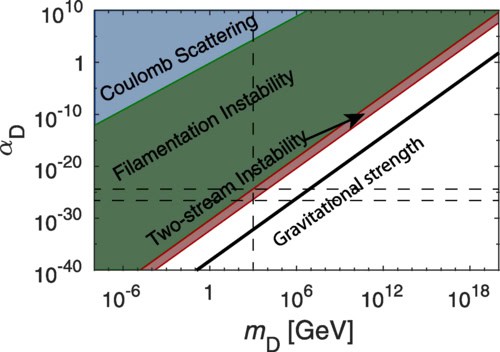
Physicists have set a new upper bound on the interaction strength of dark matter by simulating the collision of two clouds of interstellar plasma. The result, from researchers at Ruhr University Bochum in Germany, CINECA in Italy and the Instituto Superior Tecnico in Portugal, could force a rethink on theories describing this mysterious substance, which is thought to make up more than 85% of the mass in the universe.

Since dark matter has only ever been observed through its effect on gravity, we know very little about what it’s made of. Indeed, various theories predict that dark matter particles could have masses ranging from around 10−22 eV to around 1019 GeV — a staggering 50 orders of magnitude.

Another major unknown about dark matter is whether it interacts via forces other than gravity, either with itself or with other particles. Some physicists have hypothesized that dark matter particles might possess positive and negative “dark charges” that interact with each other via “dark electromagnetic forces”. According to this supposition, dark matter could behave like a cold plasma of self-interacting particles.

Bullet Cluster experiment

In the new study, the team searched for evidence of dark interactions in a cluster of galaxies located several billion light years from Earth. This galactic grouping is known as the Bullet Cluster, and it contains a subcluster that is moving away from the main body after passing through it at high speed.

Since the most basic model of dark-matter interactions relies on the same equations as ordinary electromagnetism, the researchers chose to simulate these interactions in the Bullet Cluster system using the same computational tools they would use to describe electromagnetic interactions in a standard plasma. They then compared their results with real observations of the Bullet Cluster galaxy.

A graph of the dark electromagnetic coupling constant 𝛼𝐷 as a function of the dark matter mass 𝑚𝐷. There is a blue triangle in the upper left corner of the graph, a wide green region below it running from the bottom left to the top right, and a thin red strip below that. A white triangle at the bottom right of the graph represents a region not disallowed by the measurements.

The new work builds on a previous study in which members of the same team simulated the collision of two clouds of standard plasma passing through one another. This study found that as the clouds merged, electromagnetic instabilities developed. These instabilities had the effect of redistributing energy from the opposing flows of the clouds, slowing them down while also broadening the temperature range within them.

Ruling out many of the simplest dark matter theories

The latest study showed that, as expected, the plasma components of the subcluster and main body slowed down thanks to ordinary electromagnetic interactions. That, however, appeared to be all that happened, as the data contained no sign of additional dark interactions. While the team’s finding doesn’t rule out dark electromagnetic interactions entirely, team member Kevin Schoeffler explains that it does mean that these interactions, which are characterized by a parameter known as 𝛼𝐷, must be far weaker than their ordinary-matter counterpart. “We can thus calculate an upper limit for the strength of this interaction,” he says.

This limit, which the team calculated as 𝛼𝐷 < 4 x 10-25 for a dark matter particle with a mass of 1 TeV, rules out many of the simplest dark matter theories and will require them to be rethought, Schoeffler says. “The calculations were made possible thanks to detailed discussions with scientists working outside of our speciality of physics, namely plasma physicists,” he tells Physics World. “Throughout this work, we had to overcome the challenge of connecting with very different fields and interacting with communities that speak an entirely different language to ours.”

As for future work, the physicists plan to compare the results of their simulations with other astronomical observations, with the aim of constraining the upper limit of the dark electromagnetic interaction even further. More advanced calculations, such as those that include finer details of the cloud models, would also help refine the limit. “These more realistic setups would include other plasma-like electromagnetic scenarios and ‘slowdown’ mechanisms, leading to potentially stronger limits,” Schoeffler says.

The present study is detailed in Physical Review D.

Quantum effect could tame noisy nanoparticles by rendering them invisible

In the quantum world, observing a particle is not a passive act. If you shine light on a quantum object to measure its position, photons scatter off it and disturb its motion. This disturbance is known as quantum backaction noise, and it limits how precisely physicists can observe or control delicate quantum systems.

Physicists at Swansea University have now proposed a technique that could eliminate quantum backaction noise in optical traps, allowing a particle to remain suspended in space undisturbed. This would bring substantial benefits for quantum sensors, as the amount of noise in a system determines how precisely a sensor can measure forces such as gravity; detect as-yet-unseen interactions between gravity and quantum mechanics; and perhaps even search for evidence of dark matter.

There’s just one catch: for the technique to work, the particle needs to become invisible.

Levitating nanoparticles

Backaction noise is a particular challenge in the field of levitated optomechanics, where physicists seek to trap nanoparticles using light from lasers. “When you levitate an object, the whole thing moves in space and there’s no bending or stress, and the motion is very pure,” explains James Millen, a quantum physicist who studies levitated nanoparticles at Kings College, London, UK. “That’s why we are using them to detect crazy stuff like dark matter.”

While some noise is generally unavoidable, Millen adds that there is a “sweet spot” called the Heisenberg limit. “This is where you have exactly the right amount of measurement power to measure the position optimally while causing the least noise,” he explains.

The problem is that laser beams powerful enough to suspend a nanoparticle tend to push the system away from the Heisenberg limit, producing an increase in backaction noise.

Blocking information flow

The Swansea team’s method avoids this problem by, in effect, blocking the flow of information from the trapped nanoparticle. Its proposed setup uses a standing-wave laser to trap a nanoparticle in space with a hemispherical mirror placed around it. When the mirror has a specific radius, the scattered light from the particle and its reflection interfere so that the outgoing field no longer encodes any information about the particle’s position.

At this point, the particle is effectively invisible to the observer, with an interesting consequence: because the scattered light carries no usable information about the particle’s location, quantum backaction disappears. “I was initially convinced that we wanted to suppress the scatter,” team leader James Bateman tells Physics World. “After rigorous calculation, we arrived at the correct and surprising answer: we need to enhance the scatter.”

In fact, when scattering radiation is at its highest, the team calculated that the noise should disappear entirely. “Even though the particle shines brighter than it would in free space, we cannot tell in which direction it moves,” says Rafał Gajewski, a postdoctoral researcher at Swansea and Bateman’s co-author on a paper in Physical Review Research describing the technique.

Gajewski and Bateman’s result flips a core principle of quantum mechanics on its head. While it’s well known that measuring a quantum system disturbs it, the reverse is also true: if no information can be extracted, then no disturbance occurs, even when photons continuously bombard the particle. If physicists do need to gain information about the trapped nanoparticle, they can use a different, lower-energy laser to make their measurements, allowing experiments to be conducted at the Heisenberg limit with minimal noise.

Putting it into practice

For the method to work experimentally, the team say the mirror needs a high-quality surface and a radius that is stable with temperature changes. “Both requirements are challenging, but this level of control has been demonstrated and is achievable,” Gajewski says.

Positioning the particle precisely at the center of the hemisphere will be a further challenge, he adds, while the “disappearing” effect depends on the mirror’s reflectivity at the laser wavelength. The team is currently investigating potential solutions to both issues.

If demonstrated experimentally, the team says the technique could pave the way for quieter, more precise experiments and unlock a new generation of ultra-sensitive quantum sensors. Millen, who was not involved in the work, agrees. “I think the method used in this paper could possibly preserve quantum states in these particles, which would be very interesting,” he says.

Because nanoparticles are far more massive than atoms, Millen adds, they interact more strongly with gravity, making them ideal candidates for testing whether gravity follows the strange rules of quantum theory.  “Quantum gravity – that’s like the holy grail in physics!” he says.

Copyright © 2026 by IOP Publishing Ltd and individual contributors