European centre celebrates 50 years at the forefront of weather forecasting

What is the main role of the European Centre for Medium-Range Weather Forecasts (ECMWF)?

Making weather forecasts more accurate is at the heart of what we do at the ECMWF, working in close collaboration with our member states and their national meteorological services (see box below). That means enhanced forecasting for the weeks and months ahead as well as seasonal and annual predictions. We also have a remit to monitor the atmosphere and the environment – globally and regionally – within the context of a changing climate.

How does the ECMWF produce its weather forecasts?

Our task is to get the best representation, in a 3D sense, of the current state of the atmosphere versus key metrics like wind, temperature, humidity and cloud cover. We do this via a process of reanalysis and data assimilation: combining the previous short-range weather forecast, and its component data, with the latest atmospheric observations – from satellites, ground stations, radars, weather balloons and aircraft. Unsurprisingly, using all this observational data is a huge challenge, with the exploitation of satellite measurements a significant driver of improved forecasting over the past decade.

In what ways do satellite measurements help?

Consider the EarthCARE satellite that was launched in May 2024 by the European Space Agency (ESA) and is helping ECMWF to improve its modelling of clouds, aerosols and precipitation. EarthCARE has a unique combination of scientific instruments – a cloud-profiling radar, an atmospheric lidar, a multispectral imager and a broadband radiometer – to infer the properties of clouds and how they interact with solar radiation as well as thermal-infrared radiation emitted by different layers of the atmosphere.

How are you combining such data with modelling?

The ECMWF team is learning how to interpret and exploit the EarthCARE data to directly initiate our models. Put simply, mathematical models that better represent clouds and, in turn, yield more accurate forecasts. Indirectly, EarthCARE is also revealing a clearer picture of  the fundamental physics governing cloud formation, distribution and behaviour. This is just one example of numerous developments taking advantage of new satellite data. We are looking forward, in particular, to fully exploiting next-generation satellite programmes from the European Organisation for the Exploitation of Meteorological Satellites (EUMETSAT) – including the EPS-SG polar-orbiting system and the Meteosat Third Generation geostationary satellite for continuous monitoring over Europe, Africa and the Indian Ocean.
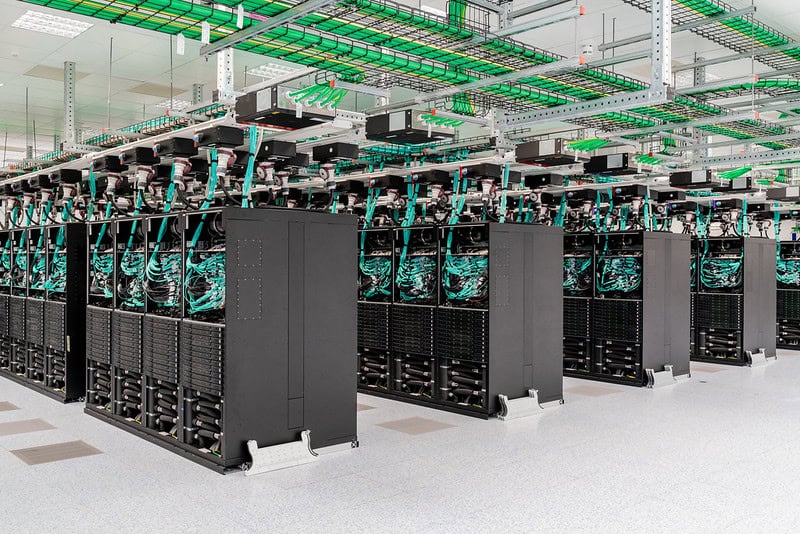
ECMWF high-performance computing centre

What other factors help improve forecast accuracy?

We talk of “a day, a decade” improvement in weather forecasting, such that a five-day forecast now is as good as a three-day forecast 20 years ago. A richer and broader mix of observational data underpins that improvement, with diverse data streams feeding into bigger supercomputers that can run higher-resolution models and better algorithms. Equally important is ECMWF’s team of multidisciplinary scientists, whose understanding of the atmosphere and climate helps to optimize our models and data assimilation methods. A case study in this regard is Destination Earth, an ambitious European Union initiative to create a series of “digital twins” – interactive computer simulations – of our planet by 2030. Working with ESA and EUMETSTAT, the ECMWF is building the software and data environment for Destination Earth as well as developing the first two digital twins.

What are these two twins?

Our Digital Twin on Weather-Induced and Geophysical Extremes will assess and predict environmental extremes to support risk assessment and management. Meanwhile, in collaboration with others, the Digital Twin on Climate Change Adaptation complements and extends existing capabilities for the analysis and testing of “what if” scenarios – supporting sustainable development and climate adaptation and mitigation policy-making over multidecadal timescales.

Progress in machine learning and AI has been dramatic over the past couple of years

What kind of resolution will these models have?

Both digital twins integrate sea, atmosphere, land, hydrology and sea ice and their deep connections with a resolution currently impossible to reach. Right now, for example, the ECMWF’s operational forecasts cover the whole globe in a 9 km grid – effectively a localized forecast every 9 km. With Destination Earth, we’re experimenting with 4 km, 2 km, and even 1 km grids.

In February, the ECMWF unveiled a 10-year strategy to accelerate the use of machine learning and AI. How will this be implemented?

The new strategy prioritizes growing exploitation of data-driven methods anchored on established physics-based modelling – rapidly scaling up our previous deployment of machine learning and AI. There are also a variety of hybrid approaches combining data-driven and physics-based modelling.

What will this help you achieve?

On the one hand, data assimilation and observations will help us to directly improve as well as initialize our physics-based forecasting models – for example, by optimizing uncertain parameters or learning correction terms. We are also investigating the potential of applying machine-learning techniques directly on observations – in effect, to make another step beyond the current state-of-the-art and produce forecasts without the need for reanalysis or data assimilation.

How is machine learning deployed at the moment?

Progress in machine learning and AI has been dramatic over the past couple of years – so much so that we launched our Artificial Intelligence Forecasting System (AIFS) back in February. Trained on many years of reanalysis and using traditional data assimilation, AIFS is already an important addition to our suite of forecasts, though still working off the coat-tails of our physics-based predictive models. Another notable innovation is our Probability of Fire machine-learning model, which incorporates multiple data sources beyond weather prediction to identify regional and localized hot-spots at risk of ignition. Those additional parameters – among them human presence, lightning activity as well as vegetation abundance and its dryness – help to pinpoint areas of targeted fire risk, improving the model’s predictive skill by up to 30%.

What do you like most about working at the ECMWF?

Every day, the ECMWF addresses cutting-edge scientific problems – as challenging as anything you’ll encounter in an academic setting – by applying its expertise in atmospheric physics, mathematical modelling, environmental science, big data and other disciplines. What’s especially motivating, however, is that the ECMWF is a mission-driven endeavour with a straight line from our research outcomes to wider societal and economic benefits.

ECMWF at 50: new frontiers in weather and climate prediction

The European Centre for Medium-Range Weather Forecasts (ECMWF) is an independent intergovernmental organization supported by 35 states – 23 member states and 12 co-operating states. Established in 1975, the centre employs around 500 staff from more than 30 countries at its headquarters in Reading, UK, and sites in Bologna, Italy, and Bonn, Germany. As a research institute and 24/7 operational service, the ECMWF produces global numerical weather predictions four times per day and other data for its member/cooperating states and the broader meteorological community.

The ECMWF processes data from around 90 satellite instruments as part of its daily activities (yielding 60 million quality-controlled observations each day for use in its Integrated Forecasting System). The centre is a key player in Copernicus – the Earth observation component of the EU’s space programme – by contributing information on climate change for the Copernicus Climate Change Service; atmospheric composition to the Copernicus Atmosphere Monitoring Service; as well as flooding and fire danger for the Copernicus Emergency Management Service. This year, the ECMWF is celebrating its 50th anniversary and has a series of celebratory events scheduled in Bologna (15–19 September) and Reading (1–5 December).
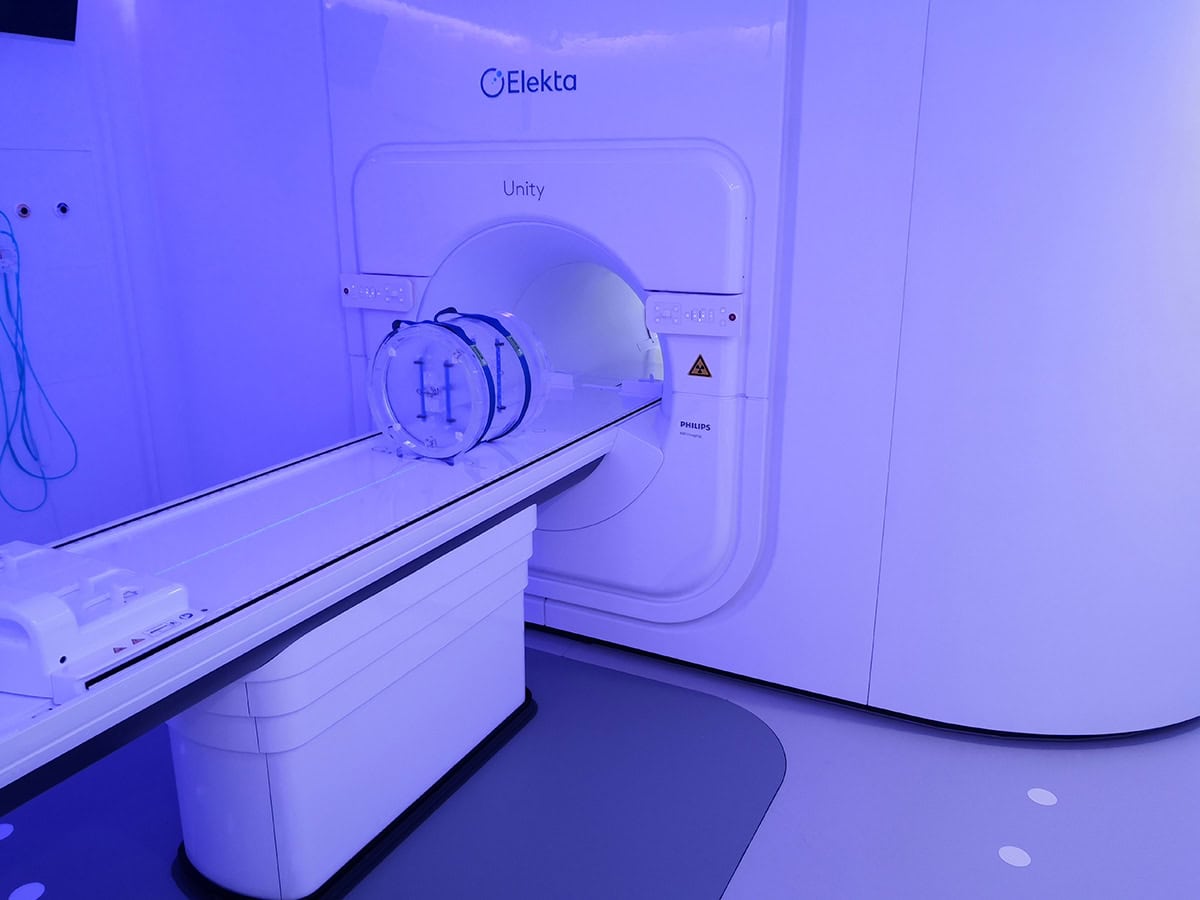

MR QA from radiotherapy perspective

Want to learn more on this subject?

IBA webinar image

During this webinar, the key steps of integrating an MRI scanner and MRI Linac into a radiotherapy will be presented, specially focusing on the quality assurance required for the use of the MRI images. Furthermore, the use of phantoms and their synergy with each other across the multi-vendor facility will be discussed.

Want to learn more on this subject?

Akos Gulyban

Akos Gulyban is a medical physicist with a PhD in Physics (in Medicine), renowned for his expertise in MRI-guided radiotherapy (MRgRT). Currently based at Institut Jules Bordet in Brussels, he plays a pivotal role in advancing MRgRT technologies, particularly through the integration of the Elekta Unity MR-Linac system along the implementation of dedicated MRI simulation for radiotherapy.

In addition to his clinical research, Gulyban has been involved in developing quality assurance protocols for MRI-linear accelerator (MR-Linac) systems, contributing to guidelines that ensure safe and effective implementation of MRI-guided radiotherapy.

Gulyban is playing a pivotal role in integrating advanced imaging technologies into radiotherapy, striving to enhance treatment outcomes for cancer patients.

Neutrons differentiate between real and fake antique coins

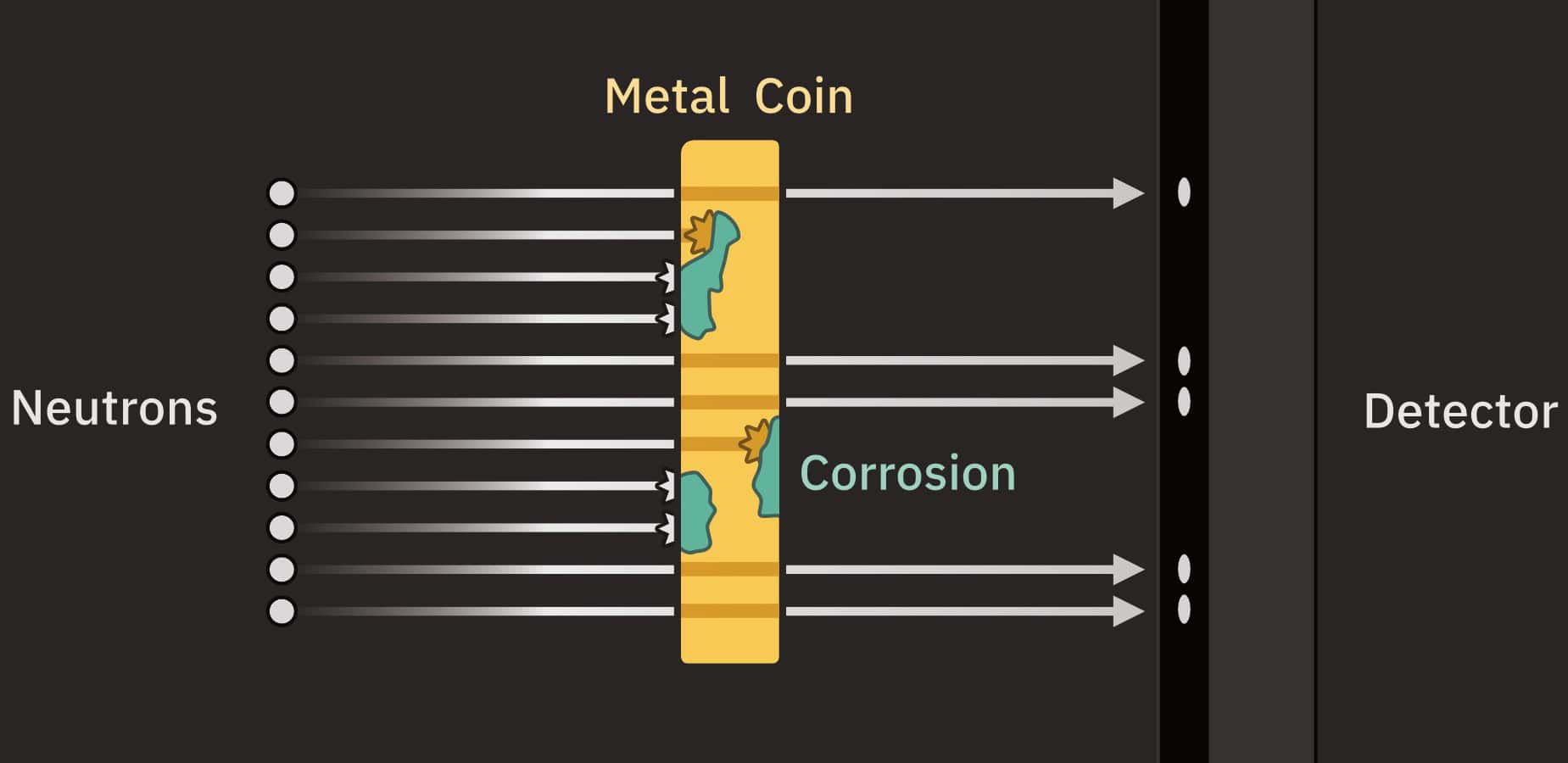
Illustration of neutron tomography

The presence of hydrogen in a sample is usually a bad thing in neutron scattering experiments, but now researchers in the US have turned the tables on the lightest element and used it to spot fake antique coins.

The scattering of relatively slow moving neutrons from materials provides a wide range of structural information. This is because these “cold” neutrons have wavelengths on par with the separations of atoms in a materials. However, materials that contain large amounts of hydrogen-1 nuclei (protons) can be difficult to study because hydrogen is very good at scattering neutrons in random directions – creating a noisy background signal. Indeed, biological samples containing lots of hydrogen are usually “deuterated” – replacing hydrogen with deuterium – before they are placed in a neutron beam.

However, there are some special cases where this incoherent scattering of hydrogen can be useful – measuring the water content of samples, for example.

Surfeit of hydrogen

Now, researchers in the US and South Korea have used a neutron beam to differentiate between genuine antique coins and fakes. The technique relies on the fact that the genuine coins have suffered corrosion that has resulted in the inclusion of hydrogen-bearing compounds within the coins.

Led by Youngju Kim and Daniel Hussey at the National Institute of Standards and Technology (NIST) in Colorado, the team fired a parallel beam of neutrons through individual coins (see figure). The particles travel with ease through a coin’s original metal, but tend to be scattered by the hydrogen-rich corrosion inclusions. This creates a 2D pattern of high and low intensity regions on a neutron-sensitive screen behind the coin. The coin can be rotated and a series of images taken. Then, the researchers used computed tomography to create a 3D image showing the corroded regions of a coin.

The team used this neutron tomography technique to examine an authentic 19th century coin that was recovered from a shipwreck, and on a coin that is known to be a replica. Although both coins had surface corrosion, the corrosion extended much deeper into the bulk of the authentic coin than it did in the replica.

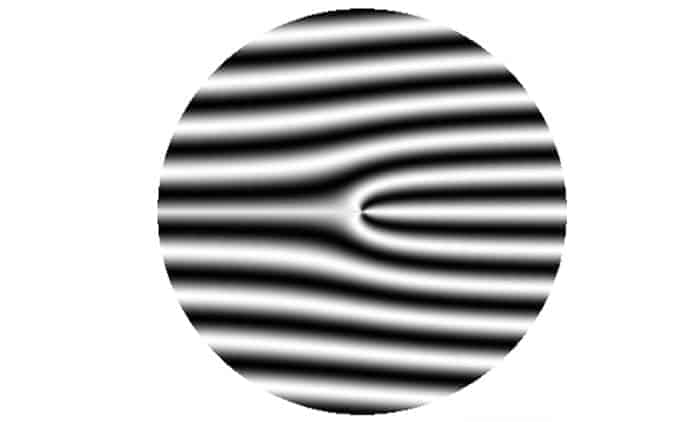
The researchers also used a separate technique called neutron grating interferometry to characterize the pores in the surfaces of the coins. Pores are common on the surface of coins that have been buried or submerged. Authentic antique coins are often found buried or submerged, whereas replica coins will be buried or submerged to make them look more authentic.

Small-angle scattering

Neutron grating interferometry looks at the small-angle scattering of neutrons from a sample and focuses on structures that range in size from about 1 nm to 1 micron.

The team found that the authentic coin had many more tiny pores than the replica coin, which was dominated by much larger (millimetre scale) pores.

This observation was expected because when a coin is buried or submerged, chemical reactions cause metals to leach out of its surface, creating millimetre-sized pores. As time progresses, however, further chemical reactions cause corrosion by-products such as copper carbonates to fill in the pores. The result is that the pores in the older authentic coin are smaller than the pores in the newer replica coin.

The team now plans to expand its study to include more Korean coins and other metallic artefacts. The techniques could also be used to pinpoint corrosion damage in antique coins, allowing these areas to be protected using coatings.

As well as being important to coin collectors and dealers, the ability to verify the age of coins is of interest to historians and economists – who use the presence of coins in their research.

The study was done using neutrons from NIST’s research reactor in Maryland. That facility is scheduled to restart in 2026 so the team plans to continue its investigation using a neutron source in South Korea.

The research is described in Scientific Reports.

Geophysicists pinpoint location of Yellowstone magma reservoir

The first clear images of Yellowstone’s shallowest magma reservoir have revealed its depth with unprecedented precision, providing information that could help scientists determine how dangerous it is. By pinpointing the reservoir’s location, geophysicists and seismologists from Rice University and the universities of Utah, New Mexico and Texas at Dallas, hope to develop more accurate predictions of when this so-called “supervolcano” will erupt again.

Yellowstone is America’s oldest national park, and it owes its spectacular geysers and hot springs to its location above one of the world’s largest volcanoes. The last major eruption of the Yellowstone supervolcano happened around 630 000 years ago, and was violent enough to create a collapsed crater, or caldera, over 60 km across. Though it shows no sign of repeating this cataclysm anytime soon, it is still an active volcano, and it is slowly forming a new magma reservoir.

Previous estimates of the depth of this magma reservoir were highly imprecise, ranging from three to eight kilometres. Scientists also lacked an accurate location for the reservoir’s top and were unsure how its properties changed with increasing depth.

The latest results, from a team led by Brandon Schmandt and Chenglong Duan at Rice and Jamie Farrell at Utah, show that the reservoir’s top lies 3.8 km below the surface. They also show evidence of an abrupt downward transition into a mixture of gas bubbles and magma filling the pore space of volcanic rock. The gas bubbles are made of mostly H2O in supercritical form and the magma comprises molten silicic rock such as rhyolite.

Creating artificial seismic waves

Duan and colleagues obtained their result by using a mechanical vibration source (a specialized truck built by the oil and gas firm Dawson Geophysical) to create artificial seismic waves across the ground beneath the northeast portion of Yellowstone’s caldera. They also deployed a network of hundreds of portable seismometers capable of recording both vertical and ground vibrations, spaced at 100 to 150-m intervals, across the national park. “Researchers already knew from previous seismic and geochemical studies that this region was underlain by magma, but we needed new field data and an innovative adaptation of conventional seismic imaging techniques,” explains Schmandt. The new study, he tells Physics World, is “a good example of how the same technologies are relevant to energy industry imaging and studies of natural hazards”.

Over a period of a few days, the researchers created artificial earthquakes at 110 different locations using 20 shocks lasting 40 seconds apiece. This enabled them to generate two types of seismic wave, known as S- and P-waves, which reflect off molten rock at different velocities. Using this information, they were able to locate the top of the magma chamber and determine that 86% of this upper portion was solid rock.

The rest, they discovered, was made up of pores filled with molten material such as rhyolite and volatile gases (mostly water in supercritical form) and liquids in roughly equal proportion. Importantly, they say, this moderate concentration of pores allows the volatile bubbles to gradually escape to the surface so they do not accumulate and increase the buoyancy deeper inside the chamber. This is good news as it means that the Yellowstone supervolcano is unlikely to erupt any time soon.

A key aspect of this analysis was a wave-equation imaging method that Duan developed, which substantially improved the spatial resolution of the features observed. “This was important since we had to adapt the data we obtained to its less than theoretically ideal properties,” Schmandt explains.

The work, which is detailed in Nature, could also help scientists monitor the eruption potential of other volcanos, Schmandt adds. This is because estimating the accumulation and buoyancy of volatile material beneath sharp magmatic cap layers is key to assessing the stability of the system. “There are many types of similar hazardous magmatic systems and their older remnants on our planet that are important for resources like metal ores and critical minerals,” he explains. “We therefore have plenty of targets left to understand and now some refined ideas about how we might approach them in the field and on the computer.”

Beyond the Big Bang: reopening the doors on how it all began

“The universe began with a Big Bang.”

I’ve said this neat line more times than I can count at the start of a public lecture. It summarizes one of the most incomprehensible ideas in science: that the universe began in an extreme, hot, dense and compact state, before expanding and evolving into everything we now see around us. The certainty of the simple statement is reassuring, and it is an easy way of quickly setting the background to any story in astronomy.

But what if it isn’t just an oversimplified summary? What if it is misleading, perhaps even wholly inaccurate?

The Battle of the Big Bang: the New Tales of Our Cosmic Origin aims to dismantle the complacency many of us have fallen into when it comes to our knowledge of the earliest time. And it succeeds – if you push through the opening pages.

When a theory becomes so widely accepted that it is immune to question, we’ve moved from science supported by evidence to belief upheld by faith

Early on, authors Niayesh Afshordi and Phil Halper say “in some sense the theory of the Big Bang cannot be trusted”, which caused me to raise an eyebrow and wonder what I had let myself in for. After all, for many astronomers, myself included, the Big Bang is practically gospel. And therein lies the problem. When a theory becomes so widely accepted that it is immune to question, we’ve moved from science supported by evidence to belief upheld by faith.

It is easy to read the first few pages of The Battle of the Big Bang with deep scepticism but don’t worry, your eyebrows will eventually lower. That the universe has evolved from a “hot Big Bang” is not in doubt – observations such as the measurements of the cosmic microwave background leave no room for debate. But the idea that the universe “began” as a singularity – a region of space where the curvature of space–time becomes infinite – is another matter. The authors argue that no current theory can describe such a state, and there is no evidence to support it.

An astronomical crowbar

Given the confidence with which we teach it, many might have assumed the Big Bang theory beyond any serious questioning, thereby shutting the door on their own curiosity. Well, Afshordi and Halper have written the popular science equivalent of a crowbar, gently prising that door back open without judgement, keen only to share the adventure still to be had.

A cosmologist at the University of Waterloo, Canada, Afshordi is obsessed with finding observational ways of solving problems in fundamental physics, and is known for his creative alternative theories, such as a non-constant speed of light. Meanwhile Halper, a science popularizer, has carved out a niche by interviewing leading voices in early universe cosmology on YouTube, often facilitating fierce debates between competing thinkers. The result is a book that is both authoritative and accessible – and refreshingly free from ego.

Over 12 chapters, the book introduces more than two dozen alternatives to the Big Bang singularity, with names as tongue-twisting as the theories are mind-bending. For most readers, and even this astrophysicist, the distinctions between the theories quickly blur. But that’s part of the point. The focus isn’t on convincing you which model is correct, it’s about making clear that many alternatives exist that are all just as credible (give or take). Reading this book feels like walking through an art gallery with a knowledgeable and thoughtful friend explaining each work’s nuance. They offer their own opinions in hushed tones, but never suggest that their favourite should be yours too, or even that you should have a favourite.

If you do find yourself feeling dizzy reading about the details of holographic cosmology or eternal inflation, then it won’t be long before an insight into the nature of scientific debate or a crisp analogy brings you up for air. This is where the co-authorship begins to shine: Halper’s presence is felt in the moments when complicated theories are reduced to an idea anyone can relate to; while Afshordi brings deep expertise and an insider’s view of the cosmological community. These vivid and sometimes gossipy glimpses into the lives and rivalries of his colleagues paint a fascinating picture. It is a huge cast of characters – including Roger Penrose, Alan Guth and Hiranya Peiris – most of whom appear only for a page. But even though you won’t remember all the names, you are left with the feeling that Big Bang cosmology is a passionate, political and philosophical side of science very much still in motion.

Keep the door open

The real strength of this book is its humility and lack of defensiveness. As much as reading about the theory behind a multiverse is interesting, as a scientist, I’m always drawn to data. A theory that cannot be tested can feel unscientific, and the authors respect that instinct. Surprisingly, some of the most fantastical ideas, like pre-Big Bang cosmologies, are testable. But the tools required are almost science fiction themselves – such as a fleet of gravitational-wave detectors deployed in space. It’s no small task, and one of the most delightful moments in the book is a heartfelt thank you to taxpayers, for funding the kind of fundamental research that might one day get us to an answer.

In the concluding chapters, the authors pre-emptively respond to scepticism, giving real thought to discussing when thinking outside the box becomes going beyond science altogether. There are no final answers in this book, and it does not pretend to offer any. In fact, it actively asks the reader to recognize that certainty does not belong at the frontiers of science. Afshordi doesn’t mind if his own theories are proved wrong, the only terror for him is if people refuse to ask questions or pursue answers simply because the problem is seen as intractable.

Curiosity, unashamed and persistent, is far more scientific than shutting the door for fear of the uncertain

A book that leaves you feeling like you understand less about the universe than when you started it might sound like it has failed. But when that “understanding” was an illusion based on dogma, and a book manages to pry open a long-sealed door in your mind, that’s a success.

The Battle of the Big Bang offers both intellectual humility and a reviving invitation to remain eternally open-minded. It reminded me of how far I’d drifted from being one of the fearless schoolchildren who, after I declare with certainty that the universe began with a Big Bang, ask, “But what came before it?”. That curiosity, unashamed and persistent, is far more scientific than shutting the door for fear of the uncertain.

  • May 2025 University of Chicago Press 360pp $32.50/£26.00 hb

General Fusion lays off staff due to ‘unexpected and urgent financing constraints’

The Canadian firm General Fusion is to lay off about 25% of its 140-strong workforce and reduce the operation of its fusion device dubbed Lawson Machine 26 (LM26). The announcement was made in an open letter published on 5 May by the company’s chief executive Greg Twinney. The moves follows what the firm says is an “unexpected and urgent financing constraint”.

Founded in 2002 by the Canadian plasma physicist Michel Laberge, General Fusion is based in Richmond, British Columbia. It is one of the first private fusion companies and has attracted more than $325m of funding from both private investors, including Amazon boss Jeff Bezos and the Canadian government.

The firm is pursuing commercial fusion energy via Magnetized Target Fusion (MTF) technology, based on the concept of an enclosed, liquid-metal vortex. Plasma is injected into the centre of the vortex before numerous pistons hammer on the outside of the enclosure, compressing the plasma and sparking a fusion reaction, with the resulting heat being absorbed by the liquid metal.

LM26 switched on in 2023 and is designed to achieve fusion conditions of over 100 million kelvin. Over the past couple of years, the machine has claimed a number of milestones, including generating a magnetised plasma in the machine’s target chamber in March. Last week, General Fusion also said that LM26 had successfully compressed a large-scale magnetized plasma with lithium.

The firm was hoping to achieve “scientific breakeven equivalent” in the coming years with the aim of potentially building a commercial-scale machine with the technology in the 2030s. But that timescale now looks unlikely as General Fusion announces plans to downscales its efforts due to funding issues. In his letter, Twinney said the firm has “proven a lot with a lean budget”.

Challenging environment 

“Today’s funding landscape is more challenging than ever as investors and governments navigate a rapidly shifting and uncertain political and market climate,” says Twinney. “We are ready to execute our plan but are caught in an economic and geopolitical environment that is forcing us to wait.” But he insists that General Fusion, which his seeking new investors, remains an “attractive opportunity”.

Andrew Holland, chief executive of the non-profit Fusion Industry Association, told Physics World that the “nature of private enterprise is that business cycles go up and go down” and claims that excitement about fusion is growing around the world. “I hope that business cycles and geopolitics don’t interrupt the good work of scientific advancement,” he says. “I’m hopeful investors see the value being created with every experiment.”

Organic magic: Ji-Seon Kim on how carbon-based semiconductors are shaping our present and future

In a sunny office, Ji-Seon Kim holds up a sheet of stripy plastic. In the middle of dark blue and transparent bands, a small red glow catches the eye, clearly visible even against the bright daylight. There are no sockets or chargers, but that little light is no magic trick.

“It’s a printed solar cell from my industrial collaborator,” Kim explains. “This blue material is the organic semiconductor printed in the plastic. It absorbs indoor light and generates electricity to power the LED.”

Kim is a professor in the Department of Physics at Imperial College London, and was director of the university’s EPSRC Plastic Electronics Centre for Doctoral Training, which closed in 2023. She researches carbon-based semiconductors, sometimes called organic, molecular or plastic semiconductors. In 2023 the Institute of Physics (IOP) awarded her the Nevill Mott Medal and Prize in recognition of her “outstanding contributions to the materials physics” of this area.

Yet she came to the field almost by accident. After completing her master’s degree in theoretical physics in Seoul in 1994, Kim was about to embark on a theory-focused PhD studying nonlinear optics at Imperial, when her master’s supervisor told her about some exciting work happening at the University of Cambridge.

A team there had just created the first organic light-emitting diodes (OLEDs) based on conjugated polymers, successfully stimulating carbon-based molecules to glow under an applied voltage. Intrigued by the nascent field, Kim contacted Richard Friend, who led the research and, following an interview, he offered her a PhD position. Friend himself won the IOP’s Isaac Newton Medal and Prize in 2024.

I was really lucky to be in the right place at the right time, just after this new discovery

Ji-Seon Kim

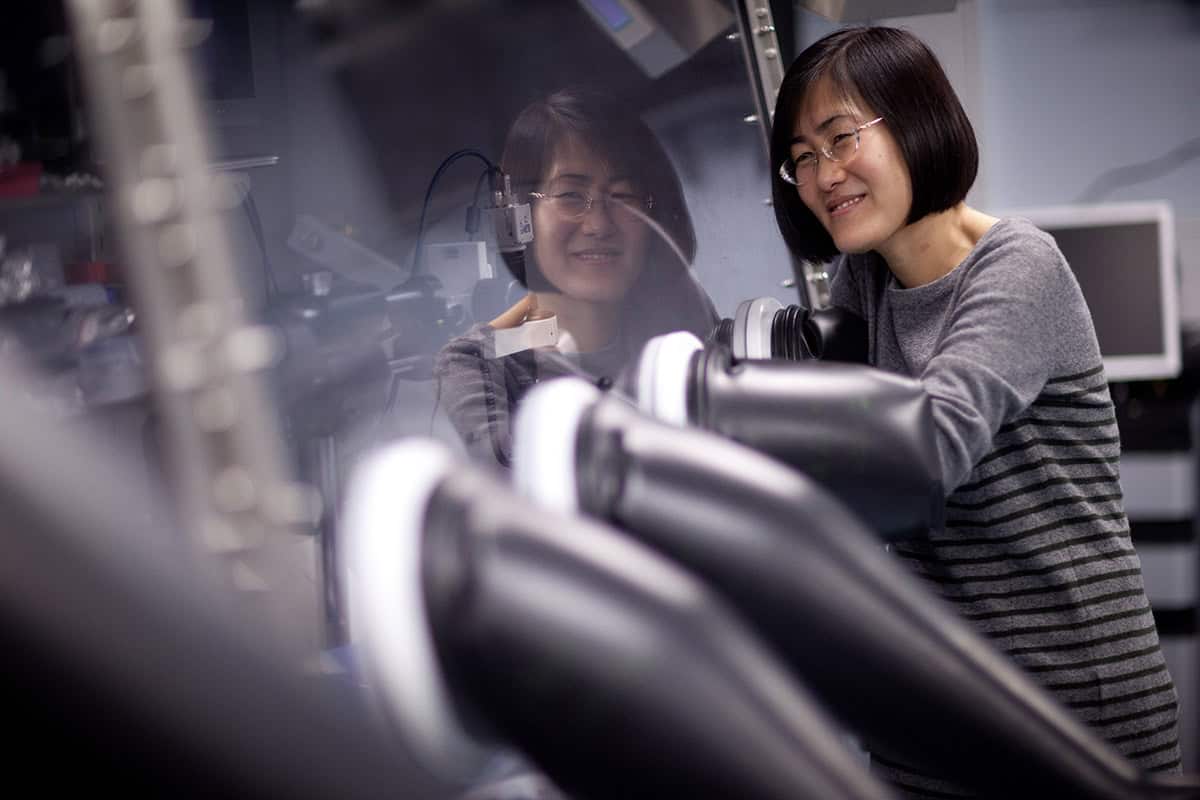
“I spent almost six months learning how to use certain equipment in the lab,” Kim recalls of the tricky transition from theory to experimental work. “For example, there’s a big glove box you have to put your hands in to make the devices inside it, and I wasn’t sure whether I was even able to open the chamber.”

But as she found her feet, she became increasingly passionate about the work. “I was really lucky to be in the right place at the right time, just after this new discovery.”

Seeing the light

You could hardly find a clearer example of fundamental research moving into consumer applications in recent years than OLEDs – now a familiar term in the world of TVs and smartphones. But when Kim joined the field, the first OLEDs were inefficient and degraded quickly due to high electric fields, heat and oxygen exposure. So, during her PhD, Kim focused on making the devices more efficient and last for longer.

A woman using a glove box in a laboratory

She also helped to develop a better understanding of the physics underlying the phenomenon. At the time, researchers disagreed about the fundamental limit of device efficiency determined by excited state (singlet vs triplet) formation under charge injection. Drawing on her theoretical background, Kim developed innovative simulation work on display device outcoupling, which provided a new way of determining the orientation of emitting molecules and the device efficiency, which is now commonly used in the OLED community.

Kim completed her PhD in 2000 and continued studying organic semiconductors, moving to Imperial in 2007. Besides display screens, she is interested in numerous other potential applications of the materials, including sustainable energy. After all, just as the molecules can emit light in response to injected charges, so too can they absorb photons and generate electricity.

Organic semiconductors have several advantages over traditional silicon-based photovoltaic materials. As well as being lightweight, carbon molecules can be tuned to absorb different wavelengths. Whereas silicon solar cells only work with sunlight, and must be installed as heavy panels on roofs or in fields, organic semiconductors offer more options. They could be inconspicuously integrated into buildings, capturing indoor office light that is normally wasted and using it to power appliances. They could even be made into a transparent film and incorporated into windows to convert sunlight into electricity.

Plastic fabrication methods offer a further benefit. Unlike silicon, carbon-based semiconductors can be dissolved in common organic solvents to create a kind of ink, opening the door to low-cost, flexible printing techniques.

And it doesn’t stop there. “A future direction I am particularly interested in is using organic semiconductors for neuromorphic applications,” says Kim. “You can make synaptic transistors – which mimic biological neurons – using molecular semiconductors.”

With all the promise of these materials, the field has flourished. Kim’s group is currently tackling the challenge of the high binding energy between the electron–hole pair in organic semiconductors, which resists separation into free charges, increasing the intrinsic energy cost of using them. Kim and her team are exploring new small molecules, which create an energy level offset by simply changing their packing and orientations, providing an extra driving force to separate the charges.

Building bridges

Alongside her work at Imperial, Kim was also a visiting professor at KAIST in Korea, and is actively involved in strengthening UK–Korea research ties. In 2016 she co-established the GIST-ICL Research and Development Centre for Plastic Electronics, a collaboration between the Gwangju Institute for Science and Technology and Imperial.

“International interactions are critical not only for scientific development but also for future technology,” Kim says. “The UK is really strong in fundamental science, but we don’t have many manufacturing sites compared to Asian countries like Korea. For a fundamental discovery to be applied in a commercial device, there’s a transition from the lab to the manufacturing scale. For that we need a partner, and those partners are overseas.”

Kim is also seeking to build bridges across disciplines. She will soon be moving to the University of Oxford to work on physical chemistry as part of a research initiative focused on sustainable materials and chemistry. She will draw on her expertise in spectroscopic techniques to study and engineer molecules for sustainable applications.

“These days physics is multidisciplinary,” she notes. “For future technology and science, you have to be able to integrate different disciplines. I hope I can contribute as a physicist to bridge different disciplines in molecular semiconductors.”

But one constant is how Kim mentors undergraduate students. Her advice is to engage them with innovations from the lab, which is why she likes to get out the plastic sheet powering the LED. The emphasis on tangible experience is inspired by the excitement and motivation she remembers feeling when she saw organic semiconductors glowing at the start of her PhD.

“Even though the efficiency was so poor that we had to turn the overhead light off and use a really high voltage to see the faint light, that exposure to the real physics was really important,” she says. “That was for me a Eureka moment.”

Vapourware and unobtanium: why overselling is not (always) a good idea

What does the word “overselling” mean to you? At one level, it can just mean selling more of something than already exists or can be delivered. It’s what happens when airlines overbook flights by selling more seats than physically exist on their planes. They assume a small fraction of passengers won’t turn up, which is fine – until you can’t fly because everyone else has rocked up ahead of you.

Overselling can also involve selling more of something than is strictly required. Also known as “upselling”, you might have experienced it when buying a car or taking out a new broadband contract. You end up paying for extras and add-ons that were offered but you didn’t really need or even want, which explains why you’ve got all those useless WiFi boosters lying around the house.

There’s also a third meaning of “overselling”, which is to exaggerate the merits of something. You see it when a pharmaceutical company claims its amazing anti-ageing product “will make you live 20 years longer”, which it won’t. Overselling in this instance means overstating a product’s capability or functionality. It’s pretending something is more mature than it is, or claiming a technology is real when it’s still at proof-of-concept-stage.

From my experience in science and technology, this form of overselling often happens when companies and their staff want to grab attention or to keep customers or consumers on board. Sometimes firms do it because they are genuinely enthusiastic (possibly too much so) about the future possibilities of their product. I’m not saying overselling is necessarily a bad thing but just that there are reservations.

Fact and fiction

Before I go any further, let’s learn the lingo of overselling. First off, there’s “vapourware”, which refers to a product that either doesn’t exist or doesn’t fulfil the stated technical capability. Often, it’s something a firm wants to include in its product portfolio because they’re sure people would like to own it. Deep down, though, the company knows the product simply isn’t possible, at least not right now. Like a vapour, it’s there but can’t be touched.

Sometimes vapourware is just a case of waiting for product development to catch up with a genuine product plan. Sales staff know they haven’t got the product at the right specification yet, and while the firm will definitely get there one day, they’re pretending the hurdles have already been crossed. But genuine over-enthusiasm can sometimes cross over into wishful thinking – the idea that a certain functionality can be achieved with an existing technical approach.

Do you remember Google Glass? This was wearable tech, integrated into spectacle frames, that was going to become the ubiquitous portable computer. Information would be requested via voice commands, with the user receiving back the results, visible on a small heads-up display. While the computing technology worked, the product didn’t succeed. Not only did it look clunky, there were also deployment constraints and concerns about privacy and safety.

Google Glass simply didn’t capture the public’s imagination or meet the needs of enough consumers

Google Glass failed on multiple levels and was discontinued in 2015, barely a year after it hit the market. Subsequent relaunches didn’t succeed either and the product was pulled for a final time in 2023. Despite Google’s best efforts, the product simply didn’t capture the public’s imagination or meet the needs of enough consumers.

Next up in our dictionary of overselling is “unobtanium”, which is a material or material specification that we would like to exist, but simply doesn’t. In the aerospace sector, where I work, we often dream of unobtanium. We’re always looking for materials that can repeatedly withstand the operational extremes encountered during a flight, while also being sustainable without cutting corners on safety.

Like other engine manufacturers, my company – GE Aerospace – is pioneering multiple approaches to help develop such materials. We know that engines become more efficient when they burn at higher temperatures and pressures. We also know that nitrous-oxide (NOx) emissions fall when an engine burns more leanly. Unfortunately, there are no metals we know of that can survive to such high temperatures.

But the quest for unobtanium can drive innovative technical solutions. At GE, for example, we’re making progress by looking instead at composite materials, such as carbon fibre and composite matrix ceramics. Stronger and more tolerant to heat and pressure than metals, they’ve already been included on the turbofan engines in planes such as the Boeing 787 Dreamliner.

We’re also using “additive manufacturing” to build components layer by layer. This approach lets us make highly intricate components with far less waste than conventional techniques, in which a block of material is machined away. We’re also developing innovative lean-burn combustion technologies, such as novel cooling and flow strategies, to reduce NOx emissions.

While unobtanium can never be reached, it’s worth trying to get there to drive technology forward

A further example is the single crystal turbine blade developed by Rolls-Royce in 2012. Each blade is cast to form a single crystal of super alloy, making it extremely strong and able to resist the intense heat inside a jet engine. According to the company, the single crystal turbine blades operate up to 200 degrees above the melting point of their alloy. So while unobtanium can never be reached, it’s worth trying to get there to drive technology forward.

Lead us not into temptation

Now, here’s the caveat. There’s an unwelcome side to overselling, which is that it can easily morph into downright mis-selling. This was amply demonstrated by the Volkswagen diesel emissions scandal, which saw the German carmaker install “defeat devices” in its diesel engines. The software changed how the engine performed when it was undergoing emissions tests to make its NOx emissions levels appear much lower than they really were.

VW was essentially falsifying its diesel engine emissions to conform with international standards. After regulators worldwide began investigating the company, VW took a huge reputational and financial hit, ultimately costing it more than $33bn in fines, penalties and financial settlements. Senior chiefs at the company got the sack and the company’s reputation took a serious hit.

It’s tempting – and sometimes even fun – to oversell. Stretching the truth draws interest from customers and consumers. But when your product no longer does “what it says on the tin”, your brand can suffer, probably more so than having something slightly less functional.

On the upside, the quest for unobtanium and, to some extent, the selling of vapourware can drive technical progress and lead to better technical solutions. I suspect this was the case for Google Glass. The underlying technology has had some success in certain niche applications such as medical surgery and manufacturing. So even though Google Glass didn’t succeed, it did create a gap for other vendors to fill.

Google Glass was essentially a portable technology with similar functionality to smartphones, such as wireless Internet access and GPS connectivity. Customers, however, proved to be happier carrying this kind of technology in their hands than wearing it on their heads. The smartphone took off; Google Glass didn’t. But the underlying tech – touchpads, cameras, displays, processors and so on – got diverted into other products.

Vapourware, in other words, can give a firm a competitive edge while it waits for its product to mature. Who knows, maybe one day even Google Glass will make a comeback?

Quantum twisting microscope measures phasons in cryogenic graphene

By adapting their quantum twisting microscope to operate at cryogenic temperatures, researchers have made the first observations of a type of phonon that occurs in twisted bilayer graphene.  These “phasons” could have implications for the electron dynamics in these materials.

Graphene is a layer of carbon just one atom thick and it has range of fascinating and useful properties – as do bilayer and multilayer versions of graphene. Since 2018, condensed-matter physicists have been captivated by the intriguing electron behaviour in two layers of graphene that are rotated with respect to each other.

As the twist angle deviates from zero, the bilayer becomes a moiré superlattice. The emergence of this structure influences electronic properties of the material, which can transform from a semiconductor to a superconductor.

In 2023, researchers led by Shahal Ilani at the Weizmann Institute of Science in Israel developed a quantum twisting microscope to study these effects. Based on a scanning probe microscope with graphene on the substrate and folded over the tip such as to give it a flat end, the instrument allows precise control over the relative orientation between two graphene surfaces – in particular, the twist angle.

Strange metals

Now Ilani and an international team have operated the microscope at cryogenic temperatures for the first time. So far, their measurements support the current understanding of how electrons couple to phasons, which are specific modes of phonons (quantized lattice vibrations). Characterizing this coupling could help us understand “strange metals”, whose electrical resistance increases at lower temperatures – which is the opposite of normal metals.

There are different types of phonons, such as acoustic phonons where atoms within the same unit cell oscillate in phase with each other, and optical phonons where they oscillate out of phase. Phasons are phonons involving lattice oscillations in one layer that are out of phase or antisymmetric with oscillations in the layer above.

“This is the one that turns out to be very important for how the electrons behave between the layers because even a small relative displacement between the two layers affects how the electrons go from one layer to the other,” explains Weizmann’s John Birkbeck as he describes the role of phasons in twisted bilayer graphene materials.

For most phonons the coupling to electrons is weaker the lower the energy of the phonon mode. However for twisted bilayer materials, theory suggests that phason coupling to electrons increases as the twist between the two layers approaches alignment due to the antisymmetric motion of the two layers and the heightened sensitivity of interlayer tunnelling to small relative displacements.

Unique perspective

“There are not that many tools to see phonons, particularly in moiré systems” adds Birkbeck. This is where the quantum twisting microscope offers a unique perspective. Thanks to the atomically flat end of the tip, electrons can tunnel between the layer on the substrate and the layer on the tip whenever there is a matching state in terms of not just energy but also momentum too.

Where there is a momentum mismatch, tunnelling between tip and substrate is still possible by balancing the mismatch with the emission or absorption of a phonon. By operating at cryogenic temperatures, the researchers were able to get a measure of these momentum transactions and probe the electron phonon coupling too.

“What was interesting from this work is not only that we could image the phonon dispersion, but also we can quantify it,” says Birkbeck stressing the absolute nature of these quantified electron phonon coupling-strength measurements.

The measurements are the first observations of phasons in twisted bilayer graphene and reveal a strong increase in coupling as the layers approach alignment, as predicted by theory. However, the researchers were not able to study angles smaller than 6°. Below this angle the tunnelling resistance is so low that the contact resistance starts to warp readings, among other limiting factors.

Navigating without eyes

A certain amount of technical adjustment was needed to operate the tool at cryogenic temperatures, not least to “to navigate without eyes” because the team was not able to incorporate their usual optics with the cryogenic set up. The researchers hope that with further technical adjustments they will be able to use the quantum twisting microscope in cryogenic conditions at the magic angle of 1.1°, where superconductivity occurs.

Pablo Jarillo Herrero, who led the team at MIT that first reported superconductivity in twisted bilayer graphene in 2018 but was not involved in this research describes it as an “interesting study” adding, “I’m looking forward to seeing more interesting results from low temperature QTM research!”

Hector Ochoa De Eguileor Romillo at Columbia University in the US, who proposed a role for phason–electron interactions in these materials in 2019, but was also not involved in this research describes it as “a beautiful experiment”. He adds, “I think it is fair to say that this is the most exciting experimental technique of the last 15 years or so in condensed matter physics; new interesting data are surely coming.”

The research is described in Nature.

The mechanics behind rose petal shapes revealed

Roses have been cultivated for thousands of years, admired for their beauty. Despite their use in fragrance, skincare and even in teas and jams, there are some things, however, that we still don’t know about these symbolic flowers.

And that includes the physical mechanism behind the shape of rose petals.

The curves and curls of leaves and flower petals arise due to the interplay between their natural growth and geometry.

Uneven growth in a flat sheet, in which the edges grow quicker than the interior, gives rise to strain and in plant leaves and petals, for example, this can result in a variety of shapes such as saddle and ripple shapes.

Yet when it comes to rose petals, the sharply pointed cusps – a point where two curves meet — that form at the edge of the petals set it apart from soft, wavy patterns seen in many other plants.

While young rose petals have smooth edges, as the rose matures the petals change to a polygonal shape with multiples cusps.

To investigate this intriguing difference, researchers from The Hebrew University of Jerusalem carried out theoretical modelling and conducted a series of experiments with synthetic disc “petals”.

They found that the pointed cusps that form at the edge of rose petals are due to a type of geometric frustration called a Mainardi-Codazzi-Peterson (MCP) incompatibility.

This type of mechanism results in stress concentrating in a specific area, which go on to form cusps to avoid tearing or forming unnatural folding.

When the researchers supressed the formation of cusps, they found that the discs reverted to being smooth and concave.

The researchers say that the findings could be used for applications in soft robotics and even the deployment of spacecraft components.

And it also goes some way to deepen our appreciation of nature’s ability to juggle growth and geometry.

Copyright © 2026 by IOP Publishing Ltd and individual contributors