Simulating inner strain that causes brains to bulge

Simple models of soft solids can be used to accurately assess the damage that may be caused by an evasive brain operation known as a craniectomy. That’s the finding of a team of researchers from the UK and America who used the mathematics of their simple model to develop a realistic simulation of such procedures, which they hope will help to improve patient outcomes.

Traumas such as strokes, tumours and traumatic brain injury can cause the brain to swell. The resulting increase in intracranial pressure can inhibit blood flow and cause parts of the brain to die, with long-lasting or fatal consequences. To relieve the pressure, surgeons may decide, as a last resort, to remove a large section of the patient’s skull and leave a hole in the bone, a procedure known as a craniectomy. In modern medicine, craniectomies have been used for more than a century, but there is archaeological evidence to suggest that similar procedures were being performed thousands of years ago. The procedure is controversial, however, as failure rates are high and outcomes can be poor.

Under pressure

Earlier this month, researchers at the University of Cambridge published the results of a 10 year study on craniectomy. More than 400 people who had suffered traumatic brain injury and had high intracranial pressure were randomly assigned to receive craniectomy or medical care. Six months after the head injury, a quarter of the patients who received a craniectomy had died (27%), compared with half who received medical care (49%). But, the surviving craniectomy patients were more likely to be in a vegetative state or have a severe disability.

Damage occurs because the procedure causes the brain to deform as it bulges through the opening. For example, blood vessels and brain tissue can be squashed, leading to herniation and loss of blood flow, and stretching can damage or kill axons – the long part of nerve cells.

To improve outcomes, it is important to understand the stresses that develop in the brain after the operation. Alain Goriely, a mathematician at the University of Oxford, and colleagues at Stanford University in the US, the University of Oxford and the University of Exeter, decided to tackle this by looking at a simple physical problem: bulging in soft solids. Starting with mathematical models of simple geometries – a cylinder and a sphere – they looked at what happens when a constrained soft-solid that is swelling is only allowed to expand through a single circular hole. What shape does the bulge form? What stresses and stretches develop?

Stretch and slide

The simulations revealed three potential issues that could cause damage. Stretching in the centre of the bulge, compression at the edge of the opening, and regions of high shear stress around the opening, where outward sliding is constrained. The first two of these, in particular, correspond with known issues following craniectomy – axon stretch and constriction of blood flow and cells.

The researchers found that moderate swelling can produce harmful forces. Their estimates show that if the deformation is restricted so that all fibre strains remain below 20%, a relatively modest-sized bulge is produced compared to those seen following craniectomy. Yet, it is know that axons can be damaged by strains as low as 4%.

Goriely says that while most scientists believe stretch causes the most axon damage, the physics of materials shows that “shear is naturally associated with damage”. He adds: “We now believe that shearing is equally dangerous to the brain. Indeed, whereas tissues can resist compression and axons can recover from small extensions, shearing is associated with tissue rupture.”

The team also created a realistic model of a brain encased in a skull, based on magnetic resonance imaging of a female head. Simulations of a craniectomy, using the mathematics developed earlier, reproduced the same findings as seen in the simple models. “The beauty of the problem is that these three mechanisms appear to be universal,” says Goriely, “They hold for idealised geometries like a circular hole in a swelling sphere, but also for a real craniectomy opening in a human brain.” The model-brain simulations showed that a 10% expansion in brain tissue produces axon strain, compression and shear that are above the known damage thresholds for axons.

Difficult compromise

Goriely says that from a “physics point of view”, a craniectomy is a choice between high compressive stresses due to swelling or high strains due to large deformations. “Our method can help shed light on this difficult compromise, and suggest modifications of the procedure that induce less damage,” he adds. The researchers hope that once the computer modelling has been validated, it can help rationalize patient selection, and optimize opening location, shape and size to improve outcomes.

Angelos Kolias, a clinical lecturer in neurosurgery at the University of Cambridge, who was also a co-author of the 10 year study, told physicsworld.com that the craniectomy trial had “confirmed the life-saving nature of the operation”, but cautions that the quality of life of patients following this operation must be closely monitored.

“Bio-engineering approaches, such as the one described, are very promising as they can help us better understand the effects of craniectomy on the brain tissue,” adds Kolias. “Additionally, bio-engineering approaches could help us answer clinical questions regarding the optimal size and location of craniectomy in a patient-specific manner. We believe that a multidisciplinary approach to the issue of brain deformation following craniectomy will play a central role in the efforts to optimize patient outcomes.”

The research is described in two papers in Physical Review Letters and Computer Methods in Applied Mechanics and Engineering.
Flash Physics: Salty life on Mars, predicting molecular properties and a new head for NASA science

Salt mine could help shed light on Martian life

In a bid to determine if there is – or has ever been – life on Mars, researchers in the UK are using Raman spectrometers to study environments on Earth that resemble the planet – including the Boulby salt mine in North Yorkshire. The team hopes to inform the European Space Agency’s 2020 ExoMars mission, which will land a rover on the Red Planet. The rover will be equipped with a host of instruments capable of analysing the composition and structure of material recovered from the near sub-surface of Mars. The researchers at the University of Leicester are part of a larger team that is developing a camera system for the rover’s one Raman spectrometer. Leicester’s Peter Edwards is looking into optimizing its performance by studying various types of samples recovered from extreme environments on Earth. “Parts of Mars are quite similar to the salty environment deep underground at Boulby,” he says, adding: “In these areas we see polygons marked out in the ground similar in some ways to those seen on Mars.”

A better way of predicting molecular properties

A new way of calculating the energy needed to break a molecule into its constituent atoms has been created by Jannis Erhard, Patrick Bleiziffer and Andreas Görling at the University of Erlangen-Nuremberg in Germany. Building on an established computational technique called density functional theory (DFT), the new “power series approximation” (PSA) method improves on how quantum-mechanical interactions between electrons are modelled. PSA models these interactions in terms of three parameters that are derived by fitting them to a set of known binding energies for small molecules. The team was then able to use these parameters to make accurate calculations of several properties of other molecules. While PSA is more accurate than other DFT-based techniques, it is not as good as an alternative method called “coupled cluster single double (triple)” CCSD(T). However, PSA uses just 10% of the computational resources required by CCSD(T). If PSA is able to calculate the properties of technological materials such as semiconductors, it could be used to predict how to make better solar cells, batteries and other devices. The technique is described in Physical Review Letters.

New head for NASA science

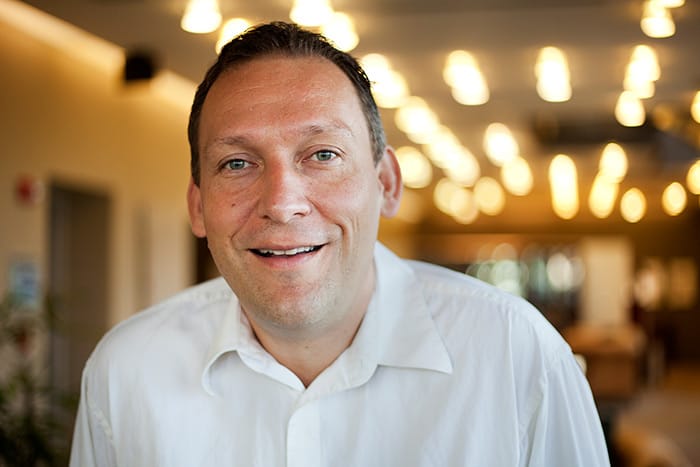
Solar physicist Thomas Zurbuchen

Solar physicist Thomas Zurbuchen has been named the new associate administrator for NASA’s science-mission directorate. Zurbuchen, who is based at the University of Michigan in Ann Arbor, will begin the role on 3 October. Although he has never worked at NASA, Zurbuchen has been involved with a number of NASA science missions such as Ulysses, the MESSENGER spacecraft to Mercury and the Advanced Composition Explorer. Zurbuchen earned his PhD in physics at the University of Bern in 1996, after which he joined the University of Michigan. He succeeds John Grunsfeld, who retired from NASA in April.


  • You can find all our daily Flash Physics posts in the website’s news section, as well as on Twitter and Facebook using #FlashPhysics. Tune in to physicsworld.com later today to read today’s extensive news story on the mechanics of the brain.

Diamond magnetometer could help shrink computer hard drives

A nitrogen-vacancy (NV) defect in diamond has been used to create a magnetometer that can measure the broadband magnetic fields generated by hard-disk write heads. The work was done by researchers in Germany and the UK who have shown that a single NV can detect the oscillating and static magnetic fields associated with write heads at nanometre resolution. The new work could help further miniaturize hard-disk drives, thereby increasing their data-storage capacity.

“The hard-disk industry currently has no established sensors that can resolve the magnetic field of write heads on the scale of 5–10 nm,” explains team-member Ingmar Jakobi of the University of Stuttgart. “This is a serious impediment for developing these devices, which will carry the biggest share of data in the ever-growing digital world.”

The NV defect in diamond offers a solution to this problem because it comprises a single electron spin that is highly isolated from its immediate surroundings. This spin is essentially a tiny magnet that could be used to detect changes in a magnetic field over nanometre distances.

Brighter light

Now, a team led by Jörg Wrachtrup at the University of Stuttgart has shown that a single NV can act as an atomic-sized magnetic sensor that can detect the broadband magnetic fields produced by the head of a hard-disk writer. NV centres give off red fluorescent light when illuminated with green light and the intensity of this red light is affected by the presence of an external magnetic field. “Depending on the spin state of the NV defect, we see darker or brighter fluorescence and this allows us to focus on a single defect near a write head using a confocal microscope and determine its spin state,” explains Jakobi.

The spin also has a Zeeman interaction, whereby its energy levels split in the presence of a magnetic field. This means that the strength of an applied static field can be determined by doing magnetic-resonance measurements. Furthermore, the strength of an oscillating field can be determined from measuring spin transition rates.

Because the NV electron spin is more or less confined to a single site of the diamond lattice, the volume that the sensor probes is just a few cubic angstroms. As a result, the spatial resolution achieved by the team depends on its ability to accurately position the NV – as well as how far the NV is from the surface of the diamond.

Shallow NVs

To test their NV-based sensor, the researchers scanned a hard-disk head – which is about 1 mm in size – over the surface of a diamond sample containing NVs. The critical part of the write head, the write pole, is only around 100 nm in size and was positioned near the NVs. “We could first observe how the fluorescence response of NVs change with the applied field direction,” says Jakobi. “It is at its brightest when the field is aligned with the crystal axis along which the defect is oriented and this is therefore a good way to measure the field’s orientation.”

Using the NV centre, the team was able to measure magnetic fields that were oscillating at frequencies approaching one gigahertz. It could also measure millitesla changes in magnetic-field strength over nanometre distances.

The team, which includes researchers from Seagate Technology in Londonderry and Element Six in Oxford, says that the NV defect could be developed into a powerful R&D tool for artificial nano-magnetic devices. “In the hard-disk industry especially, there is huge demand for increased areal-density capacity – that is, smaller bits on the recording medium and therefore smaller structures to read and write data onto,” explains Jakobi. “An atomic-scale NV sensor could therefore play a critical role in helping to miniaturize recording heads and meeting this demand.”

Quality control

Quality-control sensors for production lines are also a possibility, he believes. At the moment, writers are only tested in a finished hard-disk, but the new technique could allow for tests at the wafer stage, early on in the production process, and hence reduce manufacturing costs.

Pengbo Li at Xi’an Jiaotong University in China, who was not involved in this study, says that the new study is “very interesting and important”. “It provides a unique tool for precisely measuring the magnetic fields on the nanoscale and will advance the field of high-precision sensors based on NV centres.”

Wrachtrup and colleagues report their experiments in Nature Nanotechnology.

Flash Physics: Europa’s plumes, reflective atoms, LUX-ZEPLIN goes ahead and LHC elastic collisions

Hubble spots Europa plumes

Astronomers using the Hubble Space Telescope have spotted water jets erupting from Europa – one of Jupiter’s 67 moons. The plumes rise around 200 km above the surface of Europa, which is slightly smaller than the Earth’s Moon with a diameter of about 3100 km. Such plumes have been detected before, when in 2013 Hubble discovered one spraying from Europa’s south pole. Now the craft has spotted plumes three more times, putting the finding on a much firmer footing. The result will also help astronomers to determine whether life exists in the salty ocean hidden under Europa’s icy surface.

Light reflects from just a few atoms

Photograph showing red light being sent through an optical fibre

Light that would otherwise flow freely through an optical fibre has been reflected back using less than 2000 atoms. In experiments done by two independent groups – one led by Julien Laurat at the Pierre and Marie Curie University in Paris and the other by Jürgen Appel at the University of Copenhagen – light was transmitted along very thin fibres that are just a few hundred nanometres in diameter. This is smaller than the wavelength of the light used by the experimenters and this means that about one third of the light propagates on the outside of the fibre in the form of an evanescent wave. By shining two different laser beams of light into the fibre, the teams were able to create a standing wave of evanescent light that can trap atoms in an optical lattice near to the surface of the fibre. The spacing between the atoms was chosen to correspond to an integer multiple of one-half of the wavelength of the light to be reflected. This is the condition for Bragg reflection, and when the experimenters introduced such light into the fibre, they found that as much as 75% was reflected back. With further development, the technique could be used to create optical devices, and it could even find use in quantum simulation and quantum computing. The experiments are described in Physical Review Letters.

Dark-matter detector moves forward

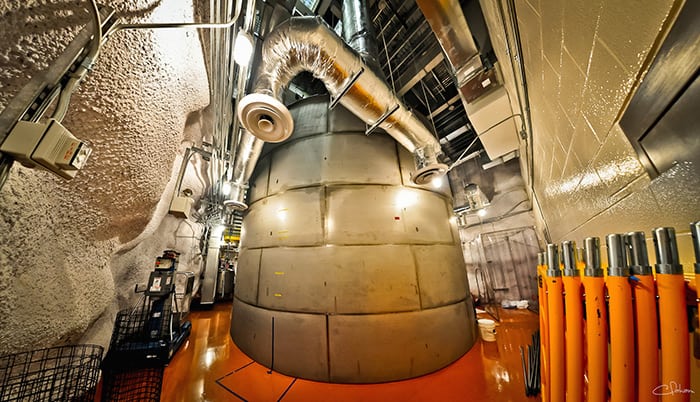
The LZ water tank

The US Department of Energy has approved the start of construction for the LUX-ZEPLIN (LZ) dark-matter detector. Researchers will now begin to build major components for the experiment as well as prepare space for it at the Sanford Underground Research Facility in Lead, South Dakota. When finished in 2020, LZ will hunt for theoretical particles known as weakly interacting massive particles via a chamber filled with 10 tonnes of purified liquid xenon. The detector is named after the merger of two existing dark-matter experiments: the Large Underground Xenon (LUX) experiment in Lead and the UK-based ZEPLIN experiment. LZ, which involves a collaboration of more than 30 institutions and 200 scientists worldwide, is expected to be around 100 times more sensitive than its predecessors.

The LHC begins low-luminosity run to study elastic scattering

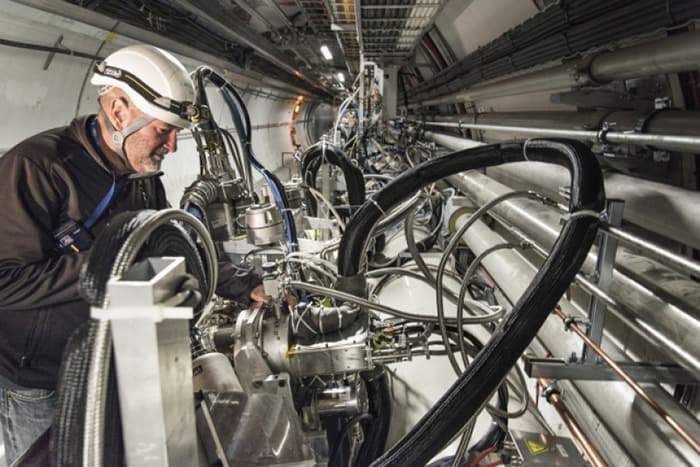
Nicola Turini at CERN

The Large Hadron Collider at CERN in Geneva has begun a special “low-luminosity” run this week. This will allow the ATLAS/ALFA and TOTEM experiments to observe the elastic scattering of protons. This occurs when two protons do not collide head-on in the detectors and so do not create new particles. Instead, the protons exchange glancing blows and are then detected. During a normal high-luminosity run, these elastic interactions are not seen because protons are much more likely to collide with each other and the detector. Elastic scattering is of interest to particle physicists because it provides insights into the internal structure of protons such as the nature of quarks and gluons. The studies should also reveal more about what makes elastic interactions possible and also help to improve our understanding of high-energy cosmic rays.


  • You can find all our daily Flash Physics posts in the website’s news section, as well as on Twitter and Facebook using #FlashPhysics. Tune in to physicsworld.com later today to read today’s extensive news story on diamond magnetometers.

‘Physical cryptography’ uses neutrons to compare nuclear warheads

A new technique for comparing physical objects – while keeping the composition of the objects secret – has been demonstrated by physicists in the US and Italy. Based on a scheme for cryptography, the method involves comparing how radiation is transmitted through two targets and could be used to verify the presence of nuclear weapons in warheads.

Future agreements on the control of nuclear weapons could require that all nuclear warheads be accounted for, including those in storage. This would rely on inspectors being able to tell a real nuclear warhead apart from a fake one. This is important because it would prevent a country from secretly stashing away some of its declared warheads and replacing them with fakes.

Plutonium-239 in a concealed warhead can be revealed by exposing it to a beam of neutrons and measuring how much radiation passes through the warhead. However, imaging a warhead in this way – which is like taking a medical X-ray – would also reveal information about the weapon’s design. That’s a problem because the design needs to be kept secret – even from inspectors – to prevent nuclear proliferation. One way around this problem is to scramble some of the information, but this is open to abuse by both parties.

Zero-knowledge proof

In 2014 Alexander Glaser and Robert Goldston at Princeton University and a colleague at Microsoft Research came up with a proposal for how to compare the contents of two warheads to confirm that they were indeed identical. Their technique is based on the “zero-knowledge proof”, which is described in detail in “Nuclear-inspection protocol inspired by game of marbles”.

Now, Glaser and Goldston have teamed-up with Princeton’s Sébastien Philippe and Francesco d’Errico at Yale University and the University of Pisa to test the protocol in the lab using neutron radiography. Instead of looking at real nuclear warheads, the team used a set of 5 cm steel-and-aluminium cubes that could be arranged in different configurations.

Steel and aluminium absorb neutrons at different rates, enabling the team to mimic the composition of a real warhead, which is made of several different materials. One such arrangement was designated the “true” configuration, which in a verification process would correspond to a warhead that is known to be armed with a nuclear weapon.

The verification process begins by taking an image of the true configuration of blocks that are hidden within a metal shield. This is done by firing a beam of neutrons through the objects and onto an array of “bubble” neutron detectors. These detectors comprise a viscous gel that contains superheated droplets of a fluorocarbon.

If a neutron collides with an atom in a droplet, the absorbed energy causes the droplet to vaporize and create a much larger bubble. An important feature of the detectors is that the bubbles will remain in place for days until the detector is reset. The positions of these bubbles can then be determined by taking a digital photograph of the detector.

Inverse image

This image of the true object is then analysed and an “inverse” image is calculated. When combined with a true image, the sum is what the detectors would register if there were no object being scanned.

The next step is to create the pattern of bubbles associated with the inverse image in a fresh array of detectors. This is done by irradiating them with the appropriate neutron beams. In a real inspection of a nuclear warhead, all of the above steps would be done by the owner of the warhead so that no information is revealed to the inspector.

The final step involves the inspector using the “preloaded” array of detectors to scan an unknown configuration of blocks. If the unknown is indeed the true configuration of blocks (or a real nuclear warhead), then the pattern of bubbles in the detectors will correspond to that expected when no object is in the path of the neutrons. If the blocks do not match the true configuration, then a different pattern will be seen. By looking at the pattern, the inspector can tell if the unknown object is a nuclear warhead without knowing what it, or a nuclear warhead, actually look like.

First demonstration

The team was able to confirm that the technique can be implemented using neutrons and bubble detectors. “This is the first experimental demonstration of a physical zero-knowledge proof,” says Philippe, adding: “We have translated a major method of modern cryptography devised originally for computational tasks into use for a physical system.”

Challenges will still need to be overcome before the technique can be put into practice. These include ensuring that the owner of the warheads actually generates the inverse pattern from a nuclear warhead, and not a decoy weapon. Another problem is that electronic processing is required to make the inverse image, which could be subject to eavesdropping that could reveal information about the composition of the warhead. Detectors loaded with the inverse image would also have to be kept secure as they contain information about the warhead.

Flash Physics: World’s largest radio telescope completed in China, tracing mercury in human hair, limiting universal anisotropy

Flash Physics is our daily pick of the latest need-to-know developments from the global physics community selected by Physics World‘s team of editors and reporters

World’s largest radio telescope completed in China

Work has finished on the Five-hundred-meter Aperture Spherical radio Telescope (FAST) in Guizhou province in southern China. The world’s largest radio telescope, FAST comprises 4450 reflecting panels and is located in a natural depression in a remote region that is very quiet in terms of human radio signals. The collection area is more than twice as big in size as its nearest rival – the 300 m Arecibo telescope in Puerto Rico. FAST covers the 70 MHz–3 GHz frequency range and will be twice as sensitive as Arecibo and capable of surveying the sky 5–10 times faster. It will also be able to look at three times more sky than Arecibo. Built by the National Astronomical Observatories under the aegis of the Chinese Academy of Sciences, the telescope will now undergo a series of tests before astronomers – including some from outside China – are allocated observing time.

Tracing the origin of mercury in human hair

A new analytical technique that helps to identify the chemical forms of mercury in human hair has been developed by an international team of researchers. Human beings are exposed to varying amounts of mercury during the course of daily life – by consuming foods such as fish and rice, via metal-based dental fillings and compact fluorescence lamps, for example – and the neurotoxin can accumulate in the body over time. Determining the source of the mercury is essential for diagnosis and treatment purposes, but currently it is difficult to determine the molecular form of mercury in human tissues and fluids, which could indicate its source. Until today, depending on the suspected source of contamination, mercury intake has been monitored by measurement of mercury concentration in urine, blood or scalp hair. The researchers, based in France and Chicago, used the European Synchrotron Radiation Facility (ESRF) and found that the source of the mercury in human hair can be identified by precisely characterizing its bonding environment. Their experiments showed that, in one case, a mercury spike along a strand of hair was correlated with a specific unsafe removal of a dental amalgam. The team found that the synchrotron data provided signatures of the mercury sources, distinguished exogenous vs endogenous exposure to inorganic mercury, and indicated the timing to within one or two days of an exposure event. These results are published in Environmental Science & Technology.

The universe is isotropic, says latest study of the cosmic microwave background

Placing limits on universal anisotropy

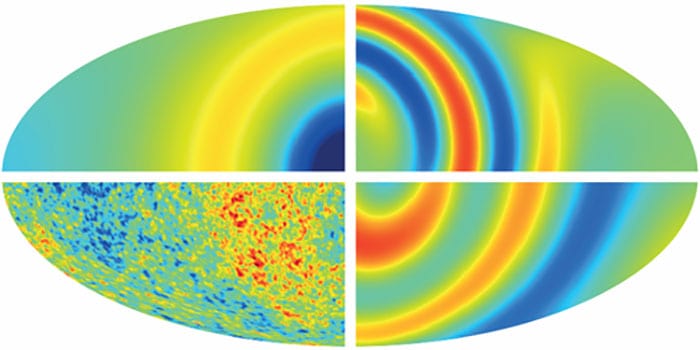
The universe is the same in every direction, at least on very large distance scales. That is the conclusion of Daniela Saadeh and colleagues at University College London and Imperial College London, who have looked for evidence of large-scale spatial anisotropies or rotation in the cosmic microwave background (CMB). The CMB was created just after the Big Bang and permeates the cosmos. As a result, it provides a record of how the universe has been expanding over the past 13 billion years. The CMB appears nearly uniform across the sky with tiny fluctuations (about one part in 100,000) that are understood as density perturbations that are associated with the emergence of structures such as galaxies. Saadeh and colleagues have tested a wide range of possible anisotropy and rotation models against CMB data from the Planck satellite, and found the universe to be isotropic to within one part in 121,000. The study is described in Physical Review Letters.


  • You can find all our daily Flash Physics posts in the website’s news section, as well as on Twitter and Facebook using #FlashPhysics. Tune in to physicsworld.com later today to read today’s extensive news story on a new nuclear-inspection protocol inspired by cryptography.

A look back at peer-review week and particle physicists say hello to Hello Kitty

By Matin Durrani

Today marks the end of Peer Review Week  – a “global event celebrating the essential role that peer review plays in maintaining scientific quality”. The event brought together “individuals, institutions and organizations committed to sharing the central message that good peer review, whatever shape or form it might take, is critical to scholarly communications”.

It’s probably fair to say that Peer Review Week – now in its second year – didn’t quite have the media profile of, say, London Fashion Week, but then you have to start somewhere. And celebrating peer review seems a worthy and worthwhile thing to do. I bet even Rio de Janeiro’s Restaurant Week started out small. (more…)

Knitted nanotubes spin an electromechanical yarn

Researchers at the University of Wollongong in Australia and the University of Texas at Dallas in the US have made stretchy, electrically conductive textiles based on Spandex and carbon nanotubes. The composite yarns, which are knitted together, could be used to make actuators and sensors for use in artificial muscles and smart clothing.

Materials that expand and contract in response to some form of stimulus could be useful as actuators or artificial muscle fibres for robotics or smart textiles. They could also make good sensors for lab-on-a-chip devices.

Now, a team led by Javad Foroughi in Wollongong has come up with a knitting technique to produce electrically conducting 3D yarns from the stretchy fabric Spandex (SPX) and multi-walled carbon nanotubes (CNTs). The fibres can be highly stretched and so could make excellent sensors and artificial muscles, say the researchers.

Capacity for work

The team made the yarns by continuously feeding commercially available SPX fibres and CNT aerogel sheets drawn from an aligned forest of tubes into a circulating knitting machine. “The CNT/SPX fabric we made can be stretched to over 600% its original length and has an electrical conductivity of between 870–7092 S/m, depending on the amount of tensile strain we apply to it,” explains team-member Geoffrey Spinks. The mechanical and electrical properties of the fabric are also stable over 10,000 cycles of strain and/or bending.”

When a voltage is applied to the stretched yarn, it heats up and contracts by as much as 33%. As a consequence, it generates a mechanical work capacity of up to 0.64 kJ/kg and a maximum specific power output of 1.28 kW/kg, which is much higher than that produced by human skeletal muscles.

We have already demonstrated a knee-sleeve prototype using our technology

Ray Baughman, University of Texas at Dallas

“Our knitted textile has strain-sensing capabilities as well as being porous, and as such could be used in smart clothing, for example, which monitors the wearer’s movements while at the same adjusting garment fit,” explains team-member Ray Baughman. “We have already demonstrated a knee-sleeve prototype using our technology, and such a device might be used to help repair injury after an accident by monitoring and manipulating knee movement.”

The team says that it is now working on using the CNT knitted textile as a wearable antenna as well as in biomedical applications, like knee sleeves and lymph sleeves. “The lymph sleeve, for example, will be developed using lightweight actuating fabric that will detect swelling and then respond by ‘squeezing’ the arm to enhance lymph flow,” explains Foroughi. “We are also investigating the possibility of employing it in artificial-heart muscles for positive support of the right ventricle,” he says.

The SPX/CNT composite yarn is described in ACS Nano.

Still not even wrong

Disillusioned by the charms of string theory, he began writing a book detailing the history and the “overwhelming triumph” of the Standard Model of particle physics, the birth of string theory and its subsequent “overwhelming failure to find any way to make further progress on fundamental questions”. This year marks the 10th anniversary of that book – Not Even Wrong: the Failure of String Theory and the Continuing Challenge to Unify the Laws of Physics.

Not Even Wrong coincided with the publication of another book – The Trouble with Physics – that had a similar theme and tone, penned by Woit’s friend and renowned physicist Lee Smolin. Together, the two books put the theory and its practitioners under a critical spotlight and took string theory’s supposed inadequacies to task. The books sparked a sensation both in the string-theory community and in the wider media, which until then had heard only glowing reports of the theory’s successes.

To mark the anniversary of Not Even Wrong, Physics World reporter Tushna Commissariat caught up with Woit to talk about the book, the subsequent “string wars” and the sociology of science. In the resulting podcast, you can also find out what has happened in fundamental and particle physics over the past decade – including the discovery of the Higgs particle at the Large Hadron Collider at CERN, but the lack of any supersymmetric particles until now. Woit also explains what he thinks needs to happen in the field to propel it into the future.

Both scientists and philosophers have long hunted for the ultimate theory – one that perfectly explains the universe we observe, from a quark to a quasar. In the mid-1980s string theory emerged at the top of the pile as the most promising candidate in this quest for a “theory of everything”, or more specifically, a theory that unified quantum mechanics and general relativity.

The original theory was a framework in which the point-like particles were replaced by one-dimensional objects called strings. It emerged that for the theory to work and to be mathematically consistent, it would require at least 10 dimensions of space–time, rather than our usually observed four dimensions. The extra dimensions, according to the theory, are “compactified” or fold in on themselves. Each extra dimension can be of a variety of “shapes” and there exist a myriad ways in which they can be compactified, meaning that there are too many possible solutions to be able to make a clear prediction.

Not being able to make clear predictions, combined with the lack of falsifiability, are the major deficiencies of string theory, according to Woit, Smolin and others such as the Nobel-prize-winner Sheldon Glashow, who once said “Sadly, I cannot imagine a single experimental result that would falsify string theory. I have been brought up to believe that systems of belief that cannot be falsified are not in the realm of science.”

String theory still polarizes opinion, but its advocates remain firm and deem it a beautiful and mathematically rigorous framework. As Woit explains in the podcast, “For many years, I’d been thinking that the situation with string theory was really pretty odd…this junction between the public perception of it, the way it had been portrayed and what was actually going on.”

Flash Physics: Seismic CT scans, an acoustic-hologram dove and a room-temperature multiferroic

Spotting deep-Earth tremors via seismic “CT scans”

The largest array of seismometers ever deployed on the sea floor has been used to peer some 160 km underneath a massive tectonic plate that is moving under North America. Coupled with other arrays in the US, the team from the University of California, Berkeley, used seismic tomography to scan the Juan de Fuca plate and part of the Earth’s mantle directly below it. The plate is currently moving under North America and forms a 1300 km-long region referred to as the Cascadia subduction zone. The research has improved our understanding of what drives subduction. This is when a tectonic plate moves sideways and below another, often causing catastrophic earthquakes. The research will also help to refine models of plate tectonics. Currently, the evidence suggests three different scenarios: the plates are pushed from mid-ocean ridges, or they are pulled from their subducting slabs, or their movement is driven by the drag of the viscous mantle material that lies directly below. The new scans show that for the Cascadia subduction zone, a distinct, thin layer separates the plate from the mantle beneath. The work is described in Science.

Manipulating objects using 3D acoustic holograms

A simple new technique to create complex 3D sound fields or “acoustic holograms” has been developed by an international team of researchers. Such fields could be used to move and manipulate microscale objects in both air and liquids without having to touch them, making the technique very useful for applications such as medical imaging and selective heating. Peer Fischer from the Max Planck Institute for Intelligent Systems in Stuttgart, Germany, and colleagues have used a 3D printer to create a plastic plate that, when placed in front of an acoustic transducer, alters the sound waves to create the desired sound field. They use the system to cause microparticles suspended in water to converge into a “dove-of-peace”-like image (seen above). While a similar approach has been demonstrated previously (see “Sonic tractor beam can manipulate objects in mid-air”, Fischer’s technique does away with the need for an array of transducers, replacing it with a single plate. The acoustic holograms are described in Nature.

Material has simultaneous electric and magnetic order at room temperature

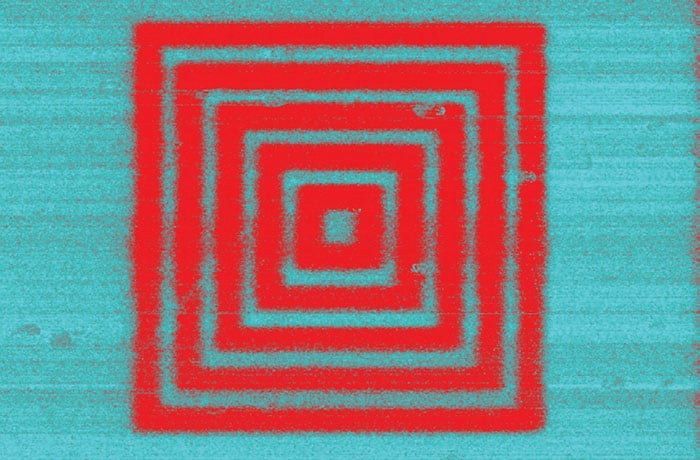
Piezoresponse-force-microscopy image of the new material showing regions of opposite electrical polarization

A new material that has both electric and magnetic ordering at room temperature has been unveiled by researchers in the US. The material is based on alternating layers of two compounds containing lutetium, iron and oxygen – LuFeO3 and LuFe2O4. LuFeO3 is a multiferroic with both a spontaneous electric polarization and magnetization. However, its magnetization is too small to be of much use. LuFe2O4 on the other hand lacks electric polarization but has a strong magnetization. Julia Mundy and Charles Brooks of Cornell University and colleagues found that when a single atomic layer of LuFe2O4 is alternated with nine layers of LuFeO3, LuFe2O4 also becomes multiferroic. Furthermore, the layered material has strong coupling between the electric polarization and magnetization at room temperature – something that had been very difficult to achieve. The material could find use in applications including low-energy computer memories. It is described in Nature.

You can find all our daily Flash Physics posts in the website’s news section, as well as on Twitter and Facebook using #FlashPhysics. Tune in to physicsworld.com later today to read today’s extensive news story on knitted nanotubes.

Copyright © 2026 by IOP Publishing Ltd and individual contributors