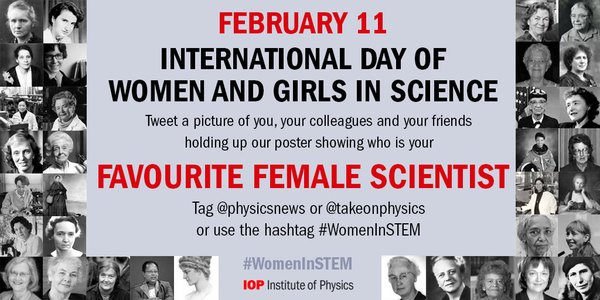
Tomorrow is the inaugural International Day of Women and Girls in Science as declared by the United Nations (UN). It’s a chance to celebrate women’s achievements in science, technology engineering and mathematics (STEM), and to address the under-representation and inequality that women and girls face in many STEM fields.
One way you can take part on the day is to write the name of your favourite female scientist on this printable poster. Take a photo of yourself holding the poster and share it on Twitter including #WomenInSTEM. This social-media initiative is the idea of our colleagues at the Institute of Physics, which publishes Physics World, who have lots of information about their ongoing diversity programmes on their website. I’ll be sharing the name of Mary Somerville, the Scottish polymath who predicted the existence of Neptune.
Topological insulators are materials that are electrical insulators in the bulk but can conduct electricity on their surface via special surface electronic states. Using just a couple of diagrams on a whiteboard, Chris Hooley of the University of St Andrews in the UK shows how this phenomenon arises from the presence of electrons and their spin properties.
The unusual properties of these materials has generated a lot of interest in the condensed-matter community in recent years. They bring a great opportunity to expand our understanding of materials physics and could lead to applications such as quantum computation.
During storms, there is a critical wind speed, of around 42 m/s (90 mph), at which almost all tree trunks break – irrespective of their size or species – according to a new study done by researchers in France. Indeed, the team has shown that the breaking phenomenon can be explained via a simple scaling law, explaining why the critical wind speed is largely independent of the tree’s diameter, height or elastic properties.
In a strong wind, a tree may break through one of three mechanisms. Uprooting can occur in rain-moistened ground, or if the tree’s roots are rotten. Alternatively, if the roots can hold, then it becomes the tree trunk that is at risk from breakage – either through torsion or, more commonly, bending. In their study, Emmanuel Virot and colleagues at the Ecole Polytechnique and ESPCI ParisTech have concentrated mainly on the latter phenomenon, which is referred to as “stem lodging”.
Storm snapping
The team’s curiosity about stem lodging was piqued in the aftermath of “Klaus” – the 2009 cyclone that caused widespread damage across parts of Europe. Data collected after the storm showed that the greatest damage to forests occurred in regions where the wind speed exceeded 42 m/s – irrespective of tree age and type, with both softwoods (e.g. pines) and hardwoods (e.g. oaks) affected similarly.
The resistance of wood – often in relation to construction – has received considerable attention over the centuries, with inputs from such recognizable names as Leonardo da Vinci, Galileo Galilei and the Comte de Buffon. All previous experiments have concluded that a tall, thick tree (or, at least, wooden beam) should be as strong as a short, thin one – but no consensus had been reached on the exact scaling laws in play.
To explore this further, Virot and his colleagues conducted experiments on horizontal beech rods. While mechanical differences between different tree species are slight, beech was chosen as a wood with average proprieties. Fixing one end of each rod, the researchers applied increasing weights to the other end, measuring the curvature of the bending rods until they broke. This occurs close to the fixed end of the rod, at a critical curvature radius related to the diameter and length of the rod.
Breaking boughs
Using this relation, and replacing the weight with a model of wind force, the researchers developed a scaling law for the critical wind speed at which trees break. Taking into consideration that trees nearly triple in diameter for a doubling in their height, the researchers showed that the critical speed is only very weakly dependant on the tree’s physical dimensions – a doubling in tree height only increases the critical speed by 9%. The elastic properties of the wood seem to have a similarly small impact.
“We studied why all trees break at almost the same wind speed, and found an explanation based on fertile results of mechanics and biology such as Euler’s elastica equation, Griffith criterion and tree allometry that describe, respectively, elasticity, fracture and tree shape,” explains Virot. “The result is that trees break at approximately the same wind speed, despite their biomechanical differences (size, age, and species).”
Barry Gardiner, a silviculturist at INRA Bordeaux-Aquitaine who specializes in wind damage and was not involved in this study, calls the work very interesting, and a good springboard for helping us to understand better the controls on wind damage in trees. Gardiner cautions, however, that the conclusion of a weak dependence of critical wind speed on tree height appears contradicted by previous studies of storm impacts – which have reported that tree height is a very important predictor of the likelihood of damage.
“From a biological point of view, it makes a lot of assumptions that simplify the natural world,” he adds – noting that the model assumes a steady wind state and complete branch shedding, two factors that are not typically reflected in real storms. “Another thing that’s important to remember is that trees are living, so they’re adjusting and acclimating to their environment all the time – they’re not a passive engineering structure.”
A new way of measuring how the Higgs boson couples to other fundamental particles has been proposed by physicists in France, Israel and the US. Their technique would involve comparing the spectra of several different isotopes of the same atom to see how the Higgs force between the atom’s electrons and its nucleus affects the atomic energy levels.
The effect of the Higgs force is tiny, but the researchers say the test would involve technologies that already exist and that some of the required measurements have already been made. The measurement would provide important information about how the Higgs couples to electrons and quarks, and would complement data gleaned from collisions using the Large Hadron Collider (LHC) at CERN.
Important mysteries
After discovering the Higgs boson at the LHC in 2012, particle physicists now want to understand how it couples to matter such as electrons and quarks. Any deviations in these couplings from the Standard Model of particle physics could reveal whether the Higgs mechanism is responsible for the masses of charged fermions, including the electron. A new way of measuring these deviations has been proposed by Cédric Delaunay of the CNRS, France, Roee Ozeri and Gilad Perez of the Weizmann Institute of Science in Israel and Yotam Soreq of the Massachusetts Institute of Technology in the US.
According to the Standard Model, the Higgs coupling creates an attractive force between the electron and the nucleus. This force decays rapidly with distance from the nucleus, which means it will have a much greater effect on electrons in S orbitals (which overlap the nucleus) than on electrons in P, D or F orbitals (which do not). The energies of photons emitted when an electron moves from a P, D or F orbital to an S orbital would therefore be greater than if the Higgs force were not present.
One way of looking for this difference would be to use different isotopes of the same nucleus. As the isotopes would have different numbers of neutrons, the Higgs force should be greater for those isotopes with more neutrons. That would lead to a difference in energy between the same atomic transition in different isotopes – the Higgs shift.
Linear thinking
The problem is that there are other isotopic differences in atomic spectra that are much larger than those related to the Higgs force. The mass shift (MS) is related to the effect of the different masses of isotopic nuclei and the field shift (FS) to the different charge distributions found in different isotopes. While the MS and FS are fiendishly hard to calculate, there is a well-known linear relationship that links the FS and MS parameters to the observed shifts.
The team’s idea is to measure the shifts of two different transitions in four isotopes of the same atom and display the data on a “King plot”. If there is no Higgs coupling, the data will be represented by a straight line. But if there is a Higgs coupling – and it is described by the Standard Model – there will be a tiny deviation from a straight line. It is likely that this deviation will be too small to measure, but if the Higgs coupling is much larger than predicted by the Standard Model, the researchers say it should be measureable using state-of-the-art atomic spectroscopy.
Delaunay and Soreq told physicsworld.com that such a measurement could provide important information to particle physicists who are trying to understand how the Higgs couples to quarks and electrons – something that will be difficult to extract from LHC collision data. “The method we propose is an example – the first one as far as we know – of how table-top experiments may give us complementary information,” they explain. “This is important to better understand the origin of the mass of the building blocks of matter – is it the Higgs mechanism, or other, unknown sources?”
“Intriguing new application”
“Qualitatively, their arguments make sense,” says Andrei Derevianko of the University of Nevada, Reno. “However, detailed atomic-structure analysis is needed – and they are clearly aware of this need – to make sure that the effect is indeed as large as they claim.”
Marianna Safronova of the University of Delaware also thinks that the proposal could be viable, but points out that a successful experiment would have to accurately separate the effects of the weak interaction. She also agrees with the team’s conclusion that ytterbium isotopes would be a good place to look for the effect, buts adds that calcium may be another viable candidate. Dmitry Budker, an experimental physicist at the University of California, Berkeley, told physicsworld.com that he plans to collaborate with the team to try to make the measurements. “It is not yet clear what specific atomic system – which atoms and/or ions – will be best for this, and so it is also not clear where the experiments will be done. I see an exciting possibility of potentially doing these tests in a range of systems and at different laboratories and facilities.”
Physicists in Finland have shown that it is possible to conduct heat over macroscopic distances at close to the maximum efficiency permitted by quantum mechanics. By directing photons along a superconducting waveguide, the researchers transferred heat between two resistors spaced up to a metre apart – some 10,000 times further than previously possible at the quantum limit. They say their technique could someday be used to cool chips inside quantum computers.
Quantum mechanics tells us that heat flow, like electric current, can be quantized. If a wire is so thin that an electron’s cross-sectional wavefunction can only assume one possible configuration as it travels along the wire, there is an upper limit to the rate at which electrical energy can be transmitted for any given voltage. Likewise, there is a maximum rate at which heat energy can be transferred along a single channel connecting a hot bath to a cold one when the baths are at given temperatures. This is the quantum of thermal conductance, which is reached when the hot bath emits energy perfectly, the cold bath absorbs perfectly, and there is no heat loss along the way.
For a hot bath at 1 K connected to a colder one at 0.9 K, heat will flow at 100 fW; one thousand trillionth of the output from a typical incandescent light bulb. Physicists have previously observed such “quantum-limited heat conduction” in a variety of physical systems; in 2013, for example, researchers at the CNRS Laboratory for Photonics and Nanostructures in Paris saw it in an electronic point contact sitting in a 2D electron gas. To date, however, such observations have been limited to distances of up to 50 μm.
Photon carriers
In the latest work, Mikko Möttönen and colleagues at Aalto University extended the quantum-limited distance to macroscopic scales by using photons, rather than electrons, as heat carriers. Maximum conductivity requires that heat carriers travel unimpeded along the thermal channel, but electrons, being electrically charged, can only go a very short distance along normal metals before they scatter off phonons, other electrons or material defects. Photons, in contrast, do not interact with one another – and if an appropriate transmission medium is used, photons will not interact with their surroundings.
The Finnish group carved a spiral-shaped superconducting waveguide into a small silicon chip, and connected each end of the waveguide to a metal resistor, which serves as a heat bath. Thermally induced voltage fluctuations across one of the resistors generate microwave photons that travel along the waveguide with a specifically shaped transverse electric field. The value of each resistor is tailored to exactly match the impedance of the waveguide and therefore minimize the number of photons reflected at the interfaces.
Möttönen and team cooled down the electrons in one of the resistors and measured the subsequent temperature drop in the other, using superconducting tunnel junctions as extremely sensitive thermometers (they decided to cool, rather than heat, the first resistor, to avoid skewing the temperature reading of the second with stray heat). Carrying out the experiment with two lengths of waveguide – 20 cm and 1 m – and operating at a temperature of about 0.1 K, they compared their measured temperature changes with predictions from a detailed thermal model they had developed. They found that their set-up reached between 80% and 110% of the theoretical maximum.
Quantum cooling
According to Möttönen, this technology would be well suited to cooling or initializing quantum devices, which need to operate at or close to the single-quantum level. Placing the cold bath far from the device being cooled down would minimize damage to the latter’s delicate quantum states while keeping the former cold, he explains.
One possible application, he says, would be very sensitive radiation sensors that need to be set to zero as precisely as possible before making any measurements. But probably the main use for the technology, he believes, would be in quantum computers, whose bits change state when absorbing even very tiny amounts of heat. He points out that some groups are now testing error-correction on qubits, but notes that these experiments rely on post-selecting only those qubits that started out in the correct state. “In an actual quantum computer, when you want to do a specific calculation you need precise initialization,” he says.
The distinctive folds of the human brain are the result of mechanical compression caused by growth during development, according to an international team of scientists. Using a 3D-printed gel model of the brain, the researchers have now shown that forces generated during expansion can create the brain’s wrinkled shape. This mechanical model was first proposed in 1975, but it has been difficult to test.
Highly folded brains are only seen in a small number of species, including some primates, dolphins, elephants and pigs. From an evolutionary perspective, the reason why the brain folds is quite simple – it maximises the number of neurons that can be squeezed into the space, while reducing the distance between them, which improves cognitive function. In humans, the outer layer of brain tissue – the grey matter or the “cerebral cortex” – starts to fold when the foetus is around 23 weeks old. The process where the cerebral cortex forms its folds, known as “gyrification”, continues until adulthood, when our brains stop growing. By this point the brain has increased about 20-fold in volume and 30-fold in surface area.
Grey-matter origami
While the purpose of gyrification is understood, the mechanism behind it is not. A number of biochemical and mechanical theories have been previously proposed, including one which suggests that folding is caused by mechanical tension generated in the neurons, but none have been proven. Tuomas Tallinen from the University of Jyvaskyla, Finland, together with colleagues in France and the US, now say the most likely explanation is the simplest one: the cerebral cortex expands faster than the rest of the brain, while changing little in thickness. Essentially, the cerebral cortex remains the same as its surface area grows. This produces compressive stress, which in turn leads to the mechanical folding of the cortex.
To test its theory, the team created a 3D cast of an unfolded 22 week-old human brain, based on MRI scans. This was used to create a gel model of the core of the brain, which was then coated in a thin layer of absorbent elastomer gel to represent the cerebral cortex. When immersed in solvent, the outer layer of the gel-brain swelled relative to the inner core and as the compressive forces built up it began to crumple. Tallinen told physicsworld.com that they “observed folding patterns that are qualitatively very similar to the folding patterns in foetal brains during the early stages of gyrification”.
After it had finished expanding, the model resembled a 34 week-old foetal brain. “The key parameters setting the size and qualitative appearance of the folds are the stiffness of the grey-matter top layer relative to white-matter substrate, and the thickness of the grey-matter layer relative to brain size,” says Tallinen. “More subtle is how the folds get oriented – the geometry of the foetal brain surface is a determinant for dominant orientations of the folds.”
Model material
Christopher Kroenke from the Oregon Health & Science University in the US, who was not involved in the research, says that similarities between the folds suggest that the “mechanical features of the model bear strong resemblance to those of the human brain” and that the “agreement between finite element calculations and experimental observations strongly supports that mechanical compression is the driving force behind folding in the model”. But he adds that further examination of the similarities and dissimilarities between the model material and foetal brain tissue “will be valuable for determining whether mechanical compression indeed drives folding of the cerebral cortex”.
David Van Essen from Washington University in St Louis, who first proposed the neuron tension-based theory, says that while the research “uses a clever combination of physical modelling and finite-element simulations to show that several features of human cortical folding can be emulated by a ‘buckling’ model”, it has a key limitation. “Their assumption that cortical thickness is fixed during massive tangential expansion is biologically implausible in the absence of a mechanism that could account for this highly anisotropic growth,” he explains. He adds that limited cortical thickness can be explained by mechanical tension along the neurons, as well as various patterns seen in the folds of the brain.
The Earth as seen by Himawari-8 earlier today. (Courtesy: JSA)
By Hamish Johnston
Who hasn’t wanted to float high above the Earth and gaze down on our planet as sunlight and clouds dapple across its surface. Thanks to the “Glittering Blue” animation, such views are not just for a privileged few astronauts. This stunning animation of one day’s observations from the Japanese weather satellite Himawari-8 has been put together by satellite-imagery analyst Charlie Lloyd. He has also included a nice FAQ page that explains some of the amazing phenomena captured by the satellite, including a huge tropical storm and the daily cloud cycles of a rainforest.
A new technique that uses diamonds and quantum logic to detect the tiny magnetic fields of single molecules has been unveiled by researchers in the US and Germany. The team then used the technique to detect nuclear magnetic resonance (NMR) signals from single molecules of a common protein. The researchers are now refining the method still further, and believe that it could reveal the currently unknown structures of some rare proteins.
Developed in the mid 20th century, NMR spectroscopy has become an immensely valuable tool for molecular analysis. “Maybe 50% of all structural information we have from complex molecules – proteins, for example – comes from NMR,” says Jörg Wrachtrup of the University of Stuttgart.
Traditional NMR involves placing the sample in a strong magnetic field, which causes atomic nuclei with dipolar magnetic moments to line up either parallel or antiparallel to the field. Radio waves of a particular frequency are then applied, causing the magnetic moments to oscillate between the two directions as they absorb the waves. The radio frequency depends on the chemical environment of the nucleus, so the absorption spectrum acts as a fingerprint of a molecule’s structure. However, there are downsides to the technique. It requires strong magnets, which are expensive. It is also a relatively insensitive technique, requiring trillions of molecules to produce a signal. As a result, conventional NMR is not useful for analysing rare proteins or looking at the variation between individual proteins in a sample.
Coupling spins
Zero-field NMR has recently been developed to make NMR spectroscopy less difficult and less expensive. Instead of studying the coupling of the nuclei to an external field, the technique records the molecular fingerprint created when neighbouring magnetic moments couple to one another. This in itself does not increase the sensitivity of the technique, but in 2013, two independent groups – one led by Wrachtrup – showed that a single nitrogen vacancy (NV) centre in diamond can detect a zero-field NMR signal from a tiny sample containing as few as 10,000 nuclear magnetic moments. A NV centre occurs when two adjacent carbon atoms in a diamond lattice are replaced with a vacancy and a nitrogen atom. NV centres are essentially tiny magnets that are isolated from their surroundings and can be manipulated using laser pulses.
In 2014, Mikhail Lukin and colleagues at Harvard University used NV centres to detect the magnetic moment of a single proton on the surface of a diamond. However, nobody had been able to detect the NMR signal from just one biomolecule.
Now, Lukin’s Harvard group has joined forces with Fedor Jelezko and colleagues at Ulm University in Germany to make two key innovations to the NV technique. First, they improved the sensitivity of the NV sensor by locating it as close as possible to the surface of the diamond. Previous research had suggested that the closer the NV centre is to the surface, the more prone it is to having its quantum coherence degraded by external noise. “But we found that, by controlling the surface very carefully, we could dramatically improve its coherence.”
Non-destructive measurement
Secondly, the researchers devised a new read-out procedure that allowed them to measure the NV centre’s electronic magnetic moment non-destructively by utilizing its quantum entanglement with the nuclear magnetic moment of the nitrogen atom. “Using this approach, the overall efficiency of read-out is dramatically increased,” Lukin says. Together, these two improvements made the technique more than 500 times as sensitive as previous attempts.
A measurement is made by fixing molecules of interest onto the surface of a diamond that has been implanted with NV vacancies. The team studied ubiquitin, which is a protein found in the tissues of all animals. The researchers were able to detect individual molecules of the protein and infer some specific chemical features. In particular, they could obtain NMR spectra of hydrogen-2 (deuterium) and carbon-13 nuclei when the proteins were enriched with those isotopes.
The team is now exploring ways of improving the sensitivity of the technique. For example, the protein molecules are currently placed in random positions on the diamond surface, and the team wants to see if placing them in specific locations relative to NV centres will lead to an improvement.
Beautiful work
“I think it is beautiful work,” says Jörg Wrachtrup. “It’s a real step forward.” However, he cautions that the NMR spectra do not have sufficient resolution to allow the researchers to actually determine the structure of a molecule. He also points out that the researchers’ proposed technique for determining structures would probably work only for very small proteins. “If I see a step that is missing,” he says, “it’s increased spectral resolution. But in principle the potential is enormous.”
It might seem obvious to say that everything in the human body is connected. Without a doubt, your various organs – heart, liver, lungs – work together to keep you alive, and functioning as close to normally as possible. Just think how both your heartbeat and your breathing speed up if you receive a shock – or how, in a starker example, the failure of one organ can lead to a cascade of failures in other organs, sometimes resulting in death.
But just how are our organs connected? Plamen Ivanov – a physicist at Boston University and Harvard Medical School in the US – thinks he may have at least the beginnings of an answer. Having developed and expanded upon the types of analyses found in the statistical physics of complex networks, Ivanov and others believe that the fluctuating outputs of organs, commonly considered “noise” by today’s physiologists, are in fact evidence of an underlying connectivity. Studying these fluctuations, he says, could give us an entirely new window into the workings of the human body – and help us prevent things going wrong.
Ivanov has grand ambitions. He wants to draw on statistical physics to build a human atlas, or “human physiolome” – a comprehensive map of all the interactions between organs in the human body. Like the Human Genome Project, which over 13 years uncovered the genetic blueprint of humans, Ivanov believes a human physiolome will revolutionize the analytic approaches of clinical practice. “It will pose new questions that have not been posed by the natural sciences until now,” he says.
Ivanov’s work on “network physiology”, as the field is now known, first began in the mid-1990s, when he began investigating the fluctuations in heart rates of both healthy human subjects and those suffering from sleep apnoea, when breathing during sleep becomes irregular. Everyone’s heart rate fluctuates, so if you measure someone’s heart rate to be an average of, say, 60 beats per minute, the time between neighbouring pulses could be at a rate of more like 50 or 70 beats per minute.
Mind over body Plamen Ivanov created the field of network physiology. (Courtesy: Mae Davis/Daily Free Press Staff)
Ivanov found that, for people with sleep apnoea, these fluctuations were random, whereas for healthy subjects the distribution of fluctuations could be described by a single function over a wide range of timescales (1996 Nature383 323). In other words, there appeared to be an underlying temporal structure to the heart-rate fluctuations in healthy people, in the sense that the time between any two pulses is in some way related to the time between another two pulses – seconds, minutes or even hours in the past. “It turns out that these fluctuations are not noise,” says Ivanov. “They are very structured.”
Working with colleagues at Boston and other institutions, Ivanov made some further interesting observations about scaling functions and power laws, which also describe temporal structure. He found that unique power laws could describe unique physiological states – not just being awake or being asleep, but different stages of sleep, including light sleep, deep sleep and rapid-eye-movement (REM) sleep. Intriguingly, an “asleep” power law could persist if a person was actually awake at an unusual time, for instance if he or she had travelled to a different time zone. Even more curious was that the researchers found a similarity between the diminished heart-rate fluctuations in the “half awake” physiological states of early morning and diminished fluctuations in those suffering from heart problems. The result, which goes against the popular idea that poorly hearts ought to exhibit more irregularities, could point to an underlying mechanism to explain why most heart attacks happen in the morning (2007 IEEE Eng. Med. Biol. Mag.26 33).
The human physiolome
The application of statistical physics to physiology does not end with heart-rate analysis. Ivanov and colleagues have also found power laws to describe fluctuations in breathing, fluctuations in the movement of a person’s hands and fluctuations in a person’s gait. But the power laws appeared to extend beyond individual limbs and organs. Even in his mid-1990s work on heart-rate fluctuations, Ivanov knew that the cardiovascular and respiratory systems must be in some way “talking” to each other – after all, there was a heart-rate power law for healthy subjects, but not for those with a respiratory disorder, sleep apnoea. Indeed, in 2000 Ivanov and colleagues showed that sleep apnoea could be diagnosed not from respiratory recordings – the traditional method, which requires hospitalization – but from inexpensive, home-monitored heart-rate recordings (2000 Comput. Cardiol.27 753). The group recently uncovered several further, independent couplings between the cardiovascular and respiratory systems, which undergo dramatic transitions from one sleep stage to another (2012 PNAS109 10181).
Could this type of communication be continuously mapped somehow, not just between the cardiovascular and respiratory systems, but among all the body’s organs? Certainly, recent decades have seen a dramatic upsurge in the application of statistical-physics techniques to complex networks. By analysing widely available information such as Internet traffic and mobile-phone data, physicists have found new insights into underlying sociological behaviour. But whereas mobile phones and IP addresses are all similar types of node, each type of human organ is very different. Worse, the links between organs are continuously changing, and operate on a vast hierarchy of timescales.
In 2012 Ivanov and an interdisciplinary team of scientists made some headway by coming up with a concept called time-delay stability. This concept relies on measuring the time between fluctuations in the output signals of one physiological system, such as cardiovascular, and the emergence of corresponding modulations in another, such as the respiratory. According to the researchers, the longer the period during which this delay is constant – for example, the constant period during which a fluctuation in heart rate is followed by a fluctuation in breathing a few seconds later – the stronger the coupling between the two systems.
To test the time-delay stability concept, Ivanov and colleagues analysed existing sleep data taken from 36 healthy volunteers. The data consisted of heart rates, breathing and brain activity, as well as eye, leg and chin movements. The researchers found that all of these physiological systems appeared to be poorly coupled during deep sleep, but more connected when a subject transitioned into REM sleep. The links became stronger in the light-sleep phase, and stronger still when the subjects finally awoke. Based on these promising findings, it was these researchers who proposed the creation of the field of network physiology (2012 Nature Comms3 702).
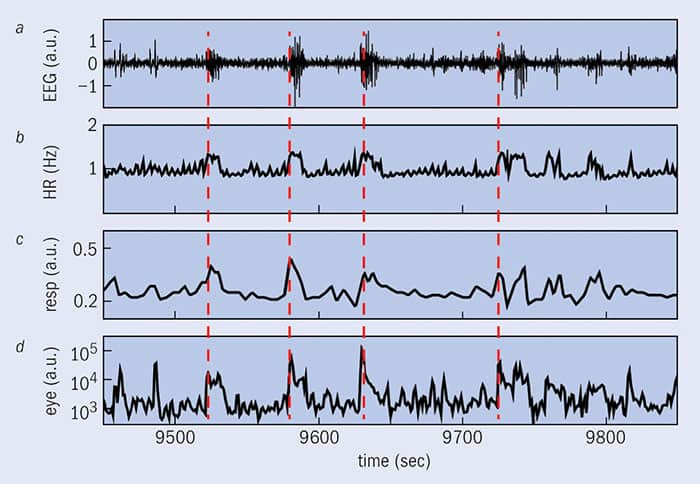
1 Co-ordinated activity from diverse organ systems Segments of synchronously recorded physiological signals including (a) brain EEG signal, (b) heart rate, (c) respiratory rate and (d) eye movement recording. Co-ordinated bursting activities with a certain time delay are consistently observed across the output signals of organ systems. Red dashed lines highlight a train of four significant bursts. These bursts transcend all systems and indicate networked communications among the systems. (Courtesy: CC BY 4.0/PLOS ONE 10.1371/journal.pone.0142143)
In November 2015 Ivanov and colleagues finished a more in-depth analysis of the data, and found that each organ has its own network of interactions with different areas of the brain, and with other organs (PLOS ONE 10.1371/journal.pone.0142143). Interestingly, there appear to be rules governing the reorganization of brain–organ and organ–organ interactions when a subject undergoes a transition to a different sleep stage; despite the uniqueness of the networks for each organ, these reorganization rules appeared to be the same for each of them (figure 1).
“Remarkably, these networked communications are so flexible that they can change and adjust within seconds [during] a transition from one physiological state to another – something we had not expected,” says Ivanov. “This shows an amazing flexibility and responsiveness in the way organ systems optimize and coordinate to generate different physiological functions during different physiological states.”
For Ivanov, this work could mark the beginnings of a human physiolome. And indeed he now has support: in July 2015, he was awarded a $1m (£660,000) grant by the W M Keck Foundation to develop network physiology. But he insists the path ahead will not be easy. “These are only the first steps in this new field,” he says. “Network physiology poses many new questions and challenges for which we do not yet have the necessary analytic [instrumentation] and theoretical framework.”
Even so, he continues, the challenges will be worth it to generate a new type of “big data”. The human physiolome will contain “streams of continuously recorded, high frequency, synchronized physiological signals under different physiological states and clinical conditions, [which] will change the way medicine operates today and will integrate more and more data-driven analytic approaches in clinical practice”, he says. “In the future, this new big data will have a similar impact on science, medical practice and health care as the Human Genome Project has today.”
The magnetic compass that birds use for orientation is affected by polarized light. That is the finding of researchers in Sweden, who studied zebra finches navigating a simple maze and found that the birds were only able to use their magnetic compass when the polarization of the illuminating light was parallel to an applied magnetic field. However, the birds became disoriented when the polarization was perpendicular to the magnetic field.
Although it has been known for more than half a century that birds can perceive direction, altitude or location using the magnetic field of the Earth, the precise mechanism that drives this “avian magnetoreception” is poorly understood. A popular theory is the “radical-pair” model, which says that incoming photons excite magnetically sensitive molecules – known as “cryptochromes” – in the birds’ retinas, causing an electron to transfer between two neighbouring molecules, leaving each molecule with an unpaired electron spin.
Excited pairs
Depending on the orientation of these molecules to some external magnetic field, the molecule spins either point in the same or opposite directions, so long as the molecules remain excited. This results in the formation of triplet and singlet states, respectively, leading to different neuronal responses in the birds. Because molecules lying along the field lines tend to favour the singlet state, a bird could determine the orientation of the geomagnetic field by comparing the effect of the field on molecules arranged at different angles across the retina. It is also known that cryptochromes absorb light anisotropically – that is, only light of a specific direction and polarization excites the molecules. Also, a certain polarization direction activates a specific subgroup of receptor molecules, and only these go on to form radical pairs and therefore are affected by the magnetic field. All of this suggests that the light-dependent magnetic compass itself is intrinsically sensitive to polarization.
To test the interactions of a bird’s magnetic compass and polarized light, Rachel Muheim and colleagues from Lund University in Sweden studied the behaviour of zebra finches trying to find food inside a simple cross-shaped maze with four arms. The maze was placed on a wooden table within a magnetic coil, which allows the researchers to deflect the horizontal component of the magnetic field.
Maze runner
The birds were first trained to find a food reward – a tray with millet seeds at the end of each arm – after they were released at the centre of the maze. During training, the birds only used the magnetic field to navigate the maze. The set-up also included an overhead light source that would illuminate the maze either with unpolarized light or linearly polarized light. Once the birds had learnt to navigate the maze, the researchers tested the bird’s navigational abilities under different alignments of polarized light and the magnetic field.
Munheim’s team found that the finches were only able to use their magnetic compass when the direction of the polarized light was parallel to the magnetic field. Indeed, the researchers found that the finches were led astray not only when the incident light was completely perpendicularly polarized, but also when only 50% of the light was polarized in that alignment. “We were expecting an effect, but not one so large that it would lead to complete disorientation when the direction of the polarization of light was perpendicular to the direction of the magnetic field,” says Muheim.
Disappearing fields and disarray
The team also found that the birds did not use the polarized light as a separate compass or guide, rather it only affected how the birds perceived the magnetic field. While it is still unclear how the different directions of polarized light in relation to the Earth’s magnetic field affect birds in the wild, the researchers say that the birds use it to accentuate the magnetic field during sunrise and sunset. These are times of day when migratory birds are believed to determine their direction and calibrate their compasses before migrating. Muheim told physicsworld.com that “during sunrise and sunset, when the polarized light in the zenith is roughly aligned parallel to North–South, birds should be able to see the magnetic field quite well, whereas at midday it might ‘disappear’.” In the middle of the day, when the polarized light is approximately perpendicular to the magnetic field, “it can be an advantage that the magnetic field is less visible, so that it does not interfere at a time when visibility is important to locate food and to detect predators,” she adds.
Erik Gauger from Heriot-Watt University in the UK, who was not involved in the current work, says that it is interesting and important because it provides further support for the radical-pair model, which is still a speculative rather than a proven mechanism. He says that while he was not surprised that the performance of the magnetic compass depends on the polarization, he was “very intrigued by the extent to which it does, and that even for only 50% polarized light in the ‘wrong direction’ that is perpendicularly polarized, the ability of the birds to orientate seems to be lost completely”.
However Gauger disagrees with Muheim’s group’s statement that “no viable theory exists on how birds, and most other vertebrates, can perceive polarized light,” citing the phenomenon of Haidinger’s brush, where many humans can see a visual pattern arising from polarized light (see video below). “Learning about Haidinger’s brush, we fully expected the compass molecules to also be sensitive to the polarization of light, but we did not take it further than that. However, it is very nice to see this confirmed,” he says.
Muheim hopes that her team’s finding will allow biophysicists to make more accurate models, and by default include polarization of light as a factor in their models. This should lead to more accurate predictions on where the receptor molecules may be located and how they work.