More data needed on the STEM 'shortage'

By Margaret Harris

“Science has always been the Cinderella amongst the subjects taught in schools…not for the first time our educational conscience has been stung by the thought that we are as a nation neglecting science.”

Sounds like something David Cameron or Barack Obama might have said last week, right? Wrong. In fact, it comes from a report by the grandly named Committee to Enquire into the Position of Natural Sciences in the Educational System of Great Britain, which presented its findings clear back in…1918.

I came across this quotation thanks to Emma Smith and Patrick White, a pair of education researchers at the University of Leicester who have spent the past few years studying the long-term career paths of people with degrees in science, technology, engineering and mathematics (STEM). Smith and White presented the preliminary findings of their study at a seminar in Leicester yesterday, and one of the themes of their presentation – reflected in the above quote – was the longevity of concerns about a shortage of STEM-trained people, especially university graduates. As Smith pointed out, worries about the number and quality of STEM graduates are not new and, historically, reports of a “STEM crisis” have been as much about politics as they have economic supply and demand.

(more…)

Burned from the inside out

In 1950 US president Harry S Truman was asked about the possible use of an atomic weapon in the Korean War. “It is a terrible weapon, and it should not be used on innocent men, women and children who have nothing whatever to do with this military aggression,” he replied, adding “That happens when it is used.” His reply is instructive, because five years earlier, Truman had authorized the use of such a weapon on the Japanese city of Nagasaki, resulting in the deaths of more than 70,000 civilians and serious long-term illness for an even larger number.

In Nagasaki: Life After Nuclear War, Susan Southard tells the stories of five people who were in the city when it was bombed on 9 August 1945 and who survived into old age. In the days immediately following the bombing, all five of these hibakusha (“atomic bomb affected people”) helplessly witnessed the swift deaths of family members, friends and hundreds of others who had received horrific injuries from the explosion. Most hibakusha received no immediate treatment due to the severe shortage of medics and facilities, and many were confined to bed for months. Later, they endured decades of social stigma as well as a range of physical and psychological illnesses, including multiple cancers, disfigurement and post-traumatic stress. By telling their stories of lifelong suffering, they express hope that there will be “no more hibakusha” in the future.

In relating these personal stories, Southard touches on several aspects of nuclear weapons, including the military, political and historical implications of their use and the scientific study of how radiation affects people. The book’s extensive notes and source listings highlight that these subjects have been covered elsewhere (often by those with more authority on the subject), while a few other relevant topics, such as the physics of nuclear explosions and the status of nuclear weapons in international law, are virtually ignored. However, Southard did interview the hibakusha and others extensively, and within these limits, she clearly illustrates how the various aspects overlap and influence each other. For example, the personal views of the hibakusha that their bodies were “burned from the inside out” overlaps with scientific analyses conducted after the bombing. This research indicates that, in addition to external exposure to radiation, the hibakusha also ingested radioactive materials, which then irradiated their cells internally. Among those who did not survive, autopsies showed severe damage to internal organs, tissue and veins.

By 1950, as the above quotation shows, Truman had made a clear link between the personal impact of nuclear weapons and their military significance. But was such a link made before 1945? The effect of small doses of radiation on human organs, tissues and cells was certainly well-established, and while no studies could be done on people whose entire bodies were suddenly exposed to massive doses of radiation, theoretical analysis would have been possible. Southard suggests that instead of performing such an analysis, US scientists and military leaders made assumptions – for example, presuming that anyone who might be exposed to fatal radiation levels would be killed by the blast. In contrast, other writers (notably Peter Pringle and James Spigelman in their 1983 book The Nuclear Barons) have suggested that (a) scientists knew many would die from delayed radiation effects in subsequent years; (b) they failed to tell the politicians this, not realizing its relevance; and (c) had politicians known that an atomic bombing would result in people dying from radiation effects decades later, they would have regarded it as different from other military options.

Regardless of how much politicians and scientists knew before August 1945, politics certainly influenced science afterwards. As Southard explains, when reports of radiation effects on the hibakusha began to emerge, US authorities dismissed them as propaganda. Indeed, for most of the 1945–1952 US occupation of Japan, censorship effectively blocked all such reporting except for the official US investigations. Research on radiation effects carried out by Japanese scientists during the occupation years was not published until after 1951, and in the US, most media organizations complied with a request that all reporting of radiation effects be approved by the War Department before publication. One extensive US account of the plight of the hibakusha (John Hersey’s Hiroshima) did emerge in 1946, and was widely read; however, an immediate counter-campaign by the US government was so influential that US media reports on the hibakusha virtually ceased. The mushroom cloud became the iconic image of the weapons, with no representation of the people beneath them.

Southard states that she hopes her book will “help shape the course of public discussion and debate over one of the most controversial wartime acts”. As she observes, the view that the use of atomic weapons on Japan “ended the war and saved a million American lives” was promoted by US politicians at the time and “became deeply ingrained as the truth in American perception and memory”. Such views persist to this day, despite the fact that, following the declassification of many relevant documents, “no serious historian regards those as the sole considerations driving the use of the bombs”.

Southard also aims to “transform our generalized perceptions of nuclear war into visceral human experience”. The wording of this aim, and of the book’s subtitle, is ambiguous. A “nuclear war” is generally understood to mean the use of several nuclear weapons by more than one state. According to many recent analyses, the human and environmental consequences of such a war would be so devastating that any “life after nuclear war” would be unimaginably worse than that of the hibakusha.

In the 1990 book Hiroshima: Three Witnesses, which contains the writings of three hibakusha, the editor and translator Richard Minear describes these personal accounts as “their Hiroshimas”. Without such accounts, he adds, “we know little of the human truth of Hiroshima. And without the human truth of Hiroshima, we know little of Hiroshima.” The same can be said of Nagasaki, and Southard’s book is one way for us to know a little more of its human truth.

  • 2015 Souvenir Press/Viking £20.00/$28.95hb 416pp

Visualizing the cosmos

Space, as Douglas Adams once wrote, is big. Really big. But just how big is it? And what else, aside from our own planet Earth, is out there in it? Cosmos: the Infographic Book of Space answers these questions in a stunning fashion, but to describe it as a beautiful book full of interesting facts does not do it justice. Frankly, it’s a marvel and a delight, and no-one with an interest in space or science communication should be without it.

The infographics in Cosmos cover a broad range of topics, from human space exploration through to cosmology. Some, such as a pair of graphics illustrating how large and how small stars can be, convey messages that can be absorbed at a single glance. Others invite the reader to dive in and explore. A good example is “Collision imminent”, which displays data on asteroids, plotted according to the year of their closest approach to the Earth (angular axis, running clockwise from the year 1900 at the top) and by how close they came, or will come, to colliding with the planet’s surface (radial axis).

Sunspots

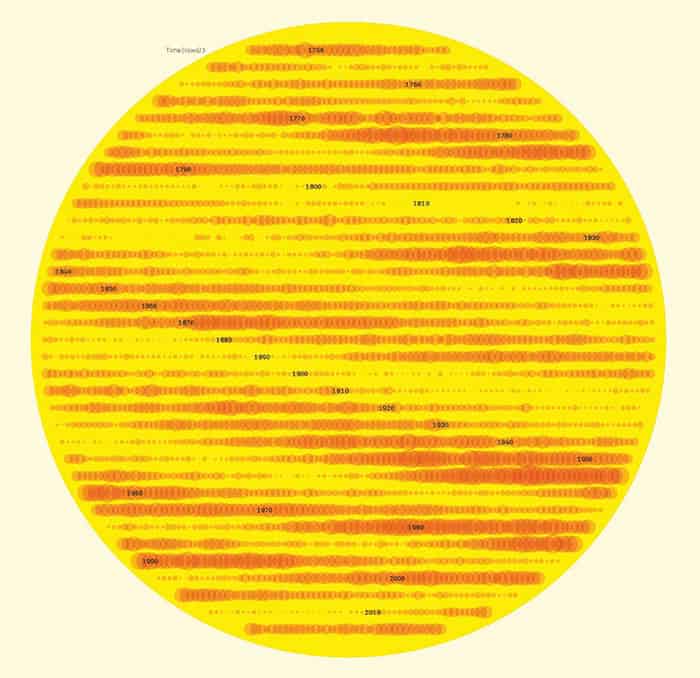
Still other graphics, such as “Sunspots”, are deceptive in their apparent simplicity. In this image, authors Stuart Lowe and Chris North have plotted the number of sunspots observed each month from the mid-18th century (top) through to the present day (bottom). Larger circles represent more active months, and plainly, their frequency is not random; as the authors note in the accompanying text, “the overall number of sunspots changes over an 11 year cycle”. But why should that happen? And why were there such long stretches of inactivity in the early 19th century, and such an active period in the middle of the 20th?

A plot of the 30,000 nearest galaxies, with different types of galaxies shown in different colours

Sunspot records alone won’t tell us the answers to these questions. Fittingly, Cosmos doesn’t either. What it does tell us, though, is that these are questions worth asking. Often, the questions that Cosmos leaves unanswered are active areas of research. A plot of the “30,000 nearest galaxies”, for example, shows plainly that they are not evenly scattered through space. Yet while astronomers have identified several distinct “superclusters” (such as the Great Attractor, located towards the right of the plot, just above the central plane of the Milky Way), their exact nature and origin remain elusive. Few, if any, popular-science books make such mysteries as accessible as Cosmos does.

  • 2015 Aurum Press £25/$34.99hb 224pp

New type of atmospheric waves seen high above Antarctica

A previously unknown class of wave has been discovered in the Antarctic atmosphere by a team of researchers from the University of Colorado Boulder in the US. These gravity, or buoyancy, waves appear to be a constant presence, being there every time the researchers looked during a five-year study. The team believes that the waves could affect weather and climate patterns, as well as Earth-based communication systems.

The discovery was made using a Fe Boltzmann/Rayleigh temperature LiDAR system at the Arrival Heights Observatory near McMurdo Station, Antarctica. The system uses light pulses to measure atmospheric temperature, and the team’s observations were made after the facility was upgraded in 2010 to make it suitable for year-round measurements of atmospheric temperature, composition and dynamics.

“Although observations in the Antarctic middle and upper atmosphere can be traced back to the 1980s or even earlier, these persistent 3–10 h waves were unknown before the McMurdo LiDAR campaign started providing high-resolution, range-resolved temperature measurements,” explains team-member Cao Chen.

Focus on winter

Chen and his colleagues made observations all year, weather permitting, over a five-year period, from December 2010. But their latest research focuses on data collected every June. Because of the very low solar background radiation, data from the winter months – May to August – provide the highest resolution and largest range of temperature measurements, and the weather is most favourable in June.

“The waves are very easy to see from our raw temperature measurements,” says Chen. The data revealed temperature perturbations that rippled continuously through the mesosphere and lower thermosphere. In the mesopause – a region at an altitude of 80–90 km that separates these two atmospheric layers – the swings in temperature reached around 40 K.

Very different

“Temperature data from the stratosphere to the lower thermosphere (about 30–115 km above the Earth) exhibit persistent, dominant, large-amplitude waves with periods of approximately 3–10 h and vertical wavelengths of approximately 20–30 km,” says Chen. He points out that these waves are very different from waves seen elsewhere on Earth, where waves caused by tidal forces – with 12 h and 24 h oscillation periods – are usually dominant.

The researchers say they are yet to see any days of data without these waves. Indeed, in the middle of the Antarctic winter in 2014, Chen collected data for nearly three days in succession and found that the waves persisted for the entire period. During this 65 h run he recorded five wave events that lasted between 30–60 h, with periods ranging from 3.4–10.6 h.

Endless and uninterrupted

The five years of June data totalled 323 h and included 35 wave events. Waves with periods of 3.5, 5, 6, 6.5 and 7.5 h were found to be the most common, with each occurring at least 25% of the time. In general, the waves have vertical phase velocities of 0.8–2 m/s and they all have long life spans: most lasted at least 10 h and some more than 60 h. According to the researchers, if they are not separated into individual wave events, but regarded as a group of waves, they occur frequently enough to be considered endless and uninterrupted.

These findings are significant, as they provide a rare chance to gain new insight on a poorly observed part of Earth’s atmosphere
Steve Miller, Colorado State University

“These findings are significant, as they provide a rare chance to gain new insight on a poorly observed part of Earth’s atmosphere,” says Steve Miller of Colorado State University, who was not involved in the research. “Waves are the dominant mechanism for energy transport in the middle and upper atmosphere. These waves govern the upper atmospheric circulation, and since the climate system is fully coupled, these high-altitude patterns cascade down to influence the weather patterns of the lower atmosphere and phenomena we experience here at the surface.”

Miller adds that “Confronted with the new observations of this study, numerical models will have an opportunity to improve their representation of important and potentially uncharacterized processes of wave-energy transport. Such improvements are critical to advancing our understanding of climate and our ability to predict climate change.”

The research is described in the Journal of Geophysical Research: Space Physics.

Rocking the status quo in science

Bronwen Konecky is in discussion with Physics World journalist James Dacey. She describes how she started playing music in her 20s and it is now an important part of her life, alongside her research in paleoclimatology. Every once in a while, her two passions come together as she writes songs inspired by geological processes. You will hear her song “River meander”, which describes the search for a romantic partner in terms of a river meandering through a flood plain.

Of course, Konecky is far from being the only musical scientist in town. Over the past few years there has also been a fashion among researchers for writing songs that explain science more directly, and describe what it is like to be a scientist. You will also hear a couple of these songs in the podcast: the LHC rap performed by particle physicist Kate McAlpine; and a plate-tectonics-inspired parody of Johnny Cash’s “Ring of fire” performed by geophysicist Richard Alley.

Konecky explains how her training as a scientist has aided her musical activities, comparing the way a song riff comes together to the way scientific findings begin to emerge from an initial hypothesis. On a practical level, she says that scientific research has also helped to bring a certain amount of discipline to the way she makes music.

Both science and music have contributed a lot of good to society. But it is also fair to say that both the physical-sciences community and the rock-music industry have faced issues over the years with diversity. Despite the exceptions, both sectors have been dominated by white men. In recent years, the music community has attempted to counter the traditional cultural message, by running rock ‘n’ roll camps for more diverse audiences. Konecky believes that science could borrow some of the formats from these camps to also challenge the status quo in science.

The programme closes out with a sneak preview from an album Konecky is currently working on with her band SwampBirds – it is not to be missed.

Scientists officially ground Spider-Man

Image of gecko and ant

By Tushna Commissariat

Don’t tell the kids just yet, but becoming Spider-Man, even after being bitten by a radioactive spider, is looking less and less likely for us humans – we are just too big. The latest work, done by researchers at the University of Cambridge in the UK, has shown that gecko-sized is pretty much the largest you can be if you realistically want to scale up walls with adhesive pads. Any bigger, and most of your surface area would need to be covered in large sticky pads to pull off the gravity-defying walk. Indeed, the team estimates that roughly 40% of an average human being’s total body surface would need to be sticky – this means a whopping 80% of your front would be covered in adhesive pads.

(more…)

X-ray laser images nanoclusters on femtosecond timescale

The first nanometre-scale images of matter at femtosecond temporal resolution have been taken by scientists working at the Linac Coherent Light Source (LCLS) at the SLAC National Accelerator Laboratory in the US. The international team heated nanoclusters of xenon atoms about 40 nm in diameter until they ionized, while using X-rays from the LCLS to monitor the process. The researchers did this with a time resolution of 100 fs (10–13 s), which is about 10 times better than previous experiments that worked on 10–12 s timescales. Although neither the spatial nor the temporal resolution is record-breaking on its own, this is the first time that physicists have achieved the two in the same measurement.

“The idea is that you send in X-rays, which have a super-short wavelength, in really short bursts,” explains Tais Gorkhover, a researcher at SLAC and Technische Universität Berlin who is the first author on a scientific paper describing the work. “So you have extremely high resolution in both time and space.”

Expanding ‘nanoplasmas’

Gorkhover and colleagues scattered X-ray pulses with wavelength 0.8 nm from the xenon clusters, allowing the team to acquire a series of diffraction-pattern images. This was done as the clusters were heated by a separate laser to create rapidly expanding “nanoplasmas”. The images revealed how electrons behave in real time when the laser light rips them from their parent xenon atoms. The group chose xenon because it is bright under X-ray illumination and because it is relatively easy to create clusters with the desired size.

Because of the high spatial and temporal resolution of the experiment, Gorkhover’s group did not have to attach the xenon clusters to a substrate – something that is done when longer X-ray exposure times are required. Instead, the clusters were free to fly around, with some reaching velocities up to 200 m/s. This meant that the researchers could monitor the ionization process as it occurs free from any substrate-related influences. “We could image the native reaction,” Gorkhover says.

Like a camera with extremely fast shutter-speed, femtosecond imaging could reveal in greater detail how fast processes like chemical reactions or ultrafast phase transitions occur. This could lead to a better understanding of a wide range of phenomena, including how air pollution is created or how the human body processes chemicals, Gorkhover says.

‘Single shot’ technique

“They got the best of both worlds, in a sense,” says Arvinder Sandhu, a physicist at the University of Arizona, who was not involved with the research. He points out that the team was able to use both short-wavelength X-ray light – which can probe small distances – and “fairly short pulses”. The pulses only qualify as “fairly” short because they are about one thousand times longer than the current record for the shortest pulse: 67 as. However, such ultrashort pulses contain very few photons, so images are created by averaging together scattering data from many samples. “Major effects get washed out,” explains Gorkhover, who adds that the new technique is able to look at processes within an individual sample. Sandhu agrees that the “single-shot” nature of the new technique makes it attractive.

The LCLS is a free-electron laser that produced its first X-rays in 2009. It is a re-fit of the original linear accelerator at SLAC, which was first used for particle-physics experiments in 1966. The laser produces X-rays by accelerating pulses of electrons over a kilometre and then “wiggling” the electrons back and forth in a magnetic field. These wiggles make the electrons emit pulses of coherent X-rays that are used in a wide range of research in physics, chemistry, biology and materials science.

Running on adrenaline

While Gorkhover and colleagues have shown that X-ray free-electron lasers can create images with high resolution in both time and space, such facilities lack the convenience of table-top laser set-ups. The LCLS cost $420m, and along with SACLA in Japan, it is one of only two operational X-ray free-electron lasers in the world. While new facilities are being built in Germany and Switzerland, opportunities to use X-ray free-electron lasers remain limited. Indeed, Gorkhover’s group only had five days to take its data, and she says that the researchers worked 48 hours straight to ensure success. “I had some naps,” she says, adding that adrenaline kept them focused on their work.

Sandhu says: “A lot of work needs to be done to make these facilities more compact and accessible”. He adds that merging the science done with ambitious machines like the LCLS with more convenient techniques, like table-top ultrafast lasers, “could really produce some revolutionary science”.

The research is described in Nature Photonics.

Mini metal blanket foils lithium-battery freeze

Batteries have long attracted environmentalists as an ideal energy-storage solution, but their dramatic power loss at below-freezing temperatures has prevented their use in practical outdoor applications such as electric cars. Researchers in the US have now shown that simply integrating a metal foil into lithium-ion batteries allows them to maintain optimum operating temperatures through resistive heating.

Chao-Yang Wang at Pennsylvannia State University has spent 20 years working on batteries and fuel cells, and says that low performance at sub-zero temperatures has been a long-standing problem for batteries – lithium-ion batteries included. He adds that they “tried many different ideas, but in the end we were very surprised that just a thin metal film was the solution”.

Warm currents

Indeed, the team’s solution requires nothing more than a thin metal foil integrated into the lithium-ion cell with a switch. When switched on, current will run through the foil, causing resistive heating to raise the temperature above freezing, at which point it can be switched off so that current no longer flows through the foil.

The added heating component works within 20–30 s. While adding just 1.5% to the weight and 0.04% to the cost of the battery, it provides a six-fold power boost at –30 °C.

Other attempts to incorporate features that get around the low-temperature power loss in lithium batteries have resorted to external heaters. These can be expensive, and use up a lot of energy because they raise the temperature of the battery case before heating the functioning components inside.

Direct heating

“For a battery to produce high power, you only need to heat the electrochemical interface,” explains Wang. “And for the interface – it’s low mass and low thermal budget.” By heating the electrolyte directly, the “all-climate battery” keeps activation times and the energy consumption of the heating component to a minimum. Wang sees the potential to further improve the efficiency of their all-climate battery because there is still some heat that is wasted raising the temperature of the bulk material. He envisages diminishing the capacity consumption on heating from 3–5% in the current demonstration to less than 1%, by refining the heat distribution.

The fast road to market

So how long before these all-climate batteries make it into commercial electric cars? Wang suggests that the simplicity of the solution may ease the technological aspects of commercializing the batteries. In addition, EC Power, a company that he founded at Pennsylvannia State University in 2011, made all of the batteries used for the current study and is ready to take orders. That said, the shortest path to large-scale uptake may be through a partnership.

“The main challenge for commercialization is on the business side, not the tech side – this is a rare example in this respect,” says Wang. “But the investment capital needed is huge, and requires high volume. Probably the fastest way is to team up with other larger companies and combine their large-scale manufacturing infrastructure with the technology from the start-up [EC Power].”

The research is published in Nature.

Physicists' pets, seven stars for Bowie, ping-pong in space and more


By Tushna Commissariat

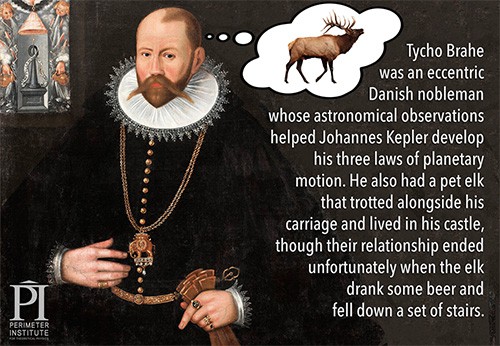
Sparks of inspiration come from many sources, but for some of the 20th century’s most well known scientists, their four-legged pets played a key role. From Tesla’s cat “Macak” – his interest in electricity was lit as a child when he noticed sparks generated while he stroked Macak –  to Schrödinger’s (real live) dog “Burshie”, these intellectual giants sought the company of pets just as we do and over at the Perimeter Institute’s website, you can learn all about “Great physicists and the pets who inspired them”. My favourite “pet” is of course Tycho Brahe’s infamous elk (you can read about it in the image above). With all of these pets about, its a miracle that a paper wasn’t eaten by a naughty dog or cat!

(more…)

NASA’s WFIRST mission set for go-ahead

NASA’s Wide-Field Infrared Survey Telescope (WFIRST) is expected to become a formal project next month, about a year earlier than initially planned. The decision was made after the US Congress provided $90m for WFIRST for the 2016 fiscal year – significantly more than the $14m NASA had requested.

With an estimated cost of $1.6bn, WFIRST is expected to launch in the next decade, and was listed as the top priority for NASA in its 2010 decadal survey carried out by the National Research Council. The probe is seen as a successor to the planned James Webb Space Telescope, which is set to launch in 2018.

One key scientific objective of WFIRST is to make “definitive measurements” of dark energy and the growth of structures in the universe. It will also aim to directly image exoplanets and take spectroscopic measurements of their atmospheres. “This is all part of NASA’s overarching high-priority science goals to understand the nature of the universe that we live in and whether we are alone in it,” says WFIRST programme scientist Dominic Benford.

Refurbished spy satellite

WFIRST will use a telescope given to NASA by the National Reconnaissance Office – a US government agency that builds and operates spy satellites. Although the telescope was designed for surveillance of targets on Earth, its capabilities are compatible with the goals of WFIRST. The telescope’s 2.4 m primary mirror is the same size as the Hubble Space Telescope, but its field of view is 100 times larger, allowing it to capture more of the sky with less observing time. Over the course of the six-year primary mission, WFIRST will measure light from a billion galaxies and perform a gravitational micro-lensing survey of around 2600 exoplanets.

According to Benford, WFIRST is currently defined as “an option that NASA could choose to pursue”. Yet he says that with the funding boost, it is now expected to become an official project in February. WFIRST will also be made available to the scientific community, through a competitive process, for a quarter of its mission time.

Copyright © 2026 by IOP Publishing Ltd and individual contributors