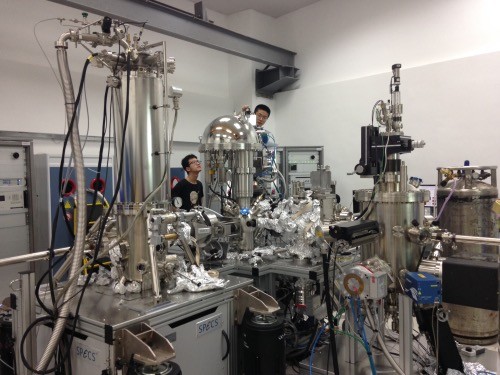
The university was only created in 2011 and currently the physics department has a sole focus on experimental and theoretical condensed-matter physics, with around 20 undergraduate students each year (that number is expected to rise as the department expands into other areas of physics).
A metallic quantum dot sandwiched between two superconductors – which functions as an electronic turnstile, only permitting one electron through at a time – has been developed by researchers in France, Russia and Finland. By driving an AC voltage through the device, the researchers can control the tunnelling of electrons into and out of the dot. While such turnstiles have been made before, this is the first where electrons at only one quantum energy level are allowed to pass through. This, say the researchers, makes the device ideal for quantum-metrology applications.
The ability to control the flow of current down to the level of a single electron has been a recent and major achievement in condensed-matter physics. Indeed, producing and controlling single electrons within a circuit on a chip has many applications, from nanoelectronics to electron optics and even quantum technologies. In most quantum current sources, electrons are sent in single file along a conductor by using the repulsive Coulomb force between electrons. Previous single-electron turnstile devices have been based on superconducting single-electron transistor (SINIS) turnstiles, where a metallic region or an “island” is connected to two superconducting leads via insulating tunnel junctions. These devices take advantage of the fact that the energy gap in the density of states of superconductors is sharply defined.
One at a time
The tunnelling itself is controlled via a periodically varying voltage that lets electrons first tunnel into the island and then onwards, much like a revolving door. In principle, the electrons are meant to pass though in single file – thanks to the Coulomb force, only one electron can sit on the island at any time. However, in practice, extra electrons can squeeze along. SINIS turnstiles, therefore, are often prone to errors, especially due to the leakage of thermally activated electrons.
But the new turnstile – developed by Clemens Winkelmann and David van Zanten from the University of Grenoble, France, together with colleagues in Russia and Finland – uses a quantum dot as the island. The dot helps to block the undesirable electrons, making it a much more exact single-electron source. While the superconductor energy gap is sharp and therefore limits the tunnelling of any extra electrons, the metal island has a range of energy levels, which unwittingly allows extra electrons to slip in.
Gold bridges
By getting rid of the metal island altogether and replacing it with a quantum dot that is much smaller and has discrete energy levels, Winkelmann and colleagues were able to develop a “superconductor–quantum-dot–superconductor” (SQS) turnstile that is a much more accurate gatekeeper. The dot’s quantum energy states are widely spaced, meaning that electrons only sit at the ground state. To fabricate the SQS junctions, the team created nanometre-sized fractures in superconducting constrictions using a technique known as “electromigration”. Randomly dispersed gold nanoparticles of about 5 nm diameter bridge the fractures, acting as the quantum-dot junctions.
The researchers found that the SQS turnstile produces a stream of single electrons, all at the same fixed energy, with less than 1% error that would arise from any trespassing electrons. As the electrons that flow through the SQS do so at a single energy, the device is especially well-suited for quantum-metrology applications, such as defining the ampere. The team is now looking into the possibility of building a spin-polarized turnstile that operates via Zeeman splitting in a magnetic field.
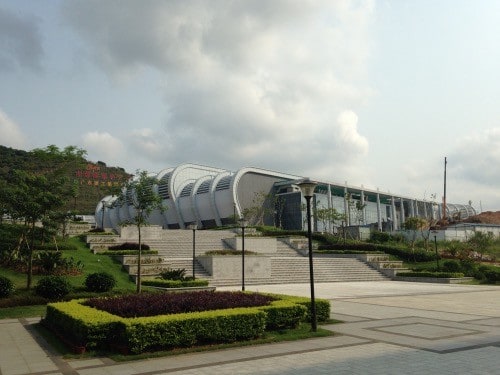
China has two nuclear reactors that generate neutrons for research via nuclear fission, but the CSNS is the country’s first spallation source. This type of facility accelerates protons before smashing them into a target to produce copious amounts of neutrons. They are then sent to numerous instruments that are used by researchers to study materials.
Zombie narratives a-plenty. (Clockwise from top left: Image Ten/Kobal Collection; Big Talk/WT 2/Kobal Collection; AMC; Spondoolie Entertainment/Vertigo Productions/Warner Bros. Television/DC Entertainment/Kobal Collection)
For Alex Alemi and Matt Bierbaum, two physics graduate students at Cornell University in the US, there really was no escaping the zombies – those fictional reanimated human corpses that feast on the living.
In autumn 2011 they were required to complete a project for a class on statistical mechanics taught at Cornell by James Sethna – a physicist who claims he’s “constantly dragged into new topics by my students”. Alemi had recently been reading World War Z and The Zombie Survival Guide, two popular and detailed books on zombies by US horror author Max Brooks. (World War Z uses a collection of individual narratives, in the style of oral history, to depict the harrowing spread of a zombie plague.) Brooks’ books attribute the resurrection of dead humans to a vicious virus, and Sethna had mentioned disease modelling as a possible topic for his students to study. Merging the two ideas “seemed natural”, Alemi recalls. “We thought we might as well study zombies.”
Alemi and Bierbaum began with a simple premise, similar in spirit to models traditionally used in epidemiology – the study of how disease spreads and can be controlled. Every individual in the model belongs to one of three groups. Uninfected humans are in one. Zombies comprise another. The third group represents zombies that have been killed by humans – “by destroying their brain so as to render them inoperable”, as the authors note in a paper they published in November 2015 in Physical Review E (92 052801). Their collaborators on that paper included Sethna and fellow Cornell physicist Chris Myers, who works with complex networks and studies infectious-disease dynamics.
In the model, humans and zombies can switch groups in two ways. Humans become zombies after being bitten, and zombies are removed once humans kill them by destroying their brain. With those ground rules in place, the physicists got to work on equations to describe the apocalyptic plague. Even after they finished the class, they continued to tinker on occasional weekends and nights. “Eventually it got to the point where we’d done some cool calculations and got some interesting results,” says Alemi.
1 Two days and two months later Simulation of a zombie outbreak in the continental US. Initially one in every million individuals is infected at random. Results are shown above at (a) two days, (b) one week, (c) three weeks and (d) two months after the outbreak begins. Shown here are the uninfected humans in blue, scaled logarithmically, zombies in red and zombies that have been killed by humans in green. All three channels are superimposed. (Courtesy: Phys. Rev. E92 052801)
The work continued for years after the end of the course. By the time they finished tinkering with their model, they’d produced an online simulation, complete with predictions for the best places to survive in case of a plague (figure 1). Alemi and Bierbaum presented their findings at the March 2015 meeting of the American Physical Society in San Antonio, Texas. As word of their work spread, they found themselves talking to a new audience – “people who might not be used to the formal ways people think about disease modelling”, as Alemi recalls.
Zombies, despite their insatiable thirst for brains, have an undeniable appeal to a wide audience right now, with successful TV series including The Walking Dead and iZombie, as well as films such as Pride and Prejudice and Zombies (based on a parody novel by Seth Grahame-Smith) and World War Z (based on Brooks’ book). They’ve also become a great way to showcase the statistical and mathematical tools of epidemiology. That’s because even though brain-eating monsters are at the heart of the physicists’ work, they lure in the curious to something more useful: an accessible way to talk mathematically about the spread of infectious disease.
“It’s a matter of meeting the audience where they are,” says Robert Smith?, a mathematician who studies infectious diseases at the University of Ottawa, in Canada. (Yes, the question mark is part of Smith?’s name.) “Now we’ve got people reading math papers with equations in them – people who would never normally read such a thing and would run a million miles to get away. You add zombies, and suddenly it’s interesting.”
Zombie epidemiology
Alemi and Bierbaum weren’t the first to study the zombie mathematical models – Smith? got there first. In a way, Smith? is like the researcher analogue of a “patient zero” – that first infected human from whom an outbreak ensues. In a 2009 paper, he described what is arguably the first modern zombie model, using popular films such as the 1968 classic Night of the Living Dead to establish the biological characteristics of the slow-moving, cannibalistic creatures (CMAJ181 E297). (He disregards the idea of a “fast zombie” as proposed in relatively recent films such as 28 Days Later, and most models have followed suit.)
Scientific interest in zombies has spread “like a zombie invasion itself”, says Smith?. “We sort of stumbled upon something that was really powerful – the idea that you could meld pop culture and academia together. People had studied popular culture with academia before, but they hadn’t really crashed them together.” Zombies, he thinks, catch the imagination of the public. “Pop culture has an incredible reach,” he says.
In the last few years, the field of zombie research has grown as people come along “and apply their own techniques to zombies”, Smith? notes. And the topic easily lends itself to a variety of ideas, from complex networks to stochastic modelling to differential equations. “The study [of zombies] doesn’t have to be incredibly sophisticated, it has to be fun and entertaining. The jokes are just as important as the equations.”
Alemi and Bierbaum say Smith?’s appeal to a wider audience was a powerful motivator in their own work. Popular-science books initially ignited Alemi’s interest in physics, but at the same time, he says “There’s a big gap between those descriptions and the actual practice of science – doing the math, working through computations.” He wanted to bridge that gap with his paper, while at the same time contributing to the zombie literature.
Zombie phase transition
Many existing zombie models are deterministic, which means that the outcome is decided by the initial conditions. Either the zombies win, or the humans do. That approach involves looking at the zombie and human population as a whole, where the populations can take on any number. Unfortunately, that means that small, random events – such as a quick and unlikely kill at the beginning of the outbreak – are smoothed over. That’s a problem with the highly random nature of zombie attacks, which happen on a decidedly personal level. “Even a ferociously virulent zombie infestation might fortuitously be killed early on by happy accident,” Alemi, Bierbaum et al. noted in last year’s paper in Physical Review E.
To accommodate those fluctuations, they added the possibility of random, one-on-one events and used a Gillespie algorithm – a probability tool from computational chemistry that’s useful in situations where outcomes may depend on random events. That way, their simulation accounted for every single human–zombie interaction, making it possible, for example, for patient zero to be killed and the whole plague nipped in the bud.
The researchers still had a problem, however. Even with a stochastic approach, the model described a scenario in which anyone could infect anyone – which meant that, hypothetically, a zombie in Atlanta could infect someone in Los Angeles. That would be a stretch, even in a zombie simulation. To fix this, the physicists turned to an approach familiar to condensed-matter physicists by treating each person or zombie as a node on a lattice and only allowing them to interact with individuals connected by bonds. Finally, they worked out a set of first-order differential equations to put the players in motion.
2 Fractal undead Example cluster resulting from the single population per site square lattice zombie model with periodic boundary conditions near the critical point αc = 0.43734613(57) on a lattice of size 2048 × 2048. Uninfected humans, zombies and zombies that have been killed by humans are shown in white, red and black, respectively. (Courtesy: Phys. Rev. E92 052801)
Once they started running simulations, curious patterns emerged. The simulation could be “tuned” according to whether people were more likely to kill zombies or if zombies were more likely to bite people. Adjusting those values revealed “a point below which the zombies die out, and above which they become too successful and eat everybody”, says Sethna. That meant the system had a phase transition – a point beyond which the outbreak would stop. As in other areas of physics, interesting effects began to crop up around that critical point. The outbreak, for example, grew into a self-similar pattern that’s characteristic of fractals, meaning that the map of the epidemic took on the same shape at large and small scales (figure 2).
Smith? says he applauds the model’s exploration of that phase transition and the fractal patterns. “I thought it was really interesting, the way they looked at the knife-edge point between extinction and existence for the zombies. There’s really fascinating behaviour there.”
The physicists populated their model with data from the 2010 US Census to show what would happen to the more than 306 million individuals in mainland US (i.e. excluding Alaska and Hawaii) during a zombie plague outbreak. It wasn’t pretty: the outbreak spread faster in the cities than in rural areas, which means the best way to survive such a disaster would be to head for remote, sparsely populated areas.
Smith? does note that Alemi and Bierbaum’s new model is lacking in a couple of areas. First, “they don’t consider the undead at all – there’s no mechanism to raise the dead, which I feel is an important factor in zombies”. And second, the researchers assumed that zombies are 1.25 times more effective at biting humans than humans are at killing zombies. Smith? thinks that number should be even higher. “It doesn’t seem that realistic. Shooting a zombie is hard – you have to get the head, and it’s hard to get something that’s moving. The probability you can do that is pretty low.”
The zombie future
Most zombie outbreaks in fiction end with either widespread extinction or zombie eradication. Zombie modelling, though, continues to evolve. Bierbaum, for his part, says he’d like to see models that allow users to adjust parameters based on their favourite films – what does a real simulation of, say, World War Z look like? Alas, he probably won’t be doing the heavy lifting: for him, the new zombie model is one of many projects he explored en route to his PhD. (Others have included the physics of mosh pits, plasticity and colloids.) Alemi also likely won’t return to zombies in the near future: he recently left Cornell to take a job at Google. And Sethna has already been dragged into other topics by his new crop of students. Smith?, though, hasn’t abandoned the undead: he is currently working on a book that expands current zombie models.
That book will add to a growing body of zombies-in-popular-science literature, which includes The Calculus Diaries: How Math Can Help You Lose Weight, Win in Vegas, and Survive a Zombie Apocalypse by Jennifer Ouellette (see December 2010 “d(y)/d(braaains)”), and Zombies and Calculus by Colin Adams (see December 2014 “The mathematical undead”).
Predictably, people who work on the models say they find their appreciation of zombie video games, films and television shows augmented. (With one exception: Sethna says he’s managed to avoid most zombie media.) At the same time, Alemi, Bierbaum and Smith? all point to one film as a classic in the field: 2004’s Shaun of the Dead, a comedic send-up of zombie flicks.
“Comedies can take all the zombie tropes and make fun of them,” Smith? says. There are many good ones out there, but he says even his students come back to the same film. “After a while the kids come back to Shaun of the Dead.”
An international team of scientists has developed an algorithm that can put data with large time uncertainty into chronological order. After applying statistical techniques to data obtained with a 300 fs (300 × 10–15 s) timing uncertainty, the team was able to describe the laser-driven explosion of a nitrogen molecule with 1 fs resolution – an improvement in time resolution of two orders of magnitude. Because the algorithm is based on statistics, it could potentially be applied to other disciplines with timing uncertainty, such as climate science and astronomy.
Abbas Ourmazd of the University of Wisconsin-Milwaukee and colleagues used data from an imaging experiment at the Linac Coherent Light Source (LCLS) at the SLAC National Accelerator Laboratory in the US. The experiment involved firing two consecutive pulses at nitrogen molecules – with each molecule consisting of two nitrogen atoms that share three of their outermost electrons in a triple chemical bond. The first pulse (called the trigger) comprises infrared light. It rips away the inner unshared electrons from each atom in the molecule, leaving the chemical bond intact but the two atoms positively charged. The two positively charged atoms then repel each other, with a force that explodes the molecule apart. Within picoseconds of the first pulse, a second pulse (called the flash) comprising X-rays is fired at the nitrogen, which allows the team to measure the momentum of the molecule as it explodes.
Femtosecond snapshots
The shortest flash pulses were less than 10 fs in duration, meaning the team could take 10 fs-long “snapshots” of the nitrogen molecules as they exploded. However, despite the shortness of the pulses, the snapshots could only achieve 300 fs resolution of the explosion.
“The difficulty with the process is that you can’t quite control the delay between the trigger and the flash,” Ourmazd explains. The uncertainty in the timing of each laser pulse means that the sequence of snapshots is slightly out of chronological order and is not evenly spaced in time, which “blurs” the details of the molecular explosion.
In the past, physicists have attempted to reduce timing uncertainty by physically adding new hardware to the experiment. However, this hardware approach is expensive and can only reduce the uncertainty by a factor of 10, at best, Ourmazd says.
Poorly shuffled cards
Instead, the team created a “re-ordering algorithm”, which Ourmazd says is similar to re-organizing poorly shuffled playing cards. “Imagine you have a perfectly ordered deck of cards and then you shuffle them,” he says. “The order is scrambled somewhat, but the original order never completely goes away.” By examining enough sequences of the cards, or data, you can extract a pattern that can tell you the original order. The algorithm used 100,000 snapshots of the nitrogen explosion up to 5 ps (5 × 10–12 s) after the first laser pulse, taken over many runs of the experiment.
The algorithm’s description of the molecular explosion matched theoretical calculations to 1 fs – shorter than the duration of the flash pulse. The physical reason the researchers were able to see faster than the laser pulse, Ourmazd explains, is that the pulses have sharp peaks, and therefore can achieve higher resolution than their average duration.
This is new to physics, but it shouldn’t be. It’s used all the time by Google
Abbas Ourmazd, University of Wisconsin-Milwaukee
The algorithm’s statistics methods – for example, first mapping the data onto a higher-dimensional curved mathematical surface – originate from the field of data science. “We’re really just applying the latest data-science techniques to physics,” Ourmazd says. “Remarkably, this is new to physics, but it shouldn’t be. It’s used all the time by Google.”
Because timing uncertainty is a problem in many scientific disciplines, the algorithm could potentially be applied to other big scientific questions, says Charlotte Haley of the Argonne National Laboratory, who was not involved in the work. For example, many astronomical and climate-science models use data that predate the digital age. “We might be looking at time-series data collected by hand,” she says. “You can never be sure if somebody recording the data did so at that particular time.”
However, the algorithm still lacks a formal mathematical framework. “They’ve established that it works well with this experiment and numerical simulation,” Haley says. “But we can’t [generally] quantify the exact reduction in uncertainty. There’s a lot of mathematics that still needs to be done.”
Starting today, members of the public will be able to run programs on IBM’s quantum processor. Users can access the device – which comprises five superconducting quantum bits (qubits) – via the US-based company’s “IBM Quantum Experience” website.
Described as a “cloud-enabled quantum computing platform”, IBM says that users will be able to run algorithms and experiments on IBM’s quantum processor, manipulate individual qubits, as well as access quantum-computing tutorials and simulations.
This morning I took Hong Kong’s metro to the City University of Hong Kong, where I met Ruiqin Zhang, who as well as being a solid-state physicist at the university is also president of the Physical Society of Hong Kong.
Over a lunch of dim sum, he told me how he is planning to boost the number of members of the society, which currently stands at around 120 researchers. He admits that the society is small, but that largely reflects the fact that there are just six universities in Hong Kong that have a physics department. Even so, he says that the society has the potential to add another 500 members.
To do so, he is planning an overhaul, including the launch of a new website – planned in the coming days – that will, among other things, aim to attract new members and help them organize meetings. He also plans to introduce a newsletter that will inform members of society matters, as well as create a fellow grade of membership. “We would like to see the society become more active,” says Zhang. “So that every member feels like they are a part of it.”
The society was set up in 1966 when there were only two universities in Hong Kong: the Chinese University of Hong Kong and the University of Hong Kong. Zhang became president of the society in 2013 for a two-year term before he was re-elected for another term in 2015.
The society holds an annual one-day meeting, but starting this year this will become a two-day event and include speakers from outside Hong Kong.
“Hong Kong has an advantage in terms of culture and accessibility,” says Zhang. “We hope that the meeting can be a platform to foster collaboration not only within Hong Kong, but further afield as well.”
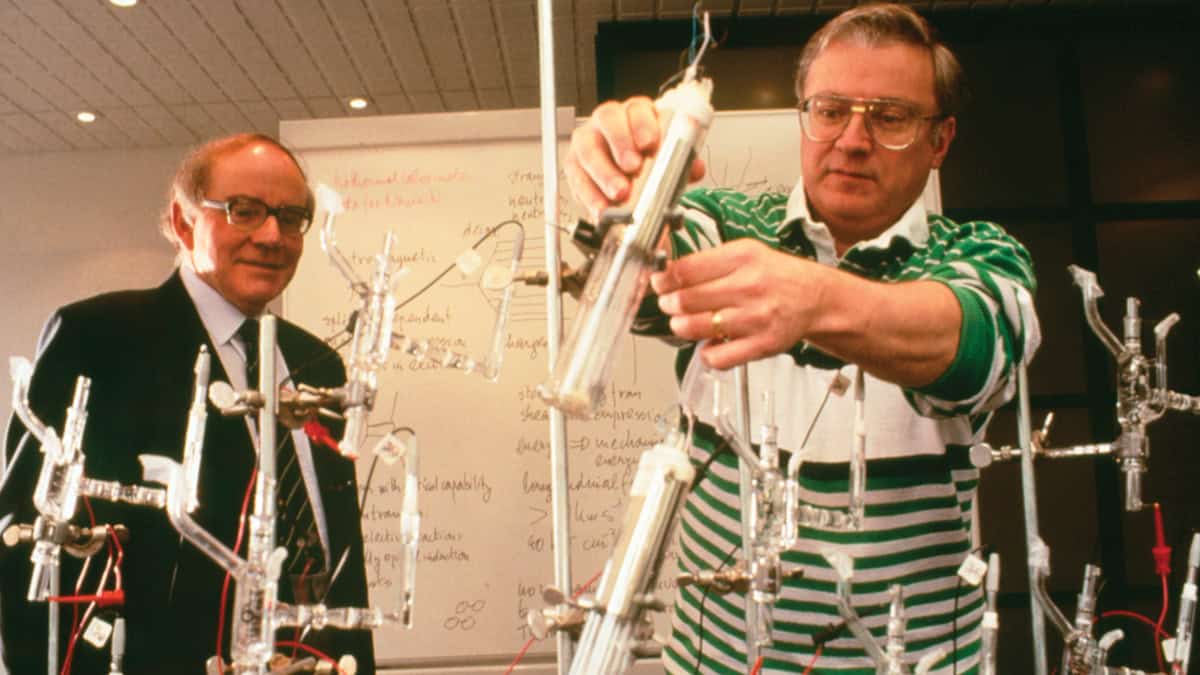
The chemist Harold Kroto, whose co-discovery of the carbon-60 molecule played an important role in the development of carbon-based nanotechnology, died on 30 April aged 76. Kroto shared the 1996 Nobel Prize for Chemistry with Robert Curl and Richard Smalley for their discovery a decade earlier that 60 carbon atoms could form hollow ball-like molecules. The structures were dubbed buckminsterfullerene, or “buckyballs”, because of their resemblance to the geodesic domes designed by the American architect Buckminster Fuller.
Kroto was born in Wisbech, UK, in 1939 to German parents who had fled their homeland in 1937 because Kroto’s father was Jewish. Growing up in Lancashire, Kroto excelled in chemistry, completing a PhD in microwave spectroscopy at the University of Sheffield in 1964. He continued his work on spectroscopy at the National Research Council in Ottawa, Canada, and then at Bell Labs in New Jersey.
In 1966 Kroto returned to the UK to join the University of Sussex, remaining there until his retirement in 2004. That year he accepted a position at Florida State University, where he could continue his research and also pursue his interest in using the Internet for educational outreach.
Interstellar chemistry
While at Sussex, Kroto became interested in “interstellar chemistry”, which uses microwave spectroscopy to work out which molecules are present in the vast clouds of gas in space. In the 1970s Kroto and colleagues began to realize that the structures of the carbon molecules they were detecting in space were not as expected, if one assumes that they were formed at relatively low temperatures and densities. Instead, Kroto surmised, the molecules must be made when material is ejected at high pressure and temperature from aging stars that are rich in carbon.
Kroto had the chance to test this idea in 1985, when he collaborated with Smalley and Curl at Rice University in Houston, Texas. Smalley had built a facility that could simulate the conditions in the plasma atmosphere of a carbon star by using a powerful laser to vaporize a graphite sample. “In that experiment, something happened that no-one predicted,” recalled Kroto in an interview at the Lindau Nobel Laureate Meeting in 2000.
The team had unexpectedly made carbon-60, a molecule that resembles a soccer ball and comprises 20 hexagons and 12 pentagons with a carbon atom at each vertex. The discovery that carbon atoms would form a one-atom-thick sheet that enveloped a hollow region was described by Kroto in 2000 as “a fundamental paradigm shift in our understanding of carbon and sheet materials”.
2D carbon allotropes
The discovery of carbon-60 turned out to be an important early milestone in the study of 2D carbon allotropes, which is a major research area in nanotechnology. These materials also include carbon nanotubes (CNTs) – rolled-up sheets of carbon – and graphene, which is a flat sheet of carbon just one atom thick. Unlike graphene and CNTs, which have been used to create a wide range of prototype technological devices, there have not been many practical applications for carbon-60. One potentially promising current avenue of research is the study of crystalline materials made from carbon-60 molecules, which have interesting superconducting and other electronic properties.
Kroto also had a deep and long-standing interest in science education. In 1995 he joined forces with the BBC producer Patrick Reams to create the Vega Science Trust, which produced educational television programmes until 2012. In 2006 Kroto founded Global Educational Outreach for Science Engineering and Technology (Geoset) at Florida State University. Geoset provides free educational materials, mostly in the form of video presentations.
Kroto described graphic design as his “first love” and won several design awards. In 2001 one of his designs appeared on a UK second-class stamp commemorating the 100th anniversary of the Nobel Prize for Chemistry.
In 1887 Albert Michelson and Edward Morley performed an experiment to detect the influence on the speed of light of the ether – the medium in which light waves were thought to travel. They reasoned that because the Earth was moving through the stationary ether, the speed of light would be different in mutually perpendicular directions. That difference, although probably tiny, should show up when light waves travel out and back along two arms and then interfere where they cross.
What Michelson and Morley found, instead, was probably the most celebrated “null result” in physics: there was no discernible difference in the speed of light in any direction. This failure to observe the expected result went unexplained for nearly two decades, until Albert Einstein’s 1905 special theory of relativity showed that the ether was not, in fact, required to understand the properties of light.
Whether the Michelson–Morley null result directly motivated special relativity is still disputed, but in any event it established a context for Einstein’s revolutionary idea. It also demonstrates why null results can be as significant as positive discoveries. Indeed, certain areas of physics are full of important null results. Might some of the fundamental constants of nature, such as the gravitational constant or the fine-structure constant, actually vary over time? Might the proton decay very slowly, as some theories beyond the Standard Model of particle physics predict? Could there be a “fifth force” that modifies gravity in a material-dependent way? Might dark matter consist of weakly interacting massive particles? Exquisitely sensitive experiments and observations have so far failed to find any evidence for these things. Yet we still keep looking, and null results place ever tighter limits on what is possible.
In other areas of physics, though, an awful lot of null results never see the light of day. If you do an experiment to look for a predicted but not terribly earth-shaking effect – a new crystal phase of a material, say – and you fail to find it, who is going to be interested? Which journal is going to want a paper saying “We thought we might see this wrinkle, but we didn’t”?
Some researchers feel this is as it should be. Isn’t there, after all, enough literature to wade through (and to referee) without also having to worry about things that proved not to be so? Others, however, think that null results are vital to the way science proceeds, and that their worth needs to be recognized and respected – perhaps in journals dedicated to that purpose. The debate between these two sides has produced a few intriguing possible solutions, while also revealing some deep disagreements about how best to do – and fund – scientific research in the modern era.
The value of nothing
Alexander Lvovsky is someone who believes there are reasons to accentuate the negative. A quantum physicist at the University of Calgary in Canada, he argues that in his field many groups wind up working on similar (even identical) problems, and so publishing a negative result would make research more efficient by removing dead ends quickly.
A study published in the Proceedings of the National Academy of Sciences last November provides some support for this view. In it, geneticist Andrey Rzhetsky of the University of Chicago, US, and colleagues attempted to gauge the efficiency of the scientific process of discovery by analysing how researchers select the problems they work on. Using biochemistry papers listed on the MEDLINE database from 1976 to 2010, they created a map, or network, in which the nodes were scientific concepts (in this case the specific molecules being studied) and the edges were the relationships between them (such as physical interactions or shared clinical relevance). Hence, research on molecules that are close together in this network is probably exploring tried and tested types of interaction, while links between distant nodes represent more innovative, perhaps speculative investigations.
The network structure that Rzhetsky and colleagues uncovered is one that suggests a rather conservative research strategy, in which individual researchers focus on “extracting further value from well-explored regions of the knowledge network”. They also found that this strategy has become more conservative over the years, slowing the pace of discovery. Scientific research, they argue, would be more efficient if it were more co-ordinated: for example, if scientists published all findings, positive and negative, to avoid repeating experiments.
The trend towards conservatism in research is very much in line with what Lvovsky sees as a likely outcome of a bias towards positive results. Combined with a “publish or perish” mentality, he says, this bias “encourages scientists not to engage in hard, challenging scientific problems, but to concentrate on those which are guaranteed to yield a [positive] result”. This problem, he says, “affects primarily young scientists who need to make a career”. Lvovsky reckons this is happening in his own field of quantum optics, where he says it has become common to “publish experiments whose result is known in advance, simply by giving them an exciting interpretation”.
A bias towards exciting results is perhaps understandable, but Jian Wu of the East China Normal University in Shanghai argues that null results needn’t be boring. “Sometimes a result is very interesting even if it is not the expected one and cannot be understood with available theories or models,” Wu says. Even so, he adds, “It is hard for such a null or negative result to be published in general journals, which are mainly looking for significant advances.” That bias can discourage further exploration of unexpected and unexplained findings.
Perhaps one of the most compelling reasons to publish null results is simple honesty. Although Lvovsky acknowledges that “it is the positive results that take science and technology forward”, everyone knows that science isn’t the endless succession of triumphs found in the literature. To pretend otherwise, Lvovsky says, “distorts the scientific truth”. Not only do “failures” predominate; they are also an important part of the record. Brian Nosek, a psychologist at the University of Virginia, US, who specializes in the cognitive biases that can manifest themselves in the conduct and reporting of science, notes that if people never hear about failures to reproduce an effect, they will assume it’s well established.
False positive Martin Fleischmann and Stanley Pons’ (left) 1989 announcement of “cold fusion” led to a flurry of published null results showing that the experiment could not be confirmed. (Courtesy: Philippe Plailly/Science Photo Library)
This skewing of the literature may, Lvovsky says, have played a role in some notorious incidents of false claims in physics. Faked nanotechnology results published by the then-Bell Labs researcher Jan Hendrik Schön in the late 1990s took years to unravel. Similarly, after the electrochemists Martin Fleischmann and Stanley Pons announced in 1989 that they had achieved “benchtop nuclear fusion” during electrolysis of heavy water – an announcement soon backed up with a sketchy paper published in the Journal of Electroanalytical Chemistry – there was a flood of apparent confirmations of the result. But it took much longer for carefully documented null results to emerge. Some of the most thorough and convincing were described in long papers in Nature, which led eventually to a general disavowal of the “cold fusion” claimed by Fleischmann and Pons. By that stage a large amount of time and money had been spent on a chimera.
Other ways of saying ‘no’
That null results like those investigating cold fusion were published in a top journal shows just how unusual that episode was. Usually, such journals insist on positive findings that more obviously seem to advance what we know. Might, then, the best place for null results be in journals dedicated to them?
“The difficulty of a null-result journal is the review procedure – how to decide which result is worth publishing,” Wu says. It’s extremely difficult for an editor or referee to judge the quality of a paper reporting a null result, he adds, because there could be so many reasons (including bad technique) why nothing was seen. Yet Nosek questions whether this problem should afflict null-result papers more than others. “Null results can be obtained because of incompetent execution of the research protocol, but so can positive results,” he says.
Perhaps more problematic is the status of such a journal. “It may have trouble succeeding, because if the journal is defined as publishing what no other journal will publish then it is defining itself as a low-status outlet,” says Nosek. That’s not a foregone conclusion, though. Lvovsky suggests that a null-result journal “must require that the accepted articles, rather than just reporting failures, demonstrate that failure derives not simply from a simple lack of prowess but from substantial scientific or technical reasons”. In other words, the reasons for the failure must be provably identified.
Unaccounted for Pharmaceutical research has been criticized for not publishing null results that are actually very important to the advancement of medical science. (Courtesy: iStock/teekid)
That, however, may be easier said than done. “Finding a true null in an experiment is very difficult to do, as one has to effectively limit all possible outcomes that might produce a zero,” says atomic physicist Andrew Murray of the University of Manchester, UK. “These can include the possibility that we measured the wrong thing, noise, something broken in the experiment, or some other artefact might lead to us not seeing anything. It is far easier to measure a finite quantity than a true zero in almost every experiment I know of.”
Given that challenge, the very notion that one can obtain a definitive null result could propagate a false idea that science is black and white, Murray adds. “Politicians and many policy-makers who are not scientists often make statements and draw conclusions without considering that there must be uncertainties in any measurement,” he says. “The existence of a journal that states that one can obtain a definitive null could imply that such precision measurements are possible on a general scale. I think that’s a dangerous precedent to set.”
All the same, null-result journals do exist, such as the Journal of Negative Results in BioMedicine. Interestingly, that publication also provides an outlet for “unexpected, controversial and provocative results” – an implicit acknowledgement, perhaps, that those are the kind of findings for which null results tend to have the most importance. Last year the science journal PLOS ONE, which has no editorial selection criteria beyond technical competence of submitted papers, started collating its negative results in a collection called “Missing Pieces”.
It’s surely no coincidence that these initiatives tend to be in the life sciences. Null results have received more attention there because of the vested interests that may accompany and even induce publication biases. Pharmaceutical companies, for example, might publish positive findings of drug trials but not negative ones. It’s for such reasons that Nosek has proposed an alternative to the regular publication of null results: peer-reviewed declarations of the objectives of an experiment before the data are collected (https://osf.io/8mpji/wiki/home). In these “registered reports”, Nosek explains, “The question and methods of the study are reviewed, and then if they pass review, the outcomes will be published regardless of whether they are positive or negative.” This procedure would protect against publication bias and improve research design, while also “focus[ing] research incentives on conducting the best possible experiments rather than getting the most beautiful possible results”. About two dozen (primarily life-sciences) journals are already offering registered reports as a submission option, he says.
What about the complaint that null results would just add more literature through which researchers have to wade? “There is already too much information,” says Nosek. “For an individual, the amount of science being produced is effectively infinite.” But the answer, he says, is not to suppress negative data, but “to improve search and discovery of information that is relevant and useful”.
Null results can also be released and discussed along less formal routes – as happened in 2011 with the alleged detection, made by researchers in the Italy-based OPERA collaboration, of neutrinos travelling faster than light. This was an extraordinary “positive” claim, revolutionary if true – and so understandably it stimulated several follow-up studies that rapidly disproved the idea. These studies were disseminated via the arXiv preprint server and through informal personal networks, and in the views of some physicists, they turned what could have been an embarrassment for the discipline into a demonstration of good, efficient scientific method. If that testing had relied on the usual peer-reviewed channels, says Nosek, it could have taken years.
No-one, then, seems to doubt the potential value of null results. The chief difficulty lies in establishing effective channels for communicating them. If we can find a way of doing that, we may find that discovering nothing is a vital part of discovering anything.