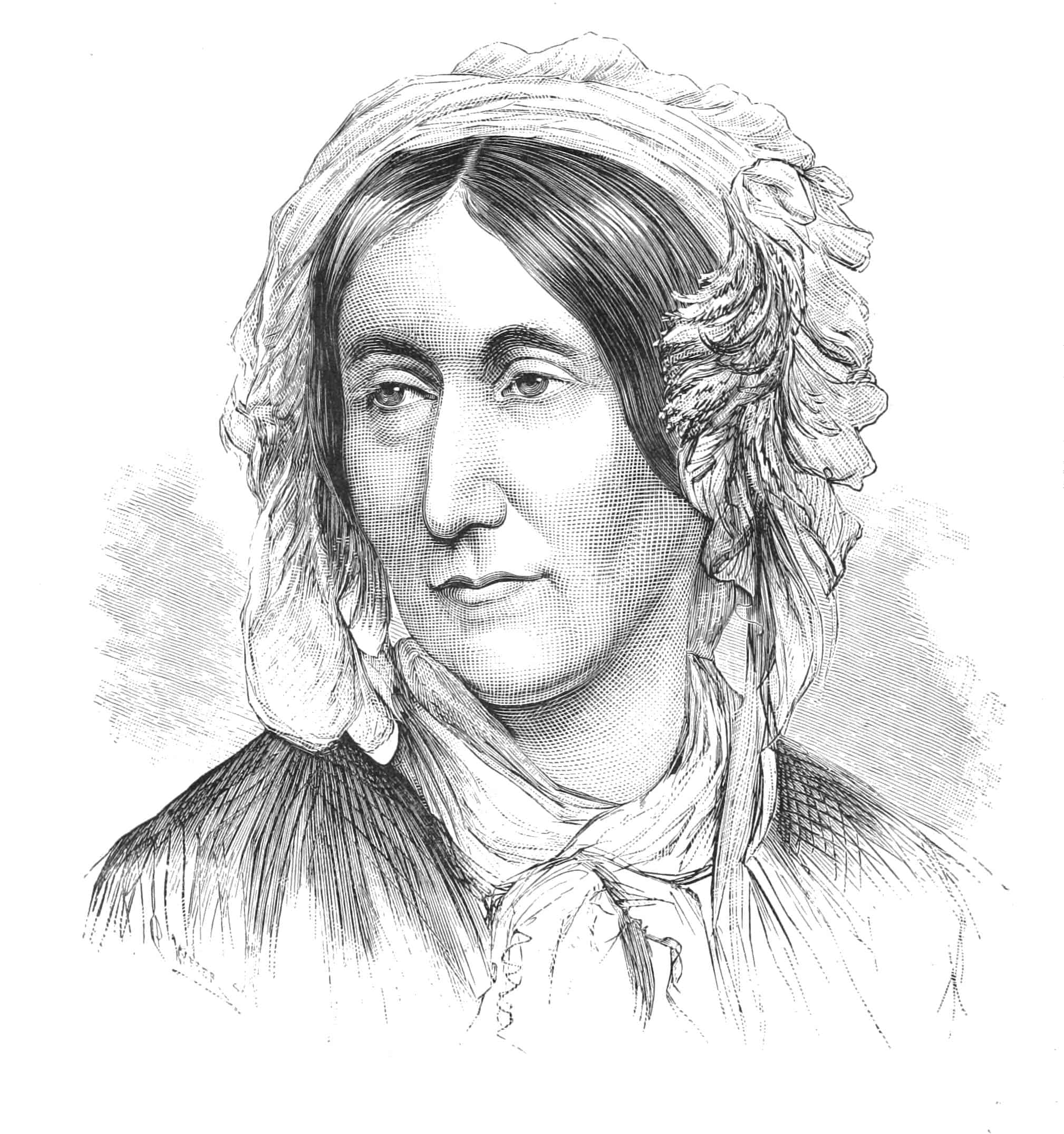
Alice Prochaska, the principal of Somerville College, Oxford, told me yesterday that she is “absolutely thrilled” that Mary Somerville (1780–1872) will appear on a new £10 Scottish banknote. Prochaska believes the decision will help to give the Scottish polymath, whose work led to the discovery of Neptune, the wide recognition she has not yet received. Somerville will be the first woman other than a royal to appear on a Scottish banknote.
The decision had been announced earlier this week by the Royal Bank of Scotland (RBS), following a somewhat bungled public vote. On 1 February, RBS launched a week-long Facebook poll to determine whether Somerville, the engineer Thomas Telford or the physicist James Clerk Maxwell should adorn the new note, which will be issued in the second half of 2017. Having led comfortably throughout, Somerville was overtaken at the eleventh hour by Telford, following a suspicious flurry of votes mainly from outside of the UK. This triggered a three-day stewards’ inquiry before the bank declared Somerville the winner on Wednesday.
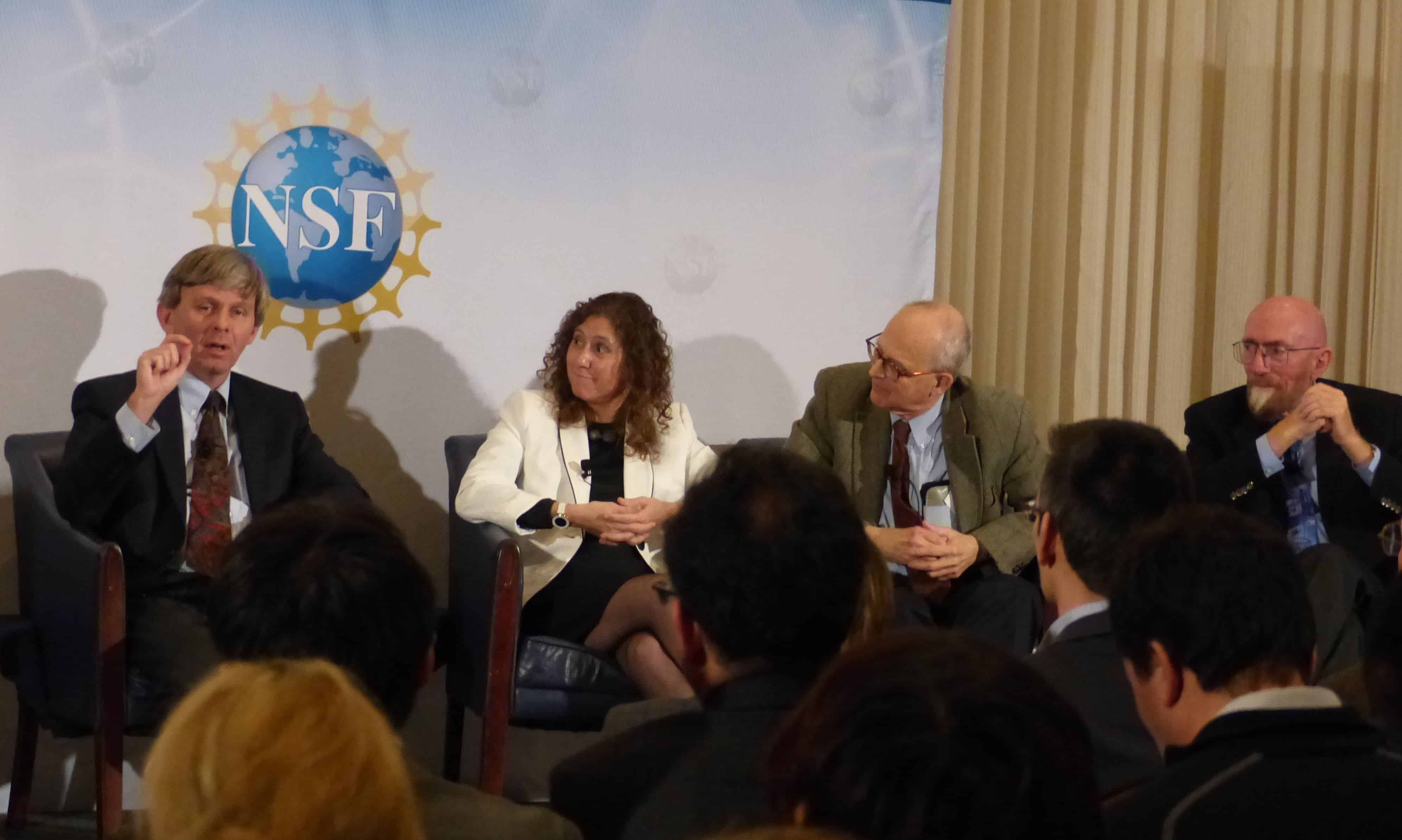
LIGO leaders at the press conference (from left): executive director David Reitze, spokesperson Gabriela González, Rai Weiss and Kip Thorne.
By Margaret Harris at the AAAS meeting in Washington DC
Not with a bang, but a chirp.
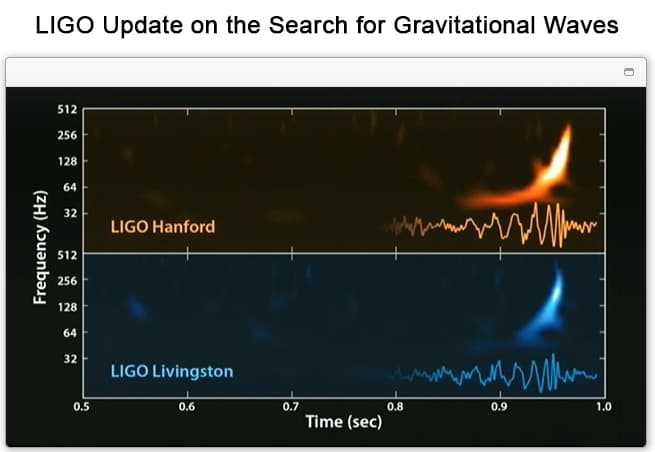
That’s how the 2016 meeting of the American Association for the Advancement of Science (AAAS) kicked off on Thursday, thanks to the spectacular news that the Laser Interferometer Gravitational-wave Observatory (LIGO) has, for the first time ever, directly observed the ripples in space–time known as gravitational waves. As our news story explains, LIGO’s twin interferometers picked up the waveform produced as two black holes spiralled into each other, emitting gravitational waves at frequencies and amplitudes that rose sharply with time, like the chirp of a cricket.
The LIGO researchers announced their discovery at a packed press conference in downtown Washington, DC. The excitement in the room was palpable, even though, as it turned out, most of the journalists present already knew what they were about to hear. This actually isn’t unusual. It’s common practice for scientific journals to send new research papers to journalists a few days ahead of publication; the idea behind this so-called embargo system is that it gives journalists time to report accurately on complex science stories.
What was unusual was that this time, there was no embargoed paper. Instead, there was a vigorous rumour mill casting out information in a messy, somewhat underhand and highly anisotropic way. This is rather interesting, and I wish that LIGO’s Gabriela González hadn’t dismissed the journalist who asked about it with an incredulous “The facts are so beautiful – why do you talk about rumours?”
The first ever direct detection of gravitational waves has been made by researchers working on the Advanced Laser Interferometer Gravitational-wave Observatory (aLIGO) in the US. The breakthrough – announced today at a news conference in Washington, DC – ends a decades-long hunt for these ripples in space–time. This monumental observation marks the beginning of the era of gravitational-wave astronomy and provides evidence for one of the last unverified predictions of Einstein’s general theory of relativity.
The waves were produced from the collision of two black holes of 36 and 29 solar masses, respectively, which merged to form a spinning, 62-solar-mass black hole, some 1.3 billion light-years (410 mpc) away in an event dubbed GW150914. The detection was made on 14 September last year and was measured while the newly upgraded aLIGO detectors – one in Hanford, Washington, and the other in Livingston, Louisiana – were being calibrated before the first observational run began four days later.
The gravitational-wave signal lasted in both of LIGO’s interferometers for 0.2 seconds and has been measured to a statistical certainty above 5.1σ. In fact, the signal from the event was so strong that it could be visually “seen” in the data by eye. It was measured in both of LIGO’s interferometers, arriving within seven milliseconds of each other. The observation is also the first time a stellar-mass binary black-hole system has been detected. The data also showed that gravitational waves travel at light speed and that gravity has no mass, as predicted by general relativity.
“The effect we are trying to measure is so tiny that it takes something like LIGO to measure it,” says David Reitze, LIGO laboratory executive director. “It’s mindboggling.” He goes on to say, “We have been deaf, but now we can hear them. We now expect to hear things we never expected as we open a new window of astronomy. This was a scientific Moon shot, and we did it, we landed on the Moon.”
Ripples in the cosmos
Just as accelerating a charged particle produces electromagnetic radiation, so accelerating mass produces gravitational radiation – this energy is lost from the system in the form of “gravitational waves”. But unlike electromagnetic waves that travel through space–time, gravitational waves actually ripple the fabric of space–time. Such waves travel away from their source in all directions at the speed of light, compressing and expanding intervening space–time as they flow.
Any accelerating mass will produce gravitational waves so long as it is not spherically or cylindrically symmetric, which means that a perfectly spherical spinning star will not create the ripples. Since Einstein published his general theory of relativity 100 years ago, scientists have predicted that binary-star or black-hole systems would be prolific sources of gravitational waves in our universe, but such waves had never been directly detected, until aLIGO’s measurement last September.
Ringing chirp: the waveform of event GW150914 The vital waveform of gravitational-wave event GW150914 showing the inspiral, chirp and ringdown features. (Courtesy: LIGO/Phys. Rev. Lett.116 061102)
If two black holes are stably orbiting each other, they produce a continuous stream of gravitational waves at twice the orbital frequency, carrying away the system’s rotational energy and angular momentum. Such ripples are thought to have wavelengths that are tens of light-years and are relatively weak. But if the initial separation between the two black holes is not too large then – at some point – the orbit will get smaller as the system loses rotational energy and the two holes will eventually “inspiral”.
Chirp and ring
The closer a binary pair is initially, the more radiation is emitted as the two black holes plunge into one another, which accelerates the inspiral. This process produces a characteristic “chirp” waveform in which both the amplitude and frequency of the gravitational waves increases – sometimes for less than a second – until it peaks at the merger. Given off during the last few seconds of the merger, these gravitational waves are characteristic of the mass and spin of the final black hole.
The single black hole created by such a cataclysmic merger is initially highly distorted. However, the nascent hole loses its deformity almost instantly by ringing like a bell and producing further gravitational radiation. The system quickly loses energy and the strength of the waves decays exponentially to form a “ringdown” signal. For event GW150914, aLIGO detected the chirp and the ringdown note at the end.
As the final black hole was 62 solar masses, this means that 3 solar masses’ worth of gravitational radiation was emitted during the event. The signal also revealed that the new-born black hole is a rotating Kerr black hole (with a spin parameter of 0.67). Cosmologists have modelled such a gravitational-wave signal as audible sounds, based on the frequencies of the waves as they would arrive at LIGO’s detectors. (You can listen to a chirp and ringdown here.)
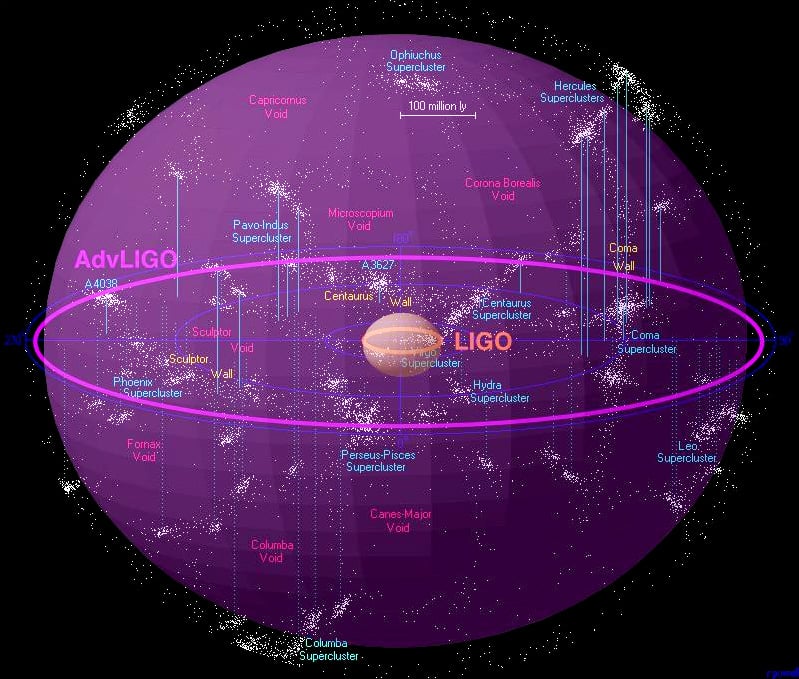
Across the universe: LIGO’s extended reach with the recent update to aLIGO Schematic showing the much greater volume of the universe to which the Advanced LIGO detectors will be sensitive. (Courtesy: Caltech/ MIT/ LIGO Lab)
The length of time that a signal remains in LIGO’s interferometers – and hence the quality of a potential detection of gravitational waves – depends inversely on the frequency that LIGO is set up to measure and the masses of the binary objects involved. It is therefore easier to detect gravitational waves at lower frequencies and from lighter objects. Before its upgrade, LIGO was able to detect gravitational waves from 40 to 10,000 Hz, but since aLIGO came online, the interferometers have been able to detect waves down to a frequency of just 10 Hz, thereby greatly extending LIGO’s reach.
B S Sathyaprakash – a physicist at Cardiff University in the UK and a member of the LIGO collaboration – says the facility is currently functioning at 30 Hz, which was still sufficient to pick up the signal at 410 mpc. Although he admits that a heavier object will last for a shorter time, the signal itself is really strong. “Big objects have a larger amplitude, so a [gravitational wave] signal from a binary black-hole system can be detected from a much greater distance than a similar signal from a neutron-star system,” he explains.
Long arm of LIGO
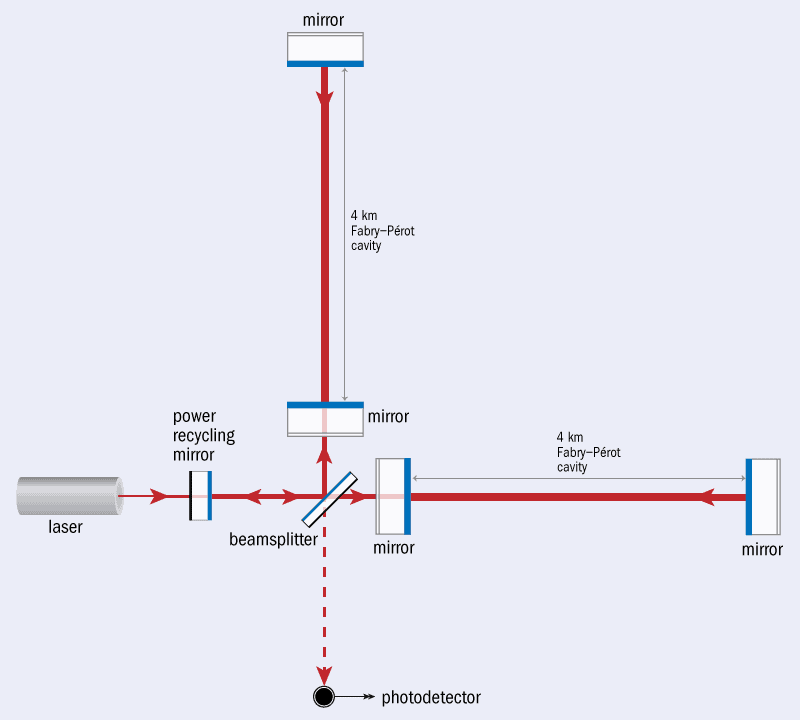
LIGO’s successful detection of gravitational waves is thanks to its simple but ingenious design. The two observatories are essentially Fabry–Pérot interferometers consisting of two 4 km-long arms at right angles to each other, with “test masses” in the form of pure silicon primary mirrors – each weighing 40 kg and suspended as a pendulum – at both ends of the arms. Both interferometer arms are housed in an ultrahigh vacuum.
During a run, laser light with a wavelength of 1064 nm and a power of 200 W is sent to a beamsplitter, which transmits one half of the light into one of the arms and reflects the rest down the other arm. As each arm itself is a Fabry–Pérot cavity, the light is allowed to bounce back and forth some 400 times in each arm before returning to the beamsplitter. This effectively increases the arm length to nearly 1600 km, boosting aLIGO’s sensitivity.
After the bounces, light from each arm returns to the beamsplitter, where the two beams combine. Some of this light is again transmitted through the beamsplitter and is detected at the photodetector (see diagram below).
Follow the beam A schematic showing aLIGO’s interferometer. (Courtesy: IOP Publishing)
Riding the wave
If the light travels exactly the same distance down both arms, the two combining light waves interfere destructively, cancelling each other so that no light is observed at the photodetector. But if a gravitational wave slightly stretches one arm and compresses the other, the two beams would no longer completely subtract each other, producing an interference pattern at the detector. This pattern contains information about how much the two arms have lengthened or shortened, which in turn tells us about what produced the gravitational waves.
The aLIGO facility does not, however, measure the change in path-length because the gravitational wave compresses or expands the light’s wavelength too. Instead, what the device reveals are tiny shifts in the period of the two light beams. If the crests or troughs of the wave arrive out of synch, they produce an interference pattern, meaning that the light acts as a clock and not a ruler.
Apart from using a Fabry–Pérot cavity to increase their sensitivity, the interferometers also have a “power-recycling mirror” placed just behind the beamsplitter. This mirror, which is partly reflective, slowly boosts the laser power from 200 W to 750 kW by reflecting nearly all of the laser light back to the beamsplitter and into the arms. Despite all of these upgrades and modifications, even a strong gravitational wave from colliding black holes displaces the mirrors by barely 10–19 m, making LIGO’s successful detection even more triumphant.
Testing Einstein
With the gravitational-wave data from the GW150914 event, the LIGO researchers were also able to check a key prediction made by general relativity, which is that gravitational waves travel at the speed of light and that the currently unknown carriers of the force – often dubbed “gravitions” – are massless. If gravitons did have mass, some physicists have reasoned, it could explain the accelerating expansion of the universe without resorting to the concept of “dark energy”. However, the aLIGO data show no evidence that the gravitational waves were anomalously dispersed, as they would if gravity had some small mass.
Chirps from the LIGO team
LIGO spokesperson Gabriela González from Louisiana State University says, “It’s been a very long road, but this is just the beginning and more is to come. We can now begin listening to the universe.” She continues, “It’s a gift of nature.”
“LIGO has opened a new window on the universe – a gravitational-wave window,” says LIGO co-founder Kip Thorne from the California Institute of Technology. “Each time a new window has opened up there have been big surprises – LIGO is just the beginning.” He continues, “Until now, we as scientists have only seen warped space–time, when it’s very calm. It’s as though we’d only seen the surface of the ocean on a very calm day when it’s quite glassy. We had never seen the ocean in a storm, with crashing waves. All of that changed on 14 September 2015. The colliding black holes that produced these gravitational waves created a violent storm in the fabric of space and time. A storm in which time speeded up and slowed down, speeded up again.”
“My reaction was ‘wow’, I couldn’t believe it,” says Reitze. “We should be seeing more in the coming year,” says Thorne. “We are going to have a huge richness in gravitational-wave signals.”
Around the time Daniel Ucko started work as a full-time editor at Physical Review Letters in 2004, the US government ordered his employer – the American Physical Society (APS) – not to peer review and publish articles submitted from countries, such as Iran, that were facing economic sanctions. (The APS and other scientific organizations refused.) Ucko found it interesting that, lumping peer review with trade, the US was explicitly recognizing that the process generates value.
Ucko also found it curious that arXiv, then over a decade old, wasn’t supplanting peer-reviewed journals. Nor has it since. Peer review, he decided, is a process that produces value. “I began to wonder,” Ucko told me recently, “about the components of that productivity.”
Keen to explore the conceptual basis of peer review, in 2011 Ucko also became a full-time graduate student in the philosophy department at Stony Brook University, where I am a professor. Ucko found that a philosophical training helped him understand peer review and that his editorial and scientific experiences – he got a PhD from University College London and did a postdoc at the University of Birmingham in the UK – gave him new perspectives on traditional philosophical issues.
Take anonymity.
Don’t you know who I am?
Anonymity has a bad rap among philosophers, who think it stimulates inauthenticity and dishonesty. In his 1846 treatise The Present Age, the Danish philosopher Søren Kierkegaard attacked the press of his day for publishing anonymous articles. Anonymity, Kierkegaard argued, allows people not to commit themselves to their statements and encourages thoughtless opinions, rash judgment, innuendo and slander. More recently, the Berkeley philosopher Hubert Dreyfus has applied Kierkegaard’s arguments to the Internet, pointing out, for instance, anonymity’s role in trolling.
Peer review somehow inverts this effect, Ucko realized, making anonymity productive, not corrosive. Ucko began to see the reasons why thanks to a famous thought experiment by the American philosopher John Rawls called the “original position”. To design a political system with maximum fairness, Rawls argued, you have to ask people to do so behind a “veil of ignorance” – not knowing what particular characteristics (such as gender, race, class, or level of education) the designers themselves would have in it. That requirement maximizes impartiality by forcing social planners not to structure the system to favour their particular circumstances.
“I thought that was an analogue to peer review,” says Ucko, who went on to explain his thinking in a paper entitled “There is no ‘I’ in referee: why referees should be anonymous” at the 2015 March meeting of the APS. “If you create a situation where it is the author who is behind the veil and doesn’t know who the referees are or their perspectives, you are encouraged to write a paper – laying out your method and procedures in detail to no-one in particular – that is maximally compelling.”
Another philosophical concept important to peer review is tackled in Lorraine Daston and Peter Galison’s book Objectivity. The authors argue that the scientific quest for objectivity is driven largely by a distrust of ourselves – by our own subjectivity. But the objectivity aimed at in the peer-review process, Ucko thinks, is of a special kind. It does not mean trying to devise a procedure that somehow allows you to get behind the experimental process to grasp what’s happening. It’s rather the opposite: to articulate the experimental process in as public a manner as possible to optimally tap the expertise of others.
Balancing interests
The late physicist John Ziman, of the University of Bristol, once called peer review “a highly reflexive and convoluted social activity”, involving a balance of interests between three constituencies: authors, editors and referees. The balance is achieved, Ziman wrote, because scientists have to play each role. “It is,” he declared, “as if every citizen must sometimes be the accused, sometimes the judge and sometimes the jury in a succession of criminal trials.”
“It’s more complicated,” says Ucko, “for the pillars are not fully interchangeable.” Ziman’s image, for instance, doesn’t have room for professional editors, such as Ucko himself, who don’t do research.
Still, Ziman’s remark helps explain how anonymity can function productively. The anonymity in Kierkegaard’s press example is one pole of a pair: reader and anonymous writer. Ziman’s image makes clear that it’s a three-way relationship in a scientific publication, where the referee is anonymous to the author but not to the editor, who is able to interpret the referee’s remarks. It also explains why scientists should prefer learned-society publishers over for-profit publishers, whose editors are less beholden to the scientific community.
Ucko has organized a session, chaired by me, at next month’s APS meeting to focus on the role of trust in peer review. That trust is lodged not necessarily in a particular editor or even journal but in the system, and is generated by knowledge of how the system operates. An author knows, for instance, that it’s in the best interests of editors to replace an irresponsible referee. Other speakers include Harvard University science historians Melinda Baldwin and Alex Csiszar as well as Jamie Hutchins, a director at IOP Publishing, which publishes Physics World.
The critical point
Richard Horton, editor-in-chief of the Lancet, once wrote that it is a “mistake” to view peer review as anything more than “just a crude means of discovering the acceptability – not the validity – of a new finding”. We tell the public, Horton continued, that peer review is “a quasi-sacred process” that makes science objective, when we know that it’s in fact “biased, unjust, unaccountable, incomplete, easily fixed, often insulting, usually ignorant, occasionally foolish and frequently wrong”.
But, Ucko argues, we also know that peer review is productive. If we begin by examining that productivity, we’ll understand the process better. “The institution of peer review,” he says, “is a fascinating philosophical laboratory.”
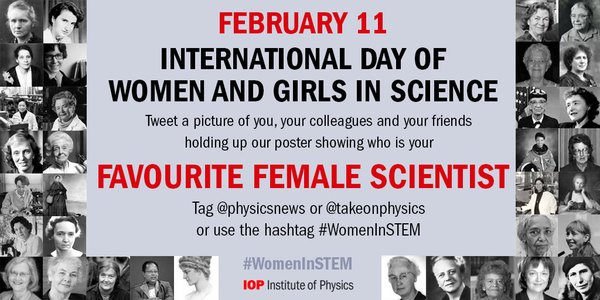
Tomorrow is the inaugural International Day of Women and Girls in Science as declared by the United Nations (UN). It’s a chance to celebrate women’s achievements in science, technology engineering and mathematics (STEM), and to address the under-representation and inequality that women and girls face in many STEM fields.
One way you can take part on the day is to write the name of your favourite female scientist on this printable poster. Take a photo of yourself holding the poster and share it on Twitter including #WomenInSTEM. This social-media initiative is the idea of our colleagues at the Institute of Physics, which publishes Physics World, who have lots of information about their ongoing diversity programmes on their website. I’ll be sharing the name of Mary Somerville, the Scottish polymath who predicted the existence of Neptune.
Topological insulators are materials that are electrical insulators in the bulk but can conduct electricity on their surface via special surface electronic states. Using just a couple of diagrams on a whiteboard, Chris Hooley of the University of St Andrews in the UK shows how this phenomenon arises from the presence of electrons and their spin properties.
The unusual properties of these materials has generated a lot of interest in the condensed-matter community in recent years. They bring a great opportunity to expand our understanding of materials physics and could lead to applications such as quantum computation.
During storms, there is a critical wind speed, of around 42 m/s (90 mph), at which almost all tree trunks break – irrespective of their size or species – according to a new study done by researchers in France. Indeed, the team has shown that the breaking phenomenon can be explained via a simple scaling law, explaining why the critical wind speed is largely independent of the tree’s diameter, height or elastic properties.
In a strong wind, a tree may break through one of three mechanisms. Uprooting can occur in rain-moistened ground, or if the tree’s roots are rotten. Alternatively, if the roots can hold, then it becomes the tree trunk that is at risk from breakage – either through torsion or, more commonly, bending. In their study, Emmanuel Virot and colleagues at the Ecole Polytechnique and ESPCI ParisTech have concentrated mainly on the latter phenomenon, which is referred to as “stem lodging”.
Storm snapping
The team’s curiosity about stem lodging was piqued in the aftermath of “Klaus” – the 2009 cyclone that caused widespread damage across parts of Europe. Data collected after the storm showed that the greatest damage to forests occurred in regions where the wind speed exceeded 42 m/s – irrespective of tree age and type, with both softwoods (e.g. pines) and hardwoods (e.g. oaks) affected similarly.
The resistance of wood – often in relation to construction – has received considerable attention over the centuries, with inputs from such recognizable names as Leonardo da Vinci, Galileo Galilei and the Comte de Buffon. All previous experiments have concluded that a tall, thick tree (or, at least, wooden beam) should be as strong as a short, thin one – but no consensus had been reached on the exact scaling laws in play.
To explore this further, Virot and his colleagues conducted experiments on horizontal beech rods. While mechanical differences between different tree species are slight, beech was chosen as a wood with average proprieties. Fixing one end of each rod, the researchers applied increasing weights to the other end, measuring the curvature of the bending rods until they broke. This occurs close to the fixed end of the rod, at a critical curvature radius related to the diameter and length of the rod.
Breaking boughs
Using this relation, and replacing the weight with a model of wind force, the researchers developed a scaling law for the critical wind speed at which trees break. Taking into consideration that trees nearly triple in diameter for a doubling in their height, the researchers showed that the critical speed is only very weakly dependant on the tree’s physical dimensions – a doubling in tree height only increases the critical speed by 9%. The elastic properties of the wood seem to have a similarly small impact.
“We studied why all trees break at almost the same wind speed, and found an explanation based on fertile results of mechanics and biology such as Euler’s elastica equation, Griffith criterion and tree allometry that describe, respectively, elasticity, fracture and tree shape,” explains Virot. “The result is that trees break at approximately the same wind speed, despite their biomechanical differences (size, age, and species).”
Barry Gardiner, a silviculturist at INRA Bordeaux-Aquitaine who specializes in wind damage and was not involved in this study, calls the work very interesting, and a good springboard for helping us to understand better the controls on wind damage in trees. Gardiner cautions, however, that the conclusion of a weak dependence of critical wind speed on tree height appears contradicted by previous studies of storm impacts – which have reported that tree height is a very important predictor of the likelihood of damage.
“From a biological point of view, it makes a lot of assumptions that simplify the natural world,” he adds – noting that the model assumes a steady wind state and complete branch shedding, two factors that are not typically reflected in real storms. “Another thing that’s important to remember is that trees are living, so they’re adjusting and acclimating to their environment all the time – they’re not a passive engineering structure.”
A new way of measuring how the Higgs boson couples to other fundamental particles has been proposed by physicists in France, Israel and the US. Their technique would involve comparing the spectra of several different isotopes of the same atom to see how the Higgs force between the atom’s electrons and its nucleus affects the atomic energy levels.
The effect of the Higgs force is tiny, but the researchers say the test would involve technologies that already exist and that some of the required measurements have already been made. The measurement would provide important information about how the Higgs couples to electrons and quarks, and would complement data gleaned from collisions using the Large Hadron Collider (LHC) at CERN.
Important mysteries
After discovering the Higgs boson at the LHC in 2012, particle physicists now want to understand how it couples to matter such as electrons and quarks. Any deviations in these couplings from the Standard Model of particle physics could reveal whether the Higgs mechanism is responsible for the masses of charged fermions, including the electron. A new way of measuring these deviations has been proposed by Cédric Delaunay of the CNRS, France, Roee Ozeri and Gilad Perez of the Weizmann Institute of Science in Israel and Yotam Soreq of the Massachusetts Institute of Technology in the US.
According to the Standard Model, the Higgs coupling creates an attractive force between the electron and the nucleus. This force decays rapidly with distance from the nucleus, which means it will have a much greater effect on electrons in S orbitals (which overlap the nucleus) than on electrons in P, D or F orbitals (which do not). The energies of photons emitted when an electron moves from a P, D or F orbital to an S orbital would therefore be greater than if the Higgs force were not present.
One way of looking for this difference would be to use different isotopes of the same nucleus. As the isotopes would have different numbers of neutrons, the Higgs force should be greater for those isotopes with more neutrons. That would lead to a difference in energy between the same atomic transition in different isotopes – the Higgs shift.
Linear thinking
The problem is that there are other isotopic differences in atomic spectra that are much larger than those related to the Higgs force. The mass shift (MS) is related to the effect of the different masses of isotopic nuclei and the field shift (FS) to the different charge distributions found in different isotopes. While the MS and FS are fiendishly hard to calculate, there is a well-known linear relationship that links the FS and MS parameters to the observed shifts.
The team’s idea is to measure the shifts of two different transitions in four isotopes of the same atom and display the data on a “King plot”. If there is no Higgs coupling, the data will be represented by a straight line. But if there is a Higgs coupling – and it is described by the Standard Model – there will be a tiny deviation from a straight line. It is likely that this deviation will be too small to measure, but if the Higgs coupling is much larger than predicted by the Standard Model, the researchers say it should be measureable using state-of-the-art atomic spectroscopy.
Delaunay and Soreq told physicsworld.com that such a measurement could provide important information to particle physicists who are trying to understand how the Higgs couples to quarks and electrons – something that will be difficult to extract from LHC collision data. “The method we propose is an example – the first one as far as we know – of how table-top experiments may give us complementary information,” they explain. “This is important to better understand the origin of the mass of the building blocks of matter – is it the Higgs mechanism, or other, unknown sources?”
“Intriguing new application”
“Qualitatively, their arguments make sense,” says Andrei Derevianko of the University of Nevada, Reno. “However, detailed atomic-structure analysis is needed – and they are clearly aware of this need – to make sure that the effect is indeed as large as they claim.”
Marianna Safronova of the University of Delaware also thinks that the proposal could be viable, but points out that a successful experiment would have to accurately separate the effects of the weak interaction. She also agrees with the team’s conclusion that ytterbium isotopes would be a good place to look for the effect, buts adds that calcium may be another viable candidate. Dmitry Budker, an experimental physicist at the University of California, Berkeley, told physicsworld.com that he plans to collaborate with the team to try to make the measurements. “It is not yet clear what specific atomic system – which atoms and/or ions – will be best for this, and so it is also not clear where the experiments will be done. I see an exciting possibility of potentially doing these tests in a range of systems and at different laboratories and facilities.”
Physicists in Finland have shown that it is possible to conduct heat over macroscopic distances at close to the maximum efficiency permitted by quantum mechanics. By directing photons along a superconducting waveguide, the researchers transferred heat between two resistors spaced up to a metre apart – some 10,000 times further than previously possible at the quantum limit. They say their technique could someday be used to cool chips inside quantum computers.
Quantum mechanics tells us that heat flow, like electric current, can be quantized. If a wire is so thin that an electron’s cross-sectional wavefunction can only assume one possible configuration as it travels along the wire, there is an upper limit to the rate at which electrical energy can be transmitted for any given voltage. Likewise, there is a maximum rate at which heat energy can be transferred along a single channel connecting a hot bath to a cold one when the baths are at given temperatures. This is the quantum of thermal conductance, which is reached when the hot bath emits energy perfectly, the cold bath absorbs perfectly, and there is no heat loss along the way.
For a hot bath at 1 K connected to a colder one at 0.9 K, heat will flow at 100 fW; one thousand trillionth of the output from a typical incandescent light bulb. Physicists have previously observed such “quantum-limited heat conduction” in a variety of physical systems; in 2013, for example, researchers at the CNRS Laboratory for Photonics and Nanostructures in Paris saw it in an electronic point contact sitting in a 2D electron gas. To date, however, such observations have been limited to distances of up to 50 μm.
Photon carriers
In the latest work, Mikko Möttönen and colleagues at Aalto University extended the quantum-limited distance to macroscopic scales by using photons, rather than electrons, as heat carriers. Maximum conductivity requires that heat carriers travel unimpeded along the thermal channel, but electrons, being electrically charged, can only go a very short distance along normal metals before they scatter off phonons, other electrons or material defects. Photons, in contrast, do not interact with one another – and if an appropriate transmission medium is used, photons will not interact with their surroundings.
The Finnish group carved a spiral-shaped superconducting waveguide into a small silicon chip, and connected each end of the waveguide to a metal resistor, which serves as a heat bath. Thermally induced voltage fluctuations across one of the resistors generate microwave photons that travel along the waveguide with a specifically shaped transverse electric field. The value of each resistor is tailored to exactly match the impedance of the waveguide and therefore minimize the number of photons reflected at the interfaces.
Möttönen and team cooled down the electrons in one of the resistors and measured the subsequent temperature drop in the other, using superconducting tunnel junctions as extremely sensitive thermometers (they decided to cool, rather than heat, the first resistor, to avoid skewing the temperature reading of the second with stray heat). Carrying out the experiment with two lengths of waveguide – 20 cm and 1 m – and operating at a temperature of about 0.1 K, they compared their measured temperature changes with predictions from a detailed thermal model they had developed. They found that their set-up reached between 80% and 110% of the theoretical maximum.
Quantum cooling
According to Möttönen, this technology would be well suited to cooling or initializing quantum devices, which need to operate at or close to the single-quantum level. Placing the cold bath far from the device being cooled down would minimize damage to the latter’s delicate quantum states while keeping the former cold, he explains.
One possible application, he says, would be very sensitive radiation sensors that need to be set to zero as precisely as possible before making any measurements. But probably the main use for the technology, he believes, would be in quantum computers, whose bits change state when absorbing even very tiny amounts of heat. He points out that some groups are now testing error-correction on qubits, but notes that these experiments rely on post-selecting only those qubits that started out in the correct state. “In an actual quantum computer, when you want to do a specific calculation you need precise initialization,” he says.