Fusion power, redefining the kilogram and mimicking the Martian surface are three exciting areas of science and technology that are benefiting from the latest vacuum equipment. In our latest Focus on Vacuum Technology, which you can read free of charge, Christian Day of the Karlsruhe Institute of Technology in Germany explains how new pumping technologies will be crucial to the successful operation of future fusion power plants. “Proving the power of fusion” focuses on the extraordinary vacuum challenges facing the designers of the planned DEMO reactor, which is expected to generate 2 GW of electrical power by the mid-2030s.
Today, the kilogram is defined in terms of a cylinder of a platinum–iridium alloy that was made in the 1880s. Metrology has moved on since then and all of the other SI base units are now defined in terms of fundamental constants. In “The kilogram’s constant struggle”, Stuart Davidson and Ian Robinson of the National Physical Laboratory in Teddington, UK, explain how vacuum technology is playing a crucial role in the development of new ways of defining the kilogram, one of which will ultimately be chosen as the new global standard.
This short film by Lucina Melesio will take you into the darkrooms of New York City to meet the purists who are still practising the art of analogue photography.
“We’re an endangered species,” says Jonathan Rodgers, a 26 year old who has recently co-founded a community darkroom in the Gowanus neighbourhood of Brooklyn. “I think being an enthusiast of analogue photography, you do have to be a little bit of an activist because there is a push to make everything digital nowadays.”
Rodgers says he is not anti-digital but prefers the tangible connection you have when developing and printing photographs. “You have a much bigger connection to it. You see it happening, you see the process, you have control over it,” he says. Rodgers co-founded the Gowanus darkroom with his partner in response to hearing about various darkroom closures across New York City.
Also profiled in the film is Veronica Hodgkinson, who describes herself as an experimental photographer. Hodgkinson uses a camera-less photography technique to create “chemigrams” – colourful patterns produced by exposing old photographic paper to light in varying chemical and atmospheric conditions. “My father had a darkroom when I was little, so I’m used to the smell of chemistry, so it’s a bit of nostalgia for me,” she says. Hodgkinson believes that the recent rapid rise of digital photography has actually helped to spur analogue photography as well. “People have gone ‘Hey, I can sit in front of a computer all day, or I can be developing prints and playing it that way.’ I enjoy being up on my feet, walking around and trying different things,” she says.
This is film number four in a series we have commissioned for the International Year of Light (IYL 2015), with each film telling local stories involving light and its applications and how they can affect people’s lives. The first film in the series followed an amateur astronomer seeking out a patch of dark sky amid the dazzling lights of New York City. The second was a film about the role of light in regulating sleep cycles and the third looked at how LED lights are helping students in a remote Indian community to study after sunset.
To find out more about light and its applications, take a look at the March special issue of Physics World. If you’re a member of the Institute of Physics (IOP), you can get immediate access to the special issue about light in our lives with the digital edition of the magazine on your desktop via MyIOP.org or on any iOS or Android smartphone or tablet via the Physics World app, available from the App Store and Google Play. If you’re not yet in the IOP, you can join as an IOPimember for just £15, €20 or $25 a year to get full digital access to Physics World.
Physicists in Europe have resolved a long-standing puzzle regarding the energy released when an isotope of the rare-earth element holmium decays via electron capture. They say that their extremely precise measurement of the mass difference between mother and daughter nuclides will be crucial in helping to pin down the unknown and very small mass of the neutrino. Other experts, however, insist that this measurement will not help to significantly reduce the upper limit on neutrino mass.
Experiments in the late 1990s and early 2000s showed that neutrinos oscillate from one flavour to another as they travel through space, and that therefore they have mass – in contradiction with the Standard Model of particle physics. However, such experiments can only establish the difference in mass between the three flavours, and not their absolute masses. But establishing the absolute value could point scientists to new physics beyond the Standard Model and identify the role of neutrinos in galaxy formation. A number of experiments including the Electron Capture 163Holmium experiment (ECHo) at the University of Heidelberg in Germany have therefore been developed to try and pin down that mass.
ECHo will begin in 2016 with the aim of measuring neutrino mass using the phenomenon of electron capture in holmium-163. The neutron-deficient isotope absorbs an electron from its inner shell, so converting one of its protons into a neutron and thereby changing into stable dysprosium-163. This results in the emission of an electron neutrino, as well as X-ray photons and Auger electrons – as an outer electron drops to fill the hole left by the absorption – and sometimes a gamma ray from the excited nucleus.
Gold standard
The experiment involves surrounding several milligrams of holmium-163 with gold and then measuring the temperature rise of the gold as it absorbs the particles and radiation from each decay event. The number of times that a specific energy is absorbed is then plotted as a function of that energy. This generates an energy spectrum with a shape that depends subtly on the mass of the neutrino.
Klaus Blaum, director of the Max Planck Institute for Nuclear Physics in Heidelberg, says that this analysis of energy conservation depends crucially on knowing the total energy released by the nuclear decay – in other words the maximum energy value at the end point of the spectrum. That quantity has been measured many times over the last 35 years using a variety of techniques. All such techniques to date, however, have been indirect, and have resulted in significant systematic errors and a consequent wide distribution of results. The current officially recommended value is 2550 eV, for example, but energies as high as 2800 eV have also been measured.
The latest work, in contrast, provides a direct measurement of the decay energy by measuring the mass difference between holmium-163 and dysprosium-163. Neutrons generated at the Institut Laue-Langevin in Grenoble, France, were used to convert erbium-162 into holmium-163, which, after being purified and processed, was ionized and placed in the SHIPTRAP Penning-trap mass spectrometer at the GSI laboratory in Darmstadt. The frequency – or, more precisely, the phase – of oscillation of the ions within the trap was measured and compared with that of a sample of dysprosium, with the frequency difference then providing a direct measure of the mass difference of the isotope.
Problem solved
The result was 2833 eV, and the uncertainty just a few tens of eV. “With our measurement, this problem is solved,” says Blaum, who points out that his group had done a large amount of test measurements beforehand.
Blaum and colleagues conclude that the new measurement should allow the upper limit on the electron neutrino mass to be reduced from its current value of about 225 eV to some 10 eV, once ECHo starts taking data around the end of 2016. Use of higher charge states for the mass spectrometry, to increase oscillation frequency and so reduce statistical uncertainty, should then help to push neutrino-mass sensitivity further down to about 1 eV over the next three to five years, says Sergey Eliseev, also at the Max Planck Institute for Nuclear Physics in Heidelberg.
However, Angelo Nucciotti of the University of Milan-Bicocca, who works on the rival HOLMES electron-capture project, points out it will now be harder than previously thought to reduce the upper limit on neutrino masses – because a neutrino of a given mass will have a smaller effect on the electron-capture spectrum when the decay energy is larger. He also disputes the idea that an accurate mass-spectrometry-based measurement is key to increasing to neutrino-mass sensitivity. “It is known,” he says, “that solid-state or chemical effects can shift the spectrum’s end-point enough to make an independent measurement using single-charged ions in a vacuum of little use.”
Are improvements futile?
Flavio Gatti, a nuclear physicist at the University of Genoa, agrees. Further improvements to the Penning-trap measurements, he argues, could be “useless or difficult to use without making large systematic errors”.
The current best upper limit on neutrino mass is about 2 eV for the electron antineutrino, and this comes from experiments that study beta decay. This limit should be further reduced to about 0.2 eV by the €60m KATRIN facility, which will then study the decay of tritium using a 10 m-diameter electrostatic spectrometer, when it switches on in 2016 at the Karlsruhe Institute for Technology in Germany. However, Nucciotti says that electron-capture experiments might eventually surpass the sensitivity of KATRIN. “This will be very challenging,” he cautions. “But not impossible. It will require a technological (and financial) effort at least comparable to that of KATRIN.”
KATRIN co-spokesperson Guido Drexlin argues that both beta-decay and electron-capture experiments are needed, given, he says, “the different systematic effects in both physics processes and detection methods”. He points out that of the more than 100 nuclei that undergo these kinds of decay, only tritium and holmium have the decay energy and other characteristics suitable for sub-eV neutrino-mass experiments. “It is very important to exploit both nuclei to the fullest extent,” he says.
Physicists who are lesbian, gay, bisexual, transgender or who belong to other sexual and gender minorities (LGBT+) often find that being LGBT+ is incompatible with being a physicist, adding to a growing sense of isolation within the community. For those of us who do bring it up among our peers, we are immediately put on the spot with questions ranging from “Why do you have to talk about it?” and “What does that have to do with science?” to “Isn’t physics progressive and thus there are no problems for LGBT+ people?” We’re even warned that we’ll be labelled “the queer physicist” and that being honest about who we are is likely to hurt our career.
The issues that face LGBT+ people in physics also keep young LGBT+ people from pursuing the subject further. The US Gay, Lesbian and Straight Education Network found in a 2013 survey that less than half of LGBT+ primary and secondary education students feel safe at school, causing many of them to skip classes and hurt their chances of going on to higher education. According to the Williams Institute – a think tank based at the University of California, Los Angeles – around 40% of young homeless people in the US are LGBT+, despite them making up only about 4% of the population. Meanwhile, a joint survey by the National Gay and Lesbian Task Force and the National Center for Transgender Equality in 2011 found that 41% of transgender people in the US have attempted suicide.
Since 2010 my colleagues and I have been building a community of sexual and gender minorities in physics – lgbt+physicists – to address the issues we face. There has been a common theme among our new members: before finding a community of LGBT+ physicists, they thought they were alone. Not only that, but they did not have anyone to talk to when they ran into issues such as employment discrimination. These issues include insurance policies that do not cover same-sex relationships or transgender-related healthcare, the effects of a same-sex relationship on the “two-body problem” and how migrating to another state or country that does not recognize their rights plays into career searches.
When we feel alone, each of these issues feels like it is specific to us as a single person and it is only by coming together as a community that we have been able to start piecing together the systemic issues consistently faced by LGBT+ people in physics. Together with the American Astronomical Society’s Working Group on LGBTIQ Equality, we have put together a best-practice guide that lays out specific actions that can be taken within a department and the university community to make physics a more welcoming environment for LGBT+ people. For example, we encourage physics faculty members to use gender-neutral and inclusive language, create safe spaces within a department, be open to name changes for job and tenure applicants, and participate in surveys exploring LGBT+ experiences.
We have also put together an “out list” for LGBT+ physicists and allies to publicly affirm the right for all physicists to pursue their scientific work in a safe and supportive environment that is free from prejudice and discrimination. By including contact information, the list has helped students who have been unsure about how to disclose their identity to connect with people who are understanding and have themselves been encouraged to stay within the field.
Support is also growing among other organizations. In October 2014 the American Physical Society (APS) formed a committee to identify areas where the society can help to improve the wellbeing of physicists, including looking at the needs of LGBT+ physicists. The Institute of Physics, which publishes Physics World, has begun work looking at the issues that affect the LGBT+ community. There is also a US organization called Out in Science, Technology, Engineering, and Mathematics, which supports students by identifying, addressing and advocating for their needs. With these organizations, there is now a community of LGBT+ physicists that extends from undergraduates to senior scientists that did not exist five years ago. We are beginning to see the first generation of LGBT+ scientists who do not feel the need to keep their identities separate from their lives as physicists.
Yet there is still a lot of work to be done. By coming together as a community, we have been able to identify a number of issues that we commonly face, but we are a long way from fixing them. Of the 4140 colleges and universities in the US, only 36 include transgender-related healthcare for their employees. Although national organizations such as the APS are becoming more inclusive towards LGBT+ physicists, this often does not trickle down to university or laboratory level, where many are still forced to hide that they are LGBT+ for fear of discrimination and hostility from co-workers.
Not only are we losing out on many extremely talented young people, but for those of us who are LGBT+ and have succeeded in physics, our communities inside and outside of academia are constantly hurting and in need. The work towards full acceptance of LGBT+ people, both in physics and in society, requires each of us to learn about the barriers that exist for LGBT+ people and to begin removing them. Through our efforts and through our community, we can make physics more welcoming and inclusive for everyone.
Can the US and Iran seal the deal? (Courtesy: iStockphoto/Kagenmi)
By Matin Durrani
Earlier this month my colleague Hamish Johnston published a blog post about the 70th anniversary of the bombing of Hiroshima, in which he reported on a piece by the science historian Alex Wellerstein about whether that first use of a nuclear weapon for non-testing purposes was justified.
It’s a hugely contentious issue – some say that the Hiroshima and Nagasaki bombings brought to an end a conflict that might otherwise have dragged on much longer, while others claim that a detonation well away from built-up areas would have been a better deterrent. Either way, the Hiroshima anniversary served as a pertinent reminder of the long and controversial role that physicists have played in designing and creating nuclear weapons, from the Manhattan Project onswards.
However, there have been plenty of physicists who have opposed the development of nuclear arms, including the Bulletin of the Atomic Scientists, which was founded in 1945 by Manhattan Project scientists who “could not remain aloof to the consequences of their work”. Another anti-nuclear group is the UK-based Scientists for Global Responsibility, whose executive director Stuart Parkinson is a physicist. Last week it published a report calling for the UK government not to replace its submarine-based Trident nuclear deterrent.
Now, a group of 29 leading US scientists and engineers, including six Nobel laureates, has written a two-page letter to US President Barack Obama backing the deal that the US – along with China, France, Germany, Russia and the UK – has struck with Iran to limit its development of nuclear weapons and permit inspections in return for a lifting of economic sanctions.
A link between pupil shape and the feeding behaviour of animals has been made by studying the eyes of 214 species. By modelling how differently shaped pupils collect light, researchers in the UK and US have argued that the shape of an animal’s pupil – the aperture through which light enters the eye – is related to whether that animal is predator or prey.
The study reveals that herbivorous prey animals such as deer and zebras are likely to have horizontal pupils, while predators actively hunting during the day – like cheetahs and coyotes – usually have circular pupils. Furthermore, animals that hunt at night, or both day and night, tend to have vertical pupils. This vertical group includes some foxes, cats and snakes.
Scanning the horizon
To understand how certain pupil shapes can benefit different types of animals, physicist Gordon Love and colleagues at the University Durham in the UK, along with psychologist Martin Banks and colleagues at the University of California, Berkeley, created computer models of the optical properties of different pupil shapes.
Their models suggest that horizontally elongated pupils in eyes located on the sides of the head give herbivorous prey animals a panoramic view of their surroundings. This helps these animals to spot a predator approaching on the ground from any direction, and also gives the animal a good sense of which escape routes are available if they are attacked. The horizontally elongated pupils also allow light to enter only in the directions that are most necessary for creating a panorama, thus avoiding dazzle from the sky above where there are no threats to these animals.
“Elongation in the horizontal direction effectively optimizes the amount of light entering [the eye] and makes a better image of the ground, which is horizontal. If a prey has to run away, it has to be able to see the ground in focus,” says Love.
Rotating pupils
The team also observed that some grazing animals rotate their eyes when they dip their heads while feeding. This is seen in sheep, goats, horses, moose and white-tailed deer, and the researchers believe that the rotation occurs so that the pupils remain horizontal and the animal is able to maintain its panoramic view of its surroundings.
When Love and colleagues studied vertically elongated pupils, they found that such pupils offer an advantage to ambush predators – creatures that hunt by stealth and often remain still for long periods of time. The team found that vertical pupils allow an ambush predator with forward-facing eyes to make a very accurate measurement of the distance to its prey without moving its head or changing its vantage point – strategies that are used by some other types of predators. “Ambush predators can’t [move], because if they did, they’d give their presence away,” says Love.
“Countless counter-examples”
However, Ronald Kröger, a biologist at Lund University in Sweden who studies the optical properties of animal eyes and who was not involved in the study, is not convinced given the enormous diversity of animal eyes. “There are countless counter-examples,” Kröger says. “A tiger is much larger than a house cat…and may have to judge longer distances more accurately than a cat. It beats me why a tiger gets away with round pupils.”
Love says that this discrepancy may have to do with the height of an animal. “When animals look along the ground, the depth of field [or range of focus of the eye] depends on how tall they are. Taller animals experience less of a blur for the same field of view,” he says. Shorter animals, like domestic and wild cats, have vertical pupils to reduce that blur, but big cats – like lions and tigers – are much taller and don’t need vertical pupils, he adds.
The first direct observations of individual interactions between charged, sub-millimetre grains have been reported by researchers in the US. The experiments were done to mimic conditions present when planets are first forming, and reveal that particles attract and repel each other through electrostatic forces. The particles also combine, often via multiple collisions, to form clusters with molecule-like configurations.
Understanding how fine particles interact is fundamental to a variety of situations – including the accretion of interstellar dust during planetary formation, the clustering of biomolecules in industrial processes and the coagulation of hazardous airborne pollutants.
Long-range electrostatic interactions are believed to play an important role in the interaction of tiny particles, sometimes causing the particles to accumulate in larger lumps. The particles themselves can be chemically neutral but can gain large positive or negative charges through friction during collision events. However, exactly how electrostatic forces affect the aggregation process is poorly understood because experiments must be done in the absence of gravity.
Tracking shot
Now, Victor Lee and colleagues at the University of Chicago have developed a new experimental set-up that minimizes the effect of gravity by observing the particles in free fall within a 3 m-tall vacuum chamber. Zirconium-dioxide–silicate grains – each with diameters on the scale of a few tenths of a millimetre – were allowed to fall through the chamber in a dilute stream. Next to the vacuum chamber, a high-speed camera was allowed to fall alongside the grains, guided by two low-friction rails. By recording the behaviour of particles through a window running the length of the chamber, Lee and colleagues were able to study particle interactions for up to 0.2 seconds in a low-gravity environment – before the camera’s descent was gently arrested by foam pads.
In a separate test, the researchers determined the net charge on individual grains by applying a strong electric field across the falling stream and measuring the resulting acceleration of the grains.
The observations revealed significant long-range attractive and repulsive electrostatic interactions between the charged particles, with some particles travelling in Keplerian orbits relative to each other. Grains were also seen to aggregate through a series of bouncing collision events. This allows for the development of particle clusters from collisions at higher relative velocities than would be expected with simple, head-on collisions. This, the researchers say, is relevant to the accumulation of dust in planetary formation.
We witness a delicate dance involving electrostatic-induced orbits Victor Lee, University of Chicago
“By removing air drag and gravity, we witness a delicate dance involving electrostatic-induced orbits, cluster aggregation and annihilation events, and even the formation of ‘molecules’ of oppositely charged grains,” says Lee. “Our results reveal the essential ingredients for making such dust clump together, perhaps explaining why the ground beneath our feet is there in the first place.”
Meticulous and “gutsy” study
Troy Shinbrot of Rutgers University in the US – who was not involved in this study – commends the research for confirming, on an individual-particle basis, how identical grains can acquire strong relative charges, and revealing in meticulous detail the complex interactions between fine particles. “The work is both technically impressive and involved a certain ‘gutsiness’ by the researchers, who fearlessly dropped a $20,000 high-speed camera thousands of times to track [the] falling particles,” he says.
“Proof that long-range electrostatic interactions lead to Keplerian orbits between these small grains is exciting to read,” agrees Jürgen Blum of the Technische Universität Braunschweig in Germany. Blum is sceptical, however, about the suggested applicability of the study to the processes of planetary formation. “The number of elementary charges per grain is huge [in this experiment] and much, much larger than ever possible in a planet-forming environment, due to the discharging ability of the partly ionized gas,” he notes. Blum also points out that the smaller grain sizes found in a protoplanetary disc would also result in a lower ratio of Coulomb-to-Van-der-Waals forces in the interactions between grains.
Lee and colleagues have made a video showing interactions between a number of particles during free fall.
“Ensuring government is properly informed by science is something that all scientists should be involved in.” So wrote Sir John Beddington, the UK government’s chief scientific adviser from 2008 to 2013, in the book of essays Future Directions for Scientific Advice in Whitehall. Beddington’s goal seems a noble aim given that so much of the modern world – from mobile communications and medicine to disease control and climate change – is intrinsically linked to science. But how exactly should we heed his advice?
Many governments and policy-makers have professed an interest in science. Jean-Claude Juncker, current president of the European Commission (EC), wrote in Future Directions that the European Union needs to “make sure that Commission proposals and activities are based on sound scientific advice”. Meanwhile, the Organisation for Economic Co-operation and Development (OECD) concluded in its recent report Scientific Advice for Policy Making that “science is truly at the centre of many important policy issues and scientists are increasingly visible and, in many cases, increasingly vulnerable, in policy-making processes”.
Scientists often say that our immediate concern should be to improve policy-makers’ understanding of “the imperfect nature of science” (Nature503 335). We believe, however, that what’s even more important is to improve scientists’ understanding of the imperfect nature of politics. Drawing on our experiences of the difficulties of bridging the scientific and political worlds – one of us (JT) served on the UK’s civil-contingencies secretariat, while both of us have contributed to meetings between scientists, politicians and political advisers sponsored by the International Risk Governance Council – we have distilled our thoughts into 12 top tips for scientists who have to advise politicians on how to deal with slowly developing risks that could have catastrophic economic, social or environmental consequences.
When science meets politics
Before we get to that advice, let’s briefly look at science in government and what politicians seek from scientists. All governments have to make three types of decision. They need to fulfil a promised programme, such as backing renewable energy. They need to solve problems and manage unplanned crises as they arise. And they need to prepare for potential future problems, which includes maintaining their own long-term political credibility. Scientists have a role to play in all three areas and those who wish to be involved are, perhaps surprisingly, helped (in the UK at least) by ongoing cuts to the size of the civil service.
Such job losses mean that civil servants increasingly need – in fact, actively want – advice from different sources, with the civil service itself being more focused on implementing that advice. Access to policy-makers is, if anything, becoming easier as the UK government is, in principle, committed to open, evidence-based policy-making, with all major government departments now having their own science adviser.
But what do we mean by “risk”? In their 1985 book Perilous Progress: Managing the Hazards of Technology, Robert Kates, Christoph Hohenemser and Jeanne Kasperson define it as “an uncertain consequence of an event or activity with regard to something humans value”. Inherently uncertain it may be, but managing risk is now a core political preoccupation. In fact, a study conducted by the UK Cabinet Office in 2002 noted that the nature of risk had changed for two reasons.
First, the accelerating pace of scientific and technological development means that we are now faced with what are known as “manufactured risks”. These occur when existing risks, such as natural hazards, are compounded by previously unknown or unexpected vulnerabilities, such as cyber attacks or geomagnetic storms. Manufactured risks force governments and regulators to make risk-based policy judgements across a huge range of technologies, many of which – from nanotechnology to energy – have a strong physics component.
Risks of working in risk The 2009 earthquake in the Italian city of L’Aquila led to the deaths of 308 people. Six scientists and a government official were charged with having contributed to the spread of falsely reassuring statements about the earthquake risk. (Courtesy: Massimiliano Schiazza/EPA/Corbis)
The nature of risk has also changed because the world is increasingly interconnected. As a result of the growth in air travel, IT and mobile communications, the global economy and environment are linked at every level. That interconnectedness has brought huge opportunities, but it’s also exposed citizens to distant events such as the spread of the Ebola virus in Sierra Leone last year. These “systemic” risks are now high on the policy agenda in many countries and, again, there are many areas for physicists and mathematicians to get involved in, especially in understanding and predicting the behaviour of networks and other complex systems.
Scientists who wish to become involved are helped by two recent changes in society: people are increasingly unhappy when governments cannot assess and manage risk, while the media increasingly seek independent validation of governments’ policy prescriptions and professed commitment to open, evidence-based policy making. As Beddington went on to say in Future Directions: “What is more difficult is ensuring that science is brought to bear effectively on the questions which policy-makers know matter but which don’t present a single decision moment, or where it is less obvious that science can help.” In other words, individual scientists must make their specialist knowledge and expertise more widely available, especially when it concerns important scientific issues that politicians may not be aware of.
So for scientists who want to get involved, here are those 12 key pieces of advice, based on recent examples of both success and failure.
The not-so-dirty dozen
1. Be aware that scientists are often seen as just another lobby group. This one simple (if unpalatable) fact means that science advice is more than a matter of speaking truth to power. It is also about persuading those who hold power that the advice is reliable, that the adviser does not have a hidden agenda, and that the advice is worth both listening to and acting upon.
2. Know how government policy-making is structured. Government decision-making is complex, and there is a clear distinction between political decision-making and policy-making. We don’t believe it’s helpful for scientists to involve themselves directly in the former (there are many unhappy examples to illustrate our point). Nor is it easy to break through the barriers that government officials erect to protect themselves and their spheres of influence.
But it is realistic for scientists to contribute evidence when new policies are being crafted, especially when governments have declared (as they have in the UK) that they want open and transparent policy-making and also when those scientists are contributing to areas in which economic growth depends largely on exploiting scientific innovation. Governments are increasingly adapting their policy-making machines to accommodate a more systematic scientific voice. Microbiologist Anne Glover’s success in collaborating with the EC on digital communication during her time as the EC’s chief scientific adviser shows what can be achieved when these new structures work.
3. Realize that science is not usually the only, or even the major, consideration. In terms of policy-making, science can be very low down the pecking order. Few ministers have science degrees, and so they tend to reach for experts and advisers in economic, legal and social issues. It follows that science advice is most likely to be listened to if it can be integrated with information from these other fields. But don’t expect politicians to pick out the salient political or economic advantages from a complex mess of science. Do it yourself! The report The Importance of Physics to Economic Growth from the Institute of Physics (which publishes Physics World) is an excellent starting point.
4. Point out the role of your speciality in contributing to the solution of cross-disciplinary problems. The most intractable science-related problems that governments face tend to be cross-boundary, especially in risk analysis, mediation and prevention. This is where governments need to bring teams of scientists from different areas together to develop a solution. It is not always obvious which areas may hold the key to a solution, so in cases of present or future risk, be prepared to consider if you might have something to contribute – and don’t be shy about coming forward.
5. Appreciate the importance of personal contact. The political process is based largely on developing trust and understanding through personal contacts. Scientists who wish to be heard should aim to develop such contacts, rather than banging the drum from the outside. The point of contact will not necessarily be a politician – it may be a committee chair, a departmental science adviser, a civil servant or other member of a government department, or even a lobbyist. The key is to find the right conduit for communication.
6. Be aware of political priorities and the need to engage with them. All too often, researchers with a passion for their subject seem to think that politicians just need to be “put straight” on the science surrounding a particular issue. Research on why certain types of advice are accepted, and others ignored, shows that this approach is ineffective unless it’s framed in terms of the needs and preoccupations of the decision-maker – in this case, that person’s political priorities. These may include the social context (such as how voters in the decision-maker’s constituency might be affected), the economic cost or benefit, and even the practicality of implementing a decision before the next election. To be truly effective, scientists must make themselves aware of the political impact of their advice, and point these out in clear, unambiguous terms. Scientists should also realize that politicians and other policy-makers are constantly bombarded with information, and short, pithy statements are much more likely to be heeded – especially if the writer takes the time and effort to use effective words and phrases that can be borrowed and repeated.
7. Be aware of political timescales. Politicians are primarily concerned with the short term. Any policy with benefits that will be felt only in the distant future is likely to assume less importance than one with benefits that can be proudly displayed before the next election. It follows that scientific advice (which is often concerned with long-term issues) is most likely to be accepted and acted on if at least some short-term benefits can be identified and “sold” to politicians. This is not cynical – it is practical (after all, a politician cannot implement a policy if he or she is not in power).
8. Offer options, not policies. Evidence suggests that science advice is most likely to be heeded if the scientist is perceived as an “honest broker”, integrating scientific knowledge and understanding with other concerns to provide even-handed advice within a policy context. By acting in such a way, scientists can help to break down the often-held political view that scientists are “just another” pressure group, or that they are acting to promote the interests of particular pressure groups.
9. Don’t over-claim. Hubris is as much of a sin among scientists as it is in other specialisms – perhaps more so, since in trying to persuade politicians and the public to take notice, scientists too often tend to overstate their case. In particular, scientists should avoid making predictions. Politicians don’t trust them (having seen so many fail), and are much more likely to be receptive to an understated, even-handed analysis of opportunity versus risk.
10. Keep it as simple as possible, but not simpler. Einstein’s famous dictum is especially appropriate when it comes to providing scientific direction for policy. Politicians and other policy-makers are aware that science is complex, but don’t appreciate (or trust) oversimplification any more than they appreciate over-complexity. The important point in communicating science in a policy context is to focus on those aspects that are relevant to the problem in hand.
11. Be aware that “more research” is seldom an option. The timescales of politics are such that politicians usually need fast answers to immediate problems. It’s counterproductive to use these occasions to push for more support for research, even if that support might be needed. It cannot be said too strongly that requests (or demands) for support for further research simply reinforce most politicians’ belief that scientists, like all other pressure groups, are promoting their views mainly to get a larger share of the financial cake. More cash is more likely only if the arguments for it are separated from the offering of scientific advice on particular issues.
12. Establish long-term gain. Scientific advice is often concerned with long-term issues, but the people who have to implement it (especially politicians and civil servants) often get replaced or change jobs over much shorter timescales. One way to overcome this problem is for scientists to keep an eye on developments (perhaps through a scientific society or other network), to point out short-term opportunities, and to urge that policies based on their advice should be flexible and responsive so that actions can be modified as new information comes in or circumstances change.
Policy in action
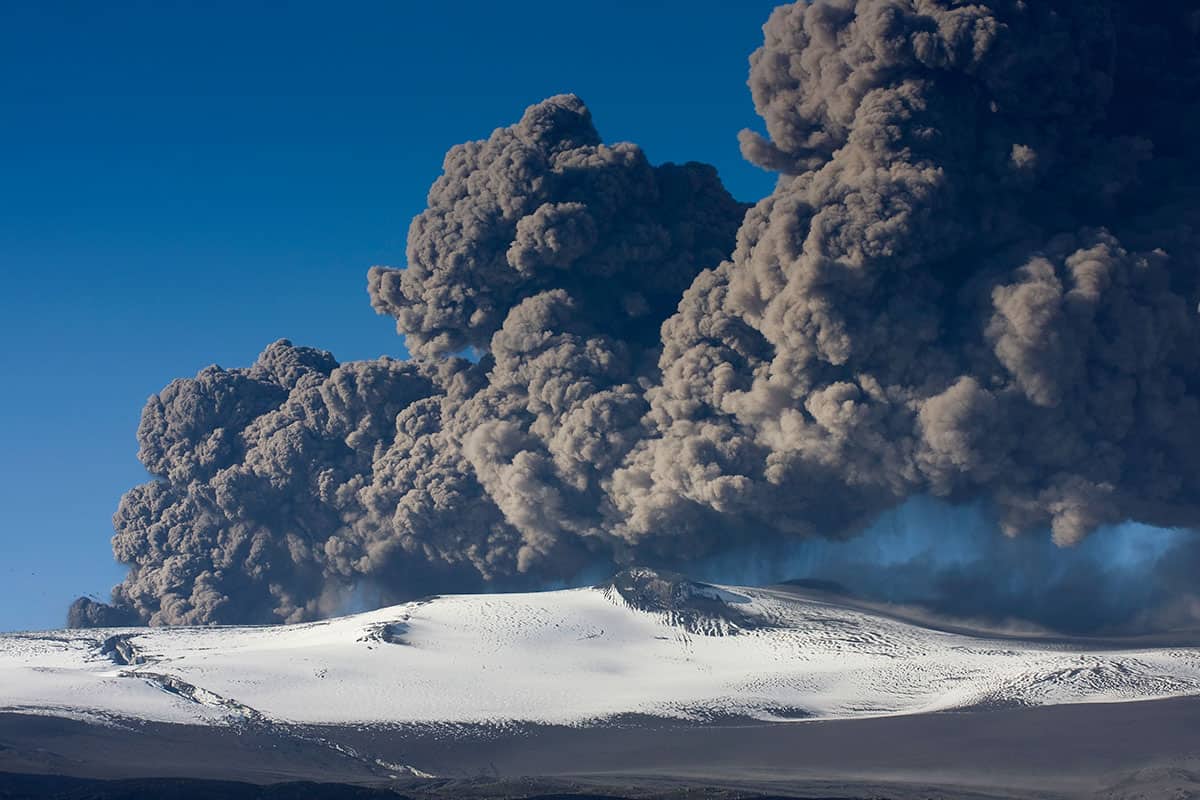
Ash cloud The 2010 eruption of the volcano Eyjafjallajökull disrupted air travel, prompting the UK government to seek advice on similar events happening again. (Courtesy: iStock/sumos)
One example of scientists working well with politicians and policy-makers took place following the eruption of the Eyjafjallajökull volcano in Iceland in 2010. The potential risk of such an event causing an ash cloud and widespread disruption to air travel had already been identified by the relevant UK government department as part of a national risk assessment process in 2005. Unfortunately, no-one had been found who’d been willing to estimate the likelihood of such an event actually causing such a disruption. That’s because the risk depended on a number of factors – such as the frequency and nature of an eruption as well as atmospheric and weather conditions – that were themselves unpredictable. The risk was held “in reserve” for further study.
So after the Eyjafjallajökull eruption, the government’s then chief scientific adviser was invited to pull together a cross-disciplinary team, including volcanologists, meteorologists and aerosol researchers, to help policy-makers understand the risk of such an ash cloud recurring and to estimate what the “reasonable worst case scenario” might be. The team also asked if Eyjafjallajökull was the very worst thing that could happen, the answer to which was “no”. Much more damaging, though rather less likely, than another ash cloud was the risk of something like a recurrence of the eruption in 1783 of the Icelandic volcano Laki. It produced large quantities of gases, including carbon dioxide and sulphur dioxide, that caused famine throughout western Europe. Such an eruption would cause massive problems not just for transport but for health and agriculture too.
The Eyjafjallajökull eruption provided many lessons about using science to support government policy. First, don’t try to predict risk, because wrong predictions are common and they merely undermine trust in science. Do, however, try to give a best estimate, even if this guess is provisional upon further research, because governments may otherwise interpret “no opinion” as meaning “there is no problem”. Third, form a team of experts that includes not only people from the most prominent relevant discipline but also anyone who has a relevant contribution to make – including policy-makers themselves. Fourth, assess not just the phenomenon but also its impact. And finally, use your team to build networks that can solve problems in other areas, as was the case with the Cabinet Office’s “natural hazards team” containing scientific experts both in government and beyond.
An eruption of risk
Dealing with risk is far from easy. In 2011, for example, six Italian scientists and one government official were charged with manslaughter following the April 2009 earthquake in the city of L’Aquila, their fault consisting of having contributed to the spread of misleadingly reassuring messages to the public about the earthquake risk. Although the six were later acquitted, their case illustrated the legal perils if responsibilities are unclear between governments and their official or unofficial advisers – and if scientists are to be heard safely, they need a formal framework.
Such frameworks exist in countries, such as the UK, that recognize the benefits and challenges of integrating scientific advice into policy-making. Indeed, the OECD report Scientific Advice for Policy Making articulates the essential conditions for an effective and trustworthy science-advisory process – namely, a clear remit to produce advice that’s sound, unbiased and legitimate, and the involvement of a full range of scientists, policy-makers and other relevant parties.
Scientists need to be aware of these two conditions when deciding whether to offer advice, but what’s also important is to know – at a practical level – how to communicate effectively with politicians and policy-makers. We hope, therefore, that our advice will be of help – indeed, one example of good, positive interactions between scientists and politicians occurred in the UK after the 2010 eruption of the Icelandic Eyjafjallajökull volcano (see box). What this incident showed is that the systematic use of science is now part of the policy-making landscape and – for those who have seen how it can work – it is a “gift that keeps on giving”.
Scientists who want their advice to be heeded need to put themselves in the shoes of their policy-making audience. They should make things easy for that audience by pointing out political benefits (if there are any), making connections with other politically relevant areas, and providing appropriate words and phrases that those whom they wish to influence can pick up and use.
These well-established principles of communication may seem self-evident, but if they were that obvious, then many more scientists would already be using them. More of us need to catch on to them if science is to take its rightful, essential place in the hierarchy of political decision-making.
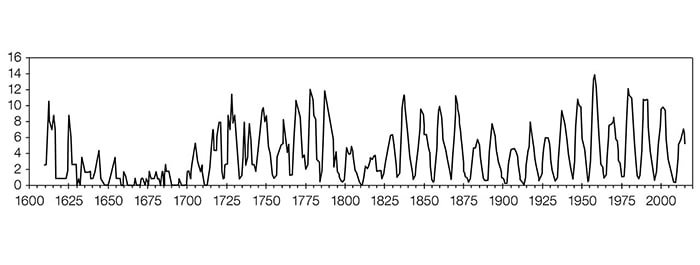
A recalibration of data describing the number of sunspots and groups of sunspots on the surface of the Sun shows that there is no significant long-term upward trend in solar activity since 1700, contrary to what was previously thought. Indeed, the corrected numbers now point towards a consistent history of solar activity over the past few centuries, according to an international team of researchers. Its results suggest that rising global temperatures since the industrial revolution cannot be attributed to increased solar activity. The analysis, its results and its implications for climate research were discussed today at a press briefing at the IAU XXIX General Assembly currently taking place in Honolulu, Hawaii.
Looking back
Measuring the sunspot number – or Wolf number – is one of the longest running scientific experiments in the world today, and provides crucial information to those studying the solar dynamo, space weather and climate change. Scientists have been observing and documenting sunspots – cool, dark regions of strong magnetism on the solar surface – for more than 400 years, ever since Galileo first pointed his telescope at the Sun in 1610. Scientists have also known about the solar cycle – an approximately 11-year period during which the Sun’s magnetic activity oscillates from low to high strength, and then back again – since the mid-18th century, and they have been able to reconstruct solar cycles back to the beginning of the 17th century based on historic observations of sunspot numbers.
Although solar activity has oscillated consistently, the timings and characteristics of individual cycles can vary significantly. Between 1645 and 1715, for example, solar activity did not pick up, and the Sun remained in an extended period of calm known as the Maunder minimum. Historically, this period coincided with the “Little Ice Age”, during which parts of the world including Europe and North America experienced colder winters and increased glaciation than today. These suggested that there exists a strong link between solar activity and climate change.
Until now, the general consensus was that since the end of the Maunder minimum, solar activity has been trending upwards over the past 300 years, peaking in the late 20th century – an event referred to as the modern grand maximum. The trend has also led some to conclude that the Sun may play a significant role in modern climate change. However, a long-running and contentious discrepancy between two parallel series of sunspot number counts has made this role difficult to pin down.
The two methods of counting the sunspot number – the Wolf sunspot number (WSN) and the group sunspot number – deliver significantly different levels of solar activity before about 1885 and also around 1945. The WSN was established by Rudolf Wolf in 1856, and is based on both the number of groups of sunspots and the total number of spots within all of the groups. In 1994 the question began to arise as to whether the WSN was good enough to construct an accurate historical sunspot record. Because of the limitations of telescopes in those days, the smaller spots could have easily been missed, some have argued. A new index – the group sunspot number (GSN) – was established in 1998, which is easier to measure and has been backdated to measurements since Galileo’s time. This index was based solely on the number of sunspot groups. Unfortunately, the two series disagreed significantly before about 1885, and the GSN has not been maintained since the 1998 publication of the series.
Then and now
The new correction of the sunspot number, called the sunspot number version 2.0, led by Frédéric Clette, director of the World Data Centre for Sunspot Index and Long-term Solar Observations (WDC–SILSO) and based at the Royal Observatory of Belgium, Ed Cliver of the National Solar Observatory in the US and Leif Svalgaard of Stanford University in the US, nullifies the claim that there has been a modern grand maximum. Indeed, the researchers say in their abstract that their study is “the first end-to-end revision of the sunspot number since the creation of this reference index of solar activity by Rudolf Wolf in 1849 and the simultaneous recalibration of the group number”, and that their results mean that there is no longer any substantial difference between the two historical records.
Clette and colleagues’ results make it difficult to explain the observed changes in the climate that started in the 18th century and extended through the industrial revolution to the 20th century as being significantly influenced by natural solar trends. According to the researchers, they have identified the apparent upward trend of solar activity between the 18th century and the late 20th century as a major calibration error in the GSN. Now that this error has been corrected, solar activity appears to have remained relatively stable since the 1700s.
The researchers say that their results now provide a homogenous record of solar activity dating back some 400 years, and that existing climate-evolution models will need to be re-evaluated, given this entirely new picture of the long-term evolution of solar activity. Their work, they hope, will stimulate new studies, both in solar physics and climatology.
The new data series and the associated information are distributed from WDC-SILSO.
Physicists tend to drink lots of coffee so I wasn’t the least bit surprised to see the above video of Philip Moriarty explaining quantum mechanics using a vibrating cup of coffee. Moriarty, who is at the University of Nottingham, uses the coffee to explain the physics underlying his favourite image in physics. You will have to watch the video to find out which image that is, and there is more about the physics discussed in the video on Moriarty’s blog Symptoms of the Universe.