A genetically engineered virus has been used as a scaffold to optimize the transport of energy through organic materials. Done by scientists in the US and Italy, the research could provide useful insight into energy transport in photosynthesis, and could also have industrial applications in solar cells, sensing and medical diagnostics.
Plants and organic photovoltaic cells capture energy from sunlight using molecules called chromophores. When light hits a chromophore, it creates a bound electron–hole pair called an exciton. This exciton then diffuses through neighbouring chromophores until it reaches an acceptor, where excitons are collected and separated to create a voltage. Therefore the efficiency of an organic photovoltaic cell can be improved by maximizing the chance that an exciton will reach an acceptor before the electron and hole recombine, destroying the exciton and losing its energy as heat.
Quench and decay
When the chromophores are not bound together, excitons can survive for 4 ns. When scientists create artificial structures by bringing chromophores into close proximity, the excitons “quench” each other and usually decay within 500 ps – about eight times faster than unbound chromophores. This phenomenon, discovered in the 1960s by the chemist George Porter, is not well understood, and plants have managed to create structures that somehow avoid this rapid decay. As a result, understanding why excitons survive longer in natural photosynthesis and using this knowledge to improve artificial systems is an important goal.
Traditionally, scientists model the propagation of excitons between chromophores using a mechanism called Förster resonance energy transfer, in which the excitons hop between chromophores in a semi-classical random walk. In 2009, researchers led by Alán Aspuru-Guzik of Harvard University showed theoretically that, if the chromophores were close enough, the excitons could become delocalized across multiple chromophores, leading to an enhancement in the transport properties that could explain the natural efficiency of exciton transport in photosynthesis.
In the new research, Seth Lloyd – who worked with Aspuru-Guzik on the 2009 research – Angela Belcher and colleagues at the Massachusetts Institute of Technology and several institutes in Italy, created networks of chromophores in which to test this hypothesis.
Fine-tuned separation
The networks were produced by the M13 phage, which is a virus that infects bacteria. This virus has proven useful in developing a range of technologies including sensing, medical diagnostics and solar cells because of its ability to self-assemble into nanostructures called viral plaques. The virus contains a protein on its surface called pVIII that can bind chromophores, and Belcher and colleagues genetically modified the amino-acid sequence of this protein to tune the distance between these binding sites. In the first virus they produced, called M13CF, the difference between the binding sites was about 33 Å – far enough apart that theory predicts the transfer would have to take place by the semi-classical random walk process. In the second virus, dubbed M13SF, the separation was just 10 Å. At this distance, theory predicts that delocalized quantum states spanning multiple chromophores are involved in exciton transport.
The researchers created “nano-antennas” from the two types of viruses and immersed these in solutions containing two types of chromophores. One type acts as the “donor”, which generates the exciton when hit by a photon, the other acts as an “acceptor”, which collects excitons from surrounding donors and, when excited, emits fluorescent light. They illuminated the nano-antennas with light of a constant intensity and measured the intensity of the fluorescence, which revealed how many excitons had successfully reached an acceptor. The researchers used these results to calculate the distance the excitons had been able to diffuse in the two types of nanostructure.
They found that bringing the chromophores closer together reduces the exciton lifetime from 422 ps in the M13CF clone of the virus to just 122 ps in the M13SF clone. However, this decrease was more than offset by the faster transport, allowing a single acceptor in the more closely spaced M13SF to receive excitons from four times as many donors as in M13CF.
Future plans
Team member Petra Scudo of the Eni Donegani Institute, which co-ordinated the research, explains that the team’s goal in this research was to try to replicate the efficient quantum-assisted transport seen in photosynthesis. “In the second step, let’s see whether having a longer exciton diffusion length is of use to create a catalyst,” she says, “And place these nano-antennas in solar cells and see whether the efficiency is increased.”
Biophysicist Rienk van Grondelle of VU Amsterdam is sceptical, however: “They make a comparison with photosynthesis,” he says, “but photosynthesis makes these kinds of dense structures [of chromophores] without quenching the fluorescence. The lifetime here is a factor of 30 [shorter], so you basically lose all the fluorescence…They are attempting the right thing, but this is not it.”
Physicists in the US, Germany and Canada have built a miniature particle accelerator that uses terahertz radiation instead of radio waves to create pulses of high-energy electrons. A single accelerator module of the prototype is just 1.5 cm long and 1 mm thick, and the technology has the potential to create facilities that are much smaller than current radio-frequency (RF) accelerators. Potential applications include free-electron lasers, whereby the electrons are used to create coherent pulses of X-rays. However, the team cautions that much more work is needed to develop the technology so it can be used in medicine, particle physics and material science.
Terahertz radiation falls between the microwave and infrared portions of the electromagnetic spectrum (300 GHz–3 THz), and its production and detection are not without significant technical challenges. However, terahertz technologies have been improving steadily and some physicists are keen on using the radiation in much the same way that radio waves and microwaves are used to accelerate charged particles.
In this latest work Emilio Nanni and colleagues at the Massachusetts Institute of Technology (MIT), the Center for Free-Electron Laser Science (CFEL) at DESY in Germany and the University of Toronto have created a terahertz accelerator module with the aim of advancing experiments that use ultrafast electron diffraction to reveal the structure and dynamics of matter. Their prototype accelerator uses optically generated pulses centred at 450 GHz and a bandwidth of 200–800 GHz. The wavelength of this radiation is around 1000 times shorter than the electromagnetic radiation used by current particle accelerators – the Large Hadron Collider uses 400 MHz microwaves – everything else on the terahertz accelerator can also be 1000 times smaller.
Steep gradients
The terahertz accelerator module increased the energy of electrons fired into it by 7 keV. This is a boost of 2.3 MeV/m, which is modest compared to conventional accelerators that can achieve about 50 times that. But, it does show that terahertz accelerators are feasible and the researchers say that it should be possible to achieve accelerating gradients of around 1 GeV.
“If we can match the accelerating gradient available with radio-frequency sources (around 100 MeV/m), terahertz accelerators could be attractive for many applications because they can operate at higher repetition rates and are more efficient,” explains Nanni. “Terahertz accelerators should be able to achieve much higher accelerating gradients than radio-frequency accelerators, which will reduce the size and cost of accelerators and improve the quality of the electron beams they produce.”
Steven Jamison of the UK’s Accelerator Science and Technology Centre (ASTeC), who wasn’t involved in the research, says “While this demonstration of terahertz-driven acceleration is done with low-energy beams and significant challenges remain in scaling to higher energies and longer interaction lengths, it is an important first step to obtaining relativistic energy electrons with terahertz waves.”
More power needed
The main barrier to faster accelerating gradients is the power of terahertz pulses that can be generated. “Considerable development is still necessary” in this area, explains team member Franz Kärtner, whose lab at MIT was used to test the prototype.
The researchers now plan to focus on developing a free-electron laser (FEL) based on terahertz technology, which they expect to be less than 1 m long. FELs fire high-speed electrons down an undulating path, which causes them to emit intense flashes of X-ray light. Currently, access to large-scale FELs is limited, but this would be “a low-cost system that can be integrated into laboratories with modest lasers” says Nanni.
Kärtner says that they are aiming to create a FEL that will “generate sub-femtosecond X-rays with a high brilliance”. Such a system could be used to study the water splitting process in photosynthesis and other molecular processes, he adds.
Creating a FEL would require significant advancement of the terahertz technology. In particular, pulses that deliver around 20 mJ of terahertz energy would be needed. In contrast, their prototype accelerator gets by on 10 µJ. More powerful sources are available, and recently researchers in Switzerland and Russia have generated terahertz pulses with almost 1 mJ of energy.
There can be few 12 year olds who read serious books about quantum physics. But then Gisela Eckhardt was no ordinary child. Born in the German city of Frankfurt in 1926, she decided to become a physicist after reading and becoming inspired by The Revolution in Physics by Ernst Zimmer, which describes how quantum mechanics shows that the world is not deterministic, but governed by probabilities. Eckhardt realized that if she wanted to understand the universe we live in, she had to study physics.
As a girl growing up in the 1930s and 1940s, her path into physics was far from smooth. Like many women of her generation, the young Eckhardt faced formidable barriers and struggles to map out a career in the subject. But she persisted and eventually went to the US, where she joined Hughes Research Laboratories – the research arm of the Hughes Aircraft Company. It was here in 1962 that Eckhardt co-invented the Raman laser and became the first person to explain its physical mechanism – one of the biggest breakthroughs in laser physics since the discovery of the laser itself. And if you’ve never heard of Eckhardt, you’re not alone. In fact, her neglect is a story in itself.
Back in the 1950s, women who studied physics at university and then pursued fruitful research careers were rare. They were the exceptions – not only statistically, but also in the professional qualities they required. Such women had to show a burning and unwavering interest in the field and needed sheer willpower too. The remarkable story that follows is based on many hours of interviews and personal communications we have had with Eckhardt herself, who now lives mainly in Malibu, California, and partly back in Frankfurt. It also draws on documents including witnessed technical lab notes provided by Eckhardt as well as the recorded testimony of Eric Woodbury, who was involved in the discovery of stimulated Raman scattering – the effect underpinning the Raman laser.
Early days
Eckhardt’s success in physics stemmed from humble beginnings: her father was an entrepreneur and her mother was a housewife. Apart from being an aspiring physicist, she was also a formidable fencer, ranked third in the under-18s group in her home state of Hessen in 1944. Told that she stood a chance of becoming a national fencing champion, Eckhardt toyed for a while with the idea of continuing with the sport. But after graduating from her local Gymnasium (high school), she plumped for physics and was admitted to the prestigious Johann-Wolfgang-Goethe Universität in Frankfurt in 1946.
Eckhardt was one of just a handful of women in the entire university to major in physics. Some of her former male schoolmates, who had also applied to study physics, had told her she was mad, claiming that women had no aptitude for the subject. Even her own family tried to discourage her. But Eckhardt did well and after five successful semesters in Frankfurt, she decided to apply to do a Diplom thesis in experimental physics at the university’s Physics Institute. (Roughly equivalent to a Master’s degree, the Diplom was a prerequisite for starting a PhD.)
Eckhardt was one of 10 students to apply for the course but because places were limited, not all could be accepted at once. Applicants were instead divided into three groups based on their age, with the oldest students taking priority. There was, though, one exception. Eckhardt should have been placed in the middle group, but was demoted to the third group and had to wait a further 18 months before she could start. Gender discrimination was alive and well.
In 1950 Eckhardt eventually began her Master’s degree, in which she designed and studied an optical filter, known as a “Christiansen filter”, that she got to work for the first time with mid-infrared light. All previous Christiansen filters, in contrast, had functioned only at visible frequencies. Before writing her Diplom thesis, Eckhardt had shown her experimental results to her adviser, who was also head of the institute, and asked if he’d let her stay on to do a PhD. His response was that it would depend on her performance in her thesis and final exam.
Unfortunately, her adviser had a dim view of women in science, believing that women who went to university were a waste of taxpayers’ money. Eckhardt concluded that her only chance of being considered for a PhD at the institute was to get an A grade in both her thesis and exam, which she eventually did in 1952. What made things harder for Eckhardt was that her adviser did not let her publish her work on Christiansen filters, despite it being worthy of publication.
Eckhardt duly began her PhD in Frankfurt, working once again under the supervision of the institute’s head, who wanted her to study heat-transfer processes in glasses at temperatures up to 450 °C. After doing some calculations, Eckhardt realized that meaningful results were possible only if she continued measurements up to 1400 °C. This, however, would require special, platinum containers that would not melt at such high temperatures. When Eckhardt’s adviser told her there was no budget for these containers, she arranged with the Glass Technical Society to get the platinum on loan. The adviser, however, refused to accept this deal – without stating why – and instructed her to work in the lower temperature range.
Eckhardt had no choice but to do as she was told, which resulted in three years of largely wasted effort. It was only after her adviser visited the German Bureau of Standards, where he discussed her thesis, that he let her accept the offer and build a set-up that could work up to 1400 °C. After three further years of research, Eckhardt finally gained her PhD in 1958.
Bound for America
Knowing that her chances of securing an academic career in Germany as a woman were near zero, Eckhardt had anticipated working as a research physicist in industry or a government lab after her PhD. But she soon realized that option was also nigh-on impossible for a woman and so she and her husband Wilfried, who had done a PhD in physics at the same time as her, decided to leave for the US. It was to be a wise choice as at that time America was the most exciting country for doing physics research.
Various agencies of the US armed forces were then recruiting German scientists, and the couple applied for – and both obtained – job offers from government labs. Wilfried, however, also received a superior offer from the RCA Laboratories in Princeton, New Jersey, which he accepted. RCA was then at the forefront of many modern technologies – developing everything from electron microscopes and colour television to videocassette recorders. Gisela, however, was not permitted to work at RCA’s Princeton lab because of a company rule forbidding husbands and wives to work in the same RCA division at the same time.
Her boss declared that if she wanted to be paid like a man she’d have to work twice as hard as one
After arriving in the US later in 1958, Gisela turned down a job offer from Bell Labs in Murray Hill, New Jersey, in favour of a post at RCA’s semiconductor division in Somerville. Apart from it being closer than Bell Labs to her husband’s workplace, salaries were also generally higher there than in the Princeton lab – although RCA’s personnel chiefs made sure she earned less than him. Despite that setback, Eckhardt had several successes at RCA. She developed an optical quality-control procedure to determine dislocation densities of silicon-crystal wafers. She invented a new, faster way of polishing them and also solved a major problem with the gallium-arsenide crystals grown at the plant by identifying the nature of a colloidal phase in the crystals using electron microscopy and diffraction.
But all those accomplishments did little to advance her career. After inventing the novel polishing process, Eckhardt asked her department head for a wage rise, explaining that she was being underpaid. Her boss first denied that this was the case before declaring that if she wanted to be paid like a man she’d have to work twice as hard as one. With that, Eckhardt decided it was time to move on. Less than two years after joining RCA, both she and her husband quit the firm – as did almost a third of the other researchers at RCA’s semiconductor division, manyof them unhappy with the company’s management.
Hughes Research Laboratories
Headline-maker The first laser was invented by Theodore Maiman at Hughes Research Laboratories in May 1960. (Courtesy: Matteis/Look At Sciences/Science Photo Library)
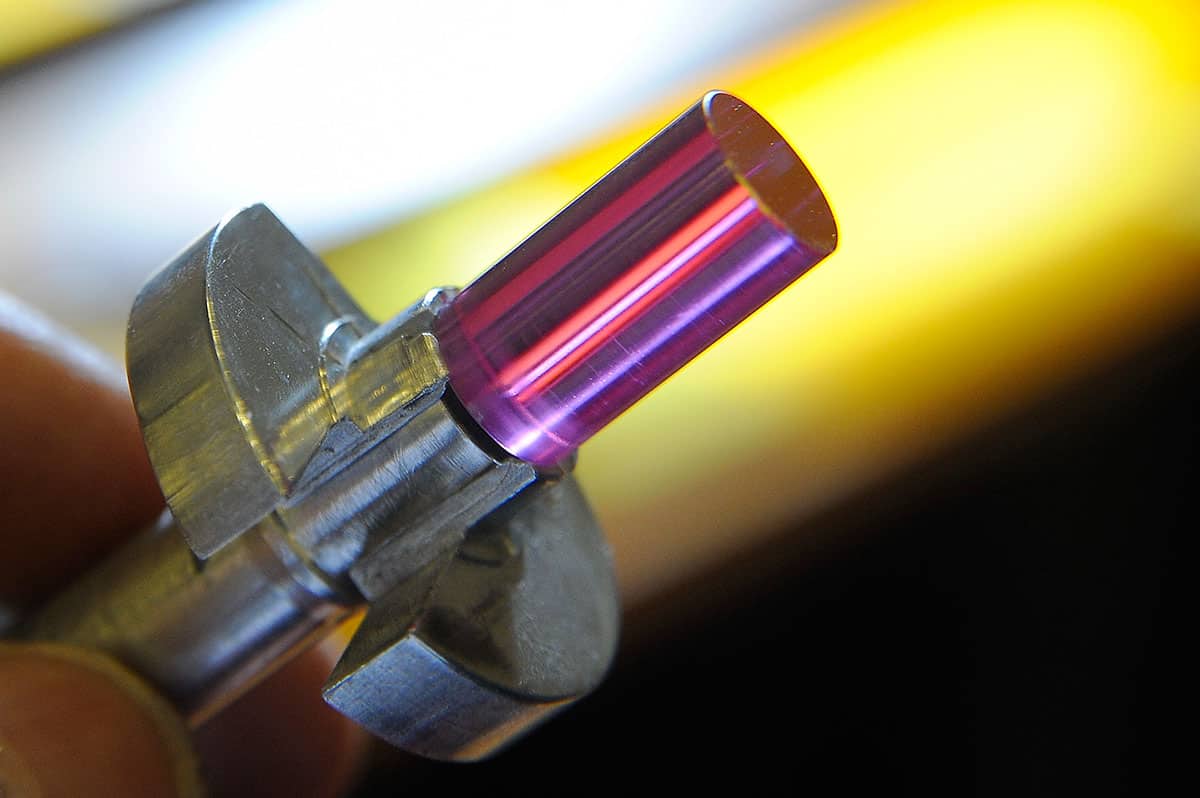
Located in Malibu, California, Hughes Research Laboratories (HRL) was an extraordinary environment in the 1960s, where researchers had freedom to pursue pilot projects even without dedicated external funding. When new ideas emerged, it was easy for HRL to assemble a team with complimentary expertise to develop those concepts into something that would attract external funding and a new product line for the Hughes Aircraft Company. It was this luxury of a long development horizon that encouraged HRL to carry out research into lasers, leading one staff member – Theodore Maiman – to obtain the first evidence for laser action, in a material known as pink ruby, on 16 May 1960 (Nature187 493).
HRL also took a keen interest in ensuring its research staff kept abreast of the latest developments in physics. Richard Feynman, who was based at the nearby California Institute of Technology (Caltech), began lecturing to PhD staff at the lab in the late 1950s and continued to do so for most of his life. He typically lectured for two hours a week, bringing along his own graduate students to avoid having to give them the same lecture at Caltech. Indeed, Feynman was due to give a lecture at HRL on the day it was announced he had won the 1965 Nobel Prize for Physics. In typical company style, the firm hired a limo to pick him up, rolled out a red carpet on his arrival and held a reception in his honour beforehand. In attending many of his lectures on everything from relativity to solid-state physics and biology, Gisela Eckhardt gained access to one of the most brilliant minds on the planet.
Heading west
In January 1960 Eckhardt attended the annual meeting of the American Physical Society in New York, where she presented a scientific paper. Occupying one floor of the conference hotel were many large companies hiring scientists and engineers for their R&D labs. Among them was Hughes Aircraft Company, a leading defence contractor based in California that had been praised as a very fair, employee-friendly company by several friends of Eckhardt and her husband. Keen to move to the west coast, they were flown first-class on TWA – the airline owned by the firm’s founder Howard Hughes – to visit its labs and meet potential managers. Put up at the luxurious Beverly Hilton Hotel, both were offered salaries 30% higher than at RCA.
Eckhardt started at Hughes Research Laboratories (HRL) in Malibu in September 1960, working on semiconductors in the quantum-physics department. Hughes Aircraft Company was involved in areas such as microelectronics, semiconductor materials, radars, missile technologies and satellite communications, the sensitive nature of which meant that Eckhardt required security clearance to work in the main building, which took her seven months to obtain as a foreign national. Confined to a room with a separate entrance and no access to the rest of the building, Eckhardt had to be escorted by a woman whenever she wanted to go to a lab or the library. Her husband faced the same restrictions too but they were less severe for him because he required a male escort and more men were around.
HRL was an extraordinary place to be at the time, with researchers being given much freedom to follow their interests. The lab hit the headlines in 1960 when Theodore Maiman obtained the first evidence for laser action in pink ruby, which produces light at a wavelength of 694.3 nm (see box “Hughes Research Laboratories”). Researchers and engineers at the company immediately started looking for applications, with the first being to use lasers to measure distances – in other words, as “range finders”. Unfortunately, the early ruby lasers were pumped by flash lamps, which meant that the lasers produced rather long, randomly spaced pulses of radiation. It is hard to use such pulsed lasers for range finding, as a clean intense echo pulse is required to obtain accurate distance measurements.
What was needed was a laser that could produce a single, short pulse with plenty of peak power and in 1961 just such a device – known as a Q-switched laser – was demonstrated at HRL by Fred McClung. Based on an idea first proposed by his colleague Robert Hellwarth, it used a high-speed shutter originally developed for cameras monitoring nuclear-bomb tests. What was seemingly just an engineering job to improve range finders eventually became crucial for the first observation of stimulated Raman scattering (SRS) – the process by which the frequency of photons in a laser is reduced by a certain amount when sent through certain materials (see box “Stimulated Raman scattering“).
Meanwhile, over at the headquarters of Hughes Aircraft Company in Culver City, Eric Woodbury and William Ng were working on amplifying Q-switched pulses using a copy of the laser at HRL. They were keen to incorporate it into future product lines, such as laser range finders, or to complement radar technology, of which the firm was a leading supplier. Their careful measurements, however, revealed a mysterious, powerful radiation emerging at a wavelength of 767 nm in addition to the expected ruby radiation at 694.3 nm. They reported this finding in July 1962 but gave no explanation for the mysterious new radiation (Proc. Inst. Radio Eng.50 2367).
Stimulated Raman scattering
New direction This diamond Raman laser at Macquarie University in Australia was a big step forward in ultrabright beam generation in 2014. (Courtesy: Dr Aaron McKay, Macquarie)
The birth of the laser in 1960 not only led to a range of futuristic devices, but also opened up the new field of “nonlinear optics”, in which light of one frequency becomes distorted in a material and exits with a completely different frequency. The first nonlinear optical effect to be seen involved using certain crystals to exactly double the frequency of infrared light passing through them, with this “second-harmonic generation” being responsible for most green, blue and ultraviolet lasers used today.
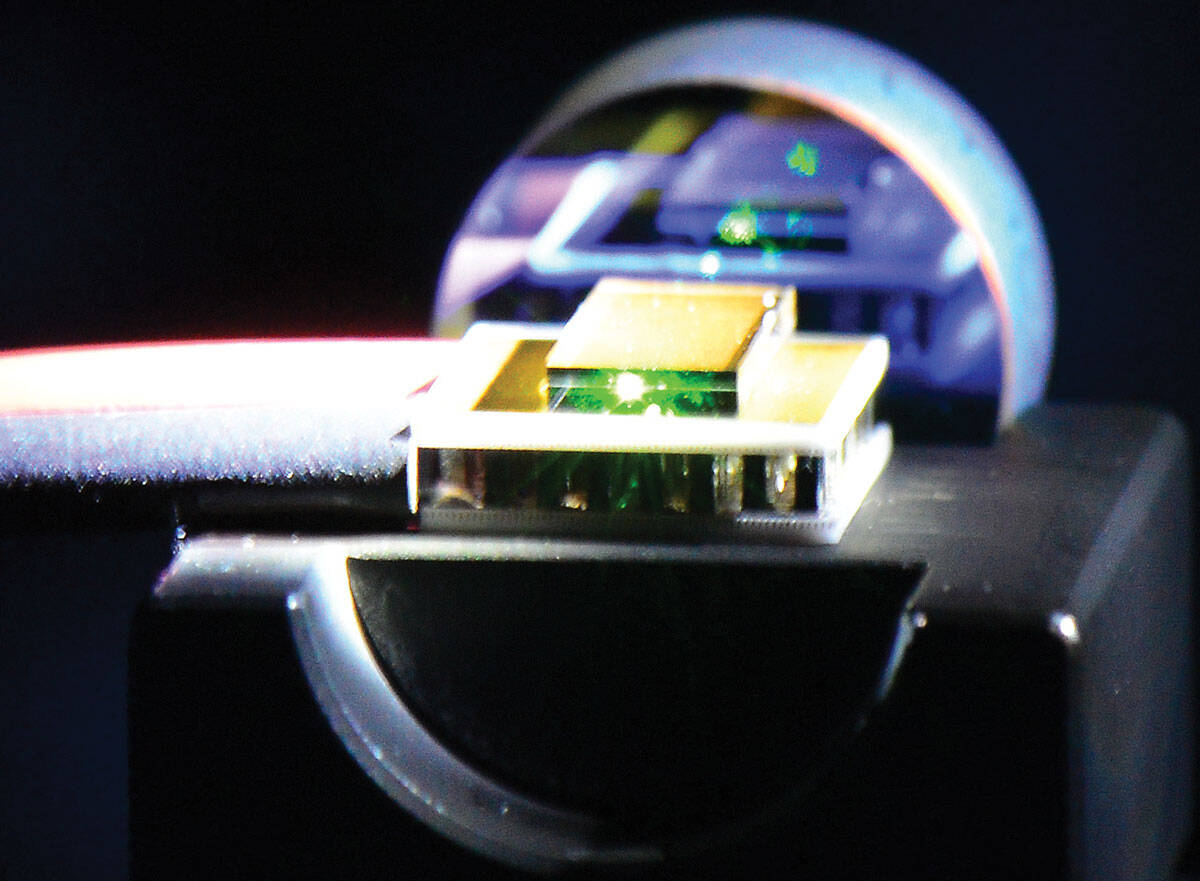
Stimulated Raman scattering (SRS) was the next such effect to be discovered. Rather than generating a harmonic at a higher frequency, SRS allows the frequency to be lowered by a fixed amount – giving physicists access to a much wider range of laser frequencies. The effect has been used extensively to extend laser capability by, for example, generating high-quality beams in “difficult” parts of the spectrum in the yellow or the so-called eye-safe region in the infrared. The effect is seen in a huge number of materials and is exploited in many other fields too. SRS can, for example, probe for chemical structures, store and read out quantum information, and amplify signals in optical data systems. It also plays a key role in areas of extreme physics such as in ultrafast supercontinuum generation (for example, white light lasers) and laser fusion.
Mystery explained
The word got out to HRL, where McClung quickly reproduced the results with his Q-switched laser. He then asked Eckhardt, who at the time was investigating gallium-arsenide crystals using infrared spectroscopy, if she could take the absorption spectrum of a ruby laser in the infrared. The working hypothesis was that the radiation was produced by electrons moving between previously unidentified energy levels in the ruby – but when Eckhardt ran the infrared spectrum, there were no absorption bands corresponding to such a transition.
Having asked if there were any other materials in the laser beam path, she was told about the shutter, which consisted of a cell containing liquid nitrobenzene. Having ample experience in Raman spectroscopy, Eckhardt not only ran the spectrum but also looked up the energy-level diagrams of all the substances inside the laser cavity: ruby, quartz and nitrobenzene. Comparing these diagrams with the energy of the new laser lines, she realized that there was an explanation: a Raman-active vibration in nitrobenzene, the energy of which corresponds exactly to the difference between that of the ruby laser and the mysterious light.
This new hypothesis was initially greeted with some scepticism because Eckhardt was not a laser specialist. But she then proposed three crucial and ingenious experiments that quickly proved unequivocally that her explanation was correct (1962 Phys. Rev. Lett.9 455). Her discovery of SRS with a ruby laser was important not only because it was a new kind of laser – the Raman laser – but also because it allowed laser radiation at one wavelength to be efficiently shifted to another wavelength; in fact, SRS gives us access to an almost unlimited number of wavelengths.
Laser pioneer Gisela Eckhardt at her home in Malibu. (Courtesy: Marja Sundquist)
The ability to build lasers operating in regions of the spectrum beyond ruby opened the door to many potential new applications. One early idea was to use Raman lasers as range finders for military purposes because they could easily create laser light at a wavelength that is less likely to damage the human eye. A 1 μm infrared laser beam, for example, which can easily penetrate the eye and damage the retina, can be shifted to a wavelength of 1.5 μm, which is largely absorbed by the cornea – a vital distinction that can avoid unnecessary accidents.
The Hughes Aircraft Company quickly realized the importance of Eckhardt’s laser discovery and asked her to write a patent disclosure. The patent application was filed in October 1962 with Woodbury and Eckhardt as co-inventors. Rejected three times by the US Patent Office, which claimed the invention was not novel, the patent was finally granted in 1968 – although only after three prominent experts had filed affidavits at Eckhardt’s behest: Nobel laureate Charles Townes, Bela A Langyel (the author of the first book on lasers) and Sergio Porto (a key name in Raman spectroscopy).
Eckhardt was rewarded with a nominal fee of $100 for assigning the patent, which was not uncommon in those days. Incredibly, it went on to earn Hughes a staggering $1.5bn in contracts and royalties, mainly for its range finder line.
Living legacy
Half a century later, Eckhardt’s discovery has influenced many areas of technology. Light amplifiers based on SRS are today key components in providing long-distance transmission of data between continents. SRS has also led to laser-based systems for eye surgery plus many applications in the defence, chemical, environmental and biomedical fields. It’s even used to make laser “guide stars” – artificial stars that can enhance the resolution of ground-based telescopes.
These days, more than 30 papers involving SRS are published every month, covering everything from chemical detection, new optical materials and quantum memories to random generators, frequency combs and on-chip light amplifiers and lasers. One particularly exciting area is the diamond Raman laser, which exploits the extreme properties of diamond to generate laser beams of unprecedented power and brightness. Few researchers, however, are probably aware that the suitability of diamond as a Raman laser material was first proposed and demonstrated in 1963 by a group at Hughes Aircraft Company, of which Eckhardt was the lead researcher (Appl. Phys. Lett.3 137).
Her career shift, which reflected the unique creative environment at Hughes Research Laboratories, is one reason why Eckhardt’s crucial contributions to Raman lasers are often forgotten
Eckhardt herself did not stay in the field of Raman lasers for long, partly due to the many research freedoms enjoyed by HRL staff. By 1968, when her patent was finally approved, the field was exploding with large Raman laser research programmes being established in the US and elsewhere in areas as diverse as the development of blue-green lasers for submarine communications and high-power lasers for missile defence. She had already moved into plasma electronics, where she became an expert as well – helping to develop devices that could convert alternating current (AC) into direct current (DC) and vice-versa. Most power lines these days use AC voltages but Eckhardt and other Hughes scientists already realized how much more efficient DC would be to transmit electricity; its converters offered a way of turning the DC back into the AC that customers use.
Her career shift, which reflected the unique creative environment at HRL, is one reason why Eckhardt’s crucial contributions to Raman lasers are often forgotten. After becoming renowned in plasma electronics, Eckhardt went on to run her own business ventures in California. As a fitting tribute to her achievements, Eckhardt, then aged 86, was invited to give the keynote address at the Europhoton 2014 conference in Switzerland on the 50th anniversary of her discovery.
So while Woodbury and Ng discovered laser lines with longer wavelengths than the ruby laser line in the output of their ruby laser, it was Eckhardt who proposed the correct explanation for the effect and it was she alone who proposed the experiments that proved it. Without her persistence, SRS would not have been discovered at HRL and, more likely, Bell Labs would have beaten them to the finish line. This episode in the early history of nonlinear optics reveals some of the many barriers to success that confronted Eckhardt and recognizes the important contributions she made. Without doubt similar challenges were faced by other female scientists of the time too.
We get many exciting, interesting and sometimes strange e-mails in our Physics World inbox on a weekly basis. But we were pleasantly surprised to receive one from Jay Gilligan – a professor of juggling at the University of Dance and Circus in Stockholm, Sweden. Together with one of his former students, Erik Åberg, he has perfected the art of juggling with giant Newton’s cradles. While juggling undoubtedly involves a lot of physics – everything from air resistance, speed, velocity and of course gravity comes into play – this takes it to an even more physical, if you will excuse the pun, level. Do watch the video above to see all of the amazing tricks that the duo can do, and try them for yourself if you are dexterous enough.
The first quantum-logic device made from silicon has been unveiled by researchers in Australia and Japan. Their controlled-not (CNOT) gate, which is a fundamental component of a quantum computer, was made using conventional semiconductor manufacturing processes. The researchers now plan to scale up the technology to create a full-scale quantum-computer chip.
Quantum computers exploit the weird laws of quantum mechanics to perform some calculations much faster than conventional computers – at least in principle. The main challenge facing physicists trying to build quantum computers is how to preserve fragile quantum bits (qubits) of information, which tend to deteriorate rapidly in real-world devices.
One approach is to use the spin of the electron – which can point up or down – as a qubit. Spin qubits have been made from tiny pieces of semiconductor called quantum dots, and quantum-logic devices have been made by coupling these qubits together. Unfortunately, the spin states in these devices rapidly deteriorate – or “decohere” – by interacting with nuclear spins in the compound-semiconductor materials normally used to make quantum dots.
Silicon spins
This source of decoherence can be greatly reduced by making the dots from silicon, the most common isotope of which (silicon-28) has zero nuclear spin. The new CNOT logic gate, which has been created by Andrew Dzurak, Menno Veldhorst and colleagues at the University of New South Wales and Keio University, has been made by coupling two silicon spin qubits for the first time.
The two quantum dots were made by placing an array of electrodes on top of a piece of silicon-28. By applying voltages to some of the electrodes, two electrons are trapped within the silicon, separated by about 100 nm. These electron spin states are set by generating a microwave pulse using one of the electrodes as an antenna – a technique known as electron spin resonance (ESR). The states of the spin qubits can be set individually by using the electrodes to apply an electric field to one of the spins, which changes how that spin responds to the microwave signal. The values of the qubits are also read out using ESR.
The spins are coupled via the exchange interaction, which is a purely quantum-mechanical effect that can be tuned to cause the spins to point in the same direction, or in opposite directions. This tuning is done by adjusting the voltages on some of the electrodes.
Improvements needed
The team verified that it had created a CNOT gate by first initializing the spins in a specific configuration, for example both spin down. A series of microwave pulses and voltages was then applied to the qubits to create a CNOT gate. When the team read out the values of the qubits, they were found to be in line with the expected output from a CNOT gate.
However, the researchers say that they were not able to show that the two qubits were quantum-mechanically entangled during the CNOT process, which they say was the result of errors in the read-out process. Entanglement is required for the operation of a quantum-logic device, and the team is now working towards improving the read-out process to confirm that the qubits are indeed entangled.
“All the physical building blocks for a silicon quantum computer have now been successfully constructed,” says Veldhorst.
Dzurak adds that the team has “patented a design for a full-scale quantum computer chip that would allow for millions of our qubits, all doing the types of calculations that we’ve just experimentally demonstrated”. He says the team is also looking for an industrial partner to manufacture a full-scale quantum-processor chip.
A new transistor with an atomically thin current-carrying channel that operates at ultralow supply voltages has been unveiled by a team of researchers in the US. The new device, which is made from a 2D semiconducting crystal and a bulk germanium substrate, can be switched on at just 0.1 V. It could be used to create extremely dense and lower-power integrated circuits, and could also form the basis of ultrasensitive sensors of biological molecules.
Field-effect transistors (FETs) are the workhorses of modern-day electronics, and the size of FETs have been decreasing steadily over the last few decades – allowing more and more devices to be packed onto computer chips. However, this relentless downsizing cannot go on forever, and chip designers are running into major difficulties. One challenge on the horizon is that the switching of conventional FETs is limited by a quantity known as “sub-threshold swing” that cannot be lower than 60 mV per decade of drain current at room temperature. This puts a lower limit on the supply voltage required to operate the FET, which makes it difficult to create the low-power devices needed for the denser chips of the future.
Swing low
The tunnel field-effect transistor (TFET) is a new type of device that works by controlling the amount of current that can quantum-mechanically tunnel through a potential barrier. In contrast, a conventional FET involves the current being thermally excited over a potential barrier. This difference means that TFETs can have sub-threshold swing values lower than 60 mV per decade.
Now, Kaustav Banerjee and colleagues at the University of California, Santa Barbara, and Rice University have developed TFETs made from bilayer molybdenum disulphide and bulk germanium that have a sub-threshold swing of 31.1 mV per decade of drain current at room temperature. This makes the device a very good contender for making practical transistors that operate with supply voltages as low as 0.1 V. Such devices would require 90% less power to run compared with conventional FETs.
Dubbed the atomically and layered semiconducting channel TFET (ATLAS-TFET), the new device uses highly doped germanium as its source electrode. The current-carrying channel is an extremely thin (1.3 nm) layer of molybdenum sulphide just two molecules thick. Resembling graphene, molybdenum sulphide is a semiconductor that occurs in sheets one molecule thick. The resulting layered device has a strain-free interface, a low barrier for current-carrying electrons to tunnel through, and a large tunnelling area – which are all desirable properties for TFETs.
On the road map
The International Technology Roadmap for Semiconductors (ITRS) has called on researchers to develop devices with sub-threshold swing values lower than 60 mV per decade, over four decades of current. The only experimental TFET made so far to meet this criterion relies on nanowire structures, which are difficult to produce and manipulate.
“Our ATLAS-TFET is the first TFET with in-planar architecture to satisfy the ITRS prescription and, as such, might be used in the development of next-generation ultralow-power integrated electronics and ultrasensitive sensors,” say Banerjee and colleagues.
Creating a sensor from the ATLAS-TFET involves removing the gate junction and placing receptor molecules on the molybdenum-sulphide channel. When a molecule of interest binds to a receptor, it changes the current flowing through the channel – thus signalling the presence of the molecules, even at tiny concentrations.
No, wait, actually, let’s try something different. Consider a rectangular pipe.
In fact, consider what happens when liquid flows along a rectangular pipe, by which I mean one with a rectangular cross section. The flow’s bound to be asymmetrical, right?
Yes, that’s true, but not always. New research published in Physical Review Letters suggests that for liquid flowing along a rectangular pipe that’s exactly 1.87 times wider than it is high, the flow is entirely symmetrical.
Now, I’ll admit that water flowing along a pipe is probably not something that keeps you awake at night, but the new discovery is weird. In fact, Roberto Camassa from the University of North Carolina, Chapel Hill, who was involved in the study, calls it “bizarre”.
For physicists who love scattering neutrons off materials, the recent ground-breaking ceremony at the European Spallation Source (ESS) in Lund, Sweden, will have been a long time coming. First proposed more than two decades ago, the ESS will – when it finally opens in 2020 – generate the world’s most intense beams of neutrons and help satisfy demand for these most useful of particles.
Neutron scattering has emerged as a mainstream scientific endeavour over the last 20–30 years, which is one reason why this month sees the first-ever Physics Worldfocus issue on neutron science. We take a look at how researchers at the ESS are designing the facility’s tungsten target, as well as a new neutron source being built in China and how the ISIS Neutron and Muon Source in the UK is looking to bring in more users from industry.
In May the two largest collaborations at CERN’s Large Hadron Collider – ATLAS and CMS – broke the record for the number of authors on a single scientific publication. With more than 5000 people, the paper pinned down the mass of the Higgs boson, the discovery of which was announced in July 2012. These two collaborations are not new to having such a huge number of authors, as the papers that ATLAS and CMS publish regularly have thousands of authors.
The scale of scientific output worldwide has steadily grown thanks to the difficulty involved with achieving milestones, the cost involved in building and operating big facilities, as well as the increased mobility and virtual nature of collaborative work. I have been working in particle physics since 2002 and I believe the sizes of such author lists are necessary as they are the correct way to acknowledge the work done by people who have been involved with the design, construction and operation of the detector, as well as the analyses of data.
Yet large authorships also come with difficulties. How, for example, can one acknowledge noteworthy individual contributions or recognize candidates who deserve career advancement or an award? Differentiating between candidates when hiring in these fields has to be mostly based on recommendation letters and details of the work carried out by an individual. While that work may be understood within the community, it is incredibly difficult to gauge when that person is competing for a job that is also open to candidates from other disciplines. Even the Times Higher Education‘s World University Ranking now excludes papers that have more than 1000 authors from its evaluations.
Hitting targets
The issue of multiple authorship has been of a particular concern to me. South Africa has just reached 20 years as a democracy and, while the country has struggled to improve the education provided to most people, the scientific community has continued to grow. Convinced that forging a productive relationship with CERN would benefit the nation, in 2008 South Africa signed an agreement with the lab allowing its scientists to be closely involved with the ATLAS and ALICE collaborations.
This move was great as it let me fulfil one of my main career aspirations and start an ATLAS group in South Africa at the University of KwaZulu-Natal in 2010. However, I was hired based on a CV populated almost entirely by papers with 600 to 3000 co-authors and shortly after arriving at KwaZulu-Natal, I was faced with a problem: my research output as part of ATLAS would count for nothing.
The difficulty was that the university judges research output based on publications that attract a subsidy from the Department of Higher Education and Training (DHET). The effect of the DHET funding policy led directly to a new stream of income that the university then began to depend on. Unfortunately, the DHET does not pay the subsidy if there are more than 100 authors per paper and thus would not cover my research output, meaning it would not count towards my job performance targets.
For my first two years I engaged management on this issue, and was assured at various stages that the quality of my work was understood and that this would only be a problem for the “bean counters”. But when I was asked for the third year running to agree that my publications had no value – while at the same time being approached by the university to give public lectures on the Higgs boson – I decided not to agree with the terms. The university responded by disciplining me for being insubordinate and in breach of contract, with the chair of the disciplinary hearing labelling my actions those of a “sluggard”. Upon appeal, the verdict was upheld.
Yet I was lucky to have support from the South African Institute of Physics as well as my colleagues. In July 2015 at the first external process at the Commission for Conciliation, Mediation and Arbitration – a body that looks into labour issues before they go to court – the university agreed to expunge my disciplinary record. In the end, I believe that my previous university (I joined the University of Cape Town earlier this year) is now poorer, since particle physics is no longer accessible to its students.
Particle physics is not the only subject in South Africa that could be hit with this issue of large authorships. The country has been constructing major astronomy facilities such as the Southern African Large Telescope, the MEERKAT/KAT-9 radio telescopes and a significant fraction of the Square Kilometre Array (SKA). The SKA commitment, in particular, has been wonderful, and we appear to be reaping the rewards with many excellent academics choosing to come to South Africa. The government is also supporting students and postdocs on SKA-funded projects with much larger bursaries than students in other fields.
But as the SKA gets going and researchers begin to publish scientific papers – many of which will be multi-authored – I hope they are not hit with the same issue over how research outputs are measured.
Our current observations and theories of neutrino oscillations suggest that at least two of the currently known three flavours of neutrinos have non-zero mass. While we know the mass differences between the different neutrino flavours accurately, their actual masses have not been measured. It’s not for lack of trying, it has simply proven very difficult to make the measurements.