It is a novel approach and one that has led to some interesting ideas, including Hidalgo’s notion of the “personbyte”, which is the total amount of information that any one individual can hold. He also extends that idea to businesses, leading him to introduce the concept of a “firmbyte”. Economies, in Hidalgo’s vision, are essentially networks of interacting people and firms – and what those systems can do depends on the skill people have and how those skills fit together.
Now, if you think it is unusual that a physicist should be straying into such territory, you are not wrong. But then César Hidalgo is no ordinary physicist. As he explains in the podcast, “I’m not very comfortable with labels. I try to borrow knowledge from whatever discipline is available to get the best possible answer. So sometimes physics inspires me. Sometimes economic sociology inspires. Sometimes I draw inspiration from design. I’m not picky. As long as it gets the job done, I’m up for it.”
If you want to find out more about Hidalgo’s new book Why Information Grows, check out the October 2015 issue of Physics World magazine, which contains a review of the book by the science journalist Mark Buchanan. The review can be read online at physicsworld.com or through our digital magazine by downloading the Physics World app to your smartphone or tablet.
A proposal for putting a living bacterium into a superposition of quantum states has been unveiled by physicists in the US and China. If successful, the experiment would be the first realization – albeit microscopic – of Schrödinger’s famous thought experiment involving a cat in a box that is simultaneously alive and dead until an observer makes a measurement by peering into the box. As well as improving our understanding of the foundations of quantum mechanics, the researchers say that their proposed experiment could also yield a new technique for monitoring defects in biological molecules.
Superposition is a quirky property of the quantum world that allows a physical system such as an atom or photon to exist in two or more quantum states, until a measurement is made on it. In recent years, physicists have created superposition states using inanimate objects of increasing size, from electrons and photons to atoms, molecules and even tiny mechanical systems. Now, Tongcang Li of Purdue University and Zhang-Qi Yin of Tsinghua University propose doing the same thing with a living object – a tiny bacterium – to realize a version of Schrödinger’s cat.
The proposal involves a tiny mechanical oscillator built by John Teufel and colleagues at the National Institute of Standards and Technology in Colorado. That oscillator is an aluminium disc 15 μm across and 100 nm thick that forms the upper plate of a capacitor within a superconducting inductor-capacitor (LC) circuit. In 2011 Teufel’s group was able to put the mechanical oscillator in its quantum ground state. This was done by first cooling the apparatus in a cryostat and then subjecting the oscillator to “sideband cooling”, which involves coupling its mechanical vibrations to microwave radiation.
Tiny bacterium
Li and Yin asked themselves whether it would be possible to place a micro-organism in a quantum superposition by attaching it to the mechanical oscillator. The micro-organism would have to be so tiny that it would have almost no effect on the oscillator’s vibrations. They suggest that a 0.02 pg mycoplasma bacterium could be fixed to the 48 pg oscillator by the van der Waals force. The mechanical oscillator plus micro-organism would then be put in a superposition of its ground and first excited state.
The researchers explain that the superposition would originate in a superconducting quantum bit, or qubit, attached to the LC circuit, and might consist of simultaneous clockwise and anticlockwise currents. That superposition would then induce a tiny current in the LC circuit that sets up a microwave oscillation with energy about halfway between the circuit’s ground and first excited state. This would excite the mechanical oscillator to vibrate simultaneously in the ground and first excited states, and create a vibration-based superposition of the organism.
Many micro-organisms can be preserved for several years at cryogenic temperature without losing their viability
Tongcang Li, Purdue University
Yin told physicsworld.com that the main challenge in carrying out such an experiment will be bringing together scientists that have experience of both high-quality mechanical oscillators and superconducting resonators and qubits. But in future, once the experiment is realized, he says, the technique may help to test the validity of different interpretations of quantum mechanics.
Finding free radicals
The researchers also describe a second experiment that could be carried out with the same apparatus. This would involve scanning a ferromagnetic tip mounted on a rigid cantilever above the micro-organism, to entangle the overall motion of the bacterium with electron spins inside it. Because those spins could belong to the extra electrons that exist inside free radicals, this kind of measurement might allow defective DNA or proteins to be identified within biological samples, says Yin. The approach might also allow isolated electron spins, which cannot be read out using optical or electrical techniques, to be used as quantum memory, he adds.
The latest research is not without precedent. In 2009 Oriol Romero-Isart, then at the Max Planck Institute for Quantum Optics near Munich in Germany, and colleagues proposed placing nanoscale dielectric objects, including micro-organisms such as viruses, into quantum superpositions by optically levitating and cooling their centre-of-mass motion to micro-kelvin temperatures inside optical cavities in a vacuum. But Yin says that the lasers used to hold the objects in place would heat those objects up, perhaps to the point where viruses lose quantum coherence. The new scheme, in contrast, involves cooling a bacterium’s internal temperature down to around 10 mK, at which point the organisms should be frozen solid. With negligible chemical activity taking place inside them, and negligible amounts of energy exchanged with the surroundings, the delicate quantum state of the oscillator plus bacterium should be preserved for significant lengths of time – up to around a millisecond – explains Yin.
The need to cool the bacterium to just a hundredth of a degree above absolute zero invites an obvious question – would such an experiment really be demonstrating the quantum superposition of a living organism? Li believes it would. He says that the frozen mycoplasma bacterium would still be alive in the sense that it would become active again after being thawed. Indeed, he notes that “many micro-organisms can be preserved for several years at cryogenic temperature without losing their viability”. But he does acknowledge that the use of active bacteria would lead to more interesting experiments. “We will leave the possibility of creating superposition states of an active micro-organism for future studies,” he adds.
The research is reported on the arXiv preprint server.
Why are some nations wealthier than others? What, precisely, does it even mean for a nation to be wealthy? And why, as a matter of practical and political importance, do some nations become wealthier more quickly than others? If we ask why a crystal grows in solution, or study how a bacterial colony grows in a sugar medium, it’s clear that the answers come down to physics – to matters of entropy and order, of information and organization. Yet such concepts, oddly enough, rarely play a role in economic analysis.
Traditionally, when judging the wealth of a nation, or assessing its growth potential, economists have looked to a handful of aggregate indicators – things like gross domestic product (GDP), total resources, levels of education and so on. In predicting future growth they’ve done much the same, by looking at past growth, debt burden, the flexibility of the labour market and the quality of government. The reasons why they took this approach are understandable: economic systems are complex, so it is important to simplify and reduce the analysis.
César Hidalgo is a physicist who thinks this situation should change, and that economists should take concepts such as information, order and organization much more seriously. He asserts that these physics-inspired notions hold the key to understanding the origins of wealth and economic growth in a deeper way, and as director of the Macro Connections group at the Massachusetts Institute of Technology Media Lab, he leads researchers using large, modern data to better understand the networks of people and technology that bind our global world together. His new book, Why Information Grows, offers an impassioned argument for the advantages of an information-centric view of economic growth, and for understanding the different capacities of nations to provide solutions to human problems.
The trouble with the traditional approach, Hidalgo argues, is that it misses most of what is important in determining both the wealth of a nation and its potential to grow further. Economies aren’t just aggregates. They’re networks of interacting people and firms, of individuals and groups with highly specific skills and capabilities. Economies, in his vision, are like systems of distributed computers, and what such systems can accomplish depends on fine details of the diversity of skills they possess, and how these skills fit together to create the capacity to get things done, whether it be growing and exporting vegetables or producing high-quality jet engines and consumer electronics.
Understanding wealth and how it grows, he argues, requires thinking deeply and in very specific terms about how knowledge and practical know-how spread from one place to another, and also why they often fail to spread. You may wonder, for example, as many economists have, why the sophistication of modern manufacturing – in the aerospace industry, for example – can’t simply be transplanted from developed nations to less developed ones, to spur economic growth. If the knowledge and know-how exist in one place, surely it is merely a question of transferring it elsewhere? But as Hidalgo points out, the barrier to doing so is actually immense, as this knowledge isn’t actually held in any single brain or even any single company. A nation’s ability to produce quality aerospace products depends on a distributed network of complementary skills, know-how, practices, habits, ideas and resources – and these are held in many brains, in many places, so dispersed that perhaps no-one understands it completely.
The chances of replicating an industry therefore depend strongly on having many of the prerequisite skills, knowledge and capabilities in the new setting. There is a natural tendency, as Hidalgo argues, for industries to emerge in places that already have related industries. Economic growth, then, isn’t just something to transplant, but demands growth in a more organic sense – with new capabilities being realized only when they can build on an existing framework.
Why Information Grows explores how this idea has been developed in research over the past decade by Hidalgo and his colleagues. Its organizing vision is one in which economic advance, and greater wealth, depend ultimately on economic complexity, meaning the possession of a great diversity of valuable skills. Much research has therefore aimed to measure such complexity. The most obvious idea is that the overall diversity of products a nation produces might reflect its capabilities and wealth, but this isn’t quite true. Getting a better measure of economic complexity requires looking at not only the diversity of products a nation produces, but also the sophistication of those products, which can be measured by how few other nations produce them. Many nations, for example, produce fruits and garments, while only a few produce advanced electronics or aerospace products. Out of this mix, in 2009 Hidalgo and his colleague Ricardo Hausmann introduced a quantitative measure of economic complexity that correlates very closely with wealth (as measured by GDP), but also goes beyond it by making better predictions about which nations will grow faster in the future.
In Why Information Grows, Hidalgo persuasively demonstrates the value of this approach by placing the ideas firmly in their historical context, both in information theory and in physics. The origins of order in systems far from equilibrium are almost never mentioned in any economics text. Yet, as Hidalgo points out, this topic is a completely natural starting point for any examination of organization in human systems, which only possess order for the same reason that biological systems have order: because our world is driven far away from equilibrium by the flow of energy from the Sun. Only this energy influx allows order to emerge locally. The existence of solids is fortuitous as well, as they allow information to endure, and for complexity to grow.
Hidalgo’s perspective on economic wealth is wildly fresh and creative. Physicists will enjoy reading about familiar ideas in new ways, and will also find value in learning how these ideas can be applied fruitfully in areas seemingly far away from physics. Economists and other social scientists will find new concepts ripe for profitable use. Hidalgo’s big point is that, even though economies involve people, and hence seem uniquely bound up with human thoughts and desires, they are also founded, ultimately, on the capacity of matter in its various forms, human and non-human, to do computations. And the most powerful engines of such computation are those networks of people and firms that embody and share diverse forms of knowledge and know-how. Economic growth, funnily enough, is also about finding better ways of computing.
When I got to immigration at Santiago airport in Chile this morning, the man behind the glass asked me whether I was here for business or pleasure. “Business,” I replied. But that word didn’t sit right with me. To me, the word “business” conjures the image of some dull suit-and-briefcase affair. But I’m here to go to the Atacama Large Millimeter/submillimeter Array (ALMA) as my reward for winning the European Astronomy Journalism Prize 2014, and I’ve been thinking of it as quite the once-in-a-lifetime treat. “Perhaps,” I thought to myself in those split-seconds following my reply, “my trip does fall under ‘pleasure’ after all?”
Not one to mislead immigration officers, I immediately wanted to clarify the situation. “Well,” I added, “er,” before quickly realizing that changing one’s answer at the immigration counter is perhaps not the best idea. The man then stopped his document-checking and looked at me square-on, fixing me with an intense gaze. “Why are you here?” he asked.
In 1978 Antonio Camargo and Glen Penfield, two geophysical engineers, conducted an aeromagnetic survey over the Gulf of Mexico. Their aim was to map the likelihood of finding oil for their employer – the Mexican state-owned oil company Petróleos Mexicanos (PEMEX). What they found, however, would have far larger implications.
To map the magnetic field, a plane equipped with sensitive magnetometers flew a series of 400 km traverses over Mexico’s territorial waters. The scientists were looking for minute local variations in the Earth’s magnetic field that would provide clues about the rock formations buried beneath a thick layer of sediments. The data revealed a ghostly arc at a depth of 600–1000 m that when matched up with a 1950s PEMEX gravity map of the neighbouring Yucatán peninsula formed a huge 200 km-diameter circular feature, spanning the land and the seabed. Camargo and Penfield proposed that they had found either an ancient volcanic caldera or an impact crater, centred on the town of Chicxulub Puerto (pronounced “Cheek-shoo-LOOB”).
The two researchers reported their findings to little ceremony at a meeting of the Society of Exploration Geophysicists in 1981. At around the same time, another conference was held to discuss the bombshell of a hypothesis dropped the previous year: the asteroid-impact theory of how the dinosaurs became extinct. The idea came from the recent physics Nobel laureate Luis Alvarez and his earth-scientist son Walter Alvarez. The Alvarezes and their co-workers claimed to have good evidence that the mass extinction that wiped out the dinosaurs, along with 75% of all species, at the end of the Cretaceous – some 65 million years ago – was caused by the impact of a 10 km-diameter asteroid. Initially, the impact hypothesis raised hackles among geoscientists and palaeontologists, still mired in “gradualism” – the overarching idea that geological change is always slow and gradual, never sudden and catastrophic. The fact that Luis was a physicist probably did not help endear him or his theory to the mainstream earth-science community, which considered him an outsider or even a trespasser. Over the following years, most objections would give way, but one pesky question recurrently plagued the theory: where is the crater?
Today, most scientists agree that the Chicxulub structure is the site of an end-Cretaceous impact, and that this impact killed the dinosaurs
In 1991, nearly a decade later, Camargo and Penfield co-authored a paper with Canadian geophysicist Alan Hildebrand and others, in which they finally brought these two stories together. Today, most scientists agree that the Chicxulub structure is the site of an end-Cretaceous impact, and that this impact killed the dinosaurs.
Peak priorities
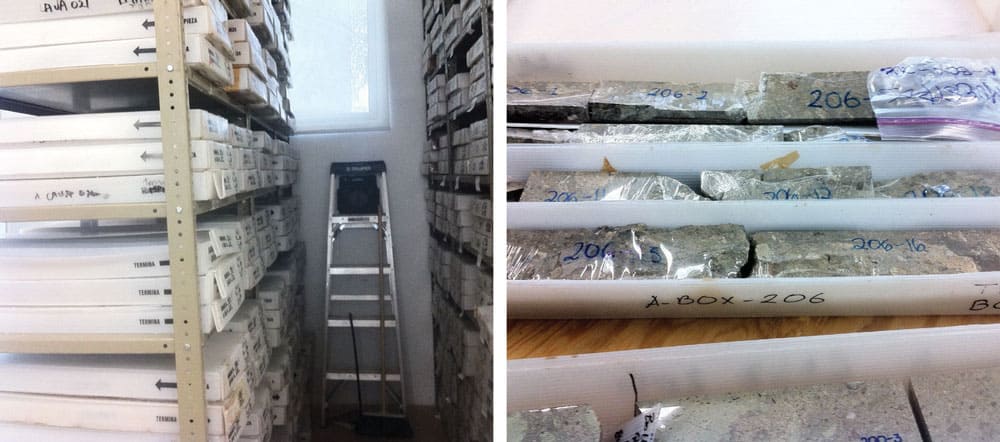
Like many breakthroughs in science, consensus does not come instantly. But research has continued to suggest that this is an impact crater, which caused a global environmental catastrophe 65 million years ago. A leader in this field is Jaime Urrutia Fucugauchi, a researcher at the Institute of Geophysics of the National Autonomous University of Mexico (UNAM). Urrutia’s office, in the research district of UNAM’s huge Mexico City campus, sits atop a small warehouse containing shelf upon shelf of flat corrugated plastic boxes. These boxes hold hundreds of metres of cylindrical core samples extracted from boreholes in Yucatán. The samples were collected in the 1990s and early 2000s in the course of drilling projects coordinated by UNAM and co-sponsored by the International Continental Scientific Drilling Program. UNAM and PEMEX are the sole possessors of rocks from the crater. “We have distributed more than 15,000 samples around the world,” says Urrutia. Those samples have helped establish the claim that the Chicxulub crater does indeed match the Alvarez impact theory.
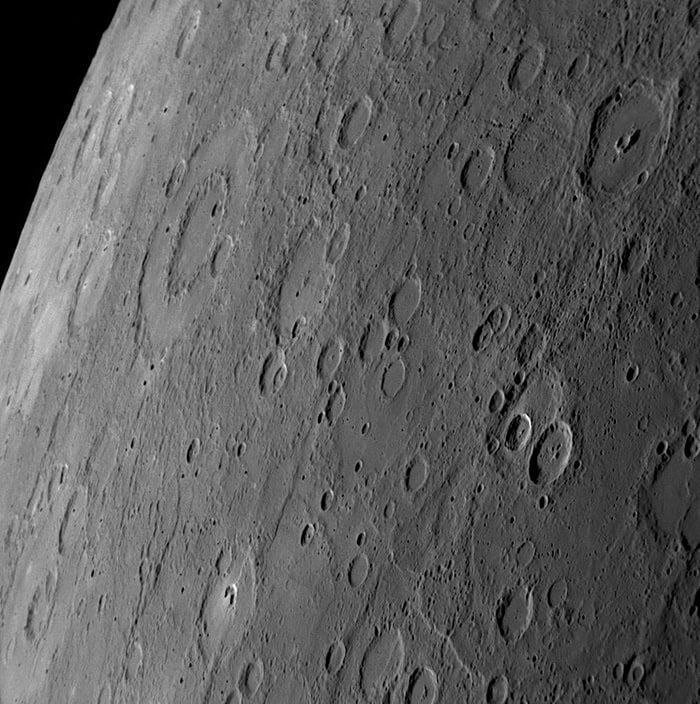
Ringing the changes Peak rings are common on other rocky bodies in the Solar System, as seen here (top left) in the Dürer basin located on Mercury. (Courtesy: NASA/Johns Hopkins University Applied Physics Laboratory/Carnegie Institution of Washington)
Today, research on Chicxulub ranges far beyond the demise of the dinosaurs. In March this year, scientists met in the Yucatán city of Mérida, located near the heart of the crater, to fine-tune the strategy for a new offshore drilling programme set to start in 2016, which will produce the first offshore samples from the structure. High on the scientists’ agenda is obtaining rock samples from a region known as the peak ring – a roughly circular chain of hills that forms around the centre of large impact basins. Although the peak ring is also present in the land sector of the crater, says Urrutia, we have a better picture of its offshore part, which has been thoroughly imaged by sending sound waves into the Earth’s crust and studying how they bounce back on different rock layers (seismic reflection and refraction surveying), a technique that yields better results at sea than on land. This is why the most promising locations for sampling the peak ring are offshore.
Craters with peak rings are common on the Moon, Mars, Mercury and other rocky bodies in the solar system. Chicxulub is the only crater on Earth known to have one, as the world’s two largest impact craters – in Canada and South Africa – have been significantly eroded thanks to their older age. The upcoming studies of Chicxulub will help scientists to understand how peak rings form and how the final crater structure depends on impact parameters and the conditions of the impacted planet (such as gravity, density and rock properties). As a result, it could enable geoscientists to infer subsurface characteristics of other planetary bodies – especially the Moon – by simply studying their craters.
There are two competing models of peak-ring formation, Urrutia explains. Both consider the rocks to behave temporarily like a liquid (smaller craters, by contrast, form in the “brittle regime” and are better understood). In one model, the middle of the impact splashes upwards like the central peak you can see fleetingly when a raindrop hits water. This central uplift then collapses, spreading outwards like a ripple in a pond and solidifying to form the ring. In the second model, the ring is created when the newly formed crater rim collapses and the material moves inwards. Samples from Chicxulub’s peak ring will help scientists determine which is the best model. “We have to be very sure of where to drill,” says Urrutia. “You can’t go, ‘Oops! Wrong location, we have to drill again’, when each drilling run costs several million dollars.”
The project will also help scientists to understand how materials behave at incredibly high deformation speeds – how rocks fracture, as well as the transition from brittle- to fluid-like behaviour when the deformation happens within a very short time. “Craters form in a flash,” says Urrutia. “When mountains are created, the deformation takes millions of years, but in an impact, the central uplift can rise higher than the Himalayas in two minutes.”
Apocalypse then
Even if research at Chicxulub has diversified over the past 20 years, impact scientists are still interested in what, exactly, caused the environmental changes that triggered the mass extinction. When the asteroid slammed into the Earth, it released an energy equivalent to that of 510 million Hiroshima bombs, which is one for every square kilometre of the planet’s surface. That is according to a proposal from 19 institutions across eight countries presented in 2008 to the International Ocean Discovery Program (IODP), which is footing the roughly Mex$162m (US$10m) drilling bill. The 21 proponents, led by Joanna Morgan of Imperial College London and Sean Gulick of the University of Texas at Austin, believe that the energy transfer from the impact to the environment remains poorly understood.
In their original paper, the Alvarez team blamed this biological catastrophe on the huge cloud of debris that shrouded the planet in darkness and cold for years after the impact. Later, other scientists proposed further effects, such as the release of greenhouse gases and acid rain. One theory even suggests that minutes after the asteroid hit, rocks ejected into suborbital flight re-entered the atmosphere in a global shower of exploding meteoroids that raised temperatures to a few hundred degrees for a short period, possibly igniting wildfires.
Core issue A drilling project to start in 2016 will collect the first offshore samples from the Chicxulub crater, adding to the numerous samples already collected from the Yucatán peninsula and stored at UNAM. (Courtesy: Sergio de Régules)
Today, despite 30 years of debate, there is no certainty about the relative importance of these events in causing the extinction, and recent simulations and experiments suggest that the wildfires probably never even happened, though the existence of an initial heat pulse is not in question. Now, computers have the power to model the aftermath of the impact and characterize how dust and gas affected the climate. Revisiting the “crater of doom”, as Walter Alvarez called the Chicxulub basin in a 1997 book, will help adjust the input parameters for our scientific model of the apocalypse. “The plan is to do stable isotopes, geochemistry, petrography and mineralogy,” says Urrutia.
Stable-isotope analysis, in particular, may help the team deduce post-impact environmental conditions, such as the temperature of the water encountered by the first organisms to colonize the crater after the catastrophe. The key to this analysis are the fossilized remains of tiny marine organisms called foraminifera, which incorporate oxygen from the water to form their calcium-carbonate shells. The ratio in the shells of two stable isotopes of oxygen, 16O and 18O, is a function of water temperature at the time of incorporation, and remains unchanged after the foraminifera die and fall to the bottom of the sea as sediment. Stable isotopes can also tell scientists how long it took for marine life to rebound.
In the 2008 proposal to the IODP, the researchers said that immediately after the impact, the peak ring was submerged and located adjacent to a thick pool of hot melt rocks. This source of heat lasted a million years, a fraction of the 65 million years since the asteroid hit, and “may have provided a niche for exotic life forms,” says the proposal, just as hydrothermal vents do in present-day oceans. Drilling samples of the first sediments that accumulated after the catastrophe is another scientific objective for the new programme. The results may shed light on how the life-forms of the very distant past coped with near-extinction. Three billion years ago, during the Precambrian geological period, impact rates were significantly higher than they are today, or at the time of the dinosaurs, yet species still managed to bounce back from those events. The re-population of Chicxulub is therefore a proxy for those turbulent times.
The oil connection
Research at the crater has come full circle in a way. Chicxulub was discovered in the course of oil exploration in the 1950s and 1970s. In 2000 José M Grajales Nishimura, of the Instituto Mexicano del Petróleo, and others including Walter Alvarez, found material in the Cantarell oil field in the Gulf of Mexico that originates from the Chicxulub crater, 300 km northeast of the crater itself. Cantarell was, at the time, the second most productive oil field in the world. The discovery established a link between the impact and the oil-bearing strata at Cantarell, made of a type of mineral called “breccia” – chunks of rock cemented together by a finer-grained material. (Imagine a Toblerone bar with its chunks of nougat embedded within the chocolate.)
The Yucatán peninsula is the land section of a much larger limestone platform made of the tiny carcasses of marine organisms that began to accumulate around 140 million years ago. This is why the land is so low and flat, and why the much-loved sands at Cancun are so beautifully white. The Cantarell breccias were formed when the margins of the platform collapsed because of the widespread violent shaking that was triggered by the impact. Much later, hydrocarbons migrated from several kilometres beneath the Earth’s surface into the breccias, which act as oil reservoirs.
Study of the impact is useful for oil exploration in the region, because it suggests not just where to look for oil, but also where not to look
Today, production at Cantarell is petering out and PEMEX is developing the offshore Ku-Maloob-Zaap field, located to the north-west of Cantarell, although production there is also declining. Study of the impact is useful for oil exploration in the region, because it suggests not just where to look for oil, but also where not to look. It is no use looking in the crater itself (and to a depth of 40 km, which is how far into the Earth the impact extends) because any oil previously formed would have been vaporized by the impact.
There is a final, intriguing, direction Chicxulub science might go one day. During the impact, tonnes of ejected material must have acquired escape velocity – a one-way ticket into space. Some of this material may have eventually landed on our nearest cosmic neighbour. So, muses Urrutia, “There must be bits of Yucatán on the Moon!” Clearly, however, spotting this debris and then linking it with the Chicxulub impact will be a task for geologists of the future. For the time being, Chicxulub science is keeping its feet on the ground – or underneath it, where there is a lot more of Yucatán to keep the scientists busy.
“Eclipse Totality over Sassendalen” by Luc Jamet. (Courtesy: Luc Jamet/RAS)
By Michael Banks and Tushna Commissariat
It’s that time of the year again when the Royal Observatory Greenwich announces the winners of its Astronomy Photographer of the Year award and releases some of the most wonderful and awe-inspiring celestial images. Pictured above is this year’s overall winning image – titled “Eclipse Totality over Sassendalen” and taken by French photographer Luc Jamet, this stunning skyscape was taken from Svalbard during the total solar eclipse that took place earlier this year. “It is one of those heart-stoppingly beautiful shots for which you feel grateful to the photographer for sharing such an exceptional moment,” says Melanie Vandenbrouck, who was one of the judges. If you are in London, then you can drop in to the observatory to see the full exhibition , which opens today, and you can see all the winning images online.
While you’re admiring pictures, do take a look at the latest images of Pluto – backlit by the Sun and showing off its many rugged mountains and icy planes – taken by the New Horizons probe. The pictures are eerily similar to something you would see at the poles of our very own planet, while still maintaining its alien air.
A material with exotic optical properties that make it both transparent and reflective to light has been created by physicists in the US and Singapore. The material, which resembles a thin piece of glass with tiny holes drilled in it, could be used to boost the output of some lasers and detect extremely small quantities of biological and chemical materials.
When light travels through a transparent material without losing energy, the system can be described by a set of energy states with values that are real numbers. In contrast, if light is absorbed during transmission, the energy states are described by complex numbers – with the imaginary part describing the absorption process. One fascinating element of complex energy states is that it is possible to have “exceptional points” where two or more energy states have the same value. Where this happens, the interplay between the energy states can cause the system to behave as if no energy loss occurs. An example of this that has been observed in the lab is “loss-induced optical transparency”, whereby a material that is normally opaque can transmit light in specific directions.
Distorted cone
Now, Marin Soljačić, John Joannopoulos and colleagues at the Massachusetts Institute of Technology (MIT) have created a photonic crystal with exceptional points in its “Dirac cone” – which is the cone-shaped function that describes the relationship between the frequency and momentum of light in the material (see figure). Their crystal is a thin layer of silicon nitride that is drilled to create a square lattice of holes (diameter 218 nm) separated by 336 nm. The size and separation of the holes was chosen so that the system is described by a Dirac cone. A true Dirac cone has real energy states, so the team needed to distort the cone so that the states are complex. This was done by simply making a silicon-nitride layer with a finite thickness of 180 nm. In this case, the imaginary component corresponds to light being radiated out of the photonic crystal, rather than light being absorbed.
Calculations and simulations done by the team suggest that when the photonic crystal is immersed in a liquid with a specific index of refraction, a ring of exceptional points should appear around its distorted Dirac cone (see figure). This was confirmed by firing light at the crystal and measuring how much was reflected at different incident angles and frequencies. The data reveal a sharp drop in the reflectivity for incident light that is on the ring of exceptional points. This effect is called “coupled-resonator-induced transparency” – or CRIT – and the team believes that it could be used to boost the performance of some optical devices.
Soljačić believes the effect could be used to boost the output of photonic-crystal-based lasers by a factor of 10. “Photonic-crystal surface-emitting lasers are a very promising candidate for the next generation of high-quality, high-power compact laser systems,” he says.
“Our system could also be used for high-precision detectors for biological or chemical materials, because of its extreme sensitivitym,” adds team member Chia Wei Hsu. This is because a tiny change in the immersion fluid will have a large effect on the CRIT.
As their name suggests, black holes are tricky to spot. That is why astronomers look instead at the effect that black holes have on their surrounding environment. In fact, when black holes accrete huge amounts of dust, they can create some of the brightest structures in the known universe. One of the holy grails of modern astronomy is to capture images of the boundary of black holes, known as their event horizon.
In this 100 Second Science video, Avery Broderick of the University of Waterloo and the Perimeter Institute in Canada introduces the instrument designed to do just that – the Event Horizon Telescope (EHT). As Broderick explains, the big challenge is to produce substantial images of these objects even though they are relatively small when compared with the scale of galaxies. The EHT will manage this by creating a network of telescopes across the globe using the process of interferometry.
The US Department of Justice has announced it will not prosecute Xiaoxing Xi – a former chair of Temple University’s physics department – for sharing information on sensitive technology with Chinese colleagues. The decision comes after prosecutors realized that the blueprints they had used as evidence did not describe the technology at issue.
Xi is a naturalized American citizen of Chinese ancestry, who specializes in thin-film materials and had been accused of sharing information about a commercial product called a “pocket heater”. The device is made by US-based Superconductor Technologies Inc. (STI), and can be used to manufacture magnesium-diboride superconducting thin films. Xi had previously signed an agreement with STI to keep the design of the device secret.
E-mail exchanges
Xi was arrested and handcuffed at his home by armed FBI agents in May 2015, on the basis of evidence that included four e-mail exchanges during 2010 with “an associate in China”. According to prosecutors, the exchange discussed means to “advance the field of superconductivy in China” and included drawings of the pocket heater. Responding to the arrest, Temple University relieved Xi of his physics chairmanship, although he was able to remain in the physics department.
I am relieved that the justice system has done its work and the threat of criminal prosecution has been lifted
Xiaoxing Xi, Temple University
The case fell apart, however, when leading authorities in thin-film materials, including a co-inventor of the pocket heater, Ward Ruby, convinced prosecutors that the drawings did not describe the pocket heater. “It is an extremely technical area. That’s the problem,” says Xi’s lawyer Peter Zeidenberg. “I think what happened is that certain assumptions were made that were incorrect.” The e-mail messages, Zeidenberg continued, “represented the kind of international academic collaboration that governments and universities encourage”. In a statement, Xi says that he is “relieved that the justice system has done its work and the threat of criminal prosecution has been lifted”.
Similar cases
The collapse of Xi’s prosecution comes six months after government lawyers dropped criminal charges against another naturalized American of Chinese ancestry. They charged National Weather Service hydrologist Sherry Chen, a specialist in modelling water flows in rivers, with unlawfully downloading information on US waterways for a Chinese official. The information turned out to be publicly available.
Another naturalized Chinese scientist to have come under suspicion was Wen Ho Lee – a physicist at the Los Alamos National Laboratory – who in 1999 was charged with spying for China and spent nine months in solitary confinement before the case was dropped. “We now have another example of apparent discriminatory arrest and discriminatory charging by federal officials,” California Democratic Congressman Ted Lieu commented in response to Xi’s case.
‘Ridiculous charges’
Xi is now free to resume his research and teaching at Temple University. “As far as we’re concerned, nothing has changed,” Jim Napolitano, who replaced Xi as physics department head, told Physics World. “We set things up so that he could devote all of his energies to fight these ridiculous charges.” Napolitano emphasizes that the physics department and the entire Temple University community have supported Xi since his arrest. Xi has not yet returned to the physics department, but Napolitano expects him to do so soon. “He has a very strong group of graduate students who have kept things going,” he says. “They are getting ready to receive their PhDs in December.”
Xi describes his research in the video above, which was released earlier this year.
Ken Ford is one of the very few surviving witnesses to the birth of the US hydrogen bomb. His book, mixing physics and history with personal memoir, has been received with great interest, partly because of a dispute with the US Department of Energy (DOE) over classification. In summary, the DOE didn’t want you to read parts of Ford’s book, although the author states plainly that it “contains nothing whose dissemination could possibly harm the United States or help some other country seeking to design and build an H-bomb”. Indeed, although his account of bomb design is detailed and intriguing, readers will find it consistent with several others in the public domain.
Ford explains that he was persuaded to join the nuclear weapons research laboratory at Los Alamos in 1950 by the physicists John Wheeler (who was, at the time, his PhD supervisor at Princeton University) and Edward Teller. Wheeler and Teller felt the pressure of Cold War rivalry keenly, and Teller in particular was the H-bomb’s greatest enthusiast. Ford, on the other hand, appears to have been charmingly naive: “At the time politics, like professional sports, were outside the range of my interests. Yet I had a general feeling that it would be a good thing if teams from Boston won their games and if the United States acquired an H-bomb before the Soviet Union.”
But the race for the new weapon – many times greater in destructive power than the existing atomic bomb – was not going well. The key challenge was to use a fission atomic bomb to ignite and sustain a fusion reaction in heavy hydrogen, and since the Second World War, Los Alamos scientists had been pursuing (with more or less enthusiasm) a plan for doing this based on a design known as the “classical Super” or “runaway Super”. But calculations showed more and more conclusively that too much energy would be lost: the classical Super wouldn’t work. Then, in February 1951, a conversation between Teller and fellow scientist Stanis?aw Ulam suggested a new direction. Radiation from the fission bomb, if confined and channelled correctly, could implode the fusion fuel, compressing it sufficiently to sustain a reaction yielding enormous amounts of energy. This new “equilibrium Super” idea led to success.
The relative contributions of Teller and Ulam have been hotly disputed, and Ford gives a clear and sympathetic account of claim and counter-claim. In many popular versions of the story, the driven Teller is the arch-villain. Ford, however, recognizing that Teller and Ulam “were not soul mates”, got on with both men. Perhaps as a result, he is refreshingly even-handed. (Although Teller, surely, deserves most of the credit for America’s H-bomb, if only for the sheer force of will with which he kept the programme alive.)
Ford goes on to describe his contribution to modelling calculations ahead of the test of the “Ivy Mike” thermonuclear device in November 1952. Here and elsewhere, Ford’s account is vivid and appealing, illustrating the informality and also the uncertainty of the work. Personal memories are the book’s greatest strength. In one such anecdote, Ford describes Wheeler writing and drawing on a blackboard simultaneously and ambidextrously. He tells us about job offers made without much thought to budgets or authorizations. He describes falling in love with the New Mexico countryside, hiking and driving at weekends, and watching Teller and Nobel laureate Enrico Fermi “fiercely” playing Parcheesi (the American equivalent of Ludo).
Upon moving back to Princeton in 1951, Ford found his office located in a corrugated metal shack that had previously housed laboratory animals. When the potential of slide-rules and “computers” (junior, generally female laboratory staff employed for number-crunching and drawing up spreadsheets in long-hand) was exhausted, Ford needed time on the cutting-edge IT of the day. The MANIAC computer at Princeton itself was “a prototype Aston Martin … fast, sleek … and unreliable” and thus not good enough for work on the H-bomb. For parts of 1951 and 1952, therefore, Ford put in long night shifts with other electronic computers, first at an IBM office in New York, then at the Bureau of Standards in Washington, DC. Here, having cautiously checked the first calculations made on the SEAC computer by hand, he became a fan: “I gained a true affection for the SEAC…my night-time companion for the many weeks of a long hot summer.” The likely progress of the fusion reaction could be modelled only in one dimension at a time, either radially or axially, and Ford was well pleased when his prediction for the yield of the Ivy Mike device was within 30% of the observed figure.
The Ivy Mike test, Ford writes, “produced in me that odd combination of euphoria and dread that other nuclear weaponeers have no doubt also experienced”. Following the test, he returned to his PhD dissertation and never worked on nuclear weapons again. Many years later, disillusioned by the Vietnam War, he announced his unwillingness to return to any secret work, although in 1968 he found himself back at Los Alamos doing unclassified research. By this time, he had enough children to qualify for housing with a fitted bathtub, and he lived next door to Ulam and his family on so-called “Bathtub Row”.
Ford doesn’t glorify, or apologize for, his work on the H-bomb. He simply tells it as it was. As a result, this is an engagingly human glimpse into the world of physics in the US in the early 1950s.