The size of the UK’s astroparticle community – and the breadth of science receiving financial support – is “critically low”, according to a report by the UK Institute of Physics, which publishes Physics World. The report – A Review of UK Astroparticle Physics Research – says that limited funding is hampering the ability of the astroparticle physics community to train people and develop new applications.
The report was written by a five-member panel that was chaired by Alex Murphy, who is professor of nuclear and particle astrophysics at the University of Edinburgh. It says that the UK hosts a community of “world-class” astroparticle physicists that publishes high-quality papers and makes “major contributions” to several key international projects. The report also points out that the international standing of the community is “exceptional”, with many physicists in the UK holding senior positions in such projects.
Leadership roles
Recommendations to further improve astroparticle physics in the UK are also presented, including that the community should establish major leadership roles in one or more international projects “through numerically significant contributions in both personnel and capital”. The report also says the UK must continue its investment in projects such as the LUX-ZEPLIN dark-matter experiment at the Sanford Underground Research Facility in South Dakota, as well as the planned Cherenkov Telescope Array.
As for astrophysical neutrino physics, which is dubbed a “major pursuit” internationally, the report warns that the UK’s efforts are at a “low level” and calls for a more strategic approach to this area. The Science and Technology Facilities Council – the main funder of astroparticle research in the UK – must now examine the structure of its peer-review system to ensure that an interdisciplinary field such as astroparticle physics is properly represented in funding calls, the report says. However, it falls short of asking for a specific astroparticle physics “grants line”, due to the concern that this would result in a drop in funding for the subject.
“The main issue here is that projects have found it difficult to know exactly who their audience for review will be, as they tend to be treated as either particle physics or astronomy,” Murphy told Physics World. He adds that astroparticle physics is experiencing rapid growth internationally, offering “tremendous opportunities” for the UK community.
It is still not widely appreciated – even by many scientists and engineers – that the growth of single crystals is the foundation upon which most modern technology is built. Without the work of crystal growers, there would be no electronics industry or computers, very little optical industry and some important gaps in conventional production engineering. Many types of single crystal are, for example, required for lasers, while optical components for spectroscopy and detection, scintillators for nuclear physics, diode light-sources, bearings, gemstones and innumerable other applications also make use of these versatile objects. In A Jewel in the Crown, Donald T J Hurle and Keith G Barraclough describe the inner workings of what was, in its heyday, one of the most important crystal growth laboratories in the world: the Royal Radar Establishment (later the Royal Signals and Radar Establishment, RSRE) in Malvern, UK. The workers at this establishment were responsible for an astonishing list of important discoveries and inventions, but perhaps the most impressive was their successful growth of thin layers of cadmium mercury telluride – a component of far-infrared detectors that is arguably the most intractable crystalline material ever employed in device production. Hurle and Barraclough’s book is concentrated and full of details (both technical and historical), and readers who were involved in crystal growth work during what is often regarded as the “golden era” of 1970–1990 will find it a delight. But the book also has implications that stretch well beyond one field or institution. After a series of amalgamations in the 1990s, the remains of RSRE were eventually floated on the London Stock Exchange as part of a commercial company, QinetiQ. Yet during its years as a state-run organization, the RSRE was both monumentally successful and the driving force behind the creation of successful specialist companies. Politicians who believe they can organize scientific research should consider its history very seriously.
2014 Aspect Design £9.99pb 126pp
How science developed
“To interpret science, we have to know something about its past. We have to continually ask not just ‘What have we discovered?’ but also ‘Why did we look for it?’ ” In The Story of Science, Susan Wise Bauer sets out to answer these questions by analysing some three dozen notable science texts from history, beginning with the Aphorisms of Hippocrates (“the first surviving book of science”) through to James Gleick’s 1987 popular-science book Chaos. In the earliest texts, the science is generally wrong (and sometimes, to quote a New Yorker cartoon, “wrongedy-wrong-wrong”), but despite this, Wise Bauer argues convincingly that scientists as well as historians should be interested in what the authors had to say. Robert Boyle’s treatise The Sceptical Chymist, for example, advocates an erroneous 17th-century theory of matter, yet many of the methods Boyle describes are sound. As Wise Bauer puts it, “its place in history is assured not by its conclusions, but by its procedures; not by the truth it discovers at the end, but by the road it takes to get there”. Sometimes, Wise Bauer demonstrates the continued relevance of old texts by showing how old ways of thinking have endured. The medieval division of the world into animal, vegetable and mineral, for example, influenced the Linnaean system of taxonomy that biologists still use today, and as Wise Bauer points out, it also lives on in the parlour game “20 Questions”. The Story of Science can be read on its own, but for those who wish to use it as a companion book to the original historical texts, the author includes some helpful and practical advice about translations.
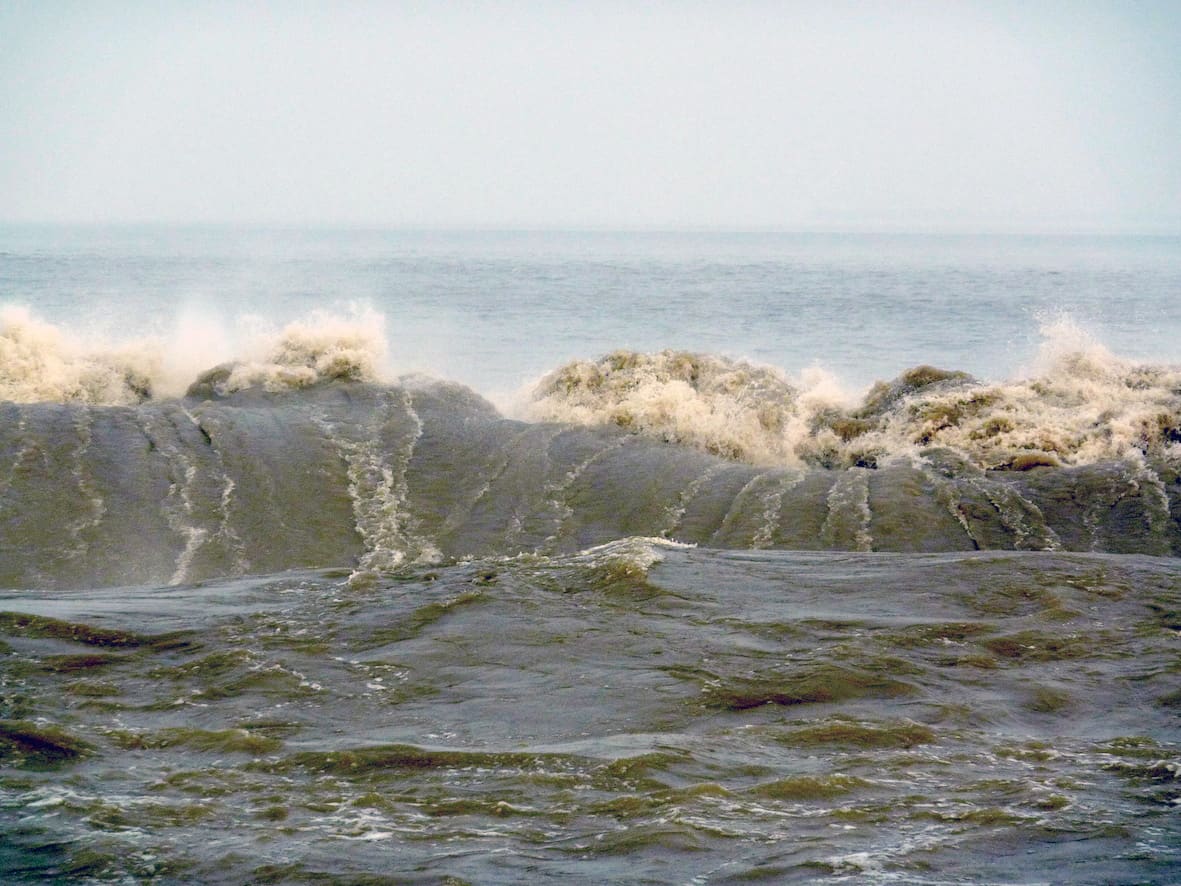
One of the great sights of the Bristol area in the UK is the tidal bore on the River Severn – a wave that steepens and grows as the tide advances inland towards the city of Gloucester. Marking the beginning of the incoming tide, this giant wave is pulled up-river by the Moon’s gravity. I like to see the bore at night. As it approaches, the effect of the distant but then growing roar is magical – and there is plenty of light from Gloucester (and from the Moon when it is visible) to watch the bore as it passes by.
We can enjoy the spectacle of the bore, but understanding it raises some questions. Why are there two tides each day – not just one, in the water on the side of the Earth that faces the Moon? Of the more than 700 tides each year, why does a bore on the Severn occur during at most 50 of them, rather than all? And why does the Moon play a role anyway, given that the Sun’s gravity is nearly 200 times stronger?
The fundamental fact is that the force that raises the tide is not simply the gravity from the Moon and the Sun. It would be, if the Earth were held fixed in space by an imaginary cosmic vice. But the solid Earth is not fixed; it moves in an orbit round the Sun, perturbed by a slight wobble caused by the Moon. The tide-raising force is the difference between the force on the water and the force on the solid Earth. And the force attracting the water on the side of the Earth facing the Moon is greater than that on the solid Earth, while the force on the water on the side of the Earth away from the Moon is less than that on the solid Earth (figure 1a).
The tide-raising force therefore points outwards, leading to two tidal bulges on opposite sides of the Earth (figure 1b). As the Earth turns, a given geographical location experiences a bulge twice each day, leading to the two tides. Quantitatively, the tide-raising force is the gradient of the forces from the Sun and Moon: it is therefore an inverse-cube force from each, rather than the familiar inverse-square. And this tide-raising force from the Moon is about twice that from the Sun.
The arrival times and heights of bores cannot be predicted precisely, as these are sensitive to the amount of water already flowing downriver
The half-strength tidal force from the Sun is far from negligible and makes the height of the tides sensitive to astronomical alignments. Tides are stronger when the Sun and Moon are almost in line: at full and new Moon, and when the inclined orbit of the Moon intersects that of the Earth along a line pointing to the Sun. The effect is enhanced when the Moon and Earth are closest to their parent bodies along their elliptical orbits. Unlike eclipses and other astronomical phenomena, the arrival times and heights of bores cannot be predicted precisely, because these are sensitive to the amount of water already flowing downriver. (Don’t therefore be fooled by seemingly precise arrival-time predictions you can find online.) The most impressive bores occur at particularly high tides after a period when there has been no rain for several days.
1 What makes a tidal bore? (a) Water on our planet is pulled more strongly towards the Moon on the side of the Earth facing the Moon than on the side facing away because the latter is further away (red arrows). The lunar pull on the solid Earth lies between these extremes (black arrow). (b) Subtracting the pull on the Earth from the pull on the water leads to net outward forces (purple), which cause twice-daily tidal bulges. As the Earth turns (black arrow), different places experience the tides at different times. (c) The profile of a typical bore flowing along a river at high tide (brown) shown not to scale. At the places where the arrows are, the tide is either rising (flowing in) or ebbing (flowing out). (Courtesy: IOP Publishing)
The familiar tides at the seashore rise and fall gradually, over several hours. (The waves we see breaking on the shore are caused by winds, not tides.) What is different about rivers that host tidal bores – making bores sensitive to geography as well as astronomy – is that they are open to a large ocean and get narrower and shallower over a long distance upstream. The speed of waves on water is limited by the depth: √(gh), where g is the acceleration due to gravity and h the depth. The crest of the tide as it travels upriver gets deeper than the trough, so it travels faster, generating a wave that gets steeper, eventually with a fairly sharp front (figure 1c).
This difference of speeds between the crest and trough is a simple example of nonlinearity – the mathematical phenomenon that underlies all fluid-mechanical analyses of the formation and shape of the bore. But no mathematical treatment has captured the variety of shapes of the bore at different places along the river. The wave can break, tumbling as it crashes against the banks. Elsewhere, the bore advances upstream in a stately procession of smooth waves behind the front; under moonlight, its mirror surface gleams like liquid mercury. Mathematical models emphasize different features, for example as a moving shock wave, smoothed with a few undulations behind.
One question people often ask is whether a bore is a soliton. The answer is no, because a soliton is a wave whose height is the same on both sides of its peak, whereas the arrival of a bore is the beginning of the tide: the water is deeper behind the bore than in front of it. A striking aspect of a bore is that after it passes, as the tide continues to rise for about an hour, the river flows backwards – upstream but downwards. The smooth downstream flow before the bore passes contrasts with the wildly turbulent tide rushing upstream afterwards.
Destination China
The tidal bore on the River Severn is caused by the extraordinary tidal range in the Bristol Channel into which it flows. It is the world’s second highest, and can be as much as 17 m. The associated bore starts about 20 km upstream from the road bridges linking England and Wales at the mouth of the Severn and continues for another 20 km, and its height rarely exceeds 1 m. In the UK there are several other bores – on the rivers Parrett near Bridgwater and Dee near Chester, for example. In France, there used to be a bore on the Seine near Caudebec-en-Caux, le mascaret, but this largely disappeared after extensive dredging in the 1960s. In Brazil, the pororoca is a dramatic bore on the Amazon and some of its tributaries, holding the world record for long-distance surfing: about 12 km.
In September 2014, however, I was privileged to see the world’s largest tidal bore: the “Silver Dragon” near Hangzhou in south-east China, on the Qiantang river, the mouth of which opens out towards Shanghai. My host was Huan-Qiang Zhou, a physicist from Chongqing, a thousand miles to the west, whom I knew through the Journal of Physics A, which is published by the Institute of Physics (along with Physics World). Hangzhou is his home city and Zhou’s generous arrangements involved finding a local “fixer” who booked our hotels and meals, selected prime locations to view the bore, and decided on the best times to do so.
Tidal bores occur roughly twice a day, separated by a gap of 12 hours and 25 minutes. We saw the Silver Dragon six times: by day and by night over three days. It is a major tourist attraction; local media estimated that on the day of the biggest bore, more than 100,000 people lined the banks to watch it, and at prime locations our host had to buy tickets to reach the river bank. I saw no non-Chinese people other than the Australian physicist who accompanied us.
Dramatic sight Huge crowds watch the Silver Dragon bore from the banks of the Qiantang. (Courtesy: Michael Berry)
As with the Severn bore, you hear the low roar of the wave before you see it. The Qiantang river is almost 3 km wide, in contrast with the mere 50 m width of the Severn near Gloucester, so the wave is louder, and the roar is audible a full 20 minutes before the bore is glimpsed as a thin white line in the distance. There is great anticipation as the angry wave approaches, before a shout goes up as it rushes by. At night, there were fewer people watching the Qiantang bore and, because of the way sound refracts differently when the ground is colder, its roar could be heard even earlier.
Several long walls jut out perpendicular to the river bank. Standing on one of them, we saw the wave approach head-on, crash into the wall and then reflect. This reflected wave was an awesome sight, hugely amplified as it receded and interfered coherently with the still-advancing tide. The Severn bore can be reflected too, after it hits the weir upstream from Maisemore, which is usually the limit of its journey. Standing on Maisemore Bridge, I once saw a tiny reflection, a few centimetres high, several minutes after the bore had passed.
The bore moves up the Qiantang river at speeds varying between 10 km/h and 20 km/h. On the last night, we chased it for tens of kilometres, following it by car until 3 a.m. The fixer chose a final viewing location where the bore crashed against another wall. As we parked, seconds before the bore arrived, police rushed alongside on motorcycles, screaming at us to shift our car, and ourselves, several tens of metres away. With my mistrust of authority, I thought they were being unnecessarily officious. But they were right, because the reflected wave smashed through the protective chain-link fence, and would have drenched us and the car, probably knocking us over.
Rarer than rare You have to get up close to see details such as reflection. (Courtesy: Michael Berry)
With the interval of 12 hours and 25 minutes between bores, and long drives between viewings in several different places, our sleep patterns were disrupted, leaving us permanently exhausted. Our discomfort was somewhat alleviated by the luxurious hotels chosen by the fixer. One deserves mention as an attraction in itself: the Ningbo Hiatian Yizhou Hotel, which is spectacularly located on the Qiantang river as it opens out into its estuary. The building lies in the middle of a bridge spanning the river, claimed to be the world’s longest over clear water – nearly 40 km.
Experiencing unification
A primary aim of physics is to unify the different fundamental forces. A giant step in this direction was Maxwell’s unification of electricity, magnetism and light, in his electromagnetic theory that now underpins our communications technology. The effort continues, with attempts to unify gravity with the strong and electroweak interactions that act on microscopic scales. But we should not forget the first unification, which was Isaac Newton’s discovery that the force that holds us to the ground, the force that keeps the Moon in its orbit, and the force that drives the tides, is in fact one force: gravity.
Witnessing a tidal bore, we experience this unification directly.
Nobody doubts that optical fibres are an incredibly useful technology, particularly when it comes to transporting information over large distances with little attenuation. But in this 100 Second Science film, Jonathan Knight points out some of the limitations of the conventional optical fibres available on the market today.
An optics researcher at the University of Bath in the UK, Knight is developing new forms of optical fibre where the light is guided in air or vacuum, rather than being reflected off the walls of a glass tube within the inner part of the fibre. As he explains in the film, these fibres could be used in specific applications, such as medical surgery, that require light to be delivered at unusual wavelengths.
To find out more about the latest light-related research, take a look at the Physics World Focus on Optics & Photonics. This free-to-read issue includes a special feature about the vital role that optics and photonics play in the UK’s new £270m Quantum Technologies Programme.
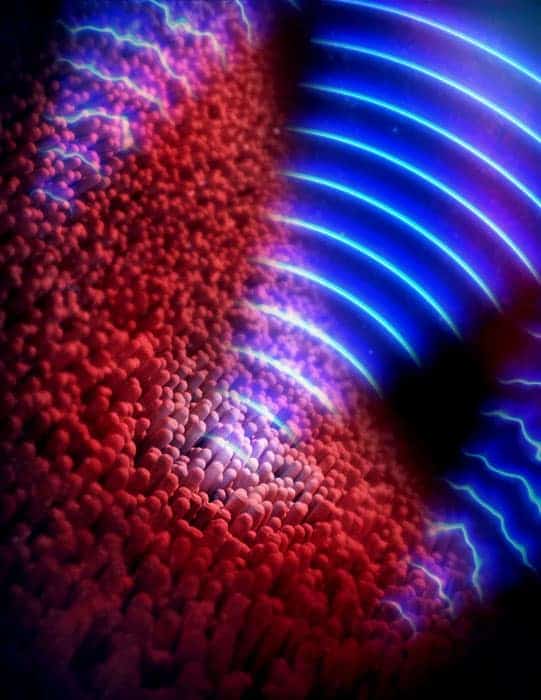
New technology uses computational techniques to more clearly see individual rods and cones, the cells that detect light in the back of the eye. (Courtesy: Alex Jerez Roman)
A new computer algorithm, to correct optical aberrations that appear while imaging the back of the eye, has been demonstrated by researchers in the US. The team’s method should allow the benefits of adaptive optics, more commonly used in astronomy, to be brought more readily into clinics. It does not need expensive optical hardware and, according to the researchers, could help diagnose degenerative eye and neurological diseases earlier, making their treatment more successful.
Optical coherence tomography is an interferometry-based medical imaging technique analogous to ultrasound imaging, but using light instead of sound. It is the standard of care for diagnosing and monitoring a number of medical conditions such as age-related macular degeneration, in which the tissue underneath the retina begins to thicken, leading to nutrient starvation and eventual death of photoreceptors.
Reduced resolution
However, light used to image the retina has to pass through a patient’s eye, and imperfections specific to each patient create aberrations in the image, thereby reducing the resolution until it is impossible to image individual receptors and researchers have to infer the microscopic progress of a disease from macroscopic details. In adaptive optics – first developed for removing the distortions introduced into astronomical images by the atmosphere – the distortion of the reflected wavefronts is measured by a wavefront sensor, and a mirror is constantly deformed to correct for these.
These corrections can improve the image resolution dramatically, but the sophisticated optical hardware required slows down the imaging speed and adds considerably to the cost, nearly doubling it. Also, tiny involuntary eye movements can alter the phase of the incoming waves and blur interferometric images, making it difficult to identify optical aberrations for correction.
Stephen Boppart and colleagues at the University of Illinois at Urbana-Champaign, as well as competing researchers, have in recent years produced several papers on so-called “computational adaptive optics”, in which these corrections are applied by image-processing software rather than optical hardware. In their new research, they unveil a multi-stage algorithm for enhancing retinal images that can be run on the graphics card of a high-end desktop computer, and use it to probe the retina with unprecedented detail for images made without adaptive optics.
Fixing imperfections
First, they correct the phase, allowing them to clearly identify the optical aberrations. Second, an electronic technique to identify and correct large bulk aberrations reveals a few obvious photoreceptors, which appear blurred. Finally, the algorithm calculates the detailed corrections needed to display these correctly and applies these to the image. In astronomical adaptive optics, stars are sometimes used to guide these corrections.
The researchers imaged the eye of a volunteer, looking at an area near the centre of the retina called the fovea. They produced extremely detailed images showing, for example, the decreasing density of photoreceptors as the distance from the fovea becomes greater. “We agree that, given the images we’ve seen from the hardware [adaptive optics] systems, our computational approaches are equivalent to those,” says Boppart, “In addition, we think we could do better by correcting the finer aberrations and by being able to manipulate the data post-acquisition, which gives us a lot more flexibility.”
Pablo Artal of the University of Madrid describes the research as “impressive” and the images obtained as “beautiful”. He remains sceptical, however, both about the researchers’ estimates of the cost of integrating adaptive optics into a properly developed commercial system and about the effectiveness of software to substitute them, especially in more complex cases in which noise presents more problems, although he agrees this warrants further study. In any case, he says, there may be many cases in which image processing is “good enough, and in that case this can have a lot of value”. A more interesting application, he says, may lie in combining the two methods to obtain even better image quality than either would achieve alone.
Boppart’s research is now focused in just this direction. “We’re going to integrate hardware adaptive optics with our computational system,” he says, “and really do that direct comparison to see if computation can completely replace hardware or if there’s some synergy in having both present.” The team also wants to use the system to obtain images of nerve fibres in the eye, as the collapse of the myelin sheath can be a key indicator of multiple sclerosis.
Exchanging messages with almost complete security by exploiting the strange laws of quantum mechanics should in future be possible on a global scale. That is the conclusion of physicists in Italy, who have found that the delicate states needed for quantum cryptography can be transmitted via laser beam from an orbiting satellite to a receiver on the surface of the Earth. The researchers say that the relatively simple technology needed for such encryption could be incorporated into conventional communications satellites.
Quantum cryptography involves two parties sharing a secret key that is created using the states of quantum particles such as photons. The communicating parties can then exchange messages by conventional means, in principle with complete security, by encrypting them using the secret key. Any eavesdropper trying to intercept the key automatically reveals their presence by destroying the quantum states.
Losses and curvature
Such cryptographic systems are already produced commercially, but they use fibre-optic cables. Losses in the cables limit the distance over which quantum keys can be sent to about 100 km, and that distance cannot be increased using repeaters, as is the case with classical data, because it is impossible to carry out the necessary amplification. Alternatively, quantum bits, or qubits, can be transmitted through the atmosphere, but this approach has a similar distance limit imposed by the curvature of the Earth.
This is where satellites could help. A single satellite, for example, could be used to send quantum data to two people on the Earth’s surface to enable those people to share a secret key. To date, however, no device capable of generating or detecting quantum states – such as single photons – has been placed in orbit.
Paolo Villoresi of the University of Padua and colleagues have taken a creative approach to this problem by using the Matera Laser Ranging Observatory in southern Italy. This facility usually directs laser pulses at passing satellites and then measures the reflected pulses in order to measure tiny variations in the Earth’s gravitational field. In 2008 Villoresi’s team worked with a group of physicists at the University of Vienna to bounce very weak laser pulses from a satellite and then show that less than one photon per pulse could be detected on the ground (see “Single photons make the trek from space”).
Polarization is preserved
In this latest research, the Italian group has gone one better, showing that it is possible to preserve the polarization state of those photons. Doing so is essential to quantum cryptography because it is the property of polarization – the orientation of a wave’s oscillation – that is used to define the value of the qubits that make up a quantum key.
The researchers prepared the observatory’s laser photons in one of four polarization states – horizontal, vertical, left-circular or right-circular – and beamed each of the states in 10-second bursts towards five satellites (including NASA’s Jason-2) in orbits up to 2000 km above the Earth’s surface. Their aim was to establish whether or not they could limit the fraction of qubits in each burst that had the wrong polarization after reflection to less than 11%. Above this figure, information theory dictates that no secret key can be established.
Villoresi and colleagues found, as hoped, that the error rates from four of the satellites were in single-figure percentages. These satellites employ corner-cube retroreflectors with metallic coatings, which are needed to preserve polarization states. The fifth satellite has uncoated retroreflectors and generated error rates of about 40%.
“Our results prove that quantum-key distribution from an orbiting terminal and a base station is not only a promising idea but nowadays is realizable,” the researchers write.
Rotation on the fly
The tests did not involve the satellites transmitting qubits that could be used to make actual quantum keys, since the polarizations of the qubits were determined on the ground. But the researchers say that a straightforward modification of existing retroreflectors could make quantum-key generation a reality. All that is needed, they say, is to add a device known as a Faraday rotator and a random-number generator to each retroreflector in order to rotate the polarization of incoming photons on the fly.
Scientists in China have already developed a satellite that will generate quantum keys, and plan to launch it next year. This mission will create entangled pairs of photons in space and then send the two halves of each pair simultaneously to two communicating parties on the ground. The retroreflector-based scheme, on the other hand, involves transmitting the key to each user separately. According to Villoresi, the latter approach will be much cheaper and easier to implement and, he says, could “piggyback” on satellites due to be launched anyway.
The research will be described in Physical Review Letters and a preprint of the paper is available on arXiv.
Electrical discharges could be controlled and guided along complex paths and even around obstacles, by using a variety of lasers, according to the latest work done by an international team of researchers. Forks of lightning, and on a much smaller scale, the tiny arcs of electricity used in everything from lighting to combustion engines, all follow highly unpredictable paths. The novel method has shown that lasers cannot only be used to guide discharges along straight lines, but also arcs and s-shapes. Greater control over discharge paths could open up a variety of potential applications, including in industrial-machining devices and lightning-protection systems.
While one might be more familiar with lightning, electrical discharges are used in many different technologies, in everything from gas-discharge lamps, arc welders, in spark machining and even to ignite fuel in combustion engines. Despite these many uses, however, our ability to control the exact path these currents take is limited – between the fixed points of the two electrodes the arcs are unpredictable, affected by various factors from air temperature to the presence of pre-ionized matter.
Wielding control
Past research, however, has demonstrated one method of controlling the discharges through the use of laser beams. These can ionize a channel through the air, locally lowering the gas density through heating and thereby creating a guide for the discharge along which there is reduced breakdown voltage.
“Controlling the gas breakdown and the associated electric discharge with laser beams is extremely appealing,” explains Matteo Clerici, a physicist at INRS and Heriot-Watt University. Recent developments in optical physics have brought to light new types of “non-diffracting” laser beams with interesting properties. Made using different lenses, these beams are not concentrated on a single point, as with a regularly focused laser.
Self-healing beams
Instead, the light may be concentrated along a line, as within a Bessel beam (created using an axicon, or conical, lens), or along a parabola, as within an Airy beam (created using a binary phase mask). Both Airy and Bessel beams have the unusual ability of being able to “self-heal” – if their intensity peaks are blocked, these lasers may be able to reconstruct themselves on the other side of the obstacle. This is thanks to how different points along these lasers are sustained by different portions of the input beam that creates them.
Clerici and his colleagues wondered if these unusual beam properties might be applied to better guide electrical discharges. To test their hypothesis, the researchers fired different laser beams between two wire electrodes, placed five centimetres apart, between which a high voltage (of 15 kV) was then applied. Photographs of the beams were taken, showing both the initial, ionization-induced fluorescence along the laser, as well as the path of the subsequent discharge.
In the case of a regular (Gaussian) laser beam, a distorted and largely unpredictable discharge was seen to form along the beam’s path. In contrast, a Bessel beam – whose high-intensity peak is much smaller in cross-section – resulted in a discharge guided along a significantly more defined straight line. In a similar fashion, a curved and well-defined discharge was seen to form along the path of a self-bending Airy laser beam – and combining two Airy beams enabled the researchers to guide the discharge along an s-shape.
Laser lasso
Furthermore, when an obstacle was placed in the direct line of both the Airy and Bessel beams, the self-healing properties were seen to allow the discharge to leap over the obstacle – leaving it undamaged – with the spark returning to the laser guide on the other side.
Practical considerations
“This work opens the way of directing electric discharges and possibly energy along arbitrary paths in free space,” comments Stelios Tzortzakis, an optical physicist at the University of Crete, who was not involved in this study. Jean-Claude Diels, a physicist at the University of New Mexico, who was also not involved, similarly commends the study for its interesting results. He cautions, however, that the use of laser beams may scale up poorly to applications requiring discharges over larger distances – as might be required for lightning triggering and protection systems. “The experiments are quite interesting for small-gap-discharge experiments, where the air is ionized, and the [laser beam] indeed produces a conductor for triggering and guiding the discharge,” says Diels. But he adds that we now know that long-gap discharge is triggered and guided by “air rarefaction by the shock wave created in air by recombining ions. Indeed, the discharge is seen to start a long time after the ions have recombined, and the channel created by the light filament is no longer conducting”, meaning that it will be quite a challenge to apply Clerici’s findings to guide lightning.
With their initial study complete, Clerici and colleagues are now exploring the potential to guide discharges along more elaborate trajectories, and around tighter arcs, by using more complicated optical elements. While the current work utilized only static optical elements, Clerici notes that the potential also exists to guide discharges using reconfigurable devices such as spatial light modulators or deformable mirrors. He adds that “this may become relevant for machining and welding applications, where complex operations may be performed without moving the samples.”
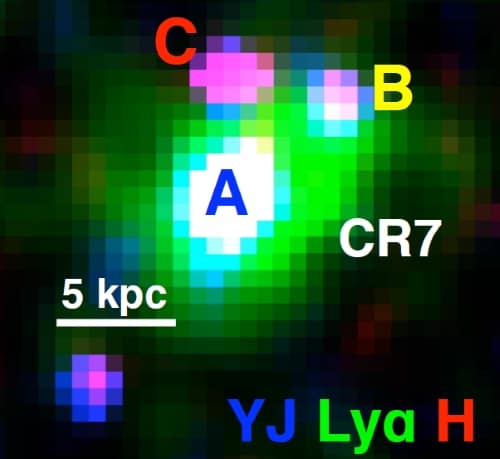
A galaxy far away: this false colour image of CR7 was taken by several telescopes. (Courtesy: David Sorbal et al.)
By Hamish Johnston
Over the past decade or so the Real Madrid football club has acquired a string of high profile players dubbed the “Galácticos”. Now the most expensive of these footballers – the Portuguese forward and Real Madrid number 7 Cristiano Ronaldo – has a distant galaxy named after him. The galaxy is dubbed “CR7” and was discovered by a team of astronomers led by David Sobral of the University of Lisbon using several different telescopes.
CR7 actually has two meanings, the second being “COSMOS Redshift 7”. COSMOS refers to the Cosmological Evolution Survey, which is using a number of telescopes to search for very old galaxies.
A new technique to reduce the effect of noise in fibre-optic cables, by adapting signals to compensate for it in advance, has been demonstrated by researchers in the US. The team has increased the maximum power – and consequently, the distance – at which optical signals can be sent through the fibres. Its technique could potentially be implemented in existing optical fibres that carry information all over the globe, thereby significantly enhancing their capacity, and could be a first step toward a faster Internet.
While there are many benefits of using fibre-optic fibres to transmit data, one of the most significant is that photons do not significantly interact with one another, so multiple optical signals can travel down the same line. However, as the signal propagates, noise gradually creeps in, and this creates “crosstalk” between the signals. To reduce the crosstalk and prevent the signals becoming lost in noise, engineers cannot squeeze different signals too close together within a single channel, or from spacing the channels too close in frequency, limiting the capacity of a fibre.
Noisy crosstalk
The noise comes from two main sources. First, from amplifiers spaced regularly along the fibres to regenerate the signal as it propagates. If this were the only noise, one could simply turn up the signal power, reducing the number of amplifiers needed and the resulting noise they inject. However, another type of noise is caused by the fact that the refractive index of silica is not perfectly linear, which creates high harmonics of the signals that interfere with one another, creating crosstalk. This type of noise gets worse at higher power levels, so above a certain threshold, turning up the power actually increases the overall amount of noise contaminating the signals.
Unlike the random noise from amplifiers, however, this nonlinear interaction noise is deterministic. This makes it possible, in principle, to modulate the signals in advance to compensate for it. However, various groups’ efforts to achieve this had met with little success. “A system typically has about 30 to 200 optical channels, each transmitted by an independent laser,” explains optical physicist Nikola Alic, of the University of California, San Diego. “These lasers are by no means perfect: their exact frequency has a certain tolerance, and furthermore they wander in frequency over time.” This uncertainty in the relative frequencies of the channels makes it impossible to calculate the exact nonlinear interaction noise and compensate for it effectively. Instead, in August last year, Alic and colleagues proposed using a frequency comb – in which one laser produces a series of pulses with equally spaced frequencies that act as a “ruler” – and transmitting each channel using a different tooth of the comb. If the fundamental laser frequency changes, all of the teeth move in step, so the relative frequency does not change and the nonlinear interaction is unaffected.
More power, less noise
The researchers have now put their proposal into practice, sending signals down three separate frequency channels in over 1000 km of standard optical fibre, and using computer software, have attempted to compensate for the nonlinear interaction noise. When the three channels were transmitted by three separate lasers, the researchers found that, despite their attempts to compensate for it in advance, there remained significant crosstalk between the signals, and as a result, signal clarity declined if they put more than 200 μW of power into each signal. Conversely, when the channels were transmitted via the teeth of a frequency comb, the researchers could reduce crosstalk far more effectively. They could therefore make the signals 10 times as powerful before nonlinear noise became a problem. If implemented in practice, this would mean fewer amplifiers needed, less random noise injected into the signals, and much greater fibre capacity.
Govind Agrawal, of the University of Rochester in New York, who was not involved in the current work, told physicsworld.com that “frequency combs have been used for metrology and other applications, but this paper is showing, for the first time, that they can have a big impact on telecommunications.” Peter Andrekson, of Chalmers University of Technology in Sweden, who was also not involved, agrees that the work is “significant”, although he cautions that “if you want to apply this in a real live information traffic situation, you will have to implement real circuits that do this pre-compensation on the fly. That will require the development of very sophisticated, expensive, power-hungry and high-bandwidth circuits.” Alic agrees, but he remains optimistic: “Yes, a push will be necessary from both researchers and industry,” he says, “but I think the rewards will be worth it.”
The simple act of turning on a light to continue studying after sunset is a standard solution for many students around the world. But for the approximately 1.5 billion people who live outside of electricity grids, this is a luxury they do not necessarily have. Instead, many students in the developing world have been forced to use kerosene lanterns that are inefficient, expensive to fuel and a fire hazard, not to mention the toxic fumes they produce that can be lethal.
Fortunately, in recent years an alternative solution has arrived in the form of LED lanterns, which can be far safer and more sustainable. This short film takes you to a small rural community in the Indian state of Karnataka where a school has been issuing students with these LED lights free of charge, supported by the Srivali Trust. Homes in this community do not always have a steady supply of electricity, which has caused students to strain their eyes while attempting to study by candlelight.
It is an inspiring short documentary, produced by Indian filmmaker Maithili Padukone, which explores the impacts of these LED lights on the students, many of whom are the children of farmers, potters and fishermen. India is home to an estimated one third of those people in the world who live outside of electricity grids.
This is film number three in a series we have commissioned for the International Year of Light (IYL2015), with each film telling local stories involving light and its applications and how they can affect people’s lives. The first film in the series followed an amateur astronomer seeking out a patch of dark sky amid the dazzling lights of New York City. The second was a film about the role of light in regulating sleep cycles and how this regular pattern has been significantly disrupted in a British woman who had her eyes removed.
To find out more about light and its applications, take a look at the March special issue of Physics World. If you’re a member of the Institute of Physics (IOP), you can get access to the special issue about light in our lives with the digital edition of the magazine