Secret of record-breaking superconductor explained

Conventional superconductivity can occur at much higher temperatures than previously expected, according to calculations made by an international team of physicists led by Matteo Calandra of the IMPMC Institute in Paris. The researchers have developed a theoretical model for the record high-temperature superconductivity reported last year in hydrogen sulphide, which the team says arises from relatively simple interactions similar to those underlying conventional low-temperature superconductors. This is different to other high-temperature materials in which the superconductivity is caused by complicated and poorly understood processes.

Low-temperature superconductors are usually well described by the BCS theory of superconductivity, whereby interactions with lattice vibrations called phonons cause electrons to pair-up to form “Cooper pairs” that can travel through the material without encountering any resistance. Such materials stop superconducting above a transition temperature (TC) fairly close to absolute zero – the highest to date being just 39 K. High-temperature superconductors, in contrast, have transition temperatures up to 133 K.

Despite the vast amount of research done on high-temperature superconductors since the first such material was discovered in 1986, much of the physics underlying their superconductivity remains unknown. This mystery appeared to deepen late last year when Mikhail Eremets and colleagues at the Max Planck Institute for Chemistry in Mainz, Germany, found that when hydrogen sulphide is subjected to extremely high pressure (200 GPa) it has a TC of 190 K. While the TC of high-temperature superconductors can be increased by applying pressure – the current record is 164 K – hydrogen sulphide looks set to become the new record-holder if the measurement can be confirmed.

Conventional yet high temperature

The strange thing about hydrogen sulphide is that – unlike other high-temperature superconductors – it does not also exist in a magnetic state, and therefore more closely resembles a conventional superconductor. This observation led Calandra and colleagues in Canada, China, France, Spain and the UK to use BCS theory as the starting point for their calculations.

Key to understanding superconductivity in hydrogen sulphide are the interactions between electrons and the vibrating hydrogen atoms. Hydrogen has a very low mass and therefore tends to vibrate at relatively high frequencies. These high-frequency modes interact very strongly with electrons and so should result in a superconductor with a very high TC. Indeed, when Calandra and colleagues used BCS theory to calculate the TC of high-pressure hydrogen sulphide, they obtained a value of about 250 K – much higher than the observed 190 K.

The team believes that the actual TC is somewhat lower, because basic BCS theory assumes that the atoms in the material vibrate as simple harmonic oscillators. However, light atoms such as hydrogen undergo more complicated anharmonic oscillations, and this can weaken significantly the interactions that create Cooper pairs. After taking anharmonic effects into consideration in their calculations, Calandra and colleagues calculate a much more realistic TC of 194 K – in close agreement with Eremets’ measurement.

Upping the pressure

The calculations also suggest that the interplay between anharmonic effects and other properties of the material will result in the TC remaining constant in the pressure range 200–250 GPa. While observing this effect in the lab would be a good test of the calculations, Calandra says he is unaware of any measurements above 200 GPa. Indeed, he points out that the 200 GPa experiment was extremely difficult to make, and that Eremets and colleagues are probably the only researchers capable of studying hydrogen sulphide at higher pressures.

“Eremet’s discovery and our theoretical work pave the way for the quest for high-TC superconductivity in hydrides and hydrogen-based materials in general,” says Calandra. “In this class of materials it should be possible to find superconductors with a TC of the same order (or maybe more) than hydrogen sulphide at high pressure,” he adds.

Elisabeth Nicol of the University of Guelph in Canada is enthusiastic about the results. “What is amazing is that this says we can actually have an electron–phonon superconductor that operates at 190 K,” she says. Nicol, who was not involved in the calculations, adds that “While technically the theory of superconductivity itself does not put a limit on TC, consensus has been that electron–phonon superconductors have low TC. Clearly, we are learning that there are still possibilities out there for conventional superconductivity.”

The work is published in Physical Review Letters.

Hubble at 25, Star Trek selfies on the ISS, Wu-Tang Clan physics and more

Hubble's official 25 anniversary image of the Westerlund 2 cluster

25 years ago today, the ESA/NASA Hubble Space Telescope (HST) was launched aboard the Discovery space shuttle and since then, it has changed the face of observational astronomy as we know it; taking millions of people worldwide from their homes to the most distant and far-flung reaches of the universe and the imagination. The telescope has also been instrumental in some of the biggest, Nobel-prize-winning discoveries in physics in the past two decades, including that of the accelerating expansion of the universe. The stunning image above of the giant cluster of nearly 3000 stars dubbed “Westerlund 2” was especially released yesterday to celebrate Hubble’s 25th anniversary. The stellar nursery is difficult to observe because it is surrounded by dust, but Hubble’s Wide Field Camera 3 peered through the dusty veil in near-infrared light, giving astronomers a clear view of the cluster. Once you are done staring in awe at the image, watch the short video below, put together by NASA on the HST’s lifetime.

(more…)

IYL 2015 gets Swiss design makeover

Posters inspired by IYL 2015

One of the big aims of the International Year of Light (IYL 2015) is to take scientific ideas out of the lab to show the world just how inspiring and useful they can be. In the process, it can forge relationships between different communities, including scientists, engineers, artists, journalists, architects, politicians, aid workers…the list goes on.

Here in Bristol, where Physics World is produced, we’ve seen a fantastic local example of this by way of an art project at the University of the West of England (UWE). Second-year graphic-design students were set the brief of creating posters themed on IYL 2015. Last night we hosted an evening at IOP Publishing headquarters to showcase the students’ work and to let them find out more about science publishing.

(more…)

Tunable plasmon laser could sniff out cancer

Researchers in the US say they have succeeded in tuning the wavelength of light emitted by a tiny laser made from plasmonic nanocavity arrays. The plasmon laser, which consists of arrays of gold nanoparticles surrounded by dye molecules dispersed in a liquid, is robust and can operate at room temperature. An important use for the new device could be detecting cancer biomarkers at very low concentrations, say the scientists.

Normally, the diffraction limit means that light cannot be focused to a spot smaller than half its wavelength – about 250 nm for green light. This puts a limit on how small a laser or other optical device can be made. But in recent years, scientists have managed to compress light down to much smaller length scales by coupling it to surface plasmons – conduction electrons that oscillate collectively at the surface of a metal. A similar effect occurs in arrays of tiny metal nanoparticles, where the resulting excitations of light and electrons are called “lattice plasmons”.

Most plasmon-based lasers operate at fixed wavelengths, and it is very difficult to adjust the wavelength, especially in real time. This is because the wavelength of a plasmon laser is defined by its gain material, which is normally a solid such as an inorganic semiconducting nanowire or an organic dye in a solid matrix.

Liquid gain materials

Now, researchers led by Teri Odom of Northwestern University say that they may have found a way to make a tunable plasmon laser by filling a plasmonic nanocavity array with a gain material that is a liquid solvent. This allows them to change the emission wavelength of the laser by adjusting the refractive index of the solvent used.

“Using liquid gain materials has two main advantages,” Odom explains. “The first is that organic dye molecules can readily be dissolved in solvents with different refractive indices. So, the dielectric environment around the nanoparticles can be tuned, which also enables us to tune the lasing wavelength in real time. Second, the fact that the gain materials are in liquid form allows us to manipulate the gain fluid within a microfluidic channel, which means that we can dynamically tune the lasing emission by simply using liquids with different refractive indices.”

And that is not all: the researchers say that their tiny lasers are easy to fabricate and can emit light over the entire gain bandwidth of the dye employed. “This means that with the same nanocavity structure, that is the same nanoparticle arrays, we can tune the lasing wavelength over 50 nm (from 860 to 910 nm) by simply changing the solvent the dye is dissolved in,” says Odom.

Molecular sensing

Xiang Zhang of the University of California, Berkeley, who was not involved in the project, says that making a tunable plasmon laser using microfluidics could lead to interesting practical applications. “Such a configuration could be very useful in biomedical diagnostics and molecular sensing in liquid environments. We could mix a cancer biomarker in the liquid gain, for example, and detect it with very high sensitivity, provided that heating is not an issue near the plasmon particles.”

Odom says that the tiny light sources could be used in ultrasensitive sensors to detect weak physical and chemical processes on the nanoscale. They might also be integrated in lab-on-a-chip devices, she adds.

The tunable plasmonic laser is described in Nature Communications.

Albert and Erwin: decline and fall

More than a century has passed since quantum theory began to pose teasing questions about how we interpret our world. Books abound that offer alternative views of the problems the theory raises, and Einstein’s Dice and Schrödinger’s Cat is another. It begins with a few central themes and then follows the later interaction-at-a-distance of two prominent figures who had their heyday in the early 20th century and lived on to become eminences grises.

As the author, Paul Halpern, acknowledges, the pairing of Albert Einstein and Erwin Schrödinger is a somewhat unbalanced one, at least in the mind of the wider public – Einstein the universal icon with the big hair, Schrödinger playing a central role for physicists but relatively unknown to others. Even the dilemma posed by Schrödinger’s cat is not widely appreciated; Halpern notes that it derives from an earlier example put forward by Einstein, one that involved exploding gunpowder rather than poisoned pets.

Einstein was a great and a good man, but perhaps he has already received rather too much biographical attention, in comparison with his contemporaries. We need a better sense of the individual researcher as a quasiparticle, moving and acting in a sea of influences from the wider scientific community. Accordingly, Halpern’s book contains a large cast of other characters, who appear in the potted history of physics that forms the background to his tale. However, much of that which feels fresh in the book lies in the recounting of Schrödinger’s adventures in Ireland, a country to whose shores he was driven by events in his native Austria and his distaste for the high tables of Oxford (which may have been mutual).

Schrödinger was brought to Ireland in 1939 by the country’s leader Éamon de Valera, who had a quixotic enthusiasm for mathematics and theoretical physics. To the very end, when he was nearly blind, de Valera would still struggle through textbooks on the subject. In earlier times, when he dominated public life, he could often be seen striding into the seminar room of the Dublin Institute for Advanced Studies – a centre created in his own image as well as that of its Princeton counterpart – to hear the latest developments. De Valera was enamoured of relativity, and according to some, he once sent a young civil servant to find out whether it could be applied to economic policy. I met the official in question many years later. He hotly denied it. Apocryphal or not, the story conveys an impression of life on the isolated offshore island where Schrödinger was beached – not quite a Crusoe, more of a Gulliver.

It is a pity, therefore, that this author does not have a better feel for Dublin life, and that some of his details seem unreliable (for example, the Trinity College physicist G F Fitzgerald is here referred to as “Edward”). His style is also racy, sometimes uncomfortably so: terms such as narky, cushy, bragging and mouthing off do not always sit well in the story of these two dignified intellectuals. However, the aspect of the book that saddens me most (but is common to most such popular writing today) is the total absence of the elegant mathematical formulae that are the very essence of theoretical physics. Granted, lay readers cannot be given an instant tutorial on technicalities; nevertheless, one might yet hope that a few excerpts could be exhibited, with some hint of their nature and sophistication. After all, a third of a millennium has passed since Leibniz and Newton introduced the kind of mathematics that – somewhat miraculously – is still used for quantum mechanics. Moreover, the reader who cannot admire a few symbols is unlikely to understand much of the author’s talk about tensors, determinants and complex numbers.

Einstein and Schrödinger rubbed shoulders and eventually locked horns over their respective attempts to produce new unified field theories. Neither was successful. In 1947 Schrödinger jumped the gun by prematurely and publicly announcing a major breakthrough in that quest. He did so in the sedate surroundings of the Royal Irish Academy, where I once proposed that the small box by the fire escape should carry the message “In case of boredom, break glass for key”. But on that day the room must have been charged with a frisson of anticipation: de Valera himself chose to attend. The subsequent over-reaction of the press in Ireland and abroad, though hardly a “press war”, was an embarrassment, and Schrödinger went on the retreat as his relationship with Einstein cooled. They renewed their friendship in due course, but the rest of the story is one of continued decline and fall.

Of more enduring interest to most of us is the scepticism both men shared regarding probabilistic interpretations of quantum mechanics. Their standpoint is outmoded today, but we are still uneasy about the relation of the quantum and classical worlds. Accordingly, John Bell makes an entrance towards the end of the book, which brings the quantum/classical conflict up to the present day. I once had the pleasure of accompanying Bell to a dinner in Trinity College Dublin. Referring to the implications of his theorem, I asked “Is there still a problem?” Not entirely sure what I meant by this conversational gambit, I did not expect a direct reply, but he was unequivocal. “Yes,” he said. “Very well,” I said. “Who will resolve it, the physicists or the philosophers?” “The physicists,” he replied.

Bell, like these two great predecessors, is no longer with us. We still wait for whoever will finally put Schrödinger’s cat at rest, not to mention the one who will solve the small problem of unifying gravity and electromagnetism. In the meantime, this book can be put on the reading list of those who have enjoyed The Theory of Everything and want to know more.

  • 2015 Basic Books £18.99/$27.99hb 288pp

Carbon nanotubes bring aircraft manufacturing out of the oven

A paper-thin carbon-nanotube film that can heat and solidify the composite materials used in aircraft wings and fuselages, without the need for massive industrial ovens, has been developed by a team of researchers in the US. The film can be rolled onto industrial components to deliver uniform, controllable and efficient heating via conduction. When connected to an electrical power source, the heated film stimulates the polymer to solidify. The technique should provide a more direct, energy-saving method for manufacturing virtually any industrial composite, according to the researchers.

Large industrial components such as aircraft wings are often made of composite materials that have layers that must be bonded together. Bonding typically involves curing the composite materials at high temperatures in expensive, immobile ovens known as autoclaves. Heating metre-sized components to temperatures of several hundred degrees in autoclaves – large industrial vessels that treat materials using elevated pressure and temperature – is an energy-inefficient process: the ovens waste significant amounts of energy as they themselves must be heated before the thermal energy is carried to the components by convection.

Beyond the oven

The inspiration to use carbon nanotubes (CNTs) as conductive microheaters was based on previous studies, explains Seth Kessler, president of Metis Design Corporation in Boston, a spin-out company from the Massachusetts Institute of Technology (MIT). Together with researchers at MIT’s department of aeronautics and astronautics, the team developed a CNT-based microheater that can effectively be rolled over an arbitrary surface to provide direct heating. “We had been using carbon-nanotube-based resistive heating for de-icing applications and had then considered the possibility of using the same principle for curing,” he says.

The team’s “out-of-oven” approach avoids the use of autoclaves entirely, thereby allowing composite materials to be efficiently cured regardless of their size or shape, and irrespective of the availability of a nearby autoclave. Similar microheaters are already commercially available, but the researchers caution that “it’s not as simple as just buying material and pushing it on the surface”. Rather, significant engineering is required for each curing project to determine the appropriate resistivity and current-flow paths.

A thin sandwich

The researchers, led by Brian Wardle of MIT, first created a mesh of aligned CNTs, where each nanotube was approximately 400 microns long. Aligning the nanotubes ensured better electrical stability, which was critical since current needs to pass through the mesh to provide resistive heating. The group then added a copper mesh to create electrical contacts, and a composite surfacing film to ensure electrical insulation. Wardle and his team tested a roughly postage-stamp-sized sample of the film on a commercial, laminated composite commonly used in aerospace manufacturing. They attached a 30 V power supply directly to the two electrodes of the microheater and manually adjusted the input voltage to modulate the film’s temperature to yield a complete cure.

“We found about a 1000-fold difference in energy used for curing, resulting in a 50% cost reduction in the final production part,” says Kessler. Even though the group only tested a small piece of the mesh, the researchers envision that scaling up the size of the mesh to cover an entire aircraft wing will not present a challenge. “The larger the part, the more opportunity the current has to achieve a uniform front,” Kessler notes. “As long as the current flow is intelligently designed, the scale of the part is irrelevant.”

Furthermore, the extremely low surface density of the films (5–10 g/m2) means that they can be simply left on the material after curing without worrying about the extra weight. Kessler told physicsworld.com that by leaving the films in situ, other multifunctional capabilities may be realized, such as damage-detection based on resistance changes.

As different composites require different temperatures in order to fuse, the researchers also tested how hot the CNT film could actually get before it failed. The team found that the film’s failure point was at more than 537 °C. In comparison, some of the highest temperature aerospace polymers require temperatures up to 399 °C in order to solidify. “We can process at those temperatures, which means there’s no composite we can’t process,” Wardle says. “This really opens up all polymeric materials to this technology.” The researchers are now working with industrial partners to find ways to scale up the technology to manufacture composites large enough to make airplane fuselages and wings.

The research is described in Applied Materials and Interfaces.

Amazing science demo four: Ball River Bobsleigh

This is the fourth in a series of “five amazing physics demonstrations” presented by science-demo guru Neil Downie and his adept assistant Matthew Isbell.

In a special feature in the April issue of Physics World, Downie describes his five best demos of all time, all of which use everyday equipment to illustrate fundamental physics concepts. Downie describes how his fondness for the five experiments comes from the fact that, with a bit of creativity, each one can be easily adapted to explore physical concepts further. In the digital edition of the April issue, each demonstration is accompanied by a video in which Downie walks you through how you would present each demonstration to an audience. Full details of how to access the digital edition are available at the bottom of this article.

In this fourth demo from the series, Downie and Isbell go head to head as they race their homemade vehicles along a track lined with ball-bearings. Downie’s vehicle is a propeller-driven half-pipe, while Isbell has constructed a pressure vessel from a soft-drinks bottle and a valve. Watch the video to find out whose vehicle wins!

Ball River Bobsleigh

So what’s this all about? Believe it or not, ball-bearings make the world go round. Drive a car, ride a bike or travel by bus or train, and you’re rolling along on ball-bearings. Run an electric motor and – unless it is very small – rotation is assured by ball-bearings. In fact, these tiny metal spheres have been so important to industry that ball-bearing factories have been wartime military targets. This project shows how a vehicle moves on a bed of loose ball-bearings.

What bits and pieces do I need? You need a long length of plastic guttering that’s normally used to collect water draining off a roof – the kind that’s got a U-shaped cross section. Spread evenly inside the guttering lots of small, round glass beads about 3–4 mm in diameter and then tape up either end of the guttering to stop the balls getting lost. The simplest “vehicle” is a plastic soft-drinks bottle. Put a car-tyre valve in the base of the bottle and a pinhole in the screw cap so that, once you’ve pumped it up, air will be released in a continuous stream over a minute or two. Place a small weight in the bottle – such as toy figures as passengers – so that it doesn’t topple over. Another option is to make a vehicle from a smaller piece of guttering, to which you attach a propeller powered by a small electric motor.

How do I get going? Simply place the vehicle on the ball-bearings at one end of the guttering – and let go. With luck, the vehicle will quickly accelerate to a few metres per second, possibly swaying from side to side and with a few beads occasionally bouncing into the air.

And what physics will I learn? Ordinary “sliding” friction is huge – the force needed to move an object on a horizontal surface can be 30–60% of the vertical force (i.e. its weight). But “rolling” friction, which this experiment shows, is hundreds of times less and can be engineered to be less than 0.1% of the vertical force. The experiment also illustrates the complex physics of ball-bearings, which concerns how the surface of the bearings and the surface they’re rolling along deform. Ball-bearings come in many different forms, and to keep friction down, the key is to use materials such as steel that are hard yet spring back efficiently. Big balls are also better. As for the top speed of the vehicle, it depends on various factors, including rolling friction, air drag, the pitch of the propeller and the kinetic energy needed to accelerate the balls that it rolls over, which it doesn’t get back in full.

  • If you’re a member of the Institute of Physics (IOP), you can now enjoy immediate access to the April issue of Physics World with the digital edition of the magazine

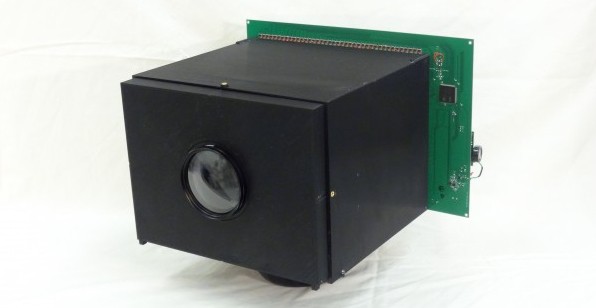
Self-powered camera can take selfies forever

By Ian Randall

With a smartphone in every pocket and remotely operated cameras on every street corner, digital cameras are a ubiquitous part of life. Last year alone an estimated two billion cameras of various sorts were sold worldwide – with such sales likely to increase. While personal cameras are easily recharged, many new remote applications require smaller and longer-lasting power supplies.

But what if your camera could self-power while you take selfies? This is the idea put forward by Shree Nayar and his colleagues at Columbia University in New York City, who have created the first ever completely self-powered video camera.

(more…)

First visible light detected directly from an exoplanet

The first-ever direct detection of the spectrum of visible light reflected from an exoplanet has been made by an international team of astronomers. Using the High Accuracy Radial velocity Planet Searcher (HARPS) instrument at the European Southern Observatory’s La Silla Observatory in Chile, the astronomers studied light from 51 Pegasi b – the first exoplanet discovered orbiting a Sun-like star. Their observations not only uncovered new properties of this well-known object, but the work is also a successful proof-of-concept demonstration of a new technique for exoplanet detection.

51 Pegasi b lies a mere 50 light-years from Earth in the Pegasus constellation and was discovered in 1995. Famous as the first confirmed exoplanet found orbiting an ordinary star much like the Sun, 51 Pegasi b is a typical “hot Jupiter”. This is a relatively common type of exoplanet that is similar in size and mass to Jupiter but that orbits much closer to its parent star and so has its gaseous atmosphere “puffed up” by the intense heat.

Exoplanetary transmission

Currently, the two most common methods of detecting exoplanets involve observing a star’s radial velocity to see if it “wobbles” from the pull of an exoplanet, or looking for a tiny dip in the intensity of a star as the companion exoplanet transits across its face. But those keen on studying the atmosphere of an exoplanet usually observe the spectrum of the parent star’s light as it is filtered through the exoplanet’s atmosphere during transit – a method known as “transmission spectroscopy”.

In the new work, a team led by PhD student Jorge Martins of the Institute of Astrophysics and Space Sciences and the University of Porto, Portugal, used the HARPS spectrograph to observe 51 Pegasi b and pick out visible, albeit faint, light from the exoplanet. At optical wavelengths, the light we see from an exoplanet is actually reflected light from the star, only several orders of magnitude fainter. Using the parent star’s spectrum as a template, the researchers look for a similar signature of light reflected from the planet as it orbits its star. As the method does not depend on viewing an exoplanetary transit, it could be used to study many more exoplanets directly in visible light, revealing previously undetected characteristics such as their actual mass.

The team then apply a “cross-correlation function of a binary mask” – an image-processing technique that was first proposed by Martins in 2013. This amplifies the weak light reflected from the hot Jupiter’s atmosphere to amplify the minute planetary signal, which is easily swamped by other effects and sources of noise.

Reflective data

“This type of detection technique is of great scientific importance, as it allows us to measure the planet’s real mass and orbital inclination, which is essential to more fully understand the system,” says Martins. He adds that it also allows researchers “to estimate the planet’s reflectivity, or albedo, which can be used to infer the composition of both the planet’s surface and atmosphere”.

The team observed 90 spectra over seven different nights for a total of 12.5 hours of observing time. The researchers carefully selected windows during which the exoplanet could be observed close to “superior conjunction” – when the day side of the planet faces Earth – to maximize the amount of light coming from the planet. They found that 51 Pegasi b has a mass about half that of Jupiter but with a larger diameter and an orbit with an inclination of about nine degrees to the direction of the Earth.

The team noted it was particularly interesting that the detection was possible with data collected by an existing observing facility, as it was initially thought that the technique would only work with extremely high signal-to-noise ratio spectra that would be available with upcoming telescopes. Indeed, the results demonstrate the promise of this technique, especially in light of next-generation instruments such as ESPRESSO on the Very Large Telescope and the European Extremely Large Telescope.

The research is published in the journal Astronomy and Astrophysics.

The masters of antimatter

Physics World reporter Tushna Commissariat recently visited the ALPHA antimatter experiment at CERN and caught up with its spokesperson Jeffrey Hangst. In this podcast, they talk about the perfect recipe for making antihydrogen, they discuss dealing with the fact and fiction that surrounds the field, and reveal the everyday realties of being an antimatter architect.

Housed within CERN’s Antimatter Factory, which includes the Antiproton Decelerator (AD) (the source that provides low-energy antiprotons), ALPHA and the other antimatter experiments – ACE, AEGIS, ATRAP and ASACUSA – all study the many puzzling facets of antimatter. From its interaction with regular matter to the biological effects of antiprotons to how it falls under gravity, the various experimental teams hope that all will be revealed about antimatter’s true nature in the coming years.

In particular, the ALPHA experiment – which won the Physics World Breakthrough of the Year in 2010 for trapping 38 antihydrogen atoms for about one-fifth of a second – is gearing up to scrutinize the stuff, as it will begin an experimental run this summer with the newly updated ALPHA2 device, which uses lasers to spectroscopically study the internal structure of the antihydrogen atom.

In addition to finding out how exactly one makes and holds a few thousand atoms of the most volatile stuff in the universe, listen to this podcast to find out why Hangst thinks he has the coolest job in the world and what it is like to visit the one place in the universe where, as far as we know, antimatter is actively being produced.

Copyright © 2026 by IOP Publishing Ltd and individual contributors