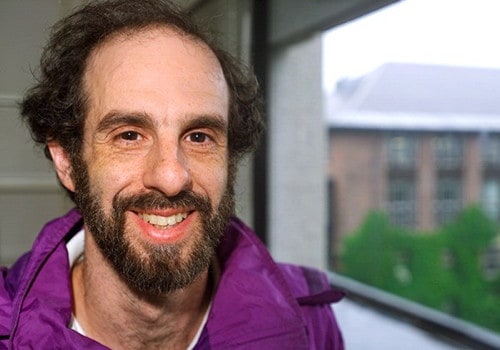
Lighting up a mid-winter Bath

In what could be described as the West Country’s answer to Diwali, the city of Bath in the UK has just hosted an eight-day festival of light, featuring colourful public artworks based on lighting technologies. “Illuminate 2015” was one of the first events on the calendar in this International Year of Light, the UNESCO-supported celebration of light science and its applications. I popped along to the event last Thursday to find out what it was all about and I’ve put together this short film, which includes the event’s creative director Anthony Head explaining what the festival is all about.

“It’s a subtle introduction to experimenting with science,” says Head, referring to the fact that many of the exhibits are interactive and involve some playful experimentation. One such exhibit, called “Light Painting”, invited the general public to create images that were then projected onto some of the local buildings. Another exhibit, called “Sonic: Sullis”, enabled people to create sounds and light projections by simply disturbing water contained in a box.

(more…)

New calculations support dark-matter discovery by DAMA, say physicists

A controversial claim by the DAMA group that it has detected dark matter in an underground lab in Italy might turn out to be true after all, according to physicists in Europe and the US. The new research reconciles the claimed detection with apparently null results from other experiments, as well as indirect astrophysical evidence. It proposes that dark matter interacts with ordinary matter not via one of the four known fundamental forces but instead through a fifth force mediated by an axion-like particle.

Dark matter is an as-yet-unknown substance that does not emit electromagnetic radiation but which numerous observations suggest makes up at least 80% of the matter in the universe. DAMA, a collaboration of physicists from Italy and China, says it has directly observed dark matter in a sodium-iodide detector located beneath Gran Sasso mountain east of Rome. The basis for its claim is a seasonal variation in the number of tiny flashes of light that should occur when dark matter collides with nuclei in the detector. The group argues that this variation – which peaks in June and has a minimum in December – is just what would be expected as the Earth moves through a “halo” of dark matter surrounding the Milky Way.

Discovery or background effect?

Having collected a whopping 1.33 tonne-years of data, DAMA says there is almost no chance that its results are a statistical fluke. It now reports a confidence level of 9.3σ, which is well above the 5σ usually required for a discovery in particle physics. The problem is that a number of rival groups operating different kinds of detectors have reached sensitivities that they say should have allowed them to also detect dark matter, assuming the DAMA claim to be correct, but that they have failed to do so. While there is little doubt that DAMA has detected an annual modulation, many physicists take issue with the group’s interpretation of its results. Some argue that the modulation could simply be a yet-to-be-determined background phenomenon.

However, as pointed out by Eugenio Del Nobile of the University of California,Los Angeles, such exclusions rely on theoretical assumptions about the kinds of interaction taking place inside the detectors. In the latest work, Del Nobile and two colleagues – Chiara Arina of the University of Amsterdam and Paolo Panci of the Institut d’Astrophysique de Paris – have shown how a certain kind of force-mediating particle can reconcile the various experimental results.

Unlike the force-carrying particles of the Standard Model, which have a spin of 1, the proposed particle is spin-0. In that sense it is like the famous Higgs boson, which is known as a “scalar” particle. However, unlike the Higgs boson, the quantum state of the new particle changes when its spatial co-ordinates are reversed, a property that earns it the title “pseudoscalar”. This also makes it similar to the hypothetical axion, which is another contender for dark matter.

A new spin on interactions

This asymmetry would make any collisions between incoming dark-matter particles and detector nuclei sensitive to the spin of those nuclei. Protons and neutrons would organize themselves into pairs with opposite spin to minimize the energy of the nucleus, and consequently interactions would involve, at most, a single unpaired proton or neutron. This contrasts with the “spin-independent” interactions generally assumed to take place inside detectors. These involve a summing across all protons and neutrons, and are therefore much stronger – which is why some detectors use heavy targets such as xenon.

To calculate the effect of the pseudoscalar mediator, Del Nobile and colleagues assumed that it acts equally on all quark types – quarks being the fundamental components of protons and neutrons. This, they explain, results in dark matter interacting much more strongly with protons than with neutrons. And as they point out, that would favour DAMA as a dark-matter target, because its constituent sodium and iodine nuclei contain odd protons. Other dark-matter detectors use xenon or germanium, which contain odd neutrons. This would therefore be much less sensitive than DAMA and explain why DAMA alone has measured a strong annual signal.

The team has also shown that the pseudoscalar interaction could explain an excess of gamma rays observed at the centre of the galaxy in terms of annihilating dark-matter particles. Del Nobile stops short of arguing that his group’s analysis now makes it more likely that DAMA has seen dark matter, cautioning that the work involved simplifying the properties of the galactic dark-matter halo. But he says the onus is now on rival experimental groups to “spell out their assumptions” when claiming to have ruled out the DAMA result. He adds that the pseudoscalar model could be tested at colliders producing K or B mesons.

Unnecessary complication

However, Juan Collar of the University of Chicago believes that Del Nobile and colleagues might have complicated things unnecessarily. Has the DAMA dark-matter mystery been solved at last? Collar, who has provided tentative support for the DAMA claim by observing a statistically limited annual modulation in data from the CoGeNT dark-matter detector in the US, says that the apparent conflict between experimental results might be resolved if dark matter were to collide with electrons, rather than nuclei. “Having said that,” he adds, “I think it is very interesting that these authors can still find room to wiggle while limiting themselves to nuclear-recoil interactions.”

The research is described in Physical Review Letters.

The physics of pop music, a stroll around the LHC, 3D illuminations in Bath and more

Pop physics: some of the subgenres used in a study of pop music (Courtesy: Gamaliel Percino, Peter Klimek and Stefan Thurner/PLOS ONE DOI: 10.1371/journal.pone.0115255)

By Hamish Johnston

The take-home message from this week’s Red Folder is that “Scientists just discovered why all pop music sounds exactly the same”, at least according to an article on Music.Mic. The report describes a paper published in PLOS ONE by Stefan Thurner – a physicist at the Santa Fe Institute – and colleagues at the Medical University of Vienna.

The researchers used the online music database Discogs to sort the material on 500,000 albums into 15 musical genres and 374 subgenres. You can see examples of some of the subgenres in the above image. They discovered that as a genre of music becomes more popular, it becomes less complex as all its constituent artists and songs start sounding the same. Music.Mic’s Tom Barnes explains in his article how this ties in with various trends in the music industry, where he says “uniformity sells”.

(more…)

How to make tiny 3D flowers and peacocks from silicon

“Tilted table”, “peacock” and “triple-floor building” are just three of many fantastical 3D structures that have been created by compressing simple 2D patterns. The new technique for creating these objects is called compressive buckling, and has been developed by researchers in the US, China and South Korea. The method can be used to create objects with features as small as 100 nm that the team says could be useful for developing new technologies for medicine, energy storage and even brain-like electronic networks.

The ability to produce precision 3D structures on the micrometre or nanometre scale is becoming increasingly important to those developing a range of new technologies. However, the number of techniques currently available is limited. One option is to extend existing methods of manufacturing 2D (or extremely thin 3D) nanoscale structures such as computer chips to allow the creation of true 3D objects. This has proved to be difficult and time-consuming because it involves creating a series of aligned 2D layers on top of one another. Other techniques such as 3D printing, in which fluid nozzles deposit the required shape, lack precision and can be used only for materials that can be deposited as inks.

Silicon challenge

“They are highly constrained in the materials,” explains John Rogers of the University of Illinois at Urbana-Champaign, who is part of the compressive-buckling development team. “You can’t do it with silicon, for example, so there goes all of electronics,” he adds.

One alternative is to make a 2D shape and then apply mechanical forces to transform it into 3D. An established technique called “residual stress-induced bending” uses the stress between layers of two different materials on a 2D surface to cause etched objects to rotate out of the plane. This has been used to tilt micro-mirrors away from a surface, for example.

Now, Rogers and colleagues from the University of Illinois at Urbana-Champaign, Northwestern University, Zhejiang University, East China University of Science and Technology and Hanyang University have created a new 2D-to-3D fabrication technique. The first step is to use computer models to design 2D shapes that, when compressed at specific points held fixed to a surface, will relieve the applied compressive stress by buckling into desired 2D structures. The next step is to etch these 2D precursor shapes onto a silicon wafer and then chemically modify the points that must stay fixed when compressed. The pattern is then transferred onto a sheet of stretched silicone rubber. When the silicone rubber relaxes to its natural shape, the silicon precursor is compressed. The points on the silicon that had been chemically modified form chemical bonds to the silicone rubber and stay fixed, while the other points buckle upwards.

Creating design tools

Using this type of controlled buckling, the team managed to produce a variety of elaborate 3D shapes. The researchers even produced structures with multiple levels of elevation by designing shapes in which the relief of stress in the initial 2D shape would create further buckling, raising another part of the shape further. “We have senior co-authors on this paper who have developed really quantitatively precise models of how the mechanics works,” says Rogers. “We are just beginning to explore those models as design tools to investigate what range of topologies we can access in this way.”

Vladimir Aksyuk of the National Institute of Standards and Technology in Boulder, Colorado, commends the work. “This is interesting because it shows that, without having a built-in bilayer or residual stress gradient, you can go from purely planar to a diversity of shapes. That’s somewhat surprising to me,” he says. Vladimir Tsukruk of the Georgia Institute of Technology agrees, describing the variety of shapes demonstrated as “amazing” and the prospective applications of the technique as “astounding in breadth and impact”. This, he says, will be one of the key future challenges: to demonstrate that the technique can genuinely be used to make something that cannot be produced using a method currently in use or do it much more simply than before.

The team is now focusing its attention on these areas. Rogers looks forward to “an electronic cell or tissue scaffold”. “A lot of the people that we talk to are enthusiastic about what you can do when you go from a passive scaffold to something that embeds full electronic functionality,” he says. Rogers claims that this would allow researchers to produce “high-performance electronic networks in configurations that resemble the 3D networks that exist in the brain or the vasculature that provides blood flow to the heart”.

The research is published in Science.

The January 2015 issue of Physics World is out now

The first issue of Physics World magazine of 2015 is now out online and through our app.

As I outline in the video above, this issue looks at the challenges of synthesizing artificial human voices. Another feature explores the little-known Jesuits who boosted astronomy in China in the 17th century. And don’t miss our exclusive interviews with Fabiola Gianotti, who takes over from Rolf-Dieter Heuer as director-general of the CERN particle-physics lab early next year, and with Mark Levinson, the former physicist who directed the film Particle Fever about what particle physicists get up to.

We also have a fascinating feature about how you can help in understanding cosmic rays simply using your mobile phone. While most “citizen-science” projects involve people analysing data collected by “real” scientists, two new apps will let you collect data using your phone itself. Indeed, the people behind one of the apps think we’d need just 825,000 phones to gather as much data as are obtained using the Pierre Auger Observatory in Argentina.

(more…)

Quantum pigeonholes are not paradoxical after all, say physicists


Two physicists in the UK have added further insight into the seemingly paradoxical “quantum-pigeonhole effect”, which says that if three quantum particles are distributed over two locations, certain measurements will reveal that there is just one particle in each location. Alastair Rae and Ted Forgan of the University of Birmingham have calculated that quantum-interference effects can make it appear that each location only holds one particle, even though two particles might actually be present. They warn, however, that measuring the effect in the lab would be an extraordinarily difficult task.

The quantum-pigeonhole effect was introduced last year by Yakir Aharonov and Jeff Tollaksen of Chapman University in the US, together with colleagues in Italy and the UK. It is an extension of the classical pigeonhole principle, which simply says that if n objects are placed in n – 1 different locations (or pigeonholes) at least one location will contain more than one object. The team argued that in quantum physics, making a special sequence of measurements on three quantum particles that had passed through the equivalent of two pigeonholes would apparently reveal that no two particles had been in the same pigeonhole (see “Paradoxical pigeons are the latest quantum conundrum”).

Electron deflections

Tollaksen and colleagues had also proposed an experiment to verify this apparent violation of the pigeonhole principle. It would involve sending three electrons through a Mach–Zehnder interferometer, which contains a beamsplitter that creates two separate paths for the electrons. The three electrons are then brought together at a second beamsplitter before diverging to two different detectors (see the figure below).

Diagram of a Mach-Zehnder interferometer

As there are only two possible paths, you would expect at least two (and sometimes three) electrons to share a path. These two (or three) electrons travelling together would then be close enough to repel each other, deflecting their trajectories slightly. When all three electrons are detected, these tiny deflections should give a pattern of electron arrivals at the detectors that would reveal that two or more electrons had travelled along the same arm of the interferometer.

Tollaksen and colleagues focused on what would happen if the experiment were run in a certain way that involves only looking at the output of the detector – a process called “post-selection”. Under these conditions, they concluded, an experimentalist would not be able to tell that two electrons had travelled along the same arm.

Possible paths

Rae and Forgan have now analysed the outcome of such a hypothetical experiment, and have shown that applying quantum mechanics and the classical pigeonhole principle can explain the apparent paradox. Their calculations involve constructing the quantum-mechanical wavefunction of the three electrons in terms of the possible paths that the electrons can take through the experiment – all three electrons going through one arm, for example, or two electrons going through one arm and one through the other.

They find that if there is a relatively strong interaction between the electrons, you would see 12 spatially separated peaks at the detector, which would be a sign of the classical pigeon principle at work (see figure at the top of the article). In other words, there would be four peaks for each electron, corresponding to the four possible histories of the electron motion: travelling alone, with one or other of the other two electrons, or with both. If the interaction strength were zero, on the other hand, then only three peaks – one for each electron – would be measured in the detector. As expected, such a measurement will yield no information about how many electrons travelled through each arm of the interferometer.

Fooled by interference

Rae told physicsworld.com that things become very interesting when the interaction strength is small but finite. Three peaks would then be seen at the detector, and the pattern resulting from the interference between the four components of the wavefunction (all of which obey the classical pigeonhole principle) will look very similar to that which occurs when the interaction is zero. As a result, the observer might be forgiven for concluding that two or more interacting electrons had travelled through the interferometer without interacting.

Rae and Forgan also looked at whether it would be possible to run the experiment with electrons in the low-interaction-strength regime. Their calculations suggest that for 40 keV electrons, an experimentalist would have to discern patterns in their detectors across distances of about 10–13 m. This is about 1000 times smaller than the distance between atoms in a solid, making the measurement extraordinarily difficult if not impossible, according to the researchers.

The research is described in a preprint on arXiv.

To infinity, beyond and back again

“We used to look up at the sky and wonder at our place in the stars. Now we just look down and worry about our place in the dirt.” This lament from the main character in Interstellar, a semi-retired NASA pilot, carries a distinctly dystopian vibe and, indeed, the prospects for humankind at the outset of the film are dire. Set sometime in the not-too-far future (director Christopher Nolan never divulges an exact date), Interstellar depicts an Earth wracked with famine and plagued by a shortage of technological resources. Humanity’s only hope, it seems, lies with a motley crew of scientists and astronauts who must find a new home for what is left of the human race.

At its heart, Interstellar is classic space-travel science-fiction, and Nolan – an acclaimed filmmaker whose previous hits include Memento and the Dark Knight trilogy – tips his hat to a number of stalwarts in the genre, from Metropolis to 2001: a Space Odyssey, Blade Runner and even Avatar. But this is no chrome-clad futuristic world. Instead, human civilization has returned to an agrarian society, with a population that struggles to feed itself amid conditions that closely mimic the “Dust Bowl” of America’s heartland in the 1930s.

After a somewhat drawn-out beginning, the film picks up pace when an enigmatic NASA physicist (played by Michael Caine) reveals a plan to save humanity by jumping ship. But before he can figure out how to get the Earth’s entire population into space, through a conveniently placed wormhole and onto an alien planet in another galaxy, he must find out which of the 12 -planets on the other side of the wormhole is best suited for human habitation. With this in mind, NASA sends astronauts to assess the -planets’ potentials. When positive signals are received from three of them, a follow-up mission is organized in which Cooper, the aforementioned pilot-turned-unwilling-farmer, must manoeuvre a spacecraft and its crew of researchers through the wormhole to find out which planet best fits the bill.

With his easy Texan charm, actor Matthew McConaughey is perfectly cast as Cooper, the “space cowboy” who is also a father desperate to return to his children – especially his daughter, with whom he shares a special bond. Throughout the film, Nolan deftly combines the cold realities of interstellar travel with the messy business of human emotion, as Cooper agonizes not just about the success of their mission, but also about how long he has been away from Earth.

This is where the physics element of the film begins to shine through. Even with a handy wormhole at our disposal, interstellar travel is a lengthy business. The film is absolutely full to the brim with physics – not surprising, considering that the idea for it was born when a physicist, Kip Thorne, and a film producer, Lynda Obst, decided it would be fun to base a film on Thorne’s complex astrophysics research. The pair had previously collaborated on Contact, the 1997 film based on Carl Sagan’s novel, and after shopping their idea around Hollywood for several years it eventually ended up in the hands of Nolan and his scriptwriter brother Jonathan. Thorne remained heavily involved in the film’s development (he is an executive producer) and he has also published a book, The Science of Interstellar, to explain the physics that went into it.

The book was rushed into print in time for the film’s release and is a bit sloppily edited for my taste. From the perspective of your average cinema-goer though, a more serious flaw is that it reads like a cosmology textbook. While scientifically trained fans of Interstellar will gain much from it, others will be put off by the level of detail. Personally, I was initially thrown by its higgledy-piggledy order (the book does not follow the film’s timeline), but I did find Thorne’s system of labelling the book’s chapters with “T” for “truth”, “EG” for “educated guess” and “S” for “speculation” useful because it helped to distinguish established science from far-out guesswork.

The best part of the book, though, is the way that it shows how keen both Thorne and Nolan were to get the science right, and how the demands of the plot were matched to the rigours of reality. For example, at one point Nolan asked whether it was possible for one of the planets in the film to experience time dilation so extreme that one hour on its surface would translate into seven years on Earth. Thorne, for his part, did some serious research on what the astrophysical phenomena in the film would actually look like to nearby observers. He and a British visual-effects company, Double Negative, developed code to solve the equations that describe how light approaching a camera (or an eye) would misbehave in the vicinity of a spinning supermassive black hole.

In general, I had little issue with the science depicted in Interstellar. I did cringe slightly at its explanation of how, exactly, a wormhole was placed at such a convenient location, but (spoilers ahead) I found the idea of a four-dimensional “hypercube” lying deep within a black hole intriguing, and I could even suspend my disbelief about Cooper encoding complex data into the ticking of a wristwatch. As an avid science-fiction fan, I am reasonably happy to overlook a few stretched truths for the sake of a really good plot twist. But what distracted and annoyed me from very early on was the way Interstellar dealt with “habitable” planets. Data from NASA’s Kepler telescope indicates that there could be as many as 40 billion Earth-sized planets in the Milky Way, including 11 billion that may be orbiting Sun-like stars. Of these 11 billion possibilities, astronomers have already identified 47 Earth-like exoplanets that lie within the habitable zones of their stellar systems. None of them, however, are anywhere near a black hole. So why is it, then, that the five-dimensional time-travelling benevolent overlords in Interstellar – who can, after all, manipulate the laws of space–time to create wormholes, and who have a very good reason to care about the survival of humanity – choose new home planets for us in such an unappealing galactic neighbourhood? While I realize that the wormhole and black hole in Interstellar made the film exciting, surely they could have been incorporated in a way that did not make these god-like beings seem stupid, mean, or both.

Nolan wanted to make a science-fiction film that got the science right while also exploring the complex human issues around interstellar travel. On the whole, he succeeded. One could, perhaps, ask whether there is much point in having such complicated science depicted so accurately in a film, given that most viewers will be unable to tell (without reading Thorne’s book) what is and what isn’t fiction. However, after decades in which mainstream science-fiction films have happily flouted pretty much every known physical law, a film in which the science is, for a change, mainly true, can only be a good thing. Knowing that some directors make serious efforts to get the science right is, in itself, probably enough to inspire a few viewers – and perhaps even to push them to find out why a “black” hole can glow so brightly.

  • Interstellar 2014 Warner Brothers Pictures, Paramount Pictures, Legendary Pictures, Syncopy/Lynda Obst Productions
  • The Science of Interstellar 2014 W W Norton £14.99/$24.95pb 336pp

Web life: Crystallography365

So what is the site about?

A little over a year ago, an eclectic group of (mostly) Australia-based researchers set themselves a challenge. On each day of 2014, they vowed, one of them would write a blog post about the crystal structure of an element, molecule or bulk material – one for every day of the United Nations International Year of Crystallography. As of early December 2014, they were tantalizingly close to completing their mission, with posts on more than 320 materials ranging from α-amylase (an enzyme in saliva that aids digestion of sugars) to zircon (a tough, diamond-like mineral found in some of the world’s oldest rocks).

Who is behind it?

The Crystallography365 website lists 33 authors, drawn from fields as diverse as chemistry, solid-state physics, structural biology and (of course) crystallography itself. Most are PhD students or early-career researchers, with a scattering of undergraduates and a few senior scientists who serve as “activators” in this scintillating mixture (see what we did there?). The project’s co-ordinator, Helen Maynard-Casely, works as an instrument scientist at the Bragg Institute in Sydney, Australia (named in honour of the pioneers of X-ray crystallography, William and Lawrence Bragg), and several other authors are likewise affiliated with its parent body, the Australian Nuclear Science and Technology Organisation (ANSTO).

What are some of the crystal structures that are covered?

The four crystals in the collection that begin with the letter “D” nicely illustrate its variety and, by extension, the importance of crystallography across many scientific fields. First up is diamond, one of three allotropes of carbon to get a blog entry of its own (buckminsterfullerene, graphite and tetrahedral amorphous carbon are the others). Next comes a mineral, diopside, whose structure was the first to be determined by studying how the intensity (rather than just the position) of peaks of diffracted light varies with the angle of incidence. The structure of the third “D” crystal, disulfide bond proteins, was discovered much more recently; these protein-folding enzymes help give structure to the walls of bacteria, and are thus a promising target for new antibacterial drugs. The final “D” in the collection is DNA, the subject of a blog post on 25 July – the birthday of Rosalind Franklin, whose X-ray crystallography images proved crucial to understanding the structure of this “molecule of life”.

Anything else of note?

The collection contains no fewer than 10 entries for water ice, from the hexagonal variety found in snowflakes (Ice Ih) to Ice XV. The latter substance, which was only discovered in 2009, is an ordered crystal that forms at low temperatures (below 150 K) and high pressures (around 1 GPa). There is also an entry for Ice IX – a real substance, but one that fortunately lacks the extraordinary properties attributed to it in Kurt Vonnegut’s science-fiction novel Cat’s Cradle (which was published 10 years before Ice IX’s real-life discovery). The emphasis on ice is partly Maynard-Casely’s doing: some of her previous research focused on the behaviour of ices under pressure, with particular applications to “ice giant” planets such as Uranus and Neptune.

Why should I visit?

Compared with some of its predecessors (particularly 2009’s International Year of Astronomy), the International Year of Crystallography received relatively little attention from the physics community – including, it must be said, in the pages of Physics World, which mentioned it only a handful of times. That’s a shame, because as Crystallography365 shows time and again, there is plenty of physics both in the techniques of crystallography and in what those techniques can reveal about the composition of the natural world. So, as physicists begin to celebrate the International Year of Light in 2015, it’s worth taking a moment to reflect on this one particular application of light and the riches of information it has yielded over the past century.

Milestone for preprint server

By Michael Banks

The arXiv preprint server received its millionth paper on 25 December 2014 – a major milestone for the repository, which was set up by the physicist Paul Ginsparg in 1991.

Cornell University’s arXiv has its roots in xxx.lanl.gov – a server set up by Ginsparg, who at the time was at the Los Alamos National Laboratory to share preprints in high-energy physics. It was originally intended for about 100 submissions per year, but rapidly grew in users and scope, receiving 400 submissions in its first half year.

(more…)

Indian Neutrino Observatory set for construction

The Indian government has given the go-ahead for a huge underground observatory that researchers hope will provide crucial insights into neutrino physics. Construction will now begin on the Rs15bn ($236m) Indian Neutrino Observatory (INO) at Pottipuram, which lies 110 km from the temple city of Madurai in the southern Indian state of Tamil Nadu. Madurai will also host a new Inter Institutional Centre for High Energy Physics that will be used to train scientists and carry out R&D for the new lab.

Originally planned to be complete by 2012, the INO has been in limbo for a number of years. In 2010 ecologists and conservationists raised objections to the INO’s initial proposed site at Singara in Tamil Nadu, which was near an elephant corridor and a tiger reserve. Researchers then had to find a new location, with the environment ministry only approving the Pottipuram site in 2011. Funding from the government arrived three years later.

The INO will be built some 1.3 km underground, accessible via a 2 km-long tunnel. The lab will comprise three caverns, the largest being 132 m long, 26 m wide and 30 m high, which will house a 50,000 tonne Iron Calorimeter (ICAL) neutrino detector. The detector will consist of alternate layers of some 30,000 “resistive plate chambers” and iron plates.

The outcome of this investment will be extraordinary and long term
Krishnaswamy Vijayraghavan, secretary of the Department of Science and Technology

The INO team hopes to use the detector to address the “neutrino-mass hierarchy”. Scientists know that there are three neutrino-mass states, but do not yet know which is the most massive and which is the lightest. “Understanding this will help scientists to pick the correct theory beyond the Standard Model and, along with other accelerator-based experiments worldwide, address the problem of matter–antimatter asymmetry in the universe,” says INO project director Naba Mondal, who is based at the Tata Institute of Fundamental Research in Mumbai (TIFR).

As well as housing other experiments such as those searching for dark matter and neutrino-less double-beta decay, scientists are also hopeful that the INO will provide opportunities for young students to work on all aspects of particle-physics research, such as detector development and data analysis. “Science students across the country will have the opportunity to participate in building sophisticated particle detectors and electronic data-acquisition systems from scratch,” says Mondal.

Indeed, Krishnaswamy Vijayraghavan, secretary of the Department of Science and Technology, which oversees funding for many science projects, says that the INO could “allow India to train experimental physicists and high-end engineers on a large scale” in “extremely important and competitive high-energy physics”. “INO will be the agent of transforming physics of this kind in India and will make a global impact,” he adds. “The outcome of this investment will be extraordinary and long term.”

Taking centre stage

Researchers also hope that the INO could help India to reclaim its leading position in neutrino physics and in constructing underground labs. The country led the way in the 1960s when physicists used a gold mine at Kolar in the southern state of Karnataka to create what was then the world’s deepest underground lab. Known as the Kolar Gold Field Lab, in 1965 it enabled researchers to detect neutrinos that are created when cosmic rays smash into the atmosphere. The lab later studied proton decay and was only shut down in 1992 when gold mining at the site became uneconomical.

“With the closure of the mines, we lost a unique facility for carrying out research in the field of non-accelerator-based particle physics,” rues Mondal. “With the approval of the INO facility, we are now back on the centre stage of particle-physics research.”

Copyright © 2026 by IOP Publishing Ltd and individual contributors