The story begins with the startling event that gives the book its unusual moniker: the firing of a Colt revolver in the famous London cathedral in 1951. A similar experiment was also performed in the Royal Festival Hall in the same year (see above photo). Fortunately, this was simply a demonstration for journalists of an experiment to understand and improve the listening experience in a space notorious for its echo and other problematic acoustic features.
St Paul’s was completed in 1711 and Smyth, a historian of architecture, science and construction at the University of Cambridge in the UK, explains that until the turn of the last century, the only way to evaluate the quality of sound in such a building was by ear. The book then reveals how this changed. Over five decades of innovative experiments, scientists and architects built a quantitative understanding of how a building’s shape, size and interior furnishings determine the quality of speech and music through reflection and absorption of sound waves.
The evolution of architectural acoustics as a scientific field was driven by a small group of dedicated researchers
We are first taken back to the dawn of the 20th century and shown how the evolution of architectural acoustics as a scientific field was driven by a small group of dedicated researchers. This includes architect and pioneering acoustician Hope Bagenal, along with several physicists, notably Harvard-based US physicist Wallace Clement Sabine.
Details of Sabine’s career, alongside those of Bagenal, whose personal story forms the backbone for much of the book, deftly put a human face on the research that transformed these public spaces. Perhaps Sabine’s most significant contribution was the derivation of a formula to predict the time taken for sound to fade away in a room. Known as the “reverberation time”, this became a foundation of architectural acoustics, and his mathematical work still forms the basis for the field today.
The presence of people, objects and reflective or absorbing surfaces all affect a room’s acoustics. Smyth describes how materials ranging from rugs and timber panelling to specially developed acoustic plaster and tiles have all been investigated for their acoustic properties. She also vividly details the venues where acoustics interventions were added – such as the reflective teak flooring and vast murals painted on absorbent felt in the Henry Jarvis Memorial Hall of the Royal Institute of British Architects in London.
Other locations featured include the Royal Albert Hall, Abbey Road Studios, White Rock Pavilion at Hastings, and the Assembly Chamber of the Legislative Building in New Delhi, India. Temporary structures and spaces for musical performance are highlighted too. These include the National Gallery while it was cleared of paintings during the Second World War and the triumph of acoustic design that was the Glasgow Empire Exhibition concert hall – built for the 1938 event and sadly dismantled that same year.
Unsurprisingly, much of this acoustic work was either punctuated or heavily influenced by the two world wars. While in the trenches during the First World War, Bagenal wrote a journal paper on cathedral acoustics that detailed his pre-war work at St Paul’s Cathedral, Westminster Cathedral and Westminster Abbey. His paper discussed timbre, resonant frequency “and the effects of interference and delay on clarity and harmony”.
In 1916, back in England recovering from a shellfire injury, Bagenal started what would become a long-standing research collaboration with the commandant of the hospital where he was recuperating – who happened to be Alex Wood, a physics lecturer at Cambridge. Equally fascinating is hearing about the push in the wake of the First World War for good speech acoustics in public spaces used for legislative and diplomatic purposes.
Smyth also relates tales of the wrangling that sometimes took place over funding for acoustic experiments on public buildings, and how, as the 20th century progressed, companies specializing in acoustic materials sprang up – and in some cases made dubious claims about the merits of their products. Meanwhile, new technologies such as tape recorders and microphones helped bring a more scientific approach to architectural acoustics research.
The author concludes by describing how the acoustic research from the preceding decades influenced the auditorium design of the Royal Festival Hall on the South Bank in London, which, as Smyth states, was “the first building to have been designed from the outset as a manifestation of acoustic science”.
As evidenced by the copious notes, the wealth of contemporary quotes, and the captivating historical photos and excerpts from archive documents, this book is well-researched. But while I enjoyed the pace and found myself hooked into the story, I found the text repetitive in places, and felt that more details about the physics of acoustics would have enhanced the narrative.
But these are minor grumbles. Overall Smyth paints an evocative picture, transporting us into these legendary auditoria. I have always found it a rather magical experience attending concerts at the Royal Albert Hall. Now, thanks to this book, the next time I have that pleasure I will do so with a far greater understanding of the role physics and physicists played in shaping the music I hear. For me at least, listening will never be quite the same again.
2024 Manchester University Press 328pp £25.00/$36.95
As service lifetimes of electric vehicle (EV) and grid storage batteries continually improve, it has become increasingly important to understand how Li-ion batteries perform after extensive cycling. Using a combination of spatially resolved synchrotron x-ray diffraction and computed tomography, the complex kinetics and spatially heterogeneous behavior of extensively cycled cells can be mapped and characterized under both near-equilibrium and non-equilibrium conditions.
This webinar shows examples of commercial cells with thousands (even tens of thousands) of cycles over many years. The behaviour of such cells can be surprisingly complex and spatially heterogeneous, requiring a different approach to analysis and modelling than what is typically used in the literature. Using this approach, we investigate the long-term behavior of Ni-rich NMC cells and examine ways to prevent degradation. This work also showcases the incredible durability of single-crystal cathodes, which show very little evidence of mechanical or kinetic degradation after more than 20,000 cycles – the equivalent to driving an EV for 8 million km!
Toby Bond is a senior scientist in the Industrial Science group at the Canadian Light Source (CLS), Canada’s national synchrotron facility. He is a specialist in x-ray imaging and diffraction, specializing in in-situ and operando analysis of batteries and fuel cells for industry clients of the CLS. Bond is an electrochemist by training, who completed his MSc and PhD in Jeff Dahn’s laboratory at Dalhousie University with a focus in developing methods and instrumentation to characterize long-term degradation in Li-ion batteries.
The Superconducting Quantum Materials and Systems (SQMS) Center, led by Fermi National Accelerator Laboratory (Chicago, Illinois), is on a mission “to develop beyond-the-state-of-the-art quantum computers and sensors applying technologies developed for the world’s most advanced particle accelerators”. SQMS director Anna Grassellino talks to Physics World about the evolution of a unique multidisciplinary research hub for quantum science, technology and applications.
What’s the headline take on SQMS?
Established as part of the US National Quantum Initiative (NQI) Act of 2018, SQMS is one of the five National Quantum Information Science Research Centers run by the US Department of Energy (DOE). With funding of $115m through its initial five-year funding cycle (2020-25), SQMS represents a coordinated, at-scale effort – comprising 35 partner institutions – to address pressing scientific and technological challenges for the realization of practical quantum computers and sensors, as well as exploring how novel quantum tools can advance fundamental physics.
Our mission is to tackle one of the biggest cross-cutting challenges in quantum information science: the lifetime of superconducting quantum states – also known as the coherence time (the length of time that a qubit can effectively store and process information). Understanding and mitigating the physical processes that cause decoherence – and, by extension, limit the performance of superconducting qubits – is critical to the realization of practical and useful quantum computers and quantum sensors.
How is the centre delivering versus the vision laid out in the NQI?
SQMS has brought together an outstanding group of researchers who, collectively, have utilized a suite of enabling technologies from Fermilab’s accelerator science programme – and from our network of partners – to realize breakthroughs in qubit chip materials and fabrication processes; design and development of novel quantum devices and architectures; as well as the scale-up of complex quantum systems. Central to this endeavour are superconducting materials, superconducting radiofrequency (SRF) cavities and cryogenic systems – all workhorse technologies for particle accelerators employed in high-energy physics, nuclear physics and materials science.
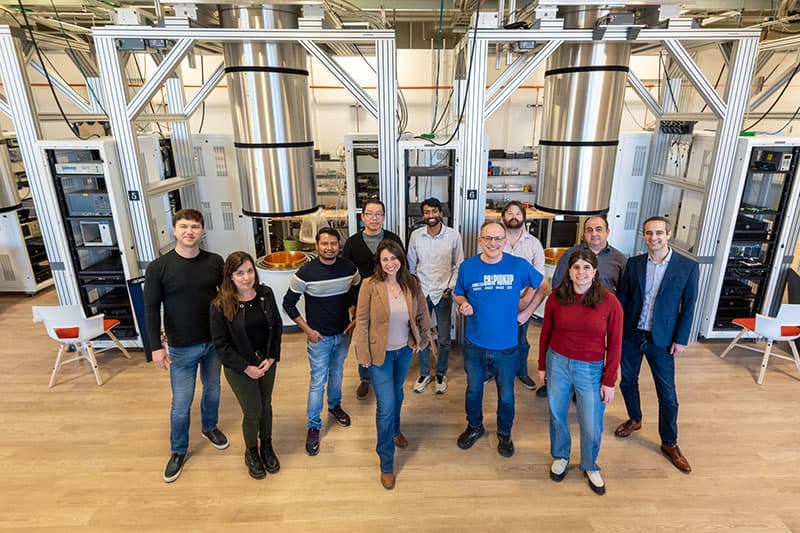
Collective endeavour At the core of SQMS success are top-level scientists and engineers leading the centre’s cutting-edge quantum research programmes. From left to right: Alexander Romanenko, Silvia Zorzetti, Tanay Roy, Yao Lu, Anna Grassellino, Akshay Murthy, Roni Harnik, Hank Lamm, Bianca Giaccone, Mustafa Bal, Sam Posen. (Courtesy: Hannah Brumbaugh/Fermilab)
Take our research on decoherence channels in quantum devices. SQMS has made significant progress in the fundamental science and mitigation of losses in the oxides, interfaces, substrates and metals that underpin high-coherence qubits and quantum processors. These advances – the result of wide-ranging experimental and theoretical investigations by SQMS materials scientists and engineers – led, for example, to the demonstration of transmon qubits (a type of charge qubit exhibiting reduced sensitivity to noise) with systematic improvements in coherence, record-breaking lifetimes of over a millisecond, and reductions in performance variation.
How are you building on these breakthroughs?
First of all, we have worked on technology transfer. By developing novel chip fabrication processes together with quantum computing companies, we have contributed to our industry partners’ results of up to 2.5x improvement in error performance in their superconducting chip-based quantum processors.
We have combined these qubit advances with Fermilab’s ultrahigh-coherence 3D SRF cavities: advancing our efforts to build a cavity-based quantum processor and, in turn, demonstrating the longest-lived superconducting multimode quantum processor unit ever built (coherence times in excess of 20 ms). These systems open the path to a more powerful qudit-based quantum computing approach. (A qudit is a multilevel quantum unit that can be more than two states.) What’s more, SQMS has already put these novel systems to use as quantum sensors within Fermilab’s particle physics programme – probing for the existence of dark-matter candidates, for example, as well as enabling precision measurements and fundamental tests of quantum mechanics.
Elsewhere, we have been pushing early-stage societal impacts of quantum technologies and applications – including the use of quantum computing methods to enhance data analysis in magnetic resonance imaging (MRI). Here, SQMS scientists are working alongside clinical experts at New York University Langone Health to apply quantum techniques to quantitative MRI, an emerging diagnostic modality that could one day provide doctors with a powerful tool for evaluating tissue damage and disease.
What technologies pursued by SQMS will be critical to the scale-up of quantum systems?
There are several important examples, but I will highlight two of specific note. For starters, there’s our R&D effort to efficiently scale millikelvin-regime cryogenic systems. SQMS teams are currently developing technologies for larger and higher-cooling-power dilution refrigerators. We have designed and prototyped novel systems allowing over 20x higher cooling power, a necessary step to enable the scale-up to thousands of superconducting qubits per dilution refrigerator.
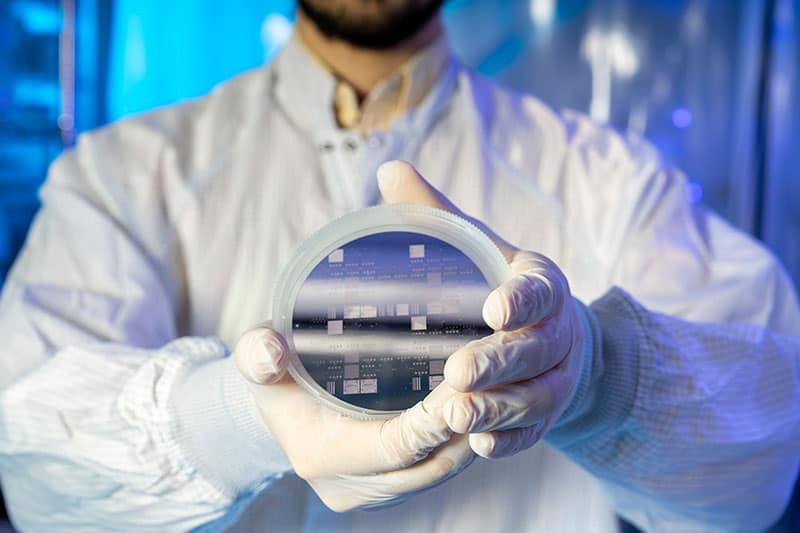
Materials insights The SQMS collaboration is studying the origins of decoherence in state-of-the-art qubits (above) using a raft of advanced materials characterization techniques – among them time-of-flight secondary-ion mass spectrometry, cryo electron microscopy and scanning probe microscopy. With a parallel effort in materials modelling, the centre is building a hierarchy of loss mechanisms that is informing how to fabricate the next generation of high-coherence qubits and quantum processors. (Courtesy: Dan Svoboda/Fermilab)
Also, we are working to optimize microwave interconnects with very low energy loss, taking advantage of SQMS expertise in low-loss superconducting resonators and materials in the quantum regime. (Quantum interconnects are critical components for linking devices together to enable scaling to large quantum processors and systems.)
How important are partnerships to the SQMS mission?
Partnerships are foundational to the success of SQMS. The DOE National Quantum Information Science Research Centers were conceived and built as mini-Manhattan projects, bringing together the power of multidisciplinary and multi-institutional groups of experts. SQMS is a leading example of building bridges across the “quantum ecosystem” – with other national and federal laboratories, with academia and industry, and across agency and international boundaries.
In this way, we have scaled up unique capabilities – multidisciplinary know-how, infrastructure and a network of R&D collaborations – to tackle the decoherence challenge and to harvest the power of quantum technologies. A case study in this regard is Ames National Laboratory, a specialist DOE centre for materials science and engineering on the campus of Iowa State University.
Ames is a key player in a coalition of materials science experts – coordinated by SQMS – seeking to unlock fundamental insights about qubit decoherence at the nanoscale. Through Ames, SQMS and its partners get access to powerful analytical tools – modalities like terahertz spectroscopy and cryo transmission electron microscopy – that aren’t routinely found in academia or industry.
What are the drivers for your engagement with the quantum technology industry?
The SQMS strategy for industry engagement is clear: to work hand-in-hand to solve technological challenges utilizing complementary facilities and expertise; to abate critical performance barriers; and to bring bidirectional value. I believe that even large companies do not have the ability to achieve practical quantum computing systems working exclusively on their own. The challenges at hand are vast and often require R&D partnerships among experts across diverse and highly specialized disciplines.
I also believe that DOE National Laboratories – given their depth of expertise and ability to build large-scale and complex scientific instruments – are, and will continue to be, key players in the development and deployment of the first useful and practical quantum computers. This means not only as end-users, but as technology developers. Our vision at SQMS is to lay the foundations of how we are going to build these extraordinary machines in partnership with industry. It’s about learning to work together and leveraging our mutual strengths.
How do Rigetti and IBM, for example, benefit from their engagement with SQMS?
The partnership with IBM, although more recent, is equally significant. Together with IBM researchers, we are interested in developing quantum interconnects – including the development of high-Q cables to make them less lossy – for the high-fidelity connection and scale-up of quantum processors into large and useful quantum computing systems.
At the same time, SQMS scientists are exploring simulations of problems in high-energy physics and condensed-matter physics using quantum computing cloud services from Rigetti and IBM.
Presumably, similar benefits accrue to suppliers of ancillary equipment to the SQMS quantum R&D programme?
Correct. We challenge our suppliers of advanced materials and fabrication equipment to go above and beyond, working closely with them on continuous improvement and new product innovation. In this way, for example, our suppliers of silicon and sapphire substrates and nanofabrication platforms – key technologies for advanced quantum circuits – benefit from SQMS materials characterization tools and fundamental physics insights that would simply not be available in isolation. These technologies are still at a stage where we need fundamental science to help define the ideal materials specifications and standards.
We are also working with companies developing quantum control boards and software, collaborating on custom solutions to unique hardware architectures such as the cavity-based qudit platforms in development at Fermilab.
How is your team building capacity to support quantum R&D and technology innovation?
We’ve pursued a twin-track approach to the scaling of SQMS infrastructure. On the one hand, we have augmented – very successfully – a network of pre-existing facilities at Fermilab and at SQMS partners, spanning accelerator technologies, materials science and cryogenic engineering. In aggregate, this covers hundreds of millions of dollars’ worth of infrastructure that we have re-employed or upgraded for studying quantum devices, including access to a host of leading-edge facilities via our R&D partners – for example, microkelvin-regime quantum platforms at Royal Holloway, University of London, and underground quantum testbeds at INFN’s Gran Sasso Laboratory.
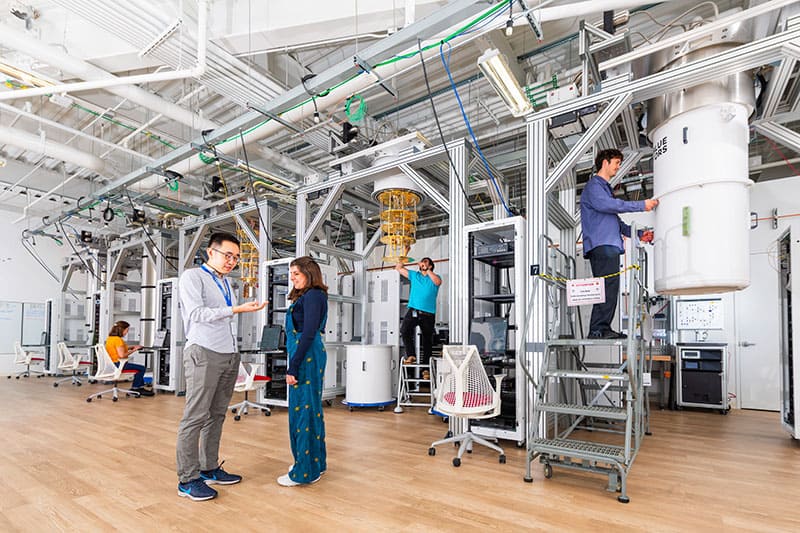
Thinking big in quantum The SQMS Quantum Garage (above) houses a suite of R&D testbeds to support granular studies of superconducting qubits, quantum processors, high-coherence quantum sensors and quantum interconnects. (Courtesy: Ryan Postel/Fermilab)
In parallel, we have invested in new and dedicated infrastructure to accelerate our quantum R&D programme. The Quantum Garage here at Fermilab is the centrepiece of this effort: a 560 square-metre laboratory with a fleet of six additional dilution refrigerators for cryogenic cooling of SQMS experiments as well as test, measurement and characterization of superconducting qubits, quantum processors, high-coherence quantum sensors and quantum interconnects.
What is the vision for the future of SQMS?
SQMS is putting together an exciting proposal in response to a DOE call for the next five years of research. Our efforts on coherence will remain paramount. We have come a long way, but the field still needs to make substantial advances in terms of noise reduction of superconducting quantum devices. There’s great momentum and we will continue to build on the discoveries made so far.
We have also demonstrated significant progress regarding our 3D SRF cavity-based quantum computing platform. So much so that we now have a clear vision of how to implement a mid-scale prototype quantum computer with over 50 qudits in the coming years. To get us there, we will be laying out an exciting SQMS quantum computing roadmap by the end of 2025.
It’s equally imperative to address the scalability of quantum systems. Together with industry, we will work to demonstrate practical and economically feasible approaches to be able to scale up to large quantum computing data centres with millions of qubits.
Finally, SQMS scientists will work on exploring early-stage applications of quantum computers, sensors and networks. Technology will drive the science, science will push the technology – a continuous virtuous cycle that I’m certain will lead to plenty more ground-breaking discoveries.
How SQMS is bridging the quantum skills gap
Education, education, education SQMS hosted the inaugural US Quantum Information Science (USQIS) School in summer 2023. Held annually, the USQIS is organized in conjunction with other DOE National Laboratories, academia and industry. (Courtesy: Dan Svoboda/Fermilab)
As with its efforts in infrastructure and capacity-building, SQMS is addressing quantum workforce development on multiple fronts.
Across the centre, Grassellino and her management team have recruited upwards of 150 technical staff and early-career researchers over the past five years to accelerate the SQMS R&D effort. “These ‘boots on the ground’ are a mix of PhD students, postdoctoral researchers plus senior research and engineering managers,” she explains.
Another significant initiative was launched in summer 2023, when SQMS hosted nearly 150 delegates at Fermilab for the inaugural US Quantum Information Science (USQIS) School – now an annual event organized in conjunction with other National Laboratories, academia and industry. The long-term goal is to develop the next generation of quantum scientists, engineers and technicians by sharing SQMS know-how and experimental skills in a systematic way.
“The prioritization of quantum education and training is key to sustainable workforce development,” notes Grassellino. With this in mind, she is currently in talks with academic and industry partners about an SQMS-developed master’s degree in quantum engineering. Such a programme would reinforce the centre’s already diverse internship initiatives, with graduate students benefiting from dedicated placements at SQMS and its network partners.
“Wherever possible, we aim to assign our interns with co-supervisors – one from a National Laboratory, say, another from industry,” adds Grassellino. “This ensures the learning experience shapes informed decision-making about future career pathways in quantum science and technology.”
When a mantis shrimp uses shock waves to strike and kill its prey, how does it prevent those shock waves from damaging its own tissues? Researchers at Northwestern University in the US have answered this question by identifying a structure within the shrimp that filters out harmful frequencies. Their findings, which they obtained by using ultrasonic techniques to investigate surface and bulk wave propagation in the shrimp’s dactyl club, could lead to novel advanced protective materials for military and civilian applications.
Dactyl clubs are hammer-like structures located on each side of a mantis shrimp’s body. They store energy in elastic structures similar to springs that are latched in place by tendons. When the shrimp contracts its muscles, the latch releases, releasing the stored energy and propelling the club forward with a peak force of up to 1500 N.
This huge force (relative to the animal’s size) creates stress waves in both the shrimp’s target – typically a hard-shelled animal such as a crab or mollusc – and the dactyl club itself, explains biomechanical engineer Horacio Dante Espinosa, who led the Northwestern research effort. The club’s punch also creates bubbles that rapidly collapse to produce shockwaves in the megahertz range. “The collapse of these bubbles (a process known as cavitation collapse), which takes place in just nanoseconds, releases intense bursts of energy that travel through the target and shrimp’s club,” he explains. “This secondary shockwave effect makes the shrimp’s strike even more devastating.”
Protective phononic armour
So how do the shrimp’s own soft tissues escape damage? To answer this question, Espinosa and colleagues studied the animal’s armour using transient grating spectroscopy (TGS) and asynchronous optical sampling (ASOPS). These ultrasonic techniques respectively analyse how stress waves propagate through a material and characterize the material’s microstructure. In this work, Espinosa and colleagues used them to provide high-resolution, frequency-dependent wave propagation characteristics that previous studies had not investigated experimentally.
The team identified three distinct regions in the shrimp’s dactyl club. The outermost layer consists of a hard hydroxyapatite coating approximately 70 μm thick, which is durable and resists damage. Beneath this, an approximately 500 μm-thick layer of mineralized chitin fibres arranged in a herringbone pattern enhances the club’s fracture resistance. Deeper still, Espinosa explains, is a region that features twisted fibre bundles organized in a corkscrew-like arrangement known as a Bouligand structure. Within this structure, each successive layer is rotated relative to its neighbours, giving it a unique and crucial role in controlling how stress waves propagate through the shrimp.
“Our key finding was the existence of phononic bandgaps (through which waves within a specific frequency range cannot travel) in the Bouligand structure,” Espinosa explains. “These bandgaps filter out harmful stress waves so that they do not propagate back into the shrimp’s club and body. They thus preserve the club’s integrity and protect soft tissue in the animal’s appendage.”
The team also employed finite element simulations incorporating so-called Bloch-Floquet analyses and graded mechanical properties to understand the phonon bandgap effects. The most surprising result, Espinosa tells Physics World, was the formation of a flat branch around the 450 to 480 MHz range, which correlates to frequencies arising from bubble collapse originating during club impact.
Evolution and its applications
For Espinosa and his colleagues, a key goal of their research is to understand how evolution leads to natural composite materials with unique photonic, mechanical and thermal properties. In particular, they seek to uncover how hierarchical structures in natural materials and the chemistry of their constituents produce emergent mechanical properties. “The mantis shrimp’s dactyl club is an example of how evolution leads to materials capable of resisting extreme conditions,” Espinosa says. “In this case, it is the violent impacts the animal uses for predation or protection.”
The properties of the natural “phononic shield” unearthed in this work might inspire advanced protective materials for both military and civilian applications, he says. Examples could include the design of helmets, personnel armour, and packaging for electronics and other sensitive devices.
In this study, which is described in Science, the researchers analysed two-dimensional simulations of wave behaviour. Future research, they say, should focus on more complex three-dimensional simulations to fully capture how the club’s structure interacts with shock waves. “Designing aquatic experiments with state-of-the-art instrumentation would also allow us to investigate how phononic properties function in submerged underwater conditions,” says Espinosa.
The team would also like to use biomimetics to make synthetic metamaterials based on the insights gleaned from this work.
From its sites in South Africa and Australia, the Square Kilometre Array (SKA) Observatory last year achieved “first light” – producing its first-ever images. When its planned 197 dishes and 131,072 antennas are fully operational, the SKA will be the largest and most sensitive radio telescope in the world.
Under the umbrella of a single observatory, the telescopes at the two sites will work together to survey the cosmos. The Australian side, known as SKA-Low, will focus on low-frequencies, while South Africa’s SKA-Mid will observe middle-range frequencies. The £1bn telescopes, which are projected to begin making science observations in 2028, were built to shed light on some of the most intractable problems in astronomy, such as how galaxies form, the nature of dark matter, and whether life exists on other planets.
Three decades in the making, the SKA will stand on the shoulders of many smaller experiments and telescopes – a suite of so-called “precursors” and “pathfinders” that have trialled new technologies and shaped the instrument’s trajectory. The 15 pathfinder experiments dotted around the planet are exploring different aspects of SKA science.
Meanwhile on the SKA sites in Australia and South Africa, there are four precursor telescopes – MeerKAT and HERA in South Africa and Australian SKA Pathfinder (ASKAP) and Murchison Widefield Array (MWA) in Australia. These precursors are weathering the arid local conditions and are already broadening scientists’ understanding of the universe.
“The SKA was the big, ambitious end game that was going to take decades,” says Steven Tingay, director of the MWA based in Bentley, Australia. “Underneath that umbrella, a huge number of already fantastic things have been done with the precursors, and they’ve all been investments that have been motivated by the path to the SKA.”
Even as technology and science testbeds, “they have far surpassed what anyone reasonably expected of them”, adds Emma Chapman, a radio astronomer at the University of Nottingham, UK.
MeerKAT: glimpsing the heart of the Milky Way
In 2018, radio astronomers in South Africa were scrambling to pull together an image for the inauguration of the 64-dish MeerKAT radio telescope. MeerKAT will eventually form the heart of SKA-Mid, picking up frequencies between 350 megahertz and 15.4 gigahertz, and the researchers wanted to show what it was capable of.
As you’ve never seen it before A radio image of the centre of the Milky Way taken by the MeerKAT telescope. The elongated radio filaments visible emanating from the heart of the galaxy are 10 times more numerous than in any previous image. (Courtesy: I. Heywood, SARAO)
Like all the SKA precursors, MeerKAT is an interferometer, with many dishes acting like a single giant instrument. MeerKAT’s dishes stand about three storeys high, with a diameter of 13.5 m, and the largest distance between dishes being about 8 km. This is part of what gives the interferometer its sensitivity: large baselines between dishes increase the telescope’s angular resolution and thus its sensitivity.
Additional dishes will be integrated into the interferometer to form SKA-Mid. The new dishes will be larger (with diameters of 15 m) and further apart (with baselines of up to 150 km), making it much more sensitive than MeerKAT on its own. Nevertheless, using just the provisional data from MeerKAT, the researchers were able to mark the unveiling of the telescope with the clearest radio image yet of our galactic centre.
Now, we finally see the big picture – a panoramic view filled with an abundance of filaments…. This is a watershed in furthering our understanding of these structures
Farhad Yusef-Zadeh
Four years later, an international team used the MeerKAT data to produce an even more detailed image of the centre of the Milky Way (ApJL 949 L31). The image (above) shows long radio-emitting filaments up to 150 light–years long unspooling from the heart of the galaxy. These structures, whose origin remains unknown, were first observed in 1984, but the new image revealed 10 times more than had ever been seen before.
“We have studied individual filaments for a long time with a myopic view,” Farhad Yusef-Zadeh, an astronomer at Northwestern University in the US and an author on the image paper, said at the time. “Now, we finally see the big picture – a panoramic view filled with an abundance of filaments. This is a watershed in furthering our understanding of these structures.”
The image resembles a “glorious artwork, conveying how bright black holes are in radio waves, but with the busyness of the galaxy going on around it”, says Chapman. “Runaway pulsars, supernovae remnant bubbles, magnetic field lines – it has it all.”
In a different area of astronomy, MeerKAT “has been a surprising new contender in the field of pulsar timing”, says Natasha Hurley-Walker, an astronomer at the Curtin University node of the International Centre for Radio Astronomy Research in Bentley. Pulsars are rotating neutron stars that produce periodic pulses of radiation hundreds of times a second. MeerKAT’s sensitivity, combined with its precise time-stamping, allows it to accurately map these powerful radio sources.
An experiment called the MeerKAT Pulsar Timing Array has been observing a group of 80 pulsars once a fortnight since 2019 and is using them as “cosmic clocks” to create a map of gravitational-wave sources. “If we see pulsars in the same direction in the sky lose time in a connected way, we start suspecting that it is not the pulsars that are acting funny but rather a gravitational wave background that has interfered,” says Marisa Geyer, an astronomer at the University of Cape Town and a co-author on several papers about the array published last year.
HERA: the first stars and galaxies
When astronomers dreamed up the idea for the SKA about 30 years ago, they wanted an instrument that could not only capture a wide view of the universe but was also sensitive enough to look far back in time. In the first billion years after the Big Bang, the universe cooled enough for hydrogen and helium to form, eventually clumping into stars and galaxies.
When these early stars began to shine, their light stripped electrons from the primordial hydrogen that still populated most of the cosmos – a period of cosmic history known as the Epoch of Reionization. The re-ionised hydrogen gave off a faint signal and catching glimpses of this ancient radiation remains one of the major science goals of the SKA.
Developing methods to identify primordial hydrogen signals will be the Hydrogen Epoch of Reionization Array (HERA) – a collection of hundreds of 14 m dishes, packed closely together as they watch the sky, like bowls made of wire mesh (see image below). They have been specifically designed to observe fluctuations in primordial hydrogen in the low-frequency range of 100 MHz to 200 MHz.
Echoes of the early universe The HERA telescope is listening for the faint signals from the first primordial hydrogen that formed after the Big Bang. (Courtesy: South African Radio Astronomy Observatory (SARAO))
Understanding this mysterious epoch sheds light on how young cosmic objects influenced the formation of larger ones and later seeded other objects in the universe. Scientists using HERA data have already reported the most sensitive power limits on the reionization signal (ApJ 945 124), bringing us closer to pinning down what the early universe looked like and how it evolved, and will eventually guide SKA observations. “It always helps to be able to target things better before you begin to build and operate a telescope,” explains HERA project manager David de Boer, an astronomer at the University of California, Berkeley in the US.
MWA: “unexpected” new objects
Over in Australia, meanwhile, the MWA’s 4096 antennas crouch on the red desert sand like spiders (see image below). This interferometer has a particularly wide-field view because, unlike its mid-frequency precursor cousins, it has no moving parts, allowing it to view large parts of the sky at the same time. Each antenna also contains a low-noise amplifier in its centre, boosting the relatively weak low-frequency signals from space. “In a single observation, you cover an enormous fraction of the sky”, says Tingay. “That’s when you can start to pick up rare events and rare objects.”
Sharp eyes With its wide field of view and low-noise signal amplifiers, the MWA telescope in Australia is poised to spot brief and rare cosmic events, and it has already discovered a new class of mysterious radio transients. (Courtesy: Marianne Annereau, 2015 Murchison Widefield Array (MWA))
Hurley-Walker and colleagues discovered one such object a few years ago – repeated, powerful blasts of radio waves that occurred every 18 minutes and lasted about a minute. These signals were an example of a “radio transient” – an astrophysical phenomena that last for milliseconds to years, and may repeat or occur just once. Radio transients have been attributed to many sources including pulsars, but the period of this event was much longer than had ever been observed before.
New transients are challenging our current models of stellar evolution
Cathryn Trott, Curtin Institute of Radio Astronomy in Bentley, Australia
After the researchers first noticed this signal, they followed up with other telescopes and searched archival data from other observatories going back 30 years to confirm the peculiar time scale. “This has spurred observers around the world to look through their archival data in a new way, and now many new similar sources are being discovered,” Hurley-Walker says.
The discovery of new transients, including this one, are “challenging our current models of stellar evolution”, according to Cathryn Trott, a radio astronomer at the Curtin Institute of Radio Astronomy in Bentley, Australia. “No one knows what they are, how they are powered, how they generate radio waves, or even whether they are all the same type of object,” she adds.
This is something that the SKA – both SKA-Mid and SKA-Low – will investigate. The Australian SKA-Low antennas detect frequencies between 50 MHz and 350 MHz. They build on some of the techniques trialled by the MWA, such as the efficacy of using low-frequency antennas and how to combine their received signals into a digital beam. SKA-Low, with its similarly wide field of view, will offer a powerful new perspective on this developing area of astronomy.
ASKAP: giant sky surveys
The 36-dish ASKAP saw first light in 2012, the same year it was decided to split the SKA between Australia and South Africa. ASKAP was part of Australia’s efforts to prove that it could host the massive telescope, but it has since become an important instrument in its own right. These dishes use a technology called a phased array feed which allows the telescope to view different parts of the sky simultaneously.
Each dish contains one of these phased array feeds, which consists of 188 receivers arranged like a chessboard. With this technology, ASKAP can produce 36 concurrent beams looking at 30 degrees of sky. This means it has a wide field of view, says de Boer, who was ASKAP’s inaugural director in 2010. In its first large-area survey, published in 2020, astronomers stitched together 903 images and identified more than 3 million sources of radio emissions in the southern sky, many of which were new (PASA37 e048).
Down under The ASKAP telescope array in Australia was used to demonstrate Australia’s capability to host the SKA. Able to rapidly take wide surveys of the sky, it is also a valuable scientific instrument in its own right, and has made significant discoveries in the study of Fast Radio Bursts. (Courtesy: CSIRO)
Because it can quickly survey large areas of the sky, the telescope has shown itself to be particularly adept at identifying and studying new fast radio bursts (FRBs). Discovered in 2007, FRBs are another kind of radio transient. They have been observed in many galaxies, and though some have been observed to repeat, most are detected only once.
This work is also helping scientists to understand one of the universe’s biggest mysteries. For decades, researchers have puzzled over the fact that the detectable mass of the universe is about half the mass that we know existed after the Big Bang. The dispersion of FRBs by this “missing matter” allows us to weigh all of the normal matter between us and the distant galaxies hosting the FRB.
By combing through ASKAP data, researchers in 2020 also discovered a new class of radio sources, which they dubbed “odd radio circles” (PASA38 e003). These are giant rings of radiation that are observed only in radio waves. Five years later their origins remain a mystery, but some scientists maintain they are flashes from ancient star formation.
The precursors are so important. They’ve given us new questions. And it’s incredibly exciting
Philippa Hartley, SKAO, Manchester
While SKA has many concrete goals, it is these unexpected discoveries that Philippa Hartley, a scientist at the SKAO, based near Manchester, is most excited about. “We’ve got so many huge questions that we’re going to use the SKA to try and answer, but then you switch on these new telescopes, you’re like, ‘Whoa! We didn’t expect that.’” That is why the precursors are so important. “They’ve given us new questions. And it’s incredibly exciting,” she adds.
Trouble on the horizon
As well as pushing the boundaries of astronomy and shaping the design of the SKA, the precursors have made a discovery much closer to home – one that could be a significant issue for the telescope. In a development that SKA’s founders will not have foreseen, the race to fill the skies with constellations of satellites is a problem both for the precursors and also for SKA itself.
Large corporations, including SpaceX in Hawthorne, California, OneWeb in London, UK, and Amazon’s Project Kuiper in Seattle, Washington, have launched more than 6000 communications satellites into space. Many others are also planned, including more than 12,000 from the Shanghai Spacecom Satellite Technology’s G60 Starlink based in Shanghai. These satellites, as well as global positioning satellites, are “photobombing” astronomy observatories and affecting observations across the electromagnetic spectrum.
The wild, wild west Satellites constellations are causing interference with ground-based observatories. (Courtesy: iStock/yucelyilmaz)
ASKAP, MeerKAT and the MWA have all flagged the impact of satellites on their observations. “The likelihood of a beam of a satellite being within the beam of our telescopes is vanishingly small and is easily avoided,” says Robert Braun, SKAO director of science. However, because they are everywhere, these satellites still introduce background radio interference that contaminates observations, he says.
Although the SKA Observatory is engaging with individual companies to devise engineering solutions, “we really can’t be in a situation where we have bespoke solutions with all of these companies”, SKAO director-general Phil Diamond told a side event at the IAU general assembly in Cape Town last year. “That’s why we’re pursuing the regulatory and policy approach so that there are systems in place,” he said. “At the moment, it’s a bit like the wild, wild west and we do need a sheriff to stride into town to help put that required protection in place.”
In this, too, SKA precursors are charting a path forward, identifying ways to observe even with mega satellite constellations staring down at them. When the full SKA telescopes finally come online in 2028, the discoveries it makes will, in large part, be thanks to the telescopes that came before it.
The US firm Firefly Aerospace has claimed to be the first commercial company to achieve “a fully successful soft landing on the Moon”. Yesterday, the company’s Blue Ghost lunar lander touched down on the Moon’s surface in an “upright, stable configuration”. It will now operate for 14 days where it will drill into the lunar soil and image a total eclipse from the Moon where the Earth blocks the Sun.
Blue Ghost was launched on 15 January from NASA’s Kennedy Space Center in Florida via a SpaceX Falcon 9 rocket. Following a 45-day trip, the craft landed in Mare Crisium, touching down within its 100 m landing target next to a volcanic feature called Mons Latreille.
The mission is carrying 10 NASA instruments, which includes a lunar subsurface drill, sample collector, X-ray imager and dust-mitigation experiments. “With the hardest part behind us, Firefly looks forward to completing more than 14 days of surface operations, again raising the bar for commercial cislunar capabilities,” notes Shea Ferring, chief technology officer at Firefly Aerospace.
In February 2024 the Houston-based company Intuitive Machines became the first private firm to soft land on the Moon with its Odysseus mission. Yet it suffered a few hiccups prior to touch down and rather than landing vertically, did so at a 30 degree angle, which affected radio-transmission rates.
The Firefly mission is part of NASA’s Commercial Lunar Payload Services initiative, which contracts the private sector to develop missions with the aim of reducing costs.
Firefly’s Blue Ghost Mission 2 is expected to launch next year, where it will aim to land on the far side of the Moon. “With annual lunar missions, Firefly is paving the way for a lasting lunar presence that will help unlock access to the rest of the solar system for our nation, our partners, and the world,” notes Jason Kim, chief executive officer of Firefly Aerospace.
Apart from the usual set of mathematical skills ranging from probability theory and linear algebra to aspects of cryptography, the most valuable skill is the ability to think in a critical and dissecting way. Also, one mustn’t be afraid to go in different directions and connect dots. In my particular case, I was lucky enough that I knew the foundations of quantum physics and the problems that cryptographers were facing and I was able to connect the two. So I would say it’s important to have a good understanding of topics outside your narrow field of interest. Nature doesn’t know that we divided all phenomena into physics, chemistry and biology, but we still put ourselves in those silos and don’t communicate with each other.
Flying high and low “Physics – not just quantum mechanics, but all its aspects – deeply shapes my passion for aviation and scuba diving,” says Artur Ekert. “Experiencing and understanding the world above and below brings me great joy and often clarifies the fine line between adventure and recklessness.” (Courtesy: Artur Ekert)
What do you like best and least about your job?
Least is easy, all admin aspects of it. Best is meeting wonderful people. That means not only my senior colleagues – I was blessed with wonderful supervisors and mentors – but also the junior colleagues, students and postdocs that I work with. This job is a great excuse to meet interesting people.
What do you know today that you wish you’d known at the start of your career?
That it’s absolutely fine to follow your instincts and your interests without paying too much attention to practicalities. But of course that is a post-factum statement. Maybe you need to pay attention to certain practicalities to get to the comfortable position where you can make the statement I just expressed.
Globular springtails (Dicyrtomina minuta) are small bugs about five millimetres long that can be seen crawling through leaf litter and garden soil. While they do not have wings and cannot fly, they more than make up for it with their ability to hop relatively large heights and distances.
This jumping feat is thanks to a tail-like appendage on their abdomen called a furcula, which is folded in beneath their body, held under tension.
When released, it snaps against the ground in as little as 20 milliseconds, flipping the springtail up to 6 cm into the air and 10 cm horizontally.
They modified a cockroach-inspired robot to include a latch-mediated spring actuator, in which potential energy is stored in an elastic element – essentially a robotic fork-like furcula.
Via computer simulations and experiments to control the length of the linkages in the furcula as well as the energy stored in them, the team found that the robot could jump some 1.4 m horizontally, or 23 times its body length – the longest of any existing robot relative to body length.
The work could help design robots that can traverse places that are hazardous to humans.
“Walking provides a precise and efficient locomotion mode but is limited in terms of obstacle traversal,” notes Harvard’s Robert Wood. “Jumping can get over obstacles but is less controlled. The combination of the two modes can be effective for navigating natural and unstructured environments.”
The internal temperature of a building is important – particularly in offices and work environments –for maximizing comfort and productivity. Managing the temperature is also essential for reducing the energy consumption of a building. In the US, buildings account for around 29% of total end-use energy consumption, with more than 40% of this energy dedicated to managing the internal temperature of a building via heating and cooling.
The human body is sensitive to both radiative and convective heat. The convective part revolves around humidity and air temperature, whereas radiative heat depends upon the surrounding surface temperatures inside the building. Understanding both thermal aspects is key for balancing energy consumption with occupant comfort. However, there are not many practical methods available for measuring the impact of radiative heat inside buildings. Researchers from the University of Minnesota Twin Cities have developed an optical sensor that could help solve this problem.
Limitation of thermostats for radiative heat
Room thermostats are used in almost every building today to regulate the internal temperature and improve the comfort levels for the occupants. However, modern thermostats only measure the local air temperature and don’t account for the effects of radiant heat exchange between surfaces and occupants, resulting in suboptimal comfort levels and inefficient energy use.
Finding a way to measure the mean radiant temperature in real time inside buildings could provide a more efficient way of heating the building – leading to more advanced and efficient thermostat controls. Currently, radiant temperature can be measured using either radiometers or black globe sensors. But radiometers are too expensive for commercial use and black globe sensors are slow, bulky and error strewn for many internal environments.
In search of a new approach, first author Fatih Evren (now at Pacific Northwest National Laboratory) and colleagues used low-resolution, low-cost infrared sensors to measure the longwave mean radiant temperature inside buildings. These sensors eliminate the pan/tilt mechanism (where sensors rotate periodically to measure the temperature at different points and an algorithm determines the surface temperature distribution) required by many other sensors used to measure radiative heat. The new optical sensor also requires 4.5 times less computation power than pan/tilt approaches with the same resolution.
Integrating optical sensors to improve room comfort
The researchers tested infrared thermal array sensors with 32 x 32 pixels in four real-world environments (three living spaces and an office) with different room sizes and layouts. They examined three sensor configurations: one sensor on each of the room’s four walls; two sensors; and a single-sensor setup. The sensors measured the mean radiant temperature for 290 h at internal temperatures of between 18 and 26.8 °C.
The optical sensors capture raw 2D thermal data containing temperature information for adjacent walls, floor and ceiling. To determine surface temperature distributions from these raw data, the researchers used projective homographic transformations – a transformation between two different geometric planes. The surfaces of the room were segmented into a homography matrix by marking the corners of the room. Applying the transformations to this matrix provides the surface distribution temperature on each of the surfaces. The surface temperatures can then be used to calculate the mean radiant temperature.
The team compared the temperatures measured by their sensors against ground truth measurements obtained via the net-radiometer method. The optical sensor was found to be repeatable and reliable for different room sizes, layouts and temperature sensing scenarios, with most approaches agreeing within ±0.5 °C of the ground truth measurement, and a maximum error (arising from a single-sensor configuration) of only ±0.96 °C. The optical sensors were also more accurate than the black globe sensor method, which tends to have higher errors due to under/overestimating solar effects.
The researchers conclude that the sensors are repeatable, scalable and predictable, and that they could be integrated into room thermostats to improve human comfort and energy efficiency – especially for controlling the radiant heating and cooling systems now commonly used in high-performance buildings. They also note that a future direction could be to integrate machine learning and other advanced algorithms to improve the calibration of the sensors.
New statistical analyses of the supermassive black hole M87* may explain changes observed since it was first imaged. The findings, from the same Event Horizon Telescope (EHT) that produced the iconic first image of a black hole’s shadow, confirm that M87*’s rotational axis points away from Earth. The analyses also indicate that turbulence within the rotating envelope of gas that surrounds the black hole – the accretion disc – plays a role in changing its appearance.
The first image of M87*’s shadow was based on observations made in 2017, though the image itself was not released until 2019. It resembles a fiery doughnut, with the shadow appearing as a dark region around three times the diameter of the black hole’s event horizon (the point beyond which even light cannot escape its gravitational pull) and the accretion disc forming a bright ring around it.
Because the shadow is caused by the gravitational bending and capture of light at the event horizon, its size and shape can be used to infer the black hole’s mass. The larger the shadow, the higher the mass. In 2019, the EHT team calculated that M87* has a mass of about 6.5 billion times that of our Sun, in line with previous theoretical predictions. Team members also determined that the radius of the event horizon is 3.8 micro-arcseconds; that the black hole is rotating in a clockwise direction; and that its spin points away from us.
Hot and violent region
The latest analysis focuses less on the shadow and more on the bright ring outside it. As matter accelerates, it produces huge amounts of light. In the vicinity of the black hole, this acceleration occurs as matter is sucked into the black hole, but it also arises when matter is blasted out in jets. The way these jets form is still not fully understood, but some astrophysicists think magnetic fields could be responsible. Indeed, in 2021, when researchers working on the EHT analysed the polarization of light emitted from the bright region, they concluded that only the presence of a strongly magnetized gas could explain their observations.
The team has now combined an analysis of ETH observations made in 2018 with a re-analysis of the 2017 results using a Bayesian approach. This statistical technique, applied for the first time in this context, treats the two sets of observations as independent experiments. This is possible because the event horizon of M87* is about a light-day across, so the accretion disc should present a new version of itself every few days, explains team member Avery Broderick from the Perimeter Institute and the University of Waterloo, both in Canada. In more technical language, the gap between observations exceeds the correlation timescale of the turbulent environment surrounding the black hole.
New result reinforces previous interpretations
The part of the ring that appears brightest to us stems from the relativistic movement of material in a clockwise direction as seen from Earth. In the original 2017 observations, this bright region was further “south” on the image than the EHT team expected. However, when members of the team compared these observations with those from 2018, they found that the region reverted to its mean position. This result corroborated computer simulations of the general relativistic magnetohydrodynamics of the turbulent environment surrounding the black hole.
Even in the 2018 observations, though, the ring remains brightest at the bottom of the image. According to team member Bidisha Bandyopadhyay, a postdoctoral researcher at the Universidad de Concepción in Chile, this finding provides substantial information about the black hole’s spin and reinforces the EHT team’s previous interpretation of its orientation: the black hole’s rotational axis is pointing away from Earth. The analyses also reveal that the turbulence within the accretion disc can help explain the differences observed in the bright region from one year to the next.
Very long baseline interferometry
To observe M87* in detail, the EHT team needed an instrument with an angular resolution comparable to the black hole’s event horizon, which is around tens of micro-arcseconds across. Achieving this resolution with an ordinary telescope would require a dish the size of the Earth, which is clearly not possible. Instead, the EHT uses very long baseline interferometry, which involves detecting radio signals from an astronomical source using a network of individual radio telescopes and telescopic arrays spread across the globe.
“This work demonstrates the power of multi-epoch analysis at horizon scale, providing a new statistical approach to studying the dynamical behaviour of black hole systems,” says EHT team member Hung-Yi Pu from National Taiwan Normal University. “The methodology we employed opens the door to deeper investigations of black hole accretion and variability, offering a more systematic way to characterize their physical properties over time.”
Looking ahead, the ETH astronomers plan to continue analysing observations made in 2021 and 2022. With these results, they aim to place even tighter constraints on models of black hole accretion environments. “Extending multi-epoch analysis to the polarization properties of M87* will also provide deeper insights into the astrophysics of strong gravity and magnetized plasma near the event horizon,” EHT Management team member Rocco Lico, tells Physics World.