A classy look through mathematics

Photo of two triangular rulers

It is depressingly common to hear people say they don’t understand maths, or don’t get it, or “it never made any sense” to them, or some variation. It’s also worryingly normal (such is the low regard for numerical skills in the modern world) for these declarations to be a source of pride, as if understanding maths were something only losers or deviants would do. One of the main contributions to this lack of general understanding for and appreciation of mathematics seems to be its apparently intangible nature. While maths proves endlessly fascinating to those of us with an interest and appreciation for how important it clearly is, its abstract quality seems like a hurdle for many. Who cares what patterns these random figures on a screen form? What’s the point of it?

If these attitudes are ever going to change, it will likely be in part due to the efforts of writers such as Alex Bellos. In his latest book Alex Through the Looking Glass, a follow-up to 2011’s successful Alex’s Adventures in Numberland (the US titles are, respectively, The Grapes of Math and Here’s Looking at Euclid), Bellos endeavours to answer the “What’s the point?” question by investigating the many ways that mathematical laws and properties become manifest in the real world, and how they are used. Without giving away too many spoilers, a particular highlight is his explanation of how people charged with investigating fraud make use of a certain mathematical rule that causes distinct patterns in large data sets. Basically, in large data sets, numbers that begin with “1” are the most common, followed by those that begin with “2”, and so on. There’s not an even spread of numbers beginning with all the digits between 1 and 9 as you (or potential fraudsters) might reasonably assume. After reading this, I found it disturbingly easy to imagine a spin-off TV series called CSI: Accountancy, although the prospect that any fraudsters who read this book might become more effective at covering their tracks is perhaps a little disconcerting.

This, however, is the sort of thing that Bellos excels at: taking seemingly abstract maths formulae and rules and showing how they actually underpin much of what goes on in the real world. Making maths tangible and relatable is an achievement in itself, and it’s worth reading the book for Bellos’s elegant style of doing so.

Quite often, this is not so much a book about maths but a book about how maths affects us. The opening chapters, for example, play around a lot with the psychology of numbers and how people perceive and process them – an interesting approach given that psychology is arguably the disciplinary opposite of mathematics, in that its findings are easy to relate to, but very difficult to pin down as constant and rigid patterns. And I say that as someone who has spent about five years trying to get enough neuroscientific data to fill a PhD thesis!

I call this material “psychology” for want of a better term, as Bellos hasn’t conducted what many would recognize as “proper” psychological studies and doesn’t quote peer-reviewed data. Instead, he simply relates his own curiosity about how people feel and think about numbers, and considers the historical and cultural reasons behind their sentiments. He does refer to a few basic surveys he did to investigate people’s perceptions of numbers and the interesting results they provided, but all the research he conducted was purely for this book and related writings, not for publication in some prestigious journal. Some readers may find this a drawback, but on the other hand, Bellos doesn’t make any grandiose claims about what he’s saying, and he also doesn’t get bogged down in minutiae and rigorous analysis (although there are some surprisingly detailed findings). As a result, his book remains easily readable.

Alex Through the Looking Glass is not without its flaws, though. Bellos is clearly an engaging writer and a keen mathematician, but his own mathematical expertise sometimes gets the better of him, and as such it’s often a bit difficult to tell exactly who this book is aimed at. For example, he sometimes presents concepts and rules as “simple” equations, seemingly assuming they are self-explanatory, when they really are not for anyone who doesn’t use maths or equations on at least a semi-regular basis. It’s likely that anyone with even a casual interest in or grasp of mathematics will be able to follow most of what he is saying, but given that the book is clearly intended to get laypeople interested in maths, it seems like a somewhat self-limiting approach. And it’s not like you can just skip over the tricky bits, either. Several times, grasping the equation is integral to comprehending what’s going on in the following paragraphs, so if you don’t understand the supposedly simple formulae or equations presented at the start of the piece (which I, for my sins, often didn’t) then you’re going to miss pretty much all of what the remainder of the section is saying.

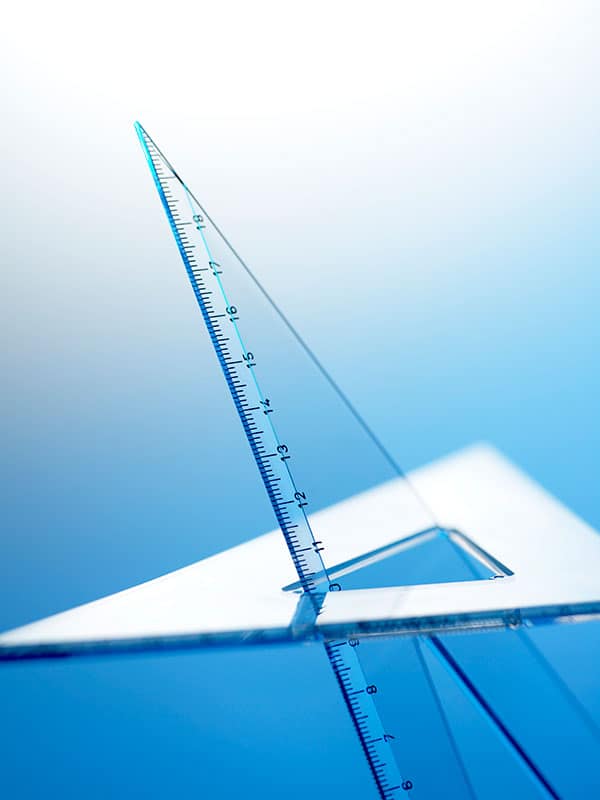
Also, as you might expect from a book that tries to cover so many different aspects of such a wide-ranging field, some sections prove more engaging than others. The previously mentioned forensic investigations are particularly intriguing, whereas the discussions about triangles and their use in measuring the Earth’s diameter are somewhat less so. Perhaps it’s because the latter was so long ago or is such a familiar subject for those (like me) who read a lot of science books. Or maybe it’s because, however talented the writer, it’s just very hard to make triangles interesting.

But all in all, Alex Through the Looking Glass is definitely a worthwhile read, especially for anyone who’d like to know more about maths but doesn’t think they have the capacity. And that’s where Bellos has made his priorities clear: this book is about sharing and explaining the world of mathematics not as some abstract, aloof area inhabited only by the most analytical and socially awkward sorts, but as something that overlaps with and influences our lives in numerous subtle but surprising ways. At this, he succeeds quite comfortably.

Granted, you may have to plough through a few more challenging sections, but there’s invariably something cool and interesting on the page.

  • 2014 Bloomsbury £18.99hb 352pp

Fractal-like honeycombs take the strain

Photograph of a fractal-like honeycomb structures being tested

Honeycomb lattices and fractal structures are found in a range of biological materials. Now, scientists in the US, the UK and France have combined the two types of pattern to create a strong and lightweight material that could be used in a range of applications, from aerospace to medicine. While the structures were made with centimetre-sized unit cells, the team believes that similar materials could be made on the nanoscale using carbon nanotubes.

Hexagonal honeycomb patterns often appear in nature, where strength, rigidity and lightness are called for. The shells of armadillos, the beaks of birds and, of course, the wax cells built by bees are just a few examples of nature’s honeycombs. Engineers have long known about the honeycomb’s strength and low density, and the structure has been used in applications as varied as satellite components and the scaffolding for growing new heart tissue.

Now, Ashkan Vaziri and colleagues at Northeastern University, along with researchers at the University of Oxford and the Université de Lyon, have shown that fractal-like structures based on honeycombs are even more resistant to deformation than conventional honeycomb materials.

Hierarchical structures

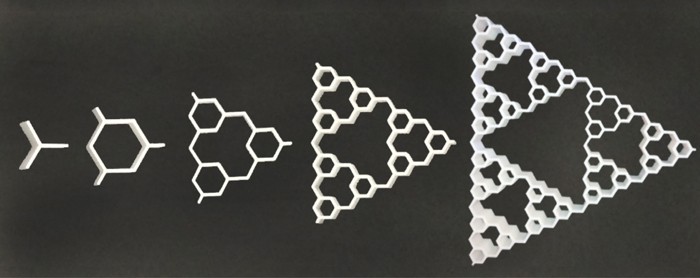
Fractals – in which the same patterns appear on different length scales – are also found in a variety of naturally occurring materials, including the buds on certain types of broccoli, pinecone seeds and nautilus shells. “Hierarchical structures are ubiquitous in nature and can be observed at many different scales in organic materials and biological systems,” explains Vaziri. Honeycombs on their own are not fractals because their characteristic shape only occurs on one length scale. However, a hierarchical fractal structure can be built upon a hexagonal honeycomb by successively replacing each vertex of three edges with another, smaller hexagon (see the image below).

Vaziri and collaborators looked at how the mechanical properties of these hierarchical hexagonal honeycombs varied as a function of how many times the fractal order was repeated. The team used both MATLAB computer models and experimental testing to study the structural performance of the hierarchical hexagonal honeycombs. Specifically, the researchers looked at the elements of the structure that can undergo stretching, shear and bending. “Our goal is to develop novel, hierarchical structures that are far superior to the classical cellular structures in terms of their mechanical response,” Vaziri told physicsworld.com.

Reaching a limit

The computer simulations focused on the elastic modulus of each structure, which measures a material’s ability to resist deformation. To make a meaningful comparison between structures comprising different numbers of hexagonal hierarchies, the team adjusted the thickness of each structure to ensure that they all had the same density.

“Generally, increasing the density of the cellular structure while preserving its topology improves the mechanical properties of the structure,” Vaziri explains. “To solely investigate the effect of hierarchical order on the mechanical properties of the hierarchical structure, we preserve the relative density while increasing the hierarchical order.”

The simulations predict that the elastic moduli of the structures increase with hierarchical order, up to a certain threshold. Furthermore, the calculations suggest that materials with desirable elastic moduli can be manufactured without having to resort to extremely high orders of hierarchy. This is good news from a practical point of view, because it would be difficult to achieve high orders of hierarchy using today’s 3D printing technologies.

Making it real

The next step for Vaziri’s team was to test its findings in the lab. The researchers used a 3D printer to manufacture extruded polymer shells of five honeycomb structures, each with a successively higher order of hierarchy. The thickness of the honeycomb walls was maintained at 2 mm because of limitations of the 3D printing process. To maintain a constant density, the size of the unit cells was adjusted instead of the thickness.

Photograph of fractal-like honeycomb unit cells

The hexagonal edge lengths of the extruded structures ranged from 0.6 to 2.2 cm. The researchers tested the compressive response and elastic modulus of each structure, recording how each structure’s resistance to deformation varied as a function of its hierarchy. The results revealed that, as predicted by the simulations, structures with a higher order of hierarchy had increasingly larger elastic moduli, to a certain limit.

Even though Vaziri and his team focused on unit cells that were on the centimetre length scale, they are confident that their findings can be applied to smaller scales. “The unit cells of the hierarchical honeycombs can be built with single- or multi-walled carbon nanotubes,” Vaziri claims. Deformation-resistant structures assembled from carbon nanotubes would have widespread applications in biological engineering and materials science.

The structures are described in Physical Review Letters.

Visualizing helium’s interacting electrons

The onset of “electron correlation” in the helium atom has been observed for the first time by an international team of researchers. Using the “photoionization microscopy” technique that the team developed in 2002, the researchers have now turned their quantum microscope on the helium atom. The team also found that it was able to tune these electron correlations at will.

The helium atom comprises a doubly charged nucleus surrounded by two electrons, and is nature’s second simplest atom after the hydrogen atom, which consists of one proton and one electron. The existence of exactly two electrons in helium provides physicists with the perfect laboratory to test “electron correlations”, which occur when the properties of electrons are influenced by their interactions with other electrons. This is important because the electrons in most materials, such as superconductors, interact so strongly with each other that it is impossible to predict their properties by simply studying the behaviour of individual electrons.

Strongly correlated

Proper descriptions of electron correlation are highly sought after but are notoriously difficult to achieve, explains Marc Vrakking of the Max-Born-Institute in Berlin, who was the lead researcher of the new work. “For example, the ‘density functional theory’ [a computational quantum-mechanical modelling method that looks at the electronic structure of many-body systems] would be a perfect theory that would be able to solve just about any problem of chemical interest, if only it were known how to include the effect of electron correlation correctly. Whole armies of theoreticians are working on and struggling with this,” he laments.

Many phenomena in atomic physics can be successfully understood without taking the correlations into account. For example, understanding how atoms or molecules ionize when they are illuminated by high-energy photons can be done by only considering the response of an electron in a single orbit, neglecting its interactions with other electrons in the atom or molecule. Vrakking told physicsworld.com that working out exactly when electron correlation becomes important in such systems is a very active field of research. “There is a lot of research aimed at observing the onset of electron correlation, to try and understand it in a way that hopefully can later be transferred to more complex systems, where the inclusion of electron correlation effects is indispensable,” he says.

In the new work, Aneta Stodolna, of the FOM Institute for Atomic and Molecular Physics in the Netherlands, along with Vrakking and other colleagues in France, Germany and the US, studied the photoionization of helium. Similar to the method perfected by the team last year while studying the hydrogen atom, the experiment begins with helium atoms that are excited by colliding them with energetic electrons, thereby putting the helium into a long-lived excited state. The helium atoms are then ionized by the absorption of a single ultraviolet photon, the energy of which is tuned such that it is only just enough to ionize the helium – 99.9% of the photon’s energy is used to overcome the ionization potential of the atom and just 0.1% of the photon’s energy is converted into photoelectron kinetic energy. The very slow photoelectrons are then accelerated towards a 2D detector, where their position is captured. This provides a measure of the velocity of the electron in the plane of the detector.

Whole armies of theoreticians are working on and struggling with [electron correlations]
Marc Vrakking, Max-Born-Institute, Berlin

Electrons exhibit wave–particle duality, and the lower the kinetic energy of the electron, the larger is its De Broglie wavelength. In fact, for low enough kinetic energies, the De Broglie wavelength becomes observable on macroscopic length scales. In the helium photoionization experiments, the wave-like nature of the slow electrons allowed the researchers to observe a series of interference rings, with constructive and destructive interferences that alternated at their detector.

In the hydrogen experiments that the team carried out last year, the interference patterns were connected to the nodal patterns of the atomic wavefunctions that were excited when the atom absorbed a photon. Previous research carried out by Vrakking’s team with xenon atoms found that the interference patterns can also be seen due to differences in the pathlengths of electrons travelling to the detector. But surprisingly, with helium, both effects seemed to come into play.

Stark appearances and unexpected states

When atoms are placed in electric fields, there is a shifting and splitting of their spectral lines, which is known as the “Stark effect”. With an increase in the electric field, some Stark states are shifted towards higher excitation energies; these are referred to as blueshifted Stark states. “To ionize an atom from that state, you’ll need laser light, which has shorter wavelengths (i.e. more energy) compared with the case without the electric field. Shorter wavelengths mean that the colour of the laser light will be ‘more blue’,” explains Stodolna. Conversely, states that are shifted towards lower energies require longer wavelengths, and so less energy to be excited. Therefore, the colour of laser light is tuned more towards the red, and this is known as a redshifted Stark state.

Vrakking and colleagues did not expect to see any red states in their experiment because these have very short lifetimes and so cannot be identified when the photoionization yield is measured as a function of photon energy. Rather, many blue states show up in the experiment, and the majority of the interference measurements that the team made were indeed for these blue states. But the researchers also observed some irregular measurements. “At some quite rare positions, we could suddenly see a red state, and we observed a ring pattern in accordance with the quantum number of that red state. We could determine that this was the result of an interaction of this very short-lived red state with a nearby blue state. This interaction resulted in a situation where the two electrons in the helium atom, which normally strongly interact with each other, suddenly did not really interact with each other anymore, and thereby the helium atom started behaving like a hydrogen atom,” explains Vrakking.

Moreover, the team observed that it could control the dynamics of the helium atoms by applying tiny changes (much less than 1%) to the strength of the external electric field. Indeed, when the electron correlations are turned off, the helium atom behaves just like a hydrogen atom. When turned on, its dynamics is strongly affected by the interaction between the two electrons.

Vrakking believes that the team’s work with the helium atom has shown how it can be used as an excellent model system for those keen to study the onset of electron correlation in simple systems.

The research is published in Physical Review Letters.

Is desperation for new physics clouding our vision for new colliders?

This month marks the 60th anniversary of CERN and to kick off our coverage here at physicsworld.com, I’m highlighting an essay on the future of collider physics that has just been written by Nobel laureate Burton Richter called “High energy colliding beams; what is their future?“.

Richter shared his 1976 Nobel prize with Samuel Ting for their independent discoveries of the J/ψ meson. He knows his particle colliders, having helped to design and build the world’s first collider in the late 1950s at Stanford University and later directing the Stanford Linear Accelerator Center for 15 years.

Richter believes that the international community is not facing up to tough decisions that must be made about what to do when the Large Hadron Collider (LHC) is retired sometime in the early 2030s. He thinks that “the perspective of one of the old guys might be useful”.

Planning the next huge collider involves the co-operation of three main groups of physicists: those who design and build the accelerators; those who design and build the experiments; and the theoretical physicists who work out what the experiments are looking for. Richter thinks that this is not going well at the moment.

(more…)

Graphene drum could store quantum information

Devices made from resonating graphene “drums” could be used as microwave amplifiers and memory chips in quantum computers. So say researchers at the Kavli Institute of Nanoscience at the Delft University of Technology in the Netherlands, who are the first to demonstrate optomechanical coupling between a mechanical resonator and a superconducting microwave cavity.

Graphene is a sheet of carbon just one atom thick, and Gary Steele and colleagues created their drum by placing a multilayer sheet of graphene over a 4 μm-diameter hole in a silicon chip. The drum is adjacent to a superconducting microwave cavity that has been created by depositing a metal alloy on the chip, and microwave photons are able to move between the two structures.

Tiny changes in position

The graphene drum behaves like a mirror that reflects microwave photons that are fired at it. By measuring the interference of the reflected photons, the researchers are able to sense tiny changes in the position of the graphene sheet. Indeed, a shift in position of just 17 fm, which is 1/10,000th of the diameter of a single atom, can be measured.

“The microwave light is not only good for helping us to detect the position of the vibrating graphene drum, it can also exert a force,” explains team member Vibhor Singh. This force arises because light carries momentum. “If I shine a flashlight at a piece of paper, in principle, the light hitting the paper will exert a force on it, pushing it away from the light source,” he says. “The radiation pressure force that light exerts, however, is usually far too small to detect – you cannot push somebody over by shining a laser pointer at them. But, thanks to the graphene sheet weighing so little, and our ability to detect small displacements of the resonator, we can make the graphene ‘dance to tune’ with the ‘beat’ set by the incident microwave light.”

This “beating” leads to an interference phenomenon known as optomechanically induced transparency. By measuring this effect in their device, the team is the first to show that it has achieved optomechanical coupling between a mechanical resonator and a superconducting microwave cavity.

Amplifying microwave signals

“Now that we have firmly established that optomechanical coupling is taking place here, the consequences of this are enormous,” Singh says. Similar devices could be used to amplify microwave signals, or even to store microwave photons for up to 10 ms. This storage capability means that the drum could function as a memory device that can store quantum information in quantum computers.

“One of the long-term goals of our project is to use these 2D crystal drums to study quantum motion,” says Steele. “If you hit a classical drum with a stick, it will start oscillating, shaking up and down. This up and down motion can be thought of as the 1 and 0 bit states in a computer chip. With a quantum drum, however, we can not only make the drumhead move up and then down, but also make it move both up and down at the same time by putting it into a ‘quantum superposition state’.”

Steele adds, “Quantum graphene drums that are shaking up and down at once could be used to store quantum information in the same way as RAM chips in ordinary computers store information today.”

More details about the research can be found in Nature Nanotechnology.

  • Steele and colleagues have made a video showing how microwave photons interact with the drum and you can watch it below.

Food for Martian thought, proton role-playing in a video game and more

By Tushna Commissariat

With space agencies across the world planning manned missions to Mars in the coming decades, pondering what one would eat while on Mars seems like a sensible thing to do. SpaceX engineer Andrew Rader helps us out with this difficult question in the video above, sharing gems like “chickens can’t swallow in space.” In the video, titled “Cooking on Mars” Rader cooks and eats a seemingly unappetizing option – bugs and insects – and makes it clear that is the fare future astronauts will be partaking in.

(more…)

Works starts on new European neutron source

Construction has finally begun on the long-awaited €1.84bn European Spallation Source (ESS), which will take five years to build and will be the most advanced neutron source in the world. Initially envisioned almost two decades ago, the ESS buildings will be complete by 2019, with experiments set to begin four years later. “We are thrilled to be able to move ahead,” says Jim Yeck, ESS director-general. “Many people have been working hard for several years already to get to this point.”

The facility will include a 600 m underground linear proton accelerator, which will create a beam of protons with energy of 2 GeV and power of 5 MW. These protons will then be sent to a heavy-metal target station to produce neutrons, which will in turn travel to 22 instruments where researchers will use them to investigate a range of materials from superconductors to proteins. The ESS will also feature sample-preparation labs as well as a supercomputing centre and a software development centre.

The European Spallation Source is a must for European researchers
Dimitri Argyriou, ESS science director

“This is a very important project for material scientists in Europe, especially for those using neutrons to study matter,” says ESS science director Dimitri Argyriou. With existing European facilities aging and competition in the field growing in Asia and North America, Argyriou adds that “the ESS is a must for European researchers”.

Some 13 nations have committed about 97% of the total construction costs, with Sweden paying 35%, Denmark 12.5%, Germany 11%, the UK 10% and France 8%. Talks are currently ongoing with the Netherlands, Latvia and Lithuania to cover the remaining 2.5%. Yeck says that other factors were important in ensuring construction can begin, including securing approvals from the Swedish Environmental Court and the Swedish Radiation Safety Authority (SSM), which came during the summer. The SSM approval is, however, conditional, meaning that additional permits will be necessary as construction progresses.

Multinational effort

Yeck adds that all partner countries will be involved in the construction of the ESS, with a large part of the accelerator being built in France and Italy, while Germany, Spain and the UK will contribute to the target station. Meanwhile, Czech, Hungarian and Swiss partners will contribute instruments, and universities and institutes in Sweden and Denmark will make “significant contributions”.

The ESS has also announced that Roland Garoby, who has spent more than 35 years at the CERN particle-physics lab, will become its technical director this month. Garoby recently led the upgrade of CERN’s injector complex for the Large Hadron Collider and is also chair of the ESS’s technical advisory committee. “The opportunity to play a leading role in the ESS project is incredibly attractive,” he says, adding that the next five years will be “a multi-facetted challenge”.

A foundation-laying ceremony for the ESS is set for 9 October, with more than 600 people from the European scientific community expected to attend.

Physicists take on the ice bucket challenge

By Michael Banks

The ice bucket challenge, which involves people pouring a bucket of ice-cold water over their heads, has taken the social media world by storm raising millions of pounds for motor neurone disease and other charities.

Not wanting to miss out, researchers have also got involved in the act. One of those to take part is the Cambridge physicist Stephen Hawking, who has suffered with the disease since he was 21. He stepped up to the challenge – albeit with a twist. In a video filmed outside his family home in Cambridge, UK, Hawking says that as he suffered from a bout of pneumonia last year it would “not be wise” to have a bucket of ice-cold water poured over him. So instead he passed over the challenge to his children – Robert, Lucy and Tim – who were then doused with three buckets of icy water, while Hawking watched on.

(more…)

Shape-shifting vesicles mimic living cells

Microscopic vesicles that swirl with oscillating surface patterns and sprout appendages like living cells have been unveiled by an international team of scientists. The researchers say that the tiny objects could be an important step in the development of shape-changing soft materials and may even shed light on some biological processes.

The vesicles were created using lipid bilayers and other components found in living cells. The work was done by scientists at Technische Universität München (TUM) in Germany, Brandeis University and Syracuse University in the US, SISSA International School for Advanced Studies in Italy, and Leiden University in the Netherlands

The shape shifting is achieved by creating an artificial cytoskeleton, which is the dynamic structure of microtubules found within living cells. “Here, we managed for the first time to reconstitute a part of the cytoskeleton inside a vesicle – in an active state, which means forces are exerted continuously inside the vesicle, leading to deformations and shape transformations of the vesicle,” Andreas Bausch, a researcher at TUM and team leader, told physicsworld.com.

Motors and scaffolding

The team formed lipid-bilayer vesicles tens of microns in diameter, and gave them an inner lining of microtubules. The researchers also added kinesin molecular motors, bound together in clusters, which formed cross-links among the microtubules. The resulting bundles of microtubules attached themselves to the inner surface of each vesicle as a nematic film – a single layer of parallel molecules with the fluid and self-assembly properties of a liquid crystal.

As in previous studies of nematic fluids on spherical surfaces, the flat sheets of parallel-aligning molecules had to bend to conform to the round surface. As a result, defects similar to the loops seen in fingerprints formed among the parallel lines. As the attractive forces in the film achieved equilibrium, the defects migrated apart and became stable at equal distances from one another. A typical number of singularities for a sphere was four, which stopped in positions at the points of an imaginary tetrahedron within the vesicle.

However, the kinesin motors ensured that the defects did not stay in place for long. Clusters of molecular motors latched onto adjacent microtubules and pulled them in opposite directions, forcing the long molecules to slide lengthwise past each other. This continuous action maintained a steady outward push, forcing each bundle to keep lengthening.

Migrating singularities

Pushed out of their stable tetrahedral points, the singularities migrated to new positions, passing through an orientation with all four in the same plane before settling again into a new tetrahedron. The motion continues as the singularities are forced out of those positions and begin another oscillation.

By creating an osmotic gradient between the inside and outside of the vesicles, the researchers could create arm-like protrusions that resemble the filopodia that occur in some living cells. As osmotic pressure deflated a vesicle, a surplus of membrane became available. In the defects, microtubules quickly took up this extra membrane as they aligned in parallel and extended outward as new appendages. When the osmotic pressure was reversed, the swelling vesicle reclaimed the surplus membrane, retracting the appendages.

“To me, it’s very cool; it’s dynamism,” says David Nelson of Harvard University. Nelson explains that all previous studies of nematic films on round surfaces focused on films in equilibrium. Defects had formed but had not moved, and no one had engineered a vesicle that grew filopodia-like appendages. “They made these defects come alive,” he says.

Hand-drawn noodles

Randall Kamien of the University of Pennsylvania points out three areas of significance. “First of all, this demonstrates that topological constraints that control equilibrium behaviour react much, much differently out of equilibrium,” he says. “Secondly [citing a figure in the paper describing the work], the beautiful mode that looks like how hand-drawn noodles are made suggests that this mechanism could be used for mixing on the few-micron level. Finally, the oscillation frequency of these states is about once per hundred seconds. Cell cycles are typically much longer. What role could oscillators at this time scale do in vivo? Are they present in cells?”

Bausch and his colleagues are focusing on future insights into basic biology. “[We want to] rebuild biological complexity by a bottom-up approach,” he says. “The big goal – very, very long term – is to rebuild cellular functions like cell migration or cell division. This is only a first step.”

Vincenzo Vitelli of Leiden University also believes that the research could improve our understanding of biology. “These synthetic structures are close enough to living organisms to provide insights into the behaviour of early life forms that marked the cross-over from inanimate to living matter,” says Vitelli, who was not involved with the research.

The vesicles are described in Science.

The physics of twitter

By James Dacey in Buenos Aires, Argentina

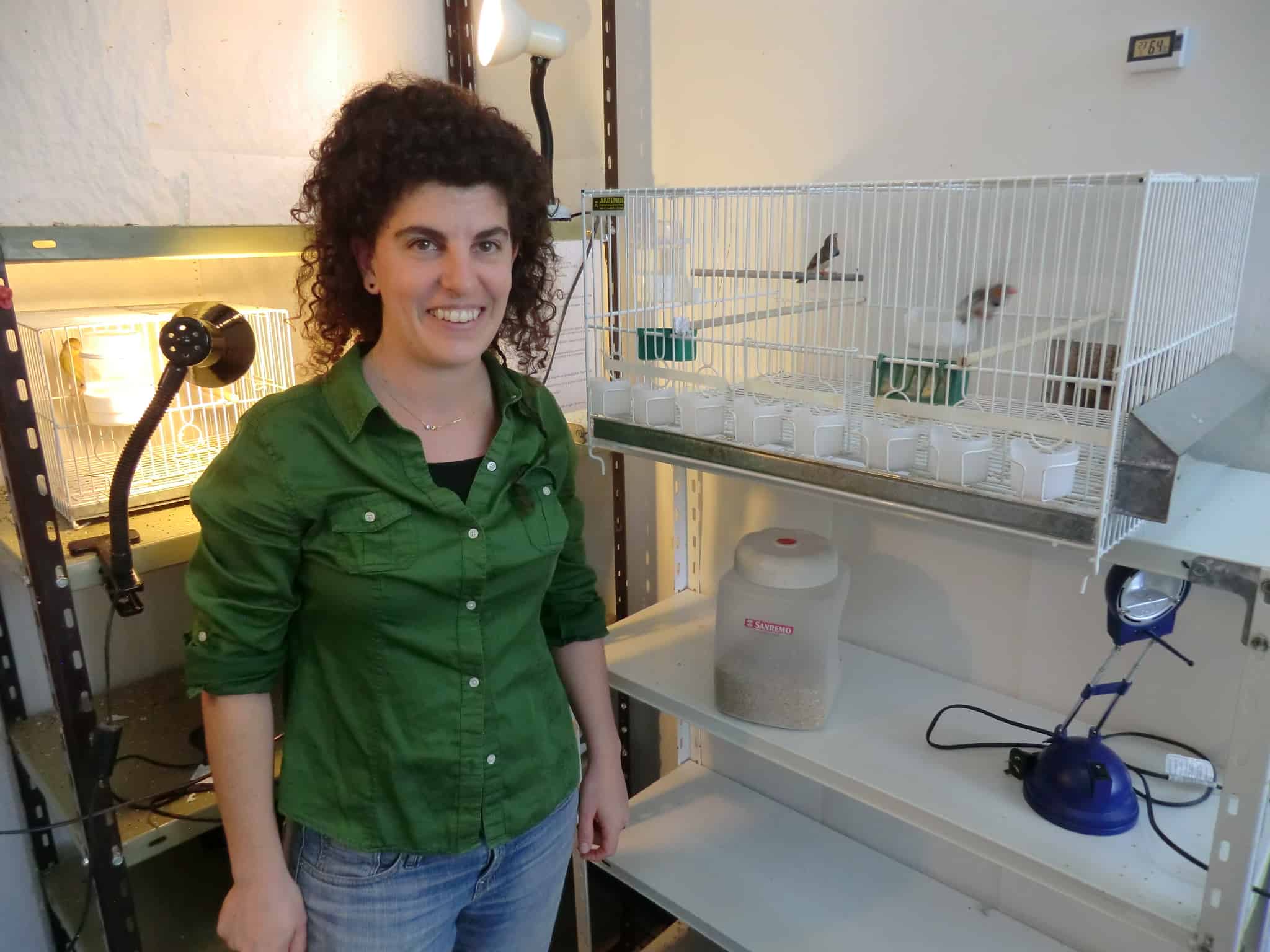
Some university physics departments are modern, others are old-fashioned, but by and large they tend to contain similar features: a bunch of physicists and a selection of equipment such as microscopes and lasers. That was why I was caught by surprise in the physics department of the University of Buenos Aires when I stumbled across a collection of caged birds living in the corner of one of the labs. My curiosity was captured and I had to find out more.

Researcher in front of a cage of zebra finches

(more…)

Copyright © 2026 by IOP Publishing Ltd and individual contributors